
Buprenorphine is an FDA-approved partial opioid agonist used to treat opioid use disorder, typically delivered as a sublingual tablet or film, often combined with naloxone. It belongs in a physician-led care plan that includes counseling, monitoring, and a plan for continuity, not medication alone.
The counterintuitive part is that buprenorphine treatment can be widely used yet still difficult to access and maintain. From 2007 to 2018, a national study identified more than 4.1 million treatment episodes among 2,540,710 unique individuals, while an estimated 86.6% of people nationwide who could benefit from medication treatment for opioid use disorder still didn't receive it (peer-reviewed review). Starting treatment matters, but so does preserving care when a prescriber stops, a clinic's requirements are unclear, or a patient returns after a period away.
Table of Contents
- What Is Buprenorphine Used For
- How Buprenorphine Works in the Body
- Buprenorphine Compared to Methadone and Naltrexone
- When and How Treatment Usually Starts
- Monitoring, Follow-Up, and Safety During Treatment
- Common Barriers to Starting and Staying on Buprenorphine
- What Recovery Support Looks Like After a Setback
- How to Discuss Buprenorphine with a Clinician
What Is Buprenorphine Used For
Buprenorphine treats opioid use disorder, or OUD, a medical condition in which opioid use leads to clinically significant impairment, distress, or loss of control. It provides controlled opioid-receptor activity that can reduce withdrawal and cravings, giving patients greater stability for medical care, behavioral support, and recovery planning.
Buprenorphine is one of three FDA-approved medications for OUD. The other two are methadone and naltrexone (CDC overview of OUD treatment). The right option depends on a patient's opioid exposure, health history, treatment goals, and access to follow-up. Formulation and prescribing arrangements also differ, so treatment is individualized rather than chosen from a single standard pathway.

Why the care plan matters
FDA labeling for SUBOXONE describes buprenorphine combined with naloxone for opioid dependence. It states that the medication belongs in a complete treatment plan that includes counseling and psychosocial support (FDA SUBOXONE prescribing information). In practice, that plan can include follow-up visits, safety planning, coordination with other clinicians, and support for housing or mental health needs.
The prescription is only one part of treatment continuity. Patients can ask who handles refills, what happens if a visit is missed, how monitoring works, and where to seek help if a prescriber becomes unavailable. A clinic's process for interruptions, emergency care, and referrals to opioid treatment services may determine whether treatment continues during a disruption.
Buprenorphine also has historical importance. The FDA approved it for opioid dependence treatment in the United States on October 8, 2002, after 36 years of research and development following its discovery in 1966. It became the first opioid medication in the United States since 1914 that could be used for OUD maintenance in primary care settings (2023 review).
Adults researching private, physician-led addiction medicine care can bring these questions to a visit. Clear answers about initiation, follow-up, monitoring, interruptions, and outside coordination help patients prepare for the full treatment pathway.
How Buprenorphine Works in the Body
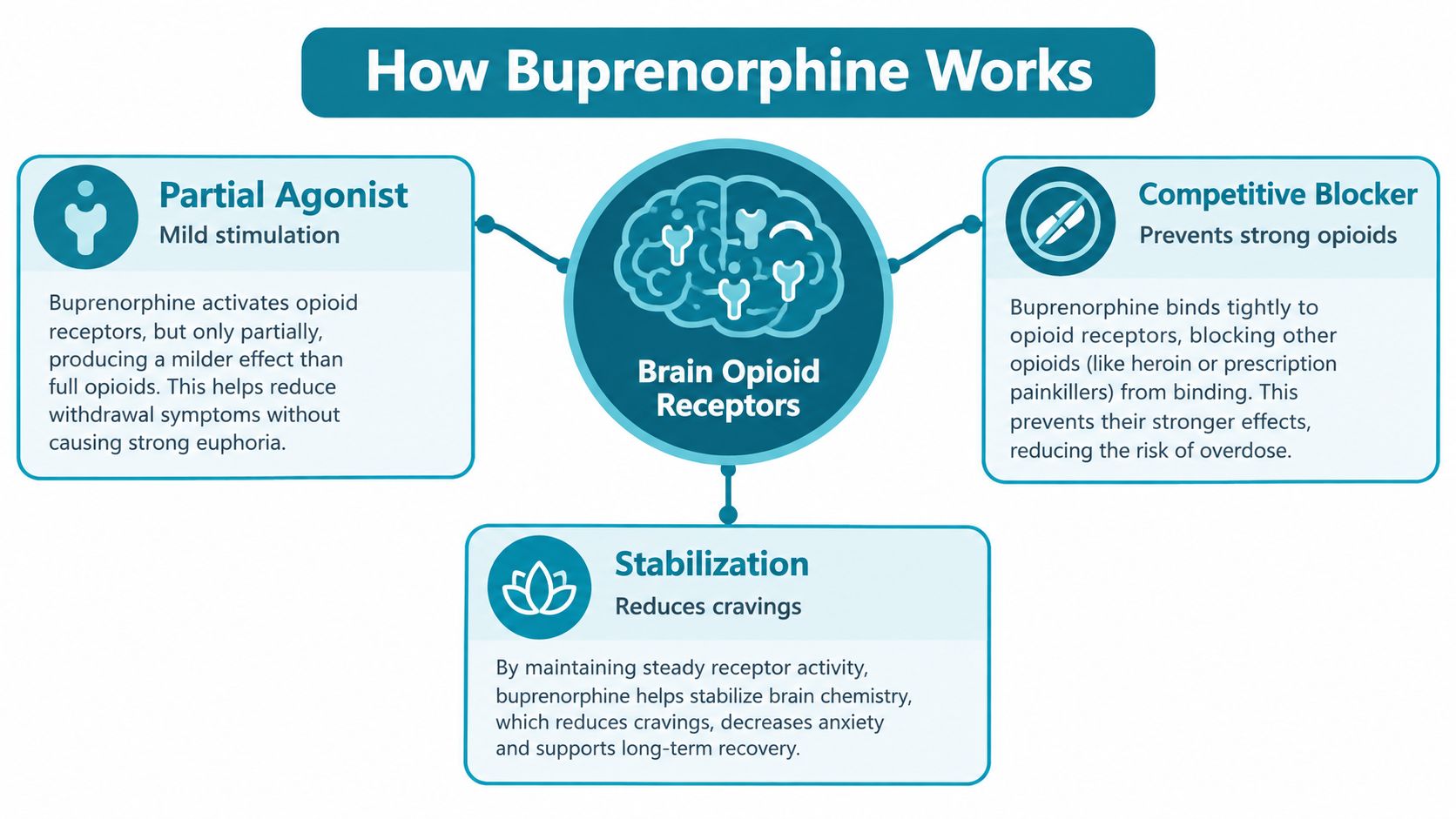
Buprenorphine can steady opioid receptors without activating them as fully as drugs such as morphine or fentanyl. It acts at the mu-opioid receptor, which influences withdrawal, cravings, pain relief, euphoria, and breathing. As a high-affinity, low-intrinsic-activity partial agonist, it binds tightly while producing a more limited receptor response. This helps explain both its therapeutic effects and its safety limits.
The medication can provide enough receptor activity to reduce withdrawal and cravings for many patients. Its partial activity also creates a ceiling effect for respiratory depression and euphoria, so effects do not keep increasing in a straight line as the dose rises (pharmacology review).
Safety principle: A ceiling effect lowers some risks, but it does not make buprenorphine risk-free.
Why naloxone may be included
Many buprenorphine products for OUD combine buprenorphine with naloxone, an opioid antagonist. In the intended formulation and when used as directed, naloxone has little therapeutic effect. Its presence can discourage some forms of misuse. FDA labeling identifies buprenorphine as the partial agonist and naloxone as the antagonist.
Strong receptor binding also affects treatment initiation. Buprenorphine may displace a full opioid agonist while providing less receptor activation. If it is taken before enough withdrawal has developed, that change can trigger precipitated withdrawal (receptor-binding review). Patients can ask a clinician how to recognize withdrawal, when to take the first dose, and what to do if symptoms worsen.
Treatment may use dissolving tablets, cheek film, or extended-release injection. The choice affects administration, follow-up, refill planning, and how care continues if a prescriber or clinic becomes unavailable. Patients can also review naloxone information and ask how overdose-prevention medication fits their safety plan.
Buprenorphine Compared to Methadone and Naltrexone
Buprenorphine, methadone, and extended-release naltrexone are FDA-approved options for OUD, but they support treatment in different ways. The choice involves more than receptor action. It also includes how treatment begins, where medication is provided, what monitoring is available, and how care will continue if a prescriber or clinic becomes unavailable.
| Medication | Typical setting | Key initiation consideration | General risk note |
|---|---|---|---|
| Buprenorphine | Often prescribed in outpatient care | Usually begins after an opioid-free interval and early withdrawal to reduce precipitated withdrawal risk | Partial agonist activity has a ceiling effect, but sedating substances can still create danger |
| Methadone | Generally dispensed through certified opioid treatment programs | The program assesses opioid use, health status, and eligibility before initiation | Full opioid agonist activity calls for careful medical supervision |
| Extended-release naltrexone | Medical treatment setting with ongoing follow-up | The patient must be fully withdrawn from opioids before starting | It blocks opioid effects and does not activate opioid receptors to relieve withdrawal |
These differences affect the full treatment pathway. Methadone may suit someone who benefits from the structure and medication approach of an opioid treatment program. Buprenorphine may fit outpatient care when the clinician can provide appropriate follow-up and monitoring. Extended-release naltrexone may suit someone able to complete the opioid-free period required before treatment.
The practical plan matters as much as the initial choice. Patients can ask how prescriptions, injections, visits, and monitoring will be handled if an appointment is missed, a clinic closes, insurance changes, or the prescriber stops practicing. They should also ask where to obtain a bridge prescription or continued treatment, and how emergency departments or another treatment program can access relevant medication information. A methadone treatment overview explains why the treatment setting forms part of this decision.
Naltrexone also needs clear identification. Naloxone reverses an opioid overdose, but it doesn't treat the underlying disorder. Extended-release naltrexone is a different medication with a different purpose, despite the similar names. At a medical visit, patients can compare craving control, withdrawal considerations, monitoring, missed-visit procedures, and continuity plans for each option.
When and How Treatment Usually Starts
Buprenorphine treatment succeeds or fails on more than the first dose. A careful evaluation establishes immediate safety, the medication involved, withdrawal timing, and a plan for continued access if prescribing arrangements change.
The sequence clinicians consider
Immediate safety comes first. If someone is unresponsive or breathing abnormally after suspected opioid exposure, call 911, give naloxone if available, and remain with the person until help arrives. Induction planning must not delay overdose response.
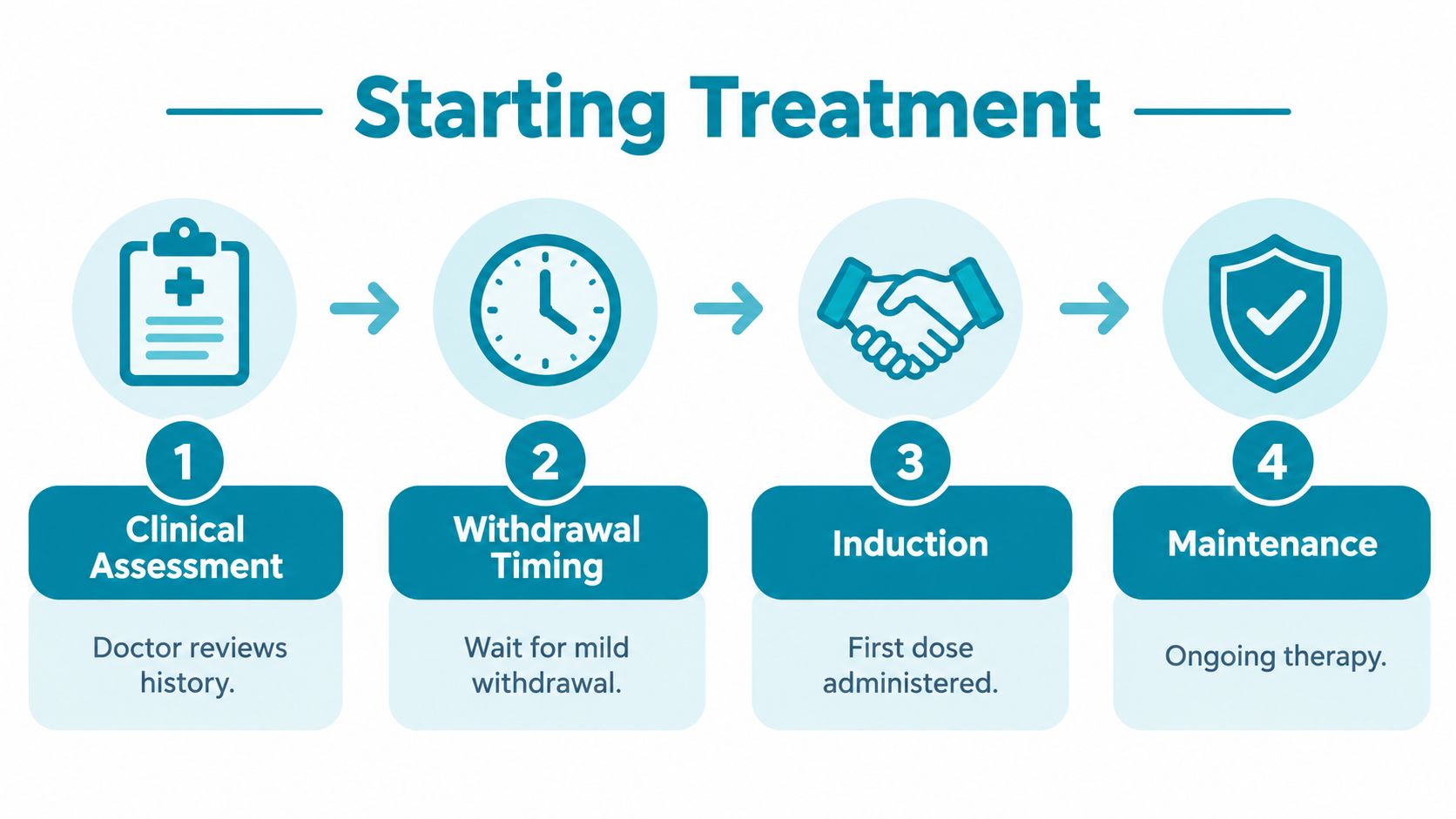
Assessment establishes the treatment plan. The clinician asks about the opioid used, route, last use, tolerance, previous overdose, withdrawal history, other sedatives or prescribed medicines, pregnancy, medical conditions, and treatment goals. This information helps determine the setting and induction approach without treating symptoms as a test of character.
Withdrawal timing guides the first dose. SAMHSA buprenorphine guidance generally recommends beginning when a person is in early opioid withdrawal and has stopped opioids for at least 12 to 24 hours, reducing the risk of precipitated withdrawal. The exact interval varies with the opioid and the person's clinical situation. A guide to opioid withdrawal manifestations can help someone describe symptoms, but it cannot determine readiness for treatment.
Induction becomes ongoing care. After the first dose, the clinician evaluates withdrawal, cravings, adverse effects, sedation, and medication access, then adjusts treatment as needed. Patients should ask what happens if a prescription is delayed, an appointment is missed, a clinic closes, insurance changes, or the prescriber becomes unavailable. They can also ask where to obtain a bridge prescription and how another clinician can confirm the current treatment plan.
The timing can seem contradictory. Buprenorphine relieves withdrawal, yet taking it while a full opioid agonist remains active can trigger a sudden worsening of symptoms. Its strong receptor affinity can displace that opioid, replacing stronger receptor activation with partial activation.
Fentanyl exposure can make timing less predictable, and clinicians may consider different induction strategies. Patients should not improvise microinduction, home induction, or dose changes from general internet instructions. They should ask which approach fits the opioid involved, current withdrawal, medical risks, and available observation.
Monitoring, Follow-Up, and Safety During Treatment
Follow-up is part of buprenorphine treatment, not an administrative afterthought. It gives the clinician and patient a shared way to spot problems early, record progress, and adjust care as health needs change. Reviews may cover withdrawal, cravings, opioid use, medication access and adherence, sedation, breathing concerns, other medical conditions, and medicines or substances that could affect safety.
The schedule should match the patient's circumstances. A clinician may use visits, symptom questions, medication reconciliation, prescription monitoring information, toxicology testing when clinically appropriate, and communication with other treating professionals. These tools are like dashboard indicators: useful signals, but none measures recovery alone or replaces a respectful conversation.
Questions about monitoring
Patients can bring specific questions to each visit:
- What will we review? Ask whether the plan includes cravings, withdrawal, sleep, mood, pain, sedation, medication access, and any return to opioid use.
- Which tests are relevant? Ask whether laboratory or toxicology testing is planned, what question it addresses, and how the result could affect care.
- How often will we meet? Clarify the early schedule and how visits may change after treatment becomes stable.
- What happens after a missed visit? Ask about refills, bridge prescriptions, urgent contact options, and transfer to another prescriber.
Continuity needs its own safety plan. A treatment pathway is incomplete if no one explains what happens when a prescriber leaves, a clinic stops prescribing, insurance changes, or a patient relocates. Patients can ask how their dose, medication list, treatment history, and monitoring results will be documented and shared with a new clinician when authorized.
A 2026 study found that 24% of patients did not re-establish buprenorphine care after their prescriber stopped prescribing (2026 continuity study). Rural residence reduced the odds of resuming treatment, with an adjusted odds ratio of 0.60. A handoff therefore affects medication continuity and safety, not just paperwork.
A conversation with an addiction medicine specialist can help patients ask how the practice handles monitoring, outside coordination, and interruptions without treating an access problem as a personal failure.
Common Barriers to Starting and Staying on Buprenorphine
Starting buprenorphine can fail because of an unclear process, not a lack of motivation. A clinic may answer the phone yet leave patients unsure about the evaluation, timing, prescription, or requirements for continuing care. In a 2025 Philadelphia secret-shopper study, rapid access was sometimes possible, but many clinics could not clearly explain key treatment details (University of Pennsylvania research brief).
During withdrawal, vague instructions can become a practical safety problem. The same brief reports that only 40% of U.S. counties had a waivered provider in 2018, while the treatment gap remained substantial. Federal rules and prescribing requirements have changed, so patients should ask the practice what applies now, rather than rely on older information.

Questions that expose practical barriers
- Access: Who conducts the evaluation, and who covers care if that clinician is unavailable?
- Timing: What symptoms or other findings determine when treatment can begin?
- Requirements: Are counseling, testing, or coordination with another service expected?
- Continuity: What happens if the prescriber leaves, the clinic stops prescribing, or insurance changes?
- Safety: How will naloxone access, medication interactions, and overdose education be handled?
Stigma can interrupt care after treatment has started. Some patients fear that requesting buprenorphine signals weakness or that returning to opioid use will lead to discharge. A medical model treats OUD as a treatable condition, while addressing adherence, sedative exposure, and overdose risk directly.
Continuity deserves a written plan. Patients can ask how their dose, medication list, treatment history, and monitoring results will be recorded and transferred, with authorization, if care must move to another clinician. An addiction medicine specialist can help clarify monitoring, outside coordination, and what to do when prescribing is interrupted.
Loss of tolerance also changes risk. After abstinence, the previous opioid amount may have a stronger effect, and fentanyl contamination makes nonprescribed exposure less predictable. A safety plan should include naloxone, emergency instructions, and a clear route back to medical care.
What Recovery Support Looks Like After a Setback
A return to opioid use is a signal to strengthen care, not proof that buprenorphine has failed. The immediate priorities are overdose safety, an honest clinical review, and continuity with a prescriber who can adjust treatment rather than leave the patient without support.
Consider an adult who uses opioids again after abstaining. Reduced tolerance can make a previously familiar amount dangerous. The clinician should check naloxone access, review the current buprenorphine plan, assess withdrawal and cravings, and identify what preceded the event. Treatment may need adjustment, but the setback alone does not require automatic discharge.
Emergency care and routine follow-up require different actions. For unresponsiveness or abnormal breathing, call 911, give naloxone if available, provide rescue breathing or other emergency measures if trained and able, and stay with the person until responders arrive. After immediate danger has passed, the clinician can review medication use, opioid exposure, sedatives, alcohol, pain, housing, transportation, and access to follow-up services.
A lower-tolerance relapse-safety plan
- Keep naloxone available: Tell trusted people where it is and how to use it.
- Avoid using alone: Anyone at risk of opioid use should have an overdose response plan and a way to summon emergency help.
- Report a setback early: Prompt contact lets the clinician assess safety before withdrawal, cravings, or concealment further disrupt care.
- Review triggers: Examine pain, grief, stress, poor sleep, untreated mental health symptoms, and high-risk settings.
- Protect continuity: Confirm the next appointment, refill process, and backup contact if the prescription or prescriber becomes unavailable.
Recovery support also includes practical mental health care. People supporting recovery may find broader tips on mental health with Boss as useful for managing stress, emotional regulation, and supportive communication. That resource does not replace addiction treatment, emergency care, or a physician's assessment.
A setback should produce a specific plan. Ask who will manage medication changes, how quickly follow-up will occur, which symptoms require urgent help, and how care will continue if access is interrupted. The response should reflect current health, opioid exposure, overdose risk, and treatment goals, while keeping a reliable path back to medical care.
How to Discuss Buprenorphine with a Clinician
A productive buprenorphine visit should produce more than a prescription. It should establish how treatment starts, how safety will be checked, and how care continues if an appointment, refill, or prescriber becomes unavailable.
Bring practical questions. You do not need to identify the right medication or describe your history perfectly. The clinician should assess the medical details, explain the choices, and help set up a plan for ongoing care.
Ask:
- Is buprenorphine appropriate for my opioid use, health history, and treatment goals?
- Which formulation fits my situation, and why?
- How will you decide when it is safe to begin induction?
- Which symptoms require an urgent call or emergency response?
- How will you monitor withdrawal, cravings, sedation, other substances, and general health?
- How often will we meet initially, and how will follow-up change when treatment is stable?
- What should I do if I miss an appointment, use opioids again, move, or lose access to the prescriber?
- How will counseling, psychosocial support, naloxone, or an outside program fit into my care?
Give specific information about your last opioid use, route, tolerance, prior withdrawal, past treatment, prescribed sedatives, alcohol use, possible pregnancy, and overdose history. These details can affect the safety assessment, timing of induction, and appropriate treatment setting.
Buprenorphine-naloxone is used within a complete treatment plan that includes counseling and psychosocial support. Ask who will coordinate with outside clinicians or programs, what information can be shared, and how quickly concerns will be addressed. For remote care, ask how privacy, identity verification, emergency planning, and clinical follow-up are handled. General information about AONMeetings HIPAA-compliant telehealth should be considered separately from medical advice.
Before leaving, confirm the medication plan, monitoring schedule, naloxone arrangements, refill process, and backup contact. Continuity is part of treatment, not an administrative detail.