
Could a medication be both an opioid and an evidence-based treatment for opioid use disorder, while also carrying serious safety risks? Methadone is exactly that kind of medication. It can reduce withdrawal and craving when carefully managed, but its long activity, cardiac effects, respiratory risks, interactions, and access rules make clinical oversight essential.
This guide separates methadone for opioid use disorder from methadone for pain. It explains how the medication works, what monitoring involves, how it compares with buprenorphine and naltrexone, and why the way methadone is delivered can determine whether treatment is realistically available.
Byline: Empire Medical Wellness Editorial Team
Published: August 19, 2026
Updated: August 19, 2026
Table of Contents
- What Methadone Is and What It Is Approved For
- How Methadone Works in the Body
- Safety Risks and Interactions to Know
- Starting Treatment and Ongoing Monitoring
- How Patients Access Methadone in the United States
- Methadone Compared With Buprenorphine and Naltrexone
- Practical Questions and When to Seek Help
What Methadone Is and What It Is Approved For
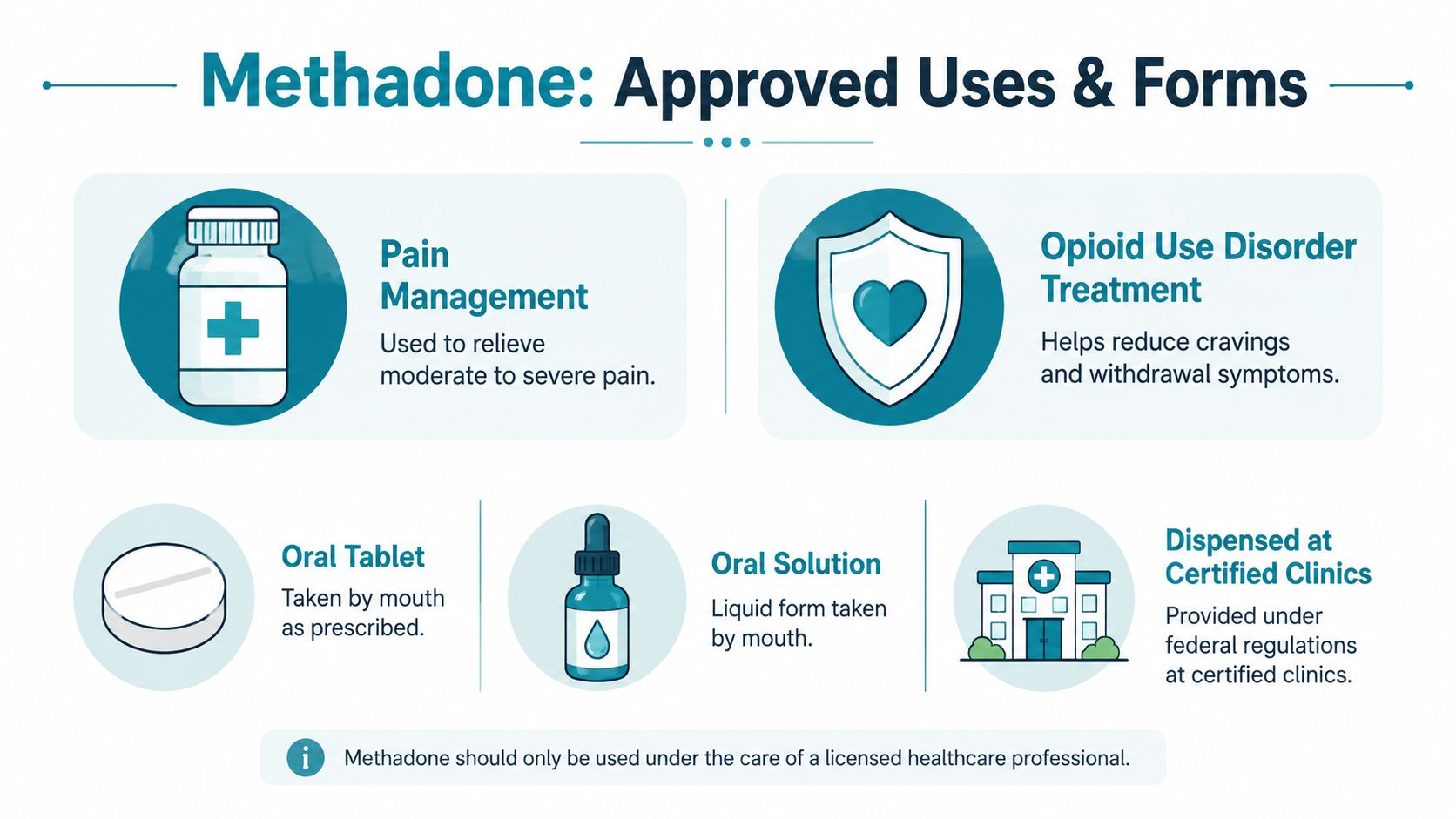
Methadone is a long-acting synthetic opioid agonist. An opioid agonist activates opioid receptors in the nervous system. Methadone was first approved by the FDA on August 13, 1947, as an analgesic and antitussive under the brand name Dolophine, according to the National Academies' federal history of methadone regulation. It has since been used for opioid treatment for decades.
Methadone has two distinct FDA-approved roles:
- Maintenance treatment of opioid use disorder, or OUD, under federal treatment standards.
- Management of moderate to severe pain when non-opioid options aren't sufficient.
Those uses shouldn't be treated as interchangeable. For OUD, methadone is administered within treatment standards under 42 CFR Part 8, with appropriate medical and social services. The current FDA labeling identifies both detoxification and maintenance treatment of opioid addiction, and it specifies that maintenance treatment must be combined with appropriate services.
The same medication, different clinical purpose
For OUD, a steady methadone effect can prevent withdrawal and reduce opioid craving. In pain care, the clinician is treating pain rather than maintaining recovery from OUD. Hospital or inpatient use for acute pain or withdrawal stabilization may also occur, but that setting is different from long-term maintenance through an Opioid Treatment Program, or OTP.
In the United States, methadone may be available as an oral tablet or oral solution. Dispersible tablets or wafers are used in federally regulated OTP settings. The exact formulation, indication, and dispensing process matter because methadone is not a routine prescription that serves every purpose in the same way.
A useful distinction: Methadone isn't “replacing one addiction with another” when it's used as prescribed for OUD. It's a structured medication treatment, although physical dependence and withdrawal can still occur.
The rest of this guide follows four practical questions: how methadone acts in the body, which risks require attention, how treatment is started and monitored, and how access rules shape real-world care. Adults seeking confidential addiction medicine care should also understand whether a physician-led outpatient practice can coordinate with an OTP or other treatment program when appropriate.
How Methadone Works in the Body
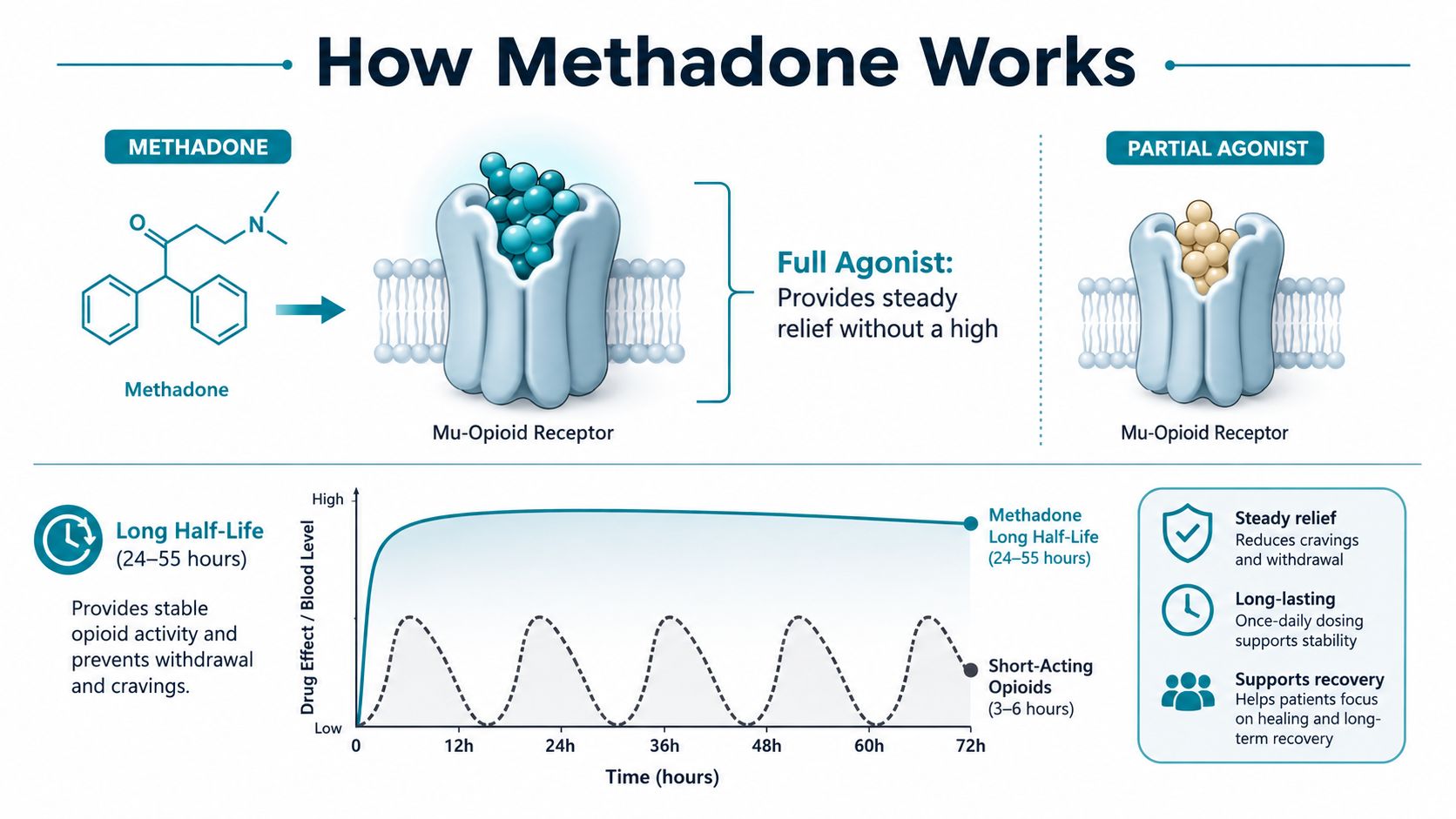
Methadone is a full mu-opioid receptor agonist. The mu-opioid receptor is a protein in the nervous system involved in pain, reward, breathing, and withdrawal. Methadone activates that receptor in a controlled, long-lasting way.
Buprenorphine is different. It's a partial agonist, meaning it activates the same receptor but has a ceiling on some opioid effects. Naltrexone is different again. It's an antagonist, meaning it blocks opioid receptors rather than activating them. These distinctions influence how each medication is started, monitored, and matched to a patient's clinical situation.
Why duration changes the treatment experience
Short-acting opioids can produce rapid peaks followed by relatively rapid declines. That cycle may reinforce intoxication, craving, and withdrawal. Oral methadone has a slower onset and a long, variable half-life, meaning the body can take a long time to remove half of the medication. That slow accumulation is one reason dose changes require caution.
Methadone's hepatic metabolism involves enzymes including CYP3A4, CYP2B6, and CYP2D6. It doesn't produce active metabolites that meaningfully accumulate in kidney disease, but that doesn't eliminate the need to review kidney function, liver health, other medicines, and the person's overall risk profile.
A stable methadone level can suppress withdrawal and craving without the rapid peaks associated with short-acting opioid misuse. It may also reduce the rewarding effect of other opioids, but it doesn't make additional opioid use safe. Tolerance, sedation, and respiratory depression remain clinically relevant.
Methadone's long duration helps create stability, but it also means that an unsafe dose or interaction may persist longer than a person expects.
The same receptor biology explains why people can develop physical dependence. Dependence means the body has adapted to the medication and may react if it's stopped abruptly. Dependence isn't identical to addiction, which involves compulsive use and loss of control, but both concepts deserve clear, stigma-free discussion. Readers comparing treatment options can review how naltrexone works in addiction care as part of a broader clinician-guided conversation.
Safety Risks and Interactions to Know
Methadone safety is easier to understand when risks are separated by urgency. Common effects may include constipation, dry mouth, sweating, mild drowsiness, and changes in weight or fluid balance. These effects can be uncomfortable, but they aren't automatically signs of an emergency. A clinician should still know about persistent or worsening symptoms.
Drowsiness deserves special attention during treatment initiation, after a dose change, or when another sedating medication is added. People shouldn't drive, operate machinery, or make safety-sensitive decisions until they know how methadone affects alertness.
Cardiac and longer-term concerns
Methadone can prolong the QT interval, an electrical measurement on an electrocardiogram, or ECG. Marked QTc prolongation appears to occur in about 2% of patients in opioid treatment programs, according to the SAMHSA expert panel literature. QT prolongation can increase the risk of torsades de pointes, a potentially lethal abnormal heart rhythm.
Risk rises with higher doses and with factors such as low potassium or magnesium, a history of fainting, structural heart disease, or other QT-prolonging medicines. FDA labeling highlights cases commonly associated with doses above 200 mg per day and recommends reviewing modifiable risk factors and interacting medications, as described in the FDA methadone label. Baseline and follow-up ECG monitoring may be appropriate when cardiac risk factors are present.
Long-term treatment can also raise questions about hormone changes, including hypogonadism, and oral solutions may create dental concerns because of repeated sugar or acid exposure depending on the formulation. These issues call for routine review, not abrupt treatment changes.
Respiratory depression and overdose prevention
The most dangerous risk is respiratory depression, meaning breathing becomes dangerously slow or stops. Alcohol, benzodiazepines, gabapentinoids, sleep medicines, muscle relaxants, other opioids, and unapproved sedatives can add to methadone's breathing-suppressing effects.
Never hide another prescription or substance from the treating clinician. A medication review should include prescribed medicines, over-the-counter products, alcohol, and nonmedical substances. People taking methadone should discuss access to naloxone treatment and overdose prevention, and they shouldn't use opioids alone.
For readers supporting someone through opioid withdrawal, Cedar Hill Behavioral Health's withdrawal guidance offers additional general education. It doesn't replace an individualized assessment, especially when breathing, consciousness, or polysubstance use is involved.
Starting Treatment and Ongoing Monitoring
Treatment begins with an assessment, not a number chosen in isolation. The clinician reviews opioid use history, tolerance, withdrawal pattern, prior treatment, medical conditions, pregnancy status when relevant, cardiac history, mental health, and every current medication.
For OUD, methadone is typically started cautiously and adjusted over time. Evidence reviews describe flexible daily maintenance doses around 60 to 120 mg for many patients, while evidence summarized by NICE indicates that 60 to 100 mg per day retains patients better and reduces heroin or cocaine use more than lower doses for many patients. Some people need doses above 100 mg per day for adequate suppression of withdrawal and craving. These figures are evidence context, not personal dosing instructions.
What monitoring is designed to catch
Early monitoring looks for two opposite problems. An insufficient dose may leave withdrawal and craving active. An excessive dose may cause sedation or impaired breathing, particularly before the body has adjusted or when other depressants are present.
Ongoing care may include:
- Medication review: Checking benzodiazepines, alcohol use, gabapentinoids, sleep medicines, and other central nervous system depressants.
- Cardiac review: Considering ECG testing and electrolyte assessment when QT risk factors or dose escalation make it appropriate.
- Substance monitoring: Using drug testing and clinical conversations to assess safety and treatment progress.
- Medical follow-up: Reviewing liver health, mental health, pain, pregnancy-related needs, and changes in daily functioning when clinically indicated.
- Dispensing decisions: Evaluating stability and adherence before unsupervised doses are considered under applicable program rules.
Composite hypothetical, not a real patient: An adult begins methadone through an OTP and reports less withdrawal but increasing daytime sleepiness after another sedating prescription is added. The clinician reviews the medication list, checks for warning symptoms, and reassesses the treatment plan rather than assuming the answer is more or less methadone. Individual outcomes vary, and this example isn't a dosing recommendation.
A clinician who provides addiction medicine evaluation and follow-up may also need to coordinate with the OTP, primary care clinician, pharmacy, or mental health prescriber, with the patient's authorization. Coordination helps prevent one clinician from changing a medication without understanding the effects of the others.
How Patients Access Methadone in the United States
For many adults, the central question isn't whether methadone can help. It's whether the person can reach and use the treatment system consistently. In the United States, methadone for OUD is still mainly delivered through federally regulated Opioid Treatment Programs, or OTPs.
An OTP must meet federal requirements, maintain SAMHSA certification, and operate within DEA and state oversight structures. State opioid treatment authorities also play a role. Early treatment has traditionally involved frequent or near-daily in-person dosing, often with observed administration. Over time, patients may become eligible for take-home doses when program clinicians determine that the person meets applicable stability and safety standards.
Federal policy has changed the framework. 2023 regulatory flexibilities broadened options involving telehealth induction and take-home eligibility, and federal flexibilities continued to shape methadone delivery after 2024. Those changes may improve convenience, but they don't erase every local program rule, staffing limitation, transportation problem, or patient concern.
Access is part of clinical fit
A medication can be effective in clinical trials and still be difficult to use in ordinary life. Rural residents may live far from an OTP. Transportation, work schedules, caregiving, disability, stigma associated with daily clinic visits, insurance authorization, and limited appointment capacity can all interfere with continuity.
The scale of the treatment system has expanded. SAMHSA reported that the number of OTPs increased from about 1,100 in 2003 to 1,482 by December 17, 2016, while the number of clients receiving methadone rose from about 227,000 in 2003 to 356,843 in 2015. Methadone clients represented roughly 21% to 25% of all substance abuse treatment clients each year during that period, according to the SAMHSA treatment-system report.
Those figures show enduring reach, but they don't prove that access is convenient or equitable. A person may be clinically appropriate for methadone yet unable to attend reliably. That tension explains why access design remains a major policy issue, including debate about whether methadone should become more available through settings beyond specialty clinics.
Methadone for pain follows a narrower path than methadone for OUD. Hospital and long-term-care settings may use it for severe pain under specific clinical circumstances, but that channel isn't a general substitute for OTP-based OUD treatment.
Methadone Compared With Buprenorphine and Naltrexone
No single medication is best for everyone. The choice depends on opioid tolerance, prior treatment, medical risks, pregnancy-related considerations, pain, ability to attend a program, and the person's preferences.
| Medication | Receptor action | Typical access pattern for OUD | Main initiation issue | Key clinical consideration |
|---|---|---|---|---|
| Methadone | Full agonist | Generally dispensed through an OTP | Requires cautious clinical initiation and monitoring | Strong retention option for some people, with respiratory and QT risks |
| Buprenorphine | Partial agonist | Can be prescribed in office-based care | Starting too soon after full agonist opioids can precipitate withdrawal | Often offers more flexible access, but formulation and dose matter |
| Naltrexone | Antagonist | Prescribed or administered after adequate clinical assessment | The patient must be fully detoxified before initiation | Blocks opioid effects but doesn't treat withdrawal while opioids remain in the body |
Methadone and buprenorphine can be equally effective in reducing opioid use and helping people stay in treatment, according to NIDA educational materials. The same source notes that lower-dose or flexible-dose buprenorphine regimens are less effective than methadone at retaining patients, which illustrates why regimen and dose matter.
Methadone may fit someone with high opioid tolerance or a strong concern about withdrawal during buprenorphine initiation. Its OTP structure may be a poor practical fit for someone who can't reliably travel to a program. Buprenorphine's office-based availability may reduce that burden, although it still requires careful prescribing and monitoring. Naltrexone may appeal to someone who wants an opioid-free medication, but it requires complete detoxification first and therefore isn't an immediate option for a person currently dependent on opioids.
A clinician also weighs respiratory depression, interactions, liver health, cardiac risk, pregnancy-related care, pain, and the person's goals. Adults exploring Suboxone and other office-based treatment options should ask how each medication's initiation process and access requirements would affect continuity.
Practical Questions and When to Seek Help
How long does methadone stay in the body?
Methadone has a long and highly variable half-life. It may remain in the body well after its noticeable effects change, which is why missed doses, extra doses, and unsupervised dose changes can be dangerous. Don't compensate for a missed dose by taking more unless the treating program gives you specific instructions.
Can methadone be taken during pregnancy or with other prescriptions?
Pregnancy requires individualized medical care. A person who is pregnant, planning pregnancy, or breastfeeding should tell the prescribing clinician and the pregnancy care team. Don't stop methadone abruptly without medical guidance.
Other prescriptions matter because sedatives and medicines that affect cardiac rhythm can increase risk. Give the treating team a complete, current medication list, including supplements, alcohol use, and nonmedical substances.
Does methadone appear on a standard drug test?
It may not appear on every routine opioid screen. Methadone often requires a test designed to detect methadone specifically. Testing policies vary by program and by the panel used, so ask the clinician or laboratory what the test includes.
When is urgent help needed?
Call emergency services immediately if someone taking methadone has:
- Slow, shallow, or stopped breathing
- Blue or gray lips or fingertips
- Fainting or inability to wake
- Severe sedation, choking, or unusual unresponsiveness
- A suspected overdose
If naloxone is available, use it according to its instructions and call emergency services. Don't leave the person alone while waiting for help.
Methadone treatment deserves a plan that respects both safety and autonomy. This article is educational and isn't personal medical advice. Individual treatment decisions require a qualified clinician who can review the person's health history, medications, symptoms, and access needs.
Empire Medical Wellness offers physician-led outpatient addiction medicine assessment, monitoring, recovery planning, and coordination with outside clinicians or treatment programs when useful and authorized. Visit Empire Medical Wellness to learn about the practice's outpatient care model and next steps.