Naloxone is an FDA-approved medication that rapidly reverses an opioid overdose by blocking opioid receptors in the brain. It's now available over the counter in all 50 U.S. states without a prescription, yet only 5.6% of surveyed adults reported carrying it, despite 75.1% reporting awareness of naloxone (survey findings).
That gap between knowing naloxone exists and having it available during an emergency can determine whether help arrives in time. Naloxone can be given by people without medical training, but it doesn't replace emergency care, observation, or treatment for an underlying substance-use condition.
Table of Contents
- What Naloxone Is and Why It Matters
- How Naloxone Reverses Opioid Overdose
- Recognizing Overdose and Administering Naloxone
- The Gap Between Awareness and Carrying Naloxone
- Where to Get Naloxone and How to Store It
- What Happens After Naloxone Is Given
- Common Questions and Misconceptions About Naloxone
- Discussing Naloxone Access with Your Physician
- Sources
What Naloxone Is and Why It Matters
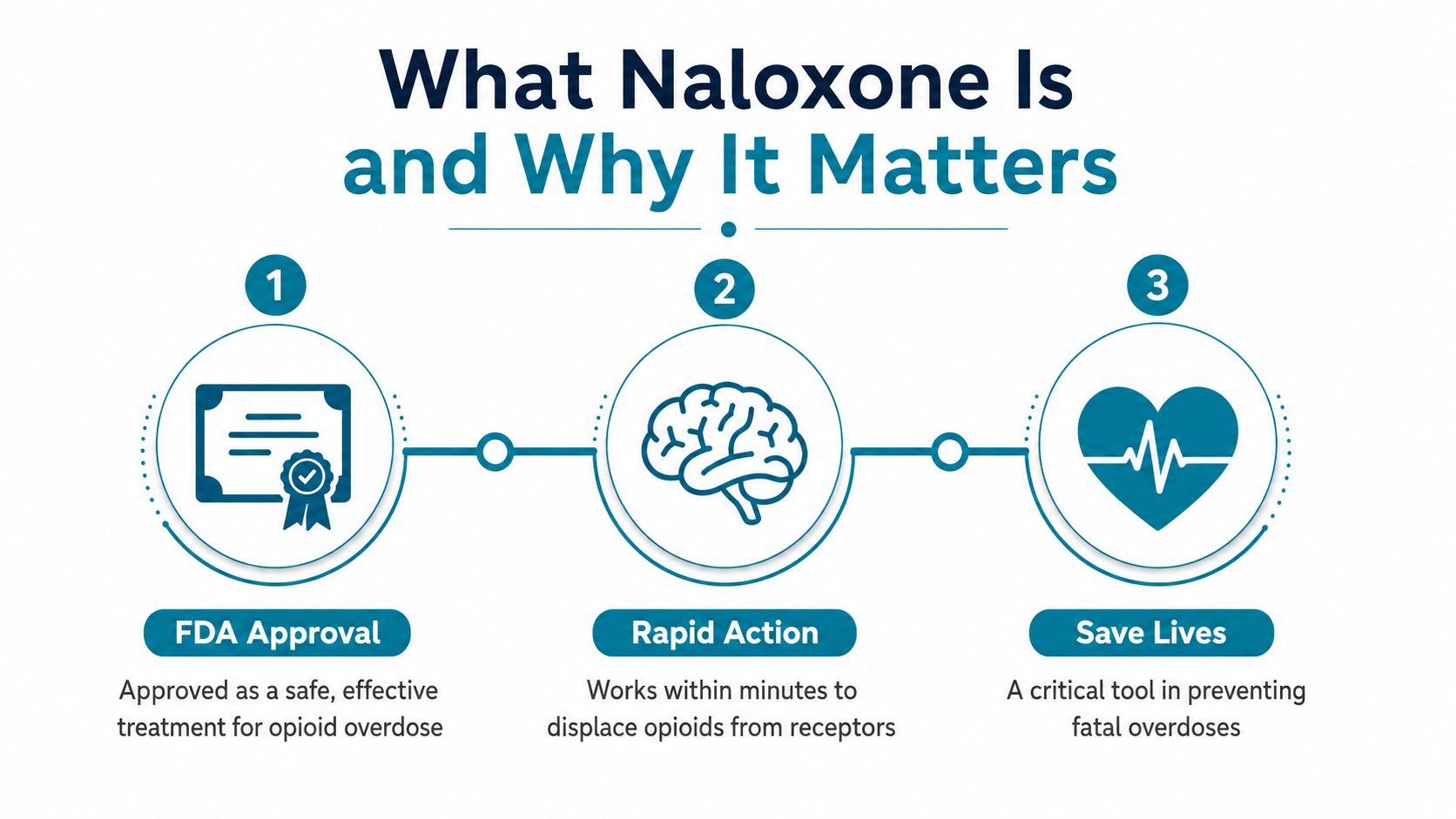
Naloxone is an opioid antagonist, a medication that attaches to opioid receptors and blocks opioid effects that can slow or stop breathing. It is used for a suspected overdose involving prescription opioids or illicit opioids such as heroin or fentanyl. By temporarily helping restore breathing, it can keep a person alive while emergency help is on the way. The World Health Organization explains how naloxone reverses opioid overdose and notes that naloxone has minimal effects in someone who has not used opioids.
Its history also explains its place in community first aid. The first naloxone product in the United States was approved for injection in 1971. The FDA approved the first nasal spray formulation on November 18, 2015, then approved the first over-the-counter naloxone nasal spray on March 29, 2023 (FDA announcement). By 2021, the FDA had identified two approved community products for adults and pediatric patients, an auto-injector and a nasal spray.
Why families should understand it
A family member may be the first to find someone unresponsive or breathing abnormally. The same may be true of a friend, roommate, neighbor, or bystander. People with or without medical training can administer naloxone, so preparedness involves more than knowing the medication exists. Someone must be able to access it, recognize a possible overdose, give it, and call for emergency help.
A first aid course can make emergency response less intimidating. The TP Training first aid guide provides general first aid context, while a suspected opioid overdose still calls for naloxone and emergency medical assistance. Adults seeking confidential, physician-led addiction medicine care can learn more about Empire's addiction medicine services.
How Naloxone Reverses Opioid Overdose
During an opioid overdose, the drug can suppress brain signals that keep breathing steady. Breathing may become very slow, shallow, irregular, or stop. Naloxone reaches the same opioid receptors and competes with the opioid for access. By displacing it, naloxone can temporarily restore the brain's drive to breathe, much like releasing a brake on a system that has been forced to slow down.
The delivery method affects how the medication enters and leaves the body. The FDA label for NARCAN Nasal Spray reports a mean plasma half-life of about 2.08 hours after a single 4 mg intranasal dose in healthy adults, compared with 1.24 hours after a 0.4 mg intramuscular dose (FDA NARCAN label). The nasal dose may begin reversing breathing before the opioid's effects have ended, so improvement does not mean the danger has passed.
Why a person can relapse into overdose
Naloxone can wear off while an opioid remains active in the body. The return of opioid toxicity after an initial response is called renarcotization. It is particularly concerning with long-acting opioids or high-potency synthetic opioids.
Naloxone has a short elimination half-life and no active metabolites. It is therefore a temporary rescue medication, not a complete treatment for the overdose. A person who becomes responsive still needs emergency evaluation and monitoring, because drowsiness or breathing problems can return.
Ongoing opioid-use-disorder medicines serve a different purpose. Naltrexone also blocks opioid receptors, but it cannot replace emergency naloxone during an overdose. This naltrexone treatment information explains how ongoing treatment differs from emergency reversal.
Practical rule: Naloxone may restore breathing temporarily. Call 911 and ensure emergency care follows.
Recognizing Overdose and Administering Naloxone
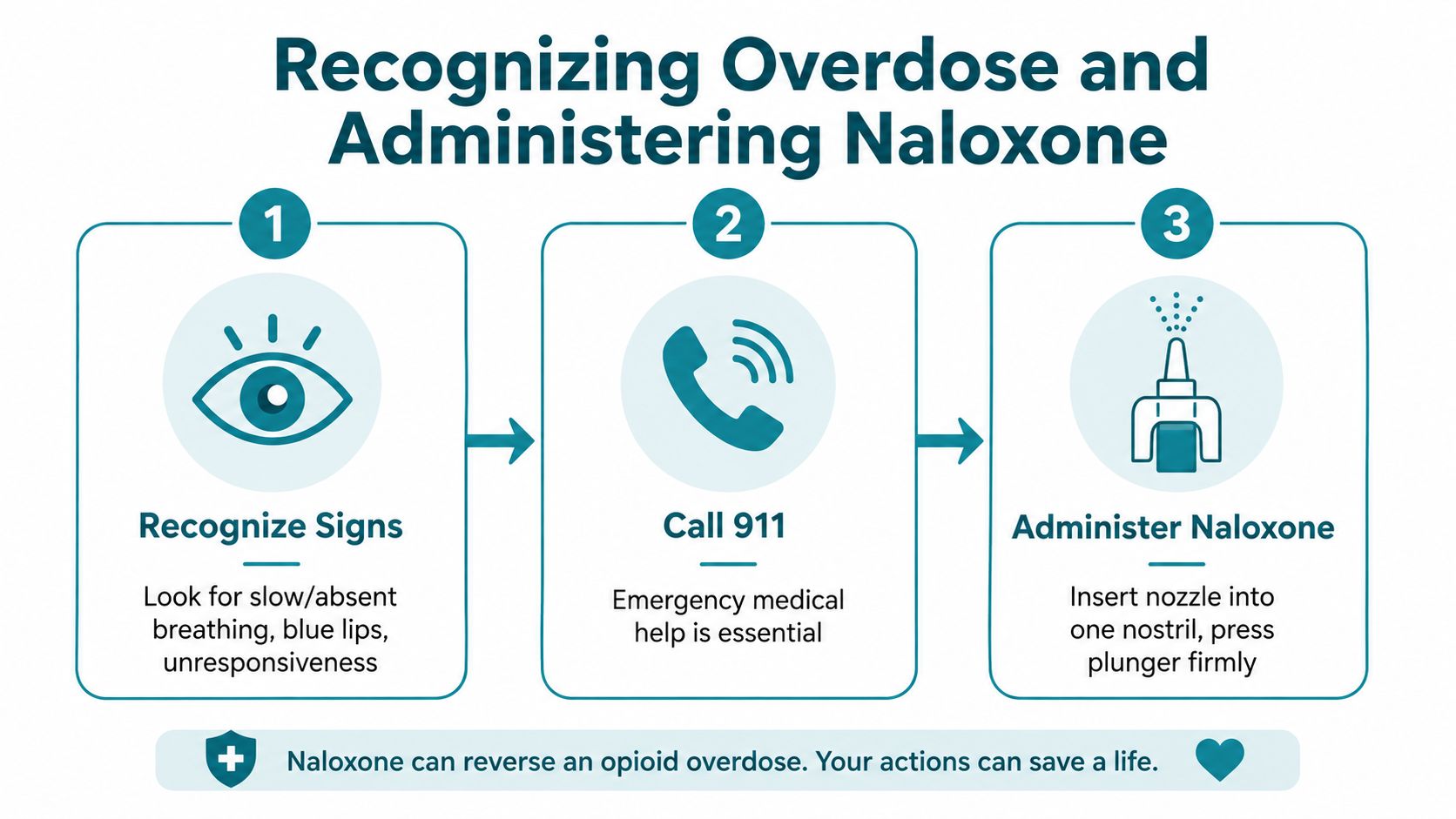
Treat a suspected opioid overdose as an emergency. You don't need certainty about which substance caused the problem before calling 911 or giving naloxone. The most concerning signs include:
- Breathing changes: Breathing is slow, shallow, irregular, or absent.
- Unresponsiveness: The person can't be awakened by speaking loudly or using a firm touch.
- Skin or lip changes: Skin may look pale, and lips or fingertips may appear bluish.
- Pinpoint pupils: The pupils may be unusually small.
- Abnormal sounds: Gurgling, choking, or snoring-like sounds can occur when breathing is impaired.
A simple emergency sequence
- Call 911. Put the phone on speaker if possible. Tell the dispatcher that the person may be experiencing an opioid overdose and provide the location.
- Give the first naloxone dose. Follow the product instructions. For a nasal spray, insert the nozzle into one nostril and press the plunger firmly. For an auto-injector, place it against the outer thigh and hold it in position according to the product directions.
- Watch breathing and responsiveness. Stay with the person. If normal breathing doesn't return, or if it returns and then worsens, follow emergency dispatcher guidance.
- Consider a second dose after 2 to 3 minutes. CDC guidance says to start with one dose and wait 2 to 3 minutes to see whether normal breathing returns before giving another dose (CDC overdose response guidance). SAMHSA notes that many naloxone products are packaged with two doses because more than one dose may be needed.
- Continue monitoring until help arrives. Keep the person in a safe position as directed by the dispatcher and don't leave them alone.
This is not a self-detox protocol. It's an emergency response for a person who may not be breathing adequately. If you're unsure whether opioids are involved, naloxone is still generally appropriate because it has minimal effects in people who haven't used opioids.
The Gap Between Awareness and Carrying Naloxone
75.1% of U.S. adults were aware of naloxone, yet only 53.2% knew it was available over the counter, and just 5.6% reported carrying it, according to a nationwide survey (peer-reviewed survey report). The difference matters because awareness is only the beginning of a care cascade: a person must understand access, obtain naloxone, learn to use the device, carry it, and recognize when to act.
People can fall out of that cascade at any point. Someone may avoid asking for naloxone because of stigma, feel unsure what to request at a pharmacy, worry about using a nasal spray, or find that local supply and affordability vary. Over-the-counter approval expanded legal access, but pharmacies do not offer the same convenience or cost in every community, according to a 2025 JAMA Network Open study summarized in the available evidence (community pharmacy access analysis).
Access isn't equal across communities
The nationwide survey found lower naloxone awareness among non-Hispanic Black and Hispanic adults. A separate Health Affairs analysis of 57,719 adults found substantially lower participation at every cascade step among Black, Hispanic, and Asian adults than among White adults (survey and cascade findings). These differences point to structural barriers, including where medication is available, how clearly access is explained, and whether people feel safe seeking help.
Geography affects the final handoff from awareness to possession. CDC reported more than 1.5 million naloxone prescriptions dispensed through retail pharmacies in 2024. The retail dispensing rate increased from 0.3 per 100 persons in 2019 to 0.6 in 2023, then fell to 0.4 in 2024 (CDC dispensing data).
| State or district | 2024 dispensing rate per 100 persons |
|---|---|
| Arkansas | 1.3 |
| New Mexico | 1.2 |
| District of Columbia | 1.1 |
| Rhode Island | 1.1 |
| Tennessee | 0.9 |
| Minnesota | 0.1 |
| South Dakota | 0.1 |
The practical goal is to move through the cascade before an emergency: ask where naloxone is available, obtain it, review the device instructions, and keep it where family members, friends, or caregivers can find it quickly. Awareness becomes protection only when the medication is present and usable.
Where to Get Naloxone and How to Store It
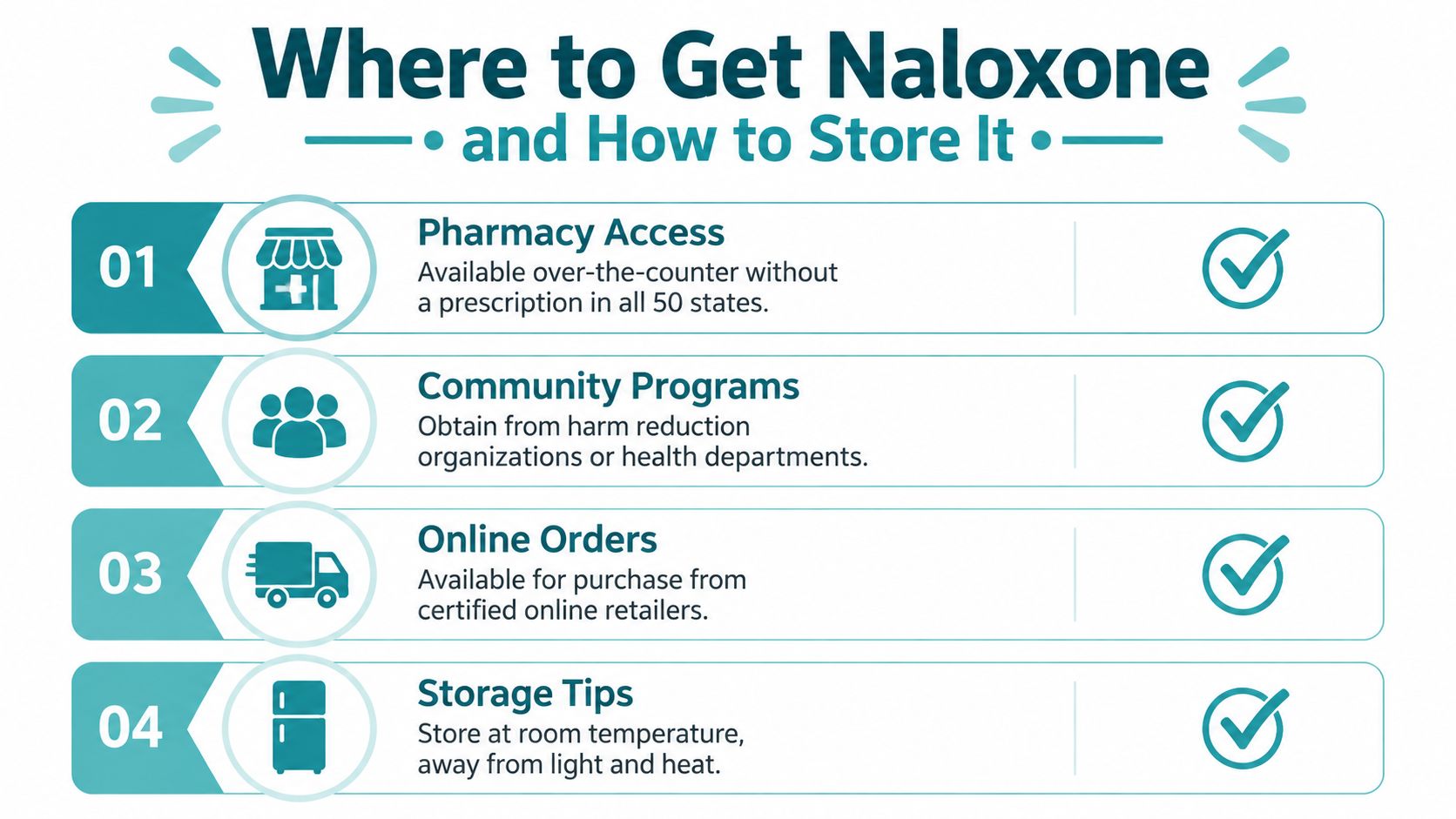
Naloxone is available over the counter in all 50 states and does not require a prescription, according to the CDC access guidance. Ask a retail pharmacy for over-the-counter naloxone nasal spray. If it is unavailable, ask whether another location has it or whether the pharmacist can identify community programs, online ordering options, or other local sources.
Access is only the first handoff. The next is possession: obtain the medication, learn the device, and place it where another person can reach it quickly. Someone may understand naloxone yet still lack it because the pharmacy does not have it, access instructions are unclear, or asking for help feels uncomfortable.
A physician can review naloxone access alongside opioid use, prescribed medicines, and overdose risk. CDC recommends offering it to patients at increased risk, including people with a history of overdose or substance-use disorder, sleep-disordered breathing, concurrent benzodiazepine use, or opioid doses at or above 50 morphine milligram equivalents per day (CDC clinical guidance).
Storage and readiness checklist
- Keep it accessible: Store naloxone where household members, friends, or caregivers can find it quickly.
- Protect the product: Keep it at room temperature, away from direct sunlight, excess heat, and moisture. Follow the package instructions.
- Check the expiration date: Replace expired product when possible.
- Review the device: Read the packaging before an emergency.
- Tell another person: A trusted person should know its location and that 911 must be called during a suspected overdose.
People in recovery or considering treatment can review opioid treatment resources while arranging medical support. Naloxone addresses a time-sensitive emergency. It does not treat withdrawal or the causes of opioid-related risk.
What Happens After Naloxone Is Given
Composite hypothetical example: A family member finds an adult who is unresponsive and breathing abnormally. The family member calls 911, gives a nasal naloxone dose, and stays nearby while following the dispatcher's instructions. The person begins breathing more normally, but the family member continues watching because the medication's effect is temporary.
That response is appropriate even if the person wakes up and speaks. Emergency responders may assess breathing, circulation, alertness, and the possibility of additional opioid exposure or another medical problem. Emergency department evaluation may include continued observation and decisions about further treatment based on the person's condition and the substances involved.
A person can become confused, uncomfortable, nauseated, or agitated after opioid effects are abruptly blocked. That reaction can reflect withdrawal in someone who has opioids in their system, but it doesn't change the need for medical evaluation. Naloxone has minimal effects in people who haven't used opioids, so fear of accidental harm shouldn't stop a bystander from using it when an opioid overdose is possible.
Stay with the person, communicate calmly, and tell emergency responders what you observed, what naloxone product was used, and whether another dose was given.
Individual outcomes vary. A hypothetical example can't predict what will happen to a real person, and naloxone doesn't guarantee survival when it's given late or when another medical emergency is present. After the immediate crisis, a confidential outpatient discussion may address ongoing opioid-use-disorder treatment, including whether Suboxone treatment discussions are clinically appropriate.
Common Questions and Misconceptions About Naloxone
Is one dose always enough?
No. After the first dose, wait 2 to 3 minutes and check whether normal breathing returns before giving another dose. Many naloxone products include two doses, so carrying medication does not guarantee that one spray will be sufficient. Some overdoses require repeated administration, particularly when opioid effects last longer than naloxone.
Call 911 immediately and follow the dispatcher's instructions. Do not postpone that call while deciding whether another dose might be needed.
Is naloxone dangerous if opioids aren't involved?
Naloxone has minimal effects in people who have not used opioids, according to WHO guidance. If an overdose is possible, giving naloxone while calling 911 is safer than waiting for complete certainty. It is a response to suspected opioid-related breathing problems, not a test that requires a confirmed history.
Does carrying naloxone encourage substance use?
Carrying naloxone is a harm-reduction step, not an endorsement of drug use. It gives a bystander a way to respond when breathing is dangerously slow while emergency help is on the way. A calm, nonjudgmental response can also open a conversation about treatment and recovery.
Does over-the-counter approval mean it's easy to find?
Not always. Pharmacy supply and affordability can vary, leaving some people aware of naloxone but without it at home or in a bag. Ask a pharmacist, contact a local health department, or discuss prescription access with a physician. For background on another medication option, see this 2026 naltrexone treatment guide.
Legal protections for people who administer naloxone differ by jurisdiction. Learn the rules where you live, and follow emergency dispatcher instructions during an actual event.
Discussing Naloxone Access with Your Physician
A physician-led addiction medicine evaluation can connect naloxone access with a person's broader risk profile. Discuss prior overdose, substance-use disorder history, benzodiazepine use, sleep-disordered breathing, and prescribed opioid therapy. These details help a clinician decide whether naloxone should be prescribed, where it should be kept, and who should learn to use it.
Awareness alone does not put naloxone in a medicine cabinet or bag. Ask directly about access, cost, pharmacy supply, expiration dates, and training for family members or other people likely to be present. A clinician can also address treatment needs and coordinate with outside programs when authorized.
Empire Medical Wellness provides confidential outpatient addiction medicine assessment, evidence-based treatment when clinically appropriate, monitoring, and recovery planning. Learn more about speaking with an addiction medicine specialist. For educational context about medication treatment, review this Suboxone treatment in PA.
Call 911 immediately for any suspected overdose. This article is educational, not personal medical advice.
Sources
- FDA approval of the first over-the-counter naloxone nasal spray
- CDC naloxone dispensing data
- FDA NARCAN Nasal Spray prescribing information
- WHO opioid overdose and naloxone guidance
- CDC naloxone access and overdose response guidance
Empire Medical Wellness offers confidential, physician-led outpatient addiction medicine assessment and follow-up for adults who want to discuss naloxone access and broader treatment options. Visit Empire Medical Wellness to learn more about the practice and request information about care.