In 2024, 48.4 million Americans ages 12 and older, about 16.8%, or roughly 1 in 6, met criteria for a substance use disorder. That makes addiction a common medical condition, not a rare personal failure.
Addiction also overlaps with other health concerns often enough that a careful medical evaluation matters. For adults looking into confidential outpatient care, the key question isn't whether the problem is “serious enough,” but whether the pattern deserves structured assessment, follow-up, and a treatment plan.
Table of Contents
- Understanding the Scope of Addiction in America
- What Addiction Really Is
- Recognizing the Signs and Risk Factors
- Evidence-Based Outpatient Treatment Approaches
- What to Expect from Your Medical Assessment
- When to Seek Outpatient Care versus Urgent Help
- Taking the Next Step
Understanding the Scope of Addiction in America
A simple number changes how we should talk about addiction. In 2024, 48.4 million people ages 12 and older met criteria for a substance use disorder, including 27.9 million with alcohol use disorder and 28.2 million with drug use disorder, with 7.7 million meeting criteria for both (SAMHSA-linked national survey summary). That is a medical issue affecting families, workplaces, and primary care visits across the country.
A useful way to understand that scope is to picture addiction as a condition that can sit beside other health problems rather than replace them. A person may still be working, caring for children, or managing daily routines while substance use is affecting sleep, mood, judgment, or safety. For clinicians, that means the question is not only whether someone uses a substance, but what the use is doing to the rest of their health.
Why the overlap matters
Addiction rarely shows up by itself. In the 2023 NSDUH, 58.7 million adults 18 and older had a mental illness in the past year, and 54.1 million had either serious mental illness or a substance use disorder in the past year (SAMHSA national report). That overlap matters clinically because mood symptoms, anxiety, sleep problems, and substance use can influence one another, much like linked gears in the same machine. If one gear slips, the others can be affected too.
The same national report also found that 70.5 million people ages 12 and older used illicit drugs in the past year, 8.9 million misused opioids in the past year, and 59.0% of people ages 12 and older used tobacco, vaped nicotine, drank alcohol, or used an illicit drug in the past month (SAMHSA national report). Those figures do not mean everyone has addiction. They do show how common exposure is, which is one reason a single conversation may miss the full pattern of use.
Practical rule: if substance use is affecting mood, sleep, work, relationships, or safety, a medical evaluation is reasonable even when the person still seems to be “functioning.”
That is where physician-led outpatient care has a clear role. A careful medical history, ongoing monitoring, and a plan that can address more than one diagnosis at a time often give the clearest picture. A confidential visit can help sort out what is happening without judgment or exaggeration, and it can also point people toward the level of care that fits their situation, including resources such as substance use disorder care at Empire Medical Wellness.
What Addiction Really Is
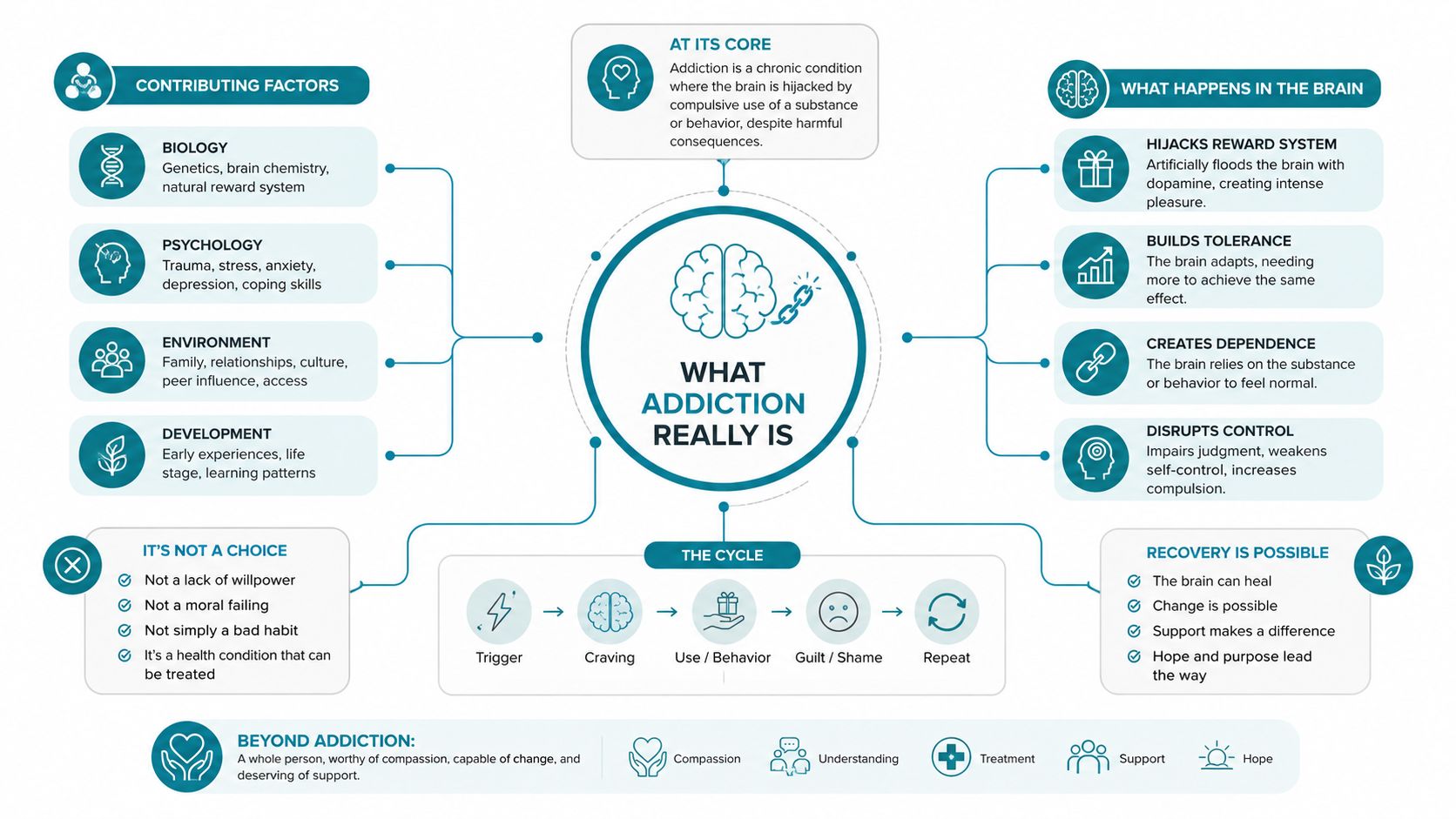
Addiction is best understood as a chronic, relapsing disorder marked by compulsive drug seeking and use despite harm, and NIDA describes it as a brain disorder because it changes circuits involved in reward, stress, and self-control (NIDA). That definition matters because it moves the conversation away from character and toward biology, behavior, and treatment.
The brain circuits involved
NIDA's model describes addiction in three linked stages, intoxication or binge, withdrawal or negative affect, and preoccupation or anticipation, mapped to the basal ganglia, extended amygdala, and prefrontal cortex (NCBI Bookshelf). A simple way to think about it is this. The brain learns that a substance or behavior brings relief or reward, then starts reacting to cues, stress, and anticipation even before the next use happens.
That's why craving can show up after the high is gone. The brain isn't only chasing pleasure, it's also trying to escape discomfort or restore what now feels “off.” Repeated exposure can strengthen that loop and weaken executive control, which is the brain's ability to pause, reflect, and choose a different response.
Why dopamine matters
A core mechanism across addictive substances is exaggerated dopamine signaling in the nucleus accumbens, followed by receptor downregulation and reduced reward sensitivity (Stanford Medicine). In plain language, the brain adapts to repeated surges by turning down its own sensitivity. Everyday pleasures can feel flatter, while the substance or behavior may start to feel more necessary just to feel normal.
The brain isn't “broken.” It's adapting to repeated chemical and behavioral signals in a way that makes quitting harder than people expect.
That's one reason simple advice rarely works on its own. If the problem is a learned brain pattern with biological reinforcement, then care often needs repeated assessment, support, and a plan that can change over time. For a plain-language overview of the condition, the substance use disorder resource page is a useful place to start.
Recognizing the Signs and Risk Factors
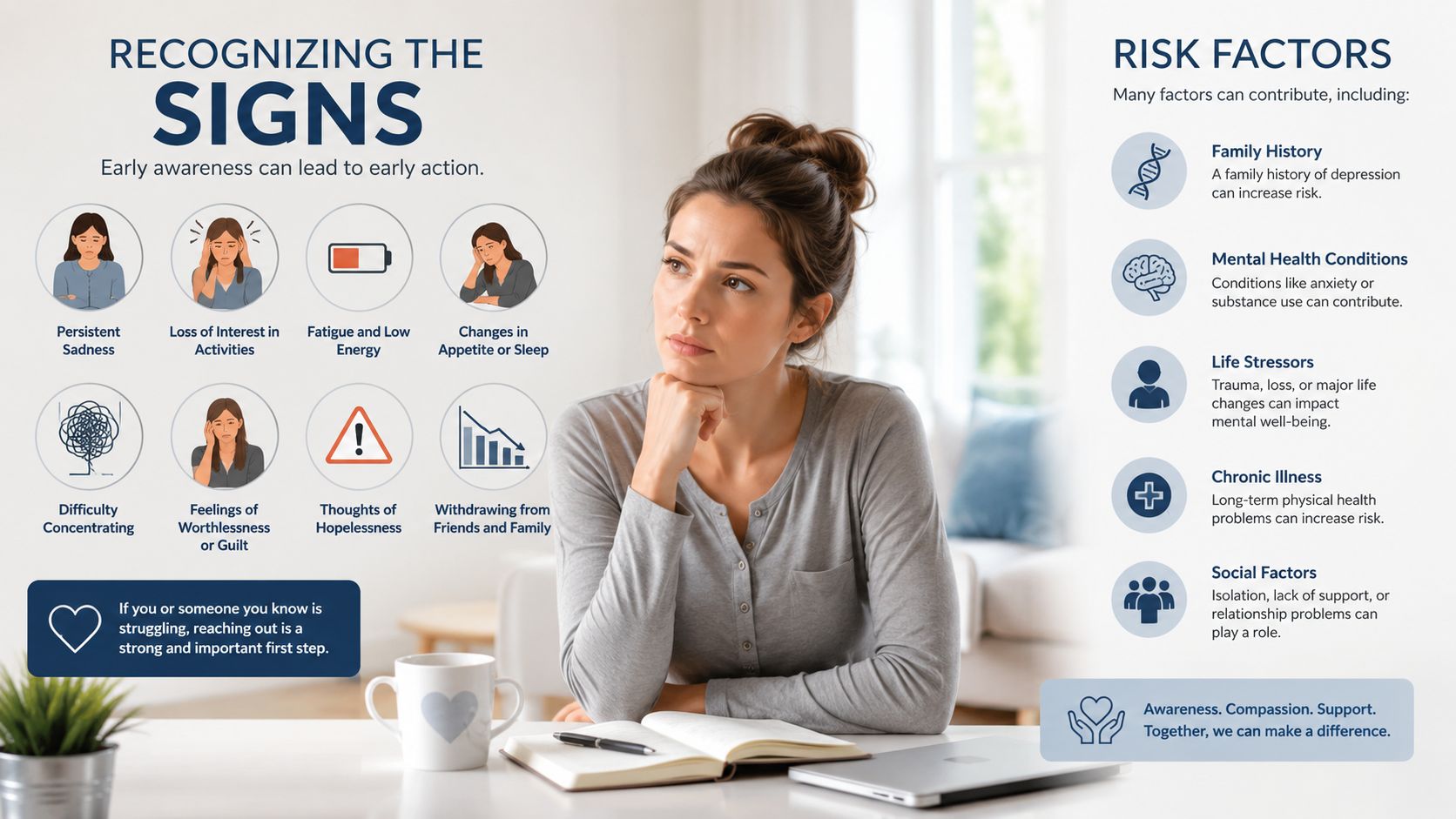
Addiction usually shows up as a pattern, not a single event. Common signs include using more than intended, losing control over use, craving the substance, and continuing despite clear negative consequences. Tolerance can also develop, meaning the same amount no longer has the same effect, which can push people toward larger or more frequent use.
Risk isn't one thing
No single factor determines whether someone develops a substance use disorder. Biology, stress, mental health, access to care, and environment can all play a role. A PubMed review notes that substance use affects people across ages, cultures, and socioeconomic levels, but the impact is often more severe in underserved populations because barriers like access, stigma, and structural disadvantage can worsen outcomes (PubMed review).
That helps explain why two people with similar use histories can end up in very different situations. One may have stable housing, support, and prompt care. Another may face legal pressure, job loss, or difficulty getting treatment. The substance pattern may look similar on the surface, but the surrounding conditions are not the same.
If you want a practical, public-facing resource that frames the warning signs clearly, recognizing addiction signs early is a straightforward reference. The important point is not to self-diagnose from a checklist. It's to recognize when a pattern deserves professional review.
If you're having to negotiate with yourself about use over and over, that's a good reason to ask a clinician to look at the whole picture.
A note on who gets missed
Recent equity-focused work shows that racial and ethnic minoritized populations can face inequities in use patterns, legal and health consequences, and treatment access. Another gap is older adults and Asian Americans, who have been underrepresented in research and data collection, which can hide clinically important need (PMC review). Those gaps matter because undercounted groups can also be underserved groups.
Evidence-Based Outpatient Treatment Approaches
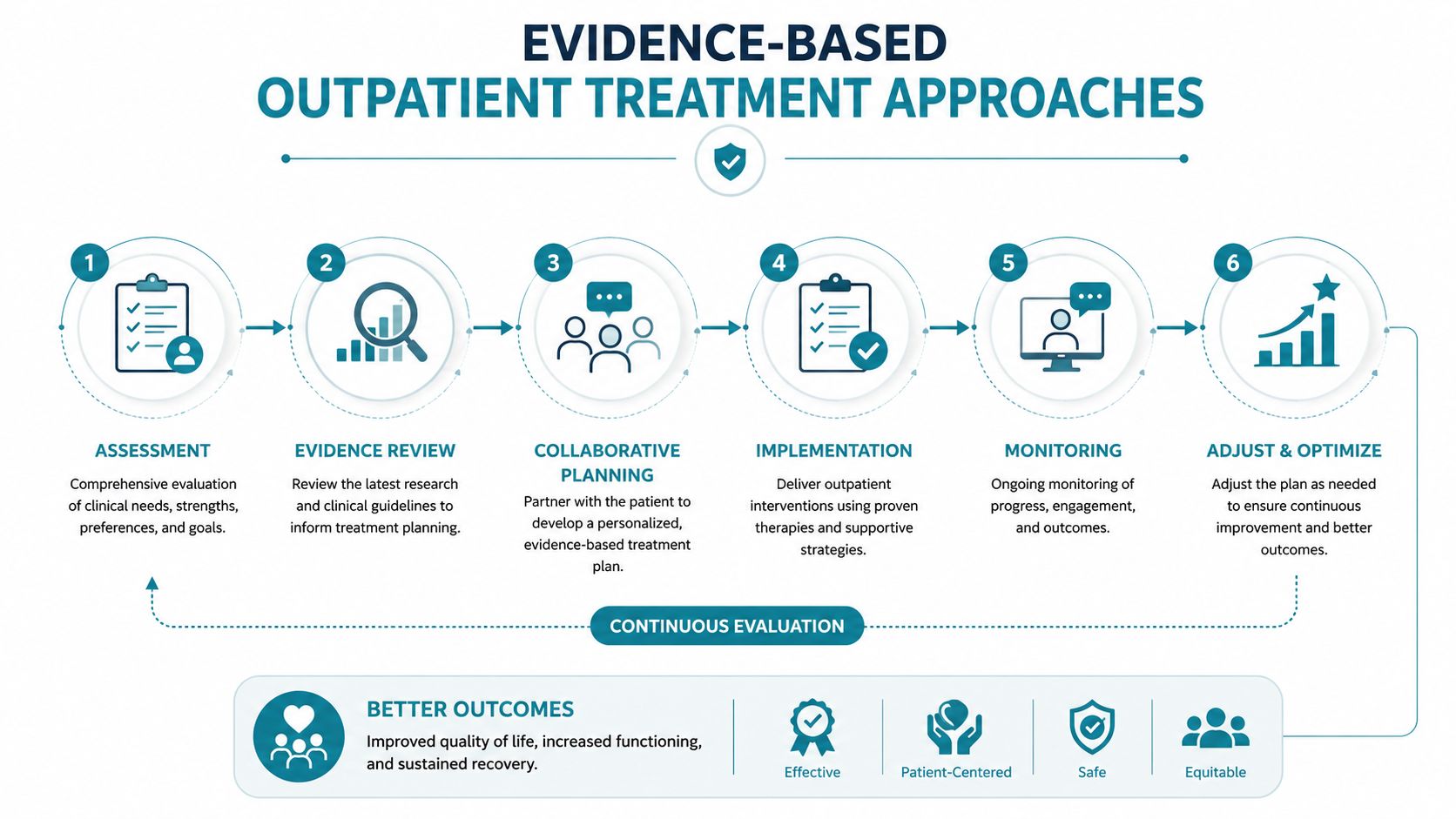
Outpatient addiction care begins with medical assessment, not with judgment or a generic checklist. The clinician reviews substance use history, medical problems, mental health concerns, current medications, and safety issues, then shapes a plan around the person's goals and level of risk. For many adults, that makes treatment easier to start while staying connected to work, family, and daily responsibilities.
What evidence-based outpatient care usually includes
A thoughtful outpatient plan often has four parts, each serving a different purpose:
- Medical assessment: The clinician looks at the full pattern of use, related symptoms, and co-occurring conditions.
- Medication when appropriate: Some patients benefit from medication as part of treatment, depending on the substance involved and the clinical picture.
- Ongoing monitoring: Follow-up visits help track response, side effects, relapse risk, and changes in life circumstances.
- Recovery planning: The plan may include counseling referrals, coordination with outside clinicians when authorized, and practical steps that support stability.
This approach is physician-led outpatient care. It focuses on evaluation, monitoring, and ongoing support. It is not detoxification, inpatient treatment, or residential treatment, and it does not promise the level of supervision those settings provide. If the clinical picture suggests a higher level of care, the clinician should say so clearly and help direct the patient there.
For readers trying to understand one medication pathway, the Suboxone information page explains that option in a straightforward way. For a broader discussion of healthcare ChatGPT compliance risks, the main issue is how digital tools handle sensitive health information, which matters in any medical setting where privacy is part of care. The right treatment still depends on the patient, the diagnosis, and the overall medical picture.
Effective outpatient care is a series of medical decisions, each based on what is happening now.
That matters because addiction changes over time. A plan that fits today may need adjustment next month, just as a blood pressure plan may need revision when symptoms, stress, or side effects change. Good outpatient care expects that kind of change instead of pretending the first plan will always stay right.
What to Expect from Your Medical Assessment
A confidential addiction visit should feel like a medical appointment, not an interrogation. At Empire Medical Wellness, the process is designed as a private-pay outpatient evaluation with Dr. Chhatpar, and the first visit is a 50-minute initial evaluation for $350, followed by 25-minute follow-up visits for $225. The practice does not bill insurance directly, and an itemized receipt is available through the patient portal.
How the first visit usually unfolds
The conversation typically begins with the story of what's been happening, including substance use patterns, health history, and any past attempts to cut back or stop. A clinician also looks for co-occurring concerns, because sleep, anxiety, depression, pain, and stress can all shape treatment decisions. That broader view is one reason physician-led care can be helpful when the picture is complicated.
Empire offers telemedicine for adults physically located in New York, New Jersey, Connecticut, Pennsylvania, or Virginia, and in-person appointments are also available. If you want to understand the practice's broader clinical focus, the addiction medicine specialist page gives a clear view of that service line.
Why privacy and workflow matter
Many adults hesitate because they worry about being judged or having their information handled carelessly. In digital care, confidentiality also includes how messages, portals, and documentation are managed, which is one reason practices should think carefully about compliance and privacy. For a useful discussion of this topic, the article on healthcare ChatGPT compliance risks explains why privacy-conscious workflows matter in medical settings.
A good first visit ends with next steps that make sense. Sometimes that means follow-up monitoring. Sometimes it means coordination with another clinician or program, if authorized and useful. Sometimes it means the assessment shows a different diagnosis than the one the patient expected.
When to Seek Outpatient Care versus Urgent Help
For many adults, scheduled outpatient care is the right next step when substance use is concerning but not immediately dangerous. That's especially true when the main issues are uncertainty, growing tolerance, repeated failed cutback attempts, or a desire for a confidential evaluation. A planned visit gives time for a real medical history, which matters more than a rushed conversation.
When outpatient care fits
Outpatient care is often appropriate when:
- The person is medically stable: There's no sign of emergency-level withdrawal or acute medical danger.
- The concern is ongoing, not sudden: The pattern has been building and needs structured evaluation.
- The goal is clarity: The person wants to know whether the pattern meets criteria for a substance use disorder.
- Follow-up matters: The person wants a clinician to monitor response over time.
There are situations, though, where waiting for a routine appointment is the wrong choice. Active suicidal thoughts, severe withdrawal symptoms, or a crisis involving another person need immediate help and may require emergency services. Those are not problems to solve in a standard outpatient slot.
If safety is in question, call emergency services or go to the nearest emergency department. Don't wait for a routine visit.
This is also why outpatient care should be framed accordingly. It can be the right setting for assessment, monitoring, and many treatment plans, but it is not a substitute for emergency care when a crisis is unfolding. The outpatient treatment resource page is useful for understanding the care setting, but it doesn't replace urgent medical attention when symptoms are severe.
A practical rule helps here. If the issue feels urgent because someone might be in immediate danger, act urgently. If the issue feels serious but stable, schedule a confidential evaluation.
Taking the Next Step
Addiction is common, medically real, and often treatable with the right outpatient support. The most useful first step is usually a calm, confidential evaluation that looks at the whole person, not just a single substance or one bad week. Seeking care is a sensible medical decision.
If you want to learn more about how physician-led addiction medicine is approached in a private outpatient setting, visit the schedule appointment page to see how a first conversation can begin. If you're comparing options, the practice's addiction medicine page can help you understand what this service line is designed to do.
This article is educational and isn't personal medical advice. If you're worried about your safety or someone else's safety, get urgent help right away.
Empire Medical Wellness offers confidential, physician-led outpatient addiction medicine with structured evaluation, follow-up, and individualized planning. If you're looking for a calm place to start a conversation about addiction, visit Empire Medical Wellness to learn more and decide whether a private medical evaluation is the right next step.