A 42-year-old may have a glass of wine with dinner, a second while answering email, and still wonder whether the pattern is medically meaningful. Occasional low-risk drinking is usually not medically concerning, but daily or heavy alcohol use carries measurable health risks and deserves an honest conversation with a clinician.
Alcohol isn't only an addiction issue. It can affect sleep, mood, blood pressure, liver health, cancer risk, medications, weight, and safety. This guide offers one calm framework for understanding those effects, screening for risk, recognizing withdrawal emergencies, and learning what evidence-based outpatient care may involve.
Table of Contents
- What This Guide Covers and Who It Is For
- How Alcohol Works in the Body
- Short-Term and Long-Term Health Effects of Alcohol
- Alcohol, Weight, Sleep, and Mental Health
- Recognizing Risky or Disordered Alcohol Use
- From Screening to Treatment What Outpatient Care Can Offer
- Emergency Red Flags and When to Seek Immediate Help
- Frequently Asked Questions and Next Steps
What This Guide Covers and Who It Is For
This guide is for adults who are curious, cautious, or worried about their own drinking or a family member's use. It isn't a diagnosis, and it isn't a self-detox plan. Acute withdrawal can be dangerous, so anyone drinking heavily or regularly should speak with a qualified clinician before making a major change.
The discussion moves from basic physiology to practical decisions. You'll learn how the body absorbs and metabolizes ethanol, why short-term impairment differs from cumulative health risk, and how alcohol can interact with sleep, mood, weight, blood pressure, and medications. You'll also see how the NIAAA Single Alcohol Screening Question and AUDIT-C help identify drinking that warrants follow-up.
The World Health Organization reports that alcohol was linked to 2.6 million deaths worldwide in 2019, including deaths from noncommunicable diseases, injuries, and communicable diseases (WHO global status report). Alcohol also contributes causally to more than 200 diseases, injuries, and other health conditions, according to the WHO alcohol fact sheet.
Those figures describe population-level harm. They don't tell you what will happen to one individual, and they shouldn't be used to label anyone. A physician evaluates the pattern, consequences, medical history, medications, goals, and safety risks together.
A useful starting point: You don't have to wait for a crisis, a diagnosis, or a “rock bottom” moment before asking whether alcohol is affecting your health.
How Alcohol Works in the Body
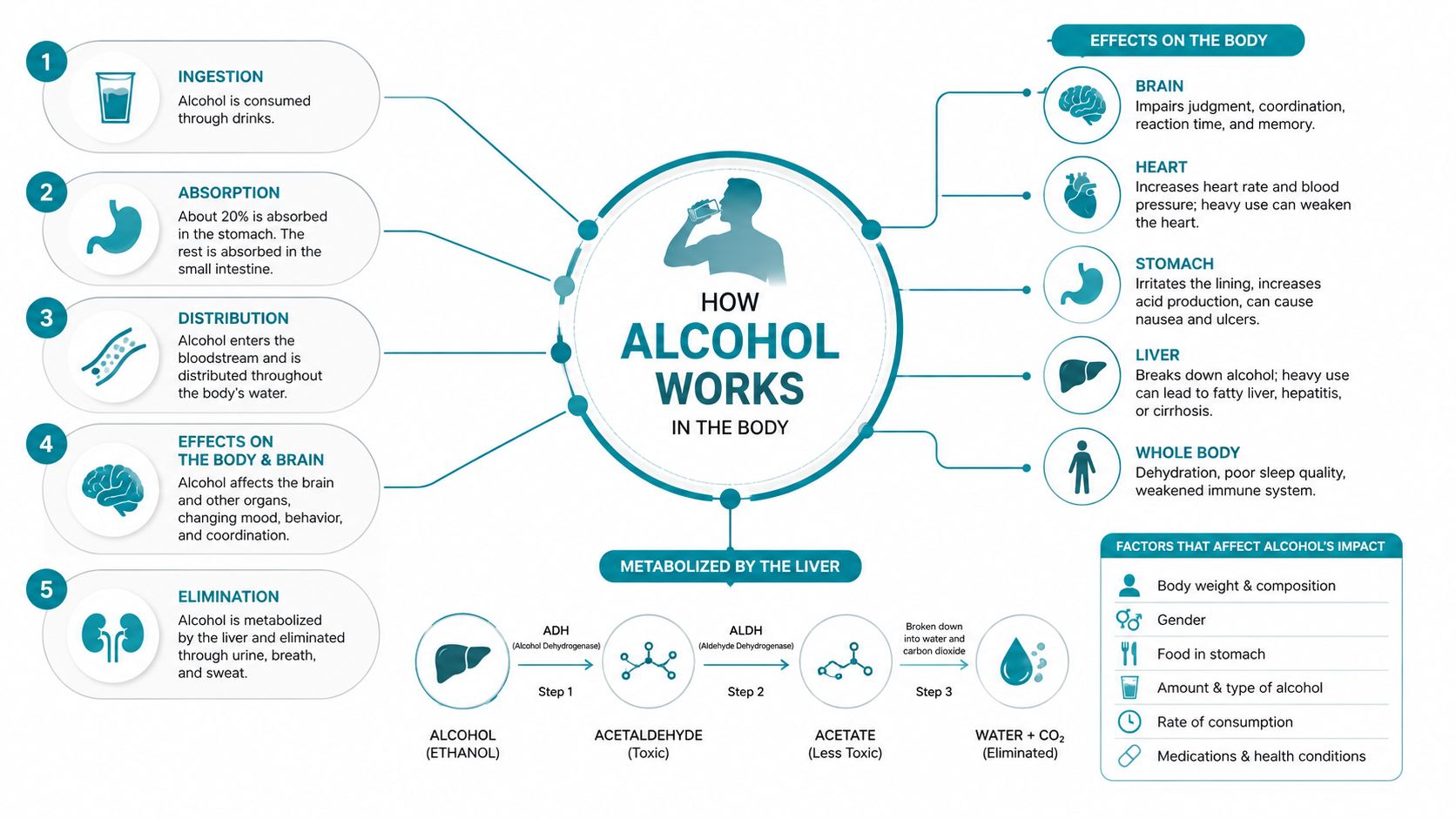
Alcohol in beverages is ethanol, a pharmacologic substance that acts on the nervous system. It crosses cell membranes quickly, including the blood-brain barrier and the placenta. That speed helps explain why alcohol can change coordination, judgment, mood, and alertness within a relatively short time.
Most absorption occurs through the stomach and small intestine. Food can slow absorption, while beverage concentration and carbonation can alter how quickly alcohol enters the bloodstream. Blood alcohol concentration, or BAC, describes the amount of alcohol in the blood and helps explain why the same number of beverages can affect people differently.
A helpful analogy is a general anesthetic. At a lower exposure, someone may feel relaxed or more talkative. As exposure rises, the same nervous-system depressant can impair balance, reaction time, memory, and breathing. The subjective feeling of being calm doesn't mean the brain is functioning normally.
The liver breaks ethanol down in stages. Alcohol dehydrogenase converts ethanol into acetaldehyde. Aldehyde dehydrogenase then converts acetaldehyde into acetate, which can enter normal energy pathways as acetyl-CoA. The liver's processing capacity is limited, so drinking more quickly can raise BAC faster than the body can clear alcohol.
A beverage isn't always one standard drink
For consistent screening, clinicians use the U.S. standard drink:
- 12 fluid ounces of regular beer at about 5% alcohol.
- 5 fluid ounces of wine at about 12% alcohol.
- 1.5 fluid ounces of distilled spirits at about 40% alcohol.
A large wine pour, strong beer, or mixed drink may contain more than one standard drink. Counting glasses alone can therefore underestimate exposure.
Adults seeking confidential medical evaluation can learn more about outpatient addiction medicine care and discuss whether their alcohol pattern merits screening or follow-up.
Short-Term and Long-Term Health Effects of Alcohol
Alcohol-related harm is easier to understand when separated by time. A single episode may create immediate safety risks. Repeated exposure can affect organs and disease risk. The effects may overlap, but they aren't identical.
Acute effects
In the short term, alcohol can slow reaction time, impair coordination, reduce judgment, and disrupt sleep. Drinking without adequate food may also contribute to low blood glucose in some people. Vomiting, falls, vehicle crashes, unsafe decisions, and other injuries become more likely as impairment increases.
A person may feel sleepy and assume alcohol helped them rest. Sedation is not the same as restorative sleep. Alcohol can shorten the time it takes to fall asleep while producing fragmented sleep later in the night.
Chronic effects
Repeated alcohol exposure can contribute to fatty liver disease, alcoholic hepatitis, and cirrhosis. It can also worsen blood pressure and contribute to atrial fibrillation, pancreatitis, and other cardiovascular or gastrointestinal problems. The WHO explains that alcohol contributes to cancer risk and to a broad range of other health conditions.
Cancer risk involves several sites, including the mouth, throat, esophagus, larynx, breast, and colorectum. The risk isn't determined only by beverage type. Clinicians generally focus on the total amount of ethanol and the person's other risk factors.
Cumulative effects
Over time, alcohol can affect immune function, cognition, peripheral nerves, and bone health. Some people develop memory or concentration problems, while others notice worsening sleep, mood, blood pressure, or medication side effects before an organ disease is identified.
The relationship between alcohol and mortality isn't a simple line separating “safe” from “unsafe.” In pooled prospective data involving current drinkers in high-income countries, the lowest all-cause mortality risk occurred at about 100 grams of alcohol per week, with risk rising above that level (The Lancet analysis30134-X/fulltext)). That finding supports a practical principle: lower exposure generally means lower long-term risk, but it doesn't establish a universally risk-free amount.
Clinical perspective: A low-risk pattern isn't the same as zero risk. The relevant question is whether the benefits, risks, consequences, and personal circumstances still support continuing the pattern.
Alcohol, Weight, Sleep, and Mental Health
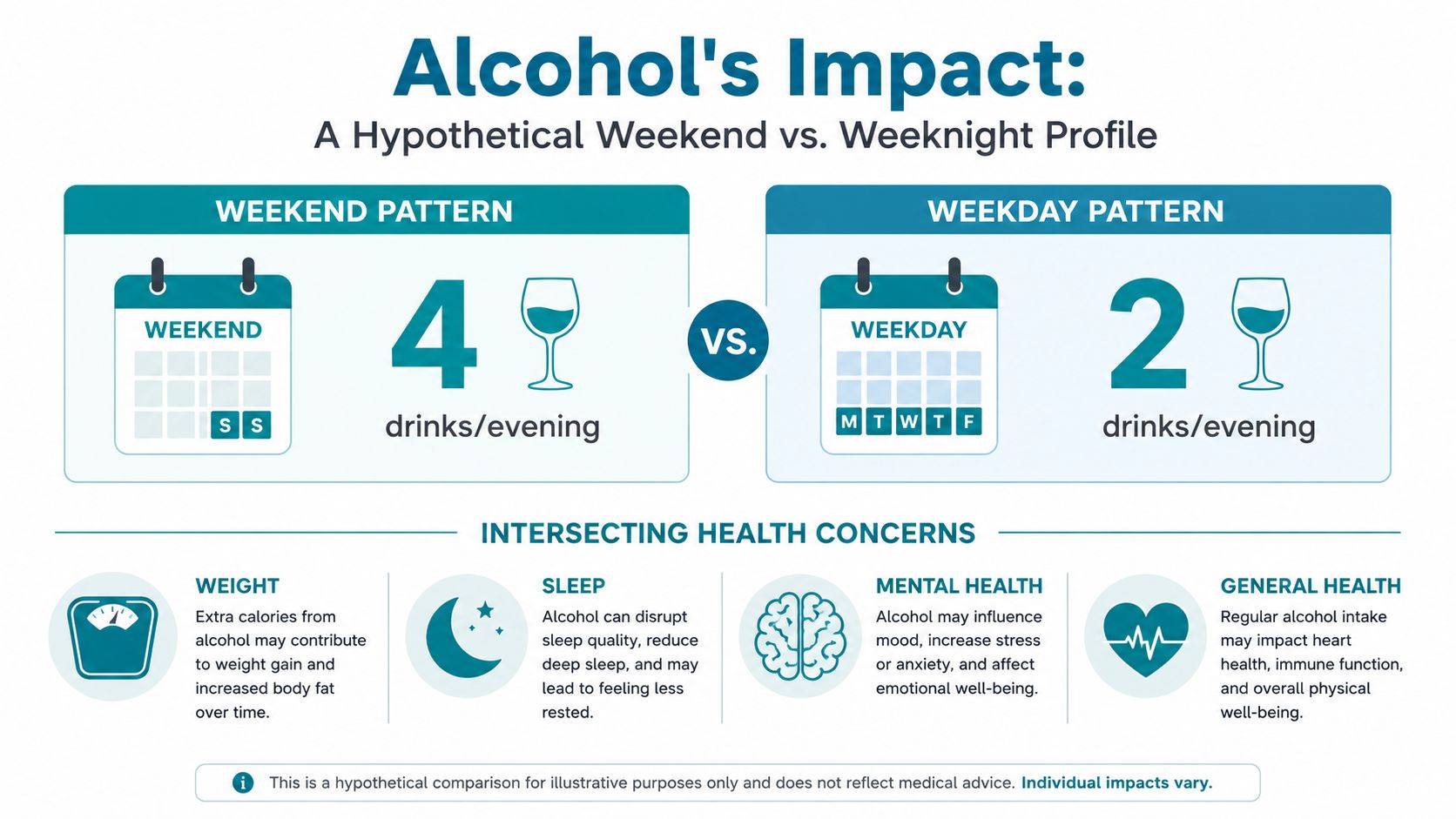
Alcohol can complicate health concerns that seem unrelated. Consider this clearly labeled hypothetical composite: an adult has four drinks on weekend evenings and two drinks on weekdays. The person doesn't describe the pattern as heavy because the drinking is social and spread across the week, yet sleep, mood, blood pressure, and weight have begun to change.
Alcohol supplies energy, and the body prioritizes metabolizing it. Those calories may replace some food, but they often add to total intake rather than producing a precise substitution. Alcohol can also lower inhibitions around late-night eating and make consistent nutrition harder.
Sleep creates another common misunderstanding. Alcohol may produce rapid sedation, but it can disturb normal sleep architecture, including restorative stages, and contribute to waking later in the night as the body metabolizes it. A person may fall asleep quickly and still wake unrefreshed.
The relationship with mood is bidirectional. Anxiety, depression, stress, or insomnia may increase the appeal of alcohol, while alcohol can worsen sleep and mood after drinking. A clinician should avoid assuming that alcohol is the only cause of fatigue, anxiety, weight change, high triglycerides, high blood pressure, or fasting glucose.
Practical questions to track
A short record can reveal patterns that memory misses:
- Timing: When do you drink, and how close is it to bedtime?
- Quantity: How many U.S. standard drinks does each serving contain?
- Consequences: Do you notice poor sleep, anxiety, low mood, overeating, reflux, or missed obligations?
- Health signals: Have blood pressure, triglycerides, glucose, liver markers, or weight changed?
- Medication context: Could alcohol interact with a prescription or over-the-counter medicine?
For readers looking for non-alcohol ways to create a bedtime routine, this resource on alternatives to a nightcap may provide practical ideas. Nutrition concerns can also be discussed through medical nutrition support, when clinically appropriate.
Recognizing Risky or Disordered Alcohol Use
A screening result is a prompt for closer review, not a diagnosis. It works like a smoke detector: an alert signals possible risk, while a clinician investigates the cause.
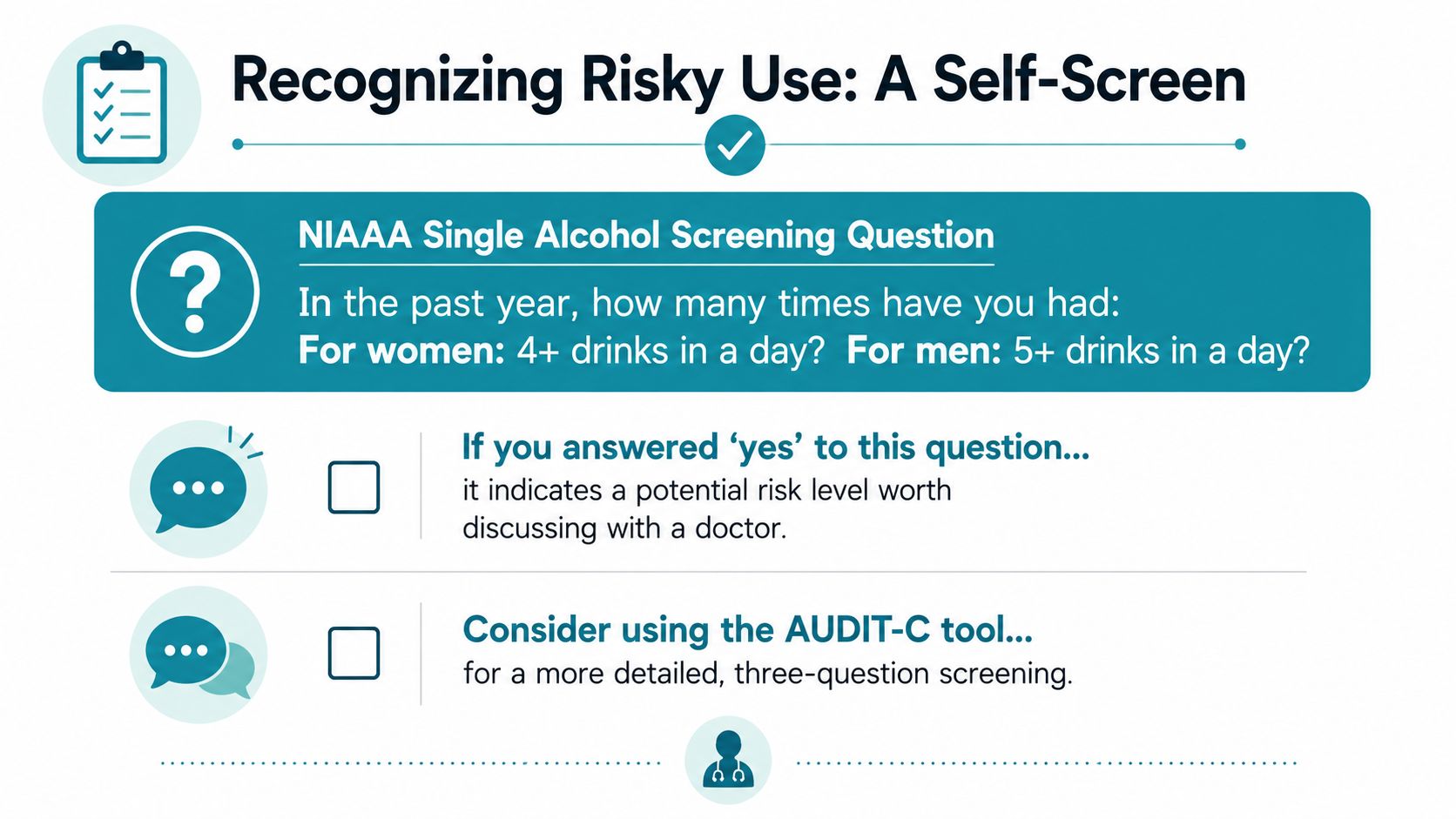
The NIAAA Single Alcohol Screening Question asks:
“How many times in the past year have you had 4 or more drinks in a day if female, or 5 or more if male?”
One or more occasions warrant follow-up. The question focuses on a concrete behavior instead of whether someone identifies as a “problem drinker.” NIAAA screening guidance also describes pairing it with the three-item AUDIT-C, which asks about drinking frequency, usual quantity, and heavy-drinking occasions.
What screening can and can't tell you
NIAAA defines heavy drinking as 4 or more drinks on any day or 8 or more drinks per week for women, and 5 or more drinks on any day or 15 or more drinks per week for men. Exceeding these limits indicates increased risk, but does not by itself establish alcohol use disorder.
Alcohol use disorder, or AUD, is a clinical diagnosis. Under DSM-5, at least 2 of 11 symptoms occur during the same 12-month period. These symptoms include impaired control, work or relationship problems, hazardous use, tolerance, and withdrawal (NIAAA DSM comparison).
Risky use can occur without AUD. A person can also meet diagnostic criteria without drinking every day or matching a stereotyped image of addiction. The pattern and its effects matter more than appearances.
Families may begin by spotting warning signs of substance abuse, such as secrecy, repeated consequences, or difficulty cutting down. Checklists can organize concerns, but they cannot replace medical evaluation. Adults seeking a private conversation can consult an addiction medicine specialist to interpret screening results and discuss appropriate outpatient options.
From Screening to Treatment What Outpatient Care Can Offer
A thoughtful evaluation follows a sequence. SAMHSA and NIAAA describe a workflow that begins with screening, moves to brief intervention and assessment, and then connects the person with appropriate treatment and monitoring. This approach is often called SBIRT, meaning Screening, Brief Intervention, and Referral to Treatment (SAMHSA SBIRT pocket guide).
What an evaluation may examine
A physician may ask about drinking frequency, standard-drink quantity, heavy-drinking days, cravings, attempts to cut down, withdrawal history, sleep, mood, blood pressure, liver concerns, and medication interactions. The review should also consider pregnancy, other substances, pain, trauma, depression, anxiety, and medical conditions without assuming that alcohol explains everything.
Laboratory testing can add context. GGT, MCV, ALT, AST, and carbohydrate-deficient transferrin may support an evaluation, but no single metabolic result diagnoses high-risk drinking. PEth and urine EtG reflect different exposure windows and have limitations. AST, ALT, triglycerides, glucose, weight, blood pressure, and sleep may reveal consequences or comorbidities, but they aren't substitutes for a careful history and validated screening.
Treatment goals should be shared rather than imposed. Depending on safety and clinical findings, a person may discuss abstinence, reduced drinking, medication, counseling or community support, and referral to a higher level of care.
Medication options
SAMHSA identifies four FDA-approved medications for alcohol use disorder: acamprosate, disulfiram, oral naltrexone, and extended-release injectable naltrexone (SAMHSA medication guide). Their roles differ. Naltrexone can reduce alcohol's reinforcing effects for appropriate patients, acamprosate supports maintenance of abstinence, and disulfiram creates an unpleasant reaction if alcohol is consumed.
Topiramate and gabapentin are sometimes discussed as off-label options, but “off-label” means the FDA hasn't approved that medication for that specific use. Medication choice depends on medical history, liver and kidney considerations, opioid exposure, pregnancy status, interactions, goals, and monitoring needs. It should be decided with a clinician, not through an online dosing plan.
Safety boundary: Outpatient care isn't the same as supervised detoxification. Severe withdrawal requires emergency or inpatient assessment.
| Red Flag or Cue | Why It Matters | Recommended Setting |
|---|---|---|
| Visual hallucinations | May indicate severe withdrawal or delirium | Emergency department evaluation |
| Seizure | Can be life-threatening and may recur | Call 911 or seek emergency care |
| Severe tremor with sweating, racing heart, or high blood pressure | Suggests significant autonomic activation | Same-day emergency evaluation |
| Persistent confusion | May reflect delirium or another acute medical problem | Emergency department or inpatient care |
For general information about assessments in another setting, readers may consult this Florida 2026 evaluation guide, but it shouldn't be used to determine medical safety. Empire Medical Wellness offers physician-led outpatient addiction medicine evaluation, monitoring, recovery planning, and coordination with outside programs when appropriate. Inpatient detox, residential care, and 24-hour withdrawal monitoring fall outside that outpatient scope. Information about naltrexone treatment can support questions for a qualified physician.
Emergency Red Flags and When to Seek Immediate Help
Alcohol overdose is an emergency. Call 911 or go to an emergency department if someone can't stay awake, loses consciousness, has slow or irregular breathing, vomits while unresponsive, feels unusually cold, or has bluish or cold skin. Don't assume an unconscious person can sleep it off.
Severe withdrawal can also become life-threatening, especially after regular heavy use. New confusion, visual or tactile hallucinations, seizures, severe tremor with sweating and a racing heart, very high blood pressure, or persistent vomiting with inability to hydrate require same-day emergency evaluation.
| Red Flag | Likely Cause | Immediate Action |
|---|---|---|
| Slow or irregular breathing, inability to wake | Possible overdose | Call 911 |
| Vomiting while unresponsive | Aspiration risk during overdose | Call 911 and stay with the person |
| Seizure or new confusion | Severe withdrawal or another emergency | Call 911 |
| Hallucinations with marked agitation or tremor | Severe withdrawal | Emergency department evaluation |
| Persistent vomiting and inability to drink fluids | Dehydration or serious withdrawal | Same-day emergency care |
Don't drive yourself if you're impaired or experiencing severe symptoms. If alcohol use occurs with suicidal thoughts, call or text 988 in the United States, contact local emergency services, or go to the nearest emergency department. A person in immediate danger shouldn't be left alone.
A confidential outpatient evaluation may include a structured history, the Single Alcohol Screening Question, AUDIT-C, laboratory review, medication assessment, and shared decision-making about options such as naltrexone, acamprosate, or referral. Empire's verified role is physician-led outpatient care, not inpatient detoxification or continuous monitoring. The practice's alcohol withdrawal guidance can help readers understand why withdrawal symptoms deserve careful attention.
Frequently Asked Questions and Next Steps
What counts as a U.S. standard drink?
One standard drink is 12 ounces of regular beer, 5 ounces of wine, or 1.5 ounces of distilled spirits. A large pour or stronger beverage may contain more than one standard drink, so serving size and alcohol concentration both matter.
Can I cut back safely on my own?
That depends on your pattern and withdrawal history. NIAAA limits identify drinking levels associated with increased risk, but they don't guarantee safety for a particular person. If you drink heavily, drink daily, have had withdrawal symptoms, or have experienced seizures or confusion, speak with a clinician before attempting a major reduction. Don't use this article as a self-detox protocol.
Which medications can interact with alcohol?
Alcohol may interact with benzodiazepines, opioids, sleep aids, acetaminophen, metronidazole, warfarin, and some antidepressants. The effect can involve sedation, impaired breathing, bleeding, liver injury, altered drug levels, or worsened mood. Ask a pharmacist or physician about your complete medication list.
What should I bring to a first outpatient visit?
Bring a brief drinking log, medication and supplement list, prior laboratory results, relevant medical conditions, questions about naltrexone or acamprosate, and any history of withdrawal. Include changes in sleep, mood, blood pressure, weight, or work and relationship functioning.
Pregnancy, liver disease, older age, opioid use, and complex medication regimens require individualized guidance. SAMHSA's National Helpline is 1-800-662-HELP, and NIAAA's Rethinking Drinking program offers educational tools for people considering a change.
Schedule a confidential appointment with Empire Medical Wellness's outpatient, physician-led addiction medicine service if you want medical assessment, monitoring, recovery planning, or coordination with outside treatment. This article is educational and doesn't replace personal medical advice from a qualified clinician.
Empire Medical Wellness provides physician-led outpatient addiction medicine evaluation and ongoing monitoring for adults seeking confidential care related to alcohol use. Visit Empire Medical Wellness to learn about the practice and request an appointment.