
You may be looking at a Zepbound pen and wondering whether 2.5 mg is your long-term dose, when an increase should happen, or what to do after a missed injection. The FDA-labeled Zepbound schedule starts low and increases gradually, but the right maintenance dose depends on response, tolerability, medical history, and your prescriber's assessment. Only the prescribing clinician should change your treatment.
Zepbound is the brand name for tirzepatide, a medication that activates GLP-1 and GIP receptors. It's FDA-approved for chronic weight management alongside a reduced-calorie diet and increased physical activity. This guide translates the current label into practical questions to discuss during physician-led obesity care.
Table of Contents
- What the Labeled Zepbound Dose Schedule Looks Like
- The 2.5 mg Starting Dose and Available Pen Strengths
- How Titration Reaches a Maintenance Dose
- Why Maintenance Dose Choice Is Individualized
- How to Use the Pen Correctly Each Week
- Safety and Candidate Screening Before Each Step
- What a Dose Adjustment Decision Can Look Like
- Missed Doses, Red Flags, and When to Call
What the Labeled Zepbound Dose Schedule Looks Like
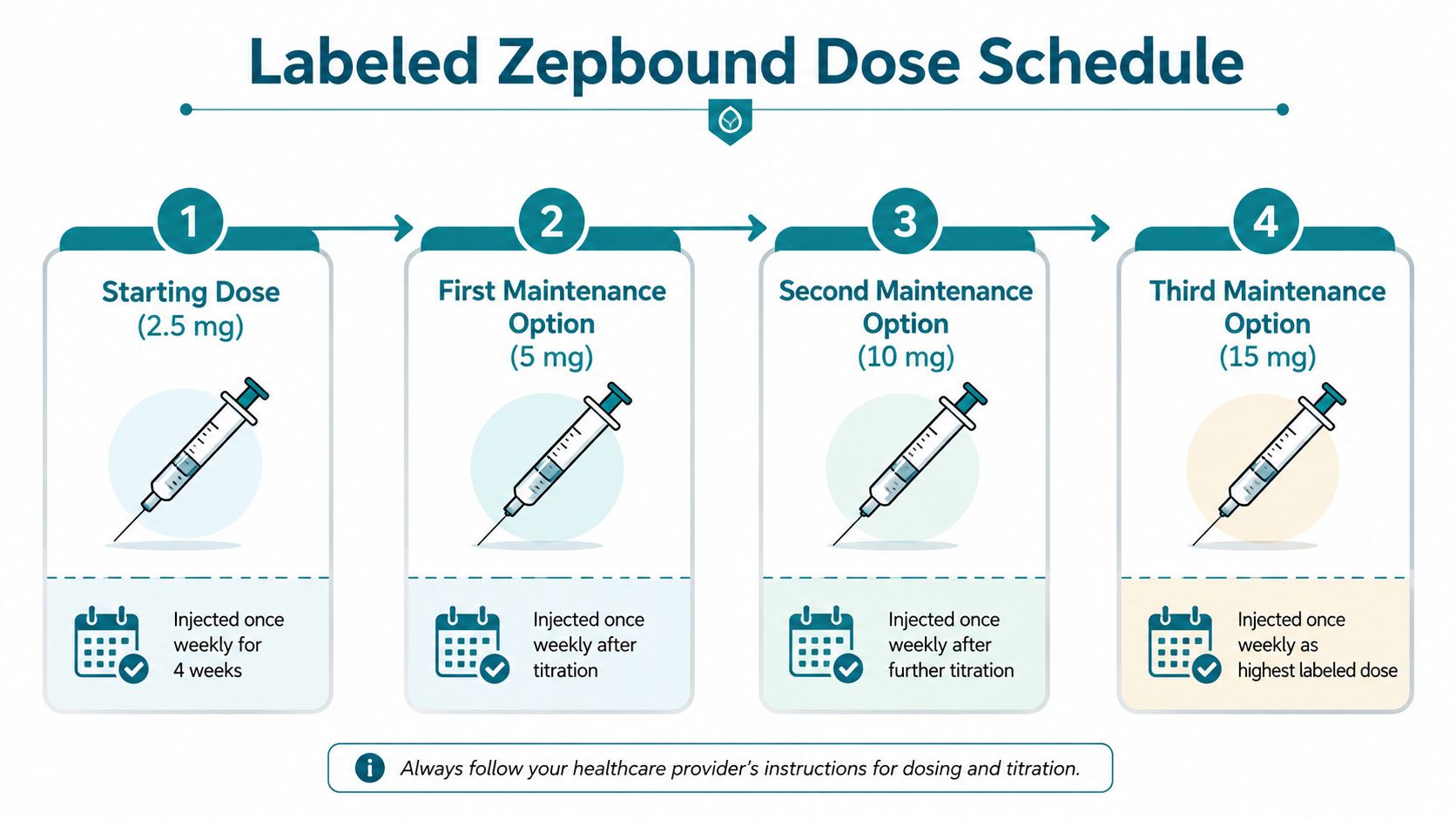
The current FDA prescribing information sets the starting dose at 2.5 mg once weekly. The labeled maintenance options for weight reduction and long-term weight management are 5 mg, 10 mg, or 15 mg once weekly, with 15 mg once weekly as the maximum approved dose.
The schedule works in stages. During initiation, the patient uses 2.5 mg once weekly for 4 weeks. If the prescriber decides an increase is appropriate, titration proceeds in 2.5 mg steps, with at least 4 weeks between increases. This spacing gives the clinician time to assess tolerance before changing the dose.
The label states that 2.5 mg is for treatment initiation and isn't intended as a maintenance dose. It is the on-ramp, not the long-term destination. A patient should not treat the first pen strength as a permanent target or change the schedule independently.
Dose selection depends on more than scale readings. The prescriber may review appetite, weight trajectory, nausea, vomiting, diarrhea, hydration, other medications, and relevant medical conditions. A plateau does not automatically mean the dose should rise, and reaching 15 mg is not required for everyone. The appropriate dose is the one the prescriber determines is suitable and tolerated.
For a plain-language overview, compare the Zepbound treatment information from Empire Medical Wellness with the FDA label and your clinician's instructions. As practical questions arise, ask the prescriber about missed injections, plateaus, oral contraception timing, or symptoms that need prompt medical attention.
The 2.5 mg Starting Dose and Available Pen Strengths
The 2.5 mg dose is an initiation dose, not a maintenance dose. The FDA labeling uses it to help patients acclimate to tirzepatide before moving to a dose intended for ongoing weight management. A prescriber may still assess whether symptoms, medication interactions, or other clinical concerns require a slower or different plan.
Lilly's prescribing information lists six Zepbound pen strengths: 2.5 mg, 5 mg, 7.5 mg, 10 mg, 12.5 mg, and 15 mg. The single-dose pen is supplied as a fixed-strength device. Patients shouldn't try to create a different dose by partially using a pen, combining devices, or changing the injection schedule.
Zepbound Single-Dose Pen Strengths
| Pen strength | Role on label | Typical duration |
|---|---|---|
| 2.5 mg | Initiation dose | First 4 weeks |
| 5 mg | Labeled maintenance option | Duration determined by prescriber |
| 7.5 mg | Titration strength | Used during stepwise escalation |
| 10 mg | Labeled maintenance option | Duration determined by prescriber |
| 12.5 mg | Titration strength | Used during stepwise escalation |
| 15 mg | Labeled maintenance option and maximum dose | Duration determined by prescriber |
Pen colors, cartons, and labels can help confirm that the dispensed product matches the prescription, but packaging should never determine a dose decision. Check the medication name and strength before every injection, especially if more than one strength is present at home. Product presentations and availability can change, so follow the device and instructions supplied with your prescription.
For broader background on tirzepatide and related medications, see Empire's GLP-1 medication information. It doesn't replace the product-specific FDA instructions for Zepbound.
How Titration Reaches a Maintenance Dose
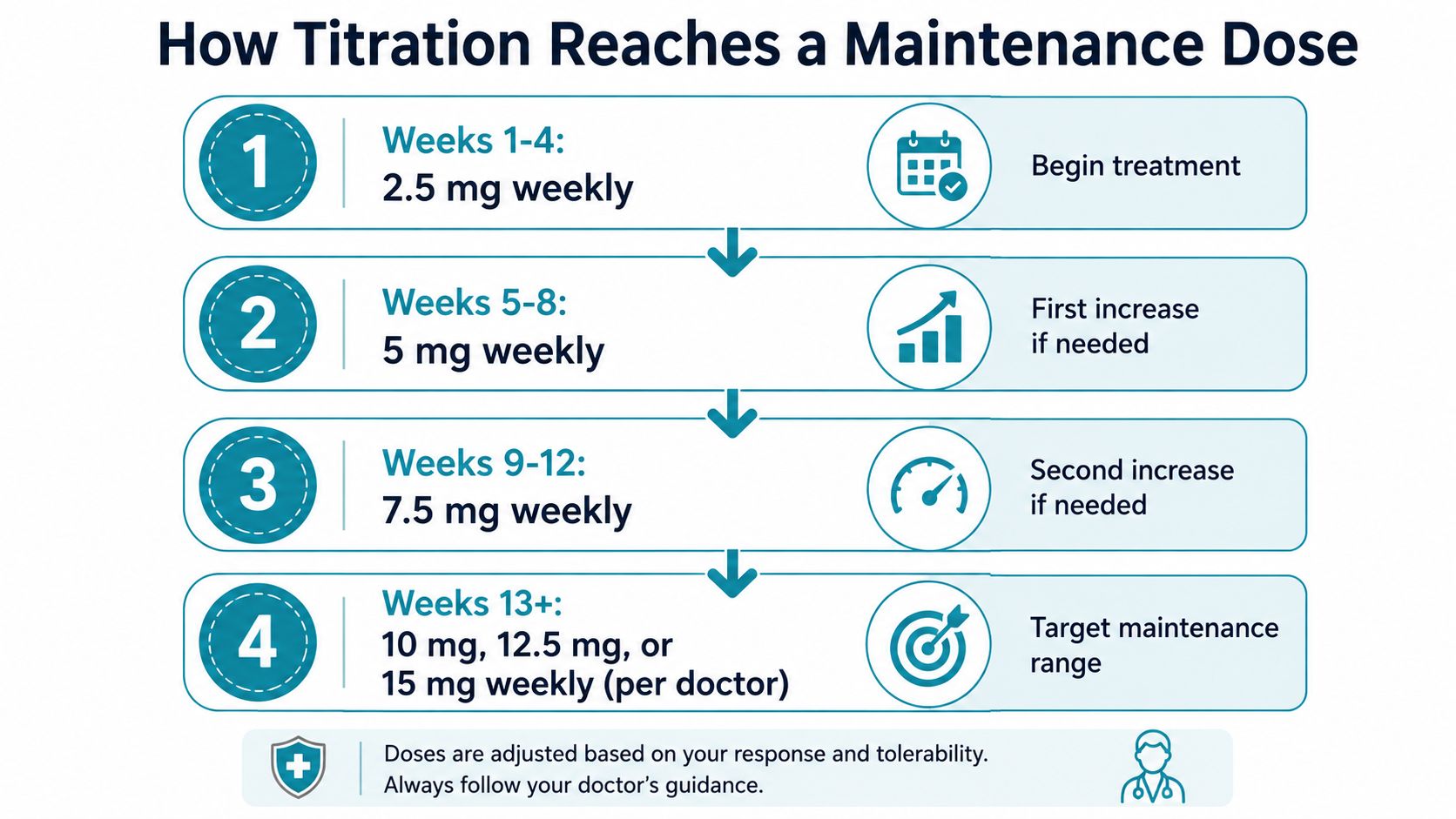
A typical label-based pathway begins with 2.5 mg once weekly for 4 weeks. The next labeled step is 5 mg once weekly, followed by possible increases of 2.5 mg only after at least 4 weeks on the current dose. The prescriber may decide that an increase isn't appropriate if the current dose is working adequately or causing troublesome symptoms.
For someone who tolerates each step, the sequence can include 7.5 mg, 10 mg, 12.5 mg, and 15 mg. That sequence describes available strengths and the minimum interval between increases. It doesn't mean every patient should complete every step.
A Label-Based Timeline
| Treatment period | Possible weekly dose | Meaning |
|---|---|---|
| First 4 weeks | 2.5 mg | Initiation |
| Next 4 weeks | 5 mg | First labeled maintenance option |
| Later steps | 7.5 mg, then 10 mg | Further titration if clinically appropriate |
| Later steps | 12.5 mg, then 15 mg | Additional titration, with 15 mg as the maximum |
The label defines 5 mg, 10 mg, and 15 mg as maintenance choices for weight reduction and long-term maintenance. The 7.5 mg and 12.5 mg strengths can serve as intermediate steps, but they aren't listed as the recommended maintenance doses for weight reduction in the prescribing information.
Practical rule: A maintenance dose is the labeled dose a patient can tolerate and continue under prescriber supervision. It isn't necessarily the highest dose available.
A treatment plan may slow, pause, or stop escalation. The relevant questions include whether the patient is benefiting, whether side effects are manageable, whether the medication can be taken consistently, and whether other health conditions or therapies change the risk picture. The Mounjaro dosage information is a separate educational resource, but Mounjaro and Zepbound have different FDA-approved indications. Mounjaro is the tirzepatide brand used for type 2 diabetes, while Zepbound is used for its approved weight-management indications.
Why Maintenance Dose Choice Is Individualized
Clinical trial results show why prescribers discuss several maintenance options instead of assigning one dose to every patient. In the SURMOUNT-1 data, average weight loss at 72 weeks increased across the studied maintenance doses.
| Maintenance dose | Average weight loss at 72 weeks | Clinical note |
|---|---|---|
| 5 mg | 15.0% | Lowest studied maintenance dose in this comparison |
| 10 mg | 19.5% | Higher average reduction than 5 mg |
| 15 mg | 20.9% | Highest average reduction in the comparison |
| Placebo | 3.1% | Comparator group |
The difference between 5 mg and 15 mg was 5.9 percentage points of body-weight loss in that trial comparison. At 15 mg, 90.9% of participants achieved at least 5% weight loss, while 57% achieved at least 20% weight loss, according to the dose-stratified summary.
These trial averages do not guarantee individual outcomes. A patient's response, side effects, and goals determine the appropriate maintenance dose. Someone who has a meaningful appetite or weight-management response at 5 mg may have no clinical reason to increase it. A plateau, persistent hunger, or a change in treatment goals may lead another patient to discuss escalation with the prescriber.
Factors That Shape the Conversation
A clinician may weigh:
- Response over time: Is the treatment supporting the agreed-upon goal?
- Tolerability: Are nausea, vomiting, diarrhea, constipation, or reduced intake interfering with daily life?
- Adherence: Is the prescribed weekly schedule being followed consistently?
- Medical context: Do diabetes therapies, reflux symptoms, delayed stomach emptying, kidney concerns, or gallbladder history affect the risk assessment?
- Long-term fit: Can the patient remain on the dose while maintaining hydration, nutrition, and follow-up?
A plateau does not automatically call for a higher dose. The prescriber may review how long the patient has used the current dose, whether injections have been taken as directed, and whether side effects or another condition could explain the change.
The goal is a sustainable labeled maintenance option that fits the patient's response and safety profile, chosen through shared decision-making with the prescribing clinician.
How to Use the Pen Correctly Each Week
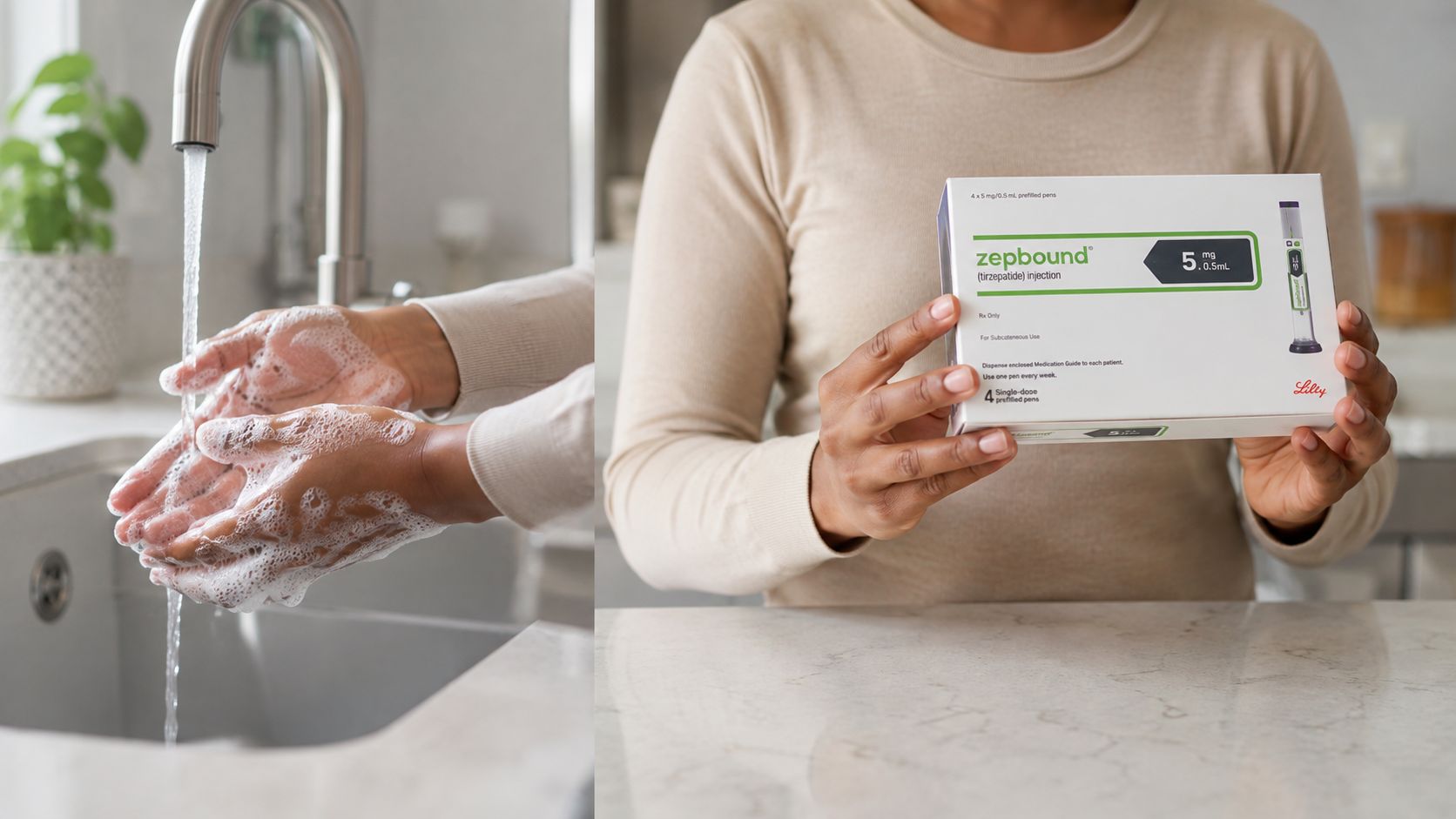
Medication errors often begin with a simple mismatch between the prescription and the device in hand. Before using Zepbound, confirm the word Zepbound, the prescribed strength, the weekly injection day, and the expiration date. The FDA Instructions for Use also directs patients to inspect the solution and follow the device-specific injection process.
A Medication-Use Checklist
- Confirm the product: Read the label instead of relying on memory, carton color, or the appearance of the pen.
- Check the solution: The label describes a clear to slightly opalescent, colorless to slightly yellow solution. Don't use a device if the solution appears abnormal or contains particles.
- Prepare safely: Wash your hands and use the device exactly as described in the supplied Instructions for Use.
- Choose an approved site: Zepbound is injected under the skin of the abdomen, thigh, or upper arm. Another person may administer an upper-arm injection when appropriate.
- Rotate locations: Change the precise injection site to reduce repeated irritation. Avoid tender, bruised, scarred, or hardened skin.
- Follow the device instructions: Don't try to measure a pen dose from memory or alter the device. Fixed-dose devices and other presentations may have different steps.
- Store and dispose correctly: Keep unused pens refrigerated according to the label. Dispose of used devices in an FDA-cleared sharps container or as directed by the product instructions.
Zepbound is taken once weekly, but the exact day and any change to that day should follow the prescribing information. If you're unsure whether an injection was complete, don't automatically repeat it. Contact the prescriber or pharmacist for product-specific guidance. The FDA-approved information about Ozempic covers a different medication and shouldn't be used as a substitute for Zepbound's Instructions for Use.
Safety and Candidate Screening Before Each Step
A dose increase is a clinical checkpoint, not just a calendar event. Before prescribing Zepbound, and again during follow-up, the clinician reviews the patient's medical history, current medications, treatment goals, and symptoms.
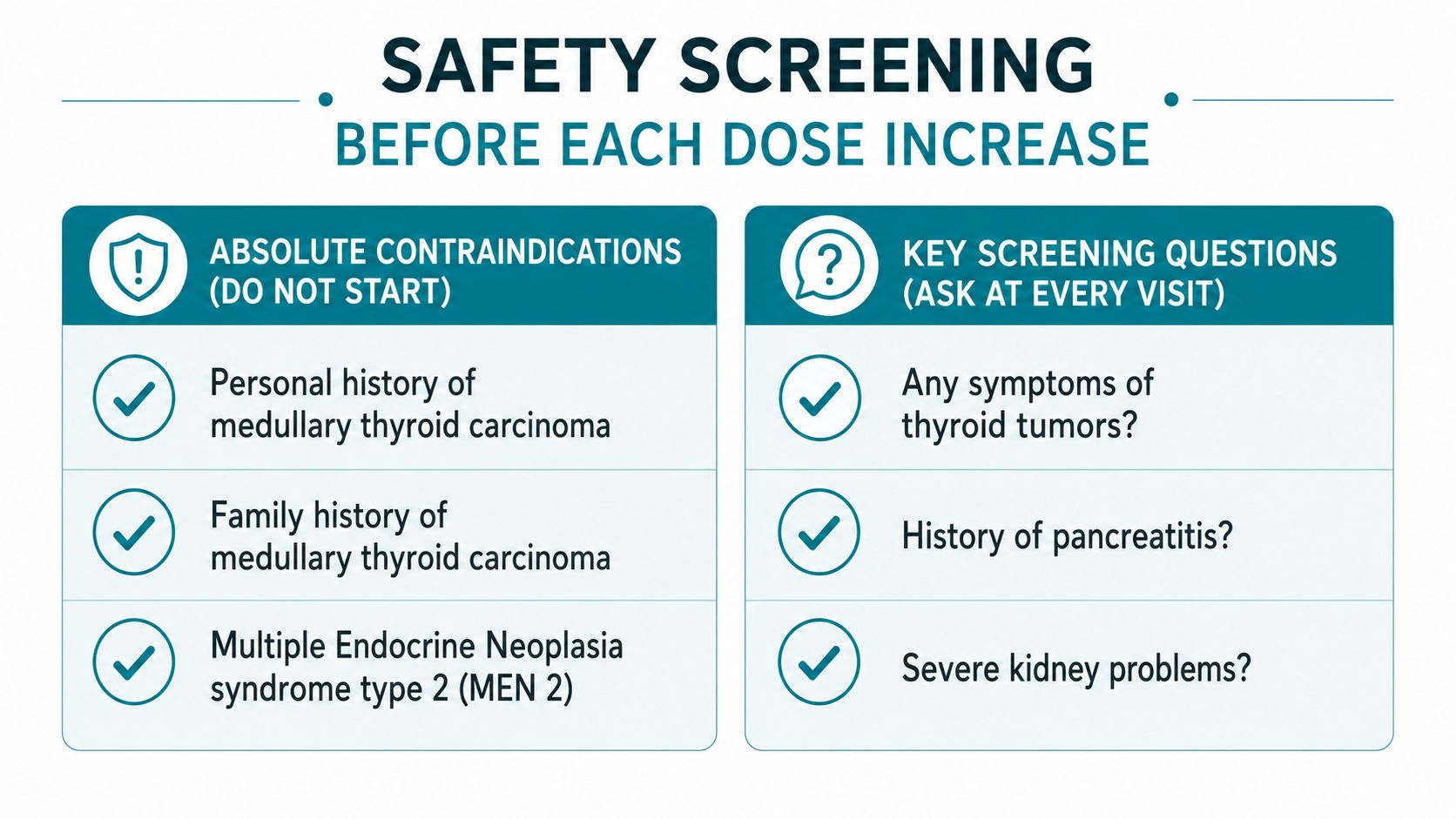
The FDA labeling contraindicates Zepbound in people with a personal or family history of medullary thyroid carcinoma or Multiple Endocrine Neoplasia syndrome type 2, also called MEN2. Pregnancy is another critical safety issue. Patients who are pregnant, planning pregnancy, or who might be pregnant should discuss this promptly with the prescriber.
Candidate and Safety Checklist
- Medical history: Discuss pancreatitis, gallbladder disease, severe gastrointestinal symptoms, gastroparesis, diabetic retinopathy, and kidney disease.
- Medication review: Insulin and sulfonylureas can raise the concern for low blood sugar when combined with tirzepatide, so the full diabetes regimen matters.
- Pregnancy planning: Ask the prescriber about pregnancy before treatment. The labeling advises discontinuing Zepbound at least 2 months before a planned pregnancy because tirzepatide remains in the body for an extended period. This timing requires clinician guidance.
- Procedures and anesthesia: Tell the prescribing team about upcoming surgery or procedures requiring anesthesia or deep sedation.
- Current symptoms: Report persistent vomiting, diarrhea, severe abdominal pain, inability to maintain fluids, or symptoms that began after a dose change.
- Baseline and follow-up information: Clinicians may track weight, blood pressure, heart rate, diabetes measures when relevant, and a side-effect baseline.
Oral hormonal contraceptives require a separate conversation. The FDA label warns that tirzepatide may reduce the effectiveness of oral hormonal contraceptives after starting treatment and after dose increases, so patients should ask the prescriber about non-oral contraception or backup contraception during the label-specified period. Don't make contraceptive changes without professional guidance.
The Zepbound side-effects resource can help organize questions, but urgent symptoms should be addressed directly with a clinician.
What a Dose Adjustment Decision Can Look Like
Hypothetical example, not a real patient: A patient has reached 7.5 mg and develops persistent nausea with vomiting and markedly reduced oral intake before the next planned increase. The prescriber doesn't treat the calendar as an automatic instruction to move to 10 mg.
Instead, the clinician reassesses symptom severity, hydration, food and fluid intake, other medications, and possible causes unrelated to Zepbound. The clinician may delay escalation, repeat the current dose, or select a lower labeled maintenance dose such as 5 mg when clinically appropriate. The exact decision depends on the complete assessment and the current FDA label.
A plateau and a side-effect problem are different clinical questions. Both deserve review before a dose changes.
The patient shouldn't skip ahead, split a pen, take an extra injection, or change the weekly day independently. Even if a previous dose felt manageable, a new symptom can change the risk assessment. Persistent vomiting or poor intake can create dehydration concerns, and severe symptoms may require prompt medical attention rather than a routine dosing discussion.
A prescriber may also consider whether the medication is being used consistently, whether meals and fluids are adequate, whether another medicine is contributing to symptoms, and whether the current treatment goal has changed. The label permits stepwise increases only after at least 4 weeks on the current dose, but the minimum interval doesn't require an increase.
This is why a thoughtful Zepbound dose plan isn't a race to 15 mg. It's a monitored process that balances response, safety, tolerability, and long-term adherence.
Missed Doses, Red Flags, and When to Call
The FDA-labeled missed-dose rule is specific. If a missed Zepbound dose can be taken within 72 hours of the scheduled time, the patient should follow the product instructions. If more than 72 hours have passed, the missed dose should be skipped and the next dose taken on the regular schedule. Never take two doses together.
Patients should contact the prescriber rather than guessing when the timing is unclear, when an injection may have been incomplete, or when another dose was taken too soon. The team can review the exact product, timing, symptoms, and other medicines.
Call the Prescriber Promptly About
- Missed-dose uncertainty: The dose is outside the label's 72-hour window, or you're unsure whether you injected it.
- Persistent gastrointestinal symptoms: Ongoing vomiting or diarrhea, inability to maintain fluids, or signs of dehydration.
- Severe abdominal pain: Especially persistent pain that could signal pancreatitis.
- Possible gallbladder symptoms: Right upper-quadrant abdominal pain, fever, or yellowing of the skin or eyes.
- Pregnancy concerns: A positive pregnancy test, possible pregnancy, or plans to become pregnant.
- Upcoming anesthesia: Surgery or a procedure requiring anesthesia or deep sedation.
- Low blood sugar symptoms: Shaking, sweating, confusion, weakness, or other concerning symptoms when Zepbound is used with insulin or a sulfonylurea.
Seek emergency care for trouble breathing, facial or throat swelling, fainting, severe weakness, or other signs of a serious allergic reaction. For severe abdominal symptoms, repeated vomiting, confusion, or inability to keep fluids down, don't wait for a routine appointment.
Empire Medical Wellness provides physician-led obesity medicine that may include medical and metabolic assessment, medication review, individualized weight-management planning, and ongoing monitoring when treatment is clinically appropriate. Visit Empire Medical Wellness to learn about the practice and discuss whether a physician consultation fits your needs.
Empire Medical Wellness Editorial Team. Published August 28, 2026. Updated August 28, 2026.
Sources
- FDA Zepbound prescribing information
- FDA Zepbound labeling
- Lilly Zepbound dosage information for healthcare professionals
- SURMOUNT-1 dose-stratified results
This article is educational and isn't personal medical advice. Do not start, stop, or change Zepbound without speaking with your prescribing clinician.