
Alcohol withdrawal is a rebound hyperexcitable state after the brain has adapted to alcohol, and symptoms often start within 6 to 12 hours after the last drink. Seizures, hallucinations, severe confusion, chest pain, or unstable vital signs need emergency care, and high-risk people should not try to manage withdrawal alone.
If you're reading this because you're worried about what happens next, you're not overreacting. Alcohol withdrawal can move from uncomfortable to dangerous quickly, especially when there's a history of severe symptoms or other medical problems. This guide is for adults looking for confidential, physician-led care, and it's written to help you understand the timeline, the warning signs, and what a careful outpatient evaluation usually looks like.
Table of Contents
- What Alcohol Withdrawal Is and When to Seek Care Immediately
- Why Withdrawal Happens in the Brain and Body
- Alcohol Withdrawal Timeline and Severity Levels
- Risk Factors That Make Withdrawal More Complicated
- Red Flags That Need Emergency Care Right Now
- What to Expect From Outpatient Medical Evaluation and Follow Up
- Safety Planning and Next Steps for Confidential Care
What Alcohol Withdrawal Is and When to Seek Care Immediately
A person who has been drinking regularly may feel fine at first, then start to shake, sweat, or feel anxious after stopping. That change can be alcohol withdrawal. The brain and body have adapted to alcohol's calming effect, so when alcohol is removed, the nervous system can rebound into overactivity. That is why symptoms can begin early and then worsen over the next few days (peer-reviewed review).
Alcohol withdrawal can affect more than comfort. Early symptoms often include anxiety, insomnia, headache, nausea, sweating, tremor, and irritability. Some people have milder symptoms that stay manageable. Others develop confusion, hallucinations, or seizures, which need urgent care. A CIWA-Ar score is a clinician tool used during medical assessment. It is not a self-detox score, and it should not be used to decide safety without a clinician's review.
Severity and level of care depend on the full picture. A physician-led evaluation looks at the current symptom pattern, prior withdrawal episodes, other drugs or medications, mental health, hydration, and whether the person has reliable support at home. Those factors help determine whether outpatient care is reasonable or whether a higher level of care is safer. If you want help with confidential outpatient evaluation, addiction medicine services can be part of that process.
The table below gives a practical way to think about withdrawal intensity:
Mild: shakiness, anxiety, poor sleep, nausea.
Moderate: worse tremor, sweating, fast pulse, agitation, higher care needs.
Severe: confusion, hallucinations, seizures, unstable vital signs, emergency care.
If symptoms are getting worse instead of easing, get medical review promptly. That pattern deserves attention even when the person can still talk and walk.
Why Withdrawal Happens in the Brain and Body
Think of alcohol as something the brain has been using to keep the system balanced. Over time, the brain adapts. The “brake” side of the nervous system, driven partly by GABA, becomes less responsive, while the “gas” side, driven partly by NMDA, becomes more active. When alcohol suddenly disappears, the brake is weaker and the gas is stronger, so the nervous system runs hot.
Plain definitions that help
Dependence means the body has adapted to alcohol's presence. Tolerance means the same amount of alcohol has less effect than it used to. Hyperexcitability means the nervous system is overstimulated, which can show up as shaking, anxiety, sweating, fast heart rate, or more severe neurologic symptoms.
That explains why alcohol withdrawal is different from a hangover. A hangover is a short-term after-effect of drinking. Withdrawal is a physiologic response to alcohol stopping after dependence has developed. The difference matters because withdrawal can become medically urgent, while a hangover usually doesn't.
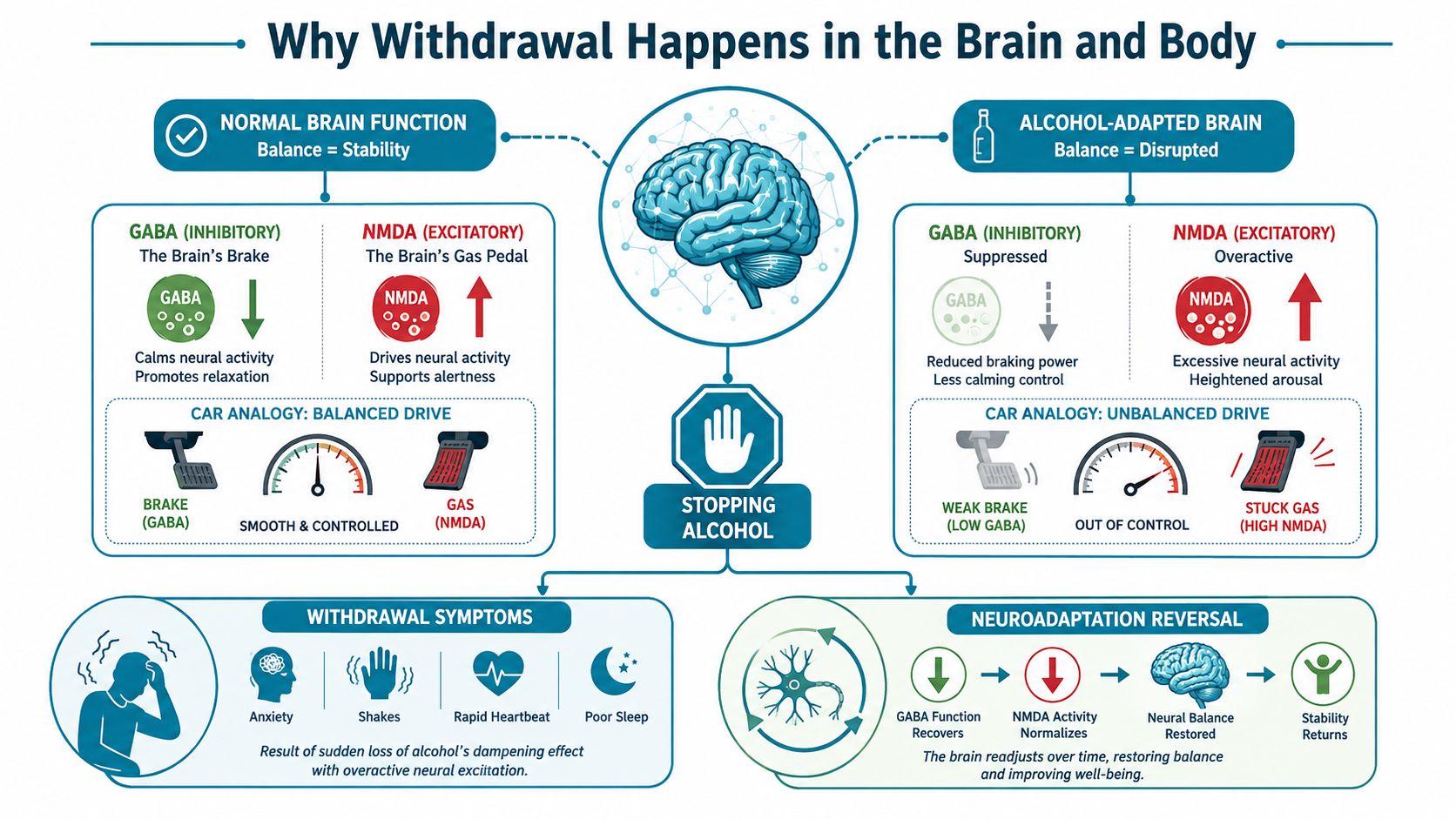
The intensity of withdrawal varies. The amount and duration of drinking matter, but they're not the only factors. Prior withdrawal episodes, other health conditions, pregnancy, and use of other sedating or stimulating substances can all change the clinical picture. That's why no one should try to predict their own risk from symptoms alone.
The safest assumption is simple. If you've had severe withdrawal before, you need clinician input before you stop drinking again.
For people also exploring medication support for alcohol use disorder, the practice's naltrexone information can be useful once the acute withdrawal question has been addressed.
Alcohol Withdrawal Timeline and Severity Levels
A person may feel fine at first, then notice shaking, sweating, or anxiety after the last drink. Alcohol withdrawal often follows that kind of delayed pattern. Symptoms commonly start within hours, become more intense over the next day or two, and then ease more slowly. Sleep, mood, and concentration can stay off even after the worst physical symptoms settle.
Alcohol Withdrawal Timeline and Severity Overview
| Time Since Last Drink | Common Symptoms | Severity and Monitoring Notes |
|---|---|---|
| About 6 to 12 hours | Anxiety, insomnia, headache, nausea, sweating, tremor, irritability | Early withdrawal may look mild, but it can still change quickly. |
| About 12 to 48 hours | Worsening tremor, agitation, autonomic symptoms, possible seizures | This is a higher-risk window. Clinician monitoring matters. |
| About 48 to 72 hours | Peak symptoms, possible hallucinations, confusion, delirium tremens | This is the classic window for the most dangerous complications. |
| First week and beyond | Gradual improvement, but sleep and emotional symptoms may persist | Follow-up can matter if symptoms do not settle. |
The serious end of withdrawal is less common, but clinicians watch for it closely. Delirium tremens is a severe form of withdrawal with confusion, severe agitation, and unstable vital signs. A StatPearls review describes it as uncommon but dangerous, and it can become life-threatening without treatment. The same review notes that severe withdrawal does not follow a single predictable pattern, so a symptom timeline helps, but it does not replace bedside assessment.
Severity is not just a number. A person can have moderate symptoms and still need urgent care if they are getting worse, cannot keep fluids down, or do not have a safe place to be watched.
That is why CIWA-Ar is a clinician tool, not a self-detox score. It helps trained staff measure withdrawal symptoms and guide treatment choices. It does not tell someone on its own whether home detox is safe. It also cannot account for the full picture, such as other medical problems, confusion, or lack of support at home. For a clinician-oriented look at taper discussions, the Maverick Behavioral Health withdrawal guide is useful background, but it is education, not a do-it-yourself plan.
A few symptoms can overlap with anxiety. If that is part of the picture, the practice's anxiety medication information may help separate routine anxiety from withdrawal symptoms that need medical attention.
Risk Factors That Make Withdrawal More Complicated
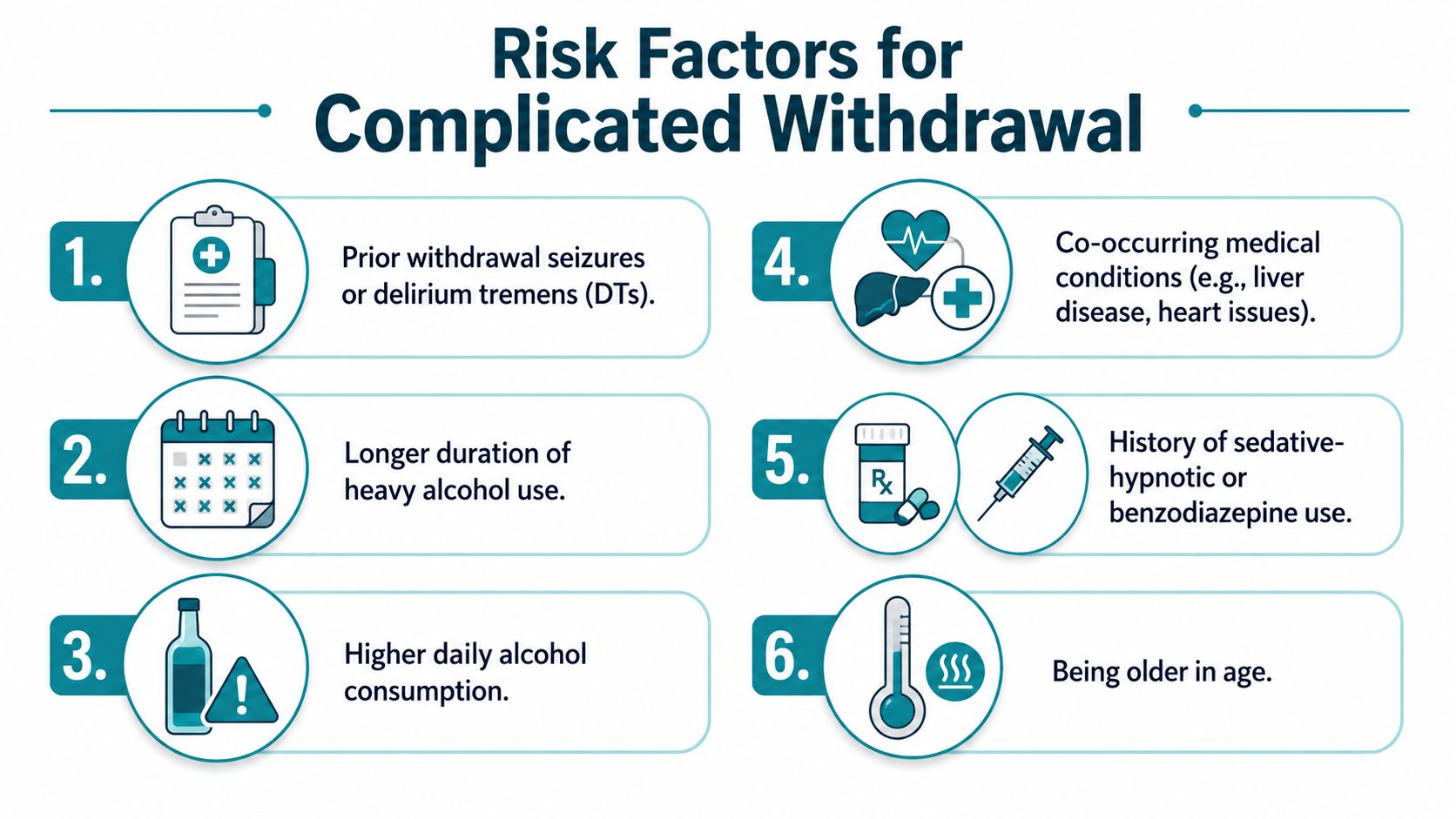
A person can look only mildly shaky and still need a higher level of care. The reason is simple. Withdrawal risk depends on the whole picture, not just the current symptom score. A past withdrawal seizure or delirium tremens tells the clinician that the nervous system has already become unstable before, so the next episode deserves extra caution.
Risk factors clinicians look at together
- Prior complicated withdrawal: A history of seizures or delirium tremens raises the chance of repeat complications and often points toward emergency or inpatient care.
- Other medical illness: Heart, liver, and other unstable medical problems can make withdrawal harder to monitor and treat safely.
- Psychiatric instability: Severe depression, psychosis, suicidal thinking, or marked agitation changes the safety picture. If mood symptoms are part of the story, the practice's depression care page may matter later, after withdrawal safety is addressed.
- Pregnancy: This calls for a clinician-led plan because maternal and fetal safety both matter.
- Polysubstance use: Alcohol plus other sedatives, stimulants, or opioids can blur symptoms and make monitoring less predictable.
- Poor intake or vomiting: If someone cannot keep fluids down, dehydration becomes part of the risk.
- Unsafe setting: Limited support, unreliable transport, or housing that prevents close monitoring can make outpatient care unsafe.
These factors work together. A person with milder symptoms but no safe home support may need more structure than someone with somewhat worse symptoms and reliable monitoring. Level-of-care decisions belong in a clinical assessment, not a guess at home.
The symptom pattern also helps clinicians decide how worried to be. Delirium tremens is uncommon, but it is one of the most dangerous forms of withdrawal. That is why a clinician may move quickly toward a higher level of care when confusion, agitation, or fluid problems are showing up together.
If anxiety is also part of the picture, symptoms can overlap and make the situation harder to read. A separate anxiety medication information page can help sort routine anxiety from withdrawal symptoms that need medical attention.
Red Flags That Need Emergency Care Right Now
Some symptoms mean the situation has moved beyond routine outpatient monitoring. Seizures, hallucinations, severe confusion, chest pain, unstable vital signs, severe vomiting, and rapidly worsening agitation or tremor all need urgent medical attention. Severe alcohol withdrawal can include hallucinations, seizures, and delirium tremens, and ASAM treats these as complications that require urgent medical management rather than routine outpatient monitoring (ASAM guideline).
Seek emergency care now if any of these happen
- Seizures: Even one seizure during withdrawal is an emergency.
- Hallucinations: Seeing, hearing, or feeling things that aren't there can signal complicated withdrawal.
- Severe confusion or disorientation: If the person doesn't know where they are or can't follow simple conversation, don't wait.
- Chest pain: Alcohol withdrawal can stress the heart and blood pressure.
- Dangerous shaking or tremor: When shaking is escalating fast, the risk picture changes.
- Severe vomiting or dehydration: Inability to keep fluids down can make outpatient care unsafe.
If you're worried about a loved one, stay calm and get help quickly. Don't leave a high-risk person alone, and don't try to “wait out” the worst symptoms at home. If there's any concern about seizure risk, confusion, or unstable vitals, call emergency services.
Do not detox alone if the person has had severe withdrawal before, is hallucinating, is confused, or is getting worse fast.
For people considering whether they need a clinician at all, the answer is often yes. That decision is safest when a physician can review the whole picture instead of relying on a symptom snapshot.
What to Expect From Outpatient Medical Evaluation and Follow Up
A careful outpatient evaluation starts with a plain conversation about alcohol use, prior withdrawal, other medications, and other substances. The clinician then checks vital signs, hydration, sleep, tremor, sweating, agitation, orientation, and whether there are any hallucinations or other signs of complicated withdrawal. Frequent reassessment matters because withdrawal can change over hours, not days.
What a clinician is trying to learn
A physician is asking a few core questions. Is the withdrawal getting worse? Is the person safe at home? Are there signs of seizure risk or delirium? Is there a medical or psychiatric issue that changes the plan?
ASAM describes CIWA-Ar 19 or higher as a threshold where medication should be given immediately to reduce the risk of seizures and delirium, while also distinguishing complicated withdrawal from milder patterns (ASAM/GuidelineCentral summary). That tool can support trained assessment, but it's not a self-diagnosis or self-treatment score.
Guideline-based outpatient care usually includes clinician-selected medication when indicated, supportive care such as thiamine when appropriate, and a clear escalation plan if symptoms worsen. Detox alone is not treatment. After the acute phase, longer-term care may include evidence-based medications for alcohol use disorder, follow-up visits, and recovery support matched to the person's goals and medical history.
Here's a hypothetical composite example. A person notices early withdrawal, reaches out quickly, gives an honest drinking history, has reliable support at home, and returns for follow-up as directed. When a red flag appears, the plan escalates without delay. That combination often matters more than any single symptom score.
For adults considering confidential outpatient addiction-medicine care, the practice's addiction medicine specialist page explains where physician-led follow-up fits after withdrawal management.
Safety Planning and Next Steps for Confidential Care
A safer plan starts before symptoms spike. Skip self-detox dosing schedules. Let a clinician decide whether medication, thiamine, hydration support, or a higher level of care is needed. Withdrawal can also bring mood and sleep changes, including dysphoria, irritability, anxiety, emotional pain, sleep disturbance, and pain.
Safety planning should be practical. Someone should be able to check on the person, notice worsening symptoms, and arrange emergency care if needed. Safe housing, reliable transportation, and an honest review of other substances all help. If an outside clinician, urgent care team, or hospital needs information, that handoff should happen with authorization and clear documentation.
Severity is one part of the decision. So is the setting. A person with shaky hands and mild anxiety may need close outpatient follow-up, while confusion, hallucinations, seizure risk, or poor support at home can point to a higher level of care. Tools such as CIWA-Ar help trained clinicians measure withdrawal, but they are not a self-detox score.
After the immediate symptoms settle, the next step is ongoing care. Withdrawal management treats the acute problem. Follow-up visits, medication management for alcohol use disorder, and coordination with other clinicians can lower the chance of another crisis cycle.
If you want confidential, physician-led alcohol care, visit Empire Medical Wellness addiction medicine care to see how outpatient evaluation and follow-up can fit into a safer plan. This article is educational and is not personal medical advice. If severe symptoms, confusion, hallucinations, chest pain, or seizures are happening now, seek emergency care right away.