
Gastrointestinal symptoms are the most common Zepbound side effects. In the key trial, 78.9% to 81.8% of participants receiving tirzepatide reported at least one treatment-emergent adverse event, compared with 72.0% receiving placebo, and nausea, diarrhea, and constipation were the leading complaints.
Most digestive symptoms were mild to moderate and occurred mainly during dose escalation rather than evenly across the full 72-week treatment period. That pattern makes the early weeks clinically significant. It also gives patients a practical framework: monitor symptoms closely after starting or increasing the dose, use conservative food and hydration strategies, and involve the prescribing clinician when symptoms persist, become severe, or interfere with fluid intake.
Table of Contents
- Understanding the Pattern of Zepbound Side Effects
- Common Side Effects Versus Serious Warning Signs
- Practical Strategies for Managing Gastrointestinal Symptoms
- The Dose-Dependent Nature of Side Effects
- Red Flags and When to Contact Your Healthcare Provider
- Physician-Led Care for Safe Medication Management
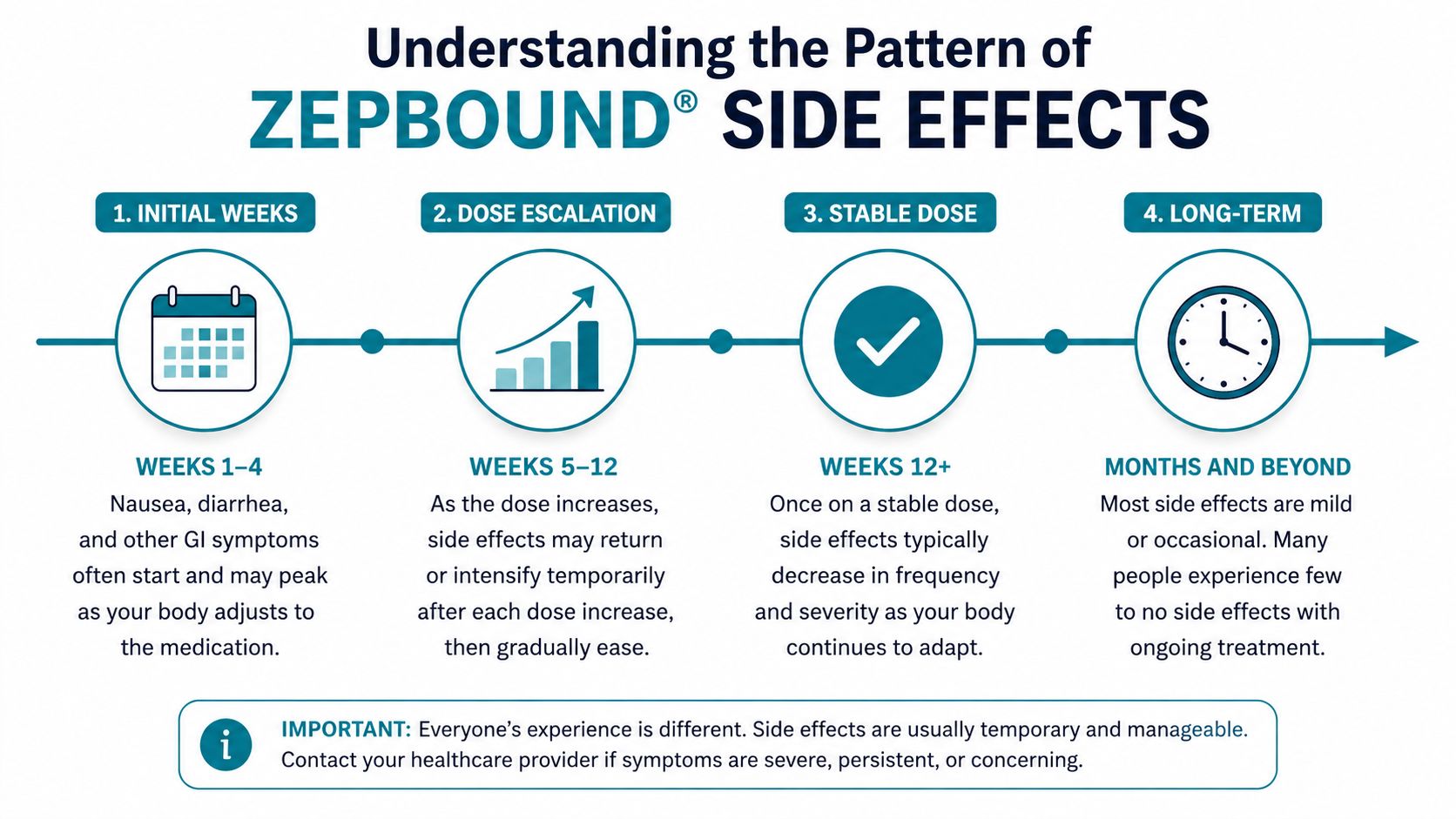
Understanding the Pattern of Zepbound Side Effects
The clinically useful pattern is dose related. During tirzepatide treatment, gastrointestinal complaints such as nausea, diarrhea, and constipation appeared most often while the dose was increasing, and they were generally mild to moderate according to the FDA prescribing information. This makes the escalation phase the point when symptom monitoring and practical adjustments matter most.
A patient may tolerate one dose well, develop digestive symptoms after an increase, and improve once the body adjusts. That course supports continued observation when symptoms are manageable, but it does not make severe or persistent symptoms acceptable to ignore. Contact the prescribing clinician before changing the dose, especially if symptoms limit eating, drinking, or normal activities.
Why digestion changes
Tirzepatide influences appetite signaling and slows gastric emptying. Those effects can reduce food intake and promote earlier fullness, while also making a large, fatty, or quickly eaten meal uncomfortable. Nausea, reflux, burping, abdominal discomfort, and constipation are consistent with that response.
Patients do not necessarily experience every symptom. During escalation, eat slowly, keep portions modest, and track nausea, bowel movements, meal size, and dose timing. This record can show whether symptoms follow an increase and gives the clinician useful information for deciding whether to hold the current dose, adjust treatment, or assess another cause.
Practical rule: Monitor early gastrointestinal symptoms. Seek clinical assessment for symptoms that are severe, persistent, or interfere with fluid intake.
People comparing incretin medications can review side effects of tirzepatide alongside the official labeling. Decisions still depend on the specific medication, medical history, concurrent drugs, and treatment response. Empire Medical Wellness provides Ozempic medical information for related context, but Zepbound and Ozempic should not be treated as interchangeable.
Common Side Effects Versus Serious Warning Signs
The dose-escalation phase is when routine gastrointestinal effects most often become noticeable or intensify. The FDA labeling lists common adverse reactions reported in at least 5% of treated patients, while postmarketing warnings describe less frequent complications that may require prompt assessment (FDA Zepbound labeling).
| Category | Side Effects | Incidence | Action Required |
|---|---|---|---|
| Common gastrointestinal effects | Nausea, diarrhea, vomiting, constipation, abdominal pain, dyspepsia, and reflux | Common adverse reactions are listed at ≥5% in the FDA labeling | Track severity, duration, fluid intake, and effect on eating. |
| Other common effects | Injection-site reactions, fatigue, hypersensitivity reactions, eructation, hair loss, and gastroesophageal reflux disease | Included in the FDA common-adverse-reaction list | Note whether symptoms are worsening, persistent, or limiting daily activities. |
| Dehydration-related kidney injury | Reduced urination, dizziness, or inability to maintain fluid intake with vomiting or diarrhea | The FDA identifies acute kidney injury as a postmarketing concern associated with dehydration | Obtain prompt medical assessment if urination or fluid intake falls substantially. |
| Ileus | Marked abdominal symptoms with reduced bowel movement or inability to tolerate intake | Rare postmarketing concern in the labeling | Seek prompt medical evaluation rather than treating the symptoms as routine constipation. |
| Serious hypersensitivity | Swelling involving the face, lips, tongue, or throat, hives, or difficulty breathing | Rare but clinically meaningful concern | Seek emergency care for breathing difficulty or rapidly progressing swelling. |
Common doesn't mean trivial, and rare doesn't mean impossible. Repeated vomiting can cause dehydration even when vomiting itself appears on the common-reaction list. The FDA safety labeling links acute kidney injury with fluid loss or reduced intake associated with nausea, vomiting, and diarrhea (FDA safety labeling).
The practical distinction is symptom trajectory. Mild nausea after an increase may settle, while repeated vomiting, inability to drink, sharply reduced urination, or escalating abdominal pain changes the risk. Symptoms that resemble obstruction or a severe allergic reaction warrant assessment rather than routine dietary management.
Supplement information, including this overview of organic green tea side effects, should not replace medication-specific FDA information. Adding several products while trying to manage nausea, constipation, or fatigue can also make the cause of symptoms harder to identify.
For related medication tolerability information, Empire Medical Wellness offers an Ozempic side effects guide. Compare mechanisms and prescribing information carefully. Zepbound and Ozempic should not be assumed to carry identical risks.
Practical Strategies for Managing Gastrointestinal Symptoms
Management starts with reducing the workload placed on a stomach that may be emptying more slowly. The FDA label and clinical practice support a cautious approach during dose escalation, but symptom severity should determine when self-care stops and clinician review begins.
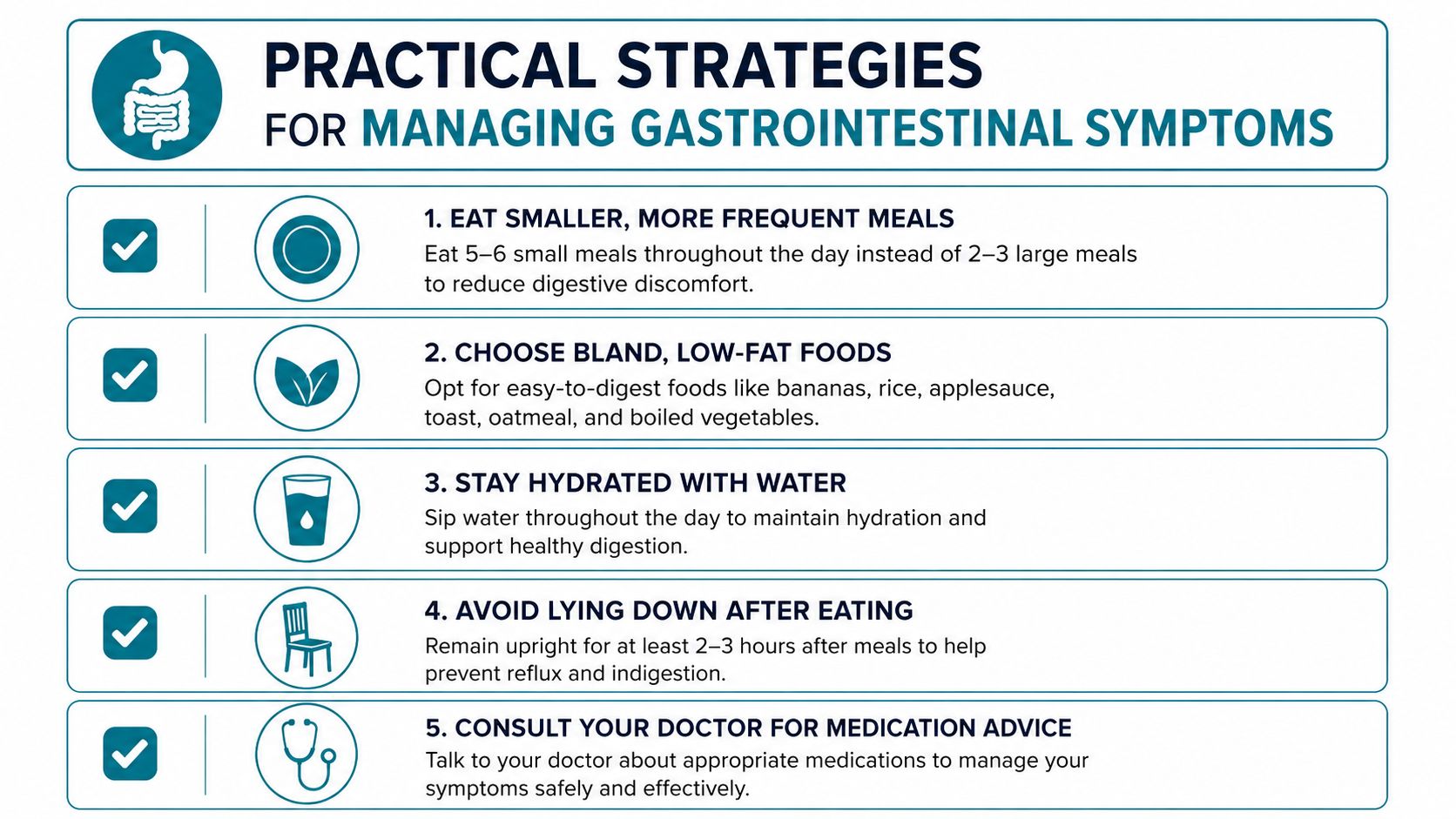
What usually helps
- Use smaller meals: Large portions can be harder to tolerate when gastric emptying is slowed. Eat slowly and stop when you first feel comfortably full.
- Choose lower-fat, simpler foods during symptoms: Greasy or heavy meals often aggravate nausea and reflux. Bland foods may be easier to tolerate temporarily.
- Prioritize fluids: Sip water regularly, particularly when diarrhea or vomiting is present. Hydration matters because gastrointestinal fluid loss can contribute to acute kidney injury.
- Stay upright after eating: Remaining upright can reduce the discomfort associated with reflux and delayed stomach emptying.
- Review medications with your clinician: Other medicines and supplements can worsen constipation, nausea, sedation, or dehydration. A clinician can review the full list safely.
Do not treat severe symptoms as a required part of treatment. If you can't maintain oral intake, have persistent vomiting or diarrhea, or notice reduced urination, contact your healthcare professional.
Constipation needs a measured response. Fluids, gradual dietary fiber, and gentle movement may help some adults, but adding over-the-counter laxatives or antidiarrheal medicines isn't automatically appropriate. The right choice depends on the symptom pattern, other medications, medical history, and whether a more serious problem needs to be excluded.
Dose changes require the same restraint. A clinician may decide that the current treatment plan needs more time, a different escalation approach, or discontinuation, but patients shouldn't independently skip, repeat, or increase doses. Empire's Mounjaro side effects information offers related context about tirzepatide tolerability, while the prescribing clinician remains the appropriate source for an individual's plan.
The Dose-Dependent Nature of Side Effects
Zepbound's gastrointestinal effects generally become more frequent at higher maintenance doses, although the pattern differs by symptom. Nausea rose from 25% at 5 mg to 29% at 15 mg, diarrhea rose from 19% to 23%, and vomiting rose from 8% to 13%. Constipation moved in the opposite direction, from 17% down to 11% across the reported dose groups (Zepbound prescribing information).
The pattern is not a uniform increase for every adverse effect. Still, it explains why a dose that was comfortable initially may become harder to tolerate after escalation. Tirzepatide's effects on appetite signaling and gastric emptying can support treatment goals while also narrowing the comfort margin for some patients.
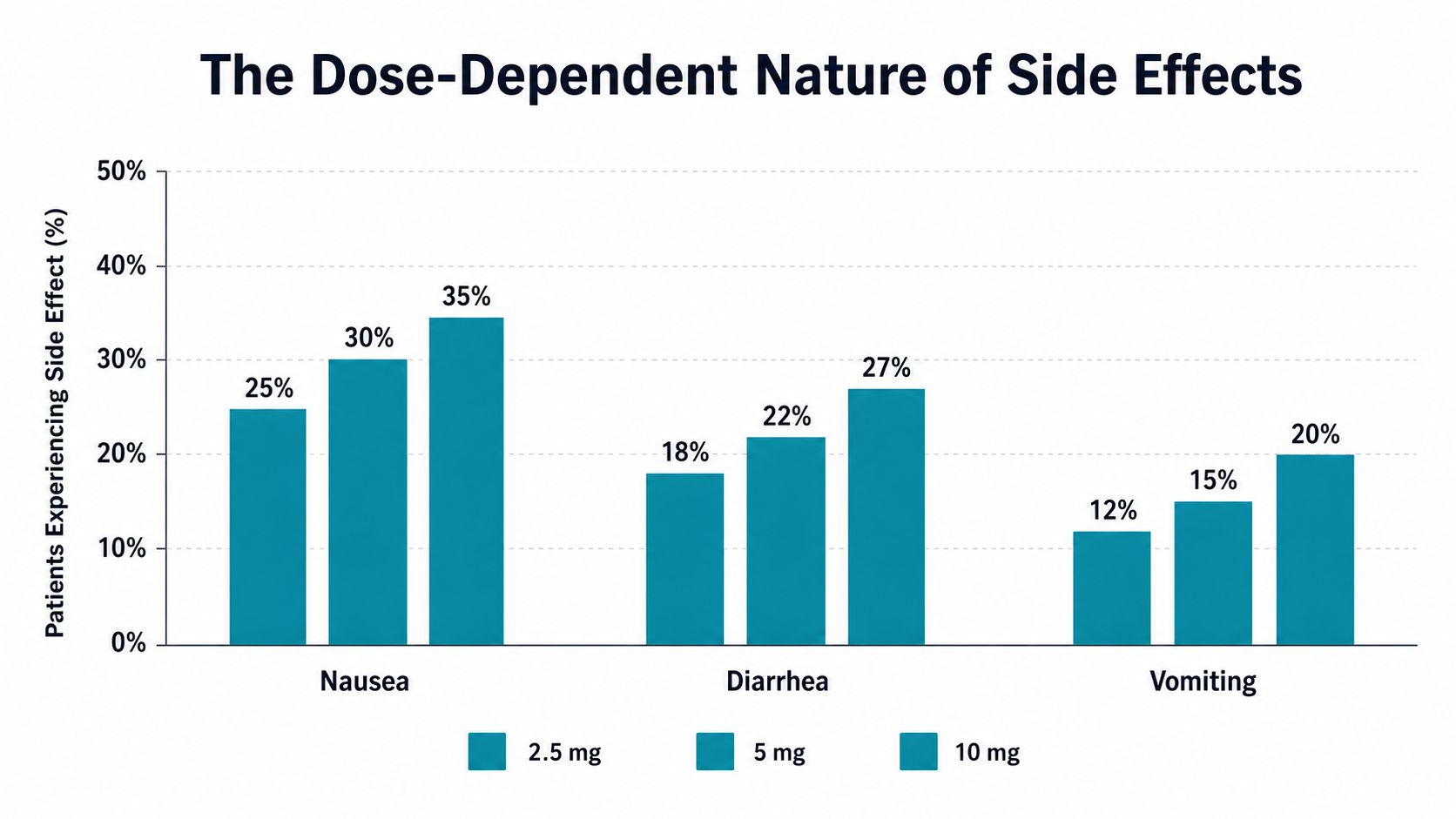
Severe gastrointestinal events were uncommon but increased across the reported doses. They occurred in 1.7% of patients receiving 5 mg, 2.5% receiving 10 mg, and 3.1% receiving 15 mg, compared with 1.0% receiving placebo (DailyMed medication guide). Gastrointestinal adverse reactions also led to discontinuation in 1.9% at 5 mg and 4.3% at 15 mg, compared with 0.5% with placebo (FDA Zepbound label).
During dose escalation, the practical question is whether symptoms remain manageable and whether the intended dose still offers a reasonable benefit-to-burden balance. Patients should report worsening intolerance before changing the schedule independently. The prescriber may need to reassess the escalation plan, target dose, or continued use.
Medication effects differ across the incretin class. Readers seeking background on how semaglutide helps reduce cravings should not assume that semaglutide experience predicts tirzepatide tolerability. Empire's Mounjaro dosage information provides related context, but individual dosing decisions require the prescribing clinician.
Red Flags and When to Contact Your Healthcare Provider
A mild episode of nausea is different from vomiting that prevents fluid intake. The safest response depends on severity, persistence, hydration, urination, pain, and associated symptoms, not solely on whether the symptom appears on the common-effects list.
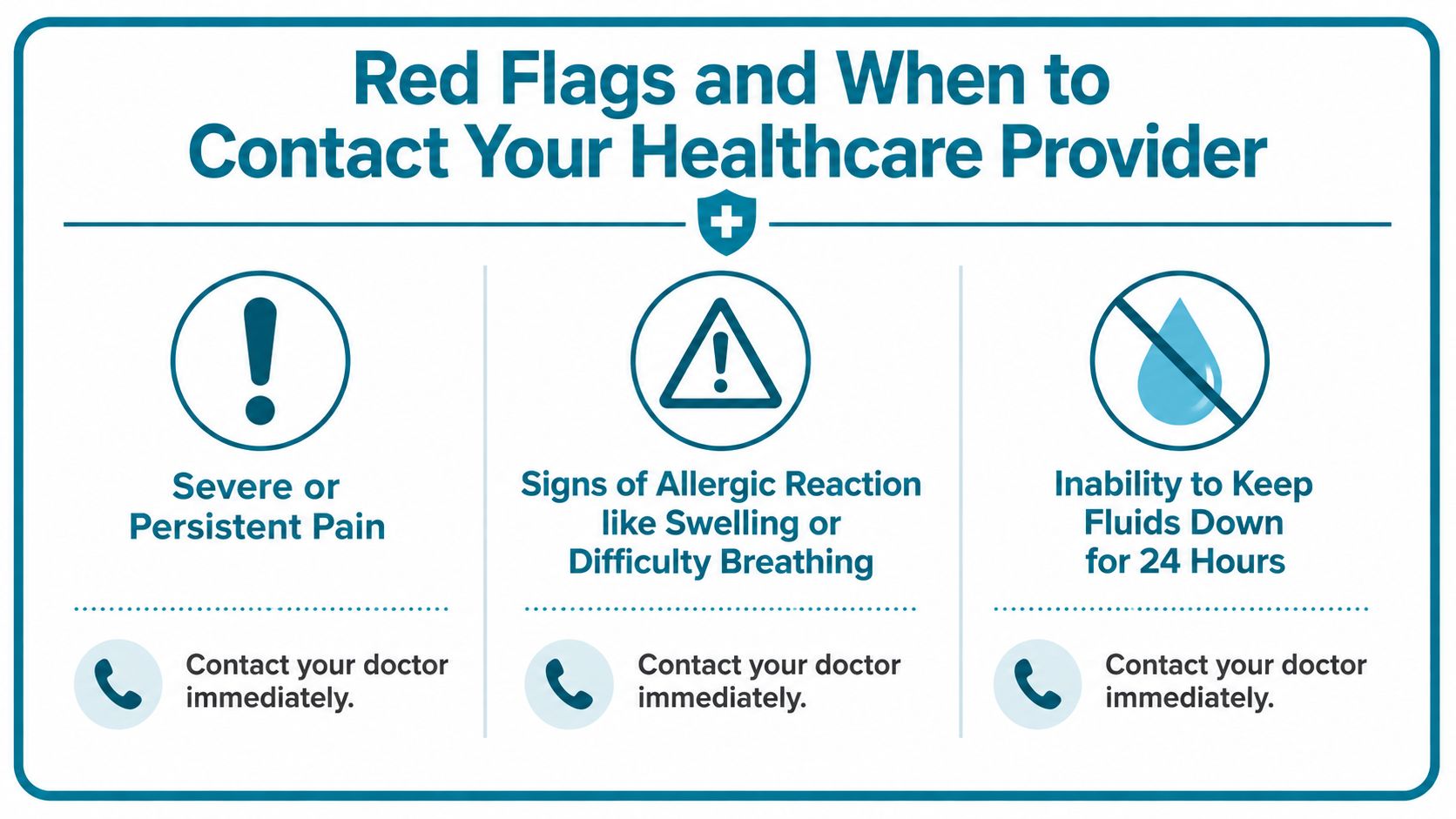
Contact a healthcare professional promptly when
- Fluids won't stay down: Repeated vomiting or diarrhea can produce volume depletion and increase kidney risk.
- Urination decreases: Reduced urination, dizziness, or marked weakness may signal dehydration and requires medical attention.
- Pain is severe or persistent: Significant abdominal pain shouldn't be assumed to be routine medication discomfort.
- Allergic symptoms appear: Hives, facial swelling, throat swelling, or trouble breathing can represent a serious hypersensitivity reaction. Breathing difficulty or rapidly progressing swelling warrants emergency care.
- Constipation becomes severe: Severe abdominal symptoms with an inability to tolerate food or fluids need evaluation rather than repeated self-treatment.
When contacting the prescriber, provide the medication name, the date of the most recent injection, the current prescribed dose, when symptoms began, how often vomiting or diarrhea has occurred, what fluids you've kept down, and whether urination has changed. That information helps the clinician assess the urgency without asking you to diagnose yourself.
Never increase, decrease, repeat, or stop Zepbound on your own because of symptoms. Contact the prescribing clinician for a supervised decision.
Emergency symptoms, especially difficulty breathing, swelling of the throat, fainting, confusion, or severe dehydration, shouldn't wait for a routine appointment. Use emergency services when the situation appears immediately dangerous.
Physician-Led Care for Safe Medication Management
Safe obesity medicine involves more than reaching a target dose. A physician-led evaluation considers medical history, current medications, relevant health conditions, prior treatment response, gastrointestinal tolerance, and the practical demands of long-term follow-up.
During treatment, follow-up gives the clinician a chance to review symptom timing and severity rather than reacting to a single bad day. A structured discussion can clarify whether symptoms began after an escalation, whether the patient can maintain food and fluids, whether constipation or diarrhea is becoming persistent, and whether another medication or health condition may be contributing.
Individualized care also means accepting that the highest labeled dose isn't automatically the right dose for every adult. The clinical goal is a safe, sustainable treatment plan that accounts for tolerability and the broader medical picture. That may include monitoring, supportive measures, a supervised change in the plan, or deciding that another approach deserves consideration.
Empire Medical Wellness provides physician-led obesity medicine care that may include medical and metabolic assessment, review of weight history and relevant health factors, individualized weight-management planning, anti-obesity medication when clinically appropriate, ongoing monitoring, and long-term maintenance planning. Adults can learn more about physician-led weight management and decide whether a private consultation fits their needs.
Published August 17, 2026. Updated August 17, 2026.
Byline: Empire Medical Wellness Editorial Team
Sources
- FDA Zepbound prescribing information
- FDA Zepbound labeling and safety information
- Eli Lilly Zepbound prescribing information
- DailyMed Zepbound medication guide
- New England Journal of Medicine SURMOUNT-1 trial
Empire Medical Wellness offers private, physician-led obesity medicine evaluations with individualized medication planning and follow-up focused on response and tolerability. Visit Empire Medical Wellness to learn more about arranging a consultation for questions about Zepbound side effects. This article is educational and isn't personal medical advice.