
Naltrexone is a prescription medication that blocks opioid receptors, and that's why it can help reduce heavy drinking in alcohol use disorder and support relapse prevention after opioid detoxification. It should not be started while opioids are still in the body, because it can trigger severe withdrawal.
That single safety rule is one of the main reasons naltrexone causes confusion. The medication has a long history, but its use depends heavily on the diagnosis, the formulation, and whether opioids are completely out of the system first.
Table of Contents
- What Is Naltrexone and How Does It Work
- Oral Naltrexone vs Extended-Release Injectable Naltrexone
- What the Evidence Shows for Alcohol Use Disorder and Opioid Use Disorder
- Safety Rules, Contraindications, and When to Seek Help
- What to Expect During Initiation and Ongoing Treatment
- Common Misconceptions About Naltrexone
- Next Steps and How to Decide If Naltrexone Is Right for You
What Is Naltrexone and How Does It Work
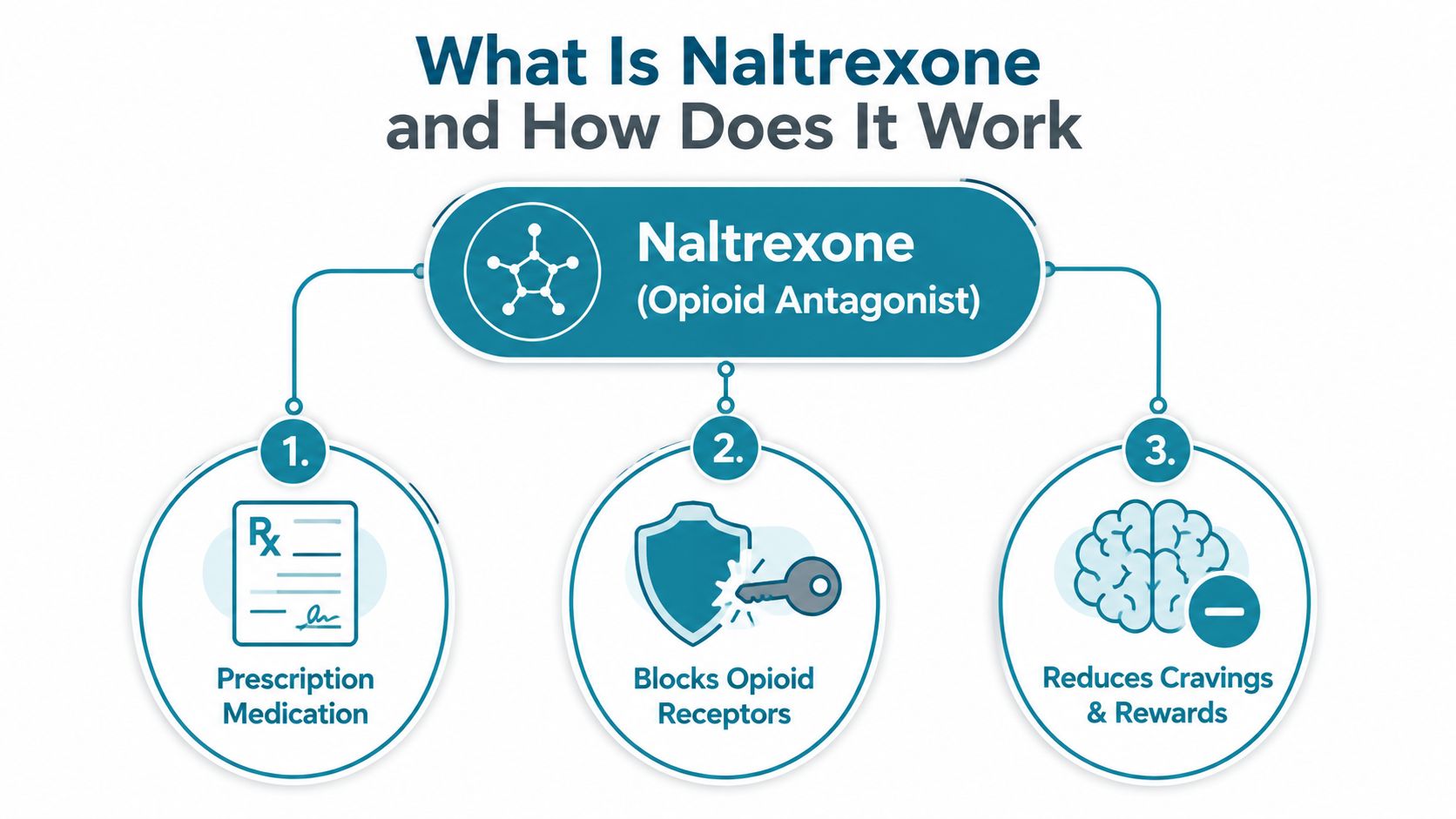
Naltrexone is a prescription opioid antagonist, which means it attaches to opioid receptors in the brain and blocks them instead of activating them. In plain language, it takes away the “landing spots” that opioids use and also changes the reward signal linked to alcohol. That blocking action is why clinicians discuss it for both alcohol use disorder and opioid use disorder. The FDA approved oral naltrexone in 1984 for opioid-related use, then later expanded its alcohol-use indication in 1994. NCBI Bookshelf
For alcohol, the goal is usually to make drinking feel less rewarding and to reduce the pull to keep going once a person starts. For opioids, the goal is different. Naltrexone is used only after detoxification and after opioids are no longer present, because its job is to block the receptor, not to treat withdrawal itself. The same medicine can therefore play two very different roles depending on the condition.
Why the timeline matters
Naltrexone's regulatory history is unusually long for a medication used in addiction care. The oral tablet has been part of U.S. care discussions for decades, and the later alcohol indication helped place it in both alcohol and opioid treatment conversations. That history matters because it shows naltrexone isn't a novelty or a trend, it's an established medication with a defined role. NCBI Bookshelf
Practical rule: naltrexone blocks reward, but it doesn't replace detox, counseling, or a full recovery plan.
The standard oral dose is 50 mg once daily, with an alternative 100 mg every other day regimen noted in authoritative references. Those are reference doses, not instructions for a specific person. Formulation and timing still depend on the medical situation and the reason it's being considered. NCBI Bookshelf
For adults looking for physician-led outpatient addiction care, the key idea is simple. Naltrexone is not an opioid, it does not create opioid-like effects, and it only helps when the clinical context fits the medication's receptor-blocking design. For more information about addiction-focused outpatient care, see Empire Medical Wellness addiction care.
Oral Naltrexone vs Extended-Release Injectable Naltrexone
Oral and injectable naltrexone contain the same active medicine, but they behave very differently in day-to-day life. The oral tablet is taken regularly at home, while the extended-release injectable form is given in a clinic and stays active much longer. That difference affects convenience, follow-through, and how often a clinician needs to plan around the medication. The FDA approved extended-release injectable naltrexone in 2006 for alcohol dependence and in 2010 for preventing return to opioid dependence after medically supervised withdrawal. NCBI Bookshelf
Naltrexone Formulations at a Glance
| Feature | Oral Naltrexone | Extended-Release Injectable Naltrexone |
|---|---|---|
| Route | Tablet taken by mouth | Injection given in a clinic |
| Typical use pattern | Regular dosing schedule | Longer-acting release after each injection |
| FDA history | Approved for opioid-related use in 1984, alcohol-use indication later expanded in 1994 | Approved in 2006 for alcohol dependence, and in 2010 for preventing return to opioid dependence after supervised withdrawal |
| Best practical strength | Flexibility | Convenience and reduced need for daily remembering |
| Main practical limitation | Adherence can be harder | Less flexible once given |
| Clinical consideration | Easier to stop or change if needed | Requires planning because it lasts longer |
The best choice often depends on routine, tolerance for clinic visits, and whether daily adherence is realistic. Extended-release treatment can improve real-world persistence compared with oral naltrexone, with one meta-analysis showing higher treatment persistence overall for the injectable form, OR 1.94, although that doesn't mean it's the right fit for everyone. JAMA
Oral treatment gives clinicians and patients more flexibility. If a side effect occurs, or if another medical issue comes up, the medication can be managed more easily because it doesn't remain in the body for a full month. Injectable treatment reduces the burden of remembering a pill, but it also requires a clinic-based plan and more advance thinking around timing. For a related comparison with another addiction medication, see Empire Medical Wellness Suboxone information.
Some people assume the monthly shot is automatically “stronger.” The better question is which format matches the person's goals, follow-up ability, and medical history.
For alcohol use disorder, extended-release naltrexone is often discussed when daily adherence is a concern. For opioid use disorder, the timing of the injection is tightly tied to the opioid-free requirement, which is covered below. For people comparing the two, the format matters almost as much as the drug itself.
What the Evidence Shows for Alcohol Use Disorder and Opioid Use Disorder
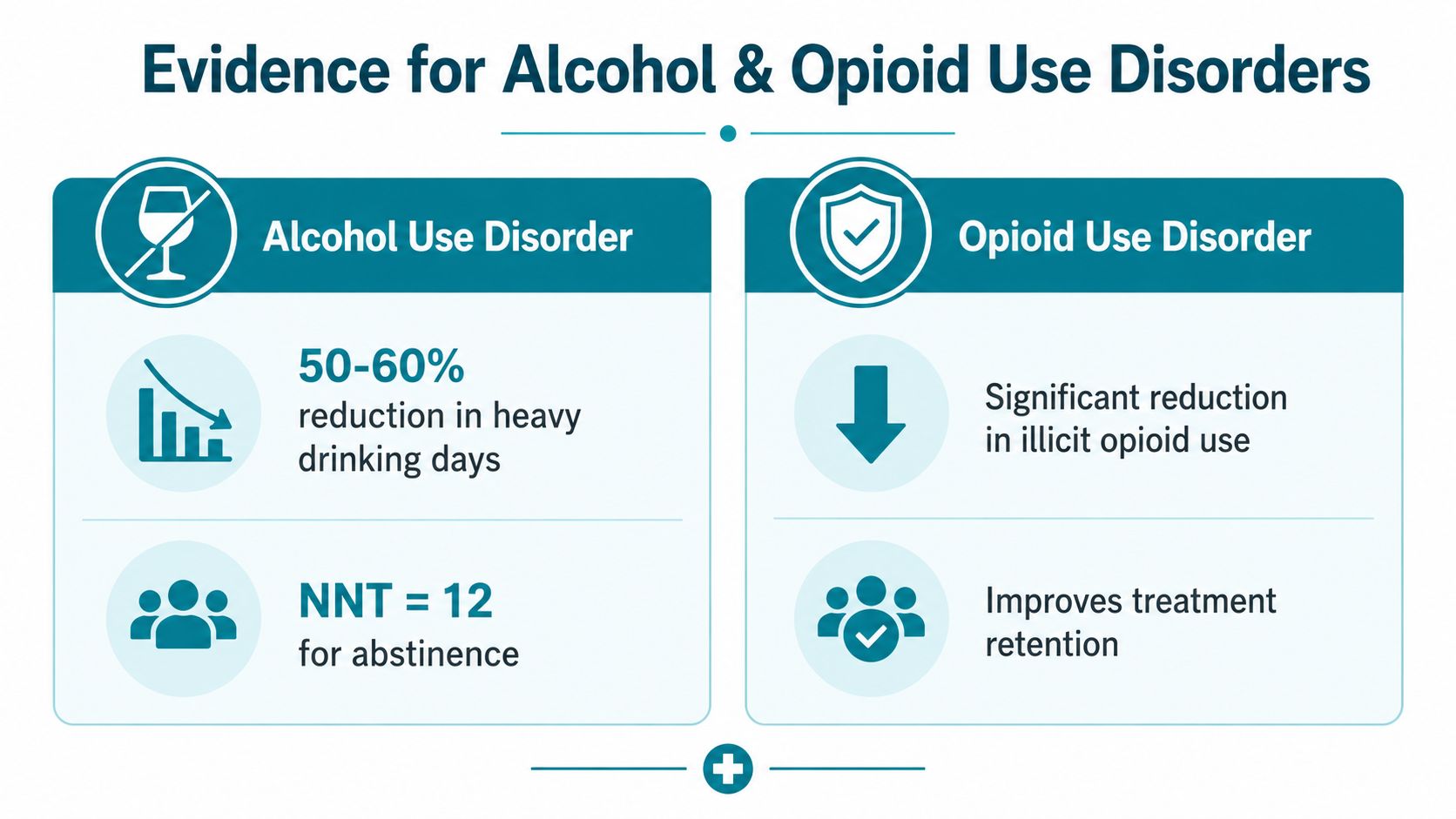
Naltrexone has a clearer evidence base for alcohol use disorder than for opioid use disorder. That difference matters because one medication can serve two very different clinical jobs. For alcohol, the goal is usually to blunt reward and reduce craving. For opioids, the medication has to fit a stricter safety pathway, which changes how useful it is in practice.
Alcohol use disorder
For alcohol use disorder, the most consistent benefit is fewer heavy drinking days and less craving. That is a meaningful outcome even when a person is not aiming for immediate abstinence. A JAMA systematic review found that 50 mg/day oral naltrexone improved alcohol consumption outcomes compared with placebo, and an updated meta-analysis found extended-release naltrexone was associated with fewer drinking days and fewer heavy drinking days versus placebo. JAMA
Clinical trial results point in the same direction. One randomized study reported fewer relapses among people taking naltrexone than among those taking placebo, and another evidence summary found better end-of-trial success rates for abstinence or controlled drinking with naltrexone. The broad pattern is familiar: the medication does not remove alcohol triggers, but it can make them easier to resist. PubMed
For patients and clinicians, that makes naltrexone more like a brake than a wall. It can reduce the reinforcing effect of drinking, which may help someone keep to a reduced-drinking plan or support abstinence efforts. That is also why some people compare it with other medication-based approaches to alcohol recovery, including discussions in the Naltrexone for depression treatment guide, even though mood-related use is a separate topic from alcohol treatment itself.
Opioid use disorder
The evidence for opioid use disorder is less straightforward. The main challenge is not whether naltrexone blocks opioids. It does. The harder part is starting it safely and keeping treatment going long enough for it to help.
A BC guidelines summary of the Cochrane evidence notes that sustained-release naltrexone may slightly worsen some outcomes compared with standard opioid agonist treatment, while also highlighting induction and retention as the biggest real-world barriers. BC guidelines summary of the Cochrane evidence That difference explains why opioid and alcohol treatment cannot be discussed as if they were the same condition.
For some patients with opioid use disorder, naltrexone is still a reasonable option, especially when opioid agonist treatment is not the right fit. But the medication has a narrower role because the person must already be opioid-free before starting. For practical information about that transition, see Empire Medical Wellness alcohol withdrawal information, which is useful background when someone is also thinking about detox planning and timing.
For adults deciding between oral and injectable treatment, or between alcohol and opioid indications, the key point is simple. Naltrexone is often a solid evidence-based choice for alcohol use disorder, while its role in opioid use disorder depends much more on timing, follow-up, and whether the patient can meet the safety rules.
Safety Rules, Contraindications, and When to Seek Help
The first safety rule with naltrexone is straightforward. Do not start it if opioids are currently in the body or if a person is opioid-dependent. Naltrexone can displace opioids from receptors and trigger precipitated withdrawal, which may be severe. In appropriate settings, clinicians may use a naloxone challenge test or urine testing to confirm opioid-free status before treatment. See the naloxone guide for a plain-language explanation of that test.
Why the opioid-free requirement matters
Naltrexone blocks opioid receptors quickly, so it does not give the body time to adjust. If opioids are still present, that sudden blockade can bring on abrupt withdrawal symptoms. For opioid use disorder, that is why the pre-treatment check is handled more carefully than it is for alcohol use disorder.
The FDA labeling also includes a liver warning. The Vivitrol label states that naltrexone can cause hepatocellular injury when given in excessive doses. Clinical references also list severe hepatic impairment as a contraindication for extended-release naltrexone and note hypersensitivity reactions as another reason not to use it. FDA label
Liver disease can also change how much drug stays in the body. In compensated cirrhosis, exposure has been reported to rise about 5-fold, and in decompensated cirrhosis about 10-fold, so liver-risk review and follow-up matter. The oral drug's elimination half-life is about 4 hours, while its active metabolite, 6-β-naltrexol, persists about 13 hours. FDA label
Emergency cautions
Seek urgent help if a person on naltrexone develops signs of severe withdrawal, an allergic reaction, or serious liver problems. Breathing trouble, confusion, fainting, swelling, or severe vomiting all need prompt medical attention. If opioid use returns after naltrexone, overdose risk can change because tolerance may be lower than before.
Emergency rule: if opioids may still be present, or if severe symptoms start after a dose, treat it as urgent and contact emergency services or a clinician right away.
For routine questions, a clinician can review side effects, liver risk, and whether the medication still fits the current treatment plan. For crisis-level substance use concerns, immediate medical evaluation is the safer path.
What to Expect During Initiation and Ongoing Treatment
Starting naltrexone usually begins with a careful review, not a prescription pad. A clinician will want to understand the reason for treatment, the substance use history, current medications, and whether opioids are absent. That first check is especially important because the same medication that can help one person can trigger harm in another if opioids are still involved.
The first visit usually focuses on fit
A physician-led evaluation often includes questions about alcohol use pattern, opioid exposure, liver history, and treatment goals. The point is to match the formulation and timing to the medical picture, not to force a one-size-fits-all plan. If the person is a candidate, the clinician then talks through oral versus injectable treatment and what the follow-up plan should look like.
For alcohol-related care, the conversation may include whether the person is aiming for abstinence or reduced drinking. For opioid-related care, the conversation is narrower and more safety-focused because the opioid-free requirement has to be satisfied first. That's a major distinction, and it's one of the reasons good outpatient care spends time on education before treatment starts.
Ongoing follow-up is about response and safety
After initiation, follow-up usually centers on three things. Is the person tolerating the medication, is the target behavior changing in the expected direction, and are there any new safety concerns. Those questions are simple, but they capture the core work of treatment.
- Side effects: nausea, headache, or sleep changes can matter even if they're not dangerous.
- Adherence or persistence: this is especially relevant with oral therapy.
- Liver risk and medication history: new medicines or new symptoms can change the picture.
A practical plan also includes clear instructions about what to do if opioid exposure happens unexpectedly or if symptoms seem concerning. For some adults, a physician-led outpatient practice can provide that kind of structured monitoring alongside recovery planning. That's the type of care model used in addiction medicine visits at Empire Medical Wellness addiction medicine specialist appointments.
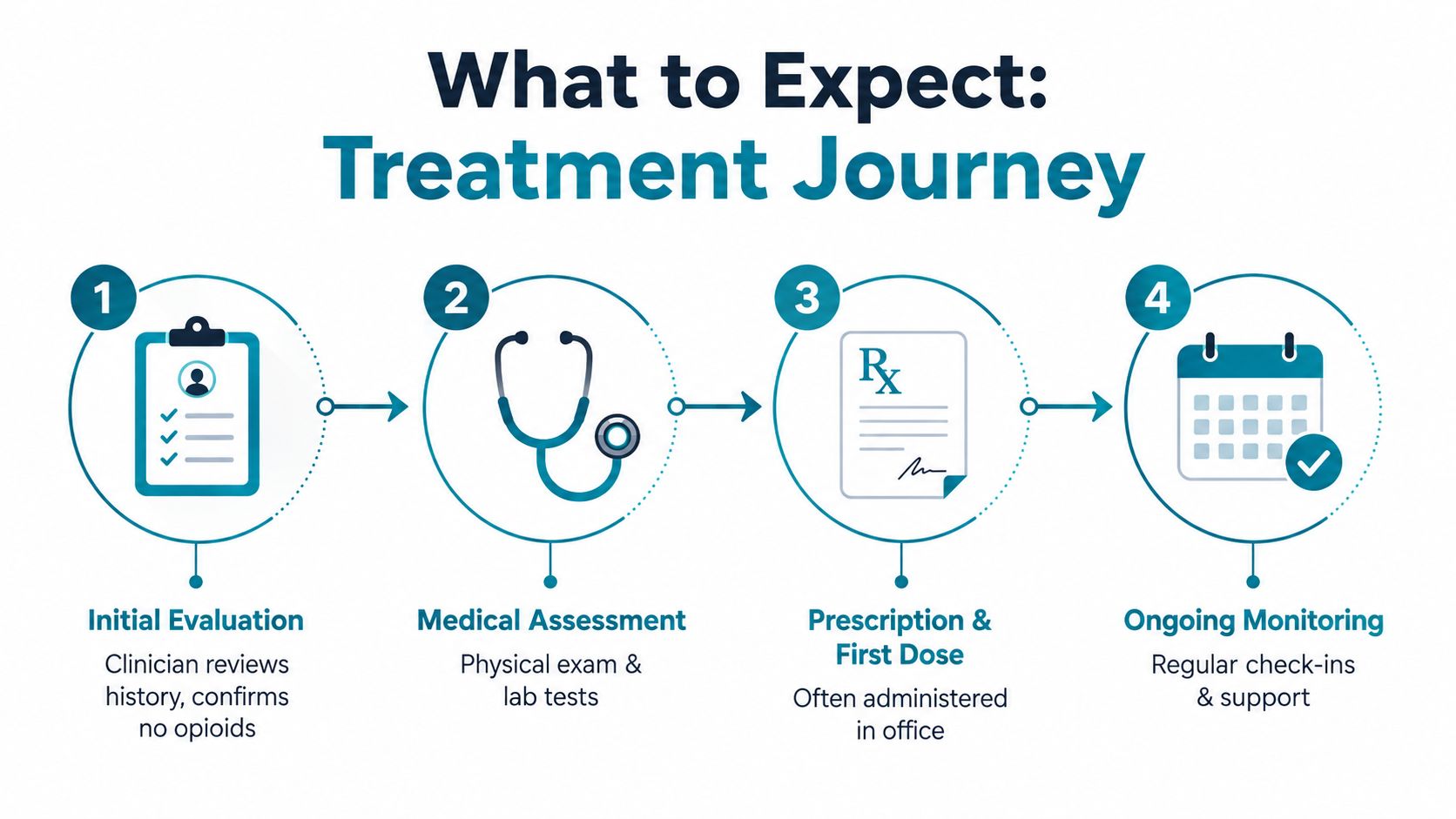
The main thing to expect is ongoing clinical decision-making, not a fixed script. Naltrexone can be part of treatment when the timing is right and the goals are clear, but follow-up is what keeps the plan safe and useful over time.
Common Misconceptions About Naltrexone
One of the biggest myths is that naltrexone by itself is a proven first-line weight-loss pill. That's not supported by recent evidence. The data point to a difference between the FDA-approved combination naltrexone-bupropion and low-dose naltrexone monotherapy, and those two uses should not be blurred together.
Weight loss is not the same as appetite curiosity
Recent reviews and real-world data show naltrexone-bupropion can produce clinically meaningful but modest weight loss, including about 8.8% median loss at 12 months in surgery-naive patients and 10.0% in post-bariatric patients, with continued use varying by group. However, the same 2025 evidence review found low-dose naltrexone 4.5 mg alone is not an effective first-line treatment for weight loss. Those are different medications with different evidence bases. CBH Philly review
Another common misunderstanding is that success in one condition predicts the same success in another. It doesn't. The evidence for alcohol use disorder is stronger and more consistent than the evidence for opioid use disorder, and the safety rules are also different. A medication can be a good fit for reducing heavy drinking and still be a weak fit for opioid relapse prevention in a given person.
“One drug” does not mean “one outcome”
Online discussions often go off track. People ask whether naltrexone “works,” but the more accurate question is, “Works for what, and under what conditions?” For alcohol use disorder, evidence supports use as part of a broader treatment plan. For opioid use disorder, the drug's barrier is often not theoretical effectiveness, but whether someone can start it safely and stay engaged.
Myth to avoid: “If it helps alcohol, it should help opioids the same way.” The evidence doesn't support that shortcut.
For patients, the most useful takeaway is to treat naltrexone as a specific tool, not a universal answer. If a clinician is discussing it, the next question should be about the indication, the formulation, and the safety checks that come first. That's the conversation that leads to informed consent instead of internet confusion.
Next Steps and How to Decide If Naltrexone Is Right for You
Naltrexone may be worth discussing when the main goal is to reduce alcohol's pull, support abstinence or reduced drinking, or prevent return to opioid use after detoxification. It's not the only option, and it isn't the same as medications that treat withdrawal or replace opioids. The right fit depends on the diagnosis, current substances in the body, liver risk, and whether oral or injectable treatment matches the person's routine.
A good next step is to bring a few direct questions to a clinician. Ask whether the treatment goal is alcohol-related or opioid-related, whether any opioid exposure makes naltrexone unsafe right now, and whether oral or extended-release treatment is more realistic. If the conversation turns to weight loss, make sure the clinician distinguishes FDA-approved naltrexone-bupropion from low-dose naltrexone, because the evidence is not the same.
You can also ask how follow-up will work, what side effects to watch for, and what to do if pain control is needed for surgery or another medical event. Those practical questions often matter more than the medication name itself. They help keep treatment grounded in safety and clear expectations.
This article is educational, not personal medical advice. If you want a physician-led review of whether naltrexone fits your situation, visit Empire Medical Wellness to learn more about outpatient addiction medicine care and how medication decisions are discussed in a private, medically supervised setting.
Empire Medical Wellness offers physician-led outpatient addiction medicine visits that can include review of substance use history, medication options such as naltrexone when clinically appropriate, and follow-up planning. If you're researching naltrexone for alcohol use disorder or opioid use disorder, visit Empire Medical Wellness to learn how a confidential evaluation can help you decide what belongs in a safe, evidence-based plan. This article is educational and not personal medical advice.
Sources
- NCBI Bookshelf, Naltrexone clinical and regulatory overview
- PubMed randomized trial and evidence summary on naltrexone for alcohol use disorder
- FDA labeling and pharmacokinetics for naltrexone
- JAMA systematic review and meta-analysis of naltrexone for alcohol use disorder
- NCBI Bookshelf, opioid-free requirement and precipitated withdrawal risk
- FDA Vivitrol label, hepatic warning and contraindication details
- NCBI Bookshelf, FDA approval history for oral and injectable naltrexone
- BC guideline summary citing Cochrane evidence for opioid use disorder
- CBH Philly evidence review on naltrexone-bupropion and low-dose naltrexone