
Nearly half of U.S. adults, 49.1%, reported trying to lose weight in the previous 12 months in CDC survey data from 2013 to 2016, and the share was higher in women than men (CDC data brief). That number matters because it shows weight loss is common, recurrent, and medically relevant, not a niche concern or a simple matter of willpower. For many adults, the hard part isn't starting. It's keeping the weight off once the first burst of effort fades.
Table of Contents
- Why Most Weight Loss Attempts Stall Over Time
- What a Medical and Metabolic Assessment Involves
- Setting Clinically Meaningful Weight Loss Goals
- Building a Personalized Nutrition and Activity Framework
- When Anti-Obesity Medications May Be Appropriate
- Planning for Long-Term Maintenance and Follow-Up
Why Most Weight Loss Attempts Stall Over Time
Prior weight-loss attempts are useful clinical data. They show what a person can sustain, where hunger or fatigue became a problem, and whether the plan failed because it was too strict, too vague, or disrupted by work, sleep, stress, or family routines.
A physician-led approach uses that history to identify the physiologic reasons weight loss often slows or reverses. As body weight falls, appetite can rise, energy expenditure can adapt downward, and day-to-day adherence can become harder than it looked at the start. Hormonal signals that regulate hunger and fullness can also shift, which helps explain why early progress does not always predict long-term success.
A National Institutes of Health review notes that long-term success rates for keeping weight off are low, with estimates often cited at only 1% to 3% (NIH review). In one U.S. study of obese adults, 63% had tried to lose weight in the previous year, yet only 40% of those attempting loss reached at least 5% body-weight loss and only 20% reached 10% (NIH review). In another long-term U.S. analysis, only 17.3% maintained at least 10% loss over time, and just 4.4% maintained 20% loss (NIH review).
That pattern is why repeated regain should not be read as a character failure. It usually means the original plan did not match the biology, the schedule, or the environment well enough to last.
Practical rule: when prior plans failed, the next step isn't more shame. It's better data collection.
A careful review also includes medications, because some routine prescriptions can affect weight. If you have ever wondered whether a common medicine might be part of the picture, see the practice's overview of medications that may affect weight.
What a Medical and Metabolic Assessment Involves
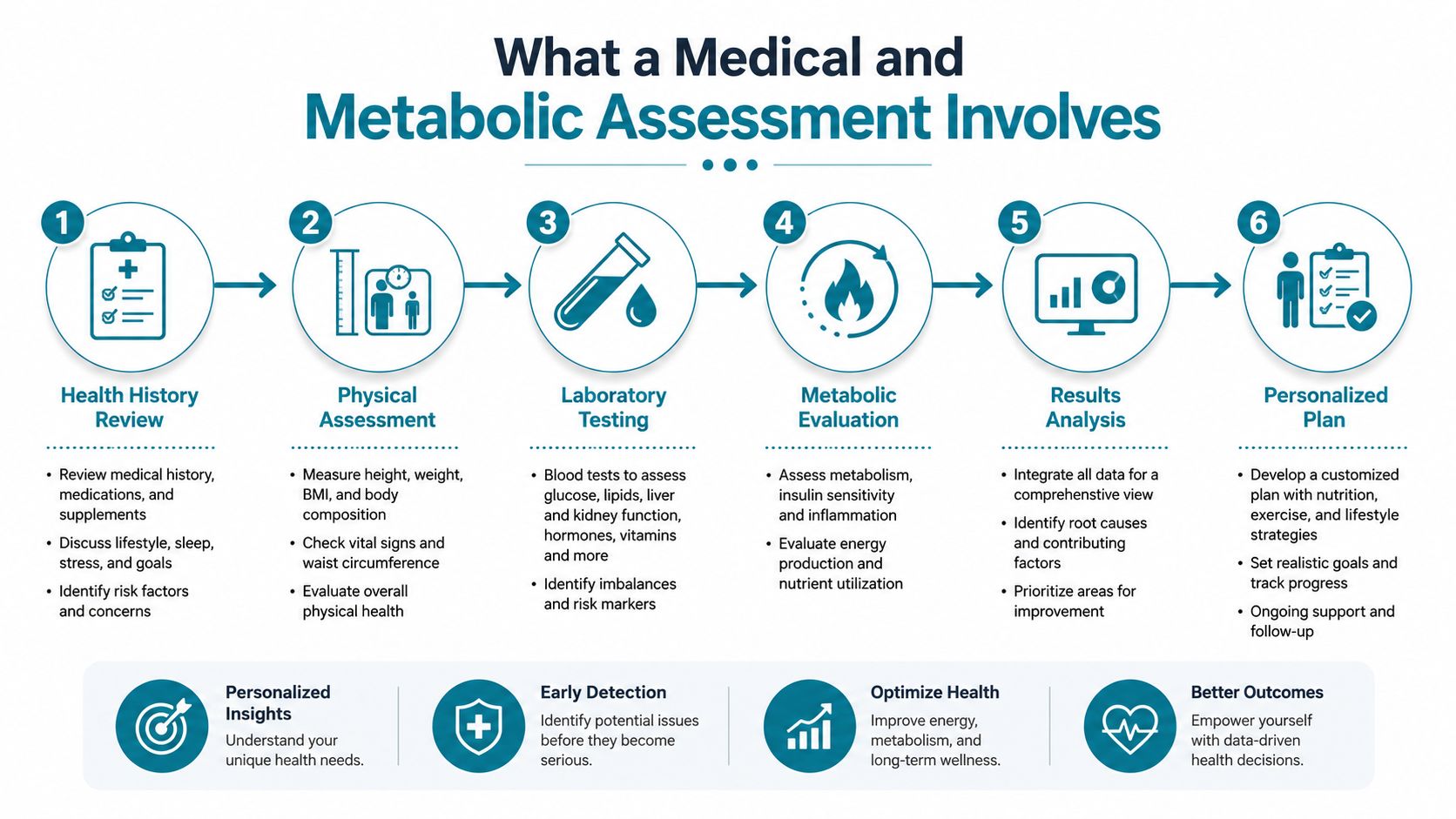
A good obesity medicine visit starts with the story of the weight, not a scale number. Clinicians look at when weight changes began, what patterns showed up over time, which efforts felt doable, and what happened when life got busier. They also review relevant medical history, current medications, sleep, stress, and eating patterns because weight is shaped by more than food choice alone.
The core pieces of the evaluation
A physician-led assessment usually looks at several domains together:
- Weight history: where the pattern started, what has changed, and which efforts were sustainable.
- Medication review: prescriptions, over-the-counter drugs, and supplements that may affect appetite, energy, sleep, or weight.
- Metabolic health: blood pressure, glucose-related concerns, lipids, and other health markers when clinically relevant.
- Daily rhythm: sleep duration, shift work, meal timing, stress, and alcohol or snack patterns.
- Behavioral barriers: eating away from home, family routines, travel, and time limits.
- Treatment fit: whether lifestyle measures alone are reasonable, or whether medication should be discussed.
Each piece matters because it changes the plan. A person with late-night hunger and poor sleep may need a different strategy than someone who skips meals and overeats at dinner. Someone taking a medicine that increases appetite needs a different conversation than someone whose main barrier is inconsistent meal structure. That's why a private medical visit can be more useful than generic advice.
A thorough assessment should make the next step feel specific, not vague.
If mental health medication is part of your picture, a medication review can matter there too, since some drugs can influence appetite, energy, and motivation. Empire's mental health medication review is one example of how a clinician can look at the broader medication picture without collapsing every issue into one bucket.
Patients can prepare for this visit by bringing a list of current medicines, prior diets or programs, typical meal timing, and any recent lab work if they have it. The goal is not to perform. The goal is to give the clinician enough context to build a plan that fits real life.
Setting Clinically Meaningful Weight Loss Goals
A good weight-loss target starts with health impact, not drama. The NIH's National Heart, Lung, and Blood Institute says losing just 5% to 10% of current body weight over 6 months can lower risk for heart disease and other conditions (NHLBI guide). That gives patients and clinicians a shared benchmark that is tied to physiology, not just appearance.
The CDC says people who lose weight at a gradual, steady pace of about 1 to 2 pounds per week are more likely to keep it off than people who lose weight faster (CDC guidance). In the NIH obesity evidence review, randomized trials often produce that same pace with a 500 to 1,000 kcal/day deficit for up to 6 months, along with 30 to 45 minutes of moderate activity 3 to 5 days per week at the start (NIH obesity evidence review).
What that looks like in practice
A person who starts at 200 pounds would use a 5% target of 10 pounds and a 10% target of 20 pounds. That range leaves room for a real physiologic response without assuming an extreme pace. It also helps patients avoid treating every slowdown as a failure when the body naturally resists ongoing loss after the early phase.
Practical rule: aim for a pace you can defend on a difficult week, not just on a perfect week.
Plateaus are normal. In structured treatment, weight loss often improves for several months and then levels off, so the key question becomes whether the plan includes a maintenance strategy. Physician-led care is useful here because it builds in review, adjustment, and accountability instead of a single check-in followed by guesswork.
A realistic goal-setting conversation also separates health goals from scale goals. Better energy, fewer cravings, improved sleep, or better blood pressure may show up before the final number does. Those markers matter because they show the plan is working even when the trend line is slower than expected.
For readers comparing services and cost before starting care, Empire's weight management visit pricing gives context for what a physician-led evaluation and follow-up can look like in private-pay care.
Building a Personalized Nutrition and Activity Framework
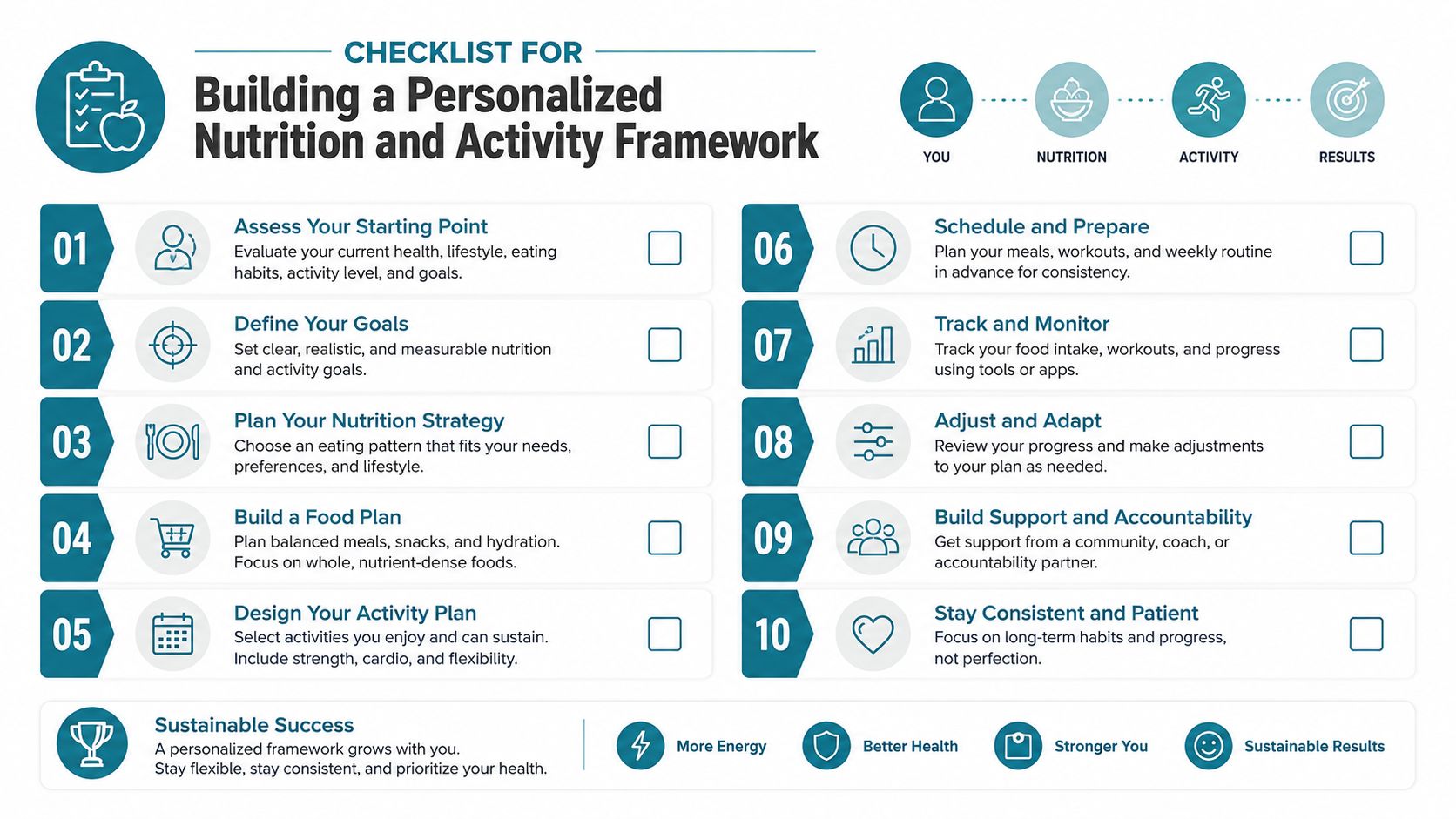
A plan only works if a patient can live with it on an ordinary Tuesday, not just during a motivated first week. In obesity medicine, that usually means a moderate calorie deficit, enough protein and fiber to support satiety, and a meal structure that fits work, family, travel, and unpredictable schedules. Severe restriction often breaks down once real life gets busy, which is why physician-led care focuses on repeatability instead of novelty.
Nutrition that supports adherence
A practical eating framework usually starts with three questions. What keeps you full? What leads to mindless snacking? What meals are hardest to control? Those answers help shape a plan around ordinary foods rather than gimmicks.
Some people do better with a larger breakfast and a lighter evening meal. Others need a planned lunch so they do not arrive home overly hungry. The goal is not to copy someone else's schedule. The goal is to reduce decision fatigue and make the plan easier to follow when energy is low.
Meal structure also needs to match the patient's physiology and routine. A person who eats fast food between appointments may need portable protein and a simpler ordering strategy. Someone who skips meals and then overeats at night may need a steadier pattern across the day. The right adjustment is the one that lowers friction and keeps hunger manageable.
Activity that fits the body you have today
Physical activity should begin at a level the body can tolerate, then build gradually. The NIH obesity evidence review supports 30 to 45 minutes of moderate activity 3 to 5 days per week early in treatment, but the starting point still depends on current fitness, joint comfort, and schedule (NIH obesity evidence review). Walking after meals, short strength sessions, and more standing during the day can all support a more active routine.
Behavior matters just as much as exercise choice. Tracking sleep, stress, and where meals are eaten gives the clinician a clearer view of why adherence breaks down. Survey analysis shows that people are especially interested in goal setting, motivation, physical activity, stress management, and eating away from home, which matches the day-to-day barriers many patients face (survey analysis).
A simple example makes the pattern clearer. A person who eats out often may need a plan for ordering before hunger gets extreme. Someone with a long commute may need portable meals instead of a perfect cooking routine. Someone with fragmented sleep may need to focus on bedtime consistency because appetite control gets harder when rest is poor.
The framework works best when it is reviewed and adjusted. If hunger stays high, meal composition may need to change. If the schedule falls apart on weekends, the weekend plan needs its own structure. Physician-led care differs from generic advice because it responds to what the body and behavior are doing. For readers comparing treatment options and follow-up models, this comparison of GLP-1 and phentermine can help clarify how medication choices may fit into a broader plan.
When Anti-Obesity Medications May Be Appropriate
A treatment plan for obesity often needs more than food changes and exercise alone. Medications can help reduce hunger, improve adherence, and support weight loss when the clinical picture shows that lifestyle treatment by itself is not enough. They work best as part of a broader plan that also addresses nutrition, activity, sleep, and follow-up, and the Obesity Medicine Association notes that medication without lifestyle change can raise the risk of muscle loss and nutritional deficiencies.
How clinicians think about medication fit
Medication becomes more reasonable when weight history, health risk, previous attempts, and current barriers all point in the same direction. A person who has regained weight after repeated efforts, has appetite that feels hard to control, or has medical conditions made worse by excess weight may be a better candidate than someone who is still early in the process. Tolerance, other medications, and medical history also matter, so the choice has to be individualized rather than automatic.
Some medicines are FDA-approved for long-term obesity treatment, while others have shorter labeled use or may be used differently in obesity medicine practice depending on the clinician's judgment and the full clinical picture. That distinction matters because the expected benefit, possible side effects, and follow-up needs are not the same for every option.
The key issue is approved use versus off-label use. FDA-approved obesity medicines come with specific indications and safety information. Off-label use means a clinician is using a medication in a way that is not specifically listed on the label, which requires a clear discussion of trade-offs, monitoring, and other options before treatment begins.
Monitoring is part of the treatment, not an afterthought
Starting medication is the beginning of treatment, not the end of the decision-making. Appetite, side effects, and weight response can change over time, and that is why follow-up has to be built into the plan from the start. Clinicians also look at whether the current medication still fits the person's goals, or whether the plan should continue, shift, or be reconsidered based on response and tolerability.
Practical rule: if a medicine helps appetite and weight trend in the right direction, maintenance planning starts early, not after the goal is reached.
For readers comparing common options, this comparison of GLP-1 medications versus phentermine is a useful way to understand different trade-offs without assuming one drug fits everyone.
People often ask which medication is strongest, but the better question is which one fits the person in front of you. For some, that means a once-weekly injectable. For others, it means a different oral or injectable approach, or no medication at all. Careful assessment keeps the conversation grounded in health, not hype.
Planning for Long-Term Maintenance and Follow-Up
The biggest mistake in weight care is treating goal weight like the finish line. Biology does not stop there. After weight loss, the body tends to defend the lower weight with increased hunger and slower energy use, which is one reason regain is so common and why maintenance has to be planned from the start.
A useful way to think about long-term care is that weight loss and weight maintenance create different problems. Early on, the challenge is adherence. Later, the challenge is physiology, routine drift, and the return of old triggers. That is why follow-up cannot be an afterthought, especially when a person has already had repeated cycles of loss and regain.
What a Maintenance Plan Requires
A good maintenance plan usually includes weight trend checks, appetite review, and a look at what has changed since the last visit. If weight is drifting up a little, that is useful information. It means the plan needs an adjustment before regain becomes large enough to feel discouraging.
The adjustment may be renewed meal structure, more activity, medication reassessment, or support around stress and sleep. It may also mean continuing a therapy that was helping rather than stopping it the moment progress slows. For some adults, that reassessment includes whether a medication dose, formulation, or access plan still fits the everyday routine, including options discussed on a GLP-1 online without insurance basis when medication remains clinically appropriate. The point is to respond early instead of waiting for a full reversal.
Follow-Up Should Be Scheduled, Not Improvised
People who lose weight often do best when monitoring continues during the period when old habits are most likely to return. That is especially true after vacations, holidays, travel, medication changes, or other disruptions that can shift appetite and routine. If the scale starts moving in the wrong direction, earlier follow-up makes it easier to correct course.
Maintenance works better when the plan assumes setbacks will happen.
For adults who want private, physician-led support while they are trying to lose weight and keep it off, Empire Medical Wellness offers medical and metabolic assessment, individualized weight-management planning, medication when clinically appropriate, and ongoing follow-up. The practice can help adults think through repeated attempts, plateaus, and maintenance planning with a calm, structured approach, so the plan matches the person instead of relying on generic advice.