
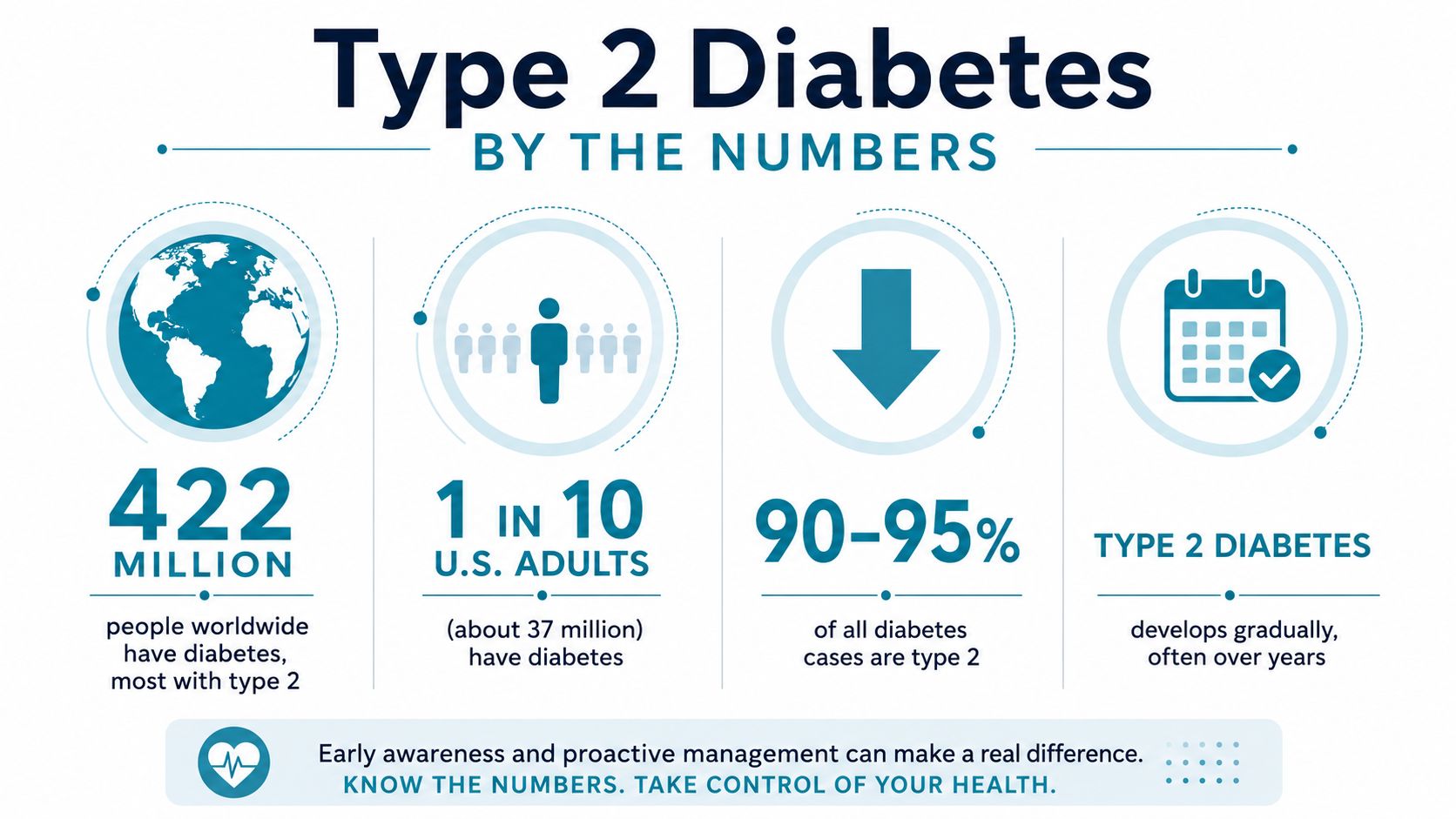
Type 2 diabetes isn't a niche diagnosis. In the Global Burden of Disease 2021 analysis, it accounted for 96.0% of all diabetes cases worldwide, with projected prevalence rising to 9.5% by 2050 and more than 1.27 billion people living with it by then (The Lancet, GBD 2021 analysis01301-6/fulltext)). That scale is why a careful, plain-language understanding of type 2 diabetes matters for adults with obesity, prediabetes, or a new diagnosis.
Type 2 diabetes is a chronic metabolic disease in which the body doesn't respond normally to insulin, then gradually loses the ability to compensate. It's different from type 1 diabetes, where insulin production is destroyed by an autoimmune process, and different from gestational diabetes, which appears during pregnancy. In routine U.S. care, it's also the subtype most adults are likely to encounter, because the CDC says about 90% to 95% of diabetes cases in the United States are type 2 diabetes (CDC).
Table of Contents
- Understanding the Scale and Definition of Type 2 Diabetes
- How Insulin Resistance and Metabolic Pathways Drive the Disease
- Diagnostic Criteria and Lab Markers You Should Know
- Why Body Size Alone Does Not Determine Risk
- Treatment Options Within Physician-Supervised Care
- When to Seek Routine Care Versus Urgent Evaluation
- Common Myths and Misconceptions About Type 2 Diabetes
Understanding the Scale and Definition of Type 2 Diabetes
The burden has grown large enough to affect ordinary clinic visits, not just public health planning. The World Health Organization reports that diabetes rose from 200 million people in 1990 to 830 million in 2022, while adult prevalence increased from 7% to 14% over that period (WHO diabetes fact sheet). A Global Burden of Disease analysis also found that the worldwide age-standardized prevalence of type 2 diabetes rose to 5.9% in 2021, with projections rising to 9.5% by 2050 (The Lancet, GBD 2021 analysis).
What type 2 diabetes means in plain language
Glucose is the body's main fuel, and insulin is the hormone that helps move glucose from the bloodstream into cells. In type 2 diabetes, the body does not respond to insulin normally, so glucose stays in the blood instead of being used efficiently.
That is why this condition is more than “high sugar.” It affects energy handling, fat storage, liver glucose output, inflammation, and long-term risk for complications. A person can have type 2 diabetes for years without obvious symptoms, which is one reason lab screening matters. Some adults also develop it at a normal body weight, so the diagnosis cannot be ruled out by appearance alone.
How it differs from other forms of diabetes
Type 1 diabetes usually begins when the immune system attacks insulin-producing beta cells. Gestational diabetes appears during pregnancy and needs its own obstetric follow-up. Type 2 diabetes develops gradually and is driven by insulin resistance plus progressive beta-cell dysfunction.
Practical rule: if you are reading about diabetes care, make sure the source is talking about the right subtype. Treatments, risks, and follow-up plans are not interchangeable.
For adults considering physician-led weight-management evaluation, the same metabolic risks that drive type 2 diabetes often overlap with obesity treatment priorities. A helpful overview of care costs is available on the weight-management cost page, which can be useful background for adults thinking about private-pay care.
How Insulin Resistance and Metabolic Pathways Drive the Disease
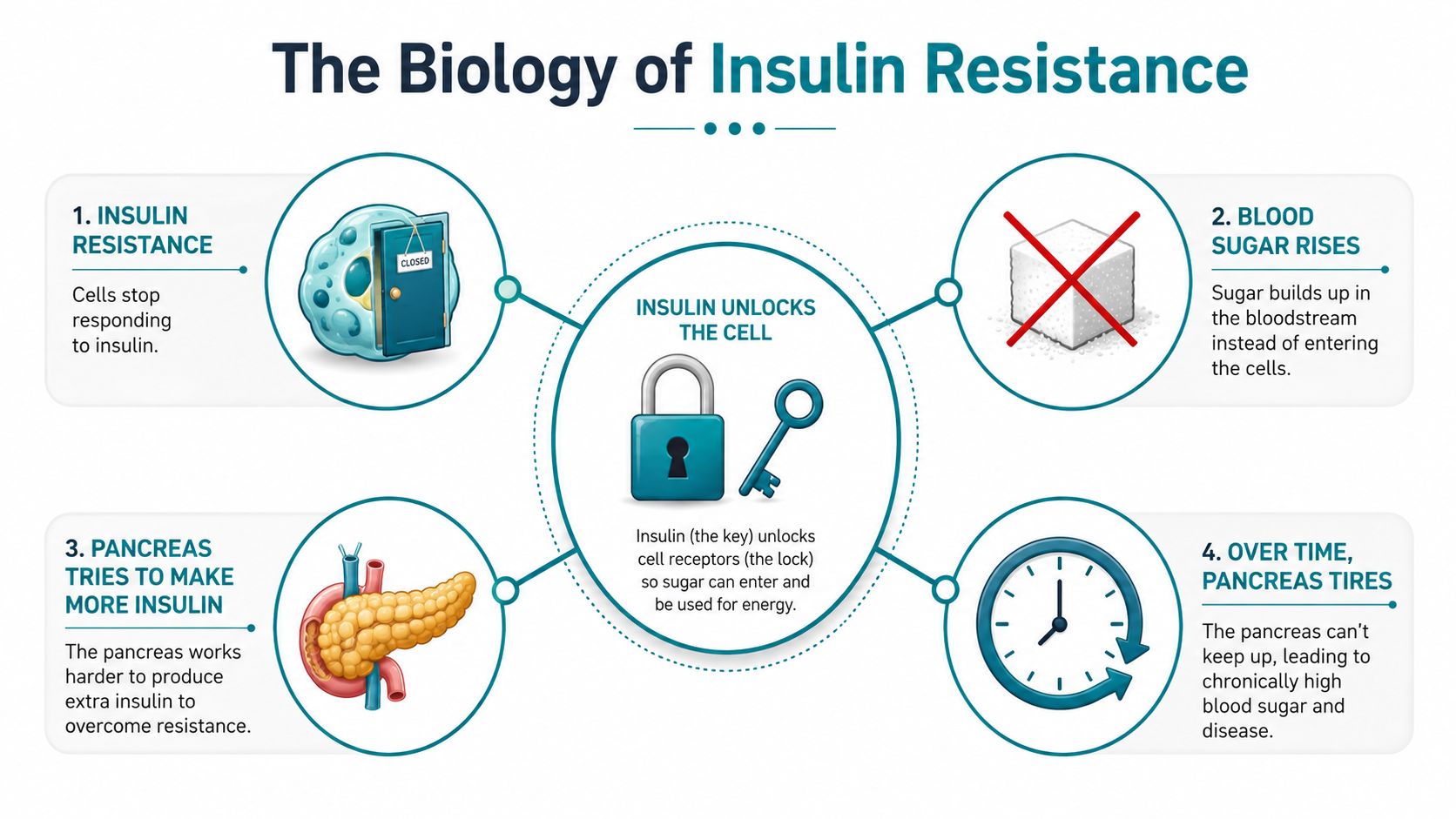
Insulin works like a signal that tells muscle, liver, and fat cells to handle glucose after a meal. In insulin resistance, those tissues respond less well to the signal, so glucose stays in the bloodstream longer and the pancreas has to work harder to keep up.
Why blood sugar rises
At first, the pancreas often compensates by producing more insulin. That extra output can mask the problem for a while. Over time, beta cells can no longer keep pace, insulin secretion becomes inadequate, and blood glucose begins to rise in a sustained way (mechanistic review).
A central signaling defect involves reduced downstream PI3K/Akt activity. When that pathway is impaired, muscle and adipose tissue take up less glucose, and the liver does not receive the normal signal to slow glucose release. The result is easy to miss at first, because the body may still be making insulin, but the message is not being received clearly.
Why it's not only a glucose disorder
Type 2 diabetes also involves chronic low-grade inflammation, ectopic lipid deposition, oxidative stress, endoplasmic reticulum stress, and mitochondrial dysfunction. These processes interact with one another. Excess fatty acids and high glucose can increase reactive oxygen species, and that can further weaken insulin signaling and beta-cell function (Nature Reviews?no, primary review on multi-pathway disease).
That is why a narrow focus on blood sugar alone can miss part of the biology. A care plan may need to address weight, glycemia, lipids, blood pressure, sleep, and cardiovascular risk together, because these systems influence one another rather than acting in isolation.
Clinical takeaway: if a plan focuses only on lowering sugar, it may overlook the broader metabolic process driving the disease.
For readers comparing nutrition strategies under medical supervision, the Empire Medical Wellness nutrition page shows how diet counseling can be framed inside a physician-led obesity-medicine visit. That matters for people who need practical meal guidance, not just general advice, especially when food access, cooking time, or health literacy are limited.
Diagnostic Criteria and Lab Markers You Should Know
A person can have type 2 diabetes for some time before symptoms make it obvious, which is why laboratory testing matters. The three tests used most often are A1C, fasting plasma glucose, and the 2-hour oral glucose tolerance test. Each one looks at a different part of glucose handling, so a single normal result does not always rule out abnormal metabolism.
Type 2 Diabetes Diagnostic Criteria
| Test | Normal | Prediabetes | Diabetes |
|---|---|---|---|
| A1C | Below 5.7% | 5.7% to 6.4% | 6.5% or higher |
| Fasting plasma glucose | Below 100 mg/dL | 100 to 125 mg/dL | 126 mg/dL or higher |
| 2-hour oral glucose tolerance test | Below 140 mg/dL | 140 to 199 mg/dL | 200 mg/dL or higher |
These thresholds match current ADA and CDC criteria (CDC prediabetes and diabetes diagnosis page). A1C reflects average blood sugar over about three months, fasting glucose measures how the body handles glucose after an overnight fast, and OGTT checks the response after drinking a standardized glucose solution. Used together, they give a clearer picture than any one test alone.
When confirmation matters
If a person does not have clear symptoms, clinicians usually confirm an abnormal result with repeat testing on another day or with a second abnormal test. That helps reduce false positives from temporary illness, laboratory variation, or unusual physiologic stress.
A composite hypothetical example makes this easier to see. An adult with obesity has an A1C of 6.6% and a fasting glucose of 129 mg/dL on routine screening. A clinician repeats testing, confirms the abnormal pattern, then reviews nutrition, activity, medication options, and cardiometabolic risk in a structured follow-up. Individual care varies, but that is the usual sequence.
A normal-looking body can still hide abnormal labs, and a person with limited food access or limited health literacy may need especially clear explanations of what the numbers mean. In that setting, the conversation should stay practical, not abstract, and should connect the lab pattern to what can be done next, including physician-guided support such as the Empire Medical Wellness weight-loss page.
Important limitation: these numbers are screening and diagnostic tools, not a substitute for a clinician's judgment about the full picture.
Why Body Size Alone Does Not Determine Risk
Body size can raise risk, but it does not explain the whole picture. Review literature describes lean type 2 diabetes as an under-recognized phenotype that may account for about 3 to 8% of global diabetes cases, with higher concentrations in South Asian, Sub-Saharan African, and Caribbean populations (review on lean type 2 diabetes).
A person with a normal BMI can still develop diabetes if insulin resistance is concentrated around the abdomen, if family history is strong, or if ancestry-linked risk is present. Some people also have metabolic changes that are not obvious from appearance alone. The body can look “normal” on the outside while glucose handling is already impaired on the inside.
Why BMI can miss people
BMI is a rough screening tool. It does not measure visceral fat, fat distribution, or how the pancreas is coping. A clinician who relies on body size alone can miss adults with normal BMI who already have central adiposity or other metabolic abnormalities.
That matters because delayed recognition delays care. People with lean phenotypes may be told their weight makes diabetes unlikely, even though the problem is not visible at the bedside. The more useful question is whether the body is handling glucose normally, not whether the person matches a stereotype.
Weight-focused advice can also miss the point for lean phenotypes. The conversation may need to focus on glucose patterns, waist distribution, family history, medications, and symptoms rather than repeated messages about losing more weight. That approach is especially important when weight loss is not the main issue or may not be appropriate.
What to ask about instead
Risk assessment should include ancestry, family history, central adiposity, symptoms, prior gestational diabetes, and lab markers when indicated. People sometimes hear, “You do not look like you have diabetes,” which is a shortcut that can delay proper evaluation. A careful history and exam do more than appearance ever can.
Practical rule: a normal BMI does not rule out insulin resistance, and a higher BMI does not diagnose diabetes by itself.
Physician-led metabolic care is useful because it separates appearance from physiology. It also helps avoid both missed diagnoses and unnecessary assumptions, which matters for people whose risk does not fit the usual visual pattern.
Treatment Options Within Physician-Supervised Care
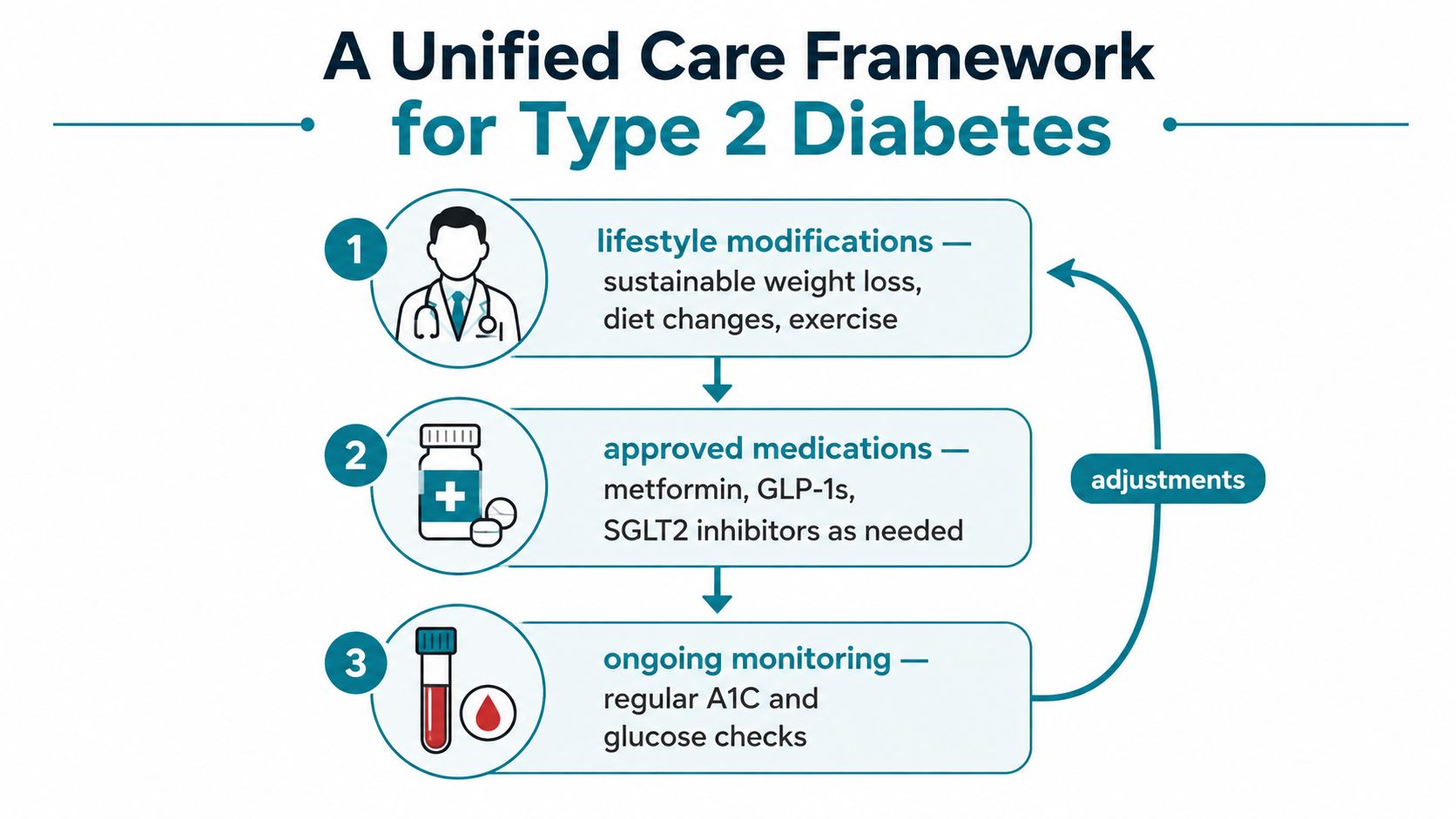
A treatment plan for type 2 diabetes should fit the person in front of you, not just the lab result. That matters because the disease is not driven by glucose alone, and care often needs to address several pathways at once, including insulin resistance, appetite signaling, activity patterns, medication tolerance, and the practical limits of daily life. For some adults, that also means recognizing lean type 2 diabetes, where body size does not match the usual stereotype.
A clinician-supervised plan usually begins with food choices that can be repeated in real life and, when possible, adapted to the person's cultural preferences and access to food. It may also include movement that is realistic for the person's joints, schedule, and baseline fitness, such as walking or resistance exercise. The goal is steadier metabolism over time, not a perfect routine that cannot be kept.
Medication review belongs in the same conversation. GLP-1 receptor agonists and GIP/GLP-1 therapy can support glucose control and weight management when they are clinically appropriate, but they still require screening for contraindications, discussion of side effects, and follow-up for tolerance. For a practical comparison of medication approaches, see the Empire Medical Wellness GLP-1 versus phentermine page.
Why follow-up matters
Monitoring is broader than a single lab value. It includes glucose or A1C trends, side effects, medication adherence, preservation of lean mass, and whether the plan is still workable for the patient's routine. If someone is dealing with food insecurity, limited health literacy, or poor digital access, the plan should be simplified and taught in plain language rather than made more complicated.
The same principle applies across chronic disease care. If a patient is also managing hypertension or depression, coordination matters because one condition can interfere with the treatment of another. A helpful external reference for that broader care-planning approach is how to manage hypertension and depression, especially when several conditions affect daily follow-through.
Bottom line: the best plan is the one a person can keep doing safely, with medical guidance.
When to Seek Routine Care Versus Urgent Evaluation
Blood sugar problems often move on two different tracks. One track is gradual, where glucose trends drift higher and the body has time to adapt. The other is abrupt, where illness, vomiting, or confusion can signal a medical emergency.
Routine versus urgent care
Routine care
- A1C or glucose rising slowly, which usually means a scheduled physician visit is appropriate.
- Wanting to adjust meal patterns or exercise, which fits a non-urgent metabolic consultation.
- Mild medication side effects, which should be reviewed during follow-up rather than ignored.
Urgent care
- Blood sugar over 300 mg/dL and not coming down, especially if it is persistent.
- Nausea, vomiting, or abdominal pain, which can signal a dangerous metabolic problem.
- Rapid breathing or confusion, which needs immediate medical attention.
The difference is timing and severity. Slow changes belong in routine follow-up, where a clinician can review patterns, barriers, and treatment options. Sudden symptoms need prompt evaluation because type 2 diabetes can affect several metabolic pathways at once, not just glucose, and those shifts can become unsafe quickly.
A useful way to sort this out is to ask whether the concern is stable, changing, or acute. Stable concerns, such as a slightly rising A1C or trouble staying on a meal plan, are usually handled in a planned visit. Acute concerns, such as vomiting with high glucose or new confusion, should be treated as urgent. If there is any doubt about medication-related symptoms, the Empire Medical Wellness Ozempic side effects page explains why symptom review belongs in follow-up care.
Questions to bring to the visit
A first appointment goes better when the patient arrives with a short list. Ask:
- Which test should confirm my diagnosis if the first result is abnormal?
- What do my A1C, fasting glucose, and other labs mean together?
- Do my body size and family history change my risk assessment?
- What side effects should make me call sooner?
- What should I do if food access or schedule limits make the plan hard to follow?
These questions matter for people at every body size, including adults with normal BMI who still have type 2 diabetes risk. They also matter when daily life is complicated by limited food access, rotating work hours, or low health literacy, because the best plan is the one the patient can carry out. A good visit should make the next step clearer, not more confusing.
Common Myths and Misconceptions About Type 2 Diabetes
A common myth is that type 2 diabetes is just a failure of willpower. That view misses how the disease develops. Biology, environment, insulin resistance, and progressive beta-cell dysfunction all play a role, so a diagnosis does not reflect a moral shortcoming.
Another misconception is that one medication can permanently cure it. Some people do reach remission, especially when treatment and daily habits reduce metabolic stress, but the underlying tendency can return if that stress returns. Improvement can be meaningful and still require follow-up, because remission is not the same as a permanent fix.
A third myth is that appearance tells the whole story. It does not. Some adults with normal BMI still develop type 2 diabetes risk, and some adults with higher BMI may not. The body can store fat in different places, and insulin resistance can show up in ways that are not obvious from a mirror or a scale.
Risk assessment has to be more precise than body size alone. Family history, lab trends, waist distribution, activity patterns, sleep, medications, and access to food all matter. That is especially important for adults who look “thin” but still have worsening glucose control, because lean type 2 diabetes is real and often overlooked.
For adults who want a thoughtful, physician-led evaluation of weight-related metabolic risk, Empire Medical Wellness offers obesity medicine care that stays focused on the individual, not assumptions. If that sounds like the kind of follow-up you've been looking for, explore the practice at Empire Medical Wellness.
This article is educational and not personal medical advice. If you have severe symptoms such as confusion, rapid breathing, vomiting, or a very high blood sugar that isn't improving, seek urgent medical care right away.
Many myths also come from treating type 2 diabetes as a single-glucose problem. In reality, it affects several pathways at once, including how the body handles insulin, fat, and energy use. That is why two people with the same A1C can still need different care plans, especially when food access is limited, work schedules are irregular, or health literacy makes self-management harder.
Private, physician-led obesity medicine can help adults review labs, discuss treatment options, and plan next steps with more clarity. For people researching type 2 diabetes alongside obesity or prediabetes, a clinician-led visit can make it easier to sort out what the numbers mean and what is realistic to do next.