
If you've tried more than one diet and the scale still doesn't stay down, you're not alone. In clinic, that pattern usually means the problem isn't a lack of effort, it's that weight loss is being treated like a short event instead of a long-term medical process.
The body defends weight more actively than many expect. That's why a plan that starts with strong motivation can still stall, rebound, or feel harder to maintain a few months later. A useful way to think about it is this, initial loss is only one phase, while maintenance needs its own structure, follow-up, and sometimes medication support.
Table of Contents
- What Weight Loss Really Involves
- How the Body Regulates Weight
- Evidence-Based Lifestyle Strategies
- Anti-Obesity Medication and Medical Monitoring
- Maintenance After the First 5 to 10 Percent
- When Environment Shapes the Outcome
- When to Seek Physician-Led Obesity Care
- Frequently Asked Questions About Weight Loss
What Weight Loss Really Involves
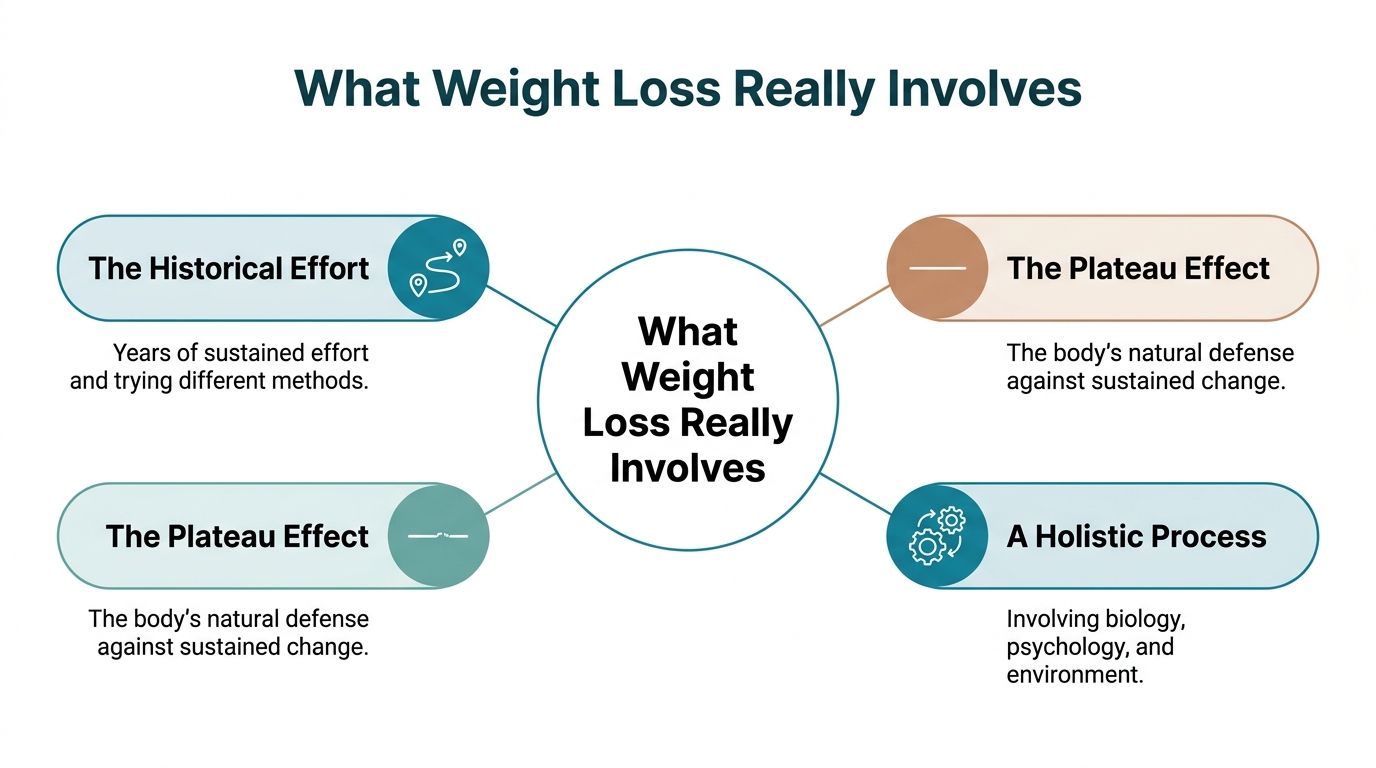
Many people who search for weight loss are not beginners. They've already counted calories, cut carbs, tried apps, joined programs, and worked hard enough to feel frustrated by the word “just.” That frustration makes sense, because the scale doesn't only reflect effort, it also reflects biology, environment, sleep, stress, medications, and time.
A better mental model starts with three truths. First, the body doesn't treat weight loss as a simple bookkeeping exercise. Second, early progress often looks better than later progress, because the body pushes back as weight comes down. Third, durable success usually needs a plan that addresses the whole arc, not just the first few pounds.
Practical rule: if a plan works only while you're white-knuckling it, it probably isn't built for maintenance.
The rest of this guide follows that logic. It starts with how the body regulates weight, then moves to lifestyle strategies, medication, maintenance after the first meaningful loss, and finally when a physician-led obesity medicine visit can help. That order matters, because people often get blamed for a problem that is partly physiologic and partly practical.
For many adults, the question isn't whether weight loss is possible. It's how to make it repeatable, tolerable, and maintainable without pretending the body will cooperate on command.
How the Body Regulates Weight
Weight loss begins with energy balance, which means the body uses more energy than it takes in. That basic idea is real, but it's not the whole story, because the body also protects against weight change through hormones, appetite signaling, and changes in energy use.
Two signals matter a lot here. Leptin tends to fall as body fat falls, and lower leptin is one reason hunger can rise after weight loss. Ghrelin is often described as a hunger hormone, and shifts in appetite-regulating pathways can make eating feel more pressing when someone is trying to maintain a lower weight. The result is not laziness or weak discipline, it's physiology defending a prior state.
Research on metabolic adaptation helps explain why maintenance gets harder. As weight drops, resting energy expenditure declines more than would be predicted from the loss of tissue alone, and that change can persist, which makes a lower weight harder to hold. Lean mass matters too, because behavioral weight loss usually reduces both fat mass and lean mass, and lean mass is a major contributor to total energy expenditure.
A simple way to say it is this, your body often needs fewer calories after weight loss than it did before. If eating patterns stay the same after the initial loss phase, regain becomes more likely. That's why a fixed diet rarely works forever.
The “set point” idea is useful here, not because it explains everything, but because it captures the body's tendency to defend a familiar range. In practical terms, that means successful long-term weight management usually needs ongoing adjustments to food intake, activity, and follow-up rather than one perfect plan that never changes.
The body's response to weight loss is coordinated and biologic, not moral.
For readers who've been blamed in the past, that distinction matters. It shifts the conversation from “Why didn't you try harder?” to “What did your body do in response, and what support does maintenance require?”
Evidence-Based Lifestyle Strategies

A person may lose the first several pounds by tightening meals, walking more, and watching the scale closely. The harder part often begins after that first stretch, when the body and daily routine start to push back. Weight loss works more like managing a chronic condition than completing a single effort, so the plan has to support both initial loss and the maintenance gap that follows.
Diet still has the clearest short-term effect in major reviews. The NHLBI evidence review found average weight loss of 4 to 12 kg at 6 months, then about 4 to 10 kg at 1 year, and 3 to 4 kg at 2 years as regain occurs, which is a useful reminder that early loss and long-term maintenance are different phases (NHLBI obesity evidence review). Another NIH evidence summary says randomized trials commonly produce about 1 to 2 lb per week when daily intake is reduced by 500 to 1,000 kcal/day, usually for up to 6 months. That pace is steady, not dramatic, and it helps explain why crash diets often disappoint, especially once the first burst of progress fades.
What tends to help most
- Structured eating patterns: Plans people can repeat, not just endure, usually hold up better than highly restrictive rules. A pattern that fits work, family, and social life is more likely to survive the maintenance phase.
- Physical activity: Exercise matters most after the initial loss phase. It helps support function, mobility, and energy balance, and it can make regained weight less likely when the diet is no longer the only focus. For a comparison of medication options used in some weight-loss plans, see this guide to GLP-1s vs phentermine.
- Sleep and stress care: Poor sleep and high stress can make appetite control harder, even when someone is following the plan well. These factors do not act alone, but they can tilt cravings and routine in the wrong direction.
- Self-monitoring: Simple check-ins, whether with weight, food patterns, or habits, make it easier to notice drift before regain becomes large. Think of them as the maintenance dashboard, not a grade.
The CDC recommends a gradual, steady pace of about 1 to 2 pounds per week for people who want to keep weight off more successfully than faster loss (CDC weight loss guidance). That does not guarantee success, but it gives a realistic target and keeps expectations anchored to what can be sustained.
The evidence summary in JAMA Internal Medicine shows a familiar pattern, mean loss of 5 to 8.5 kg, or 5% to 9%, in the first 6 months, with weight loss tending to plateau at around 6 months, and studies extending to 48 months showing a mean maintained loss of 3 to 6 kg, or 3% to 6% (PubMed summary of the review). In plain English, the scale often responds first, then slows, then tests whether the plan can survive ordinary life. That gap after the first 5 to 10 percent is where maintenance infrastructure matters most.
A Mediterranean-style pattern is one example of a sustainable eating approach for many adults. It emphasizes vegetables, legumes, whole grains, nuts, olive oil, fish, and less red meat, and it is often easier to maintain than a highly punitive plan (Harvard Health guide to the Mediterranean diet). The right pattern is the one a person can repeat over time, not the one that sounds most impressive on day one.
Anti-Obesity Medication and Medical Monitoring
A patient who has already tried diet changes may reach a point where the next question is not whether to try harder, but whether the plan needs another tool. For some adults, medication belongs in that plan. Medication does not replace lifestyle work. It treats obesity as a chronic condition that may require more than behavior change alone.
The NIH obesity evidence review describes anti-obesity drugs as producing a mean 5% to 10% body-weight reduction within about 6 months of starting treatment. That range helps set a realistic frame without pretending the outcome is identical for everyone. Some people respond better, some less well, and the result depends on factors such as adherence, side effects, and the fit between the medication and the person's daily life.
What physician-led monitoring usually covers
Medication works best inside a monitored plan, the same way a blood pressure medicine is checked against symptoms and readings rather than taken on faith. Physician-led follow-up usually asks four practical questions.
- Response: Is the treatment helping enough to justify staying with it?
- Side effects: Are there symptoms that need attention or a different approach?
- Follow-up: Is the plan workable in ordinary life, or is it too hard to sustain?
- Maintenance planning: What happens after the first loss phase, especially if progress slows?
FDA approval matters because it means a medication has gone through formal review for a specific use. That is different from off-label use, which can be reasonable in some settings but should involve a clearer discussion of evidence, risk, and fit. It also matters to separate approved products from compounded versions, because approved medications follow a defined manufacturing and regulatory pathway.
Practical rule: if a treatment plan does not include monitoring, part of the treatment is missing.
For a general comparison of treatment options discussed in obesity medicine, this weight-loss medication guide can help readers see how physician conversations often differ across medication classes. Private-pay care can be helpful when a person wants that level of discussion, especially if earlier attempts have not held up over time.
| Approach | Typical 6-month loss | Typical 12-month loss | Notes |
|---|---|---|---|
| Lifestyle intervention | Often meaningful early loss, but varies | Often less than the 6-month phase because regain can occur | Works best with structure and follow-up |
| Anti-obesity medication | 5% to 10% body-weight reduction in about 6 months | Long-term use is often needed for maintenance | Monitoring matters as much as the prescription |
| Combined care | Can support better adherence than either alone | More realistic for chronic management | Depends on fit, follow-up, and tolerability |
A clinician and patient still have to decide whether a given medication is appropriate, and whether the trade-offs make sense for that person. Some people prefer to avoid medication. Others want a plan that includes it because repeated diet-only attempts have not been durable. The point is not that medication is a shortcut or a verdict, it is one tool in a long-term treatment plan.
Maintenance After the First 5 to 10 Percent
A common mistake in consumer weight-loss advice is treating the first stretch of loss as the finish line. Many people can start with structure and motivation, but fewer are given a maintenance plan that assumes the body will push back.
Maintenance is where the biology becomes obvious. As weight drops, hunger signals can rise, resting energy use can fall, and the body can become more efficient with fuel. The same intake that produced early loss may stop producing the same result, even when someone is still following the original plan closely.
Long-term data fit that pattern. In U.S. adults who had ever been overweight or obese, only 17.3% reported maintaining at least 10% weight loss long term, and 4.4% maintained 20% or more (CDC data brief). In adults with obesity, 63% reported trying to lose weight in the prior year, while among those attempting weight loss, 40% achieved at least 5% loss and 20% achieved at least 10% loss, per CDC data brief. That gap matters. Trying, losing, and keeping the loss are different phases of care.
What a maintenance plan usually includes
- Continued follow-up: Regular check-ins help catch drift early.
- Activity progression: Exercise often needs to grow as the plan matures.
- Nutrition re-titration: Food targets may need updating after weight changes.
- Medication review: If medication is part of care, the plan should revisit benefit, tolerability, and long-term use.
The CDC advises people to monitor progress and revise goals as needed rather than treating weight loss as a one-time event, as the CDC notes in its weight loss guidance. That fits what clinicians see in practice. A lower weight must be actively defended, not merely achieved.
For readers considering medication and wanting to understand long-term support, this option for online obesity medication care reflects the same principle that maintenance planning should be built in from the start.
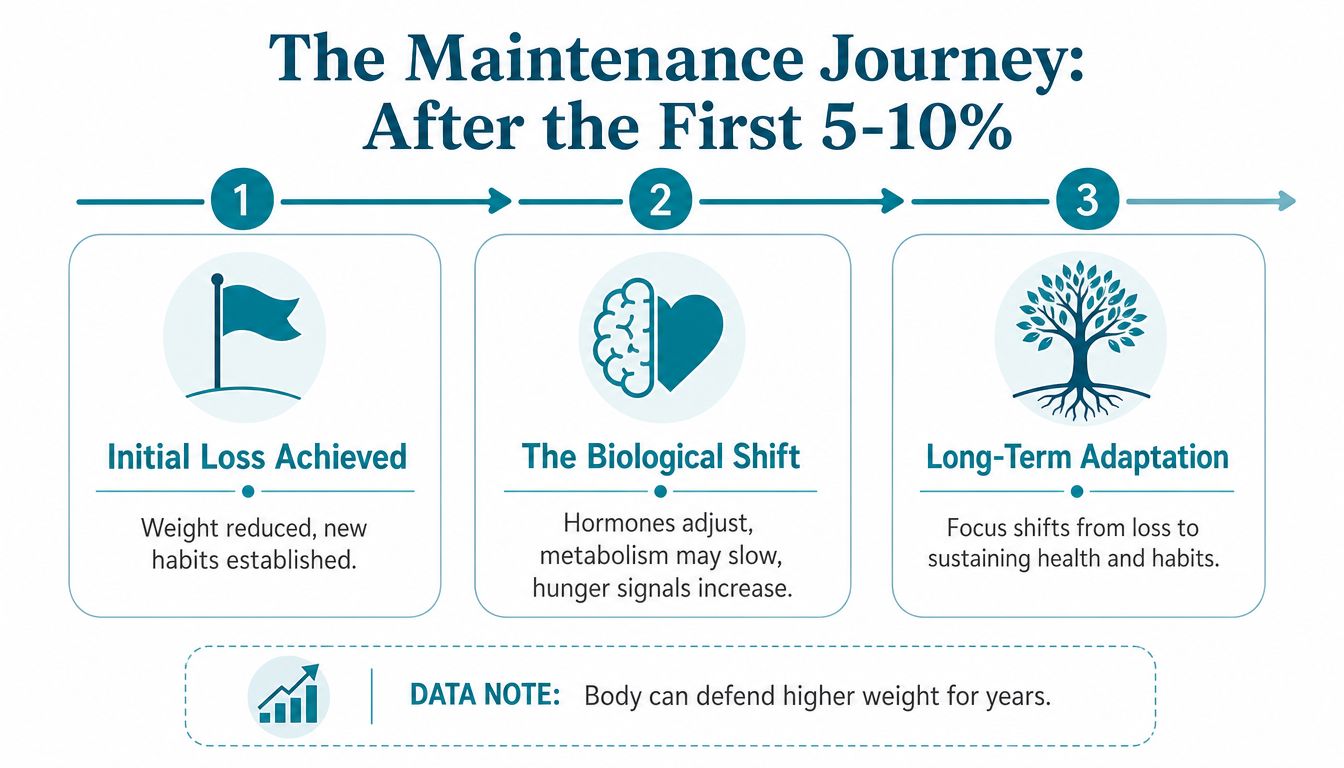
The maintenance phase is not a failure point. It is the part of care that comes after success, when the plan has to hold up in ordinary life.
When Environment Shapes the Outcome
Not everyone is trying to lose weight from the same starting line. Grocery budgets, food access, work schedules, household stress, and meal timing all change what's realistic, even when two people are given the same advice.
A useful example comes from an underserved primary-care trial. In a post hoc analysis, food insecurity blunted weight loss over 24 months compared with food-secure patients, even though both groups received the same intensive lifestyle intervention (PMC analysis). That doesn't mean weight loss is impossible in a difficult environment. It means the environment can change the response.
The distinction matters in clinic. Someone may know what to eat and still struggle to buy it, store it, prepare it, or eat it at predictable times. Stress can also make planning harder, and irregular access to food can push people toward whatever is available, not whatever is ideal.
A plan that works in a stable household can fail in a strained one for reasons that have nothing to do with effort.
For people who want a more nuanced conversation about these practical constraints, this discussion of the cost of weight management can help frame the issue before a visit. The right question is not whether someone is “committed enough.” The better question is what barriers are shaping daily choices, and how a clinician can adapt the plan to fit them.
When to Seek Physician-Led Obesity Care
A physician-led obesity medicine visit can make sense when prior attempts haven't held, when weight-related health concerns are present, or when someone wants a plan that includes monitoring instead of guesswork. It can also be appropriate if medication is being considered and the person wants a careful discussion of fit, safety, and follow-up.
At Empire Medical Wellness, Dr. Chhatpar provides direct care in the practice's obesity medicine service. A typical visit may include a history review, medical and metabolic assessment, individualized planning, and discussion of ongoing monitoring and maintenance. That kind of structure is useful when the issue isn't effort, but durability.
The practice is private-pay and appointment-based, and adults who want to learn more can review the appointment request page. The goal is not to promise a result, it's to build a plan that matches the person's history and supports the long term.
If the next step is a consultation, keep the goal simple, bring a full list of prior efforts, and be ready to talk about what felt sustainable, what didn't, and what barriers came up. That kind of information helps a clinician make the plan more realistic.
Frequently Asked Questions About Weight Loss
If weight loss has felt straightforward at the start and harder after a few months, that pattern is familiar in obesity care. The first part of treatment often changes the scale, but the harder task is building the routine that keeps weight from drifting back. That is why these questions focus on pace, meaningful change, medication, and maintenance.
How fast should weight loss happen?
A gradual pace is usually easier to sustain. Per CDC guidance, adults who lose weight steadily at about 1 to 2 pounds per week are more likely to keep it off than people who lose it faster.
What counts as clinically meaningful weight loss?
In many obesity medicine discussions, 5% to 10% body-weight loss is a meaningful benchmark because it can reflect real physiologic change, not just day-to-day scale fluctuation. The exact goal depends on the person, the health issue being addressed, and the treatment plan. For some people, the first 5 to 10 percent is the point where labs, energy, or symptoms begin to shift. For others, it is only the opening phase, and the maintenance plan matters just as much as the initial loss.
Do weight loss medications have to be taken forever?
Obesity is a chronic condition, and many people regain weight after stopping medication, so ongoing monitoring matters. The right duration depends on response, side effects, and what happens when treatment is adjusted. A useful way to think about it is the way clinicians treat other chronic conditions, with follow-up, dose review, and maintenance planning rather than a one-time prescription. The question is often less about whether medication can work and more about how to support the benefit after the first response.
What should I look for in a physician-led evaluation?
Look for a visit that reviews history, relevant medical issues, current medications, and realistic follow-up. A good evaluation should also discuss what happens if progress slows, because the maintenance phase is part of treatment. That matters after the first 5 to 10 percent, when many consumer plans become vague and a clinician may need to adjust the plan instead of repeating the same advice. The goal is to see whether the approach includes monitoring, troubleshooting, and a plan for weight regain before it happens.
If you're dealing with repeated regain, trying to decide whether medication belongs in the plan, or just want a calmer, more structured conversation about obesity care, Empire Medical Wellness can help you think through the options with a physician-led approach. Visit Empire Medical Wellness to learn more about obesity medicine and request an appointment when you're ready.
This article is educational and isn't personal medical advice.