
Saturated fat can raise LDL cholesterol, and lowering it matters most when it's replaced with unsaturated fat rather than refined starch or added sugar. If saturated fat disappears from a meal, what fills the space left behind? That replacement question changes how a label, a recipe, and a daily eating pattern should be judged.
Table of Contents
- Why Saturated Fat Matters With Your Replacement
- Understanding Saturated Fat and LDL
- Comparing Saturated Fat Guidance
- Compare Food Labels With Simple Math
- Find Higher Saturated Fat Sources
- Make Substitutions That Fit Your Table
- Connect Nutrition to Individualized Care
Why Saturated Fat Matters With Your Replacement
Many adults ask how much saturated fat is too much. A more useful question comes first. What food will replace it?
Removing butter and adding a sugary, refined starch isn't the same nutritional change as cooking with olive oil instead. The first swap lowers saturated fat but doesn't add unsaturated fat. The second swap changes the type of fat in the meal. That distinction sits at the center of current guidance and helps explain why simple good versus bad labels often confuse readers.
A practical way to frame the choice
A calm starting point has three steps. Readers can check which foods contribute the most saturated fat, compare those foods at realistic portions, and choose one substitution that fits taste, culture, cost, and access. A single sustainable swap is easier to evaluate than a sweeping rule that removes familiar meals.
The American Heart Association advises aiming for less than 6% of calories from saturated fat, which is about 13 grams on a 2,000-calorie diet, in its American Heart Association guidance on saturated fats. That figure is attributable guidance, not a universal prescription. Calorie needs vary. LDL levels, medical conditions, medications, food access, and personal preferences also vary.
Practical rule: Don't judge a change only by the saturated fat removed. Judge it also by the food added in its place.
Adults who want broader context for meal planning can review the nutrition guidance page alongside label information for specific foods. Even a familiar unsaturated fat source still contains calories, so portion context matters. Readers comparing energy density in whole foods may find a breakdown of calories in avocado per gram useful as a general reference, separate from any medical recommendation.
That approach avoids two common errors. It doesn't treat saturated fat as harmless just because it's found in a popular food. It also doesn't assume that every low saturated fat product is a better choice. The replacement may bring unsaturated fat, fiber, and protein, or it may bring mostly refined carbohydrate. Those are different patterns, and they shouldn't be given the same credit.
Understanding Saturated Fat and LDL
Saturated fatty acids are a type of fat found in animal products and in some plant oils, including coconut and palm oil. Many are solid at room temperature, as butter is. Unsaturated fats are usually liquid at room temperature, as olive and canola oil are.
LDL cholesterol, often written as LDL-C, is a blood lipid that carries cholesterol in the bloodstream. Higher LDL-C is associated with cardiovascular risk. Saturated fat can raise LDL-C, but one food doesn't determine a diagnosis, and a single meal shouldn't be treated as a medical test result.
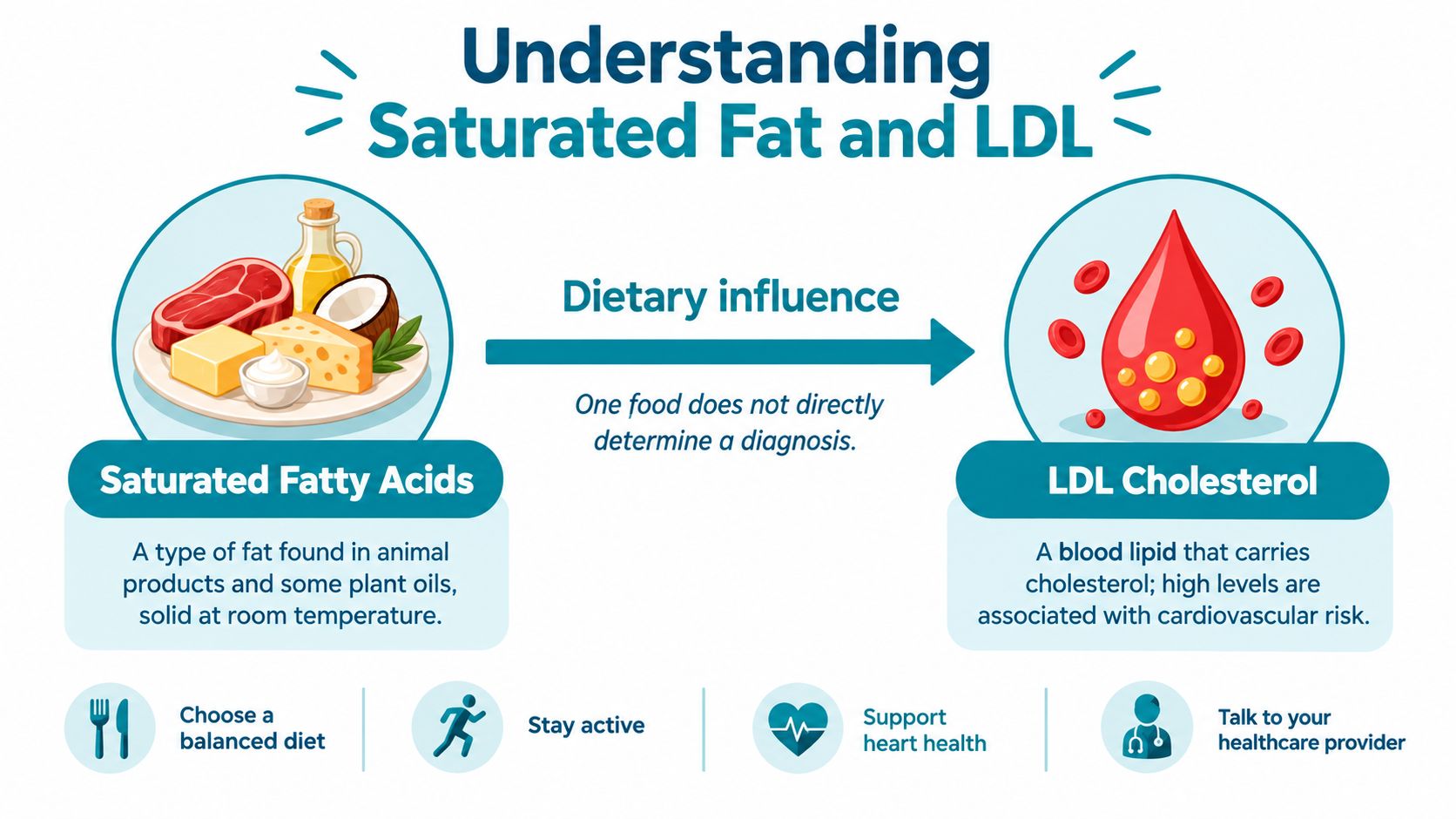
Think of fats as building materials
A meal pattern resembles a structure built from different materials. Replacing one material changes the whole pattern, not just one corner. When saturated fat is replaced with polyunsaturated fatty acids, particularly linoleic acid rich vegetable oils, LDL-C reduction is greater than when it's replaced with monounsaturated fat, according to the American Heart Association scientific advisory on dietary fats and cardiovascular disease. The same advisory reports that randomized trials replacing saturated fat with polyunsaturated vegetable oil reduced cardiovascular disease by approximately 30%.
That evidence supports substitution, not a promise. It doesn't mean a specific oil will produce a specific result for a specific person. It means the comparison should be made correctly. Butter compared with olive oil is one question. Butter compared with white bread or added sugar is a different question.
Liquid vegetable oils, nuts, seeds, legumes, and fish can provide unsaturated fat within meals. Lower fat dairy may reduce saturated fat compared with full fat dairy at a similar portion. None of these foods guarantees a health improvement on its own.
The overall eating pattern remains more informative than a single ingredient. So do clinically measured risk factors, including LDL-C when testing is appropriate. A food can be lower in saturated fat and still be high in sodium, added sugar, or calories. A food can also contain saturated fat while providing protein or other nutrients. Context prevents a label from becoming a moral judgment.
Comparing Saturated Fat Guidance
Different organizations publish different numbers because they serve different purposes. A population ceiling is designed for broad public health communication. A lower clinical target may be discussed with adults who need LDL-C reduction. Neither number replaces individualized care.
The World Health Organization updated its guidance in July 2023 and recommends that people aged 2 years and older obtain no more than 10% of total energy from saturated fatty acids, with trans fat limited to no more than 1% of total energy, in the World Health Organization update on fats and carbohydrates. U.S. guidance similarly recommends less than 10% of total daily calories from saturated fat for adults, as described in the U.S. Dietary Guidelines material on saturated fat.
Converting percentages into grams
The math is simple. Fat provides about 9 calories per gram. On a 2,000-calorie diet, 10% equals 200 calories. Dividing 200 by 9 gives roughly 22 grams per day.
- 10% benchmark: About 22 grams at 2,000 calories.
- AHA 5 to 6% range: About 11 to 13 grams at 2,000 calories for adults with raised LDL-C, based on the advisory cited in the earlier section.
- Different calorie needs: The gram amount changes when total calories change.
The AHA's more recent professional summary, the 2026 dietary guidance to improve cardiovascular health, provides additional context for clinicians and readers comparing current recommendations. A date matters because guidance can be reviewed and updated. Readers shouldn't treat an older screenshot or social media summary as current medical advice.
A lower percentage isn't automatically better in every circumstance. WHO evidence for reducing intake below 10% is described as limited in the World Health Organization guideline document on saturated fatty acid intake. The nutritional quality of the replacement still matters. Pushing saturated fat lower by adding refined carbohydrate doesn't carry the same meaning as replacing it with unsaturated fats or fiber rich plant foods.
Adults reviewing general eating patterns can compare these benchmarks with the healthy diet overview and then discuss personal targets with a qualified clinician. A clinician may consider LDL-C, other cardiometabolic factors, calorie needs, medical history, and whether a proposed change is realistic over time. A population number can start that conversation. It can't finish it.
Compare Food Labels With Simple Math
A food record doesn't need specialized software to be useful. It needs honest portions. The central calculation is grams of saturated fat per serving multiplied by the number of servings eaten.
Modern U.S. Nutrition Facts panels list saturated fat separately. The serving size appears near the top of the label. That serving size may be smaller than the portion placed on a plate, poured into a bowl, or served in a restaurant.
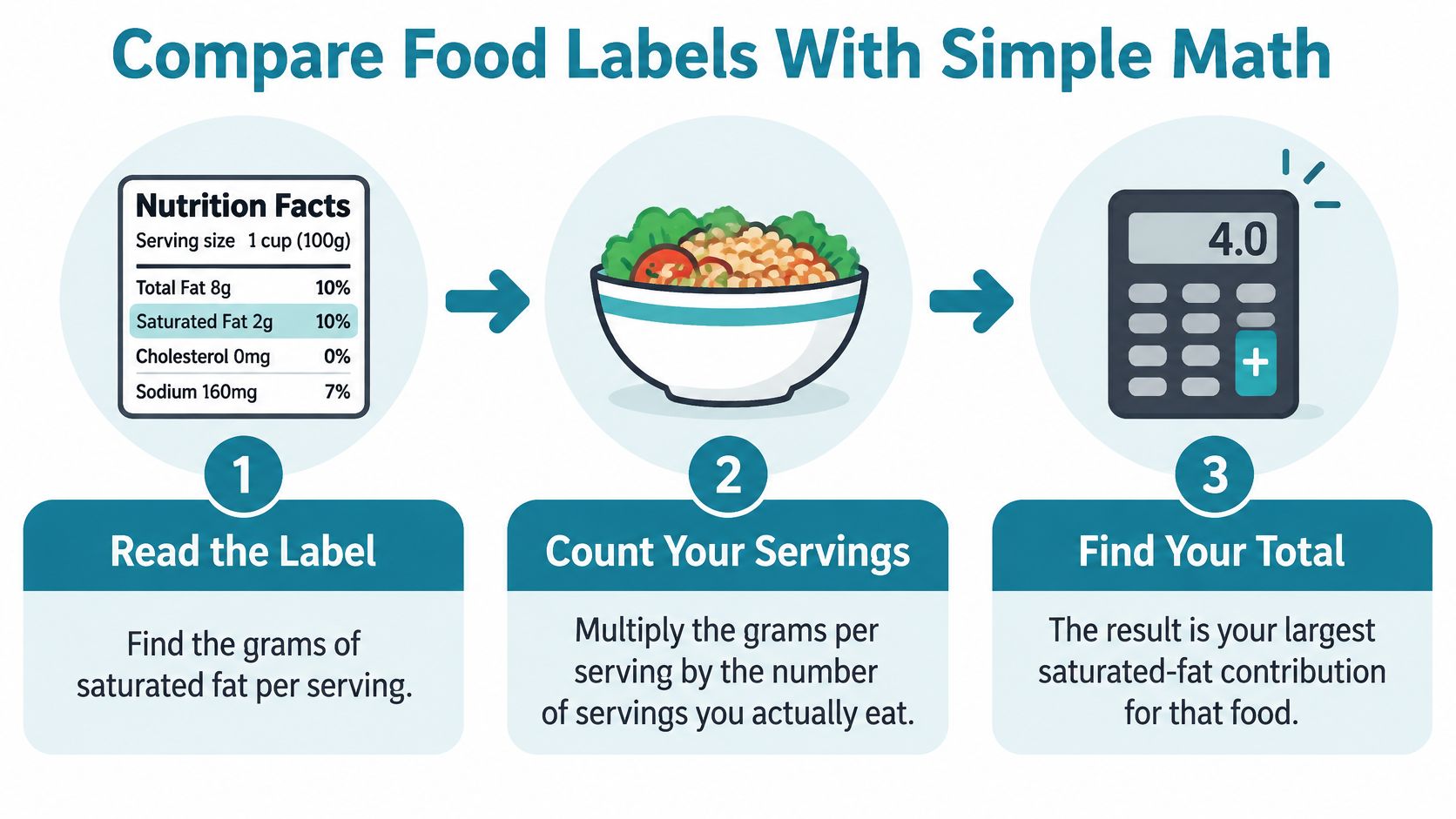
A repeatable three-step method
- Read the serving size: Note the amount the label uses and the grams of saturated fat listed for that amount.
- Count actual servings: Estimate how many label servings were eaten, including seconds and shared dishes.
- Multiply and add: Multiply grams per serving by servings eaten, then add the results across the day.
A symbolic example keeps the method clear without inventing a product value. If a label lists G grams per serving and a person eats S servings, the total from that food is G × S grams. Repeating that calculation for each food shows which items contribute most. The largest contributors deserve attention before minor ingredients do.
The label serving isn't a recommended portion. It's the reference amount used for the numbers on that package.
Comparisons work best at the same portion size. Two cheeses, two yogurts, or two cooking fats should be compared gram for gram or serving for serving. Brand recipes differ, so a familiar product should be checked again if its label changes. Restaurant meals are harder to estimate because cooking fats, sauces, cheese, and portion sizes may not be visible.
A short food record can also reveal pattern questions beyond saturated fat. A replacement food may add fiber, protein, sodium, or added sugar. Adults looking for higher fiber replacement ideas can review foods high in fiber while remembering that fiber content doesn't cancel out every other nutrient. The goal of the record is clarity, not perfection.
No clinic average is needed to use this method. The record belongs to the individual reader. It identifies one feasible substitution, creates a baseline for discussion, and avoids turning an estimate into a promised result.
Find Higher Saturated Fat Sources
Some sources are obvious. Butter, fatty meat, and cream announce themselves. Others hide inside pastries, sauces, cheese, processed meat, and packaged foods made with coconut or palm oil.
Coconut oil is not low in saturated fat. Its plant origin doesn't make it equivalent to olive or canola oil. That's a common substitution mistake. Palm oil raises a similar concern in packaged foods, where it may appear in baked goods, spreads, and convenience items.
Recent U.S. dietary guideline evidence states that swapping saturated fat sources for beans, lentils, whole grains, vegetables, nuts, or oils rich in unsaturated fat is associated with lower cardiovascular risk than replacing one animal based saturated fat food with another, as summarized in the Dietary Guidelines Advisory Committee executive summary. The replacement may help through lower saturated fat, added fiber, or other nutrients. Those combined features are part of the comparison.
Saturated Fat Substitution Guide
| Food Often High in Saturated Fat | Possible Unsaturated-Fat Swap | Planning Note |
|---|---|---|
| Butter | Liquid olive or canola oil | Compare labels at the amount used for cooking |
| Coconut or palm oil | Nontropical liquid vegetable oil | Plant based doesn't mean low in saturated fat |
| Fatty or processed meat | Beans, lentils, or fish | Consider protein, sodium, allergies, and access |
| Full fat dairy | Lower fat dairy when appropriate | Check added sugar, portion size, and tolerance |
| Cream based sauces | Oil and herb based sauces, or blended legumes | Preparation changes texture and total calories |
| Pastries and packaged snacks | Nuts or seeds in a planned portion | Check salt, added sugar, and label serving size |
Exact grams require label and brand verification. A table can organize choices, but it can't assign a universal value to every recipe. Cheese varies by type and portion. Meat varies by cut and preparation. A pastry may contain butter, palm oil, or both.
Allergies and food safety also shape the choice. Nuts and fish aren't appropriate for every household. Cost and local availability matter. Cultural preferences matter too, and no cuisine needs to be rejected to make a thoughtful substitution.
A useful review starts with frequency. A food eaten daily contributes differently from a food eaten occasionally. A large portion contributes differently from a small one. Ranking foods by actual contribution helps adults choose changes that are meaningful without turning every meal into a calculation exercise.
Make Substitutions That Fit Your Table
A hypothetical shopping example can show the process without implying a patient outcome. A shopper plans to cook vegetables and eggs at home. Butter is the usual cooking fat. For one meal, the shopper chooses liquid olive oil instead.
That example illustrates a substitution only. It isn't a documented patient response. It doesn't predict an LDL reduction, weight change, or disease prevention.

Preserve the meal, adjust one part
A familiar stew can remain a stew. Beans or lentils can replace some fatty meat while keeping the same spices, vegetables, and cooking method. A smaller portion of fatty meat can also be paired with a larger portion of legumes or vegetables.
Fish may fit some households as an alternative protein. Nuts or seeds may add unsaturated fat to salads, grains, or sauces when allergies and cost allow. Lower fat dairy may suit some recipes, while a smaller amount of full fat dairy may better preserve a culturally important dish. Both approaches can be discussed without framing one cuisine as correct and another as careless.
Questions make the swap more realistic.
- Portion: How much is served at home?
- Preparation: Is the food fried, grilled, baked, or cooked in sauce?
- Access: Is the replacement affordable and available nearby?
- Tolerance: Are allergies, digestive concerns, or medical restrictions relevant?
- Sustainability: Will the household accept the taste and texture more than once?
Adults seeking recipe level context can review the heart healthy eating page and adapt ideas to familiar ingredients. A substitution doesn't need to be permanent to be informative. Trying one meal can reveal cost, flavor, cooking time, and family response. Those practical details often decide whether a pattern lasts.
Connect Nutrition to Individualized Care
For adults considering physician led obesity care, saturated fat is only one part of a broader evaluation. A clinician may review weight history, nutrition patterns, food access, relevant health factors, lipid results, and treatment goals. That review can separate a general benchmark from a personal plan.
Monitoring may include a food record, label comparison, and clinically appropriate lipid assessment. No verified three month clinic reduction average is presented here because an individual record is more relevant than an unsupported group claim. A record also shows whether saturated fat was replaced with unsaturated fat, fiber rich foods, refined carbohydrate, or a larger portion of something else.
Questions for a physician visit
- LDL context: What do current lipid results mean in the full medical picture?
- Target setting: Which saturated fat range fits personal calorie needs and cardiometabolic risk?
- Replacement quality: Which substitutions add unsaturated fat, fiber, or protein?
- Practical fit: How do culture, allergies, cost, access, and cooking habits affect the plan?
- Follow up: When should eating patterns or lipid results be reviewed again?
Adults with concerns about cholesterol can read the high cholesterol information page before an appointment and bring specific label questions. Obesity medicine is a distinct service area focused on medical and metabolic assessment, individualized planning, monitoring, and maintenance. It shouldn't be confused with addiction care or mental health care, and obesity shouldn't be described as a failure of willpower.
This article is educational and isn't personal medical advice. It doesn't diagnose any reader or direct anyone to start, stop, or change medication. Adults with a lipid disorder or another medical condition should discuss individualized nutrition targets with a qualified physician who knows their history.
Adults who want physician led obesity medicine with individualized cardiometabolic evaluation, nutrition discussion, monitoring, and long term planning can learn more through Empire Medical Wellness. A visit to the practice website is a restrained next step for reviewing care options and deciding whether a medical evaluation fits personal goals.