
Mounjaro is tirzepatide, and the FDA approves it to improve glycemic control in adults with type 2 diabetes as an adjunct to diet and exercise. It is not indicated for type 1 diabetes, and Zepbound is the separate tirzepatide brand used for chronic weight management.
Table of Contents
- Introduction to Mounjaro and What Readers Should Know First
- How Tirzepatide Works in the Body
- Mounjaro Compared With Zepbound and Other FDA Indications
- What Research Shows About Effects and Weight Changes
- Side Effects Contraindications and Safety Monitoring
- How Physicians Evaluate Whether Mounjaro Is a Good Fit
- Living With Treatment and Next Steps for Evaluation
Introduction to Mounjaro and What Readers Should Know First
Why do some clinicians discuss Mounjaro for diabetes, while many readers hear about it in weight-loss conversations? The FDA label starts with blood sugar control in adults with type 2 diabetes, so that approved use sets the frame for safety, follow-up, and prescribing decisions. Brand name, indication, and clinical goal are not interchangeable, and physicians use all three to decide whether a medicine fits a person's situation. For adults comparing treatment options, Empire Medical Wellness obesity medicine shows how that conversation can be explained in plain language.
Mounjaro is the brand name for tirzepatide. Tirzepatide belongs to a newer group of incretin-based medicines, meaning it works through gut hormone pathways that affect blood sugar and appetite. The FDA label and trial evidence explain why it draws attention in both diabetes care and obesity medicine, but the reason for use still depends on the approved indication and the clinician's assessment of the whole person, not just a single lab value or a scale reading.
This guide is for adults who want a careful explanation before they bring questions to a clinician. It explains what Mounjaro is, how it works, what the trial data show, how it differs from Zepbound by FDA label, and how physicians think about safety and monitoring. The goal is education, not personal medical advice, and it is meant to help you understand the terms that often get used too quickly in medication discussions.
Practical rule: when a medicine is discussed for weight management, ask, “Which brand is being prescribed, what is the FDA indication, and what follow-up is expected?”
That framing helps when reviewing treatment plans. It also matters for long-term continuity, because some people need ongoing therapy, while others may be better served by a different approach after evaluation.
How Tirzepatide Works in the Body
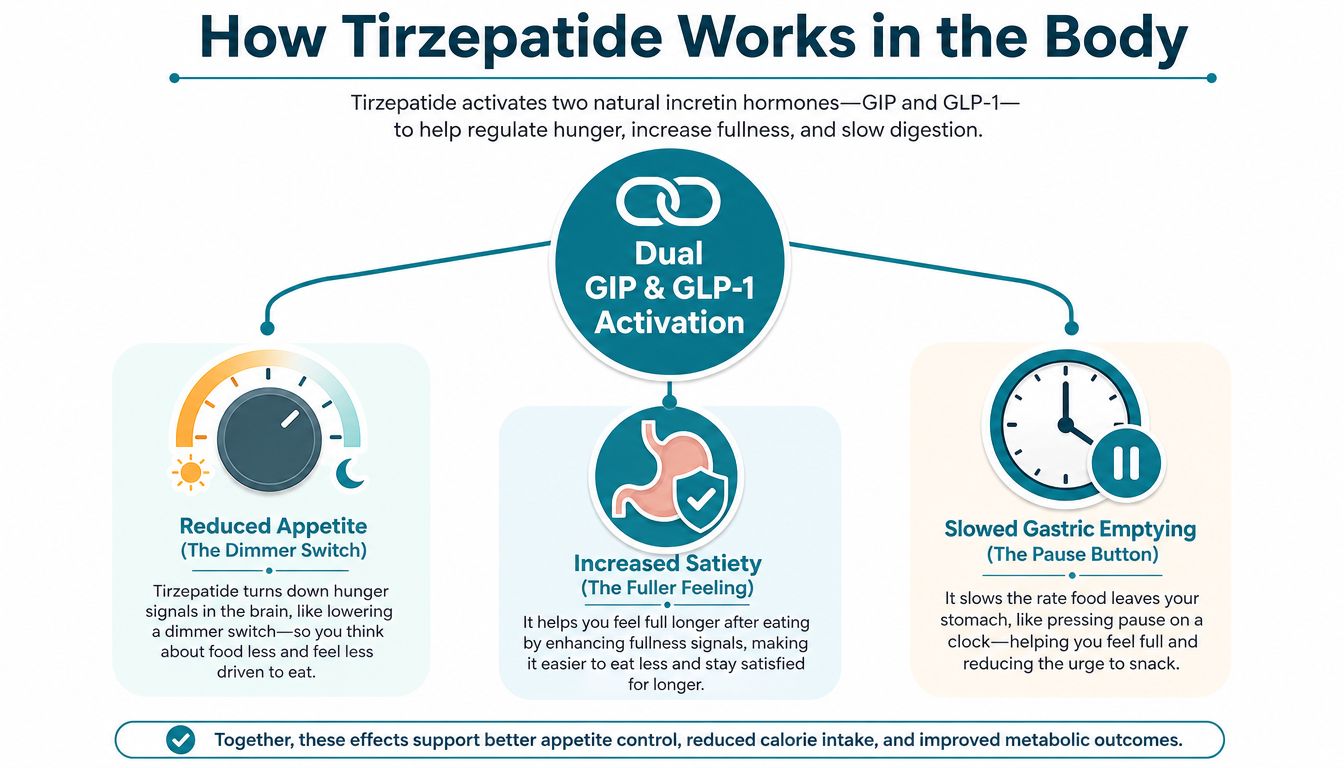
Tirzepatide acts on two gut-hormone pathways at the same time. It activates GIP and GLP-1 receptors, which are part of the incretin system, the hormone network that helps the body respond to food. In plain terms, that can improve glucose-dependent insulin signaling, reduce appetite, and slow gastric emptying, the pace at which food leaves the stomach.
The receptor details matter. Tirzepatide is not “more GLP-1.” A mechanistic review found dual agonist activity and about 5-fold weaker activity at the GLP-1 receptor than native GLP-1, while still retaining GIP-like potency at the GIP receptor. That helps explain why its effects do not line up exactly with older single-pathway medicines.
Why this matters for day-to-day treatment
Appetite, satiety, and gastric emptying are related but not identical. Appetite is the drive to eat, satiety is the feeling of being satisfied after a meal, and gastric emptying is the speed at which the stomach passes food onward. Tirzepatide acts across that system, so people may feel less driven by hunger and may be satisfied with smaller meals. That is one reason it is usually given as a once-weekly injection.
The same biology explains why dose adjustment and tolerability matter. When these signals shift, some people notice nausea, early fullness, or less interest in large meals. Careful follow-up lets a prescriber balance benefit and side effects instead of treating the medicine like a fixed, one-size-fits-all tool.
Plain-language takeaway: the goal is to reduce the biologic pressure that can make eating feel harder to regulate.
If you are comparing treatment styles, this overview of GLP-1 medicines versus phentermine shows why tirzepatide belongs in a different category than older appetite suppressants.
Mounjaro Compared With Zepbound and Other FDA Indications
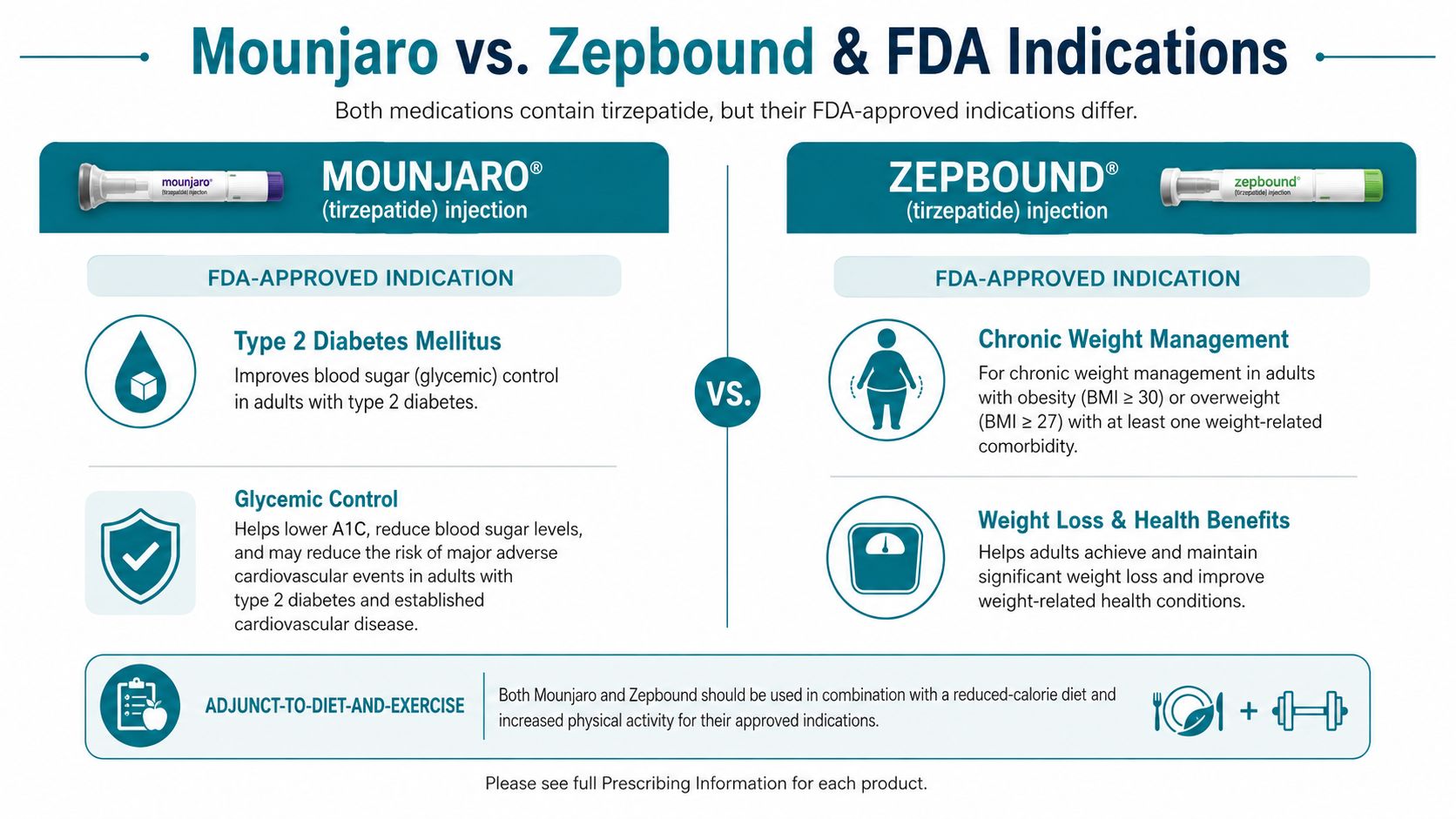
Mounjaro and Zepbound contain the same active ingredient, tirzepatide, but the FDA labels are different. Mounjaro is approved for adults with type 2 diabetes, while Zepbound is the tirzepatide brand used for chronic weight management in eligible patients. That distinction matters because the approved indication shapes the chart note, the prior authorization request, and how a prescriber explains the goal of treatment.
The FDA review history shows how Mounjaro entered care through diabetes treatment first. The original U.S. approval was on May 13, 2022, and the approval package drew on nine clinical trials involving 7,769 patients, including 5,415 who received Mounjaro (FDA drug trial snapshot). For readers comparing brands, that is the key point. Same molecule, different FDA label, different use case.
What “adjunct to diet and exercise” really means
The phrase can sound stiff, so here is the plain meaning. The medicine is studied and prescribed with nutrition changes and physical activity, not instead of them. It does not imply that a person must be perfect with habits before treatment begins.
If a prescriber uses a medicine outside its approved label, that is called off-label use. Off-label prescribing can be legal and sometimes appropriate, but it should be discussed clearly so patients know which brand is approved for which goal. For a side-by-side consumer explanation, the obesity medicine page on Ozempic comparisons can help frame the questions to ask in clinic.
Ask directly, “Am I being considered for the diabetes brand or the weight-management brand, and why does that matter for my case?”
The FDA Mounjaro label, 2025 and the FDA obesity review also make clear that tirzepatide is part of a broader treatment plan, not a stand-alone answer. For adults thinking about evaluation, Empire Medical Wellness weight-loss care is best understood as physician-led assessment, where the diagnosis, medication choice, and follow-up plan are matched to the person, not to the brand name alone.
What Research Shows About Effects and Weight Changes
What do the trial results mean for someone reading a Mounjaro discussion online? The clearest answer is that tirzepatide can produce meaningful weight change, but the size of that change depends on dose, time, and whether treatment continues. In SURMOUNT-1, once-weekly tirzepatide produced mean weight loss at 72 weeks of −15.0% with 5 mg, −19.5% with 10 mg, and −20.9% with 15 mg versus placebo, which shows a dose-response pattern (SURMOUNT-1 overview). The FDA-reviewed evidence base also showed that more participants reached clinically meaningful loss thresholds with tirzepatide than with placebo (FDA obesity review summary).
How to read those numbers carefully
Trial averages help, but they are not guarantees. They describe what happened in a study group, not what any one person will see. That distinction matters in obesity medicine because sleep, food environment, other medications, and follow-up all affect the result.
The studies also place the medicine inside a broader care plan. Tirzepatide was studied as an adjunct to a reduced-calorie diet and increased physical activity in adults with obesity or overweight with at least one weight-related condition in the FDA-reviewed obesity program (FDA obesity review summary). For readers comparing treatment paths, physician-guided weight-loss evaluation at Empire Medical Wellness is the kind of setting where diagnosis, medication choice, and follow-up can be matched to the person rather than to the brand name alone.
| Tirzepatide Clinical Effects at a Glance | What Trials Showed | What It Means for Care Planning |
|---|---|---|
| Weight change | Dose-dependent loss over 72 weeks in SURMOUNT-1 | Response should be reviewed over time, not guessed from week one |
| Maintenance | Ongoing treatment preserved benefit, withdrawal led to regain in SURMOUNT-4 | Obesity care often needs a long-term plan |
| Lifestyle context | Studied with reduced-calorie diet and increased activity | Nutrition and movement are part of treatment, not afterthoughts |
Stopping treatment changed the picture. A later follow-up found that withdrawal led to regain, with partial reversal of improvements in waist circumference, blood pressure, non-HDL cholesterol, glycemic measures, and insulin resistance one year after stopping treatment (SURMOUNT-4 follow-up report). That is why physicians often discuss obesity care as long-term management rather than a short course.
Side Effects Contraindications and Safety Monitoring
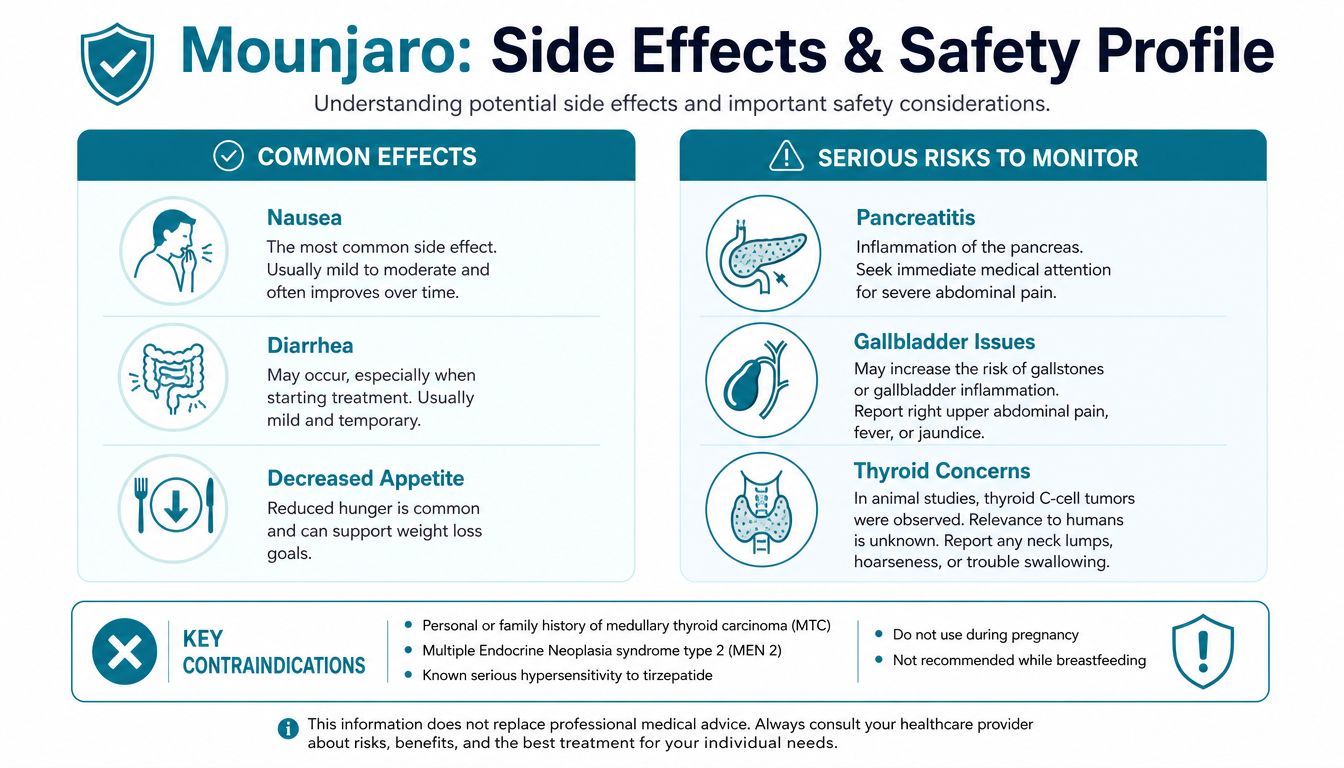
What should you expect, and what should make a clinician pause? With tirzepatide, the early effects are often gastrointestinal. Nausea, diarrhea, constipation, and reduced appetite are the complaints people notice first. That pattern makes sense because the medicine changes appetite signaling and how quickly food moves through the gut. For a plain-language overview of those early symptoms, Mounjaro side effects at Empire Medical Wellness is a helpful companion read.
Safety screening is broader than side effects alone. A prescriber should ask about prior pancreatitis, gallbladder disease, thyroid cancer history, pregnancy plans, and other glucose-lowering medicines. The FDA label also makes clear that Mounjaro is not indicated for type 1 diabetes, so the diagnosis matters before treatment is chosen.
A practical safety checklist
- Common effects: nausea, diarrhea, constipation, decreased appetite, and early fullness often appear early and may improve as the body adjusts.
- Serious symptoms: severe abdominal pain, repeated vomiting, or dehydration need prompt medical review.
- History to review: pancreatitis, gallbladder problems, thyroid tumors, pregnancy plans, and other diabetes medicines can change the risk discussion.
- Follow-up needs: weight, blood sugar, tolerability, and eating patterns should be checked over time, not guessed from the first few days.
Continuity matters because stopping treatment can change the clinical picture. As noted earlier, follow-up reporting after withdrawal showed partial reversal of several metabolic improvements one year later. That is why safety also includes a plan for what happens if treatment is paused, stopped, or changed.
If symptoms are severe, persistent, or unusual, they should not be brushed off. New abdominal pain, ongoing vomiting, signs of dehydration, or a reaction that feels out of proportion deserves clinical reassessment rather than watchful waiting.
How Physicians Evaluate Whether Mounjaro Is a Good Fit
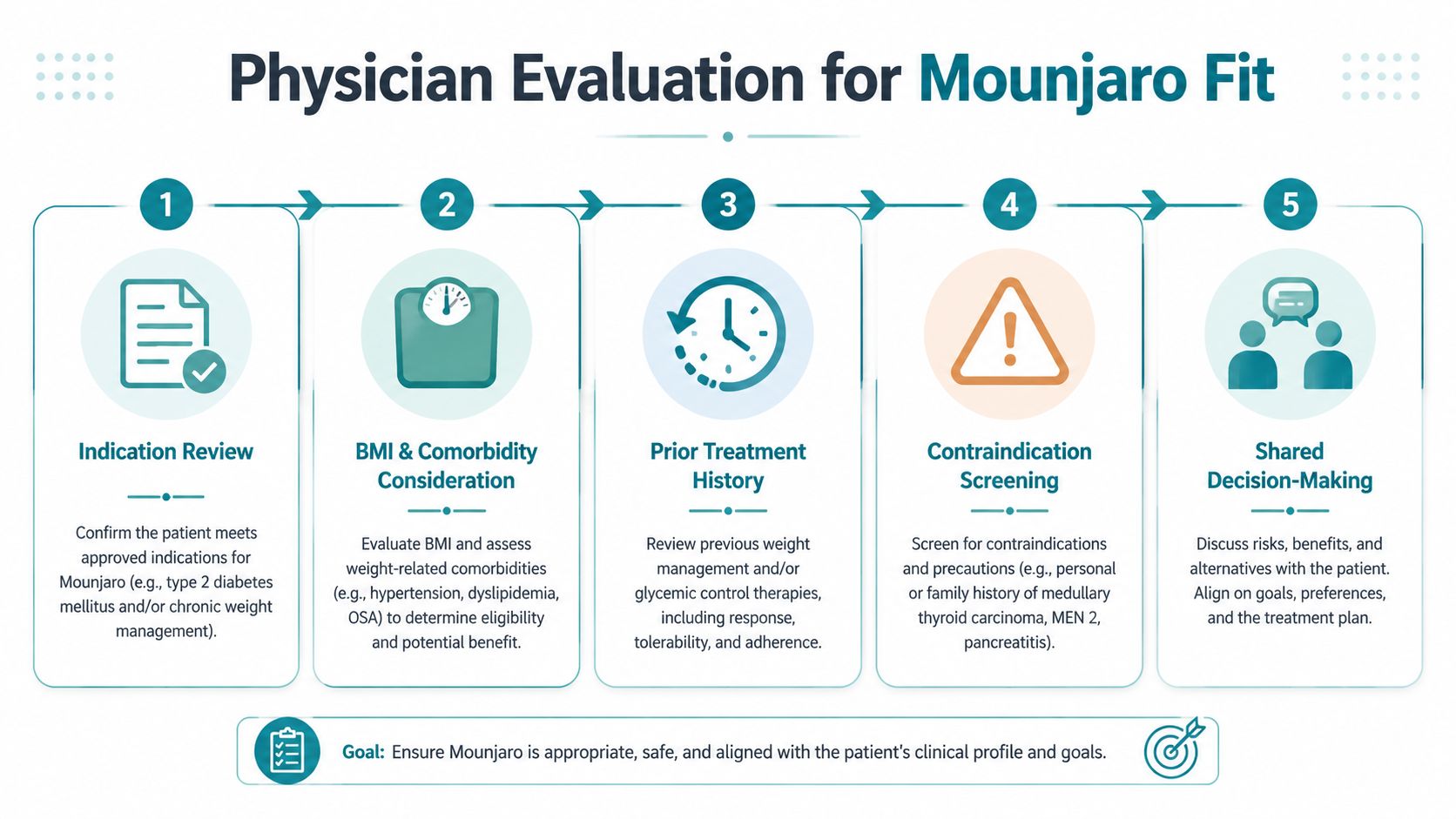
What makes Mounjaro a good fit starts with the diagnosis, not the request. A clinician first asks whether the treatment goal is diabetes care, weight management, or both, then checks history, current medicines, and whether the patient can keep up with follow-up. For weight-management decisions, body size and related health conditions matter, but so do prior treatment attempts, eating-disorder risk, and the person's ability to stay engaged in monitoring.
Safety comes next. A careful prescriber asks about pancreatitis, gallbladder disease, pregnancy plans, prior reactions to similar medicines, and other glucose-lowering drugs that could change the risk discussion. That review helps separate a medication that might be reasonable from one that could cause avoidable harm.
A hypothetical composite scenario
A middle-aged adult with obesity and prediabetes meets with a physician after repeated weight regain. The clinician checks eligibility, reviews contraindications, chooses a starting plan, and schedules follow-up often enough to adjust support as appetite and side effects change. As appetite quiets, the patient works on protein intake, hydration, and resistance training, then returns for reassessment of weight and metabolic markers. The plan is adjusted according to response, because people do not respond in the same way.
This is the part many consumer articles skip. Mounjaro is not a one-time prescription decision, it is a follow-up decision. If access or continuity becomes a concern, the FDA has said tirzepatide supply has begun to stabilize, which makes source verification and continuity planning more relevant than shortage-era workarounds (FDA on tirzepatide supply stabilization).
For readers comparing educational resources, a useful background piece on healthcare content marketing ROI shows why clear medical information earns trust when it stays specific and evidence-based. The same standard applies here. The question is not only whether a treatment exists, but whether it is appropriate, monitored, and explained clearly.
Living With Treatment and Next Steps for Evaluation
What does living with Mounjaro look like once the prescription starts? It looks like ongoing medical care, not a one-time decision. Appetite changes first, but nutrition, hydration, sleep, and activity still shape the result. Protein intake and resistance training can help support fullness and preserve lean mass while eating patterns change.
Follow-up matters for another reason, too. People who stay in contact with their clinician are more likely to catch side effects early, adjust the plan, and think ahead about maintenance instead of waiting for progress to stall. If treatment is paused, weight regain can happen, so continuity planning should be part of the first discussion, not an afterthought.
Practical rule: if a medicine seems to work on its own, ask what happens when routines change, side effects appear, or access is interrupted.
A physician-led obesity medicine visit is the right place to sort out whether the diabetes brand, the weight-management brand, or a different plan fits the FDA label and the person in front of you. That visit should also review prior treatment history, current medications, contraindications, and the monitoring plan. For many patients, the main question is simple: is this medicine appropriate now, and how will it be followed over time?
If you want a careful, physician-led discussion of tirzepatide in the context of obesity medicine, visit Empire Medical Wellness and review the weight-loss service page before scheduling. This article is educational only and isn't personal medical advice. If you develop severe abdominal pain, persistent vomiting, signs of dehydration, or another urgent symptom, seek immediate medical care.