DASH means Dietary Approaches to Stop Hypertension. It's an eating pattern centered on vegetables, fruit, whole grains, legumes, low-fat dairy, and appropriate lean proteins, with less saturated fat and sodium. Clinical trials found that DASH lowered blood pressure on average, but those group results can't predict how much any one person's readings will change.
A practical approach starts with food choices, not a rigid menu. The guide below covers what to buy, how to think about sodium, and why kidney function and some medicines can affect potassium advice. It's educational information, not a diagnosis or an individual treatment plan.
Table of Contents
- How the DASH Diet Affects High Blood Pressure
- Why the Eating Pattern Lowers Blood Pressure
- Food Targets and Sodium Goals for Daily Shopping
- A Realistic Sample Day of DASH Meals
- Adapting DASH with Medicines and Kidney Concerns
- Monitoring Blood Pressure and Talking with a Physician
- Limits of the Evidence and a Careful Next Step
How the DASH Diet Affects High Blood Pressure
In the original randomized trial, the DASH combination eating pattern lowered blood pressure more than the control diet over eight weeks. The study included 459 adults, including 133 with hypertension and 326 without. Across the full group, average differences were 5.5 mm Hg lower systolic pressure and 3.0 mm Hg lower diastolic pressure (original DASH trial).
Systolic pressure is the top number in a reading; diastolic pressure is the bottom number. Among participants with hypertension, the average differences were 11.4 mm Hg systolic and 5.5 mm Hg diastolic. For participants without hypertension, they were 3.5 mm Hg systolic and 2.1 mm Hg diastolic. These figures describe groups in a trial, not the change an individual should expect.
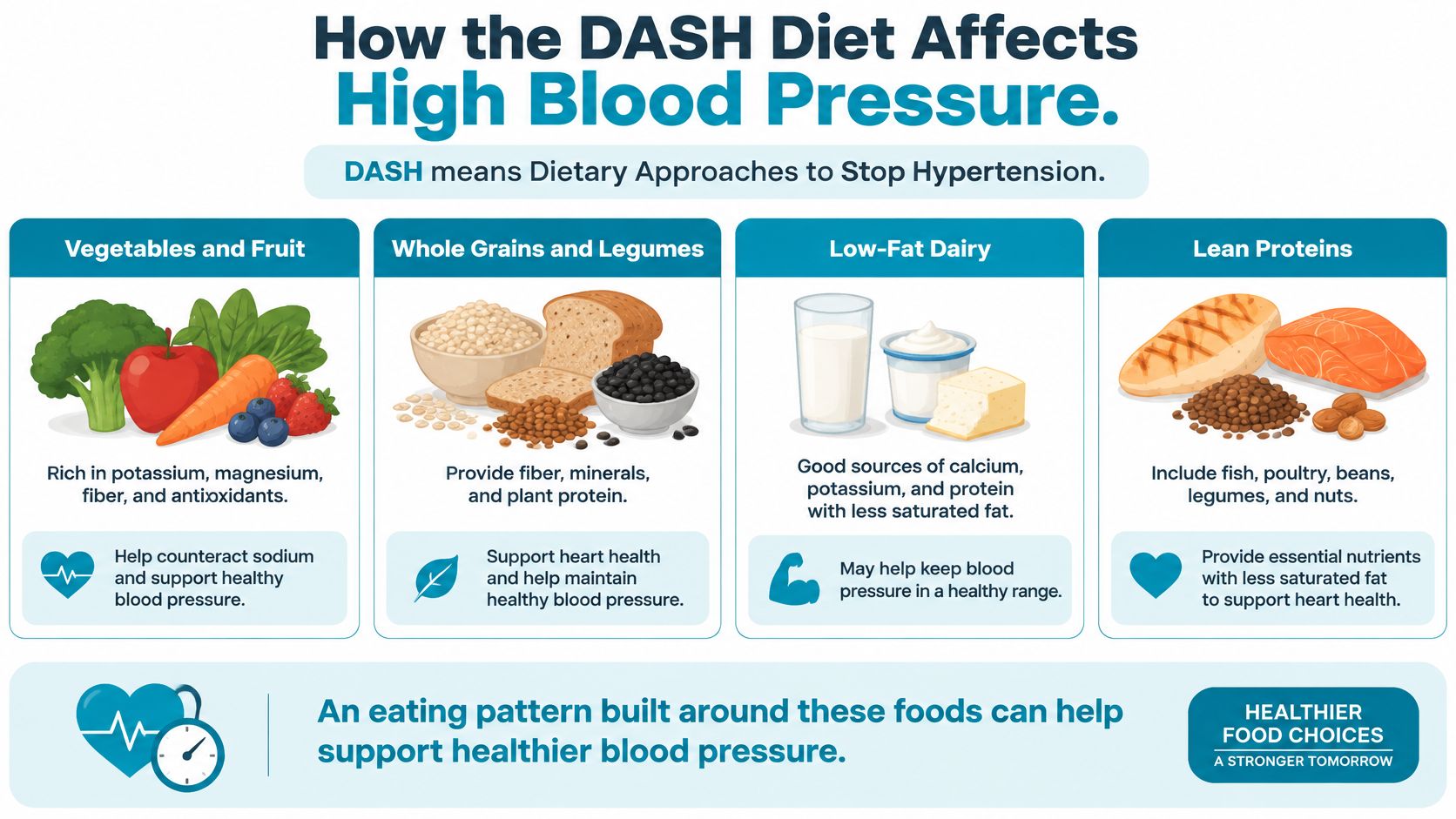
The trial's results support looking at DASH diet and high blood pressure through the overall eating pattern, rather than expecting one food or supplement to account for the change. It examined a dietary pattern, so its average results are not a personal forecast. The study did not establish an eight-week blood pressure average for Empire Medical Wellness patients.
For a practical look at the food groups, see the NHLBI guide to the DASH eating plan. You can also browse heart-healthy eating patterns for related ideas.
Why the Eating Pattern Lowers Blood Pressure
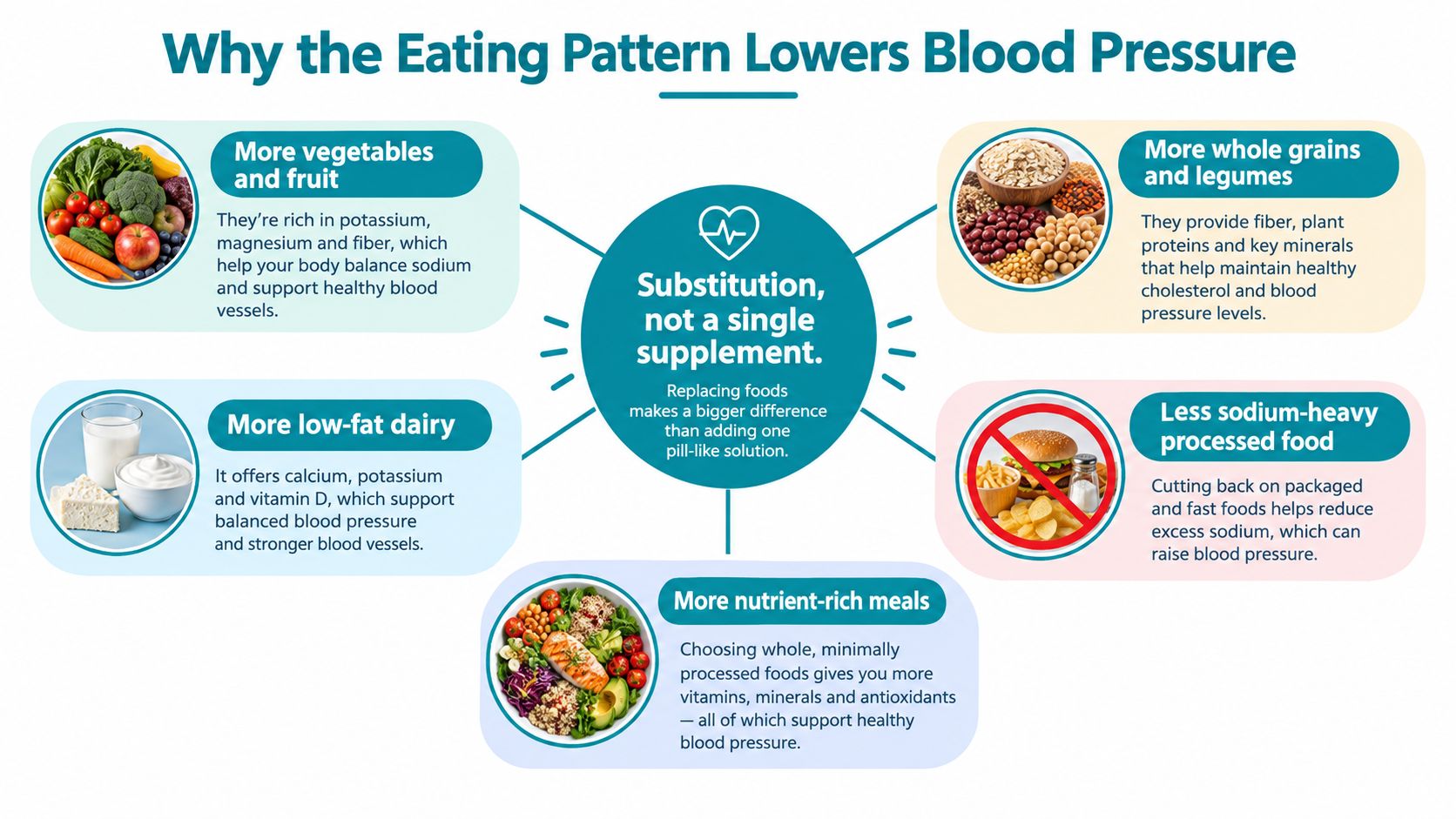
DASH is a substitution pattern: it changes what regularly appears in meals, rather than relying on one “heart healthy” ingredient. More vegetables, fruit, whole grains, legumes, fish, poultry, and low-fat dairy take the place of some foods higher in saturated fat, total fat, and cholesterol. Small, repeatable swaps can shape the overall pattern over time.
Blood vessels work somewhat like flexible hoses. Their inner lining helps regulate how easily blood flows, while the body manages sodium and fluid balance. Potassium, calcium, magnesium, and fiber may support these processes. Natriuresis is the excretion of sodium in urine, and endothelial function describes how well the blood vessel lining helps regulate vessel tone. These are related processes, not a single explanation for DASH's effects.
The original trial helps clarify the role of the overall food pattern. Participants ate diets with about 3,000 mg of sodium daily, while their body weight and physical activity remained stable. The DASH pattern still lowered blood pressure compared with the control diet, according to the NHLBI summary of the DASH trial. This group result suggests the effect was not due only to weight loss, increased exercise, or sodium restriction.
Everyday substitutions make the pattern easier to sustain. Beans or fish can replace processed meat in a meal; fruit can take the place of a refined snack. Choosing lower-fat dairy instead of high-fat dairy is another possible swap. Learn more about saturated fat and food choices. These examples describe options, not a prescribed menu or a guarantee of an individual blood-pressure response.
Food Targets and Sodium Goals for Daily Shopping
DASH shopping begins with the overall pattern: vegetables and fruit, whole grains, legumes, plain low-fat or fat-free dairy, and lean proteins such as fish, skinless poultry, or tofu. Fatty and processed meats, full-fat dairy, and foods high in saturated fat fit less often. A meal could include a cupped handful of cooked grain, a piece of fruit, a cup of raw vegetables, and a modest serving of fish. These are examples, not fixed portions; needs vary.
Sodium reduction is a separate part of the approach. NHLBI lists 2,300 mg of sodium a day as one DASH option and 1,500 mg as a lower-sodium option that may offer additional blood pressure benefit. The lower target does not suit everyone, so personal circumstances matter. In the DASH-Sodium study, compared with a high-sodium control diet, low-sodium DASH lowered average systolic pressure by 11.5 mm Hg in participants with hypertension and 7.1 mm Hg in those without hypertension. Within DASH, moving from the intermediate to the low sodium level added about 1.7 mm Hg of systolic reduction (DASH-Sodium trial details). These are group averages, not a prediction for any one person.
Practical rule: Compare the label's sodium amount with the serving you actually eat. The serving listed may be smaller than the portion on your plate.
Sodium often comes from packaged foods, sauces, breads, and restaurant meals, as well as salt added at the table. Compare labels, choose no-salt-added beans or vegetables when available, and use herbs, spices, garlic, vinegar, or lemon for flavor. A guide to foods high in fiber can help with plant-food choices, while the overall DASH pattern remains broader than any single nutrient.
| Usual choice | DASH-style swap | Sodium cue |
|---|---|---|
| Packaged beans with added salt | No-salt-added beans | Compare label values with the portion you eat |
| Salty prepared sauce | Herbs, garlic, vinegar, or lemon | Check the sauce label, since sauces can add sodium |
| Processed meat | Fish, tofu, or skinless poultry | Compare packaged options and choose less sodium when available |
| Refined snack | Fruit, vegetables, or unsalted nuts if suitable | Check labels on packaged snacks |
| Restaurant meal with sauce mixed in | Ask for sauce on the side | Separate components can make sodium choices easier to assess |
A gradual shift toward 2,300 mg daily may be easier to manage than aiming for a lower level at once. Whether 1,500 mg is appropriate is a question to discuss with a clinician. Sodium goals can be adjusted to a person's health needs, rather than treated as a one-size-fits-all shopping rule.
A Realistic Sample Day of DASH Meals
A DASH-style day can be built from familiar foods, with choices adjusted to fit appetite, culture, and health needs. The meals below are an illustrative example, not a prescribed menu or a clinic plan. Portions and sodium levels are not specified, so the example shows the overall pattern rather than a sodium-reduction target.
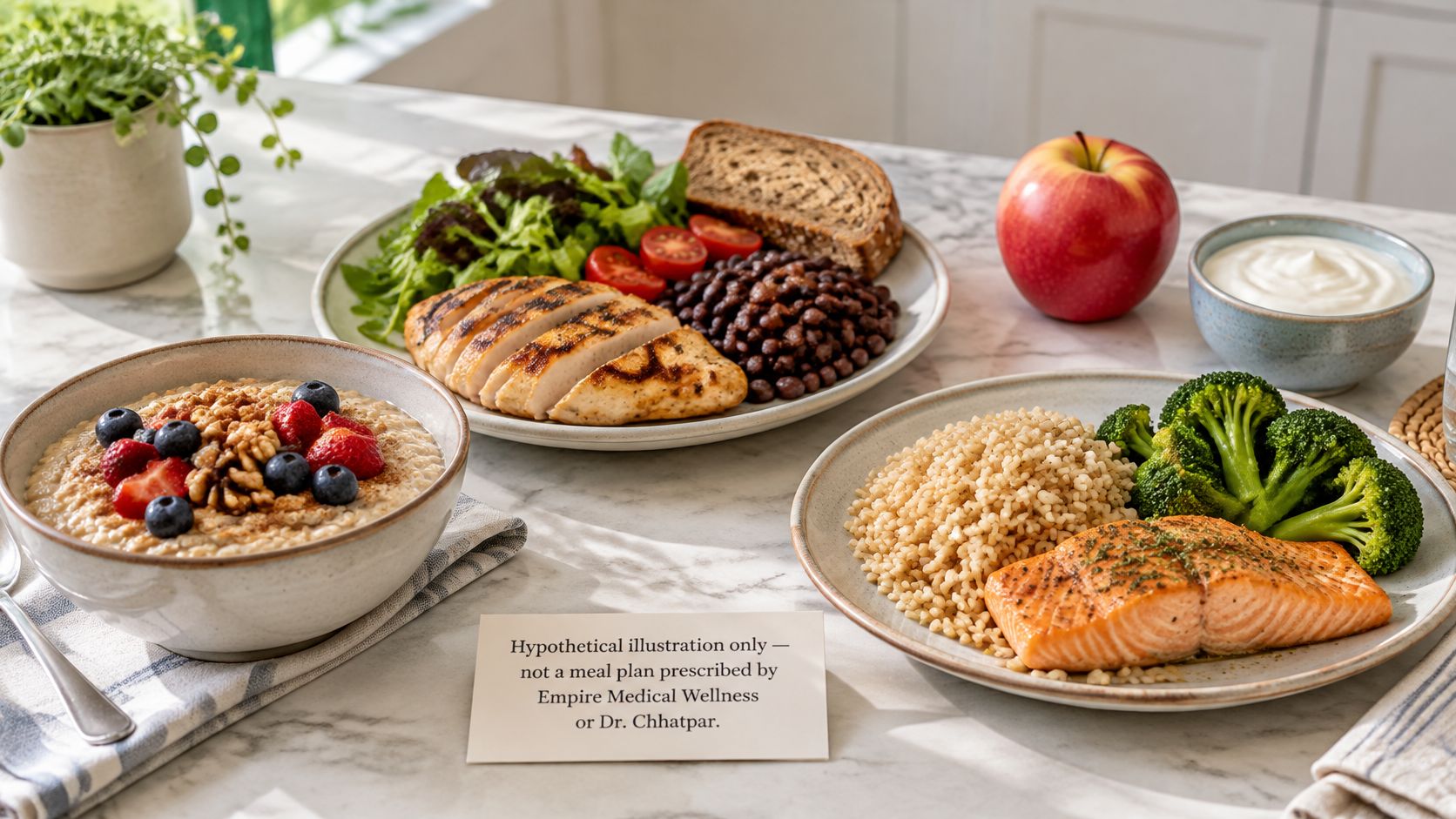
Breakfast: Oatmeal with fruit and plain low-fat yogurt combines a whole grain, fruit, and dairy. It offers an alternative to processed breakfast meat.
Lunch: Try a bean-and-vegetable bowl over a whole grain. For a packed meal, combine no-salt-added beans with chopped vegetables and a simple herb-and-lemon dressing.
Dinner: Serve fish or tofu with vegetables and brown rice. At a restaurant, grilled fish with extra vegetables and sauce on the side may fit, depending on the menu and individual needs.
Fruit or unsalted nuts can be snacks when suitable. A heart-healthy eating approach can adapt familiar foods to this pattern without requiring a fixed menu. For vegetarian meals or dairy avoidance, beans, tofu, vegetables, fruit, and whole grains offer options. If calcium intake is a concern, discuss suitable sources with a clinician.
The same general pattern can work for someone living with obesity, while a physician individualizes portions and any weight-management plan. DASH does not guarantee a particular amount of weight loss. Diabetes, kidney disease, allergies, and cultural food practices may call for adjustments, so use this sample as a starting point for discussion, not a prescription.
Adapting DASH with Medicines and Kidney Concerns
More potassium isn't always safer. DASH includes potassium-rich foods such as fruits, vegetables, beans, and dairy. The 2025 American Heart Association/American College of Cardiology hypertension guideline favors getting potassium from food, but chronic kidney disease and some medicines can make higher potassium intake risky. Potassium supplements and potassium-containing salt substitutes therefore aren't right for everyone.
ACE inhibitors, ARBs, and potassium-sparing diuretics can affect how the body handles potassium. Before making a major change to potassium-rich foods or using a salt substitute, ask a clinician whether kidney function and blood potassium levels should be checked. The DASH4D research program adjusted potassium intake while studying sodium reduction in people with diabetes and possible kidney disease, reflecting how the pattern may need to be adapted.
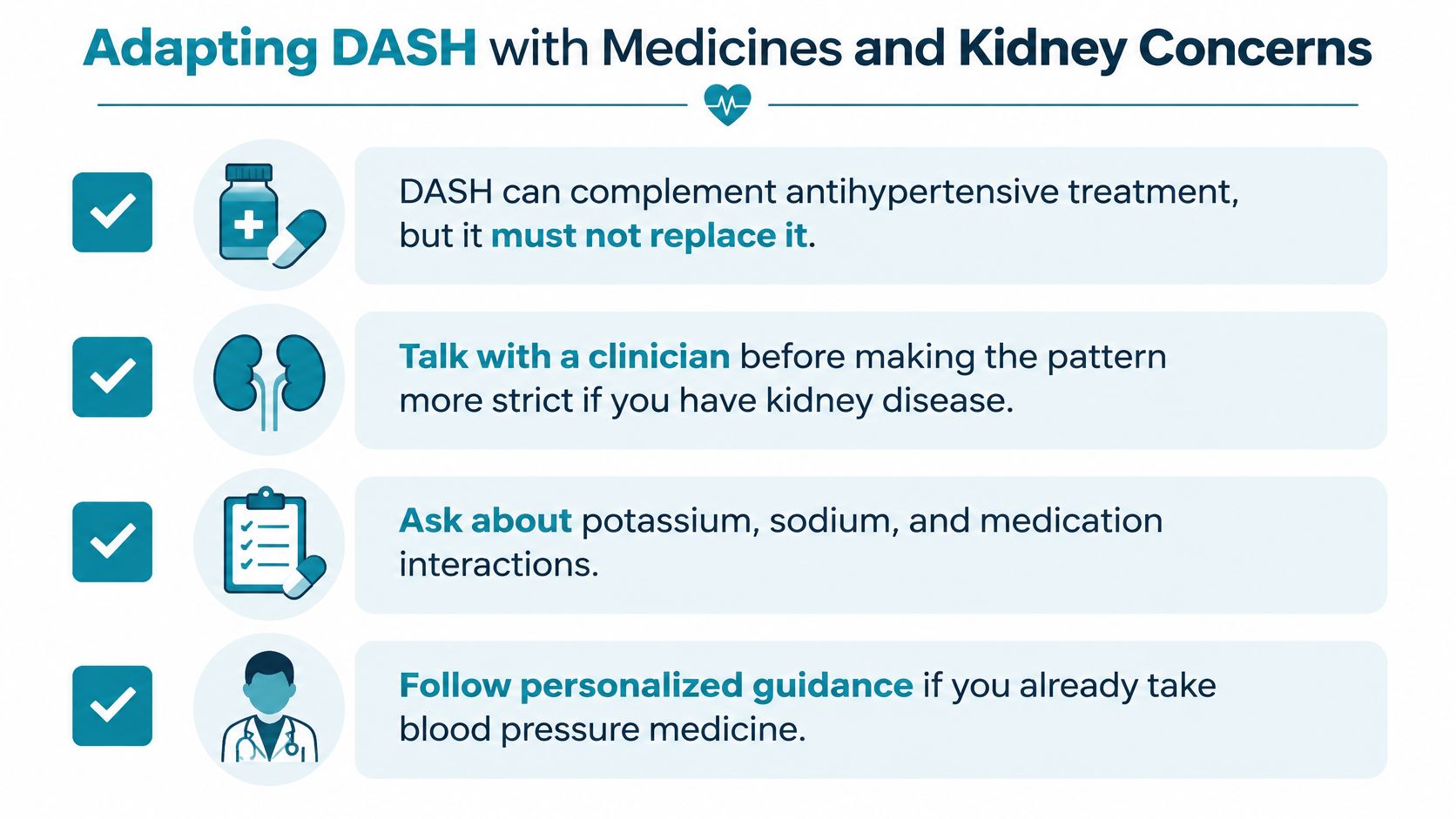
DASH can complement antihypertensive treatment; it does not replace prescribed medicine. Keep following the medication plan, and tell a clinician about dizziness or readings that seem too low. A diet trial's average result is a group finding, not a reason to stop, skip, or reduce medicine on your own.
The overall DASH pattern and sodium reduction are related, but they are not the same change. In a randomized trial of 102 adults with type 2 diabetes, a lower-sodium DASH-style diet reduced systolic pressure by 4.6 mm Hg and diastolic pressure by 2.3 mm Hg compared with a higher-sodium comparison diet. Most participants were already taking multiple blood-pressure medicines (2025 diabetes and DASH trial). The guideline estimates that sodium reduction may lower systolic pressure by roughly 6–8 mm Hg across a population. That estimate is not a personal forecast. When planning meals, consider sodium separately from potassium, and discuss food choices and salt substitutes with a clinician if kidney disease or blood-pressure medicines are involved.
Monitoring Blood Pressure and Talking with a Physician
A home blood pressure reading is a snapshot; readings taken consistently can show a clearer pattern. Use a properly fitting upper-arm cuff, sit with your feet supported, and measure at similar times. Write down the results, since a log helps a clinician distinguish a repeated trend from a temporary change after eating, activity, or stress.
Several weeks of readings can add useful context. Follow your clinician's monitoring instructions, and bring your record to an appointment with notes about food changes and symptoms. The blood pressure and care overview can help you prepare questions for a qualified clinician.
Contact a clinician promptly if readings seem low while you take medicine, or if you experience dizziness, fainting, chest pain, a severe headache, neurologic symptoms, or very high readings that concern you. Sudden or severe symptoms need urgent medical attention. Do not change a medication dose based on a home reading without clinical guidance.
For adults whose blood pressure concerns overlap with weight management, physician-led obesity medicine may be an option when clinically appropriate. At Empire Medical Wellness, care may include a medical and metabolic assessment, review of weight history, an individualized plan, anti-obesity medication when appropriate, and follow-up. Dr. Chhatpar provides direct care, distinct from the practice's other areas of care.
The practice offers a 50-minute initial evaluation for $350 and a 25-minute follow-up for $225. It does not bill insurance directly. Telemedicine is available to adults physically located in New York, New Jersey, Connecticut, Pennsylvania, or Virginia, with in-person visits also available. Details about physician-led adult care at Empire Medical Wellness may help readers decide whether to explore an evaluation.
Limits of the Evidence and a Careful Next Step
DASH and sodium reduction have been studied in controlled trials, but study results cannot select an individual's ideal menu or predict a personal blood pressure response. Lower-sodium versions of DASH produced larger average reductions in trial groups. The 1,500 mg daily sodium level was studied among participants who could safely follow it. 2,300 mg daily is a broader target to discuss with a clinician, since health conditions and medicines can affect what is appropriate.
A trial average works like a map of a group, not a forecast for each person. The original studies provided food and kept participants' weight stable, conditions that may differ from everyday shopping and meals. Later research involving people with diabetes who took blood pressure medicines is encouraging, but it does not promise the same result for each person.
The DASH pattern and sodium reduction are related, but they are not the same change. Someone can choose more fruits, vegetables, and other DASH foods without assuming that every product labeled as a salt substitute is safe. Kidney disease and medicines that affect potassium may make some potassium-rich foods or potassium-based salt substitutes unsuitable. Ask a clinician before making a major change to potassium intake.
No eight-week Empire blood pressure average is documented, and no specific blood pressure drop is claimed for Dr. Chhatpar or the practice. Do not start or stop medicine, potassium supplements, or potassium salt substitutes without clinical guidance. A food log and home readings can help a clinician discuss practical adjustments.
The byline is the Empire Medical Wellness Editorial Team. Published October 23, 2026. Updated October 23, 2026.
This article is educational and isn't personal medical advice.