
Have you ever asked, “How would I know if my blood pressure is high?” and assumed your body would tell you? Usually, it won't. Blood pressure is a measurement pattern, not a feeling, and understanding that pattern can improve conversations about screening, lifestyle, medication, and follow-up.
For adults considering physician-led care, the useful question isn't whether one reading looks perfect. It's whether readings are collected accurately, interpreted in context, and followed over time. This guide explains what the numbers mean, how to measure them at home, why symptoms can mislead you, and how individualized care may connect blood pressure with obesity medicine, addiction medicine, or mental-health medication management.
Table of Contents
- What Blood Pressure Actually Means
- Normal, Elevated, and High Blood Pressure Ranges
- How to Measure Blood Pressure Correctly
- Why High Blood Pressure Is Usually Silent
- Lifestyle and Medical Management of Hypertension
- Blood Pressure in Obesity, Addiction, and Mental-Health Care
- Follow-Up, Tracking, and When to Call Your Physician
What Blood Pressure Actually Means
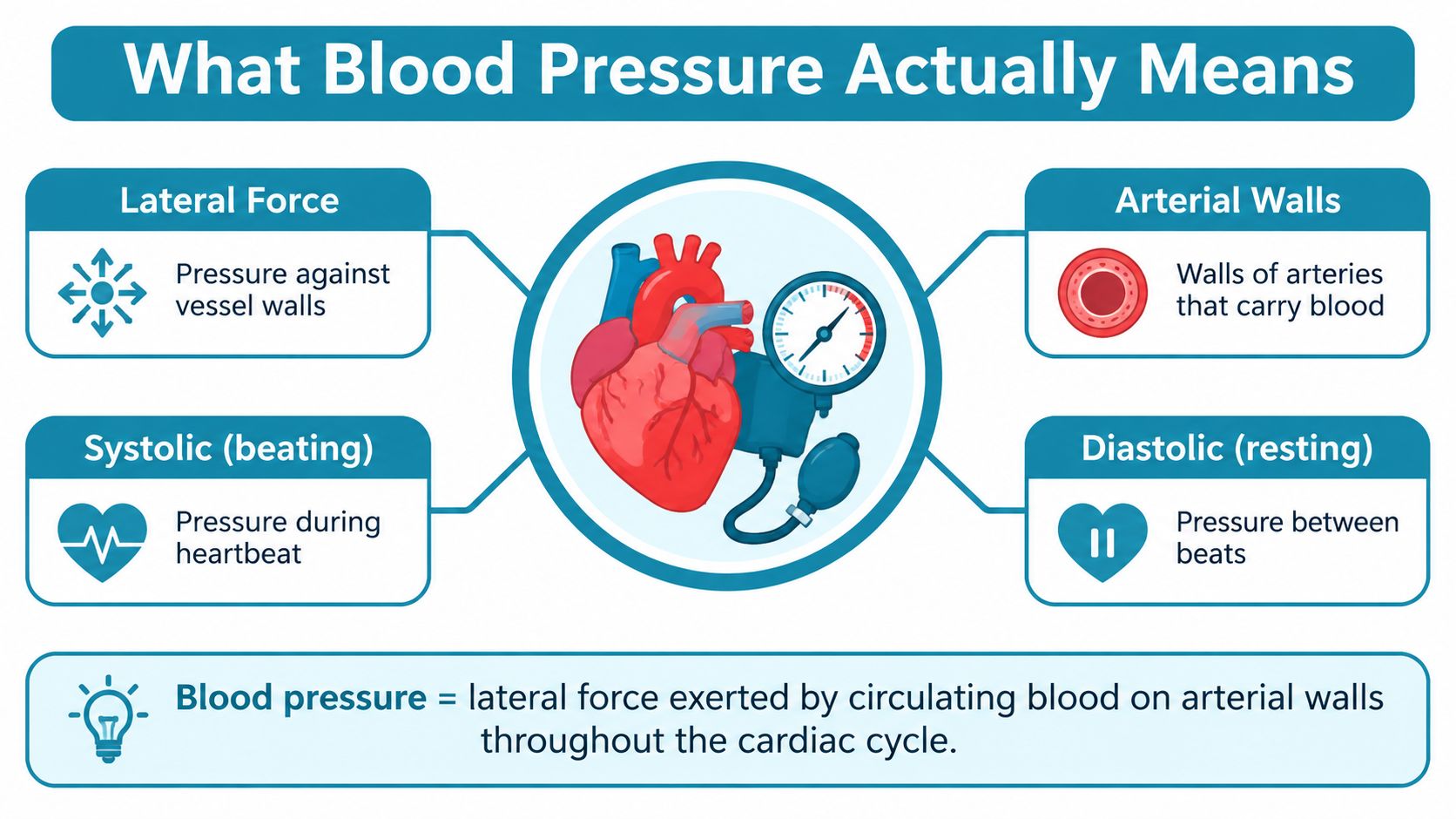
Blood pressure is the force of circulating blood against the walls of your arteries. The top number, called systolic pressure, reflects pressure when the heart's main pumping chamber contracts and sends blood forward. The bottom number, called diastolic pressure, reflects pressure in the arteries while the heart relaxes between beats.
A garden hose offers a simple comparison. When water moves through the hose, it presses outward on the hose wall. If the hose is flexible, flow can be accommodated more easily. If it becomes narrow or stiff, resistance changes. Arteries also respond to the amount of blood moving through them and the condition of their walls, although the body's circulation is far more complex than a hose.
Blood pressure is written in millimeters of mercury, or mm Hg. A reading of 120/80 mm Hg means a systolic pressure of 120 and a diastolic pressure of 80. Hypertension means persistently high blood pressure. Hypotension means blood pressure is low enough to cause concern in a particular clinical context, especially when it produces fainting, dizziness, weakness, or other symptoms. There isn't one universally accepted low number that defines a problem for every adult.
Two derived measurements
Pulse pressure is the systolic number minus the diastolic number. Mean arterial pressure is an estimated average pressure that supports blood flow through the organs. Clinicians may use these derived values in specific settings, but routine diagnosis usually focuses on the systolic and diastolic readings.
Blood pressure changes throughout the day. Activity, posture, emotional state, sleep, pain, illness, caffeine, tobacco, and medication timing can all affect it. Arterial stiffness, meaning reduced flexibility of the artery walls, can also influence the relationship between the heart's pumping cycle and the reading on the monitor.
People whose health picture includes metabolic conditions may also discuss blood pressure alongside type 2 diabetes care. The interpretation still depends on accurate readings and the broader clinical picture, not on a single number.
Normal, Elevated, and High Blood Pressure Ranges
How should one blood pressure reading be interpreted? The answer depends on both numbers, the setting, and the pattern over time. The American College of Cardiology and American Heart Association classify adult office readings as normal, higher than normal, stage 1 hypertension, or stage 2 hypertension. If the systolic or diastolic value falls into a more serious category, clinicians use that higher category. A systolic value in the stage 1 range with a diastolic value in the normal range is therefore classified by the systolic result. (ACC/AHA categories)
| Category | Office BP (mm Hg) | Home BP Average (mm Hg) | Daytime ABPM (mm Hg) |
|---|---|---|---|
| Normal | Less than 120 and less than 80 | Interpreted with the clinician and device context | Interpreted with the clinician and device context |
| Higher than normal | 120–129 and less than 80 | Interpreted with the clinician and device context | Interpreted with the clinician and device context |
| Stage 1 hypertension | 130–139 or 80–89 | Out-of-office averages require clinical interpretation | Out-of-office averages require clinical interpretation |
| Stage 2 hypertension | At least 140 or at least 90 | Out-of-office averages require clinical interpretation | Out-of-office averages require clinical interpretation |
| Hypertensive crisis range | More than 180 and/or more than 120 | Repeat carefully and seek appropriate clinical guidance | Requires prompt clinical interpretation |
These categories support clinical assessment rather than self-diagnosis. A clinician generally looks for a pattern from repeated readings taken with sound technique. The CDC measurement guidance recommends taking at least two readings one minute apart and averaging them.
Why older thresholds still appear
WHO defines adult hypertension as systolic pressure of at least 140 mm Hg and/or diastolic pressure of at least 90 mm Hg on two different days. (WHO hypertension definition) That threshold remains useful for global reporting and public-health tracking, while U.S. ACC/AHA categories identify risk earlier, beginning at 130/80.
Out-of-office readings require their own context. Home and ambulatory monitors collect data under different conditions, and clinicians interpret averages according to the device, protocol, timing, and the patient's risk. Home averages often provide more information than a single office reading, especially when white-coat hypertension, meaning higher clinic readings, or masked hypertension, meaning higher readings outside the clinic, is suspected.
Some adults also worry about a low reading. The more clinically meaningful concern may be orthostatic hypotension, a fall in pressure after standing that can produce lightheadedness or fainting. A low value without symptoms may have a different significance from a symptomatic drop, so the surrounding circumstances matter.
Adults seeking a physician-led evaluation may explore obesity medicine services when weight-related health factors are part of their medical picture. Blood pressure remains a separate clinical measurement and cannot be inferred from appearance.
How to Measure Blood Pressure Correctly
A blood pressure monitor can produce a precise-looking number that's still misleading if the setup is wrong. Measurement technique is part of the diagnostic test, especially when a reading is close to a treatment threshold. (British Columbia measurement appendix)
Choose the right equipment
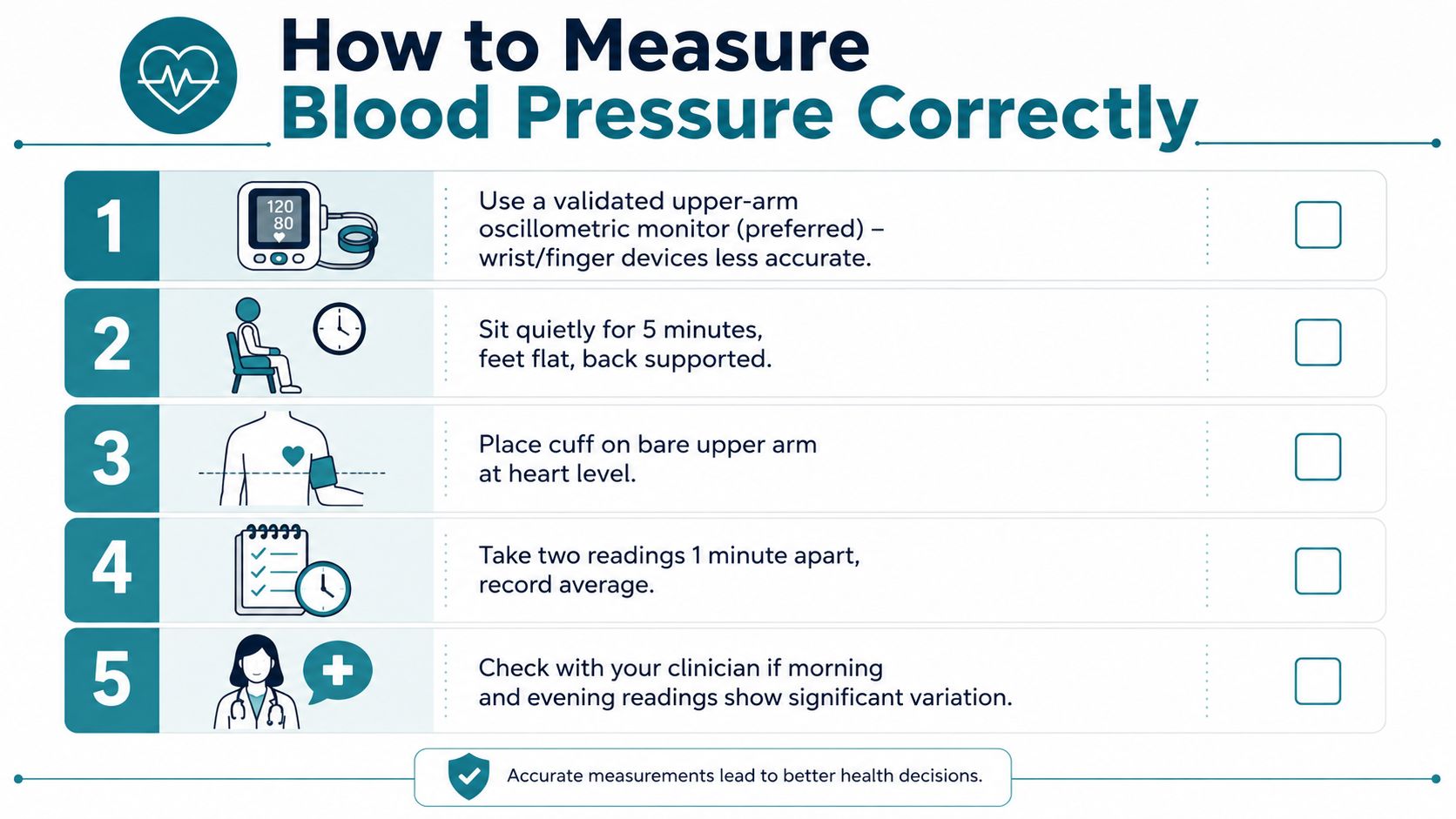
A validated upper-arm oscillometric monitor is generally preferred for home use. Wrist and finger devices can be more sensitive to positioning and may be less reliable. The ValidateBP device listing can help you identify monitors that have undergone a validation process.
The cuff must fit the arm. For auscultatory measurement, guidance describes a bladder width of about 40% of arm circumference and a bladder length covering 80–100% of the arm. An undersized cuff on a larger arm can overestimate pressure. The arm should be bare, because clothing beneath the cuff can interfere with placement and compression.
Use a consistent home routine
Before measuring:
- Prepare your body: Avoid caffeine, exercise, and tobacco for 30 minutes beforehand, and empty your bladder.
- Rest quietly: Sit for 5 minutes before starting.
- Set your posture: Keep your back supported, feet flat, legs uncrossed, and arm supported at heart level.
- Stay still: Don't talk, text, or measure while taking a phone conversation.
- Repeat the reading: Take two readings one minute apart and record the average.
For a structured dataset, many home-monitoring protocols use morning and evening measurements over 7 days, followed by an average. Follow the protocol your clinician gives you, particularly if medication timing, symptoms, pregnancy, kidney disease, or other factors change the plan.
Practical rule: Bring the monitor to an appointment when possible. A clinician can compare it with an office device and check whether your cuff and positioning are appropriate.
In an office, clinicians may measure both arms initially, repeat a reading after a short interval, and take a standing measurement when orthostatic symptoms are suspected. At home, record the date, time, readings, body position, symptoms, and any relevant medication timing. A clean log is more useful than selecting only the values that support a preferred conclusion.
For a visual demonstration of home technique, you can also review this blood pressure measurement video.
Why High Blood Pressure Is Usually Silent
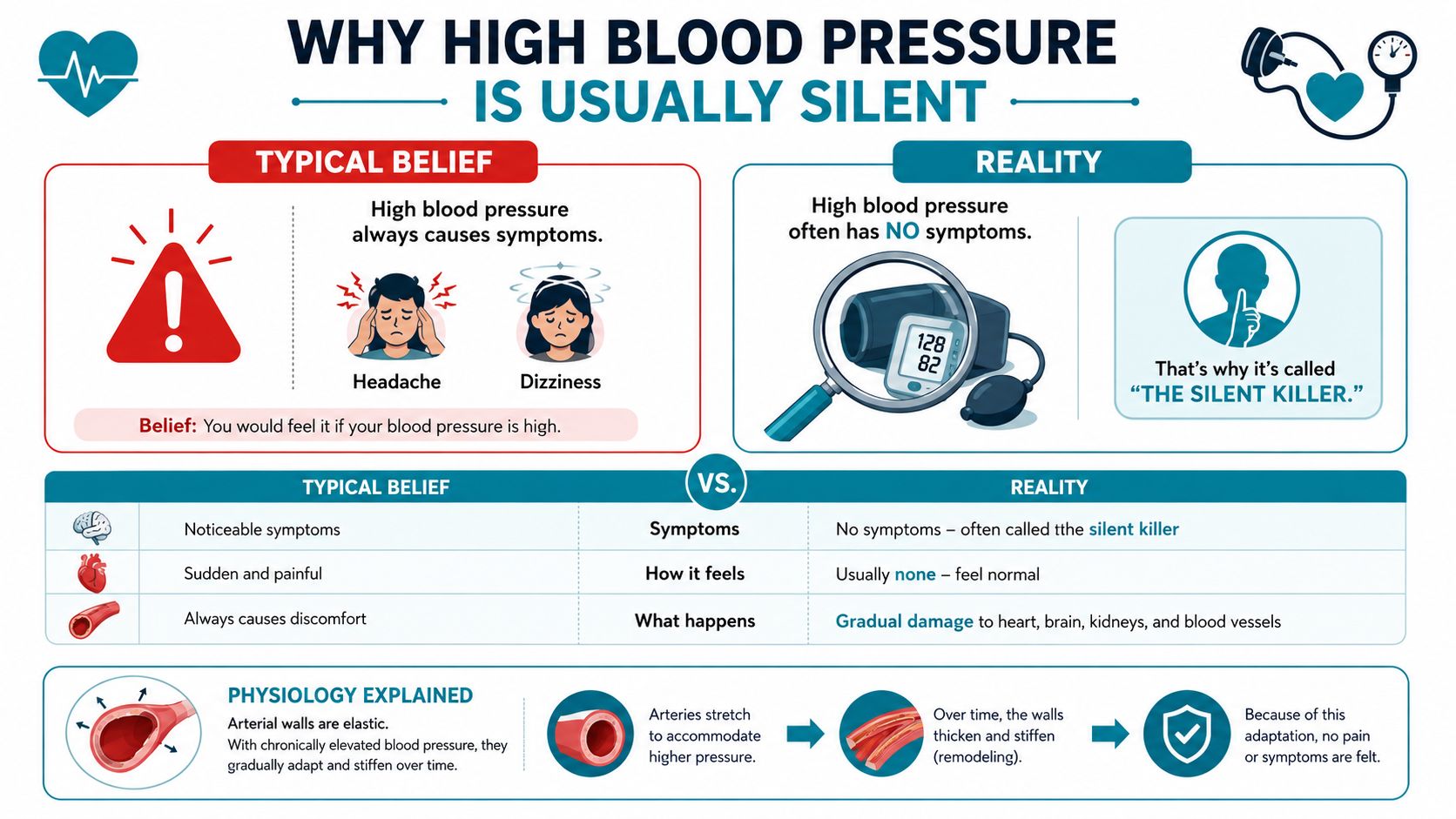
A common assumption is that high blood pressure should cause a recognizable sensation. Usually, it doesn't. The CDC describes high blood pressure as often having no warning signs or symptoms, which is why routine and home measurement matter. (CDC blood pressure facts)
The body can adapt to a gradual rise in pressure. Arteries may remodel over time, and pressure-sensing systems can adjust their response. The artery wall itself doesn't provide the kind of pain signal that would reliably announce a chronic elevation. As a result, a person can feel calm, energetic, and completely well while repeated readings remain high.
A survey summarized in JAMA found substantial confusion about symptoms and thresholds. Only 13% of adults correctly identified hypertension as 130/80 mm Hg or higher, while more than a third incorrectly believed hypertension usually causes dizziness or shortness of breath. About 2 in 5 thought feeling calm and relaxed meant their blood pressure was normal.
Symptoms that change the situation
A very high reading with no symptoms still deserves prompt clinical guidance, particularly if it persists after careful repeat measurement. Chest pain, severe shortness of breath, new weakness or numbness, confusion, vision changes, difficulty speaking, or other signs of acute organ injury require urgent evaluation. Don't wait for a home trend if those symptoms are present.
Symptoms can occur when pressure rises rapidly or when complications affect the heart, brain, kidneys, or eyes. But symptoms aren't a dependable screening tool. Headache or dizziness can have many causes, and their absence doesn't establish normal blood pressure.
Blood pressure is a measurement, not a feeling.
Lifestyle and Medical Management of Hypertension
The most reliable approach is usually a combination of accurate monitoring, sustainable habits, and medication when a clinician determines it's appropriate. No single lifestyle change works equally well for every adult, and medication decisions shouldn't be based on one reading.
A DASH-style eating pattern emphasizes vegetables, fruits, whole grains, and appropriate potassium-rich foods. Sodium reduction can help, although the right dietary plan depends on kidney function, medications, food access, preferences, and other medical conditions. Regular aerobic activity and resistance training can support cardiovascular health. Weight management may be clinically relevant for some adults, but it should be approached without stigma or promises about a specific outcome.
A practical evidence summary
| Lifestyle intervention | Approximate SBP reduction |
|---|---|
| DASH-style dietary pattern | Individual response varies |
| Lower sodium intake | Individual response varies |
| Regular aerobic activity | Individual response varies |
| Resistance training | Individual response varies |
| Weight management when indicated | Individual response varies |
| Limiting alcohol | Individual response varies |
| Sleep evaluation and support | Individual response varies |
The table intentionally avoids universal effect estimates. Blood pressure response depends on starting readings, adherence, genetics, kidney function, sleep, medications, and measurement quality. Nutrition planning can be discussed through individualized nutrition support, rather than a rigid diet prescription.
Other consistently recommended levers include avoiding tobacco, addressing stress, evaluating possible obstructive sleep apnea, and taking prescribed medication as directed. Potassium-rich foods may be helpful for some people with normal kidney function, but potassium can become unsafe with certain kidney conditions or medications.
For readers comparing supplements or nonprescription approaches, this blood pressure guide from VitzAi.com can be used as a starting point for questions, not as a substitute for clinician review. Supplements can interact with medications, and “natural” doesn't automatically mean safe.
Medication requires context
Common first-line classes include thiazide diuretics, ACE inhibitors, angiotensin receptor blockers, and calcium channel blockers. The choice depends on readings, cardiovascular risk, kidney function, diabetes, pregnancy status, other medications, interactions, adverse effects, and patient preferences.
The 2025 AHA/ACC update emphasizes individualized risk-based decisions and home or ambulatory monitoring, while recognizing unresolved questions about targets across age, sex, and ethnic groups and about newer wearable or cuffless devices. (2025 guideline overview) Major guidance often favors a goal below 130/80 mm Hg for many adults with confirmed hypertension, especially when cardiovascular risk is higher, but some reviews support below 140/90 mm Hg for lower-risk populations because more intensive treatment can create additional burdens or adverse effects. (Evidence review)
Only the treating clinician should start, stop, or adjust medication.
Blood Pressure in Obesity, Addiction, and Mental-Health Care
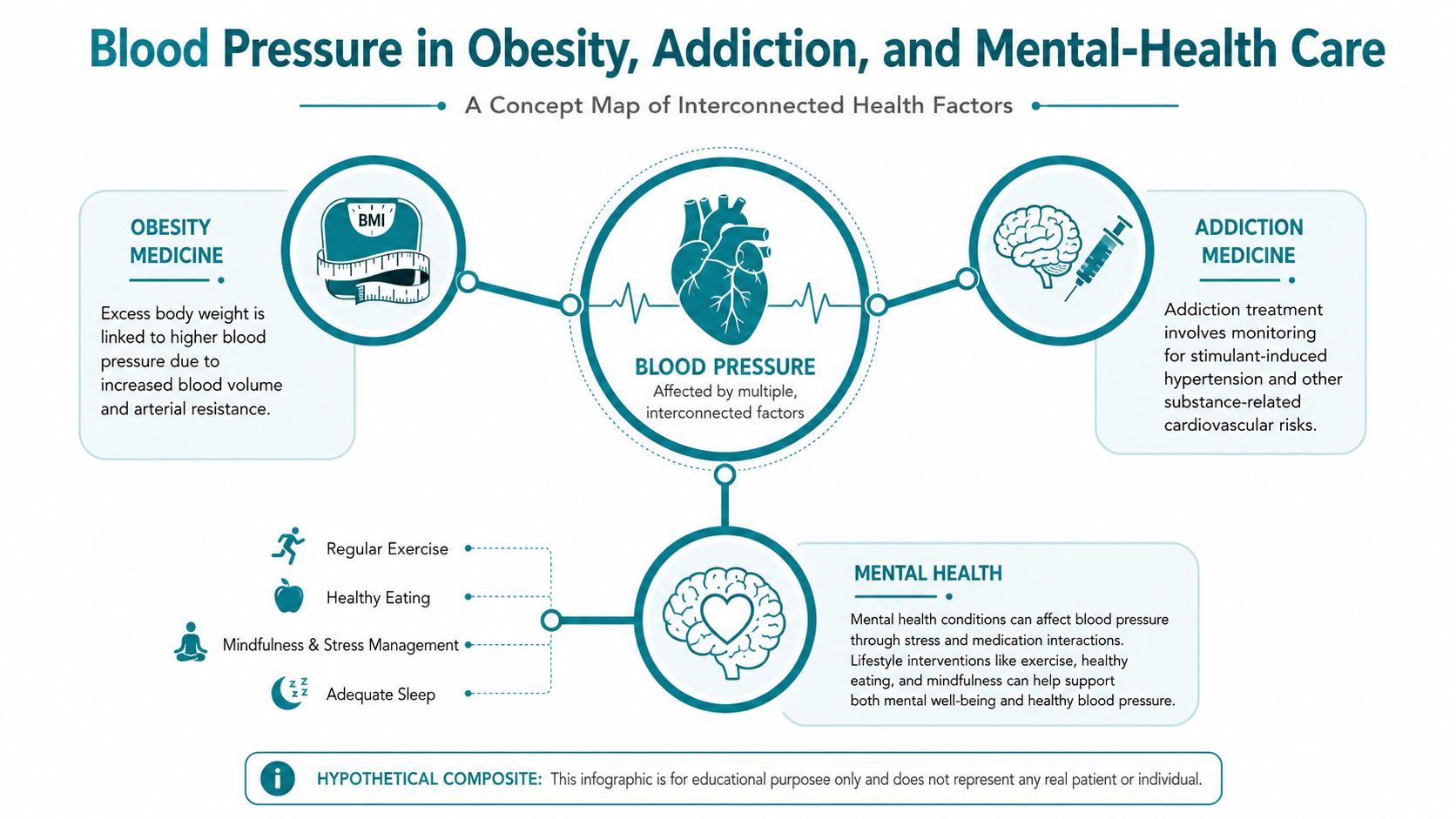
Blood pressure can affect several forms of outpatient care, but these service lines should remain clinically distinct. Obesity medicine may consider blood pressure alongside metabolic health, sleep, activity, and medication effects. Addiction medicine may need to account for alcohol, stimulant exposure, withdrawal, nutrition, and sleep. Mental-health medication management may include blood pressure monitoring when a medication or symptom pattern could affect it.
Some substances and medications can raise readings. Stimulants such as cocaine and methamphetamine may produce acute elevations. Alcohol can contribute to higher blood pressure, and opioid withdrawal may temporarily increase blood pressure and heart rate. Some serotonin-norepinephrine reuptake inhibitors, bupropion, monoamine oxidase inhibitors, and ADHD stimulants can affect blood pressure. Certain antipsychotic medications can contribute to metabolic changes.
These possibilities don't mean a person should stop a prescribed medication or assume a substance caused a reading. They mean the prescriber needs a timeline, accurate measurements, medication list, substance-use history, symptoms, and follow-up data.
A clearly labeled hypothetical composite
Hypothetical composite, not a real patient: An adult begins physician-led care for weight management while also taking a medication that can influence blood pressure. The clinician compares standardized office readings with a dated home log, reviews sodium and alcohol intake, checks adherence, asks about sleep and possible apnea, and tracks any weight change without assuming that one factor explains everything.
If readings later improve, the change may coincide with several factors, including diet, activity, weight change, medication adherence, or another medication adjustment. An anti-obesity medication may be part of the timeline, but an individual response doesn't prove that it caused the blood-pressure change.
Adults reviewing psychiatric medications can learn more about mental-health medication review. People who experience dizziness after standing may also benefit from a clinically cautious guide on POTS-related dizziness, while remembering that dizziness has many possible causes and isn't a diagnosis by itself.
Follow-Up, Tracking, and When to Call Your Physician
Follow-up should use a transparent dashboard rather than an undocumented practice protocol. The clinician identifies a target and reassessment interval based on the person's readings, cardiovascular risk, kidney function, symptoms, medication tolerance, and overall goals.
Bring a dated home log to each visit. Include:
- Measurement details: Device brand and model, cuff size, arm used, posture, and whether readings were taken at home or in an office.
- Pattern information: Morning and evening readings, repeated values, and notable variation.
- Treatment details: Medication names, timing, missed doses, recent changes, supplements, and over-the-counter products.
- Symptoms: Lightheadedness, fainting, chest discomfort, shortness of breath, vision changes, weakness, or confusion.
- Related factors: Sleep quality, possible apnea, sodium and alcohol intake, activity, weight trend, and orthostatic symptoms.
A clinician may ask for a standing measurement when symptoms suggest orthostatic hypotension. The usual process involves recording a seated or lying reading, standing safely, and repeating the measurement after standing. A fall of 20 mm Hg systolic or 10 mm Hg diastolic can be clinically meaningful, but the result must be interpreted with symptoms, timing, medications, hydration, and the measurement method.
Reassessment timing is individualized. A newly abnormal pattern may warrant earlier review. Medication changes often require closer monitoring for response and adverse effects, and stable patients still need periodic follow-up. Kidney function and electrolytes may need checking when a treatment requires it.
For organizing questions and medication information, these doctor visit notes may be useful. Don't adjust medication based on a single home value, and don't wait for a scheduled visit if symptoms suggest an emergency.
Seek urgent help for chest pain, severe shortness of breath, new neurologic deficits, confusion, vision changes, or other concerning symptoms. If a carefully repeated reading remains above 180 systolic or 120 diastolic, contact a clinician promptly even without symptoms. With symptoms, call emergency services rather than driving yourself.
For physician-led follow-up, you can schedule an appointment to discuss your readings and broader health context.
Empire Medical Wellness provides physician-led outpatient care in obesity medicine, addiction medicine, and adult and child and adolescent mental-health evaluation and medication management, with treatment areas kept clinically distinct. Visit Empire Medical Wellness to learn about the relevant service and discuss whether an appointment is appropriate for your blood-pressure questions.
This article is educational and isn't personal medical advice.