
Could nicotine gum help you quit without becoming another problem to manage? Chewing gum nicotine is a smoking-cessation medicine, not ordinary candy or a casual supplement. Used correctly, it delivers nicotine through the cheek lining to reduce withdrawal while you change the smoking behavior. It still has a learning curve, and technique, strength, side effects, and follow-up all matter.
Byline: Empire Medical Wellness Editorial Team
Published: October 3, 2026
Updated: October 3, 2026
Table of Contents
- What Nicotine Gum Is and Who It Is Designed For
- How Nicotine Gum Actually Works in the Body
- Using Nicotine Gum Correctly, Dosing, and a Practical Chewing Checklist
- Nicotine Gum Compared With Patches, Lozenges, and the Inhaler
- Side Effects, Risks, and When Side Effects Mean Stop and Seek Care
- A Composite Example of Chewing Gum Like a Cigarette, and What To Do Instead
- Putting It Together, Working With a Clinician, and When to Reach Out
- Frequently Asked Questions About Nicotine Gum
What Nicotine Gum Is and Who It Is Designed For
Who is nicotine gum designed for, and what role can it play in quitting? Nicotine gum is an FDA-approved, over-the-counter nicotine replacement therapy, or NRT. It supplies nicotine without smoke and many toxic substances created by burning tobacco. The aim is to reduce withdrawal and cravings while a person changes smoking-related routines. It is a behavior-change tool, not a recreational nicotine product or a guaranteed solution.
The gum comes in 2 mg and 4 mg strengths. Choosing between them depends on smoking intensity, how soon a person smokes after waking, earlier quit attempts, and the effect of withdrawal on daily life. Guidance commonly associates 2 mg with lower nicotine dependence and 4 mg with higher dependence or smoking soon after waking. A pharmacist or clinician can help weigh these details rather than treating strength selection as a single-number decision.
Nicotine gum may suit an adult who wants an oral option that can be used when cravings arise, instead of wearing a patch continuously. Some people use it as needed, while others follow a planned schedule during the early part of a quit attempt. Counseling and other behavioral support can make the process easier to manage. The Empire Medical Wellness nicotine care page describes physician-led addiction medicine care, while an individual evaluation determines which approach fits a particular person.
What it isn't
Nicotine gum is chewing gum with an active drug. Incorrect use, or combining it with other nicotine products without clinical guidance, can cause side effects and may prolong nicotine dependence. It is not intended for adolescents or people who have never used nicotine.
Pregnancy, recent heart problems, significant cardiovascular disease, irregular heart rhythms, uncontrolled blood pressure, and dental or jaw problems call for a discussion with a qualified clinician before use. These circumstances do not automatically rule out NRT, but they can change the choice of product, dose, and follow-up. Review the product label and FDA DailyMed information for nicotine gum alongside professional advice. Persistent side effects, uncertainty about dosing, or difficulty reducing smoking are practical reasons to contact a clinician rather than adjust treatment alone.
Nicotine gum has substantial evidence behind it. A Cochrane summary reports a relative risk of abstinence of 1.49 for nicotine gum compared with control across 56 trials involving 22,581 participants. It concludes that commercially available NRT forms generally increase quit rates by about 1.5 to 2 times. These findings describe population-level results, not a promise for one person. (Cochrane evidence summarized by the World Health Organization)
How Nicotine Gum Actually Works in the Body
Why does nicotine gum require a pause between chewing instead of being used like ordinary gum?
The answer is buccal absorption, the process by which nicotine passes through the moist lining inside the cheek. You chew briefly until you notice tingling or a peppery taste, then park the gum between your cheek and gum. Nicotine can then cross the oral mucosa, the mouth's inner lining, and enter the bloodstream gradually.
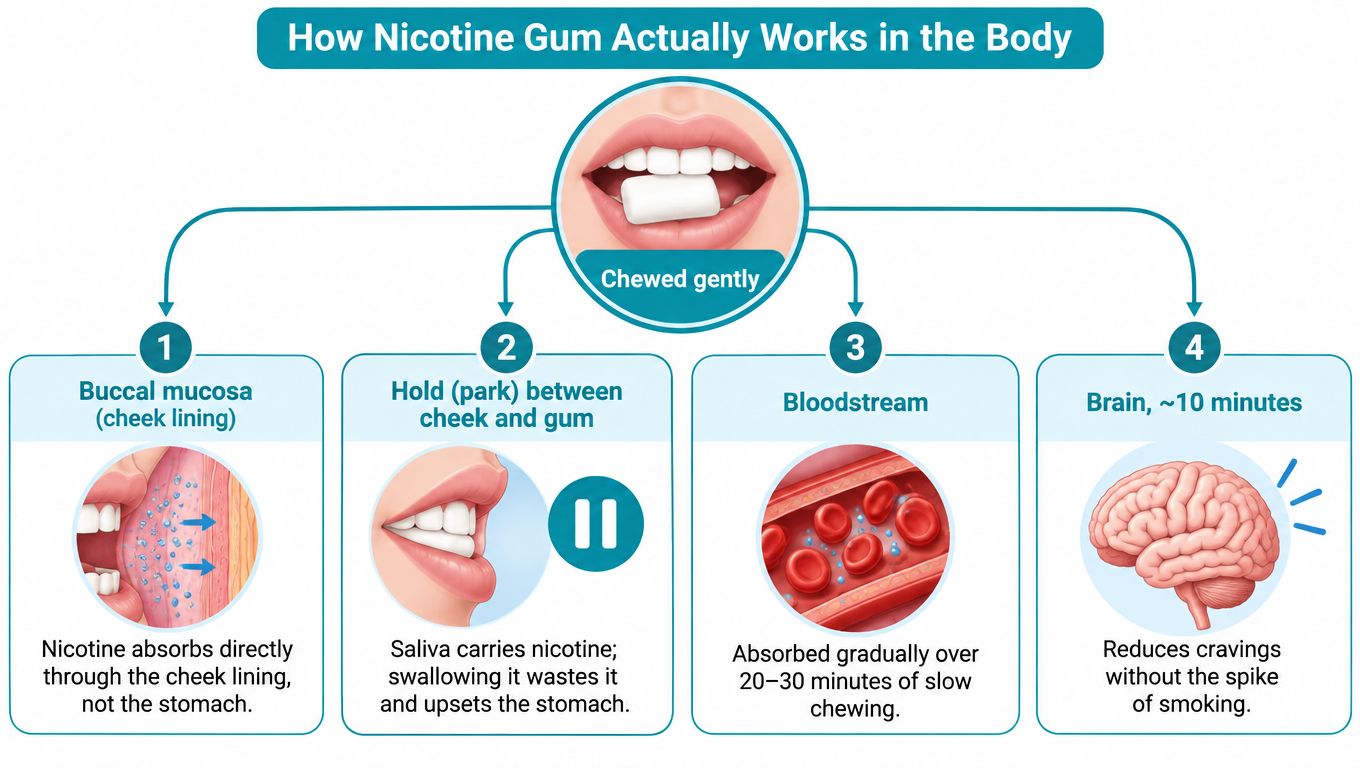
Why swallowing causes trouble
Nicotine swallowed with saliva contributes less to useful absorption because the digestive system and liver process much of it before it reaches circulation. Fast, forceful chewing releases more nicotine into saliva and makes swallowing more likely. That pattern can contribute to nausea, hiccups, heartburn, or dizziness. Chewing harder does not necessarily deliver nicotine more effectively.
A typical cycle alternates brief chewing with parking the gum for about 30 minutes. This slower method also gives the mouth and hands an activity that can replace part of the smoking ritual. It cannot remove every trigger, yet it may create enough time to respond to a craving differently. The detailed technique appears in the next section.
Cigarette smoking reinforces dependence through rapid nicotine delivery, withdrawal relief, and learned cues linked to particular places or routines. Gum delivers nicotine more slowly, so it works best as a behavior-change tool with a learning curve. Users may need to adjust their technique, discuss dose and side effects, and seek clinical follow-up when cravings or symptoms remain difficult to manage.
A patch follows a different route. It provides a steadier nicotine supply through the skin, known as transdermal delivery, while gum offers relief that the user can time around cravings. Lozenges also use the mouth lining, but they dissolve instead of being chewed and parked. The nicotine patch information from Empire Medical Wellness explains that alternative delivery system.
Using Nicotine Gum Correctly, Dosing, and a Practical Chewing Checklist
Why does nicotine gum require a technique? It is designed to release nicotine through the cheek lining gradually, rather than deliver it like ordinary chewing gum.
- Place one piece in your mouth and chew slowly.
- Stop when you notice tingling or a peppery taste.
- Park the gum between your cheek and gum.
- Leave it there while the sensation fades.
- Resume gentle chewing, then park it again.
- Continue this chew-and-park cycle for about 30 minutes, then discard the gum.
The CDC's nicotine gum instructions describe this approach because rapid, continuous chewing can release more nicotine into saliva, increasing the chance of swallowing it. The goal is controlled absorption, not vigorous chewing. Learning that distinction can take practice, especially for someone used to chewing gum like a cigarette.
Strength and schedule
Guidance commonly uses 2 mg gum for lower dependence and 4 mg gum for higher dependence or smoking soon after waking. Many evidence-based schedules begin with one piece every 1 to 2 hours, often aiming for approximately 8 to 12 pieces per day during the early phase. The FDA label sets a maximum of 24 pieces per day. (American Cancer Society guidance on NRT; FDA DailyMed label)
These are general guidance points, not an individualized prescription. Someone who smokes cigarettes, uses disposable vapes, or combines nicotine products may need a review of total nicotine exposure. A clinician or pharmacist can help choose the strength and schedule instead of relying on another person's routine.
Practical rule: A very strong taste, nausea, or repeated swallowing signals that continuous chewing may be too fast. Park the gum and ask a clinician or pharmacist whether the product, dose, and technique suit your situation.
A daily-use checklist
- Check the product: Confirm the strength, expiration date, and label instructions.
- Plan the timing: Use a schedule that addresses predictable cravings before withdrawal becomes overwhelming.
- Protect absorption: Do not eat or drink for 15 minutes before use or while chewing, as directed on the FDA label.
- Reduce side-effect triggers: Coffee, soda, and other acidic drinks can interfere with nicotine absorption when used around the same time.
- Respect the ceiling: Never exceed 24 pieces in one day.
- Review the timeline: Many public instructions recommend stopping within 12 weeks unless a clinician advises otherwise.
- Track symptoms: Record nausea, mouth soreness, palpitations, sleep disruption, and craving patterns.
- Reassess: Persistent symptoms, continued smoking, or repeated slips call for clinical guidance rather than more gum.
The required technique is also demonstrated in this educational video:
Nicotine Gum Compared With Patches, Lozenges, and the Inhaler
No NRT format is ideal for everyone. The practical question is which delivery method fits the person's cravings, routines, physical comfort, and ability to use the product correctly.
Nicotine gum is an on-demand buccal product. It can address a craving during a predictable trigger, but it requires active technique and may aggravate jaw or dental problems. A patch provides a slower, steadier delivery through the skin and may suit someone who wants background coverage without remembering repeated oral doses. Skin irritation is its main format-specific concern.
A lozenge dissolves in the mouth and uses a similar oral absorption route. It may be useful for someone who doesn't want to chew, but it must be allowed to dissolve correctly and can be uncomfortable if swallowed or used improperly. An inhaler provides nicotine vapor to the mouth and throat and may reproduce more of the hand-to-mouth ritual. Throat irritation can occur, and the device requires active use.
| Format | How it delivers nicotine | Onset of relief | Best fit | Key caution |
|---|---|---|---|---|
| Gum | Absorption through the cheek lining during chew-and-park use | Gradual, over minutes | People who want flexible, oral, on-demand use | Jaw soreness, mouth irritation, nausea from rapid chewing |
| Patch | Transdermal absorption through the skin | Slower and steadier | People who want background nicotine delivery | Skin reactions and the need to follow label instructions |
| Lozenge | Dissolves and releases nicotine through the mouth | Gradual, over minutes | People who prefer not to chew | Swallowing or using it like a hard candy can worsen discomfort |
| Inhaler | Nicotine vapor is released into the mouth and throat | Gradual, over minutes | People who value hand-to-mouth behavior replacement | Throat irritation and device-specific technique |
The products differ from cigarettes because they don't involve combustion. That makes FDA-approved NRT a substantially safer approach than continuing to smoke, but “safer than smoking” doesn't mean risk-free. The choice should account for current nicotine use, medical conditions, prior quit attempts, and whether the person can use the product consistently.
Additional discussion of treatment formats appears in Empire Medical Wellness's nicotine replacement therapy resources.
Side Effects, Risks, and When Side Effects Mean Stop and Seek Care
Nicotine gum side effects often fall into two practical groups. Some are mild and may reflect chewing too quickly. Others persist despite correct technique or signal a need for medical review.
Symptoms that may improve with technique
Mouth soreness, jaw ache, hiccups, mild heartburn, nausea, dizziness, and a strong tingling sensation can occur. Slowing the chew, parking the gum, and avoiding continuous chewing may reduce these effects. Someone with dental disease, dentures, jaw pain, or temporomandibular joint problems may need a different NRT format.
Symptoms that continue, worsen, or interfere with eating, sleeping, or normal activity deserve attention. Persistent mouth ulcers, significant dental or jaw pain, ongoing indigestion, or repeated palpitations shouldn't be dismissed as a technique issue.
Symptoms that need urgent attention
Stop using the gum and seek urgent medical care for chest pain, a fast or irregular heartbeat, breathing difficulty, swelling of the face or throat, or signs of a serious allergic reaction. Severe dizziness, confusion, vomiting, or other symptoms suggesting excessive nicotine also warrant prompt evaluation. Call emergency services for severe or rapidly worsening symptoms, especially chest pain or trouble breathing.
MedlinePlus lists important warnings and adverse effects for nicotine gum, including symptoms that require contacting a clinician. (MedlinePlus nicotine gum information)
People who are pregnant, adolescents, or people with recent cardiac events, serious arrhythmias, or uncontrolled hypertension shouldn't make an unsupervised decision about nicotine gum. NRT may still be considered in some clinical situations, but the risk-benefit assessment belongs with a qualified professional.
Mild discomfort linked clearly to chewing too fast may call for a technique review. Persistent or urgent symptoms call for medical contact, not more experimentation.
A Composite Example of Chewing Gum Like a Cigarette, and What To Do Instead
Composite example, not a real Empire patient: An adult who vapes frequently begins using nicotine gum but chews it like ordinary gum while working. After prolonged continuous chewing, the person develops nausea, a racing heartbeat, and jaw soreness, then considers abandoning NRT altogether.
Three problems may be operating at once. Mechanically, continuous chewing releases nicotine into saliva and encourages swallowing instead of allowing gradual cheek absorption. Behaviorally, the person uses the gum automatically during work without identifying whether the triggers are stress, boredom, concentration, or a particular routine. Clinically, nausea and a racing heartbeat are not symptoms to ignore or treat by changing the schedule alone.
The safer next step is to stop and review symptoms, then discuss the product and technique with a clinician or pharmacist. If the symptoms resolve and a professional considers continued NRT appropriate, the person can learn the chew-and-park method, avoid food and drinks around use, and track cravings instead of chewing continuously.
A trigger plan can be specific:
- During work stress: Pause, take several slow breaths, and identify whether the urge is withdrawal or a learned cue.
- After meals: Replace the smoking routine with a brief walk, water, or a planned support contact.
- While driving: Keep the chosen cessation tool available and record the trigger rather than using it automatically.
- After a slip: Treat it as information, not failure. Record what happened and discuss the pattern at follow-up.
People who vape or use multiple nicotine products should quantify the product, strength, frequency, and time to first use before selecting a strategy. The Empire Medical Wellness disposable vaping resource addresses a separate nicotine-delivery pattern, but it doesn't replace an individualized assessment.
Putting It Together, Working With a Clinician, and When to Reach Out
A practical cessation pathway starts with a clear goal. Some adults want to quit completely. Others begin by reducing smoking while preparing for a quit attempt. Neither goal should be treated casually, because each requires a plan for cravings, triggers, slips, and follow-up.
A clinician-guided decision path
- Quantify current nicotine use. Record cigarettes or vaping episodes, product strength when known, daily frequency, and time to first use.
- Identify withdrawal and cues. Note irritability, restlessness, concentration changes, sleep disruption, and situations that prompt use.
- Choose the treatment format. Discuss gum, patch, lozenge, or another FDA-approved option in light of medical history and preferences.
- Add behavioral support. Counseling, quitline support, and structured planning can address habits that medication alone can't change.
- Review technique and symptoms. A clinician can assess whether nausea, palpitations, mouth discomfort, or persistent cravings reflect technique, product choice, or another issue.
- Plan for slips. One cigarette or vaping episode doesn't require abandoning the attempt, but repeated slips may show that the current plan needs adjustment.
Contact a clinician for cardiovascular symptoms, persistent mood changes, pregnancy, continued nicotine gum use beyond the labeled period, or difficulty stopping after a full treatment course. A physician can also review other medications, medical conditions, total nicotine exposure, and whether combining NRT formats is appropriate. Don't create a combination plan by copying someone else's regimen.
Physician-led addiction medicine care can be useful when nicotine use is complicated by repeated quit attempts, significant withdrawal, coexisting medical concerns, or uncertainty about the safest treatment pathway. Empire Medical Wellness addiction medicine care includes confidential outpatient medical assessment, evidence-based treatment when clinically appropriate, monitoring, and recovery planning. It doesn't provide emergency or detoxification services, so urgent symptoms require emergency medical care.
The central lesson is practical: nicotine gum is a tool, not a complete behavior-change plan. Correct delivery, realistic goals, trigger management, and appropriate follow-up make the tool easier to use safely.
Frequently Asked Questions About Nicotine Gum
Can someone use nicotine gum beyond 12 weeks?
Many labels and public instructions describe a course of approximately 6 to 12 weeks, and some guidance allows longer use in selected situations. Continued use beyond the usual period should be reviewed with a clinician, especially if the person is still smoking, using other nicotine products, experiencing side effects, or repeatedly increasing use. Long-term nicotine gum use has been reported, but the incidence of dependence was judged very small in older survey data, and individual circumstances still matter. (Long-term nicotine gum survey data)
Does smoking occasionally mean the quit attempt has failed?
An occasional cigarette doesn't erase the work already done, but it should prompt a review of triggers and total nicotine exposure. Don't respond by automatically increasing gum use or combining products without professional guidance. Record when the slip occurred, what preceded it, and whether the current plan addresses that situation.
What should someone bring to a clinician visit?
Bring the gum strength, pieces used per day, timing, current cigarettes or vaping pattern, time to first nicotine use, side effects, withdrawal symptoms, triggers, medical conditions, current medications, and prior quit attempts. This information helps the clinician distinguish inadequate support from incorrect technique or a product that doesn't fit the person's routine.
How should someone choose flavored versus unflavored gum?
Flavor is mainly a tolerability and preference issue, not proof that one version works better. A person who dislikes a strong taste may use the product inconsistently, while another may find a flavor helpful during cravings. Discuss the specific product, strength, frequency, and any nausea, mouth irritation, or jaw discomfort with a clinician or pharmacist before changing products.
When is a symptom an emergency?
Chest pain, severe or irregular heartbeat, breathing difficulty, swelling of the face or throat, or severe symptoms suggesting too much nicotine require urgent medical attention. For immediate danger, call emergency services. Mild nausea or jaw soreness may be technique-related, but symptoms that persist still deserve routine clinical review.
Empire Medical Wellness offers confidential, physician-led outpatient addiction medicine assessment, treatment planning when clinically appropriate, monitoring, and recovery planning for adults. Visit Empire Medical Wellness to learn about care options and discuss nicotine gum use with a qualified clinician. This article is educational and isn't personal medical advice.