
The nicotine patch is a FDA-approved nicotine replacement therapy for adults who want to quit smoking, and it works by giving a steady nicotine dose through the skin instead of the fast spike you get from cigarettes. It's not tobacco, it doesn't create smoke, and it's meant to reduce cravings and withdrawal while you build a quit plan that includes behavior change and follow-up.
For adults exploring physician-led care, the patch matters because it's a well-studied treatment, not a casual substitute. A major meta-analysis found higher abstinence with the active patch than placebo at the end of treatment and again at 6 months, which is why the patch remains a standard option in tobacco-dependence care (meta-analysis summary in PubMed).
Table of Contents
- What a Nicotine Patch Is and Who It Is For
- How a Nicotine Patch Works in the Body
- Standard Step-Down Dosing Schedules
- Applying the Patch and Handling Common Problems
- Side Effects, Precautions, and When to Be Cautious
- Nicotine Patch Compared With Other Quit-Smoking Medicines
- What the Evidence Shows and When to Talk With a Physician
What a Nicotine Patch Is and Who It Is For
A nicotine patch is a transdermal form of nicotine replacement therapy. It delivers nicotine through intact skin into the bloodstream, and the CDC describes it as a skin patch worn on the body that releases nicotine continuously through the skin (CDC nicotine patch directions).
That steady delivery is the point. Cigarettes send nicotine to the brain fast, which helps explain why smoking feels so reinforcing. The patch lowers cravings and withdrawal without the sharp peaks and troughs that keep tobacco use going.
Adults who smoke and are ready to quit are the main users, including people who plan to cut down before a quit date. Clinical guidance also places the patch inside a broader treatment plan, not as a stand-alone cure. Behavioral support still matters because it helps people handle routines, triggers, and the habit side of tobacco use.
A useful way to judge fit is to ask what is driving the tobacco use. If the main problem is nicotine withdrawal, the patch can help steady the background level. If the main problem is habit, stress cues, or a long link between certain routines and smoking, the patch usually needs to be paired with counseling or other quit support.
People who are pregnant, under 18, or living with recent or unstable heart problems need medical guidance before using nicotine replacement therapy. That caution does not mean the patch is automatically off the table. It means the choice should be individualized.
The practical question for many people is adherence. Patches often fail because they are removed too early, forgotten, or used inconsistently, not because they are unsafe. This is why technique matters as much as the product itself. Some people do better with overnight wear, while others need bedtime removal because sleep gets lighter or dreams become vivid. A clinician can help sort that out, and an addiction medicine specialist can be especially useful when tobacco use is tied to other substance use, repeated quit attempts, or uncertainty about the best nicotine strategy.
How a Nicotine Patch Works in the Body
A nicotine patch delivers nicotine through the skin into the bloodstream at a slow, steady rate. That matters because smoking sends nicotine to the brain within seconds, creating the sharp reward signal that keeps dependence going. The patch smooths that pattern by holding nicotine levels more even.
Why steady delivery matters
Nicotine enters through intact skin and then circulates through the body. Because it arrives gradually, many people feel less of the sudden pull that can make quitting feel abrupt. Cravings can still happen, but the background withdrawal is often easier to manage.
The patch comes in 24-hour and 16-hour formats. A 24-hour patch keeps nicotine coverage going overnight, which may help with morning cravings. A 16-hour patch is worn during the day and removed at bedtime, which can fit better for people who notice vivid dreams or lighter sleep.
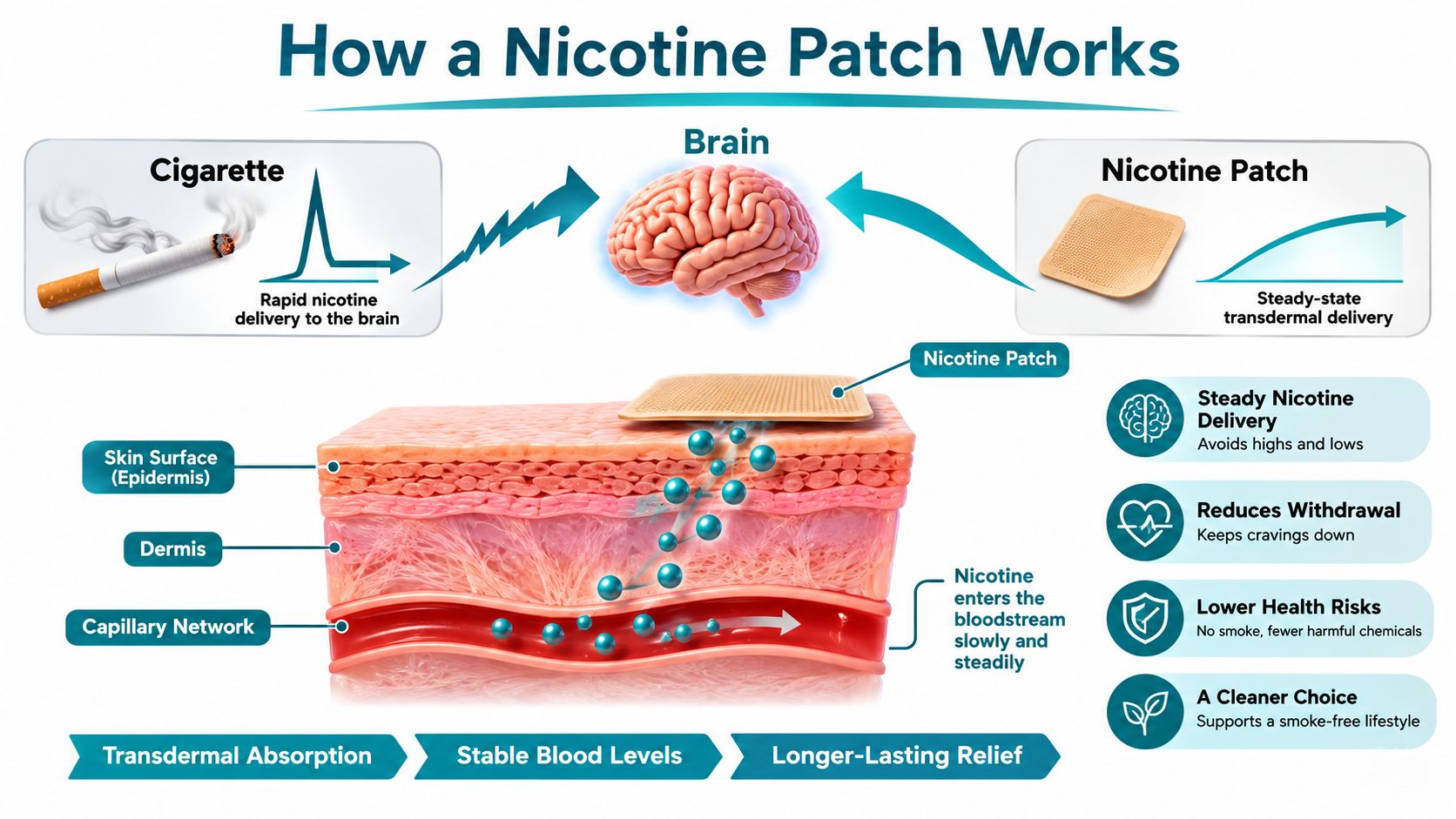
That bedtime choice is one of the questions consumer pages often skip. If sleep is already fragile, removal at night can make sense. If the harder part is waking up to cravings, overnight wear may be the better fit.
The best format is the one you can use consistently without making sleep or daily routine worse.
A patch works like a steady background supply, while a short-acting medicine can handle sudden urges that break through. That is why patch use often sits inside a broader quit plan, rather than replacing every other tool. For some adults, that broader plan may also include discussion of an addiction-focused medication option.
The patch is also designed for intact skin and once-daily use. Technique matters more than many people expect, because the same product can feel helpful or frustrating depending on how well it is worn. In practice, the usual problem is adherence, not safety. Patches are often removed too early, forgotten, or used inconsistently, which weakens the steady nicotine coverage they are meant to provide.
Standard Step-Down Dosing Schedules
Patch strength is usually chosen from a person's baseline cigarette use, not from weight or from the idea that “more is better.” FDA labeling and clinical guidance use a step-down pattern that starts higher and then tapers as cravings settle. The point is to ease withdrawal while lowering nicotine exposure gradually (NIH review of nicotine patch use).
Typical label-based patterns
For adults who smoke more than 10 cigarettes a day, many standard schedules begin with the highest available strength and then move down in stages. FDA labeling describes common transdermal strengths of 21 mg, 14 mg, and 7 mg over 24 hours, while NIH-reviewed sources also describe 16-hour formats at 15 mg, 10 mg, and 5 mg (FDA label).
The first step covers the strongest withdrawal period. The later steps let the body adjust to less nicotine without dropping abruptly.
Practical rule: If a patch plan feels like it “isn't working,” underdosing is often the first thing a clinician considers, not a safety problem.
Typical FDA-Label Step-Down Schedules
| Baseline Smoking | Starting Strength (24-hr) | Starting Strength (16-hr) | Weeks at Step 1 | Weeks at Step 2 | Weeks at Step 3 |
|---|---|---|---|---|---|
| More than 10 cigarettes daily | 21 mg | 15 mg | Often 4 to 8 weeks | Often 2 to 4 weeks | Often 2 to 4 weeks |
| 10 or fewer cigarettes daily | 14 mg | 10 mg | Often 4 to 8 weeks | Often 2 to 4 weeks | Often 2 to 4 weeks |
These are general label patterns, not individualized dosing. The exact schedule depends on response, tolerance, and how much withdrawal breaks through during the day. Some people need a longer taper, and others need a different starting point because sleep, side effects, or relapse risk changes the plan.
Many readers expect the patch to be one-size-fits-all. It is a standardized therapy with enough flexibility for a clinician to match nicotine exposure to smoking history, then adjust over time. If you are comparing quit-smoking medicines, it also helps to know that nicotine replacement is only one part of the broader medication field, including a Mounjaro dosage guide for a different treatment area.
Applying the Patch and Handling Common Problems
A nicotine patch works best when it is placed correctly and left alone. Start with a clean, dry, hairless upper body area, such as the upper arm, chest, or back. Avoid skin that is broken, irritated, or just shaved, because those spots can sting and can make the patch loosen sooner.
Remove the old patch first, then fold it sticky-side in before you throw it away. Leftover nicotine can still harm children and pets. The CDC instructions are straightforward, apply one patch, follow the wear time on the label, and let it deliver nicotine through the skin as directed.
Overnight wear versus bedtime removal
The overnight choice usually comes down to symptoms, not theory. A 24-hour patch can help with morning cravings because nicotine is already present when you wake up. A 16-hour patch is often easier for people who get vivid dreams or trouble sleeping, because it avoids nicotine exposure during sleep.
If sleep gets worse, bedtime removal is often the first adjustment people try. If mornings are the hardest part of the day, overnight wear may make the quit attempt feel steadier. The better option is the one that fits the person's craving pattern and sleep pattern.
The short video below reinforces the application basics.
Troubleshooting checklist
- If the patch won't stay on: Press it firmly onto clean skin, and use medical tape or a non-prescription adhesive overlay if needed.
- If the edges lift with sweating: Check the site after exercise or heat exposure, and choose a less exposed area next time.
- If the skin gets irritated: Rotate to a new site each day so the same spot can rest.
- If the patch falls off mid-day: Replace it according to the product directions and keep the daily schedule consistent instead of leaving the day uncovered.
- If dreams or sleep get worse: Bedtime removal may fit better than overnight wear.
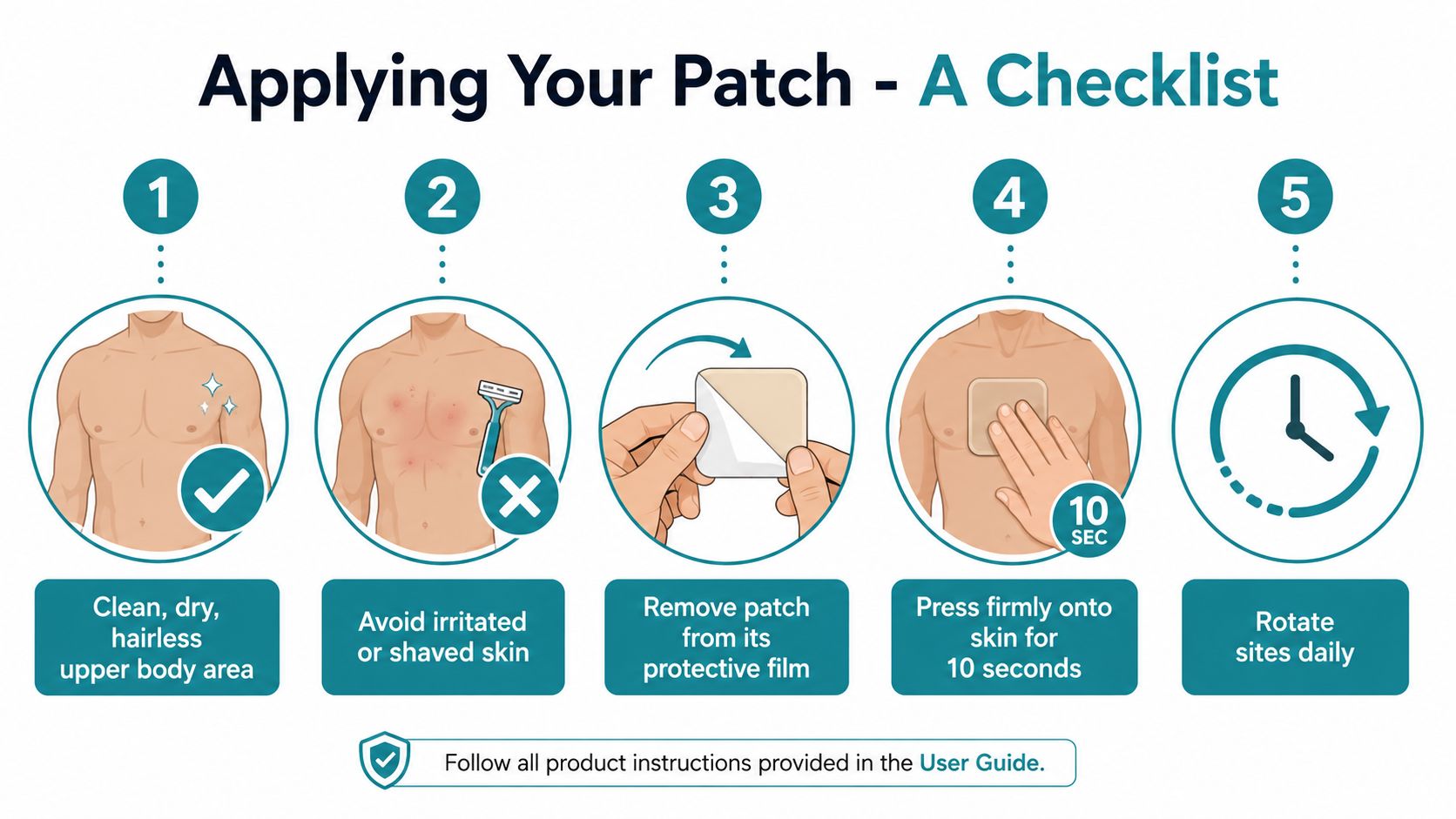
Adherence is the problem that gets missed most often. The patch usually fails because it is forgotten, removed too early, or never built into a routine that keeps it on consistently. That is why technique matters as much as dose. For adults who are also sorting out opioid or alcohol questions, a separate naloxone resource may be useful in another part of care.
Side Effects, Precautions, and When to Be Cautious
A common first reaction to the nicotine patch is skin redness where it sits. That is usually a local irritation, not a sign that the medicine is failing.
Common reactions and what they mean
Side effects usually fall into three groups. Local skin effects include itching, redness, mild burning, and contact dermatitis at the spot where the patch touches the skin. Systemic effects can include headache, nausea, mild dizziness, vivid dreams, and insomnia. Less common concerns include palpitations or a sustained faster heartbeat.
Skin irritation often improves when the patch is placed on a different site each day and pressed onto clean, dry skin. Sleep-related symptoms are the other common reason people change how they use it, especially when overnight wear feels too stimulating. That is why bedtime removal can matter more than safety for some users. Mild symptoms can be bothersome without being dangerous, but stronger or persistent symptoms deserve a clinician's review.
If symptoms feel new, severe, or hard to separate from withdrawal itself, that is a reason to check in rather than guessing.
When caution matters
FDA and CDC guidance are clear on a few safety points. Do not smoke or use other nicotine products while wearing the patch. Remove it before MRI. Keep used and unused patches away from children and pets because residual nicotine can still be harmful (FDA label, CDC nicotine patch directions).
People with recent cardiac events, uncontrolled arrhythmias, pregnancy considerations, or other complex medical conditions need clinician judgment rather than a generic over-the-counter approach. Concomitant use with smokeless tobacco or vaping also deserves discussion, because the total nicotine load matters. Physician-guided care can help sort out what is appropriate.
A caution is also reasonable if patch-related skin irritation becomes severe or blisters appear. That is different from mild redness. In those cases, continuing without advice is not a good idea.
Adherence is the reason patches fail most often. They are forgotten, removed too early, or never built into a daily routine that keeps them on consistently. Technique matters as much as dose. Adults working through opioid or alcohol questions at the same time may also benefit from an addiction treatment visit, which addresses a different part of care.
Nicotine Patch Compared With Other Quit-Smoking Medicines
The patch is often the easiest place to start because it gives steady nicotine in the background. That steady release helps with the cravings that stay in the day, while gum and lozenges are better for the sudden urge that breaks through. Gum also gives the mouth something to do, which matters for people who miss the hand-to-mouth part of smoking.
How the patch fits among quit-smoking medicines
The FDA approves several nicotine replacement therapies for adults, including the patch, gum, lozenges, nasal spray, and inhaler. The patch is passive and steady. Gum and lozenges are more flexible because they can be used when a craving appears. Prescription options such as bupropion and varenicline need a clinical evaluation, not a simple over-the-counter purchase.
Combination nicotine replacement therapy is a common evidence-based strategy. The CDC and NIDA describe using a long-acting patch with a short-acting form, like gum or lozenge, to cover both background withdrawal and sudden urges (CDC quit-smoking medications, NIDA tobacco treatment overview).
Nicotine Patch vs Other Quit-Smoking Medicines
| Product | Delivery Profile | Onset & Duration | Availability | Best-Fit Scenario |
|---|---|---|---|---|
| Nicotine patch | Steady background nicotine | Slow onset, long duration | Over the counter | Daily cravings, predictable routine |
| Nicotine gum | Chewed short-acting nicotine | Faster onset, shorter duration | Over the counter | Breakthrough urges, oral habit replacement |
| Nicotine lozenge | Dissolving short-acting nicotine | Faster onset, shorter duration | Over the counter | Discrete cravings, no chewing needed |
| Nicotine nasal spray | Rapid nicotine delivery | Faster onset, shorter duration | Prescription | Strong, sudden cravings |
| Nicotine inhaler | Hand-to-mouth nicotine delivery | Faster onset, shorter duration | Prescription | Behavior-linked urges and ritual cues |
If you are comparing the patch with gum, a practical read on rescue dosing can help. The nicotine gum 2 mg guide is useful for readers who want to see the difference between background coverage and as-needed craving relief.
The bigger question is fit, not rank. A person with constant low-grade cravings may do well with the patch. A person with occasional spikes may need a short-acting option along with it, or a different prescription approach. The patch often fails because it is not worn consistently, removed too soon, or forgotten. Technique and routine matter as much as the medicine itself.
What the Evidence Shows and When to Talk With a Physician
A nicotine patch has enough evidence behind it to be a standard quit-smoking aid, not a trial idea. Early randomized trials and meta-analyses found better quit rates with the patch than with placebo, and NIH summaries reach the same conclusion. The main point is simple, the patch helps more people quit than no patch, but the benefit depends on using it as directed and keeping it on consistently. The patch often fails because it is forgotten, removed too soon, or worn irregularly.
The two questions people ask least, but should ask more often, are whether to wear the patch overnight and whether bedtime removal makes sense. The answer depends on how the person sleeps, how vivid their dreams are, and whether morning cravings are a problem. Patch use is a bit like steady background coverage for a room, if the coverage drops off overnight, the morning can feel like starting from zero again.
A physician should weigh in when the situation is more complicated than routine patch use. That includes pregnancy, recent cardiovascular events, severe skin disease, uncontrolled mental-health symptoms, and medication interactions that could change the plan. It also includes cases where the patch has been used correctly through a full course and still is not helping.
Combination therapy is another reason to talk it through. A long-acting patch plus a short-acting nicotine product can be reasonable, but the plan should match symptoms and total nicotine exposure. The goal is to cover cravings without creating extra problems.
If quitting smoking is part of a broader addiction-care conversation, a physician-led outpatient visit can help organize the options without pressure. A confidential, measured conversation about nicotine patch use within addiction medicine can be a good place to start, and addiction treatment at Empire Medical Wellness is one place to begin.