
A person may have lost weight with medication and now face a change in access, side effects, cost, or treatment goals. The central question is what support will help maintain health and weight if treatment changes. The evidence points to planning with a clinician, not assuming that reaching a target weight ends care.
Byline: Empire Medical Wellness Editorial Team
Published: October 8, 2026
Updated: October 8, 2026
Table of Contents
- Why Maintenance Is the Real Question
- What the Withdrawal Trials Actually Showed
- Maintenance Is Not the Same as Discontinuation
- Personal Factors That Shape a Maintenance Plan
- What to Monitor After a Dose Change or Pause
- Dietary Patterns That Support Maintenance
- What Physician-Led Maintenance Looks Like at Empire
- Common Maintenance Questions Answered
Why Maintenance Is the Real Question
Weight loss maintenance after medication deserves its own conversation. A person may be considering treatment, already using an anti-obesity medication, or trying to plan around a possible interruption. In each case, the practical question is what ongoing care should look like, not whether weight regain reflects a personal failure.
Obesity is a chronic condition, and medication can be one part of its management. Research on stopping semaglutide and tirzepatide shows that, on average, people regain some of the weight they lost after treatment ends. That finding helps guide planning, but it doesn't predict what will happen to any one person.
A useful maintenance discussion can cover treatment response, side effects, other health conditions, access, preferences, and what to monitor if care changes. It can also clarify which questions remain open. For example, evidence about continuing effective treatment is stronger than evidence about reducing dose or frequency to preserve weight loss.
The practical aim: make a plan for ongoing follow-up before a medication change becomes urgent.
This article offers a general framework and questions to bring to a qualified clinician. It doesn't diagnose readers or tell them to start, stop, taper, or change medication. Those decisions depend on individual medical circumstances and require clinical guidance.
What the Withdrawal Trials Actually Showed
Two randomized withdrawal studies help explain why maintenance is not just the period after weight loss.
In the STEP 1 extension, adults without diabetes received weekly semaglutide 2.4 mg alongside lifestyle intervention for 68 weeks, then stopped treatment and were followed for another 52 weeks. At the end of treatment, participants had lost an average of about 17% of their starting weight. During the year after stopping, they regained an average of 11.6 percentage points of body weight, roughly two-thirds of what they had lost. The placebo group regained 1.9 percentage points. By the end of the 120-week observation period, the semaglutide group retained an average loss of 5.6% from baseline, compared with 0.1% in the placebo group. Some cardiometabolic improvements also moved back toward baseline. The STEP 1 extension report provides the trial details.
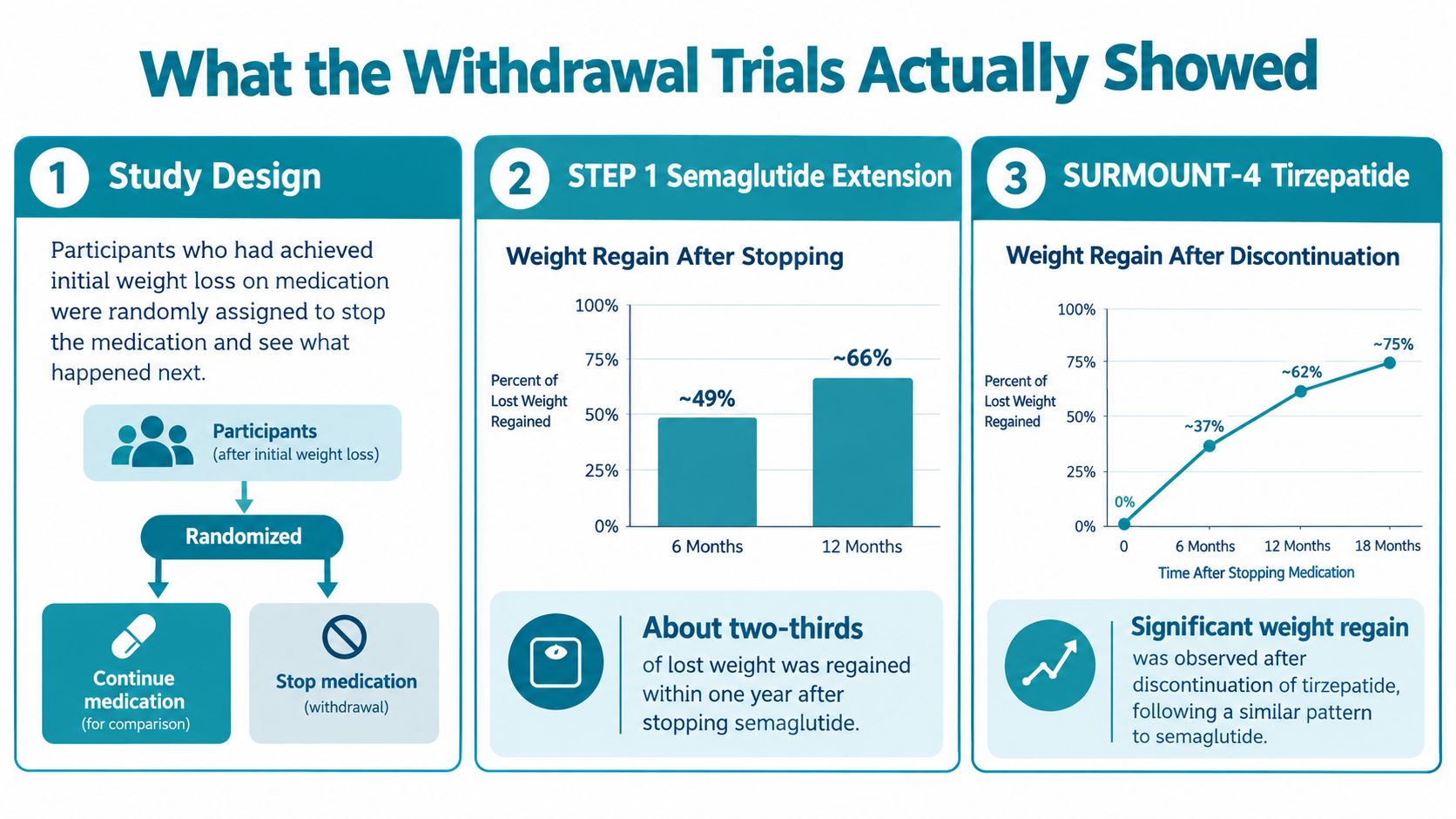
SURMOUNT-4 tested tirzepatide after a 36-week lead-in. Participants who continued treatment for another 52 weeks lost an additional average of 5.5% of body weight. Those who switched to placebo regained an average of 14.0% relative to their weight at randomization. In the continued-treatment group, 89.5% maintained at least 80% of the weight they had lost during the lead-in, compared with 16.6% of participants switched to placebo. The SURMOUNT-4 trial summary describes the results.
These are group averages from particular trial populations, not personal forecasts. They show that stopping active treatment often changes the likelihood of maintaining prior weight loss, even when lifestyle support continues. They don't establish a universal stopping schedule or mean that every person will regain the same amount.
Maintenance Is Not the Same as Discontinuation
A target weight can mark progress without marking the end of treatment. Maintenance is an active phase of care, and it may involve continued medication, another approach, or close monitoring when treatment changes. The useful distinction is not success versus failure. It's whether the current plan is still appropriate and what support is needed next.
The 2025 VA/DoD obesity guideline advises against routine discontinuation because regain is likely. At the same time, it finds insufficient evidence to recommend for or against lowering the dose or frequency to preserve weight loss. The American Diabetes Association describes shared decision-making that may include continued treatment at the lowest effective dose, intermittent treatment, or stopping with close monitoring. These options aren't equally well established, and none should be treated as a self-directed medication plan. The VA/DoD guideline summary sets out the limits of current evidence.
A discussion about medications should account for the specific product and its approved use. FDA labeling can help clarify medication-specific indications and safety information, but it doesn't decide what is appropriate for an individual. MedlinePlus information on semaglutide and MedlinePlus information on tirzepatide are starting points for reviewing those medicines with a clinician.
For a person weighing options, the useful questions are whether the current treatment remains beneficial and tolerable, what alternatives are appropriate, and how follow-up will work if access changes. Empire's GLP-1 care information offers context about medication-related care. It doesn't replace a clinical discussion about an individual's options.
Personal Factors That Shape a Maintenance Plan
A maintenance plan should reflect more than a number on the scale. A clinician can review the full medical picture and the practical circumstances that affect continuity.
- Treatment response: Consider whether the medication has supported meaningful progress and whether other health markers have changed.
- Tolerability and safety: Discuss side effects, relevant medical conditions, other medications, and any new symptoms. A treatment that isn't tolerable may require a different clinical conversation.
- Pregnancy planning and life stage: Tell the clinician about pregnancy plans or other changes that may affect medication decisions. The appropriate discussion depends on the specific medication and circumstances.
- Cost and access: Raise affordability, pharmacy availability, insurance changes, and interruptions as soon as they become concerns. A plan that assumes uninterrupted access may not fit real life.
- Personal preference: Discuss what matters most, including treatment burden, appetite changes, follow-up, and willingness to consider different options.
Access is not a side issue. A 2025 JAMA commentary reports that real-world discontinuation of GLP-1 receptor agonists may range from 50% to 75% at 12 months, and that nearly 30% of participants discontinued semaglutide in the SELECT trial. These figures describe reported treatment patterns, not the experience of every patient. The JAMA commentary discusses how interruptions complicate long-term care.
A helpful visit makes room for the reasons treatment might change, whether that's cost, availability, tolerability, pregnancy planning, or preference. Empire's metabolism information can help readers explore related topics, while medication decisions belong in a qualified clinician's care plan.
What to Monitor After a Dose Change or Pause
Monitoring works best when it's agreed on in advance. A clinician can tailor the timing and measures to a person's health history, medication, and reason for a change. There isn't one universal schedule or threshold that applies to everyone.
| Metric | Typical interval | Threshold to discuss with clinician |
|---|---|---|
| Weight trajectory | At intervals agreed on with the clinician, with earlier follow-up after a treatment change | A sustained upward trend, or a change that concerns the patient |
| Waist circumference | Periodically, if useful to the care plan | A consistent increase or change alongside other health markers |
| Blood pressure | As directed by the clinician or existing care plan | Readings outside the person's agreed target or a notable change |
| Glycemic markers and lipids | Based on medical history and clinician guidance | A result that changes the current health plan |
| Hunger and eating patterns | Check in during follow-up and when changes arise | Persistent appetite changes or eating patterns that feel difficult to manage |
| Sleep and physical function | Discuss at follow-up and when day-to-day function changes | New or worsening concerns that affect health or activity |
The table is a planning aid, not a diagnostic tool. A clinician may also review medications, nutrition, activity, and sleep before deciding whether a change in care is needed. Tracking should support a useful conversation, not become a reason to judge oneself or make unsupervised medication changes.
People who notice a pattern they're concerned about can bring their observations to a clinician rather than waiting for a particular number on the scale. For background on changes in weight trajectory, Empire's article on weight-loss plateaus may also be useful.
Dietary Patterns That Support Maintenance
No single eating pattern has been established as the best way to maintain medication-associated weight loss. A practical approach should fit a person's health needs, preferences, routines, and metabolic goals. Protein adequacy and fiber-rich foods may be useful planning considerations, but they don't guarantee that weight loss will be maintained.
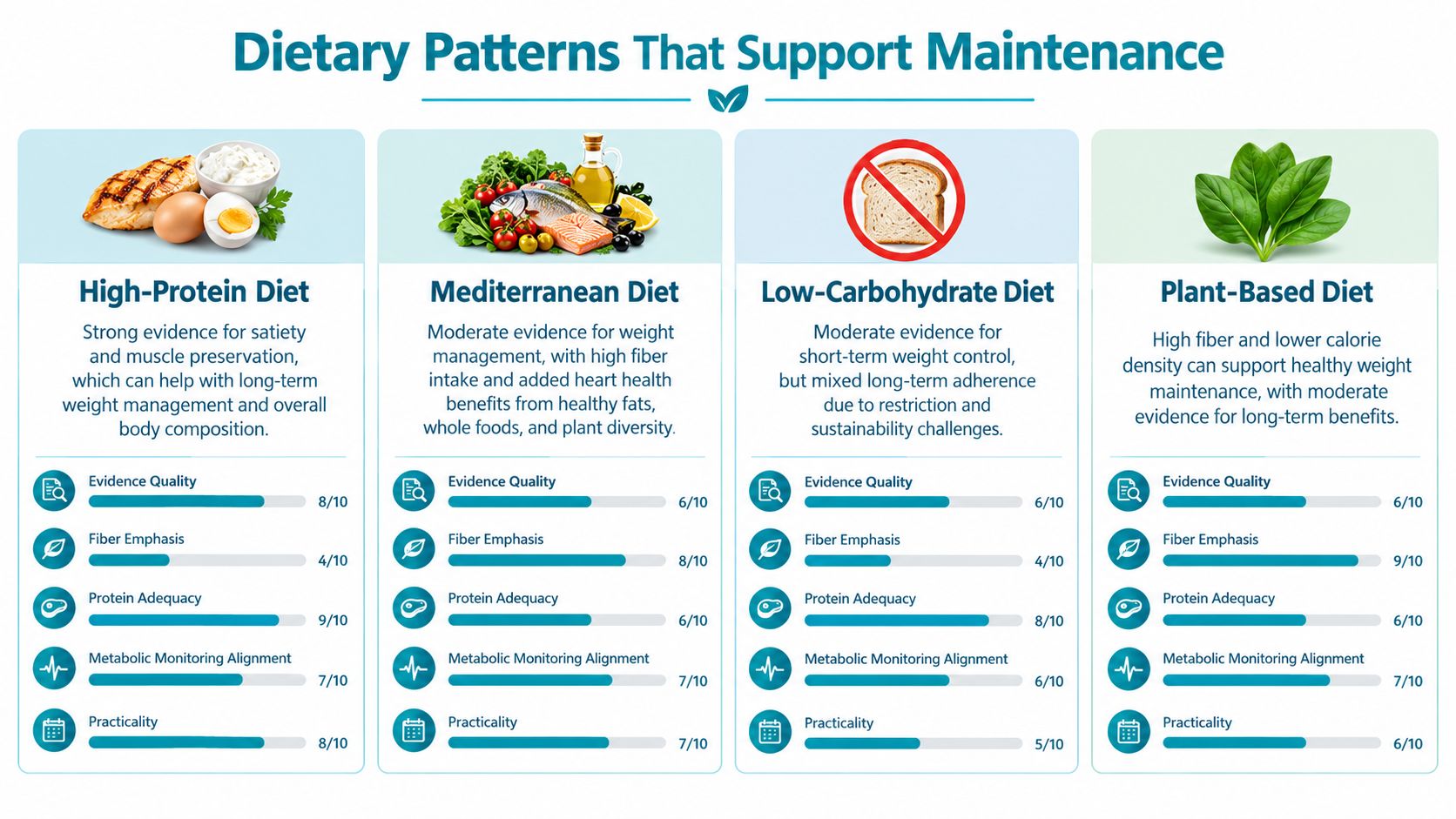
These patterns can serve as discussion points rather than prescriptions:
| Pattern | Potential planning strengths | Questions to consider |
|---|---|---|
| Mediterranean-style | Emphasizes vegetables, fruit, whole grains, legumes, and unsaturated fats | Does it fit the person's preferences and cardiometabolic goals? |
| DASH-style | Organizes choices around a balanced pattern that can be discussed alongside blood pressure goals | Can the person sustain it in their daily routine? |
| Lower-carbohydrate | May suit some food preferences and metabolic goals | Is the approach nutritionally adequate and practical over time? |
| Plant-forward | Can emphasize fiber-rich foods and a range of plant sources | How will the plan meet individual protein and nutrient needs? |
A person may also benefit from support with meal planning or food choices. An app such as GrabGains app for slimming down can be considered as a general planning resource, not a substitute for medical or nutrition care. Empire's balanced-diet guidance offers related reading.
The best discussion is specific: which pattern fits the patient's health picture, what nutrition markers matter, and what adjustments are realistic. A clinician can help connect those questions with medical monitoring rather than presenting one diet as a universal solution.
What Physician-Led Maintenance Looks Like at Empire
Empire Medical Wellness provides private-pay, physician-led outpatient obesity care for adults. A maintenance-focused visit can include review of weight history, relevant health factors, treatment response, and options for ongoing follow-up. A description of care is not a promise that every medication or strategy discussed here is offered or appropriate for every patient.
The practice's standard initial evaluation is 50 minutes and $350. A standard follow-up is 25 minutes and $225. Empire doesn't bill insurance directly, and an itemized receipt is available through the patient portal. Telemedicine is available for adults physically located in New York, New Jersey, Connecticut, Pennsylvania, or Virginia; in-person appointments are also available. Fees and how care works explains the practice's payment model.
Dr. Chhatpar, DO, DABOM, serves as Medical Director and provides direct patient care. He is board-certified in family medicine, osteopathic manipulative therapy, and obesity medicine. Nutrition-related information is available through Empire's nutrition page.

People preparing for a first visit can review what to expect at an obesity medicine appointment. Appointment availability and clinical recommendations depend on the practice's current services and each person's needs.
Common Maintenance Questions Answered
Is a lower maintenance dose a settled strategy?
It may be discussed, but the evidence doesn't establish dose or frequency reduction as a reliable way to preserve weight loss. A clinician can review the medication, response, tolerability, and relevant risks. Patients shouldn't change a dose or schedule without medical guidance.
Does a small early increase on the scale mean the plan has failed?
Not by itself. A single measurement doesn't show the full weight trajectory or explain a change. The useful next step is to look at the broader pattern and any related changes in appetite, health markers, or daily function, then discuss concerns with a clinician.
When should regain prompt a medical conversation?
A person doesn't need to wait for substantial regain to ask for help. A sustained change, increased hunger that feels hard to manage, worsening health measures, or concern about a treatment interruption are all reasonable reasons to check in. The clinician can determine whether the care plan needs reassessment.
How can someone prepare for a likely access interruption?
Raise the issue early, before medication becomes unavailable. Explain whether the concern involves cost, supply, insurance, side effects, or another change, and ask what follow-up and monitoring would be appropriate. There's no universal backup medication plan, and any transition should be discussed with a qualified clinician.
Adults seeking an individualized maintenance discussion can visit Empire's obesity medicine service page for information about the practice's care. This article is educational and isn't personal medical advice.
Empire Medical Wellness offers physician-led outpatient obesity care, including individualized weight-management planning and follow-up when clinically appropriate. Adults considering how to maintain progress through a treatment or access change can learn more at Empire Medical Wellness and discuss their circumstances with a qualified clinician.