
An adult considering a first obesity medicine appointment may hesitate before booking. They may wonder whether the visit will focus only on a scale reading, whether medication will be expected, or whether past attempts will be judged. A physician-led consultation should do something more useful: establish a private medical baseline and create a realistic plan for evaluation, treatment, monitoring, and long-term maintenance.
Byline: Empire Medical Wellness Editorial Team
Published: October 9, 2026
Updated: October 9, 2026
Table of Contents
- What a First Obesity Medicine Visit Actually Addresses
- Why the Initial Evaluation Looks Beyond the Scale
- What Happens During the Medical Assessment
- Practical Checklist for Your First Visit
- Turning the First Visit Into a Long-Term Plan
- Understanding Access, Costs, and Next Steps
What a First Obesity Medicine Visit Actually Addresses
Obesity medicine treats excess weight as a chronic health condition, not as a matter of appearance or personal failure. The scale can be part of the conversation, but it doesn't tell the whole story. A clinician may need to understand when weight changed, what treatments have already been tried, which health conditions are present, and what the adult seeking care wants to improve.
The reason for this broader approach is clear. The World Health Organization reports that more than 1 billion people worldwide were living with obesity in 2022, approximately 1 in 8 people globally. Adult obesity had more than doubled since 1990, and 43% of adults worldwide were classified as overweight in 2022. Those population figures don't diagnose any individual, but they help explain why a first visit usually requires more than a quick discussion about weight.
The appointment begins with context
A physician may review:
- Weight trajectory: When weight changes began, how quickly changes occurred, and whether patterns have repeated.
- Previous approaches: Nutrition programs, activity changes, counseling, medications, or other interventions, including what helped and what became difficult to sustain.
- Health conditions: Blood pressure concerns, abnormal cholesterol, blood-sugar problems, sleep symptoms, joint limitations, liver concerns, and other relevant conditions.
- Current treatment: Prescriptions, over-the-counter products, and supplements that might affect weight, appetite, safety, or treatment selection.
- Daily factors: Sleep, activity, eating-related behaviors, stress, work demands, and social circumstances.
- Personal goals: Better mobility, improved metabolic health, more consistent energy, or another outcome that matters to the patient.
This conversation supports shared decisions. A patient may want to discuss medication, while a clinician may first recommend records, testing, behavioral support, or attention to a related condition. Another patient may prefer to avoid medication. The first visit should leave room for both preferences and clinical judgment.
Practical rule: A useful consultation should answer not only “What could be started?” but also “What information is still needed, how will progress be monitored, and what happens if the plan changes?”
Patient participation also matters. Clear explanations, time for questions, and agreement on next steps are part of effective care. Readers interested in the broader role of communication can review this patient engagement guide. For more context about physician-led services, the obesity medicine service page describes the practice's approach without reducing care to a single prescription.
Why the Initial Evaluation Looks Beyond the Scale
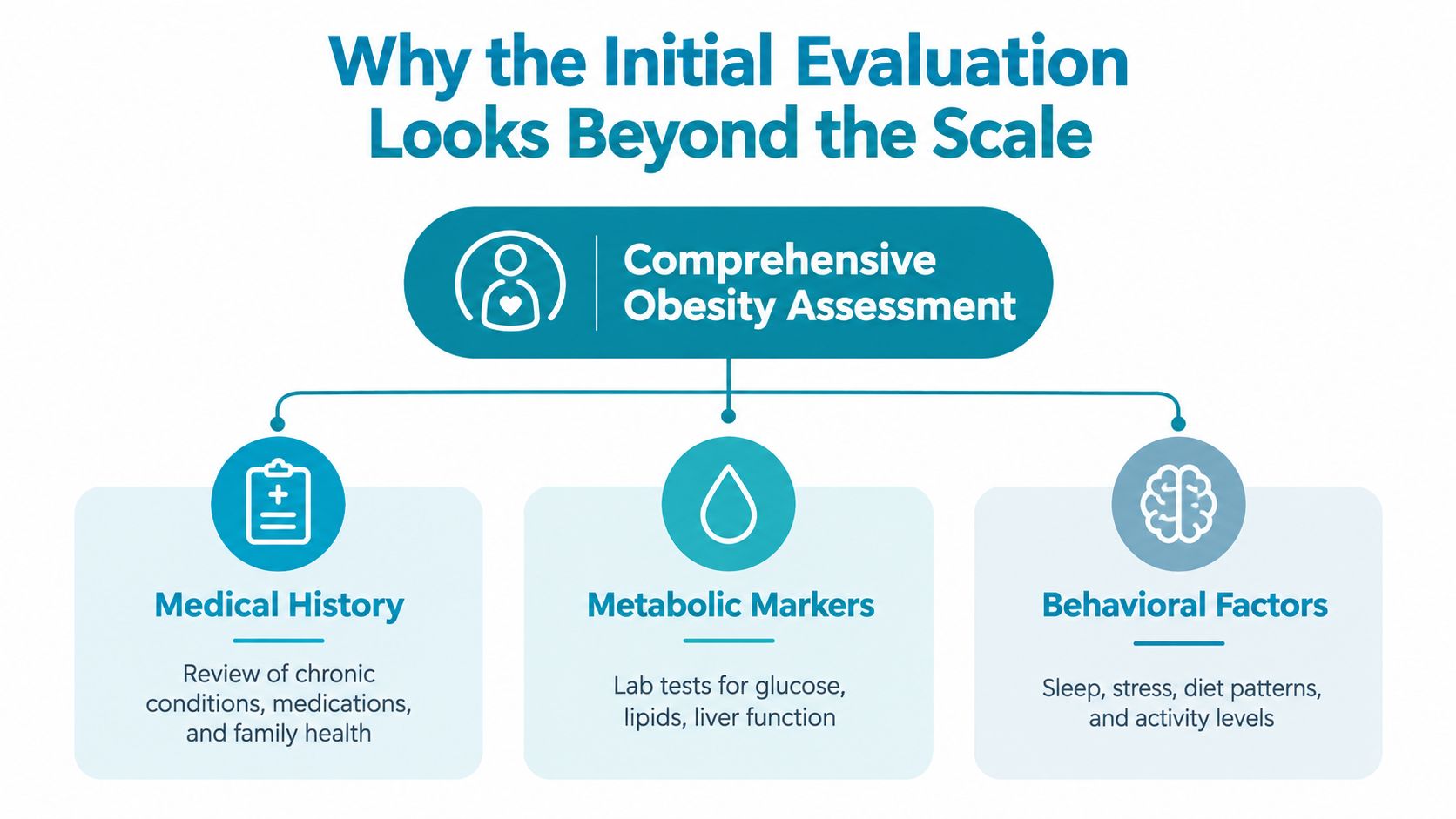
A first evaluation works best when it establishes a clinical baseline. That baseline can include height, weight, calculated body-mass index, waist circumference, blood pressure, medical history, physical findings, laboratory review, and assessment of obesity-related complications. The exact combination depends on the person's history and symptoms.
Body-mass index, or BMI, is a screening measure, not a complete diagnosis of body composition. It is calculated from weight and height, but muscularity, edema, sarcopenia, hydration, and other factors can affect how well it reflects adiposity. Waist circumference may add information about cardiometabolic risk, particularly when BMI is below 35 kg/m². Body-composition testing may be considered selectively, but it isn't automatically required for every patient. Adults who want general background can review the practice's BMI information without turning the first appointment into a calculator exercise.
Three layers of a useful baseline
Medical history helps identify complications and possible contributors to weight change. It can include chronic conditions, surgeries, family health history, current prescriptions, and supplements. A medication review matters because some treatments may influence appetite, weight, blood pressure, blood sugar, or the safety of a proposed option. The National Center for Biotechnology Information clinical reference describes this type of history as part of assessing weight patterns and related health factors.
Metabolic markers help the clinician evaluate conditions that may not be visible from appearance. Depending on clinical findings, commonly considered tests can include blood glucose or hemoglobin A1C, lipid levels, thyroid-stimulating hormone, and liver enzymes. Testing isn't identical for every adult, and the clinical assessment review explains why laboratory decisions should follow medical history and findings rather than a fixed panel for everyone.
Behavioral and social factors provide practical context. Sleep quality, stress, eating patterns, activity, work schedules, emotional well-being, and access to food or care can affect which plan is realistic. This isn't a judgment about habits. It helps a clinician distinguish a recommendation that sounds good in theory from one that can be monitored and adjusted in ordinary life.
The baseline guides the conversation
The result isn't a label based on a single measurement. It is a map of risks, contributing factors, preferences, and priorities. That map can support decisions about behavioral treatment, medication when clinically appropriate, additional evaluation, follow-up timing, and maintenance planning.
A broader assessment also prevents a narrow interpretation of success. Changes in blood pressure, sleep, mobility, blood sugar, symptoms, medication tolerability, and daily function may matter alongside scale weight. The clinician and patient can decide which outcomes deserve monitoring.
What Happens During the Medical Assessment
A first obesity medicine appointment often follows a conversational sequence, although the order can vary. The clinician may begin by asking what prompted the visit, then work backward through weight history, previous attempts, health conditions, current treatment, and goals. A physical examination and individualized testing may follow when clinically appropriate.
The following comparison shows why breadth matters:
| Category | What is reviewed or measured |
|---|---|
| Weight history | Timing and pattern of weight change, previous approaches, and treatment response |
| Medical history | Chronic conditions, surgeries, family history, symptoms, and relevant complications |
| Medications and supplements | Current products, prior experiences, possible interactions, and factors affecting treatment selection |
| Eating and activity patterns | Eating-related behaviors, physical activity, sleep, stress, and daily barriers |
| Measurements | Height, weight, BMI, waist circumference when useful, and blood pressure |
| Health screening | Possible type 2 diabetes, abnormal cholesterol, cardiovascular disease, sleep apnea, liver disease, and joint or respiratory problems |
| Testing | Individualized laboratory or other evaluation based on history, symptoms, and examination |
| Goals and preferences | What the patient wants to improve and which treatment approaches feel acceptable |
| Follow-up planning | Monitoring needs, response assessment, tolerability review, and next clinical steps |
A narrow intake might record weight, ask whether the patient has tried dieting, and move directly to medication. That approach can miss sleep symptoms, a medication interaction, an untreated condition, or a goal that isn't captured by the scale. A broader assessment takes more clinical reasoning, but it creates a safer basis for shared decisions.
Medication eligibility is not automatic
Common clinical criteria for prescription weight-management medication include a BMI of at least 30 kg/m², or at least 27 kg/m² with a weight-related condition, such as hypertension, type 2 diabetes, or sleep apnea. These thresholds are described in clinical guidance on pharmacologic treatment, but they don't guarantee a prescription.
The clinician also considers complications, weight trajectory, medications, physical findings, laboratory results, contraindications, potential adverse effects, and patient preferences. The Endocrine Society guideline describes anti-obesity medication as an addition to diet, physical activity, and behavioral modification for appropriate adults, rather than as a stand-alone replacement for complete care.
A patient may also hear that a proposed treatment is FDA-approved for a particular indication, or that a use is off-label. Those categories should be explained clearly before treatment begins. The purpose of the visit is not to guarantee access to a specific drug. It is to determine whether a treatment option is clinically appropriate and feasible.
Adults preparing for care can review the weight-management services available through the practice, while recognizing that a service description cannot replace an individualized medical evaluation.
Practical Checklist for Your First Visit
Preparation doesn't require a perfect food diary or a complete record of every past meal. It helps to assemble information that allows the clinician to understand the full timeline and make the appointment more useful.
Gather the medical details
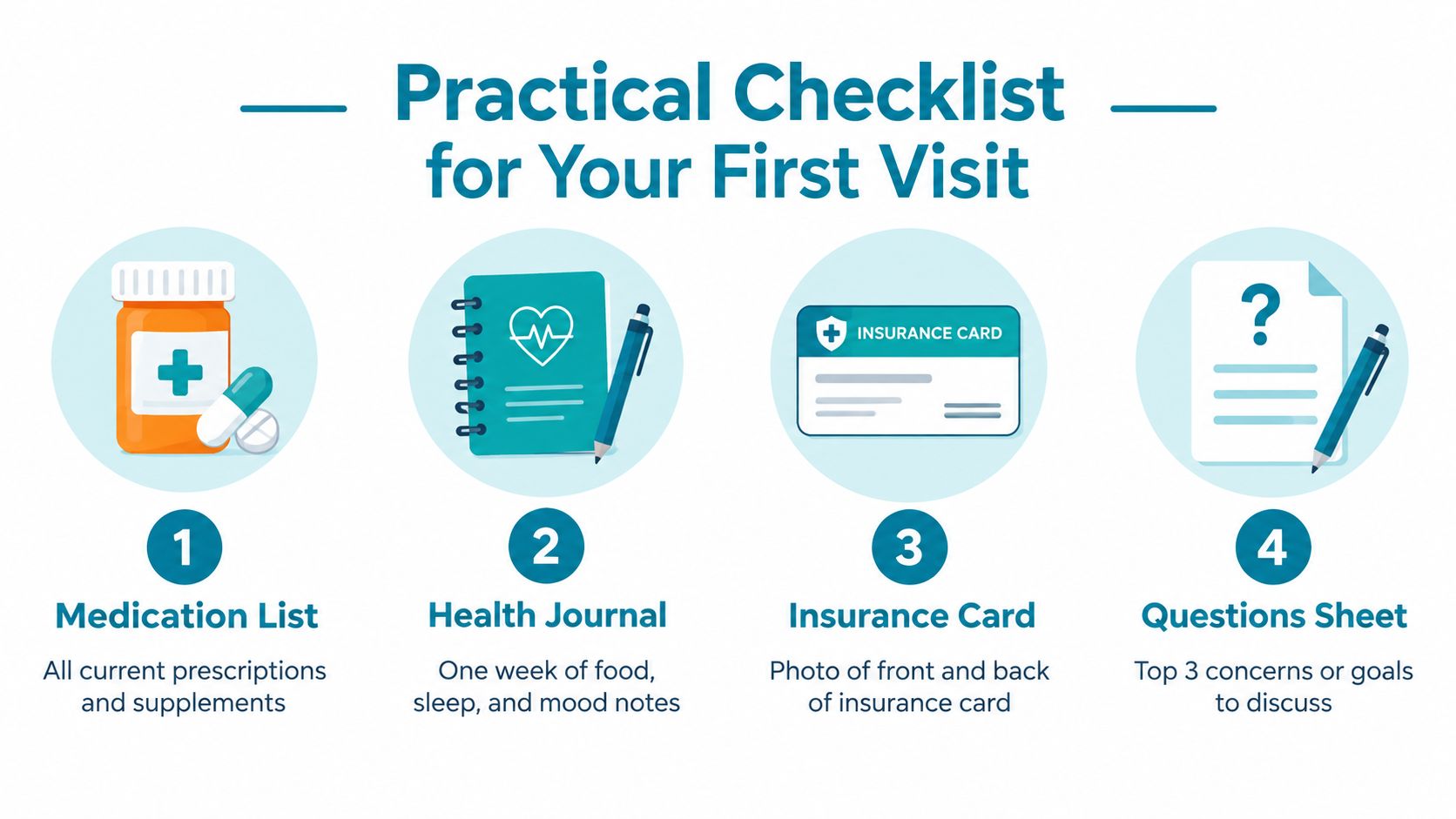
Medication and supplement list: Include prescription medicines, over-the-counter products, vitamins, herbal products, and any recent medications. The list should include names and, if available, directions from the prescribing clinician. It should also identify medication allergies or previous adverse reactions.
Relevant records: Recent laboratory results, blood-pressure information, sleep evaluations, imaging reports, and notes from other clinicians may help if they relate to weight, metabolism, or treatment safety. Patients can ask whether records should be sent before the visit rather than bringing an unorganized stack of papers.
Medical and surgical history: Include major diagnoses, procedures, hospitalizations, and conditions that affect activity, eating, sleep, pregnancy planning, or medication decisions. Family history can also help clarify cardiometabolic risk.
Previous weight-management efforts: A short timeline is more useful than a long list of program names. The patient can record what was tried, how long it was followed, what changed, what became difficult, and why the approach ended. No result needs to be presented as a success or failure.
Define goals and questions
A goal might involve improved mobility, sleep, blood-sugar management, reduced joint strain, or a more sustainable routine. The clinician can help translate a broad goal into outcomes that can be followed over time.
Questions for the appointment may include:
- Treatment fit: Which options might be appropriate, and what information is needed before making a decision?
- Monitoring: What will be tracked, how often will follow-up occur, and how will response or adverse effects be assessed?
- Long-term use: Is a proposed treatment expected to be finite, ongoing, or reassessed at defined points?
- Contingencies: What happens if a medication isn't tolerated, becomes unavailable, or no longer fits the patient's circumstances?
- Total cost: What are the fees for the consultation and follow-up care, and are there other expected expenses?
- Receipts: Can the practice provide an itemized receipt for possible patient-submitted reimbursement?
Insurance information can still be brought if applicable, even though a private-pay practice may not bill insurance directly. Patients should avoid assuming that a medication, laboratory test, or follow-up service will be covered. Current payment details should be checked through the practice's fees and care process page.
Before the appointment: A short, honest timeline is more valuable than a polished account that leaves out stopped treatments, side effects, or barriers.
Turning the First Visit Into a Long-Term Plan
The first appointment should end with more than a treatment preference. It should produce clear next steps, including what information is still needed, what will be monitored, when response will be reviewed, and how the plan can change if circumstances change.
A multicomponent strategy may include individualized goals, nutrition and physical-activity changes, behavioral support, self-monitoring, medication when appropriate, and maintenance planning. The U.S. Preventive Services Task Force evidence summary supports intensive, multicomponent behavioral interventions for adults with BMI of at least 30 kg/m². It describes high-intensity counseling with behavioral strategies as generally producing modest but sustained losses of approximately 3 to 5 kg over one year or longer.
That finding sets a realistic expectation. A first visit isn't a promise of a particular result. It is an opportunity to establish a process that can be reviewed, adjusted, and maintained.

Questions that protect continuity
Patients considering medication should ask what would count as an inadequate response, an unacceptable adverse effect, or a reason to change course. They can also ask how missed doses, illness, surgery, pregnancy planning, shortages, cost changes, or pharmacy access would affect the plan. These questions don't assume that a problem will occur. They make the plan more resilient if one does.
Withdrawal evidence supports this emphasis on maintenance. A synthesis of studies found that weight regain after stopping anti-obesity medication occurred from 8 to 52 weeks after discontinuation, with a significant difference measurable at 8 weeks. A 2025 meta-analysis reported drug-specific regain after discontinuation, including an average change of approximately 5.15 kg after semaglutide cessation. These findings are summarized in the review of weight regain after medication withdrawal, and they don't predict what will happen to a particular patient.
The practical question is whether the initial plan includes a transition strategy. That may involve ongoing follow-up, maintenance treatment, behavioral support, or a reassessment of goals and risks. The answer should be individualized rather than assumed.
Everyday care still needs to be understandable
Patients may want plain-language explanations of eating patterns, activity, sleep, and self-monitoring. A general educational resource about carbohydrates, such as this carbohydrate guide from SANS Meal Bar, can provide background, but it shouldn't replace individualized medical guidance or turn one food category into the entire treatment plan.
The practice's weight-management information can help adults understand the general care pathway. A physician-led plan should still account for the patient's medical history, preferences, access, response, and safety.
Understanding Access, Costs, and Next Steps
A clinically appropriate recommendation isn't useful if the patient can't realistically obtain or continue it. Before accepting a plan, the patient can ask for the expected total cost of the consultation, follow-up visits, supplies, testing, and prescribed treatment. The patient can also ask whether an itemized receipt is available for possible patient-submitted reimbursement, without assuming that an insurer will reimburse any expense.
Medication access deserves direct discussion. In a 2025 analysis of 9,848 prescription orders from 6,094 patients, 60.1% of GLP-1 prescriptions were filled overall, compared with 55.3% among Black patients, 58.4% among Hispanic patients, and 60.9% among White patients, as reported in the Harvard Gazette discussion of medication access. Research published in 2025 also identified disparities in real-world initiation of newer GLP-1 medications among adults eligible for obesity treatment. These findings don't determine an individual's access, but they show why availability and affordability should be part of the clinical conversation.
Useful questions include:
- What happens if a pharmacy can't fill the prescription?
- Are there clinically appropriate alternatives?
- Which follow-up costs should be expected?
- What information must be confirmed before treatment begins?
- How will the plan change if treatment becomes unavailable or unaffordable?
Adults can review the practice's cost information for weight management and use the booking page to request a consultation. The practice describes a private-pay, physician-led model, and the preliminary consultation should be distinguished from a completed medical evaluation and treatment decision.
Empire Medical Wellness offers physician-led obesity medicine evaluations that can include medical and metabolic assessment, individualized planning, and follow-up based on clinical response. Adults seeking a first obesity medicine appointment can review Empire Medical Wellness, then check the current fees and scheduling information before deciding whether to request care.
This article is educational and isn't personal medical advice. A qualified clinician must evaluate an individual's health, treatment options, risks, and follow-up needs.