
Obesity is a chronic, multifactorial disease involving excess body fat that impairs health, not a failure of willpower. In 2022, more than 1 billion people worldwide were living with obesity, including about 890 million adults, and evidence-based care combines medical assessment, shared goal-setting, selected treatment, and long-term monitoring.
Popular advice often reduces obesity to “eat less and move more.” Those behaviors matter, but that explanation leaves out appetite biology, sleep, medications, genetics, stress, environment, and medical complications. A physician-led evaluation asks why weight changed, what health risks are present, and which treatment options fit the person's goals and circumstances.
A useful clinical principle: Weight is one measure. Health risk, function, metabolic markers, treatment safety, and long-term sustainability matter too.
Table of Contents
- Redefining Obesity as a Chronic Disease
- Understanding the Multifactorial Causes of Obesity
- How Clinicians Assess and Diagnose Obesity
- Evidence-Based Treatment Options for Obesity
- Monitoring Progress and Troubleshooting Plateaus
- When to Seek Physician-Led Obesity Care
- Common Questions About Obesity Treatment and Next Steps
Redefining Obesity as a Chronic Disease
Obesity isn't diagnosed from appearance, clothing size, or a single number on a scale. It's a medical condition in which excess adipose tissue, meaning body fat, affects health or raises the risk of health problems. The condition develops through interacting biological, behavioral, environmental, and psychosocial factors.
Calling obesity a chronic disease doesn't remove personal agency. It puts personal choices in the correct medical context. Appetite, satiety, energy expenditure, sleep, medications, stress, food access, and prior weight history can all influence what a person experiences. Two adults can follow similar routines and have very different responses because their underlying physiology and circumstances differ.
The global scale is substantial. The World Health Organization's obesity and overweight fact sheet reports that more than 1 billion people were living with obesity in 2022, including about 890 million adults aged 18 and older, roughly 16% of the global adult population. The same data show that 2.5 billion adults were overweight, meaning 43% of adults globally were above a healthy weight range. Worldwide obesity prevalence more than doubled between 1990 and 2022.
These figures don't describe an individual diagnosis, but they explain why obesity medicine has become a distinct area of care. It affects cardiovascular risk, glucose regulation, sleep, mobility, medication planning, and prevention of long-term disease.
Why willpower is an incomplete explanation
Willpower can influence a decision in a particular moment. It doesn't fully control hunger signals, sleep disruption, medication effects, food availability, or the body's adaptations after weight loss. Treating obesity as a moral failing can also delay care because people may avoid discussing weight, eating patterns, or related symptoms with a clinician.
A more accurate framework resembles the management of other chronic conditions. A clinician evaluates contributing factors, identifies complications, agrees on goals, chooses an intervention, monitors response, and adjusts the plan over time. Treatment may include nutrition, physical activity, sleep care, behavioral support, medication, or a procedure, depending on the person's health profile.
Adults seeking this type of evaluation can review physician-led weight-management care as one example of how medical assessment and follow-up can be organized. The purpose isn't to pursue a particular appearance. It's to improve health, function, risk factors, and quality of life while respecting the person's preferences.
Understanding the Multifactorial Causes of Obesity
No single cause explains every case of obesity. A practical assessment wheel helps organize the main domains without pretending that they operate independently.
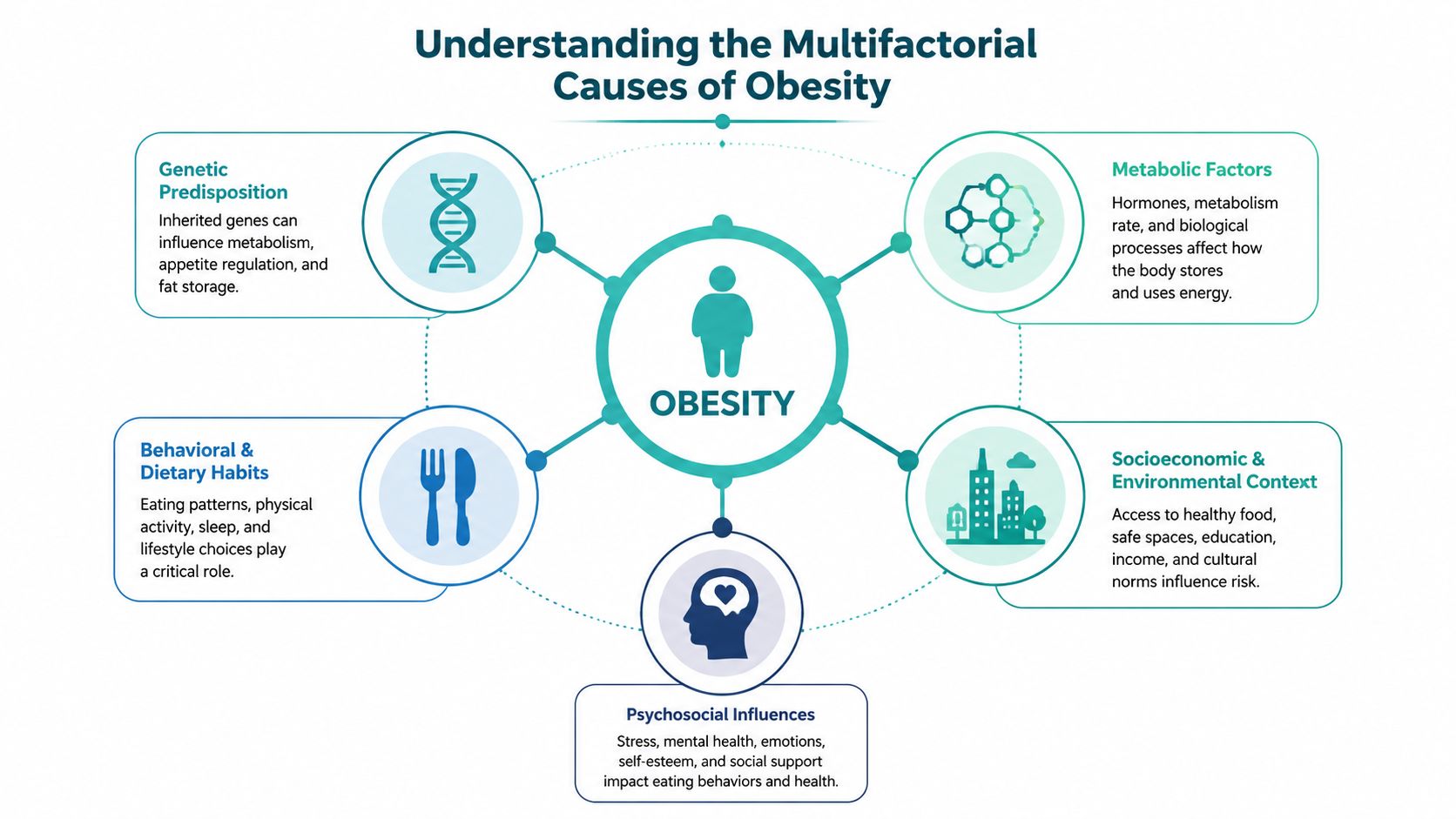
The multifactorial assessment wheel
Genetic and epigenetic predisposition: Family biology can influence appetite regulation, fat distribution, energy expenditure, and susceptibility to weight gain. Rare genetic disorders can also cause severe appetite dysregulation, although they account for a small portion of adult obesity care.
Neurohormonal regulation: The brain receives signals related to hunger, fullness, food reward, and energy availability. Hormones and neural pathways can make hunger persistent or satiety less reliable. This is one reason obesity treatment may include medications that target appetite and fullness pathways.
Sleep and circadian health: Short or disrupted sleep can increase fatigue, reduce the capacity for planned activity, and affect eating patterns. Obstructive sleep apnea can fragment sleep and produce daytime symptoms even when a person believes they're sleeping through the night. A clinician may ask about snoring, witnessed breathing pauses, morning headaches, and daytime sleepiness.
Medication effects: Some medicines can promote weight gain in susceptible people. The review should include prescription drugs, over-the-counter products, supplements, and recent changes. A patient shouldn't stop a medication independently, but a clinician can consider whether an alternative or additional strategy is appropriate.
Behavioral patterns: Meal timing, grazing, emotional eating, loss-of-control eating, alcohol intake, activity, and sedentary time may all be relevant. These patterns are information, not evidence of character.
Psychosocial influences: Stress, trauma, depression, anxiety, social isolation, and caregiving demands can affect sleep, appetite, food choices, and the ability to maintain routines. These factors deserve respectful assessment rather than blame.
Environmental and socioeconomic context: Food prices, transportation, work schedules, neighborhood safety, kitchen access, caregiving, and healthcare access shape what's feasible. A plan that ignores these realities may fail even when its nutritional theory is sound.
The domains interact. Poor sleep may increase fatigue and cravings, stress may alter eating patterns, and a weight-promoting medication may make previous routines less effective. The clinical question is therefore not “Which one cause did you choose?” It's “Which factors are active, modifiable, medically important, or requiring support?”
Practical nutrition planning can be part of that review. Nutrition-focused weight-management information may help readers prepare questions, but an individualized plan should account for health conditions, medications, preferences, and access.
How Clinicians Assess and Diagnose Obesity
Obesity diagnosis is more than a number on a scale. BMI of 30 or greater generally meets the U.S. threshold for obesity, while BMI of 27 or greater with a weight-related condition, such as hypertension or type 2 diabetes, commonly prompts evaluation for treatment. BMI works like a screening signal, not a complete health assessment. Clinicians may use physician-guided weight-management care to place that signal alongside symptoms, examination findings, medical history, and treatment goals. The National Institute of Diabetes and Digestive and Kidney Diseases guidance describes these thresholds for prescription weight-management medications.
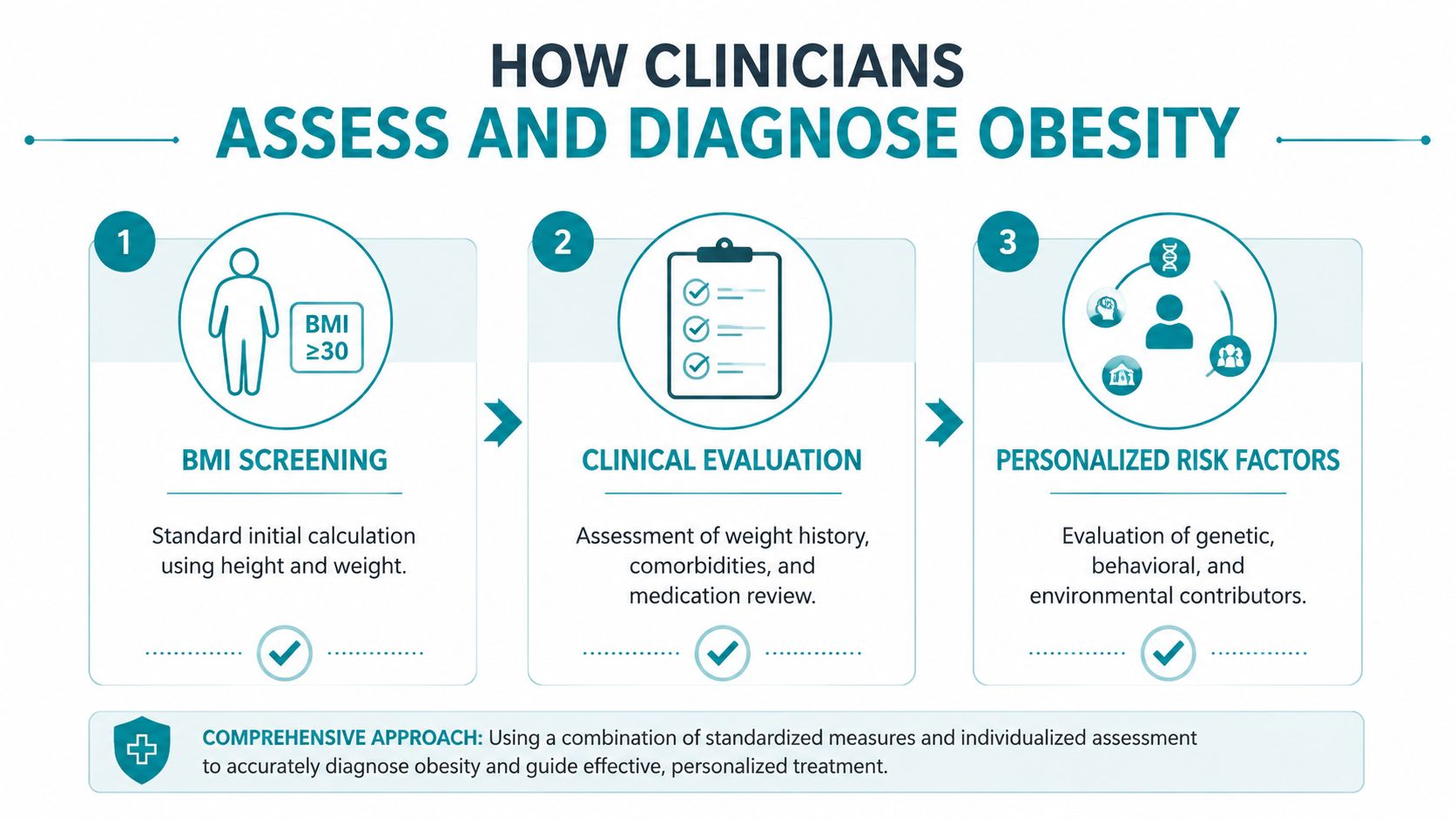
What the assessment includes
A careful evaluation usually starts with weight history. The clinician may ask when weight changed, whether weight cycled, which approaches were tried, what helped temporarily, and what preceded regain. This timeline can point to medication effects, life events, sleep changes, restrictive dieting, or patterns needing further assessment.
The physical and metabolic review may include:
- Blood pressure, because hypertension can be a complication and can affect treatment choices.
- Glucose assessment, such as HbA1c or another test selected by the clinician.
- Lipid evaluation, including cholesterol-related risk.
- Waist circumference or body-fat distribution, which may add information beyond BMI.
- Sleep assessment, especially when symptoms suggest obstructive sleep apnea.
- Medication review, including drugs that may affect weight, appetite, blood pressure, glucose, or treatment safety.
- Eating and behavioral assessment, including loss-of-control eating, emotional eating, meal structure, activity, and stress.
- Mental health and social context, because mood, trauma, work, finances, and support affect what treatment is feasible.
The U.S. Preventive Services Task Force recommendation on adult obesity screening supports screening adults for obesity and offering or referring them to intensive, multicomponent behavioral interventions when appropriate. Screening begins care. It is not a judgment.
A hypothetical red-flag example
Hypothetical example: An adult has a BMI that meets a medication-evaluation threshold and reports loud snoring, witnessed breathing pauses, and severe daytime sleepiness. If testing identifies obstructive sleep apnea, the clinician addresses that risk directly rather than treating the scale as the only target.
A high HbA1c could shift the discussion toward glucose management and diabetes prevention or treatment. The next step depends on the full clinical picture, not BMI alone. These examples cannot diagnose an individual.
A physician may also assess look-alikes and secondary contributors, including endocrine disease, medication-related weight change, sleep disorders, and eating disorders. These conditions can coexist with obesity, and identifying them can change the safest plan. Assessment is therefore a repeatable clinical process, with follow-up used to test whether the working diagnosis and care plan still fit.
Evidence-Based Treatment Options for Obesity
Effective obesity care is not a contest to find the strongest intervention. It is a process of matching treatment with health risk, goals, preferences, safety, access, and the likelihood that ongoing maintenance will be needed. Because obesity is a chronic disease, treatment often requires adjustment over time rather than a single short-term plan.
The comparison below outlines broad options. A clinician should assess the individual before selecting an intervention, since safety, expected benefit, and practicality differ among adults.
Obesity Care Options Comparison
| Intervention Category | Mechanism and Examples | Typical Indications | Monitoring Needs |
|---|---|---|---|
| Behavioral and lifestyle treatment | Nutrition changes, physical activity, sleep improvement, stress management, and behavioral strategies address daily routines and health behaviors. | Appropriate throughout obesity care, either alone or alongside medication or procedures. | Food and activity patterns, sleep, mood, function, cardiometabolic markers, and whether the plan remains feasible. |
| FDA-approved medication | Options include orlistat, phentermine/topiramate, naltrexone/bupropion, liraglutide, semaglutide, and tirzepatide. Some affect appetite and satiety, while orlistat reduces intestinal fat absorption. | U.S. guidance commonly evaluates adults with BMI 30 or greater, or BMI 27 or greater with a weight-related condition. | Response, adverse effects, vital signs, relevant laboratory findings, interactions, contraindications, pregnancy status when relevant, and maintenance planning. |
| Procedural or surgical treatment | Procedures alter gastrointestinal anatomy or food intake and can produce substantial metabolic effects. | Considered for selected adults after evaluation of health risks, readiness, expected benefits, and procedural risks. | Nutritional status, medication changes, surgical follow-up, eating patterns, mental health, and long-term medical monitoring. |
The National Library of Medicine overview of long-term anti-obesity medications identifies the FDA-approved long-term options listed above and notes that orlistat is the only FDA-approved obesity medication available over the counter. The other listed agents require prescriptions.
Evidence describes average effects across groups, not a guaranteed outcome for one patient. A 47-trial meta-analysis including 23,244 participants found that GLP-1 receptor agonists produced mean reductions versus placebo of 4.57 kg in body weight, 2.07 kg/m² in BMI, and 4.55 cm in waist circumference, as reported in this peer-reviewed meta-analysis.
Medication eligibility also depends on the specific product. The FDA-approved use of tirzepatide for chronic weight management applies to adults with obesity or overweight plus at least one weight-related condition, alongside a reduced-calorie diet and increased physical activity. The labeled eligibility language is BMI 30 or greater, or BMI 27 or greater with conditions such as high blood pressure, type 2 diabetes, or high cholesterol. The FDA approval information reproduced in the National Library of Medicine provides that wording.
Indications and access can change. In 2024, Wegovy gained a cardiovascular-risk-reduction indication, and Zepbound became the first drug indicated for obstructive sleep apnea in adults with obesity. A 2025 market analysis reported non-coverage of Zepbound for commercial beneficiaries rising from 18% to 51% from 2024 to 2025, while describing close to 225 marketed or pipeline drugs, with roughly half being oral candidates. These time-sensitive details are discussed in Guidehouse's obesity-treatment market analysis. Insurance coverage and labeled indications answer different questions, so both require review.
Treatment should also address function. A person whose mobility is limited may need equipment planning alongside medical care. A bariatric wheelchair guide offers practical context for readers supporting a loved one or arranging a safer environment, but it does not replace clinical evaluation.
The practice's GLP-1 medication information can help organize questions about these medicines. Shared decision-making should cover potential benefits, adverse effects, interactions, monitoring, cost, coverage, and the plan if treatment is ineffective or unavailable. The right option is the one that fits the person's medical needs and can be monitored over time.
Monitoring Progress and Troubleshooting Plateaus
Chronic disease care is longitudinal. Progress may appear in weight, waist circumference, blood pressure, glucose, sleep, mobility, appetite control, or daily function, and those measures don't always change at the same pace.
A useful monitoring framework defines five elements before treatment begins:
- Measure: Record the baseline variables that matter, such as weight, waist circumference, blood pressure, relevant metabolic markers, sleep symptoms, medication tolerance, eating patterns, and functional goals.
- Reassess: Set follow-up timing based on the intervention, clinical risk, adverse effects, and the need for titration. There isn't one safe interval for every medication or patient.
- Set safety thresholds: A new severe symptom, concerning vital-sign change, significant dehydration, persistent vomiting, severe abdominal pain, confusion, or a serious allergic reaction requires prompt medical guidance. Chest pain, severe difficulty breathing, fainting, or signs of a life-threatening reaction warrant emergency care.
- Handle missing data: A missed weight measurement doesn't equal treatment failure. Document why data are missing, use other available measures, and avoid drawing conclusions from a single reading.
- Add context: Interpret the data alongside illness, menstrual or hormonal changes, sleep, stress, travel, medication changes, and access barriers.
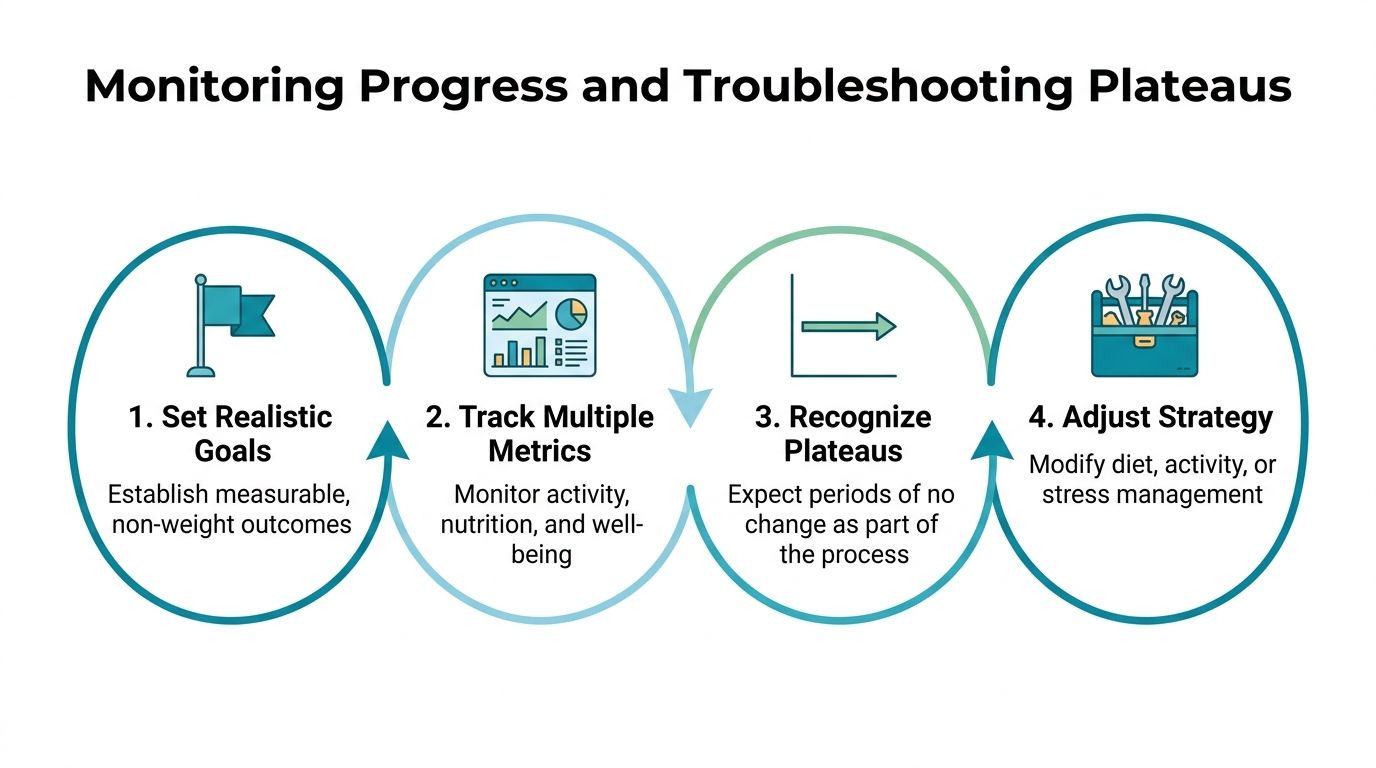
A plateau troubleshooting checklist can make the review more specific:
- Routine issue: Has meal structure, activity, sleep, or hydration changed?
- Measurement issue: Are readings inconsistent, or is one short period being treated as a definitive trend?
- Medication issue: Is the medication being taken as prescribed, tolerated, and appropriate for continued use?
- Interaction issue: Has another medication or supplement been added?
- Medical issue: Are symptoms suggesting sleep apnea, endocrine disease, uncontrolled glucose, depression, or another contributor?
- Goal issue: Does the plan need to prioritize blood pressure, mobility, glucose, sleep, or maintenance rather than further scale change?
Hypothetical example: A person's weight appears unchanged while daytime fatigue worsens. The clinician identifies symptoms concerning for sleep apnea, arranges appropriate evaluation, and reviews the treatment plan. The next step isn't automatically increasing or replacing an anti-obesity medication.
Readers who track exercise may find a general system for tracking training results useful for organizing activity and function data. It should complement, not replace, medical monitoring.
For medication safety, readers should discuss any medication changes directly with the prescriber. General educational material about Mounjaro dosage isn't a substitute for an individualized prescription or titration plan.
When to Seek Physician-Led Obesity Care
A physician-led evaluation is reasonable when weight affects health, prior efforts haven't produced durable improvement, or the next step is unclear. Useful reasons to seek assessment include a BMI in the range commonly used for medication evaluation, weight-related conditions, repeated weight cycling, suspected sleep apnea, medication side effects, rapid unexplained change, or concern about an endocrine or other secondary cause.
The purpose isn't to confirm that you've “failed” at lifestyle change. It's to identify what has been tried, what may be interfering, and what treatment options are medically appropriate.
What a first evaluation should address
A first visit should include more than a scale reading. A clinician may review:
- Weight history and previous interventions
- Blood pressure and relevant metabolic risks
- Sleep quality and possible sleep apnea
- Current medications and potential weight effects
- Eating patterns, activity, stress, mood, and social context
- Treatment goals, preferences, safety considerations, and follow-up needs
At Empire Medical Wellness, obesity medicine is a distinct service within a private-pay physician-led practice. The published care model includes medical and metabolic assessment, review of weight history and relevant health factors, individualized planning, anti-obesity medication when clinically appropriate, ongoing monitoring, and long-term maintenance planning.
The practice identifies Dr. Mohit Chhatpar, DO, DABOM, as board-certified in family medicine, osteopathic manipulative therapy, and obesity medicine. Current standard appointments include a 50-minute initial evaluation for $350 and a 25-minute follow-up for $225. Empire doesn't bill insurance directly, and an itemized receipt is available through the patient portal.
Telemedicine appointments support adults physically located in New York, New Jersey, Connecticut, Pennsylvania, or Virginia, with in-person appointments also available. Availability and clinical appropriateness should be confirmed directly with the practice.
Common Questions About Obesity Treatment and Next Steps
What should I ask before starting treatment?
Ask which health concerns treatment is intended to address, how benefits and risks will be reviewed, how progress will be monitored, and what symptoms should prompt a call. Clarify the follow-up schedule, expected duration, and plan for maintaining results. A prescription, an approved indication, and insurance coverage are separate questions.
How can I prepare for a first consultation?
Bring a current medication and supplement list, relevant laboratory results, records of previous weight-management efforts, and notes about sleep, eating patterns, activity, mood, and stress. Write down your goals and concerns beforehand. A useful consultation should connect these details, like pieces of a wheel, to possible contributors, complications, treatment choices, and follow-up.
What should I ask if progress reaches a plateau?
Ask the clinician to review the timeline, treatment adherence, appetite or eating changes, sleep, medications, medical conditions, and current goals. A plateau can reflect several factors rather than a single failure. The next step may involve adjusting treatment, addressing a newly identified barrier, or confirming that the current plan remains appropriate.
How can I judge health information online?
Prefer official health agencies, medication labeling, and peer-reviewed research. The WHO obesity fact sheet provides general background, but it cannot replace an individualized assessment. Be cautious with promises of guaranteed results, dosing advice offered without an evaluation, or trial averages presented as personal outcomes.
Empire Medical Wellness offers physician-led obesity medicine evaluations, individualized planning, and follow-up focused on response, safety, and long-term maintenance. Visit Empire Medical Wellness to review the service and decide whether an evaluation fits your needs.
Empire Medical Wellness Editorial Team. Published August 23, 2026. Updated August 23, 2026.
This article is educational and isn't personal medical advice. A qualified clinician must evaluate your history and circumstances before diagnosis or treatment decisions.