
Heroin is an illegal opioid with a high risk of fatal overdose, but effective medication-based treatments exist. Naloxone can reverse opioid-related breathing failure, yet emergency care is still needed because its effects are temporary and the street supply may contain other dangerous substances.
If someone thinks they're using heroin, can they safely assume they know what drug is entering their body? In 2026, that assumption is often unsafe. Heroin remains a powerful opioid, but drugs sold as heroin may also contain illicit fentanyl, xylazine, medetomidine, or other compounds. That uncertainty changes how families should recognize an overdose, respond to it, and seek treatment.
Table of Contents
- What Heroin Is and Why It Matters
- A Brief History of Heroin
- How Heroin Affects the Body
- Signs of Use and Overdose Red Flags
- Evidence-Based Treatment Pathways
- A Hypothetical Path Through Outpatient Care
- When and How to Seek Help
- Key Takeaways and Next Steps
What Heroin Is and Why It Matters
What enters the body when someone believes they are using heroin? Heroin, also called diacetylmorphine, is an illegal opioid synthesized from morphine. It may be sold as white or off-white powder or sticky black tar, but appearance cannot reveal its strength or contents. Unlike regulated medicines, it is not manufactured, labeled, or tested to consistent standards.
Heroin may be injected, snorted, or smoked. All three routes can lead to overdose because they deliver an opioid to the brain and can suppress breathing. Injection also adds risks such as skin and soft-tissue infections and bloodborne infections from shared equipment.
The current street supply makes the label “heroin” unreliable. The Drug Enforcement Administration's reporting on heroin and fentanyl packaging illustrates how a product sold as heroin may contain fentanyl or other active substances. Public-health surveillance has also found unexpected sedatives, including xylazine and medetomidine, in opioid supplies. These drugs can change the pattern of sedation and unresponsiveness, so symptoms may not be explained by heroin alone.
Practical rule: Treat an unknown opioid supply as unpredictable. Smell, appearance, and a familiar source cannot establish safety.
Heroin matters medically because repeated exposure can slow breathing, cause dependence, and produce withdrawal after the body adapts. It matters clinically because the same street product may represent a changing mixture, not one consistent drug effect. That distinction affects overdose response and treatment planning.
A physician-led addiction medicine assessment can distinguish an immediate emergency from a longer-term treatment need while treating the person with respect rather than blame. Breathing and immediate safety come first. After that, clinicians assess opioid exposure, health conditions, goals, and access to continuing care.
A Brief History of Heroin
Heroin's history helps explain why it shifted from a commercial medicine to a tightly controlled illicit drug. In 1874, British chemist C. R. Alder Wright synthesized diacetylmorphine by heating morphine with acetic anhydride. Bayer later commercialized the compound in 1898, promoting it as a supposedly less harmful medicine.
The early marketing reflected incomplete knowledge of dependence and respiratory depression. In the United States, the American Medical Association approved heroin in 1906. The Harrison Narcotics Tax Act followed in 1914, Congress outlawed heroin production in 1924, and possession and consumption were fully criminalized by 1925. These decisions helped establish the legal framework that still influences opioid policy.
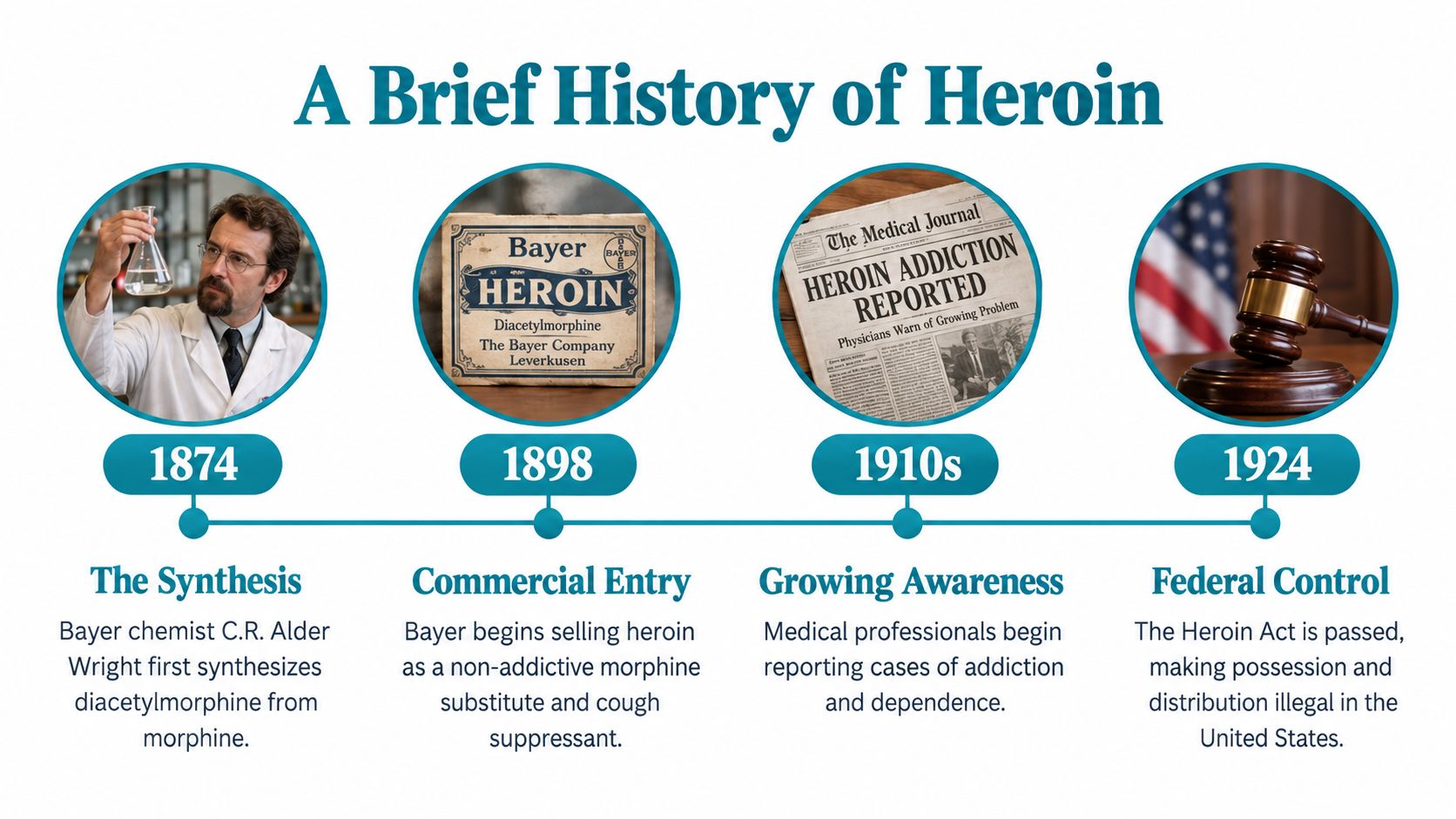
Milestones that shaped current care
Heroin became a major military and social issue during the Vietnam era. One congressional report cited an estimate that about 15% of U.S. servicemen in Vietnam were actively addicted to heroin. That episode showed how quickly a drug could move through military and international supply networks.
Treatment systems evolved in response. Methadone maintenance programs expanded during the 1970s, offering a medically supervised alternative to illicit opioid use. Later, prescription opioid misuse, including the OxyContin-related wave, contributed to a wider opioid crisis. As prescription supplies tightened, some people shifted to illicit heroin, and the market later became increasingly shaped by illicit fentanyl.
The policy response has therefore broadened beyond punishment. Naloxone distribution, buprenorphine treatment, opioid treatment programs, and low-barrier medical care now form part of the public-health response. The historical lesson is clear: heroin policy has changed as understanding of dependence, supply, and overdose has changed.
How Heroin Affects the Body
Heroin crosses the blood-brain barrier and is rapidly converted into active metabolites. It becomes 6-monoacetylmorphine, or 6-MAM, and then morphine. In humans, heroin's blood elimination half-life is typically less than 5 minutes, 6-MAM's is about 15 to 20 minutes, and morphine's is about 2 to 3 hours (peer-reviewed pharmacology review).
These substances activate mu-opioid receptors in the central nervous system. The result can include pain relief, sedation, euphoria, nausea, constipation, clouded thinking, and slowed breathing. Pinpoint pupils are common, but pupil size alone can't determine whether someone is overdosing.
Short-term effects and longer-term changes
A person may experience warmth, heavy limbs, drowsiness, reduced alertness, and impaired coordination. As the opioid effect deepens, breathing may become dangerously slow or stop. The same receptor activity that reduces pain can suppress the brain's automatic drive to breathe.
Repeated exposure can produce tolerance, meaning the person needs more opioid to achieve a similar effect. It can also produce physical dependence, meaning the body functions abnormally when the opioid is removed. Withdrawal may involve body aches, insomnia, gastrointestinal symptoms, anxiety, and intense cravings. Those symptoms can drive continued use, but stopping alone doesn't address the underlying opioid use disorder or protect against relapse.
Longer-term complications may include chronic constipation, hormonal disruption, cognitive changes, injection-site abscesses, endocarditis, hepatitis C, and HIV. Some complications arise from the opioid itself, while others result from injection practices, contaminated materials, or barriers to medical care.
Why fentanyl changes the calculation
The current illicit supply can make the timing and severity of opioid effects difficult to predict. CDC materials state that illegally made fentanyl is up to 50 times stronger than heroin and may be mixed into other drugs, increasing the risk of a fatal overdose (CDC overdose data and guidance).
Fentanyl can also appear with non-opioid sedatives. Naloxone blocks opioids, but it doesn't reverse every sedative effect. That's why a person who remains difficult to wake after naloxone still needs emergency care. The practical conclusion is not to calculate a “safe” amount. There's no reliable way to do that with an unregulated supply.
For a focused explanation of the synthetic opioid component, see Empire's educational resource on fentanyl and overdose risk.
Signs of Use and Overdose Red Flags
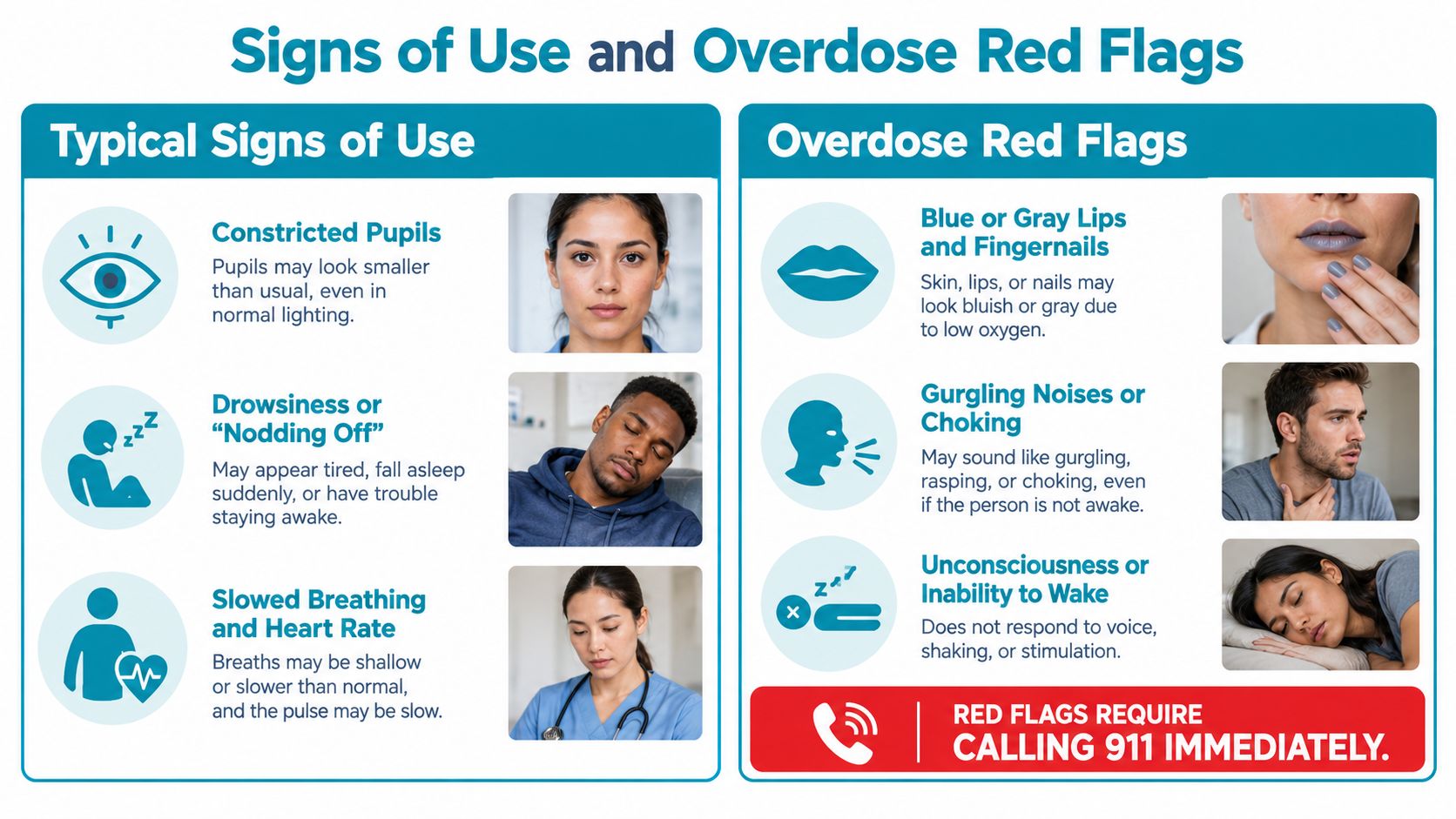
A person who has recently used heroin may have constricted pupils, drowsiness, slurred speech, poor coordination, nausea, or a pattern of briefly falling asleep while sitting or standing. Injection may leave marks or wounds, but appearance alone doesn't establish what happened. A respectful conversation and attention to breathing are more useful than confrontation.
Overdose signs require immediate action. Look for:
- Slow or stopped breathing: The chest may barely move, or breathing may stop altogether.
- Blue or gray lips and fingernails: This can indicate inadequate oxygen.
- Gurgling, choking, or snoring sounds: These may signal blocked or failing breathing.
- Unresponsiveness: The person doesn't respond to their name, touch, or a firm stimulus.
- A limp body: Muscle tone may become markedly reduced.
The naloxone response
Naloxone is an opioid antagonist. It can displace opioids from their receptors and restore breathing, often within 2 to 3 minutes, but its effects may wear off while the opioid or another sedative remains active (CDC guidance on heroin overdose).
- Check responsiveness and breathing. Try to wake the person and look for normal chest movement.
- Call 911 immediately. Put the phone on speaker if possible, and follow the dispatcher's instructions.
- Give nasal naloxone. Use the available product according to its label.
- Provide rescue breathing if trained and able. If the person isn't breathing normally, emergency dispatchers can guide you.
- Give another dose if there's no improvement after 2 to 3 minutes. Fentanyl and related opioids may require repeated naloxone doses (SAMHSA fentanyl guidance).
- Stay until emergency responders arrive. Place a breathing person on their side if they're vomiting or cannot maintain their airway.
Naloxone is not harmful when opioids aren't present, but revival doesn't mean the danger has passed. A suspected overdose requires emergency evaluation, especially when the supply may include fentanyl or sedatives. Families who need a practical reference for documenting a chronic pain history can also consult this chronic pain encounter coding help, although coding information isn't a substitute for emergency care.
People seeking naloxone education can review naloxone information for overdose response.
Evidence-Based Treatment Pathways
Opioid use disorder is a treatable medical condition. NIDA identifies medication as first-line treatment, usually alongside behavioral therapy or counseling. The principal medications are methadone, buprenorphine, and extended-release naltrexone (NIDA treatment and recovery guidance).
These medications aren't interchangeable. Each has different initiation requirements, delivery systems, and risks. A clinician must account for current opioid exposure, withdrawal status, other sedatives, pregnancy, medical conditions, and the person's treatment goals.
| Medication | How it works | Initiation requirement | Typical setting | Key risks and cautions |
|---|---|---|---|---|
| Methadone | A slow-acting full opioid agonist that reduces withdrawal and cravings | Requires clinical assessment and structured initiation | Licensed opioid treatment programs, with dispensing rules that may change as treatment stabilizes | Respiratory depression, sedation, medication interactions, and heart-rhythm concerns require medical monitoring |
| Buprenorphine | A partial opioid agonist that reduces cravings and withdrawal with a ceiling on some opioid effects | Usually begins when an appropriate level of withdrawal is present, under clinical direction | Office-based addiction care, opioid treatment programs, and other authorized settings | Starting too soon after another opioid can precipitate withdrawal; sedation and respiratory risk increase with alcohol or sedatives |
| Extended-release naltrexone | An opioid antagonist that blocks opioid effects without producing opioid activity | Requires a fully opioid-free period, often roughly 7 to 10 days, before the first dose, depending on clinical circumstances | Medical office or treatment program | Precipitated withdrawal if opioids remain in the body, reduced opioid tolerance, and increased overdose risk after loss of tolerance |
NIDA describes methadone as an oral, slow-acting opioid agonist dispensed daily through approved outpatient programs. Buprenorphine is a partial opioid agonist that can relieve cravings without producing the same high or dangerous effects as full opioids (NIDA heroin-use-disorder treatment overview).
Medication works best within a broader plan when that plan matches the person's needs. Contingency management, cognitive and behavioral therapies, recovery housing, peer support, low-barrier primary care, naloxone access, and drug checking where available may all contribute. Counseling can be useful, but medication shouldn't be withheld because someone can't participate in every counseling service.
The most suitable pathway depends on eligibility, setting, access, medical history, and preference. Information about anxiety and co-occurring symptoms can be discussed separately, including this resource on anxiety management for seniors, but it shouldn't replace an addiction-focused evaluation.
For readers comparing outpatient options, buprenorphine and Suboxone treatment information may help frame questions for a qualified clinician.
A Hypothetical Path Through Outpatient Care
Composite example, not a real patient: Alex is a hypothetical 32-year-old adult whose breathing stopped after using heroin that also contained fentanyl. Emergency medical services administered naloxone and transported Alex for evaluation. This example illustrates a possible care sequence, not a diagnosis or a promise about any individual outcome.
The first outpatient step would be a safety-focused assessment. A clinician would ask about the opioid used, route, timing, tolerance, prior overdose, other sedatives, pregnancy when relevant, medical conditions, withdrawal symptoms, and goals. With informed consent, urine toxicology might help identify exposure, although test results must be interpreted in context and can't replace a conversation.
The clinician and Alex would compare treatment options. Buprenorphine might be considered if the timing and withdrawal state support it. Methadone might be more appropriate through an opioid treatment program if a structured setting or a different medication profile fits the person's needs. Extended-release naltrexone would require an opioid-free period and a separate discussion about reduced tolerance.
A practical plan would include naloxone access, education for family or trusted supports, and a response plan for return to use. Fentanyl test strips may provide information where legally available, but they can't guarantee that a substance is safe or free of every contaminant. Avoiding use alone is another harm-reduction measure, although no strategy removes the risk.
What coordination can look like
An outpatient practice may provide assessment, medication management when clinically appropriate, monitoring, and follow-up. It may coordinate with an opioid treatment program, residential service, hospital, therapist, or primary-care clinician when the patient authorizes that communication. It shouldn't be assumed that an outpatient office provides emergency stabilization, detoxification, residential treatment, or methadone dispensing.
If buprenorphine doesn't meet Alex's needs, the plan would be reassessed rather than treated as a personal failure. A referral to an outside opioid treatment program or a higher level of care could be part of that revision. Return to work, caregiving, or school would be paced around safety, sleep, withdrawal stability, and medical follow-up.
A return to opioid use is clinical information. It calls for reassessment, not a character judgment.
When and How to Seek Help
The right starting point depends on urgency. Separate an emergency response from routine treatment planning.
Three levels of response
Call 911 now for unresponsiveness, abnormal or absent breathing, blue or gray lips, choking or gurgling, or any suspected opioid overdose. Give naloxone if available, provide rescue breathing if trained, and place the person in the recovery position if they're breathing but not fully alert. Don't leave them alone after they wake up.
Seek urgent support when a person is actively using, experiencing withdrawal, or worried about stopping but doesn't have immediate overdose signs. SAMHSA's National Helpline can connect people with treatment information and local resources, and its treatment locator can help identify opioid treatment programs. A first call generally involves basic questions about location, insurance or payment, urgency, and the type of care being sought.
Arrange an outpatient assessment when the person is medically stable and wants a continuing plan. An intake may include a substance-use history, medication review, physical-health screening, urine testing with consent, infectious-disease testing when clinically appropriate, screening for co-occurring mental-health concerns, and shared treatment planning.
Bring a photo ID, an insurance card if available, a list of current medicines and substances, names of prior prescribers or treatment programs, and emergency contacts. A family member or trusted support person may attend if the patient wants them involved.
Privacy rules apply to addiction treatment. 42 CFR Part 2 provides specific protections for substance-use-disorder records, although information may be shared in limited circumstances and with appropriate authorization. Patients can ask an office how it stores records, communicates with outside programs, and handles consent.
An outpatient addiction practice can assess, prescribe or monitor medication when clinically appropriate, provide recovery planning, and coordinate authorized referrals. It doesn't replace emergency services, inpatient detoxification, residential care, or an opioid treatment program that dispenses methadone. Learn more about seeing an addiction medicine specialist and ask directly which services are available in your situation.
Key Takeaways and Next Steps
A few points should guide safer decisions:
- The supply is unpredictable: Heroin is illegal and unregulated. What is sold as heroin may contain fentanyl or non-opioid sedatives, so textbook expectations about strength and effects may not match the actual product.
- Overdose is an emergency: Slow breathing, blue or gray lips, gurgling, or unresponsiveness require 911, naloxone if available, and continued observation.
- Naloxone buys time: It can reverse opioid-related respiratory depression, but it does not treat opioid use disorder or reliably reverse every substance that may be present.
- The body can be harmed in several ways: Opioids may cause sedation and constipation. Injection can contribute to abscesses, endocarditis, hepatitis C, HIV, and other complications.
- Medication-based treatment is evidence-based: Methadone, buprenorphine, and extended-release naltrexone have different requirements and risks. A clinician should help match treatment to the person's health, exposure, and goals.
- Recovery isn't a moral test: A setback may reflect changed tolerance, triggers, medication fit, or support needs. It calls for a revised safety and treatment plan, not blame.
A confidential outpatient assessment can clarify whether medication, harm-reduction planning, coordination with an outside program, or a higher level of care fits the situation. Empire Medical Wellness provides private-pay outpatient addiction medicine assessment, treatment planning, monitoring, and authorized coordination when clinically appropriate. Visit Empire Medical Wellness to request information. This article is educational, not personal medical advice.