
Relapse means returning to substance use after a meaningful period of abstinence, while a lapse is a brief, contained slip that may not become sustained use. Relapse is common: about 40% to 60% of people treated for a substance use disorder relapse at some point, with risk often highest in the first few months, and it's most treatable when addressed early without shame.
You may be asking this after one drink, a return to opioids, several days of stimulant use, or a near miss that left you worried. The next step isn't self-punishment. It's a safety assessment, followed by a clear look at what changed, what risks are present, and what support needs to be restored.
Relapse is often understood as part of a chronic-disease pattern rather than proof that recovery has failed. NIDA explains that addiction is chronic and that relapse can occur during recovery, which is why treatment plans often include ongoing monitoring, adherence support, and relapse prevention.
Table of Contents
- What Relapse Means in Addiction Recovery
- Why Relapse Happens Across Substances
- A Labeled Composite Example of Responding to a Return to Use
- Warning Signs and Everyday Triggers to Watch For
- Evidence-Based Ways to Prevent and Manage Relapse
- When to Seek Medical Care or Emergency Help
- Key Takeaways and a Restrained Next Step
What Relapse Means in Addiction Recovery
A practical definition helps separate a frightening event from a useful clinical description. The NIH glossary defines relapse as “the return to alcohol or drug use after a significant period of abstinence” in Facing Addiction in America. A lapse usually means an initial or isolated use after abstinence. Relapse generally describes a return to a prior, ongoing, or worsening pattern of problematic use. The boundary isn't always perfectly clear, so clinicians focus on safety, duration, loss of control, and the person's treatment goals.
A return to use doesn't erase the time, skills, relationships, or insight developed during recovery. It signals that the current plan may need adjustment. The adjustment might involve closer follow-up, medication review, renewed therapy or peer support, changes in the home environment, or a higher level of care when outpatient treatment no longer provides enough safety.
A chronic-care framework
Chronic care means treating a condition over time rather than assuming one successful intervention ends the risk. The same logic applies to relapse prevention. A person may improve, encounter a new stressor, experience stronger cravings, or lose access to support. Those changes deserve clinical attention before they become a crisis.
The numbers vary by substance and study design. A NIH-hosted review of relapse prevention for alcohol use disorders reports that 40% to 80% of patients have at least one drink during the first year after treatment, while about 20% return to pretreatment levels of alcohol use. The review also distinguishes a lapse, the initial use, from relapse, a return to prior problematic use.
Practical rule: Treat the first return to use as information that requires a response, not as evidence that recovery has disappeared.
This distinction matters because shame can delay disclosure. Early disclosure gives a clinician more options to address overdose risk, withdrawal risk, triggers, medication continuity, and support. Adults seeking confidential outpatient addiction medicine care can discuss these concerns without turning the visit into a moral judgment.
Why Relapse Happens Across Substances
Relapse has several possible causes, and the safest response depends on the substance involved. Opioids, alcohol and sedatives, and stimulants affect the brain and body differently, so their withdrawal patterns and emergency risks also differ.
After abstinence, tolerance can fall. Tolerance is the body's adjustment to repeated exposure. As that adjustment fades, an amount that once seemed familiar may have a stronger effect. The danger is especially serious with opioids and sedatives, which can slow or stop breathing. Combining substances can raise the risk further, particularly when opioids, alcohol, or sedating medications are involved.
| Substance class | Typical relapse triggers | Tolerance and overdose risk after abstinence | Key monitoring priorities |
|---|---|---|---|
| Opioids | Pain, withdrawal symptoms, stress, contact with drug-related people or places, and strong cravings | Lower opioid tolerance can make a previously familiar amount medically dangerous. Overdose risk becomes especially urgent after abstinence. | Breathing, alertness, naloxone access, withdrawal symptoms, medication continuity, and prompt clinical contact |
| Alcohol and other sedatives | Anxiety, insomnia, interpersonal stress, loneliness, and attempts to manage distress | Returning to alcohol or sedatives can cause intoxication and breathing problems. Abrupt withdrawal from alcohol or some sedatives can also become dangerous. | Tremor, confusion, seizures, hallucinations, sedation, medication interactions, and whether medically supervised care is needed |
| Stimulants | Fatigue, low mood, work or financial stress, social settings, and reminders of prior use | Risk may involve unpredictable potency or contamination. Stimulants can also trigger cardiovascular or psychiatric emergencies. | Chest pain, severe agitation, paranoia, hallucinations, suicidal thoughts, disrupted sleep, and blood pressure concerns |
Stimulant relapse often follows fatigue, low mood, or financial stress. An overview of outpatient cocaine treatment explains how care can address these patterns while monitoring related risks.
Shared contributors, different clinical questions
Mental health symptoms, chronic pain, poor sleep, social stress, and isolation can increase vulnerability across substances. They do not explain every return to use or establish a diagnosis. Instead, they help clinicians ask focused questions: What happened before use? What did the person hope the substance would change? What risks appeared afterward?
The period soon after treatment deserves close attention because relapse risk is often higher during the first few months and may decline with continued care and support. A clinical overview of relapse patterns and treatment outcomes notes higher recurrence in some alcohol and opioid populations, which is why substance-specific planning matters.
A return to use is a safety signal, much like a warning light on a dashboard. It does not determine one person's outcome, yet it calls for prompt assessment of overdose, withdrawal, mental health, and medication risks. Treating it as information can support earlier, more targeted care.
A Labeled Composite Example of Responding to a Return to Use
Labeled composite example, not a real Empire patient: Jane is a hypothetical 34-year-old adult in early opioid recovery. After a stressful family event, she uses an opioid following several abstinent weeks. No Empire case or outcome is being described here.
The first step isn't a lecture about motivation. An outpatient team would separate immediate danger from routine planning. The team would ask whether Jane is currently awake and breathing normally, whether anyone else is with her, whether alcohol or sedatives were also used, and whether she has chest symptoms, severe confusion, or signs of withdrawal. If she is difficult to wake, breathing slowly or not breathing, turning blue or gray, or otherwise in immediate danger, someone should call 911.
Once an emergency has been ruled out or addressed, the conversation turns to overdose prevention. The team reviews naloxone access and use, encourages connection with a trusted person, and discusses avoiding situations where an overdose could go unnoticed. It would not assume that Jane can safely return to an amount she used before abstinence. Reduced tolerance makes that assumption unsafe.
The return-to-use safety plan
A clinician would document the event as treatable data. The written plan would include:
- Substance and context: What substance was used, when, how much the person believes was used, and whether it was combined with alcohol, sedatives, or other drugs.
- Tolerance and withdrawal risk: How long abstinence lasted, whether withdrawal symptoms are present, and whether alcohol or sedative withdrawal could become dangerous.
- Emergency actions: Who calls 911, where naloxone is kept, who stays with the person, and which symptoms require emergency care.
- Medicine continuity: Which prescribed medications are being taken, missed, or causing problems. Jane's clinician would decide whether treatment needs to be restarted, adjusted, or coordinated with another service. She shouldn't independently change medication.
- Trigger analysis: The family event, emotions, location, access, sleep, pain, and decisions that preceded use.
- Rapid follow-up: A prompt visit, communication with authorized outside clinicians, and review of whether outpatient care remains appropriate.
A therapist, pharmacist, or treatment program may provide important context when Jane authorizes coordination. The aim is to preserve gains that remain, reduce immediate risk, and revise the plan rather than declare recovery over.
Warning Signs and Everyday Triggers to Watch For
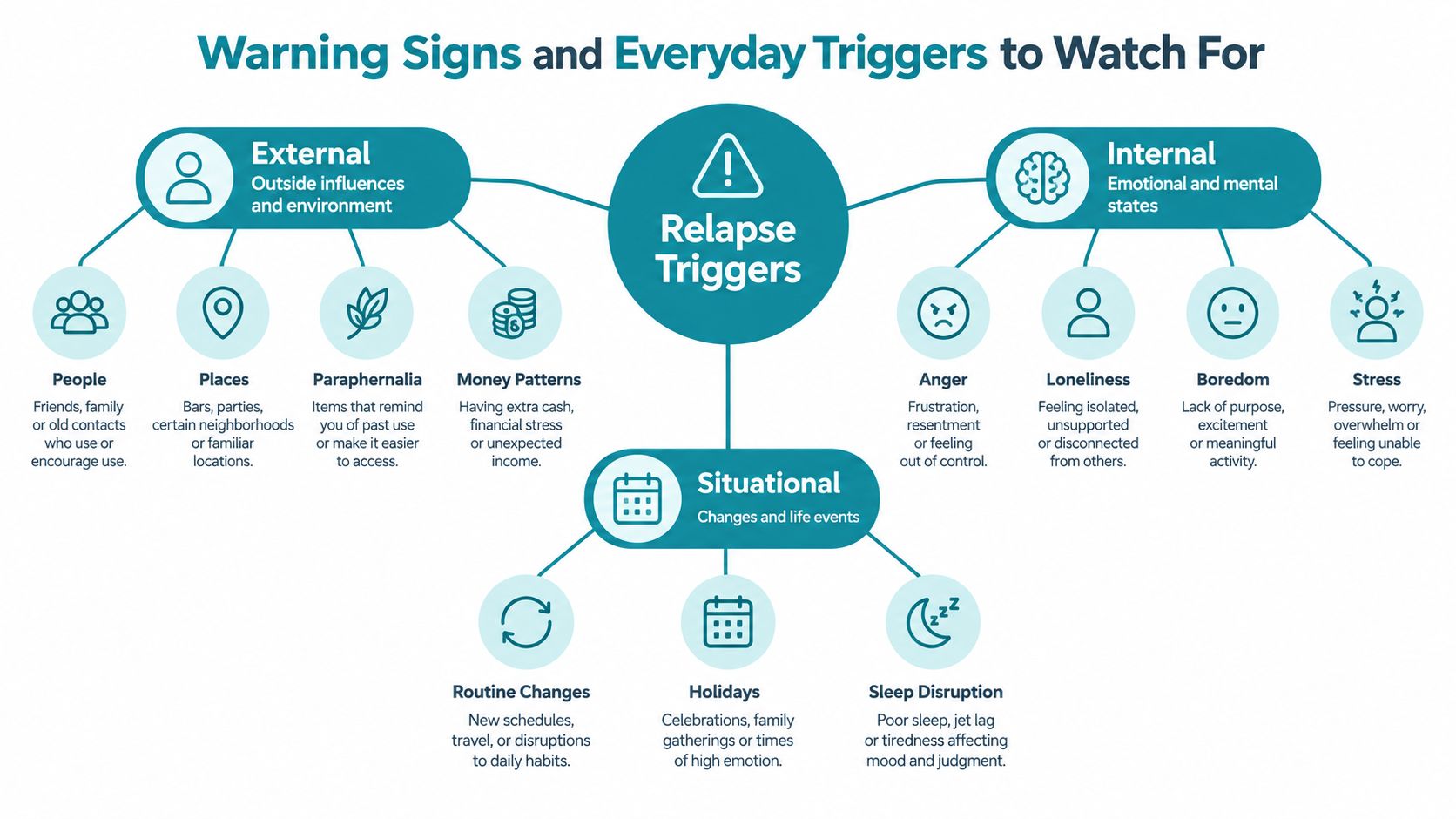
Relapse prevention becomes more practical when warning signs are grouped by type. External triggers include people who use, places connected with prior use, paraphernalia, unexpected contact from a dealer, or changes in money access. Internal triggers include anger, loneliness, boredom, anxiety, depression, excitement, or the belief that one use can be controlled. Situational triggers include holidays, conflict, travel, poor sleep, missed meals, and a sudden loss of routine.
Notice clusters, not just single feelings
One difficult day doesn't automatically mean relapse is approaching. A cluster deserves attention. For example, poor sleep plus isolation plus skipped medication is more actionable than any one item alone. So is increasing craving combined with contact from people associated with prior use.
A brief daily check-in can help identify patterns:
- Body: Have sleep, meals, pain, or withdrawal symptoms changed?
- Mood: Am I unusually angry, anxious, depressed, restless, or overconfident?
- Connection: Have I stopped answering supportive people or missed planned care?
- Craving: When did the urge appear, what preceded it, and how long did it last?
- Safety: What will I do if the urge becomes difficult to manage?
Some people use the HALT prompt, hungry, angry, lonely, or tired, as a quick review of basic vulnerability. It isn't a diagnostic tool. It's a reminder to address ordinary physical and emotional needs before they compound.
A person may also notice “mental” warning signs, such as romanticizing past use, bargaining about one exception, or planning how to obtain a substance. Sharing those signs early with a clinician, therapist, sponsor, or trusted person can interrupt the process before a physical return to use.
Evidence-Based Ways to Prevent and Manage Relapse
A return-to-use plan should be written before it is needed. It should fit the substance, the person's medical history, prescribed treatment, support network, and emergency risks. The following structure is a framework for discussion with a qualified clinician, not a self-detox protocol.
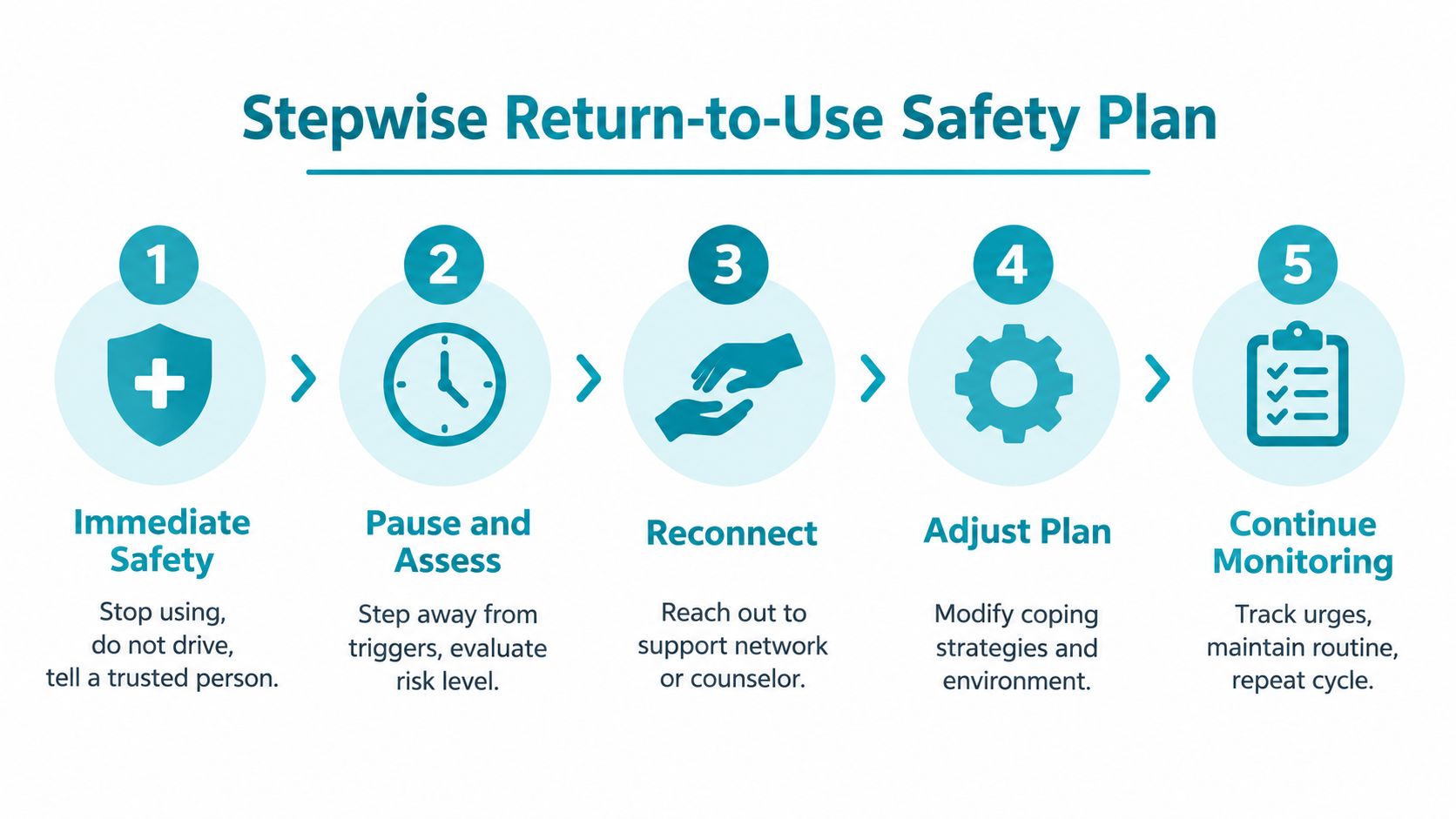
Immediate safety: Stop the situation, don't drive, and tell a trusted person. Move away from substances and unsafe settings. If overdose, severe withdrawal, suicidal intent, or another emergency may be present, call 911 or go to an emergency department.
Pause and assess: Identify the substance, possible amount, time of use, combinations, current symptoms, and whether the person is alone. Avoid combining substances, especially opioids with alcohol or sedatives. For opioid-related risk, keep naloxone available and make sure people nearby know where it is.
Reconnect: Contact the treating clinician or established support as soon as possible. A person shouldn't stop or restart prescribed treatment based only on fear or shame without guidance. Medication decisions require individualized clinical review.
Adjust the plan: Write a brief timeline of the preceding 48 hours, including sleep, stress, conflict, pain, cravings, access, and decisions. This can reveal a modifiable trigger without turning the review into blame.
Continue monitoring: Arrange rapid follow-up, update the written plan, and track urges, sleep, medication problems, and new warning signs. The appropriate timing depends on risk, but a prompt visit within the following week is a reasonable planning target to discuss with a clinician.
For readers comparing medication treatment with counseling, this overview of Suboxone and therapy for recovery may help explain how different supports can fit together. Treatment should remain specific to the substance, medical risks, goals, and clinician assessment. Empire's outpatient addiction medicine and Suboxone information can be another starting point for questions about physician-led evaluation and continuity, without implying that one medication or setting fits everyone.
When to Seek Medical Care or Emergency Help
A return to use is a safety event and a signal to adjust treatment, not proof of moral failure or proof that progress is lost. The urgency depends on the substance, the person's symptoms, the time since prior use, combinations, mental state, and access to help.
| Urgency level | Action required | Warning signs |
|---|---|---|
| Emergency | Call 911 or go to an emergency department now | Suspected overdose, slowed or stopped breathing, blue or gray skin, chest pain, seizures, severe confusion, vomiting while sedated, suicidal thoughts with a plan or means, or alcohol or benzodiazepine withdrawal with tremor, confusion, or visual disturbances |
| Urgent | Contact a clinician within hours | Use of a new or unfamiliar substance, return to use after abstinence, unexpected medication effects, rising cravings with disrupted sleep, sudden mood changes, or concern about withdrawal |
| Routine follow-up | Schedule a clinical review | Mild craving increases, skipped coping skills, near-miss triggers, reduced support contact, or a request to revise the recovery plan |
Substance-specific danger signals
Opioid overdose can present with extreme sleepiness, inability to wake, slow or absent breathing, and changes in skin color. Naloxone can be lifesaving when opioid overdose is suspected, but emergency services remain necessary. CDC overdose guidance explains the importance of recognizing overdose and calling for emergency help.
Alcohol and benzodiazepine withdrawal require particular caution. Tremor, confusion, hallucinations, or seizures can indicate a medical emergency. A person shouldn't attempt to manage potentially dangerous withdrawal alone.
Stimulant return can produce chest pain, severe agitation, paranoia, hallucinations, or suicidal thinking. Those symptoms require urgent medical assessment, especially when the person is alone or cannot reliably stay safe.
If someone has immediate suicidal intent, call 911 or contact the 988 Suicide & Crisis Lifeline in the United States. For additional crisis communication guidance, urgent text coaching may offer a supplemental resource, but text support isn't a substitute for emergency care when danger is immediate. Questions about overdose prevention and naloxone access should be addressed before an emergency occurs.
Key Takeaways and a Restrained Next Step
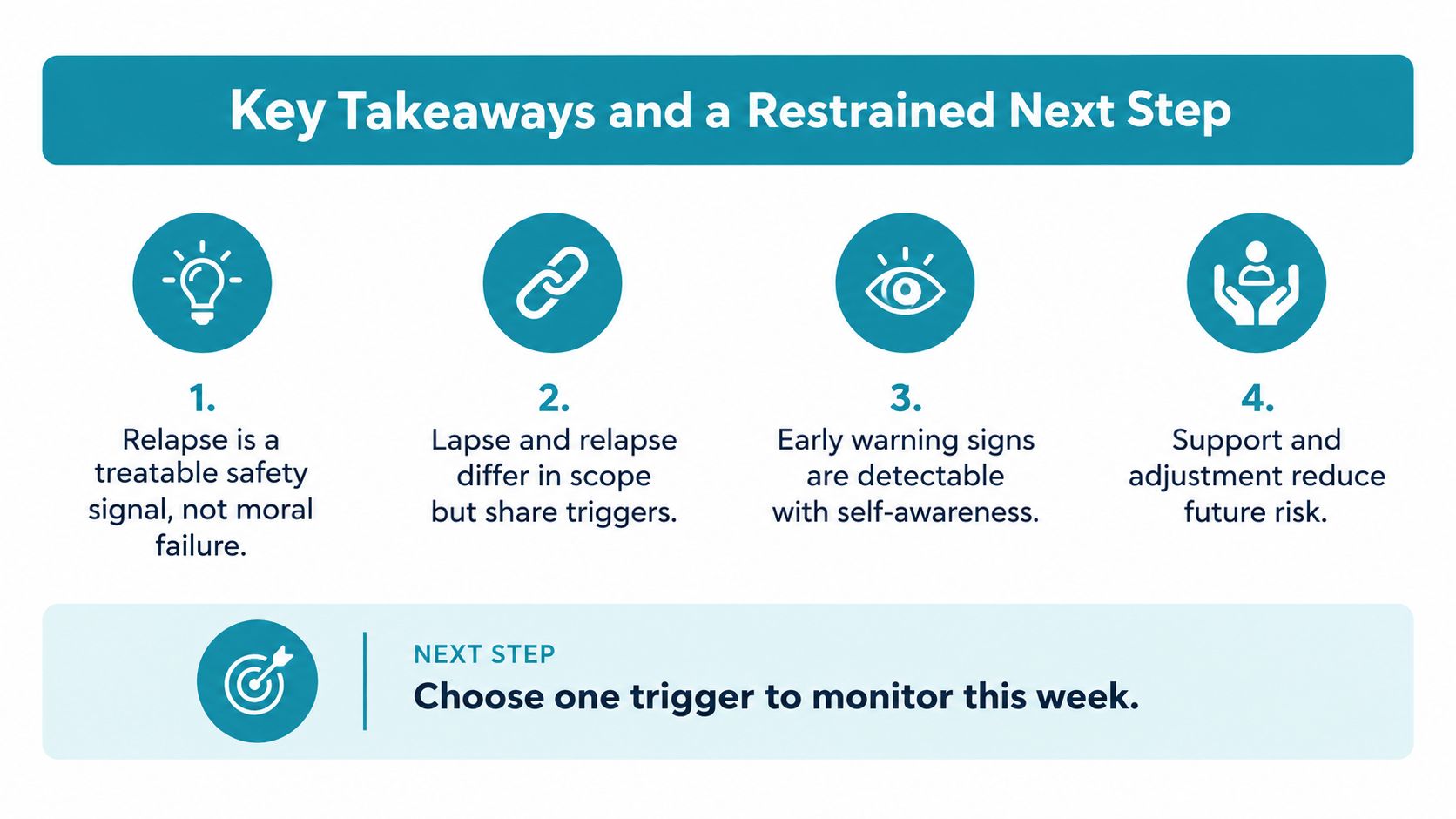
Relapse is easier to manage when the response begins with safety rather than shame.
- A relapse is a clinical signal: It may indicate that medication, monitoring, coping tools, treatment intensity, or outside support needs revision.
- A lapse and relapse aren't identical: A lapse may be brief and contained, while relapse generally describes sustained or intensified return to problematic use. Both deserve attention.
- Tolerance can change: After abstinence, a previous amount may carry greater overdose risk, especially with opioids and sedatives.
- Warning signs form a spectrum: Mild craving and skipped coping skills fit routine follow-up. Breathing problems, seizures, severe confusion, suicidal intent, and dangerous withdrawal require emergency help.
- A written plan improves clarity: Include the substance, tolerance or withdrawal risk, emergency actions, medication continuity, trigger analysis, and rapid follow-up.
- Progress isn't erased: A return to use identifies a problem to address. It doesn't prove that prior recovery work had no value.
Outpatient care can be one part of a broader plan. A physician may assess medical and substance-use concerns, review treatment continuity, monitor progress, develop recovery planning, and coordinate with an outside therapist or program when useful and authorized. Adults considering an addiction medicine specialist can use that visit to discuss what happened, what risks are present, and what level of support makes sense.
If you're in immediate danger, call 911 or seek emergency care first. This article is educational and isn't personal medical advice.
Empire Medical Wellness provides private-pay, physician-led outpatient addiction medicine assessment, monitoring, recovery planning, and authorized coordination with outside clinicians or treatment programs when clinically useful. Visit Empire Medical Wellness to learn how to request an evaluation and discuss a return-to-use safety plan with the practice.
Byline: Empire Medical Wellness Editorial Team
Published: September 26, 2026
Updated: September 26, 2026
Sources
- NIDA, Treatment and Recovery
- NIH, Relapse Prevention and Alcohol Use Disorders
- CAMH, Preventing and Managing Relapse
- CDC, Overdose Prevention
- FDA, Medication Guides and Prescribing Information