
Anxiety medication use in the United States has climbed again, with 11.7% of adults in 2019 rising to 14.3% in 2024, which the reporting source translated into roughly 38 million adults and about 8 million more users than in 2019 KFF Health News. That makes the decision more common, not simpler. The right medication depends on diagnosis, medical causes, current drugs, substance-use history, pregnancy, and how quickly you need relief.
For many adults, anxiety medication is useful, but it works best as part of a careful plan, not as a reflex prescription. Some medicines take weeks to help. Others act faster but carry bigger safety trade-offs. The goal is to match the drug to the person, not just to the symptom.
Table of Contents
- Why Careful Evaluation Comes Before a Prescription
- How the Main Anxiety Medication Classes Work
- Comparing the Drug Classes Side by Side
- How Diagnosis, Substances, and Health Change the Choice
- Medication Combined With Therapy and Other Care
- What to Expect From Evaluation and Follow-Up
- Red Flags, Safety Practices, and Questions for Your Clinician
- Common Misconceptions and a Path Forward
Why Careful Evaluation Comes Before a Prescription
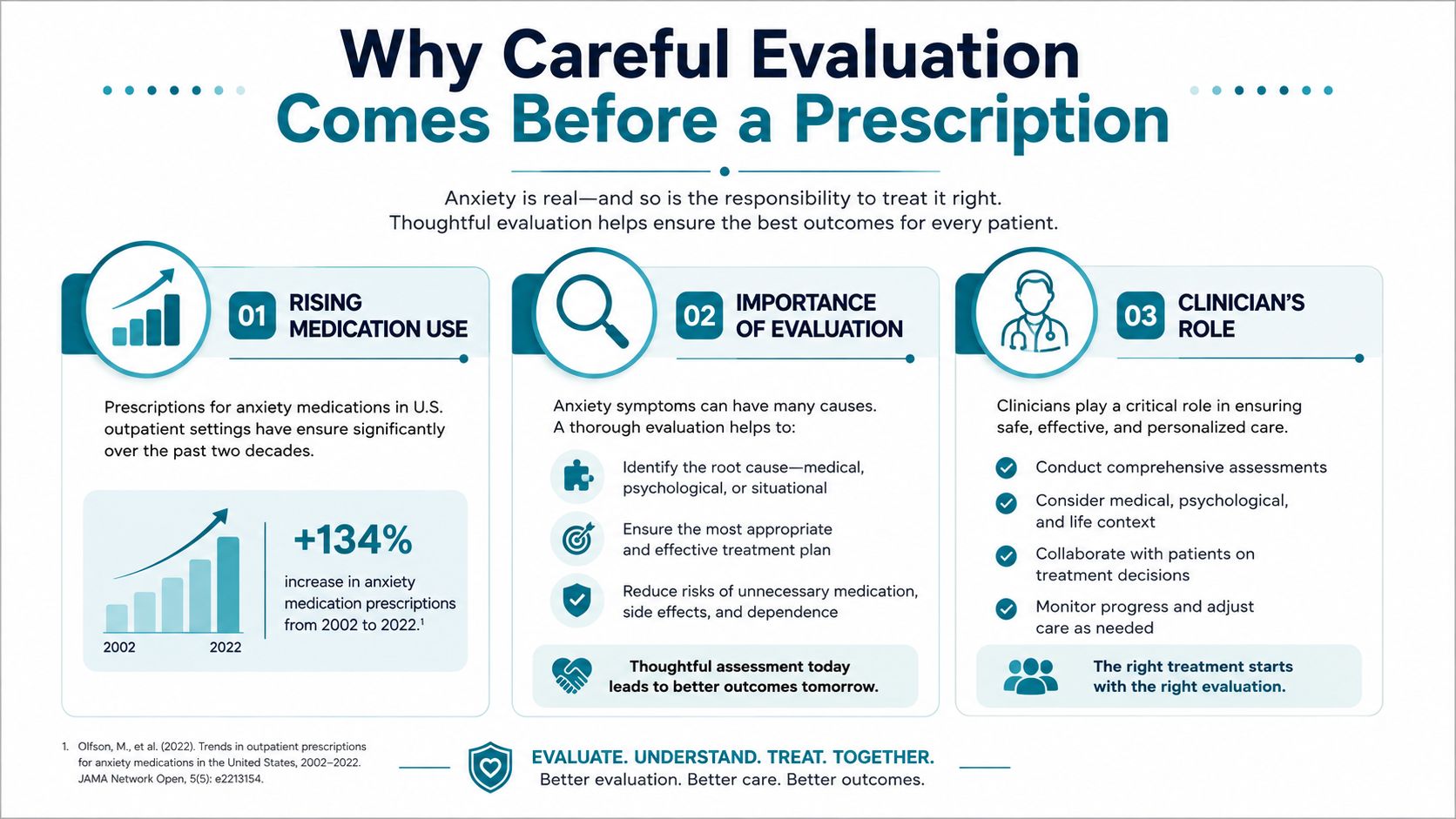
Anxiety medication works best when the diagnosis is clear and the treatment goal is specific. The first step is deciding whether the symptoms fit an anxiety disorder, another medical problem, a medication side effect, a substance-related issue, or a short-term stress response. That distinction changes the whole plan, because the wrong drug can miss the underlying cause or add avoidable risk.
Start With the clinical picture
The World Health Organization estimated that 359 million people worldwide had an anxiety disorder in 2021, about 4.4% of the global population, and only about 27.6% of people in need received any treatment WHO. That is one reason anxiety treatment is so common in outpatient care, but common use does not replace careful diagnosis. A rushed prescription can miss a medical contributor, a medication reaction, or a substance issue that needs a different response.
Practical rule: if the history is unclear, the prescription should wait until the diagnosis is clearer.
A short-lived reaction to a life event does not call for the same approach as persistent worry that interferes with sleep, work, or relationships. The clinical interview should also cover caffeine, sleep deprivation, alcohol, illicit substances, and physical illness, since any of them can intensify symptoms or look like an anxiety disorder. Current medications matter too, especially if the next option has interaction risks. If substance use is part of the picture, a careful review like the one described in the addiction evaluation process at Empire Medical Wellness helps clarify whether anxiety is primary, secondary, or mixed with withdrawal or use patterns.
Why timeline expectations matter
Antidepressant-class anxiety medicines often need time. In generalized anxiety disorder, response commonly takes 3 to 6 weeks to emerge PsychiatryOnline. That means an SSRI or SNRI is unlikely to feel like immediate relief, and early discouragement can lead people to stop before the medicine has a fair trial. A good plan treats the first prescription as a monitored trial, with room to adjust dose, timing, or medication choice based on what occurs.
Safety is the other reason to slow down. Careful dose review and follow-up matter when medication is started or adjusted, because benefit, side effects, and tolerability do not line up neatly on day one KFF Health News. Prescribing starts with questions, because the right drug depends on the person in front of you, not just the symptom on the chart.
How the Main Anxiety Medication Classes Work
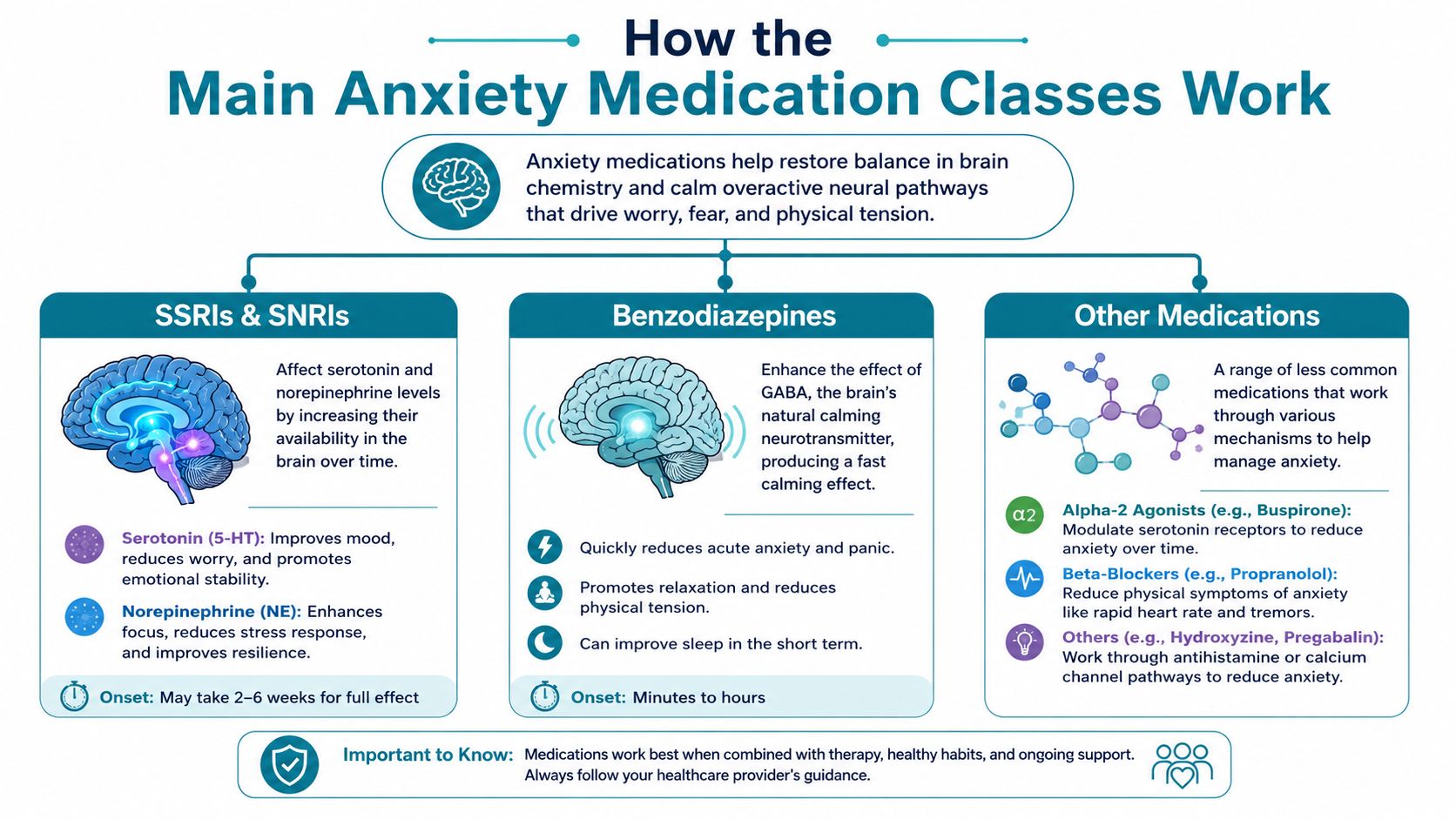
A medication choice for anxiety medication starts with one question, what problem is the drug meant to solve. Some medicines aim to lower the baseline level of anxiety over time. Others are meant to calm symptoms quickly, and a few are better reserved for limited, specific situations.
Daily medications versus rapid symptom relief
SSRIs and SNRIs are the usual long-term starting points for generalized anxiety disorder. They work by changing serotonin signaling, and SNRIs also affect norepinephrine signaling PsychiatryOnline. These medicines are taken daily because their benefit builds gradually. They are used to lower the constant background level of anxiety, not to produce immediate calm.
Buspirone works through a different pathway. It is a 5-HT1A partial agonist, which is one reason clinicians often consider it when they want a non-sedating, non-benzodiazepine option PMC8475920. It is not a quick fix, but it can fit well when daytime alertness matters and sedation would create problems.
Hydroxyzine is an H1 antihistamine with additional antimuscarinic and 5-HT2A effects PMC8475920. That profile can make it useful when short-term calming is the goal and sedation is acceptable. The trade-off is a higher anticholinergic burden, which can matter for some patients.
Fast-acting and situational options
Benzodiazepines act quickly through GABA-A receptor effects. That is why they can reduce anticipatory anxiety within days PsychiatryOnline. Speed is only part of the story. They also bring dependence and misuse risk, so they require a careful reason for use and a clear plan for duration.
Selected beta-blocker use serves a narrower purpose. These drugs are generally aimed at the physical signs of performance anxiety, such as tremor or palpitations, rather than the broader pattern of worry. They can be useful in that setting, but they are not a general solution for anxiety disorders.
Mechanism matters because the question is not just what reduces anxiety. The choice depends on what kind of anxiety is present, how fast relief is needed, and which side effects or risks a patient can reasonably accept. That is the point of comparing classes before choosing one.
Comparing the Drug Classes Side by Side
The table below gives the clearest starting point for a medication discussion. It does not replace a diagnosis, but it shows why two drugs that both reduce anxiety can lead to very different choices in practice.
| Class | Typical Role | Onset | Common Side Effects | Dependence Risk | Major Cautions |
|---|---|---|---|---|---|
| SSRIs | First-line for generalized anxiety and many chronic anxiety disorders | Often takes time before benefit is clear | Early activation, nausea, sleep changes, sexual side effects, discontinuation symptoms with some agents | Not considered addictive in the way benzodiazepines are | Dose adjustment is often needed before deciding it failed |
| SNRIs | First-line for generalized anxiety, especially when a serotonin-norepinephrine approach is preferred | Often takes time before benefit is clear | Similar to SSRIs, plus possible blood pressure concerns at higher doses | Not considered addictive in the way benzodiazepines are | Watch for discontinuation symptoms with some agents and blood pressure elevation with higher-dose venlafaxine XR |
| Buspirone | Non-sedating option for generalized anxiety, sometimes when benzodiazepines are not a good fit | Slower than benzodiazepines, generally not immediate | Dizziness, headache, nausea | Low dependence risk | Less useful for immediate relief |
| Hydroxyzine | Short-term or as-needed option when sedation is acceptable | Can work sooner than antidepressants | Sedation, dry mouth, anticholinergic effects | Low dependence risk | Anticholinergic burden can be limiting |
| Benzodiazepines | Short-term bridge or adjunct for acute anxiety | Fast, often within days | Sedation, impaired coordination, cognitive slowing | Meaningful dependence and abuse risk | Extra caution with alcohol, opioids, and repeated use |
| Selected beta-blocker use | Performance-related physical symptoms, not core generalized anxiety | Can help symptom control around specific events | Fatigue, slowed heart rate, dizziness | Low dependence risk | Not a treatment for generalized anxiety itself |
The main trade-off is speed versus staying power. A benzodiazepine may help faster, but that speed comes with a narrower safety margin and a real risk of dependence. An SSRI or SNRI may look underwhelming early, yet that does not mean it failed. It may only need time and careful titration.
The practical decision is rarely about the drug alone. It is about whether the target is steady control of chronic worry, short-term relief during a difficult stretch, or symptom control before a specific event. That is why class comparison matters before anyone settles on a prescription.
Bottom line: if the goal is long-term control, the first few weeks matter less than many patients expect. If the goal is immediate relief, the safest option still has to fit the rest of the medical picture.
How Diagnosis, Substances, and Health Change the Choice
The right medication starts with the diagnosis. Generalized anxiety disorder, panic disorder, social anxiety disorder, and anxiety tied to another condition can point in different directions, because each one carries a different pattern of symptoms, urgency, and response to treatment. A clinician also has to ask whether the anxiety is coming from thyroid disease, stimulant use, withdrawal, medication side effects, sleep disorders, or depression with prominent anxiety.
Substance use and interaction risk matter
A substance-use history changes the treatment frame right away. Benzodiazepines need extra caution in anyone with current or recent alcohol or opioid use because the combined CNS depressant effect can become dangerous. Physician-led addiction medicine becomes relevant here, because dependence risk is part of the prescribing decision, not an afterthought.
For patients already receiving opioid use disorder treatment, coordination with Suboxone care may also shape whether a sedating anxiety medication is safe or appropriate.
Medical factors can narrow the list
Pregnancy or breastfeeding changes the risk-benefit calculation, so the choice should not come from a generic drug list. Hepatic and cardiac conditions matter too, as do daytime sedation concerns, fall risk, and other CNS-active medications. Lorazepam is specifically noted as not reliant on CYP450-mediated hepatic metabolism, which can simplify use when interaction risk is high PMC8475920. Diazepam, by contrast, has active metabolites and a very long half-life, which increases carryover sedation and accumulation risk with repeated dosing.
That is why the “best” anxiety medication is rarely universal. It is usually the one that fits the diagnosis, the medication list, the patient's history, and the side-effect profile they can realistically live with. If those pieces have not been reviewed, the prescription is premature.
Medication Combined With Therapy and Other Care
Medication often works better as part of a broader plan. For many adults, that means combining it with evidence-based psychotherapy such as cognitive behavioral therapy, which targets the thought patterns and avoidance behaviors that keep anxiety active. Medication can lower symptom intensity enough for therapy to feel more usable, and therapy can help the gains last.

Why combination care often feels more realistic
Some people do well with medication alone. Others need both medication and therapy because fear, sleep disruption, and avoidance reinforce one another. That pattern is common when anxiety has begun to shrink work, relationships, or daily routines.
A clinician also has to look at the rest of the medical picture, including obesity when it is present as a comorbidity. Some agents can affect appetite, energy, or weight, so the choice should account for the full metabolic context rather than treating anxiety as an isolated symptom. Obesity is a medical issue, not a moral one, and it can change which medication is the better fit.
Where addiction medicine fits
Benzodiazepines deserve special caution when substance use is part of the current or recent history. A physician with addiction medicine experience can help weigh symptom relief against dependence risk, relapse vulnerability, and medication misuse concerns. That is especially relevant when the plan needs tighter monitoring and clearer guardrails.
If alcohol or opioid recovery is part of the picture, treatment decisions may also need coordination with Suboxone care or with naltrexone treatment options. The point is not to avoid anxiety treatment. It is to match the medication to the person's risks, other treatments, and daily life.
Empire Medical Wellness offers mental health evaluation and medication management, which can be relevant when adults want a physician-led review of anxiety treatment options and follow-up. The practice also provides addiction medicine, which becomes particularly relevant when dependence risk affects the medication choice.
Composite example: a patient starts a daily anxiety medicine, feels a little less tense, but also reports nausea and no real change in sleep or avoidance. A clinician would not jump straight to a new drug. They would check adherence, confirm the diagnosis, look for interactions, review how long the medicine has been taken, and then decide whether to adjust the dose, switch classes, or add therapy. Improvements and timelines vary, so the response has to be measured, not guessed.
What to Expect From Evaluation and Follow-Up
A careful anxiety medication visit should feel methodical, not hurried. The clinician should ask about the symptom pattern, how the symptoms affect work, sleep, relationships, and daily tasks, current medications, caffeine, substances, medical history, prior treatment, and what the patient wants from care. Safety screening belongs early, including suicide risk when symptoms are severe or changing.
The first visit should also sort out what kind of anxiety is present. Panic attacks, generalized anxiety, trauma-related symptoms, and anxiety tied to substance use can lead to different medication choices, different timelines, and different follow-up needs.
What a strong first visit covers
A complete evaluation usually includes:
- Symptom history and impact: what the anxiety feels like, when it appears, and how it affects work, sleep, relationships, and daily tasks.
- Safety review: current suicidal thoughts, escalating agitation, panic severity, and whether the person can stay safe.
- Substance and medication review: alcohol, cannabis, stimulants, opioids, prescribed sedatives, supplements, and recent changes.
- Medical context: thyroid disease, sleep problems, cardiac issues, pregnancy status, and other conditions that can alter the plan.
- Past treatment and preferences: what helped, what didn't, and what side effects the person wants to avoid.
Validated screening tools can support that conversation, but they do not replace it. The goal is to narrow the diagnosis before choosing a medication class, then set a clear plan for follow-up and adjustment. A structured mental health medication review can be useful when several prescriptions, symptoms, or side effects need to be sorted in one visit.
A practical follow-up standard
A useful follow-up plan asks two questions, “Is it helping?” and “Is it causing problems?” That is the point of the first medication check after a new start or dose change. Some side effects appear early, while benefit may take longer to judge, especially with antidepressant-class treatment PsychiatryOnline.
That first follow-up should also test whether the original choice still fits the patient's situation. A medication can look ineffective if the dose is too low, adherence has been inconsistent, alcohol or another substance is blunting the response, or the symptoms point to a different diagnosis. If the person has partial benefit, the next step may be to adjust the dose, change classes, or add psychotherapy rather than starting over from scratch.
A good visit leaves the patient knowing what to watch for and when to report back. It also gives a realistic sense of trade-offs, because the right choice is rarely the one with the fewest side effects on paper. It is the one that fits the diagnosis, the person's medical risks, and the plan for follow-up.
Red Flags, Safety Practices, and Questions for Your Clinician
A careful anxiety medication plan starts with safety, not comfort alone. The most urgent warning signs are worsening suicidal thoughts, new or escalating agitation, and suspected overdose. If someone cannot stay safe, emergency help is the right step.
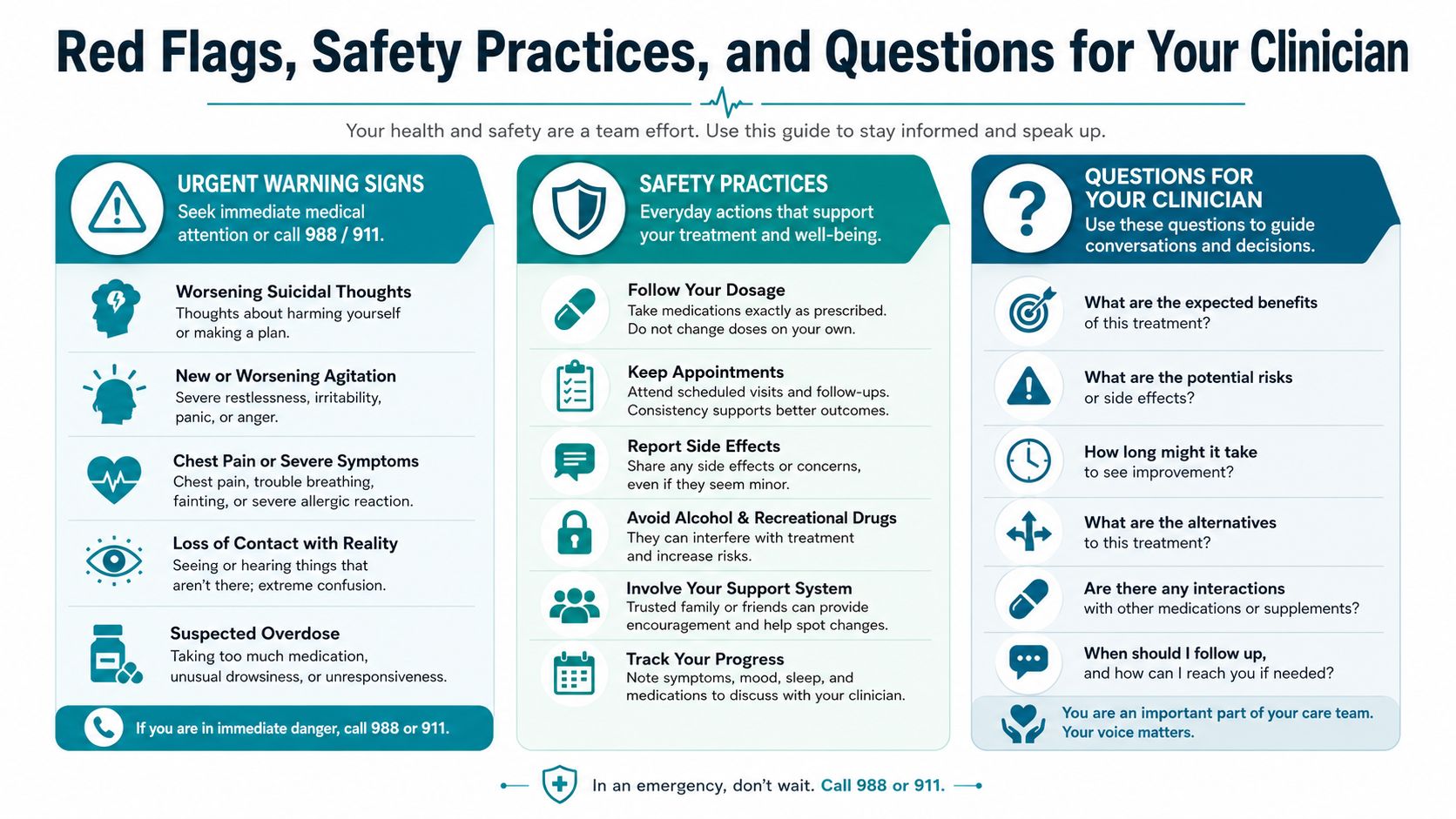
A medication plan also gets safer when the full list is accurate. That includes prescription drugs, over-the-counter products, supplements, alcohol, and any past reactions to psychiatric medicine. A careful 5-step medication reconciliation process helps make sure the list matches what the patient is taking before a new prescription is written.
Questions worth bringing to the visit
Before leaving an appointment, ask:
- How long should I wait before judging benefit?
- Which side effects are expected, and which should prompt a call?
- How do my pregnancy plans, liver health, or other medications affect the choice?
- What is the follow-up schedule, and what happens if this doesn't work?
Those questions focus the visit on key decision points. They also help separate temporary startup effects from problems that should lead to a change in dose, class, or diagnosis.
Safety practices that apply to everyone
Never start, stop, or taper an anxiety medication on your own. Controlled substances should be stored securely, especially if anyone else at home could access them. Alcohol and other CNS depressants can create real risk when combined with sedating medicines unless a clinician has specifically addressed the combination.
If dependence risk is part of the picture, a visit with an addiction medicine specialist can help keep the plan safer and better coordinated. That extra review is especially useful when the medication list is crowded or the history includes substance use, because those details change the risk-benefit balance.
Common Misconceptions and a Path Forward
A common mistake is assuming anxiety medication should produce relief right away. Some fast-acting medicines can work quickly, but antidepressant-class options often need time before they produce meaningful anxiolysis, as noted earlier. A second misconception is that dependence is unavoidable. It is not, although benzodiazepines do carry real dependence and safety risk, which is why they are usually used short term or as an adjunct in selected cases.
Medication also does not have to mean lifelong treatment. How long someone stays on it depends on the diagnosis, the response, and the follow-up plan. Stopping is not as simple as deciding to stop, especially with medicines that can cause discontinuation symptoms if they are reduced too fast.
The practical question is not whether anxiety medication is good or bad. It is which class fits the problem, how quickly relief is needed, what side effects are acceptable, and whether dependence risk, substance use, pregnancy plans, or other health conditions change the choice. That decision is different for panic disorder, generalized anxiety, insomnia with anxiety, or anxiety that sits alongside depression, and the right answer can change after the first follow-up visit.
A careful clinician will treat the prescription as one part of a broader plan. That usually means checking the diagnosis, reviewing all medications and substances, setting expectations for onset and side effects, and planning what happens if the first choice falls short. Empire Medical Wellness offers physician-led evaluation and medication management for adults who want a careful review of anxiety treatment options, safety trade-offs, and follow-up planning.
This article is for educational purposes only and isn't personal medical advice. If you're in immediate danger or thinking about harming yourself, seek emergency help right away.