
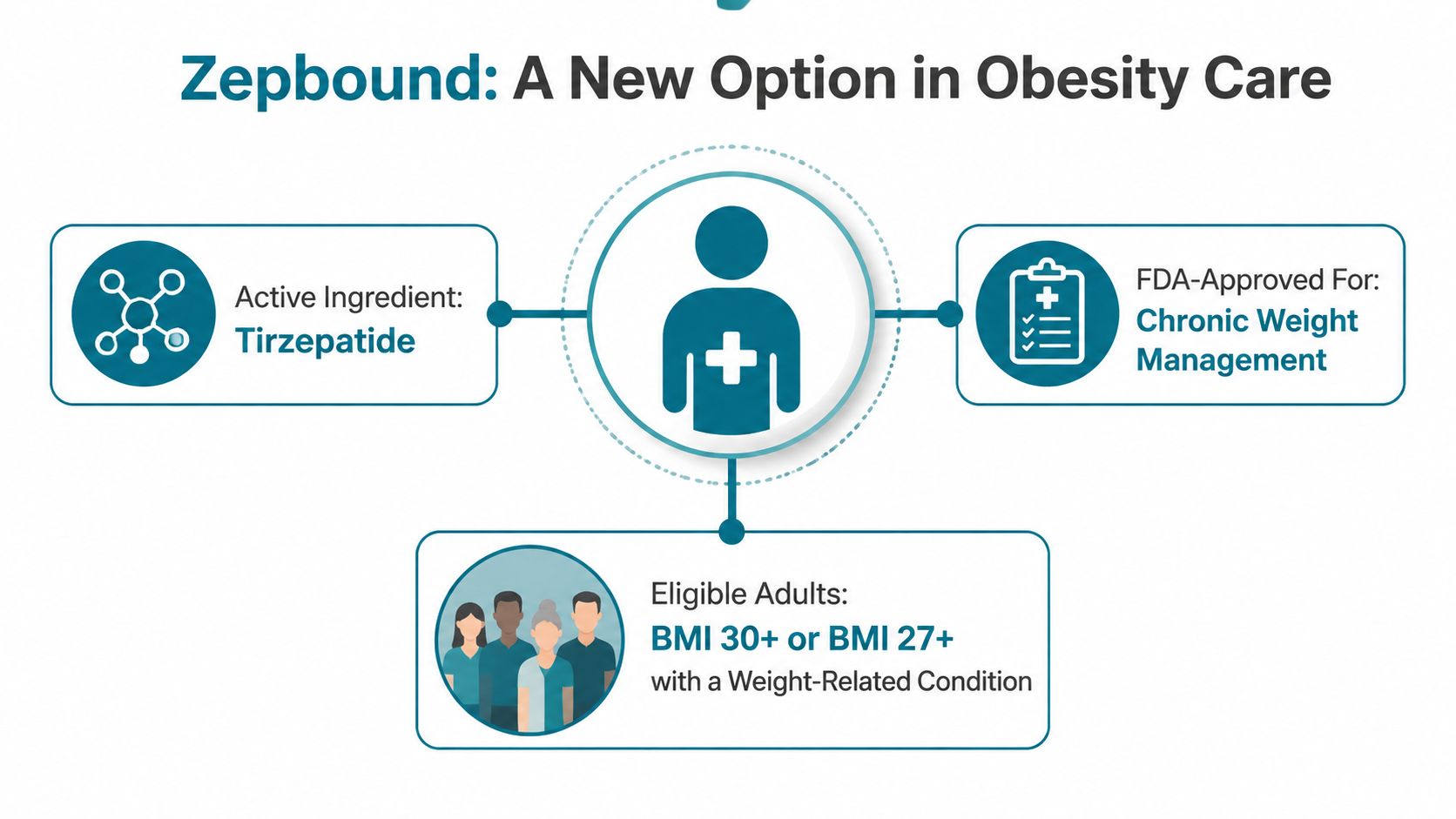
Tirzepatide, the active ingredient in Zepbound, received FDA approval for chronic weight management in adults with obesity or overweight with a weight-related condition in 2023. In the key trial, the highest studied dose produced mean weight loss of 20.9% after 72 weeks, compared with 3.1% with placebo.
But the more useful question isn't only whether Zepbound can help someone lose weight. It's whether the medication fits their health history, how side effects will be monitored, how access will be handled, and what a long-term maintenance plan might look like. Obesity affects at least one in five adults in every U.S. state, according to the CDC's adult obesity prevalence data, so many adults are now weighing medication as one part of physician-led care rather than treating it as a temporary trend.
This guide explains what Zepbound is, how it differs from Mounjaro, what clinical trials found, who may not be able to use it, and which questions deserve attention before treatment begins.
Table of Contents
- What Zepbound Is and How It Fits Into Obesity Care
- How Tirzepatide Works in the Body
- What the Clinical Trials Show
- Eligibility, Safety, and the Label-Based Checklist
- What a Physician-Led Evaluation and First Month Look Like
- Access, Cost, and Coverage After the Shortage
- Common Misconceptions and Questions for Your Clinician
What Zepbound Is and How It Fits Into Obesity Care
Zepbound is tirzepatide, a prescription medication approved by the U.S. Food and Drug Administration for chronic weight management in adults with obesity, meaning a body mass index, or BMI, of 30 or higher, or adults with overweight, meaning a BMI of 27 or higher, who also have at least one weight-related condition. Examples include hypertension, type 2 diabetes, or dyslipidemia. The FDA-approved indication is used alongside a reduced-calorie diet and increased physical activity, not as a replacement for them. The FDA announced the approval on November 8, 2023 in its approval announcement.
BMI is a screening measure, not a complete picture of health. A physician-led evaluation usually considers weight history, previous treatment attempts, related medical conditions, current medications, eating patterns, activity, sleep, and relevant family history. That broader review helps separate a medication that may be clinically appropriate from one that could introduce avoidable risk.
Zepbound and Mounjaro are not interchangeable labels
Zepbound and Mounjaro contain the same active ingredient, tirzepatide, but they have different FDA-approved indications. Mounjaro is approved for type 2 diabetes management, while Zepbound is approved for chronic weight management in the population described above. The product name matters because approval, prescribing context, and insurance coverage follow the labeled indication. The FDA prescribing information identifies tirzepatide's initial U.S. product approval in 2022, followed by the weight-management approval in 2023.
People researching incretin-based medications may also encounter general educational material about GLP-1 therapies, including this GLP-1 overview from Gym Snack. Readers comparing related obesity medicines can review Empire Medical Wellness information about Ozempic, while keeping in mind that brand names and FDA indications aren't identical.
The rest of the decision involves mechanism, evidence, safety, monitoring, and affordability. A successful start matters, but chronic treatment also requires a realistic plan for plateaus, tolerability, access, and maintenance.
How Tirzepatide Works in the Body
Tirzepatide is administered as a once-weekly injection under the skin. It activates two receptor systems involved in appetite and glucose regulation, GIP, or glucose-dependent insulinotropic polypeptide, and GLP-1, or glucagon-like peptide-1. These are incretin pathways, meaning they're connected to signals released around eating and to the body's regulation of blood glucose.
A simple analogy is two thermostats working together. One influences how satisfied you feel during and after a meal. The other affects hunger signals between meals. Tirzepatide also slows gastric emptying, so food can remain in the stomach longer and fullness may last longer. The experience isn't the same for everyone, and the medicine doesn't erase the need to eat adequately or maintain activity.
What this mechanism doesn't mean
Zepbound isn't a stimulant and isn't an older-style appetite suppressant such as phentermine. It belongs to a newer group of incretin-based treatments, but its dual GIP and GLP-1 activity makes it structurally different from semaglutide, which targets GLP-1 alone.
That distinction can help explain why someone may feel less interested in food without experiencing the alertness, jitteriness, or stimulant effects associated with some older medications. It also explains why gastrointestinal symptoms can occur. Changes in stomach emptying and appetite may affect meal size, food tolerance, bowel habits, and hydration.
Practical rule: A quieter appetite isn't the same as adequate nutrition. A clinician still needs to consider what a patient is eating, drinking, and tolerating.
Tirzepatide is also used under the Mounjaro brand for a different FDA-approved purpose. The Mounjaro information page from Empire Medical Wellness can help readers understand that the same active ingredient doesn't make two products identical in indication or treatment context.
What the Clinical Trials Show
The strongest evidence comes from randomized clinical trials, where participants are assigned to treatment groups and outcomes are compared under defined conditions. In the SURMOUNT-1 obesity trial, adults with obesity or overweight without diabetes received once-weekly tirzepatide or placebo for 72 weeks. Weight loss was dose-dependent, meaning the average reduction differed across the studied dose levels. The highest studied dose produced mean body-weight reduction of up to 22.5% in published results, while the FDA noted statistically significant reductions versus placebo at 5 mg, 10 mg, and 15 mg. The published SURMOUNT-1 results in the New England Journal of Medicine provide the primary trial evidence.
A related analysis gives the comparison in a form many patients find easier to understand. At the highest dose, mean weight loss was 20.9%, compared with 3.1% with placebo. Also, 91% of participants receiving the 15 mg dose achieved at least 5% body-weight reduction, compared with 35% of those receiving placebo, as reported in Lilly's SURMOUNT-1 and head-to-head trial release.
The maintenance question changes the interpretation
Weight loss results don't answer what happens after the initial phase. Lilly's SURMOUNT-MAINTAIN phase 3b trial followed adults for 112 weeks under different treatment strategies. Participants who remained on their maximum tolerated Zepbound dose maintained 22.4% mean weight loss. Those who stepped down to 5 mg maintained 17.0%, while those switched to placebo fell to 10.1%, according to the company's maintenance-trial announcement.
These figures don't establish the right maintenance plan for any individual. They do show why stopping, stepping down, or continuing treatment deserves a deliberate conversation rather than an assumption that the weight-loss phase is the entire treatment.
Real-world outcomes can also be smaller than randomized-trial averages. Cleveland Clinic reported that people receiving a high maintenance dose lost 18.0% with tirzepatide in practice, which remained substantial but was below randomized-trial averages. Trial participants and clinical patients may differ in adherence, follow-up, health conditions, treatment duration, and access.
Eligibility, Safety, and the Label-Based Checklist
The FDA label provides a starting point, not a substitute for an evaluation. BMI and weight-related conditions help establish whether the indication may fit, while medical history determines whether important risks or contraindications apply.
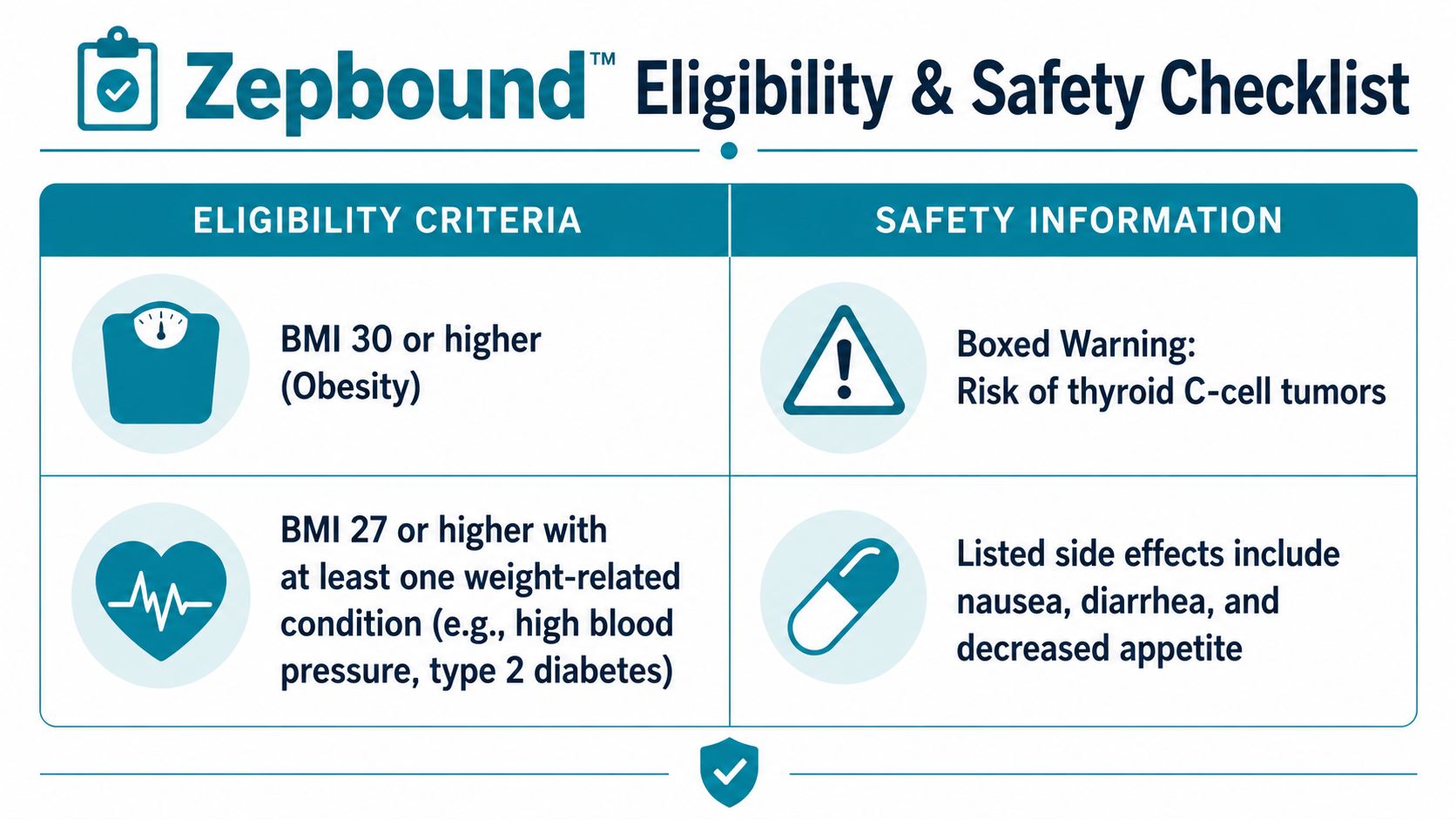
Zepbound Label-Based Eligibility and Safety Summary
| Topic | Label-Based Summary |
|---|---|
| FDA-approved indication | Chronic weight management in adults with obesity, BMI 30 or higher, or overweight, BMI 27 or higher, with at least one weight-related condition, used with a reduced-calorie diet and increased physical activity |
| Boxed warning | Risk of thyroid C-cell tumors |
| Contraindication | Personal or family history of medullary thyroid carcinoma |
| Contraindication | Multiple endocrine neoplasia syndrome type 2 |
| Contraindication | Known serious hypersensitivity to tirzepatide or any product excipient |
| Common gastrointestinal effects | Nausea, vomiting, diarrhea, constipation, and related gastrointestinal symptoms |
| Important label warnings | Pancreatitis and gallbladder problems require clinical attention when symptoms suggest those conditions |
The FDA says Zepbound is contraindicated for people with a personal or family history of medullary thyroid carcinoma, or MTC, and for people with multiple endocrine neoplasia syndrome type 2, or MEN 2. It's also contraindicated in anyone with serious hypersensitivity to tirzepatide or an excipient. The FDA safety communication and warning information describes the boxed warning and contraindications.
Common gastrointestinal effects can include nausea, vomiting, diarrhea, and constipation. The label also includes warnings related to pancreatitis and gallbladder disease. That doesn't mean every symptom signals a serious complication, but persistent, severe, or concerning symptoms shouldn't be dismissed.
A clinician typically asks about thyroid cancer history, digestive symptoms, prior pancreatitis, gallbladder problems, allergies, and current medications. They may also consider laboratory testing when clinically appropriate. Readers can review general medication education, including information about Mounjaro side effects, but only a prescribing clinician can interpret an individual history.
What a Physician-Led Evaluation and First Month Look Like
Composite hypothetical, not a real Empire patient: An adult who has tried several structured weight-management approaches schedules an evaluation to ask whether Zepbound could fit. The clinician doesn't begin with the medication alone. The visit starts with weight history, prior attempts, related health conditions, current medications, eating patterns, activity, sleep, and goals.
The discussion also includes family history. A personal or family history of medullary thyroid carcinoma, MEN 2, pancreatitis, gallbladder disease, or serious medication allergy may change the safety discussion. Depending on the broader medical picture, the clinician may consider basic laboratory testing or coordination with another treating professional.
The first month is about tolerance and fit
If an FDA-approved anti-obesity medication appears clinically appropriate, the plan still includes nutrition, physical activity, and practical routines. A physician may discuss how to recognize gastrointestinal intolerance, maintain hydration, and report symptoms that need prompt assessment. The precise follow-up schedule varies because it depends on medical history, treatment response, side effects, and access.
A first-month conversation often focuses on questions such as:
- Tolerability: Is the person experiencing nausea, vomiting, diarrhea, constipation, or difficulty eating and drinking?
- Daily function: Are symptoms interfering with work, sleep, activity, or regular meals?
- Hydration and nutrition: Is reduced appetite making it difficult to consume enough fluids or balanced food?
- Medication review: Have other medicines, allergies, or new symptoms changed the risk assessment?
- Next decision: Does the clinician need to continue, adjust, pause, or reconsider the treatment plan?
The goal isn't to chase a particular scale reading. Early treatment is also a period for learning how the body responds and whether the overall plan is workable.
The practice's physician-led weight-loss care information describes evaluation and ongoing planning as distinct from a single medication transaction. Individual outcomes vary, and no hypothetical workflow predicts what a particular patient will experience.
Access, Cost, and Coverage After the Shortage
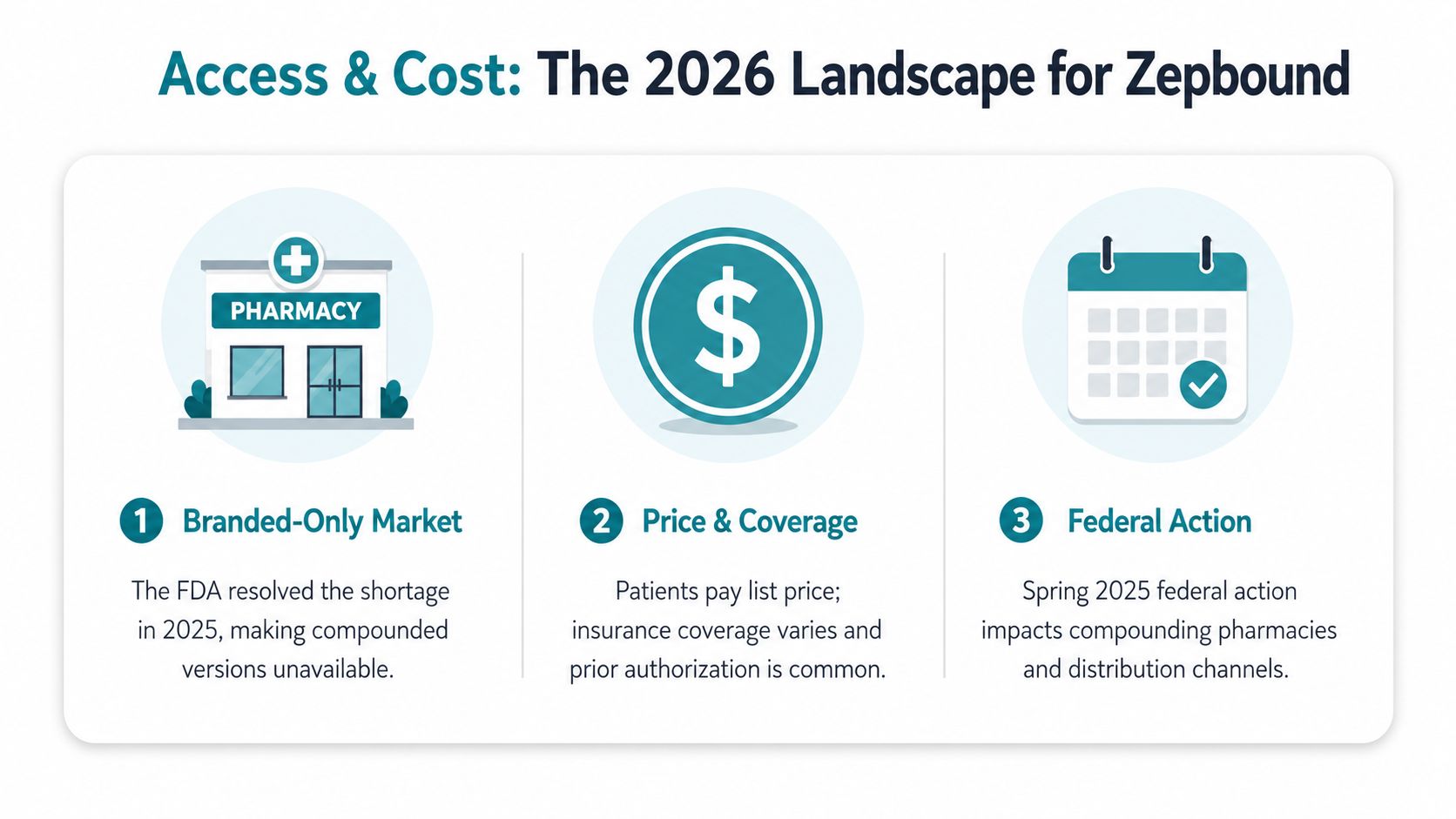
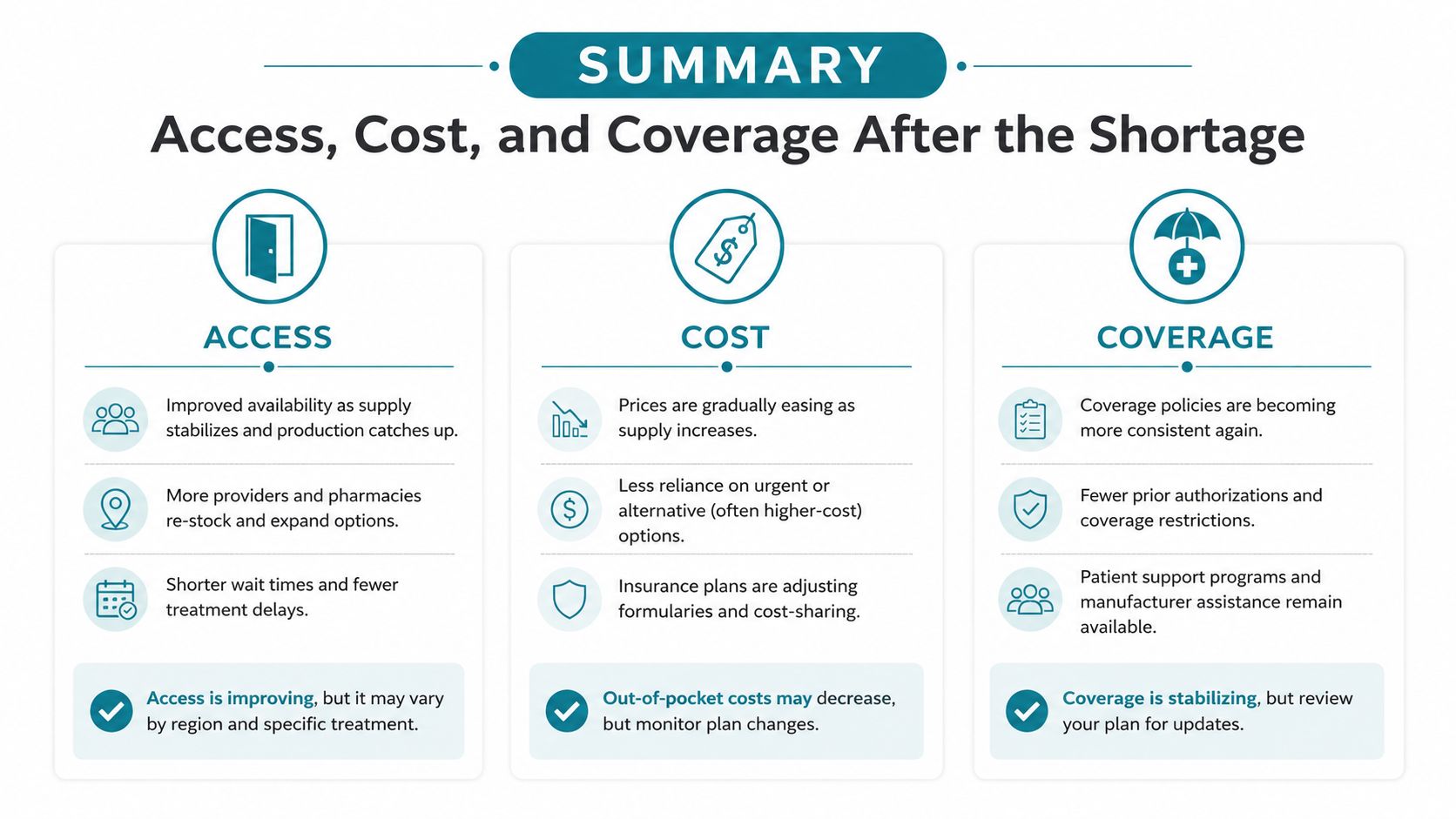
Could a prescription be available at the pharmacy yet remain unaffordable? After the FDA determined that the Zepbound shortage was resolved, access shifted. By spring 2025, federal action pushed compounded copies off the market, changing options for patients who had relied on lower-cost alternatives. The New York Times reported on obesity-drug access and compounding during this transition.
Branded supply may be easier to find, while payment remains uncertain. Insurance plans use different formularies, the lists of covered medicines, and those decisions can determine which prescription a patient is offered. In May 2025, CVS Health announced that it would remove Zepbound from its preferred formulary and prioritize Wegovy. That example shows how an insurer or pharmacy-benefit decision can redirect treatment without reflecting a clinician's individual assessment.
Questions to ask before relying on access
A clinician's office, insurer, or pharmacy can help clarify:
- Formulary status: Is Zepbound covered by the patient's specific plan?
- Prior authorization: What records or criteria must the insurer receive?
- Step therapy: Must another medication be tried before Zepbound qualifies?
- Continuation rules: Will coverage be reviewed after the initial treatment period?
- Out-of-pocket cost: What amount remains if coverage is limited or denied?
- Maintenance planning: Could the patient afford treatment if it continues?
A coverage approval is only one part of the plan. Pharmacy policies, prices, coupons, and compounded-product availability can change, so a previous arrangement may no longer apply or be appropriate. After branded access was restored, a 2026 market update described insurance coverage and cost as the remaining major barriers rather than supply.
Cost belongs in the maintenance discussion from the beginning. A plan that fits a temporary budget may become difficult to sustain if treatment continues. Information about GLP-1 care without insurance may offer context for self-pay questions, but it does not guarantee reimbursement, a specific price, or medication availability.
Common Misconceptions and Questions for Your Clinician
Zepbound is often discussed in simplified terms. Those shortcuts can create confusion about indications, safety, and what happens after weight loss.
Misconceptions worth correcting
“Zepbound and Mounjaro are the same prescription.” They contain the same active ingredient, tirzepatide, but their FDA-approved indications differ. Mounjaro is approved for type 2 diabetes, while Zepbound is approved for chronic weight management in eligible adults.
“It's just a short-term appetite suppressant.” Zepbound is authorized for chronic weight management. The trial and maintenance evidence supports discussing duration, dose changes, and ongoing follow-up rather than treating the first period of weight loss as the complete plan.
“Trial averages predict my result.” They don't. The SURMOUNT results describe groups of participants under trial conditions. A person's response may differ because of health history, tolerability, adherence, nutrition, activity, and duration of treatment.
“Compounded tirzepatide is equivalent now that the shortage is over.” The post-shortage market and federal action changed the availability of compounded copies. Patients should ask a clinician about the current FDA-approved product and the legal, safety, and access context instead of assuming equivalence.
“Stopping is automatically safe.” Stopping or stepping down should be discussed with the prescribing clinician. SURMOUNT-MAINTAIN showed different maintenance outcomes across continued treatment, a lower dose, and placebo, so the next step deserves planning.
Questions to bring to a visit
- Indication fit: Does my medical history fit the FDA-approved chronic weight-management indication?
- Safety history: What personal or family history, including thyroid cancer, MEN 2, pancreatitis, gallbladder disease, or serious allergies, matters here?
- Side effects: Which symptoms should I report, and how will gastrointestinal tolerance be assessed?
- Treatment changes: How will decisions about dose changes or continued treatment be made without giving myself instructions outside the plan?
- Maintenance: What would long-term treatment, stepping down, or reassessment involve if results stabilize?
- Coverage: Does my plan require prior authorization or step therapy, and what cost should I expect?
- Follow-up: What follow-up cadence does the practice recommend for monitoring and treatment decisions?
Empire Medical Wellness offers physician-led obesity medicine evaluation, medication management when clinically appropriate, and long-term weight-management planning. Visit Empire Medical Wellness to learn more about arranging care and preparing questions for an evaluation.
Empire Medical Wellness Editorial Team
Published August 18, 2026. Updated August 18, 2026.
Sources
- FDA approval announcement for Zepbound
- SURMOUNT-1 results in the New England Journal of Medicine
- CDC adult obesity prevalence maps
- FDA safety and contraindication information
This article is educational and isn't personal medical advice. A qualified clinician must evaluate your health history before any medication decision.