
What's the point of Ozempic if weight loss isn't the main goal? For many adults with type 2 diabetes, the answer is straightforward: Ozempic is a glucose-lowering medication, and it also has an approved role in reducing cardiovascular risk in selected patients with established cardiovascular disease, while weight loss is a common secondary effect rather than its primary label purpose FDA label.
Table of Contents
- What Ozempic Is and Who It Is For
- How Semaglutide Lowers Blood Sugar
- Clinical Benefits and the Evidence Behind Them
- Dosing, Administration, and What the Weekly Schedule Looks Like
- Side Effects From Common to Serious
- Where Ozempic Fits Among Other Diabetes Therapies
- What the Weight Loss Effect Means in Practice
- How a Physician Evaluates and Monitors Patients
What Ozempic Is and Who It Is For
Who is Ozempic for, and what is it meant to do? Ozempic is semaglutide, a once-weekly injectable prescription medicine for adults with type 2 diabetes. It is approved as an adjunct to diet and exercise for glycemic control, and it is also approved to reduce the risk of major adverse cardiovascular events in adults with type 2 diabetes and established cardiovascular disease FDA label.
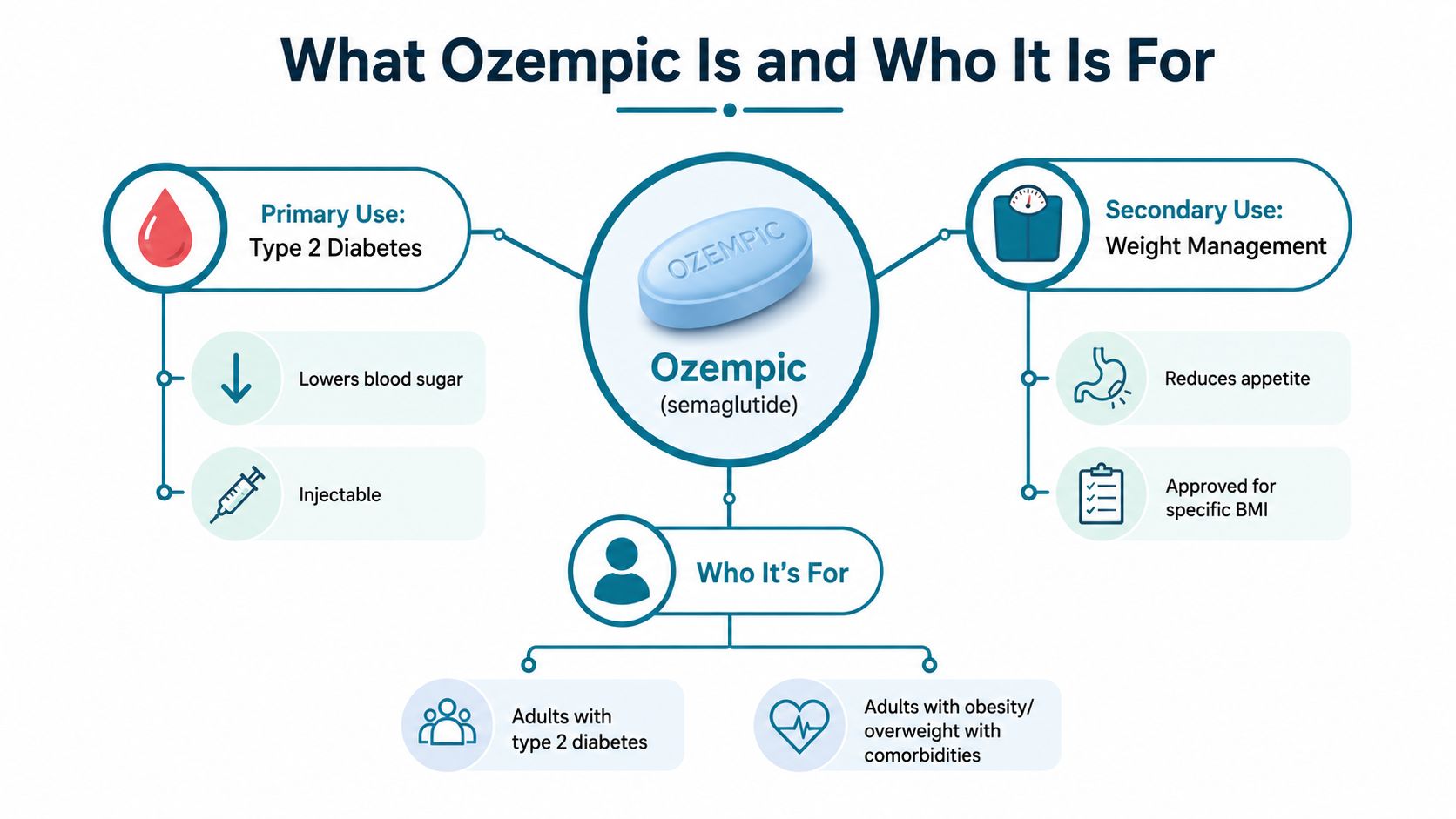
A lot of confusion starts because Ozempic is often discussed online like a weight-loss drug. That framing misses the main clinical point. For adults whose blood sugar is above goal, Ozempic is used to help lower glucose. For adults with type 2 diabetes and established cardiovascular disease, the approved cardiovascular indication matters as well.
Why that distinction matters
The label tells you what the medicine is for, not just what people notice first. Weight change can happen, but that does not make Ozempic the same thing as a dedicated weight-loss treatment. The medication's role depends on the problem being treated, and that is why the conversation changes when the priority is diabetes care rather than appearance.
Practical rule: if blood sugar control is the reason for treatment, judge Ozempic by glucose and cardiovascular goals first, not by social-media framing.
For adults exploring access and affordability, a private-pay discussion may also include practical options such as online GLP-1 care without insurance. The right plan still starts with the medical indication, not the marketing.
How Semaglutide Lowers Blood Sugar
Semaglutide is a GLP-1 receptor agonist. GLP-1 is a natural gut hormone involved in blood-sugar regulation, and semaglutide copies some of its effects NovoMedLink.
Think of it as a glucose thermostat. When blood sugar rises, the drug helps the body respond. When blood sugar is not high, it doesn't push the pancreas in the same way. That “only when needed” pattern is the key idea.
The main actions in plain language
Semaglutide works mainly by doing two things when glucose is high. It increases glucose-dependent insulin secretion, which means the pancreas releases more insulin when the body needs help moving sugar out of the bloodstream. It also suppresses glucagon, a hormone that tells the liver to release stored sugar NovoMedLink.
That mechanism is clinically useful because it's more physiologic than drugs that force insulin release regardless of glucose level. It also helps explain why many people feel full longer after meals, since semaglutide slows gastric emptying.
The point isn't that the medicine “turns off” digestion. The point is that it changes how the body handles a meal so glucose doesn't rise as sharply.
This mechanism explains the drug's role. It doesn't tell you whether it's the right choice for a specific person. That decision depends on the whole diabetes picture, other medicines, and safety considerations.
Clinical Benefits and the Evidence Behind Them
For adults using Ozempic for type 2 diabetes, the main benefit is better HbA1c reduction, the lab measure that reflects average blood sugar over time. In the European Medicines Agency review of the SUSTAIN clinical program, five studies in more than 4,000 patients showed Ozempic lowered HbA1c by 1.2 to 1.8 percentage points over 10 to 13 months, with larger reductions than comparators including sitagliptin, exenatide, insulin glargine, and placebo EMA Ozempic review.
That kind of change is not just a number on a lab report. It means glucose levels stayed lower across the day, including after meals and between meals, which is often the reason semaglutide is added to a diabetes treatment plan.
What that means for patients
The clinical meaning is straightforward. Lower HbA1c usually reflects less time spent in hyperglycemia, so the body is exposed to fewer sustained sugar spikes. For many adults, that is the main goal of treatment, and it is the reason semaglutide is considered even when weight loss is not the primary reason for starting therapy.
Higher-dose data point in the same direction. In the FDA-reviewed SUSTAIN FORTE study, semaglutide 2.0 mg lowered HbA1c by 2.1 points compared with 1.9 points with 1.0 mg. The between-group difference was statistically significant at 0.18 percentage points (95% CI 0.04 to 0.31; P < 0.001) EMA Ozempic review.
That result shows a real dose-response pattern, but the size of the added benefit was still modest. Clinicians have to weigh tighter glucose control against tolerability, cost, and whether the extra dose is likely to change the person's day-to-day diabetes management in a meaningful way.
| Therapy | Approximate HbA1c Reduction | Comparator Type |
|---|---|---|
| Semaglutide in the SUSTAIN program | 1.2 to 1.8 percentage points | GLP-1 receptor agonist |
| Semaglutide 2.0 mg in SUSTAIN FORTE | 2.1 points | Higher-dose GLP-1 receptor agonist |
| Semaglutide 1.0 mg in SUSTAIN FORTE | 1.9 points | Lower-dose GLP-1 receptor agonist |
| Semaglutide added to metformin in a randomized study | 1.5 to 1.8 percentage points | Combination therapy AAFP |
Ozempic is also approved to reduce major adverse cardiovascular events in adults with type 2 diabetes and established cardiovascular disease. That matters because diabetes care is not only about the next glucose reading, it is also about lowering longer-term heart risk for selected patients.
Dosing, Administration, and What the Weekly Schedule Looks Like
Ozempic comes as a pre-filled pen and is given as a subcutaneous injection, which means it goes under the skin, not into a muscle or vein. It's taken once weekly, on the same day each week, with or without food.
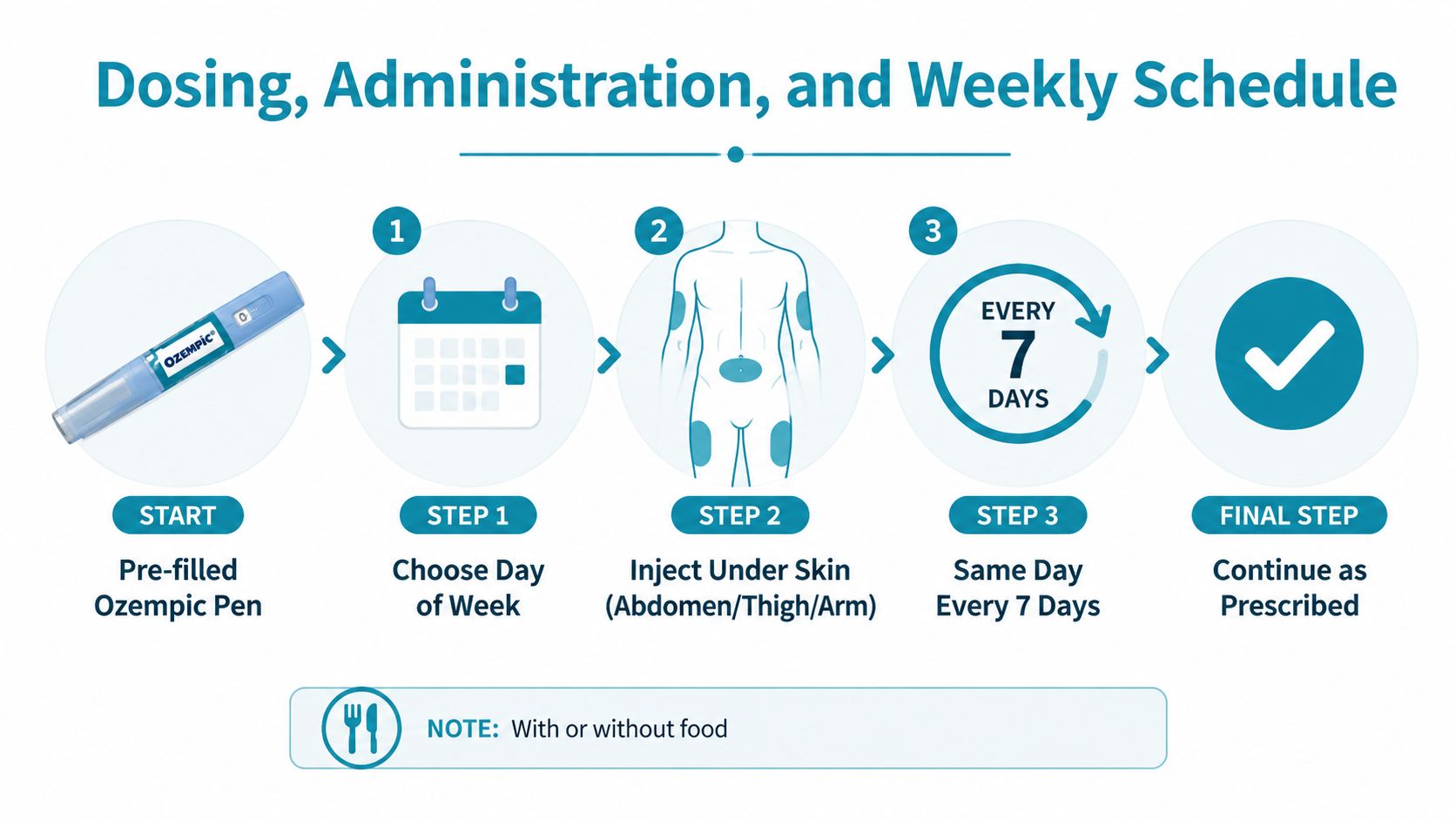
The weekly rhythm is one reason people like the medication. There's no daily pill schedule to remember. There is, however, a need for careful titration, because the body needs time to adjust.
Why the start-low approach exists
A common pattern is to begin at a lower dose and then increase gradually if the prescriber thinks it's appropriate. That isn't just about caution for its own sake. It's meant to improve tolerability, especially for gastrointestinal side effects that can make people stop treatment.
Practical rule: the first weeks are usually about adjustment, not judging the full effect of the drug.
Missed doses and storage details should come from the prescribing instructions and the pharmacy label, because those are the safest sources for handling a specific prescription. The larger point is simpler. Ozempic is a weekly medication with a structured ramp-up, and that schedule is designed to help people stay on therapy long enough to benefit.
Side Effects From Common to Serious
What should you expect after starting Ozempic for type 2 diabetes? For many adults, the first issues are digestive. People often report nausea, vomiting, diarrhea, abdominal pain, and constipation, and these are the effects that most often shape whether someone stays on treatment.

The common effects are not trivial
These symptoms can be more than a passing annoyance. Nausea or diarrhea can affect meals, work, travel, and the simple ability to keep up with daily routines. Some people also feel full sooner than expected, which can make eating feel different while the body is adjusting. That discomfort is one reason clinicians usually increase the dose gradually, so the stomach has time to adapt.
More serious risks are less common, but they still deserve attention. Ozempic carries warnings about pancreatitis, gallbladder disease, and severe hypoglycemia when it is used with insulin or sulfonylureas. The prescribing information also includes a boxed warning related to thyroid C-cell tumors seen in rodent studies, and it should not be used in people with a personal or family history of medullary thyroid carcinoma or Multiple Endocrine Neoplasia syndrome type 2.
Call the prescribing clinician promptly for persistent severe abdominal pain, signs of an allergic reaction, or symptoms of low blood sugar if the medication is being used with other glucose-lowering drugs.
For adults weighing safety concerns before treatment, a look at Ozempic facial changes and common concerns can help put appearance-related worries in context. The more important questions are still the warning signs above and the full medication history, including other diabetes medicines that may change the risk of low blood sugar.
Where Ozempic Fits Among Other Diabetes Therapies
Ozempic is one option in a broader type 2 diabetes toolkit. It is often considered alongside metformin, other GLP-1 receptor agonists, and insulin, because each medicine class helps in a different way and is chosen for different clinical goals.
A simple comparison
Metformin is still a common starting medication in type 2 diabetes care because it is long established and widely used. Insulin lowers glucose through direct hormone replacement, and clinicians often use it when non-insulin medicines do not bring blood sugar into a useful range. Other GLP-1 receptor agonists, such as dulaglutide and liraglutide, share the same class mechanism as semaglutide but differ in dosing and in the trial evidence available for each product.
The practical difference is often about fit. Some medicines are better for lowering glucose quickly, some are chosen because they are familiar or affordable, and some are selected because they may help with cardiovascular risk reduction in the right patient.
Where semaglutide often stands out
For adults with established cardiovascular disease, semaglutide has a distinct place in treatment planning, as noted earlier in the FDA information for the drug. It can also be attractive when avoiding hypoglycemia matters, because its insulin effect is glucose-dependent. That means it helps the body release insulin more in response to high glucose, rather than forcing insulin release at all times.
That said, there is no single best diabetes medication for everyone. A prescriber weighs the A1C pattern, current medicines, side-effect history, cardiovascular status, and whether a weekly injectable option fits the person's life. One patient may do well on semaglutide, while another may need a different approach because the priority is simpler dosing, lower cost, a different side-effect profile, or a therapy that works better with their other medicines.
For a plain-language comparison of classes, GLP-1 therapy compared with phentermine can help clarify why these medicines are not interchangeable, even when people talk about them in the same breath.
What the Weight Loss Effect Means in Practice
Ozempic can lead to weight loss, and that effect is real for many adults with type 2 diabetes. It may matter metabolically, and it can also change how people feel in their clothes, but that is not why the drug is used in diabetes care.
Weight change is a secondary benefit
The main reason Ozempic is used is glycemic control in adults with type 2 diabetes, with cardiovascular-risk reduction for adults who also have established cardiovascular disease, as noted earlier. Weight loss can be welcome, but it is secondary to those diabetes goals.
Public discussion often reduces the story to “Ozempic is for weight loss.” That shorthand leaves out the people who care most about glucose numbers and heart risk. It also leaves out the practical reality that side effects can limit long-term use for some people.
A better way to think about the weight effect is as one benefit among several. In diabetes care, the question is whether the medication helps with blood sugar, supports cardiovascular goals when relevant, and remains tolerable enough to continue.
For adults comparing options in a weight-focused clinic setting, medical weight-loss care may be part of the broader conversation, but Ozempic's diabetes value should still be judged on diabetes endpoints first.
How a Physician Evaluates and Monitors Patients
A thoughtful prescriber starts with medical history, not just a prescription form. The review usually includes A1C, current medications, past reactions to diabetes drugs, kidney function, pregnancy considerations, diabetic retinopathy status, and history of pancreatitis, gallbladder disease, or medullary thyroid carcinoma in the patient or family.
What follow-up usually focuses on
After a medication is started, monitoring centers on three things. Is the person tolerating it? Is glucose improving? Does the dose still make sense over time?
That follow-up may also include coordination with a primary care clinician or endocrinology team when it's helpful and authorized. Access matters too. High demand, supply variability, insurance differences, and the ability to stay on therapy all shape whether the medication produces lasting benefit.
The prescription is only one part of the plan. Follow-up is what tells you whether the treatment is helping, tolerable, and still appropriate.
If you're comparing a diabetes-focused visit with broader private outpatient care, medical weight-loss evaluation and treatment can be one route into a physician-led discussion, but the key is matching the treatment to the medical problem, not the headline.
Ozempic can be a useful part of type 2 diabetes care when the goal is better glucose control, cardiovascular-risk reduction in eligible patients, and a treatment plan that fits the person's medical history. If you're looking for a careful, physician-led conversation about whether semaglutide belongs in your diabetes plan, visit Empire Medical Wellness to learn more about the practice's outpatient care approach and next steps.
Educational note: This article is for general information only and isn't personal medical advice.