
Alcohol withdrawal manifestations typically begin within 6 to 24 hours after reducing or stopping alcohol, often with tremor, anxiety, and sweating. In severe cases, withdrawal can progress to seizures or delirium within 48 to 96 hours.
You may be reading this after someone has stopped drinking and now feels shaky, restless, nauseated, unable to sleep, or unusually anxious. Those symptoms can represent the early phase of a medical syndrome, not merely discomfort that should be ignored. Alcohol withdrawal follows a variable but recognizable time-linked pattern, and severe confusion, hallucinations, seizures, fever, unstable vital signs, or inability to stay awake require emergency evaluation.
Table of Contents
- Understanding Alcohol Withdrawal and Its Onset
- The Physiologic Basis of Withdrawal Symptoms
- Timeline of Alcohol Withdrawal Manifestations
- Distinguishing Mild Symptoms from Dangerous Complications
- Risk Factors That Increase Withdrawal Severity
- Assessment Priorities and Safe Care Pathways
Understanding Alcohol Withdrawal and Its Onset
Alcohol withdrawal is a collection of physical, emotional, cognitive, and neurologic manifestations that can occur when a person who has developed physiologic dependence abruptly stops drinking or significantly reduces alcohol use. The symptoms reflect the brain and body adjusting after prolonged exposure to alcohol.
Major clinical references estimate that about 50% of people with alcohol use disorder who stop or significantly cut down drinking will develop withdrawal symptoms, and about half of long-term heavy drinkers will have at least mild symptoms when they stop. Clinical guidance from the National Center for Biotechnology Information places this syndrome in a medical context. It's common enough to anticipate, but its severity can't be determined from the first symptom alone.
Why the first symptoms can be misleading
Early manifestations often include:
- Autonomic symptoms: Sweating, pulse, blood pressure, and a sense of internal restlessness.
- Neurologic symptoms: Tremor, nervousness, irritability, and heightened sensitivity to stimulation.
- Gastrointestinal symptoms: Nausea and vomiting.
- Sleep and mood changes: Insomnia, anxiety, agitation, and difficulty concentrating.
These symptoms may begin within hours of the last drink, but the timing varies. A person who initially has only mild tremor can later develop hallucinations, seizures, or delirium. Conversely, not everyone with early symptoms will progress to a dangerous complication.
Alcohol withdrawal isn't a moral failure or a sign that someone lacks discipline. Chronic alcohol exposure can produce neuroadaptation, meaning the nervous system changes its baseline activity over time. Once alcohol is removed, those adaptations may temporarily create excessive nervous-system activity. Confidential addiction medicine care can help adults discuss alcohol use and withdrawal risk without judgment, while emergency services remain the appropriate choice for severe or rapidly worsening symptoms.
Safety principle: The absence of severe symptoms early in withdrawal doesn't guarantee that the later course will remain mild.
The Physiologic Basis of Withdrawal Symptoms
Alcohol affects several signaling systems in the brain. In simplified terms, it strengthens inhibitory activity associated with calm and sedation while reducing some excitatory signaling associated with alertness and activation. With sustained exposure, the brain compensates so it can continue functioning in the presence of alcohol.
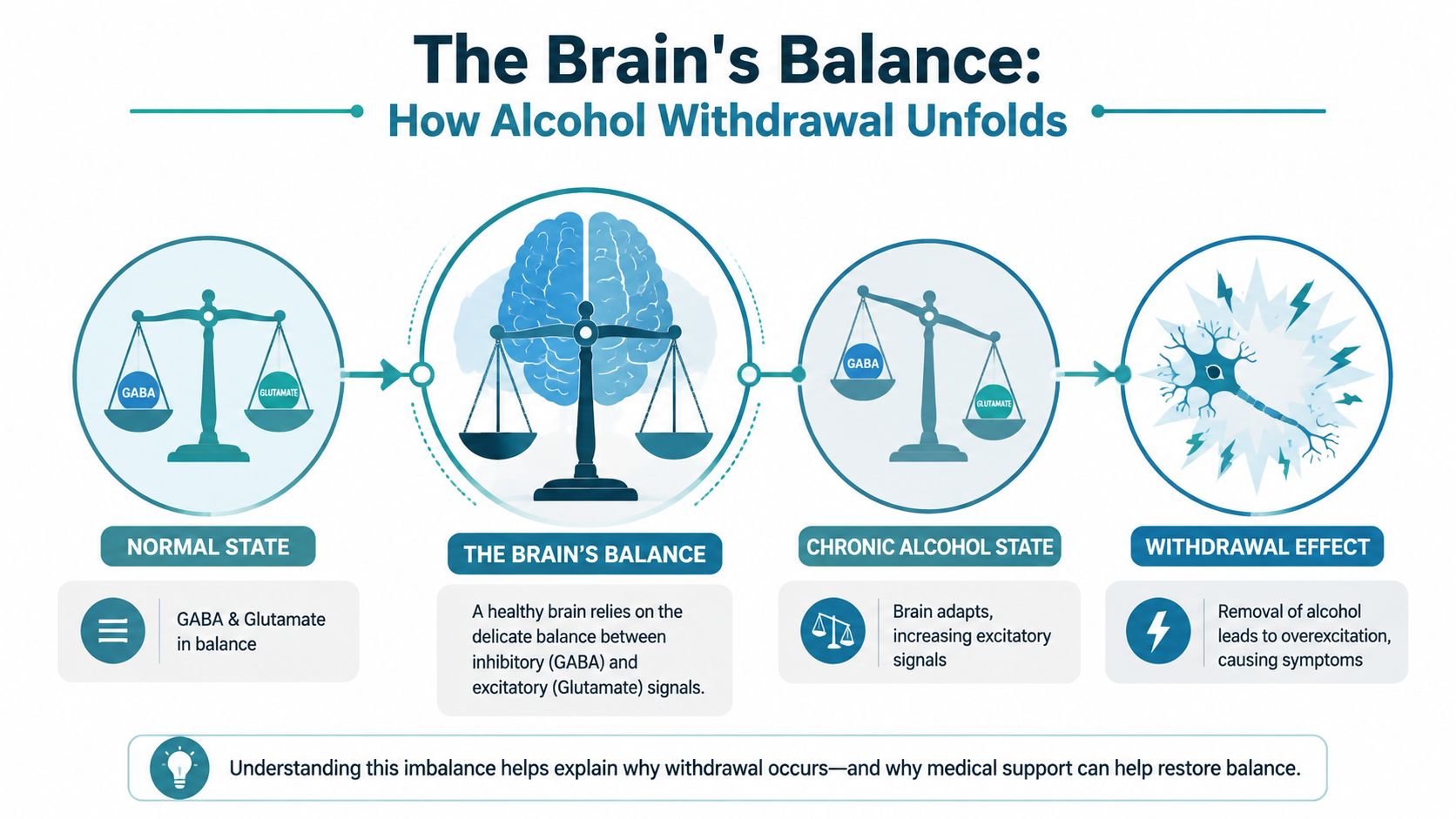
The brain's compensating response
Two neurotransmitter systems are especially useful for understanding the process:
- GABA is an inhibitory neurotransmitter. It helps reduce neuronal activity.
- Glutamate is an excitatory neurotransmitter. It helps promote alertness and signaling between nerve cells.
A useful analogy is a car traveling with the accelerator and brake continuously adjusted to counterbalance one another. Alcohol acts like a strong brake on some brain activity. Over time, the brain adapts by reducing its response to inhibitory effects and increasing excitatory drive. While alcohol remains present, that compensation may be partly hidden.
When alcohol is suddenly removed, the brake disappears before the compensatory acceleration has settled. The result is central nervous system hyperexcitability, which can feel like tremor, anxiety, agitation, sweating, insomnia, or a racing pulse. The same rebound can become more serious when it affects attention, perception, or electrical activity in the brain.
This mechanism helps explain why withdrawal can include both ordinary-seeming symptoms and emergencies. Nausea and poor sleep may occur alongside autonomic activation, while hallucinations and seizures reflect more severe neurologic disturbance. The manifestations aren't separate unrelated problems. They can arise from the same destabilized nervous system.
Alcohol withdrawal also differs from other substance-related syndromes. For example, the symptoms, risks, and treatment decisions in opioid withdrawal manifestations follow a different clinical pattern. A person shouldn't assume that advice for one substance applies safely to another.
Timeline of Alcohol Withdrawal Manifestations
A person may go to bed feeling restless and wake with shaking, sweating, nausea, and a racing pulse. By the next day, the same withdrawal process may affect perception or trigger a seizure. The timeline below is a vigilance guide, not a prediction tool. Symptoms can overlap, begin earlier or later, and intensify quickly. The National Center for Biotechnology Information overview of alcohol withdrawal describes early central nervous system excitation and adrenergic hyperactivity as typically occurring within 6 to 36 hours, while withdrawal delirium usually emerges within 48 to 96 hours.
| Time since last drink | Typical manifestations | Severity indicators |
|---|---|---|
| About 6 to 36 hours | Anxiety, nervousness, tremor, sweating, insomnia, nausea, vomiting, irritability, increased pulse, and increased blood pressure | Worsening tremor, rapidly increasing pulse or blood pressure, repeated vomiting, inability to take fluids, or marked agitation |
| About 6 to 48 hours | Neurologic hyperexcitability, including tremulousness and, in some people, seizures | Any seizure is an emergency. Seizures may cluster over several hours and can occur without other severe symptoms |
| About 12 to 24 hours | Hallucinations may occur, including visual, auditory, or tactile experiences | Hallucinations require urgent medical assessment, especially when paired with agitation, abnormal vital signs, or impaired attention |
| About 48 to 96 hours | Severe withdrawal may progress to delirium tremens, with confusion, disorientation, agitation, fever, hallucinations, and marked autonomic instability | Delirium, fluctuating attention, severe confusion, fever, unstable vital signs, or inability to stay awake require emergency care |
How to read the time windows
The ranges overlap because alcohol withdrawal does not follow a rigid clock. Early symptoms can start within 6 to 8 hours in some people, while other manifestations may appear later. Symptoms can be most intense during the first several days, and sleep or mood symptoms may continue longer.
Seizures most often occur within 6 to 48 hours after cessation, although this period can overlap with other manifestations. Hallucinations may appear relatively early without indicating delirium tremens. A person can remain oriented during hallucinations. Delirium includes impaired attention, confusion, and disorientation.
The pattern matters more than a perfect match with a time box. Early autonomic symptoms, such as sweating and increased pulse, show nervous system activation. A shift toward seizure, hallucination, severe agitation, confusion, fever, or unstable vital signs indicates a more dangerous change and calls for prompt medical escalation.
Distinguishing Mild Symptoms from Dangerous Complications
A person may begin with shaking hands, sweating, anxiety, poor sleep, nausea, or irritability, then worsen as the nervous system becomes more excitable. Because early and dangerous manifestations can overlap, self-triage is unreliable. The key question is whether symptoms remain mainly autonomic or progress toward neurologic and mental-status changes.
A practical comparison
| More common early manifestations | Dangerous changes |
|---|---|
| Tremor or shakiness | Seizure |
| Anxiety, irritability, or restlessness | Hallucinations or severe agitation |
| Sweating and insomnia | Severe confusion or disorientation |
| Nausea or vomiting | Fever or unstable vital signs |
| Increased pulse or blood pressure | Inability to stay awake or inability to take fluids |
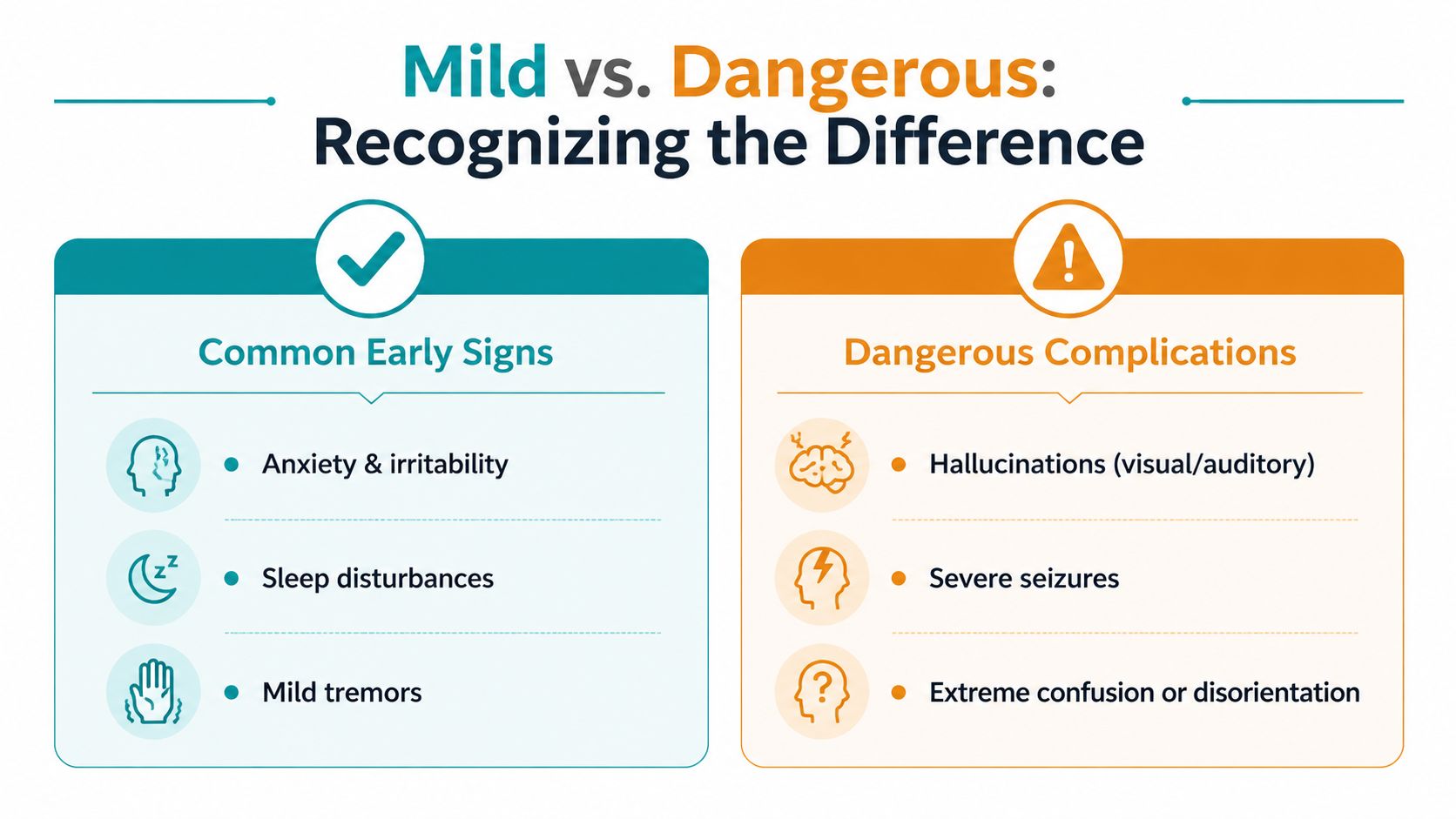
Early autonomic symptoms reflect the body's stress response. Anxiety, irritability, difficulty concentrating, sweating, and disrupted sleep can occur together. Confusion is different from anxiety. Hallucinations, disorientation, fluctuating attention, severe agitation, or inability to stay awake indicate a dangerous neuropsychiatric change and should not be watched casually at home.
Seizures require emergency evaluation. They can occur during the early withdrawal window, may recur over several hours, and warrant medical assessment even if the person seems to recover afterward.
Why delirium tremens demands urgent care
Delirium tremens, or withdrawal delirium, is a severe form of withdrawal marked by confusion, disorientation, agitation, fever, hallucinations, and substantial autonomic instability. It generally appears around 72 hours after cessation and affects approximately 3% to 5% of patients. A peer-reviewed review in the National Library of Medicine reports that mortality can reach 1% to 4% even with treatment and may be as high as 50% without prompt recognition.
Do not wait for every warning sign to appear. Call 911 or seek emergency care for a seizure, hallucinations, severe confusion, rapidly worsening agitation, fever, unstable vital signs, chest pain, severe vomiting, or inability to stay awake. Naloxone education explains opioid overdose safety. Naloxone does not treat alcohol withdrawal.
Risk Factors That Increase Withdrawal Severity
Risk assessment should happen before someone stops drinking, when possible. Clinical guidance from the American Society of Addiction Medicine identifies factors that can increase concern about severe or complicated withdrawal. These factors don't diagnose withdrawal, and one absent factor doesn't make unsupervised cessation safe.
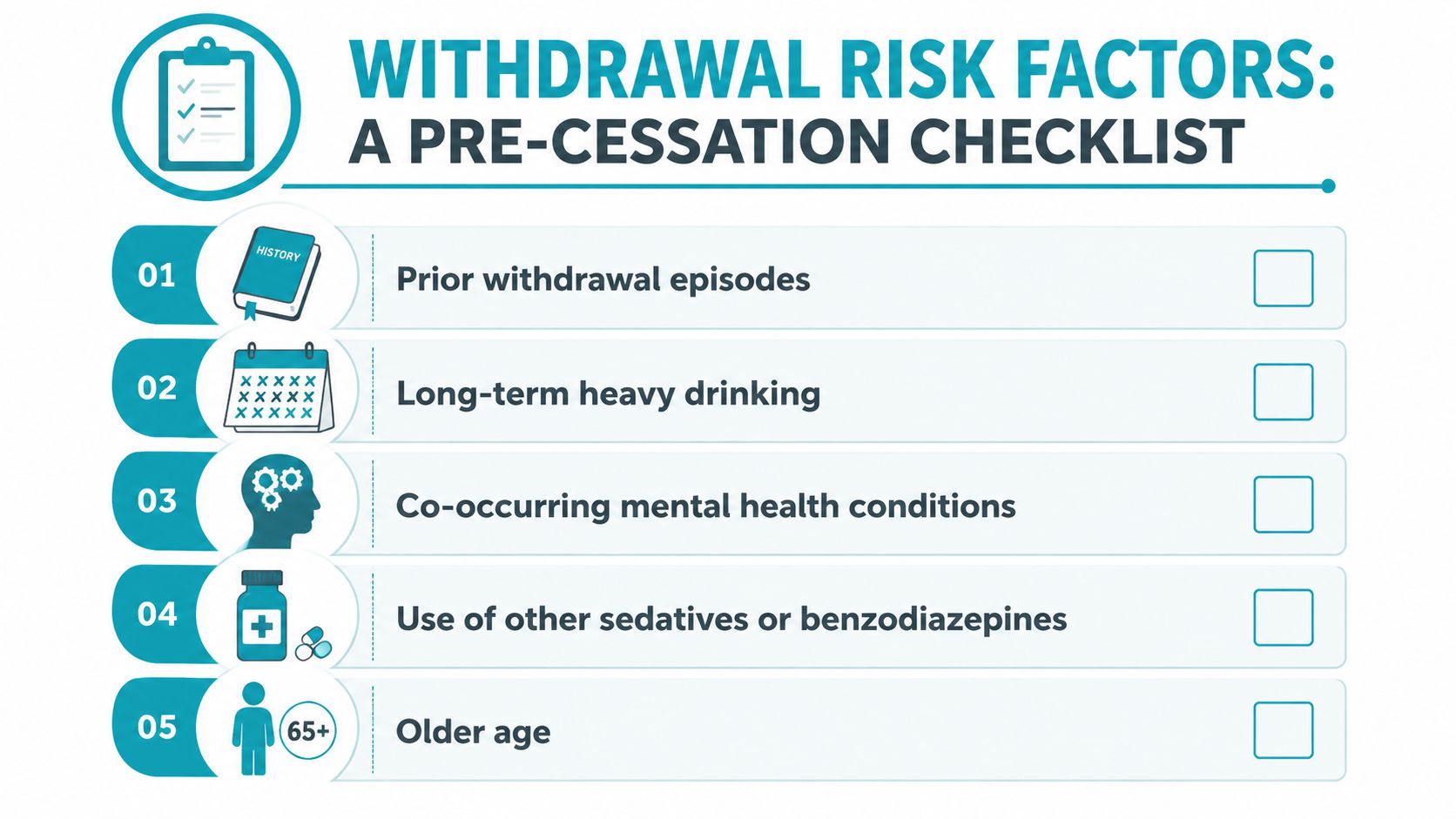
Pre-withdrawal questions to discuss with a clinician
- Prior withdrawal complications: A previous withdrawal seizure or episode of delirium is a major reason to seek medical assessment before stopping.
- Repeated withdrawal episodes: Multiple cycles of stopping and restarting may change future withdrawal responses and increase clinical concern.
- Heavy or prolonged alcohol use: A longer or more intensive pattern of use can increase the likelihood of physiologic dependence.
- Other sedatives: Concurrent use of benzodiazepines or other sedatives can complicate symptoms and medical decisions. Don't combine substances to manage withdrawal.
- Medical or psychiatric illness: Significant co-occurring conditions can alter presentation, monitoring needs, and the safest level of care.
- Older age or pregnancy: These circumstances require individualized medical planning rather than generic online guidance.
- Abnormal vital signs: A high pulse, increased blood pressure, fever, or other instability may signal more than mild withdrawal.
- Inability to take fluids: Persistent vomiting, dehydration, or inability to maintain hydration increases concern.
- Limited support: Being alone or lacking reliable help can make outpatient monitoring unsafe if symptoms escalate.
Why the history matters
The first hours may not reveal the full risk. A person can be awake and oriented while still approaching the period when seizures, hallucinations, or delirium may develop. Repeated prior episodes, medical illness, sedative exposure, and limited support all affect the level of observation a clinician may consider appropriate.
Mental health symptoms also deserve careful attention. Depression, anxiety, trauma-related symptoms, or suicidal thoughts may complicate withdrawal and require separate evaluation. Adult mental health evaluation is not a substitute for emergency withdrawal care, but co-occurring concerns should be disclosed during medical assessment.
Withdrawal management should connect to ongoing treatment for alcohol use disorder. Treating the acute syndrome without addressing cravings, triggers, health effects, and continuing care can leave the underlying condition unaddressed.
Assessment Priorities and Safe Care Pathways
Safe care begins with determining whether the person is experiencing mild symptoms, a potentially escalating syndrome, or an emergency. A clinician may review alcohol-use history, prior withdrawal episodes, other substances, medical conditions, medications, mental health symptoms, hydration, support, vital signs, and changes in orientation.
Structured assessment can make this process more consistent. The CIWA-Ar, or Clinical Institute Withdrawal Assessment for Alcohol, is the best-known symptom scoring instrument used in practice to quantify features such as nausea, tremor, sweating, anxiety, agitation, and orientation changes. The National Center for Biotechnology Information reference on CIWA-Ar describes its role in structured severity assessment.
What professional assessment adds
Unmonitored observation asks a person or family member to interpret symptoms while the condition may be changing. Physician-led assessment instead creates a framework for:
- Identifying risk before symptoms intensify. History and current findings can reveal concerns that aren't obvious from tremor or anxiety alone.
- Checking for complications. Vital signs, hydration, neurologic status, and mental status help distinguish discomfort from instability.
- Choosing an appropriate setting. Some people may be evaluated in an outpatient setting, while severe or high-risk presentations may require emergency or inpatient care.
- Escalating promptly. A plan should specify what changes require emergency services rather than asking someone to wait and see.
- Connecting acute care with ongoing treatment. Withdrawal management is an entry point to treatment for alcohol use disorder, not the complete treatment itself.
No screening score can guarantee that severe withdrawal won't develop. Symptoms may evolve between assessments, and a person's ability to remain oriented, hydrated, and safely observed matters. Outpatient care is therefore appropriate only when a qualified clinician determines that the setting and monitoring plan fit the person's clinical circumstances.
When to use emergency care
Call 911 or go to the nearest emergency department for:
- A seizure, loss of consciousness, or inability to stay awake
- Hallucinations, severe confusion, disorientation, or fluctuating attention
- Severe agitation that is escalating or difficult to manage safely
- Fever, markedly unstable vital signs, chest pain, or severe breathing symptoms
- Repeated vomiting, inability to take fluids, or signs of serious dehydration
- Any rapidly worsening withdrawal symptoms or concern that the person may harm themselves or someone else
Don't drive an impaired or actively seizing person yourself. Keep the environment as safe as possible while waiting for emergency responders, and tell them when the person last drank and whether other substances or medications may be involved. Don't attempt to manage severe withdrawal with alcohol, someone else's medication, or an improvised taper.
Empire Medical Wellness provides confidential, physician-led outpatient addiction medicine evaluation, monitoring, recovery planning, and coordination with outside clinicians or treatment programs when clinically useful and authorized. The practice serves adults physically located in New York, New Jersey, Connecticut, Pennsylvania, and Virginia, and it does not provide emergency care, inpatient detoxification, residential treatment, or hospital-level withdrawal management. Adults considering physician-led support can review the addiction medicine specialist service, while anyone with red flags should use emergency services first.
Empire Medical Wellness offers confidential outpatient addiction medicine assessment, monitoring, recovery planning, and coordination for adults who want physician-led support around alcohol use and continuing care. Visit Empire Medical Wellness to learn about the practice and determine whether an outpatient evaluation is an appropriate next step.
Byline: Empire Medical Wellness Editorial Team
Published: August 24, 2026
Updated: August 24, 2026
Sources
- National Center for Biotechnology Information overview of alcohol withdrawal
- National Center for Biotechnology Information review of severe alcohol withdrawal
- National Center for Biotechnology Information clinical overview of alcohol withdrawal
- PubMed review of alcohol withdrawal complications
- MedlinePlus alcohol withdrawal reference
This article is educational and isn't personal medical advice.