
Tirzepatide is a once-weekly injectable medication FDA-approved as Mounjaro for adults with type 2 diabetes and as Zepbound for chronic weight management, working through dual GIP and GLP-1 receptor activation. For obesity treatment, the FDA-supported program included 3,477 participants across two randomized, placebo-controlled trials, including 2,519 people who received tirzepatide over 72 weeks. FDA review data
Those facts explain why tirzepatide has attracted so much attention, but they don't answer every practical question. The brand name, indication, dose escalation, expected benefits, contraindications, side effects, and long-term maintenance plan all matter. A careful discussion also distinguishes what the medication is approved to treat from results that remain investigational or population-specific.
Table of Contents
- What Tirzepatide Is and Why It Matters
- How the Dual GIP and GLP-1 Mechanism Works
- Clinical Evidence for Diabetes and Weight Management
- FDA-Labeled Dosing and Administration Basics
- Safety Profile and Monitoring Considerations
- Common Misconceptions About Candidacy and Results
- How Physician-Led Care Supports Safe Use
- Frequently Asked Questions About Tirzepatide
What Tirzepatide Is and Why It Matters
Tirzepatide is the active molecule in both Mounjaro and Zepbound. The products share the same medication, but their FDA-approved indications differ. Mounjaro is approved for adults with type 2 diabetes. Zepbound is approved for chronic weight management in adults with obesity, defined as a BMI of 30 kg/m² or greater, or adults with overweight, defined as a BMI of 27 kg/m² or greater, when at least one weight-related condition is present. The FDA specifies that Zepbound should be used with reduced-calorie eating and increased physical activity. FDA announcement for Zepbound
The regulatory timeline developed quickly. The FDA approved Mounjaro on May 13, 2022, then approved Zepbound on November 8, 2023 for chronic weight management. That progression doesn't mean the two brands are interchangeable for every person or purpose. It means the same dual-receptor medication gained a second FDA-approved cardiometabolic indication after additional evidence in people with obesity or overweight.
People researching private, physician-led obesity care often want a direct answer to a simple question: “Is tirzepatide a weight-loss drug or a diabetes drug?” The accurate answer is that the medication has two FDA-approved brand-specific uses. The appropriate product and treatment discussion depend on the diagnosis, health history, other medications, and the indication being considered.
A physician-led obesity medicine evaluation can place the medication in context rather than treating a scale reading as the entire clinical picture. The relevant conversation includes candidacy, safety, eating and activity patterns, comorbidities, monitoring, response, tolerability, and what happens after initial progress.
How the Dual GIP and GLP-1 Mechanism Works
Tirzepatide is called a dual GIP and GLP-1 receptor agonist because it activates two incretin pathways. GIP stands for glucose-dependent insulinotropic polypeptide. GLP-1 stands for glucagon-like peptide-1. These naturally occurring hormonal signals help coordinate the body's response to food, including insulin signaling, appetite regulation, and gastrointestinal function.
A useful analogy is a two-channel control system. One channel influences glucose-dependent insulin secretion, while the other contributes to appetite and digestive signaling. The medication doesn't “burn fat.” It changes several connected signals involved in blood sugar regulation and food intake. The effects are glucose-dependent, which is one reason the clinical context and concurrent glucose-lowering therapies matter.
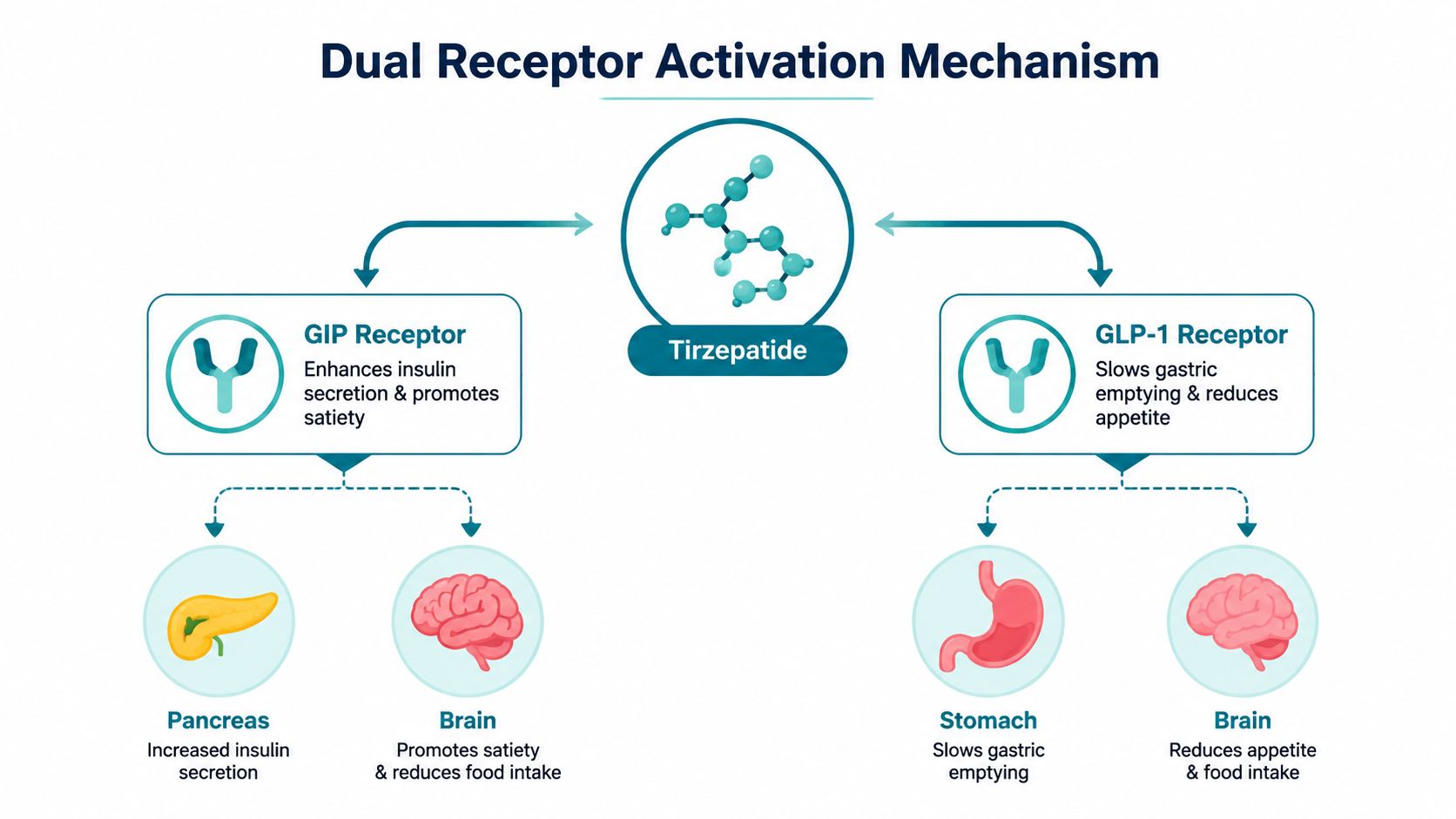
The practical experience also reflects tirzepatide's pharmacokinetics. The medication reaches its maximum plasma concentration at a median of 24 hours, with a range of 8 to 72 hours, and its elimination half-life is approximately 5 to 6 days. Its absolute bioavailability is about 80%, and steady-state exposure develops after about 4 weeks of weekly administration. Current FDA prescribing information
That prolonged exposure supports a once-weekly subcutaneous injection rather than daily administration. It also explains why a patient and clinician generally evaluate tolerability and response over time instead of judging the entire treatment from a single dose or isolated day.
People sometimes describe tirzepatide as “a stronger GLP-1.” That shorthand is incomplete. Tirzepatide does activate the GLP-1 receptor, but it also activates the GIP receptor. The distinction matters because the medication's evidence, labeling, and monitoring should be understood as a dual-pathway treatment, not as an interchangeable version of every single-target GLP-1 medication. A GLP-1 treatment overview can help clarify the broader medication class while keeping product-specific decisions tied to FDA labeling.
Clinical Evidence for Diabetes and Weight Management
The evidence needs to be separated by indication. Diabetes trials evaluate glucose control in people with type 2 diabetes, while obesity trials evaluate weight and related outcomes in people who may not have diabetes. A result from one population shouldn't automatically be presented as a guaranteed result for another.
| Brand Name | FDA-Approved Indication | Key Supporting Trial | Notable Efficacy Threshold |
|---|---|---|---|
| Mounjaro | Adults with type 2 diabetes | Diabetes development program | Demonstrated clinically meaningful glucose-lowering efficacy in the population studied |
| Zepbound | Chronic weight management in adults with obesity, or overweight with at least one weight-related condition | SURMOUNT-1 and FDA-reviewed obesity trials | In one FDA trial table, 70.6% of participants in the highest-dose arm reached at least 15% weight loss, compared with 2.7% receiving placebo at Week 72 |
The landmark SURMOUNT-1 trial enrolled 2,539 adults with obesity or overweight and at least one weight-related complication, without type 2 diabetes. Participants received tirzepatide at 5 mg, 10 mg, or 15 mg, or placebo, and outcomes were assessed over 72 weeks. In the highest-dose group, average body-weight reduction was roughly 20% to 22.5%, depending on the analysis and reporting. SURMOUNT-1 in the New England Journal of Medicine
Those findings changed expectations about what medication-assisted obesity treatment can accomplish. The trial also showed why threshold outcomes are useful. A person doesn't need to reach a particular percentage for treatment to have value, but the share reaching clinically meaningful thresholds helps researchers and clinicians understand the medication's potential across a study population.
The FDA's obesity evidence included two randomized, double-blind, placebo-controlled trials with 3,477 total participants over 72 weeks, including 2,519 tirzepatide recipients and 958 placebo recipients. These were controlled studies, and participants used the medication within a broader weight-management approach. Individual outcomes can differ because of medical history, dose tolerability, adherence, eating patterns, activity, concurrent medications, and the duration of treatment.
Tirzepatide also shouldn't be compared with semaglutide using a single headline number from separate studies. Direct head-to-head evidence has shown stronger weight and waist reduction with tirzepatide than semaglutide in the studied population, but treatment selection still requires attention to indication, contraindications, tolerability, access, and patient preference. Readers considering the broader options for medication can review semaglutide and obesity treatment as a separate therapeutic discussion.
FDA-Labeled Dosing and Administration Basics
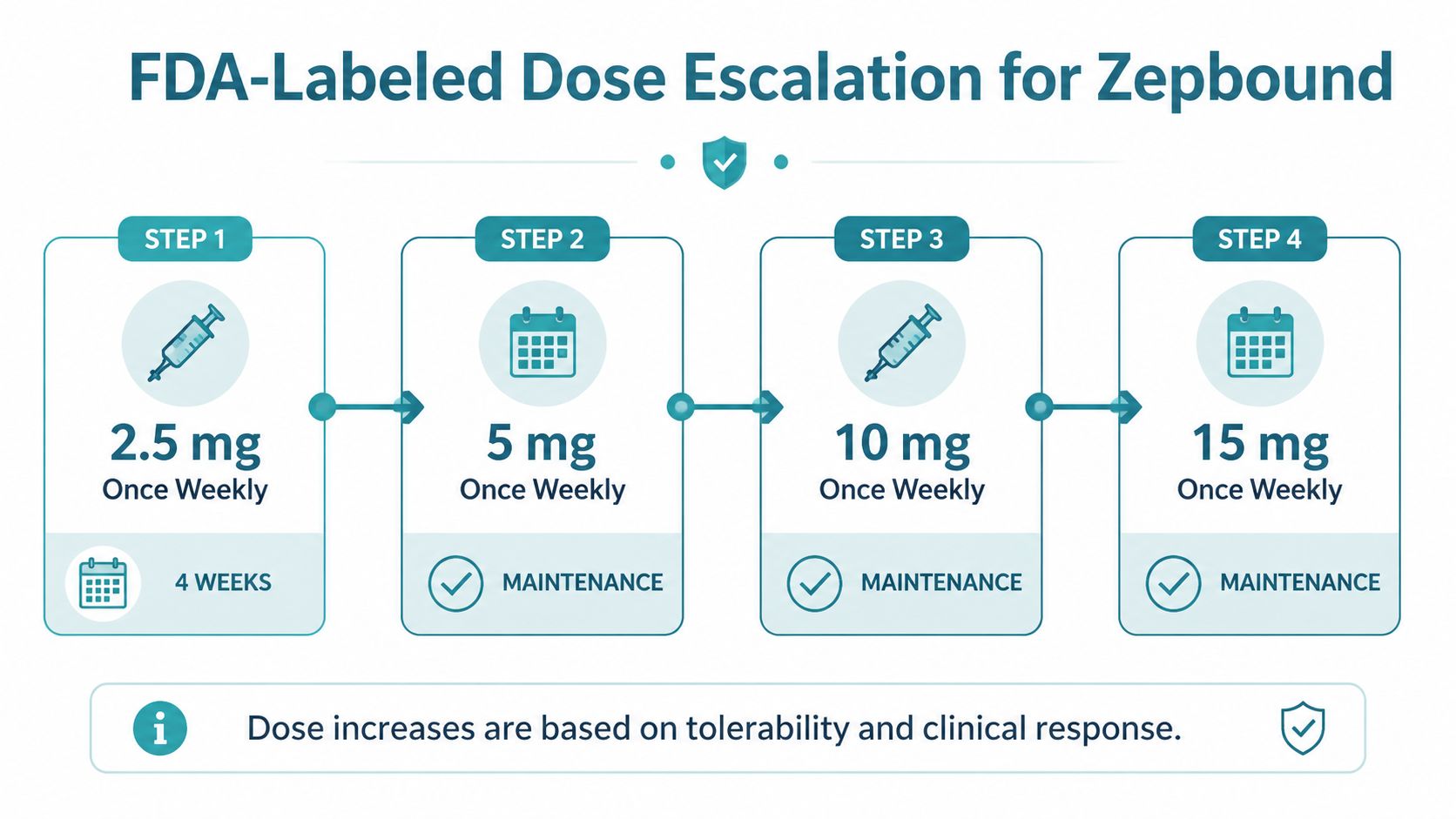
For Zepbound, the FDA label describes a gradual dose ladder. Treatment starts at 2.5 mg once weekly for 4 weeks, then increases over 4 to 20 weeks to a maintenance dose of 5 mg, 10 mg, or 15 mg once weekly. The maximum approved dose is 15 mg weekly. Current Zepbound prescribing information
The starting dose is used for treatment initiation and tolerability rather than as a maintenance target. Dose changes aren't a reason for a patient to self-adjust. A prescriber considers gastrointestinal symptoms, other adverse effects, response, concurrent medications, and the clinical indication before determining whether and when an increase is appropriate.
Zepbound is administered by subcutaneous injection. The FDA instructions address injection technique, storage, missed doses, and product handling. Patients should use the Medication Guide and the instructions supplied with the exact prescribed product rather than relying on generalized online dosing charts.
The same active molecule is marketed as Mounjaro for its diabetes indication, so readers should avoid treating a Mounjaro schedule and a Zepbound schedule as interchangeable instructions for personal use. A Mounjaro dosage guide may provide general product context, but an individual's prescription and instructions must come from the clinician managing that person's care.
An important practical point is that the medication's long half-life means changes may not be experienced as an immediate on-off event. That doesn't justify unsupervised changes. It supports a measured follow-up process, especially when symptoms emerge after initiation or escalation.
Safety Profile and Monitoring Considerations
Tirzepatide's most familiar adverse effects involve the gastrointestinal system. Nausea, diarrhea, vomiting, constipation, decreased appetite, and abdominal discomfort can occur, particularly as the body adjusts or after a dose increase. “Common” doesn't mean symptoms should be ignored. Persistent symptoms can lead to dehydration, poor nutrition, medication intolerance, or a need to reassess the treatment plan.
The FDA labeling also identifies more serious risks and warnings. These include pancreatitis, gallbladder disease, severe gastrointestinal reactions, kidney injury related to volume depletion, hypoglycemia when used with certain diabetes medications, hypersensitivity reactions, and risks related to aspiration during anesthesia or deep sedation. Pregnancy requires prompt clinician discussion because weight loss offers no benefit during pregnancy and may cause fetal harm.
Common symptoms versus urgent warning signs
| Situation | What it may look like | Appropriate response |
|---|---|---|
| Common and often transient | Nausea, diarrhea, constipation, reduced appetite, or mild digestive discomfort | Report persistent or troublesome symptoms to the prescribing clinician |
| Serious concern | Severe or ongoing abdominal pain, repeated vomiting, inability to maintain fluids, or symptoms suggesting gallbladder or pancreatic disease | Seek prompt medical evaluation |
| Contraindication or major warning | Personal or family history of medullary thyroid carcinoma, or a personal history of MEN2 | Tell the clinician before treatment is considered |
Zepbound is contraindicated in people with a personal or family history of medullary thyroid carcinoma or in people with multiple endocrine neoplasia syndrome type 2. The FDA Medication Guide also includes a boxed warning related to thyroid C-cell tumors observed in rats. Patients shouldn't interpret every thyroid diagnosis as equivalent, but they should disclose the exact history so a clinician can determine its relevance.
Monitoring is individualized. A clinician may review weight trajectory, waist measurement, blood pressure, glucose-related data, hydration, gastrointestinal tolerance, medication interactions, eating patterns, and activity. Relevant laboratory testing depends on the patient's medical history and concurrent treatments. Follow-up endpoints should include tolerability, functional change, treatment goals, adherence, safety signals, and whether the medication remains appropriate. More detail is available in this Mounjaro side-effects guide.
Urgent warning: Severe, persistent, or rapidly worsening symptoms deserve medical attention. Don't wait for a routine follow-up if you believe you may be experiencing an emergency.
Common Misconceptions About Candidacy and Results
A single number doesn't determine candidacy. BMI is part of the FDA-approved eligibility framework for Zepbound, but the label also requires attention to weight-related conditions for adults with overweight. A physician still needs to understand the person's medical history, current medications, eating and activity patterns, prior treatment, and safety risks.
The opposite mistake is assuming that one symptom or lab value rules a person in. A diagnosis of diabetes, prediabetes, hypertension, or another condition may be clinically relevant, but it doesn't replace a full evaluation. The medication's approved indication and the patient's actual diagnosis must match.
A hypothetical example
Hypothetical example, not an Empire patient: An adult meets the weight-related criteria for a discussion about chronic weight management but reports that a close family member had medullary thyroid carcinoma. The next step isn't to focus on a desired dose or predicted result. The clinician would first clarify the family history and assess the FDA contraindication before considering tirzepatide.
That example illustrates a broader principle. The pathway moves from approved indication and comorbidities, to contraindications and interacting therapies, to label-based initiation and titration, and then to response, tolerability, and red-flag review. A concerning history can redirect the conversation before treatment begins.
Another misconception is that medication replaces lifestyle care. The FDA specifically describes Zepbound as an adjunct to reduced-calorie eating and increased physical activity. That doesn't mean weight is a test of virtue or that obesity reflects a lack of effort. It means medication works within a broader plan that can address nutrition, movement, sleep, medical conditions, eating behavior, and long-term maintenance.
Trial results describe groups, not promises to individuals. The SURMOUNT-1 findings are meaningful evidence, but a patient's response may be greater, smaller, slower, or limited by tolerability. A responsible consultation makes room for uncertainty instead of presenting a study outcome as a personal forecast.
How Physician-Led Care Supports Safe Use
A thoughtful obesity medicine evaluation starts with the indication, not the medication name. The clinician confirms whether the patient is seeking treatment for an FDA-approved purpose, reviews weight history and related health conditions, and considers whether a different intervention may be more appropriate.
What the initial review may include
- Medical history: Thyroid cancer history, endocrine disorders, gastrointestinal disease, pancreatitis, gallbladder problems, kidney concerns, pregnancy possibility, and prior medication reactions.
- Medication and substance review: Diabetes medications, insulin or insulin secretagogues, oral contraceptives, supplements, alcohol, and other substances that may affect safety or symptom interpretation.
- Measurements: Weight, BMI, waist circumference, blood pressure, pulse, and relevant changes in function or health.
- Laboratory context: Existing glucose-related, kidney, liver, or other testing when clinically relevant. The specific tests depend on the patient's history, symptoms, and medications.
- Shared decisions: What outcome matters to the patient, what side effects would be unacceptable, how injections fit daily life, and what a maintenance plan could look like if treatment is effective.
The clinician then uses the FDA label as the framework for initiation and escalation, while allowing tolerability and clinical response to shape decisions. The review doesn't end after the prescription. Follow-up considers digestive symptoms, hydration, appetite, eating adequacy, glucose-related concerns, changes in measurements, medication adherence, and any new red flags.

Questions worth bringing to a consultation
- Does my diagnosis fit an FDA-approved indication for this product?
- Does my personal or family history raise a contraindication or warning?
- Which current medications, supplements, or substances need special attention?
- How will we judge tolerability and meaningful response?
- What symptoms should prompt a same-day call or urgent evaluation?
- What is the plan if the medication works, stops working, or is discontinued?
This approach differs from selecting a dose from an online chart. It treats tirzepatide as one component of medical care, with documentation, informed consent, safety review, and follow-up customized to the adult receiving treatment.
Frequently Asked Questions About Tirzepatide
Does tirzepatide have to continue indefinitely?
Not necessarily for every person, but the long-term decision isn't settled by a short initial response. Evidence indicates that continuing tirzepatide helps maintain weight loss and related health benefits, while weight regain can occur after discontinuation. A 2025 review found that long-term patient-important outcomes and withdrawal evidence remain limited, so maintenance planning should be individualized rather than reduced to “stay on it forever” or “stop as soon as the goal is reached.” Maintenance evidence summary
Can tirzepatide help prevent type 2 diabetes?
In adults with obesity and prediabetes, three years of treatment substantially reduced progression to type 2 diabetes in the evidence summarized by the supplied peer-reviewed source. That finding is clinically relevant, but it doesn't make tirzepatide a universal prevention medication or replace assessment of glucose status, cardiovascular risk, eating patterns, activity, and other prevention strategies. Peer-reviewed diabetes prevention evidence
Do genetic differences affect response?
Emerging analyses suggest benefits may extend to people with MC4R deficiency, but this remains a nuanced area of developing evidence. Genetic findings don't establish candidacy by themselves, and they shouldn't be used to predict an individual's response without appropriate clinical context.
Is tirzepatide automatically better than semaglutide?
Head-to-head trial data showed stronger weight and waist reduction with tirzepatide in the studied comparison. “Better” still depends on the approved indication, contraindications, tolerability, concurrent treatment, patient preferences, and the goals being measured.
Empire Medical Wellness provides private-pay, physician-led obesity medicine care for adults, including medical assessment, individualized weight-management planning, medication discussions when clinically appropriate, monitoring, and long-term maintenance planning. Visit Empire Medical Wellness to learn how to discuss tirzepatide and other evidence-based options with the practice.
Byline: Empire Medical Wellness Editorial Team
Published: August 24, 2026
Updated: August 24, 2026
Sources
- U.S. FDA Zepbound prescribing information
- U.S. FDA Mounjaro pharmacokinetic information
- U.S. FDA approval announcement for chronic weight management
- SURMOUNT-1 trial in the New England Journal of Medicine
This article is educational and isn't personal medical advice.