
Yes, buprenorphine/naloxone, sold as Suboxone, can cause drowsiness in some people, but fatigue also has other causes. Feeling tired doesn't automatically mean the medication is wrong or that treatment has failed.
A person can feel sleepy after medication and still have disrupted nighttime sleep. The useful distinction is between sleepiness, which means difficulty staying alert, and fatigue, which means low energy or exhaustion. Mapping those symptoms against medication timing, sleep, other substances, and health changes helps a prescriber assess what needs attention.
Table of Contents
- Why Suboxone Can Cause Drowsiness in Some People
- What Else Can Cause Tiredness on Suboxone
- Mild Tiredness Versus Dangerous Sedation
- Alcohol, Sedatives and Other Medicines That Add Drowsiness
- Tracking Fatigue Patterns Over Time
- Talk to Your Prescriber Before Changing Anything
Why Suboxone Can Cause Drowsiness in Some People
Suboxone contains buprenorphine, a partial opioid agonist, and naloxone, an opioid antagonist. An agonist activates a receptor; an antagonist blocks it. Buprenorphine acts on opioid receptors to help treat opioid use disorder, while naloxone is included to discourage misuse by injection.
“Partial” means buprenorphine has a ceiling on some opioid effects compared with full opioid agonists. It does not mean that excessive sedation or dangerous breathing problems are impossible, particularly when other sedating substances are involved.
Why alertness can change
Buprenorphine affects the central nervous system, meaning the brain and spinal cord. Those effects can include drowsiness, dizziness, lightheadedness, and slower reactions. Sleepiness may become more noticeable when treatment begins or a prescribed dose changes.
The SAMHSA clinical guidance hosted by the National Library of Medicine records that the FDA approved buprenorphine for maintenance treatment and medically supervised withdrawal on October 8, 2002. Its effects have been monitored for years, but that history doesn't predict how sleepy a particular person will feel.
Trial percentages describe participants in particular treatment groups. They aren't a personal forecast because dose, other medications, health conditions, and study design differ.
Practical distinction: A recognized side effect is something to assess, not something a person must simply tolerate.
What the treatment context adds
The question “Does Suboxone make you tired?” is most useful when paired with another: what changed around the time the tiredness began? Information about opioid use disorder and medical care can help place medication effects within the broader treatment picture.

The practice doesn't publish a patient percentage for fatigue or drowsiness. No practice-specific incidence estimate is offered here.
What Else Can Cause Tiredness on Suboxone
Fatigue is like a smoke alarm: it signals that something needs checking, but it doesn't identify the cause. A person's medication, sleep, mood, withdrawal symptoms, and physical health may all deserve review.
SAMHSA's buprenorphine treatment guidance supports assessing sedation in context, especially concurrent alcohol, benzodiazepines, and other central nervous system depressants. Persistent tiredness also calls for consideration of sleep problems and other medical or psychiatric conditions rather than automatic attribution to buprenorphine.
Fatigue patterns and what a clinician reviews
These patterns help organize a conversation. None establishes a diagnosis or proves that a dose is too high or too low.
| Pattern you notice | Factors to review with a clinician | Why it matters |
|---|---|---|
| Sleepy one to four hours after a dose | Dose timing and recent dose changes | Points toward possible medication-related sedation |
| Tired on waking, snoring, or witnessed breathing pauses | Sleep quality and possible sleep apnea | Sleep-disordered breathing can add to sedation |
| Fatigue with sweating, aches, or stomach upset | Withdrawal symptoms and dosing interval | May point to ongoing withdrawal rather than sedation |
| Low mood or loss of interest most days | Depression screening | Mood symptoms can affect energy independently |
| Fatigue with pale skin, cold intolerance, or other illness signs | Anemia, thyroid disease, and other medical causes | Medical causes need separate assessment |
| Sleepy after alcohol, a sleep aid, or another sedative | Medication and substance review | Additive central nervous system depression requires attention to interactions |
The timing window in the table is a monitoring cue, not a test for medication toxicity. A person who feels sleepy after a dose may also have slept poorly, taken another sedating medicine, or developed an unrelated illness.
Likewise, sweating or stomach upset doesn't establish withdrawal by itself. The prescriber considers the full symptom pattern, cravings, medication use, and clinical stability before drawing conclusions.
Sleepiness and poor sleep can coexist
A 2025 mixed-methods study of women stabilized on buprenorphine described participants' experiences of medication effects on both sleep and energy, including arranging dose timing around sleep. This small, population-specific study offers insight into patient experiences, not proof of a general pattern or a recommendation to change medication timing independently.
The distinction matters because ongoing fatigue shouldn't automatically be interpreted as treatment failure. Someone may have adequate control of opioid-related symptoms while still needing assessment for insomnia, sleep apnea, depression, or another source of exhaustion.
A symptom pattern can guide the assessment without determining the answer.
Mild Tiredness Versus Dangerous Sedation
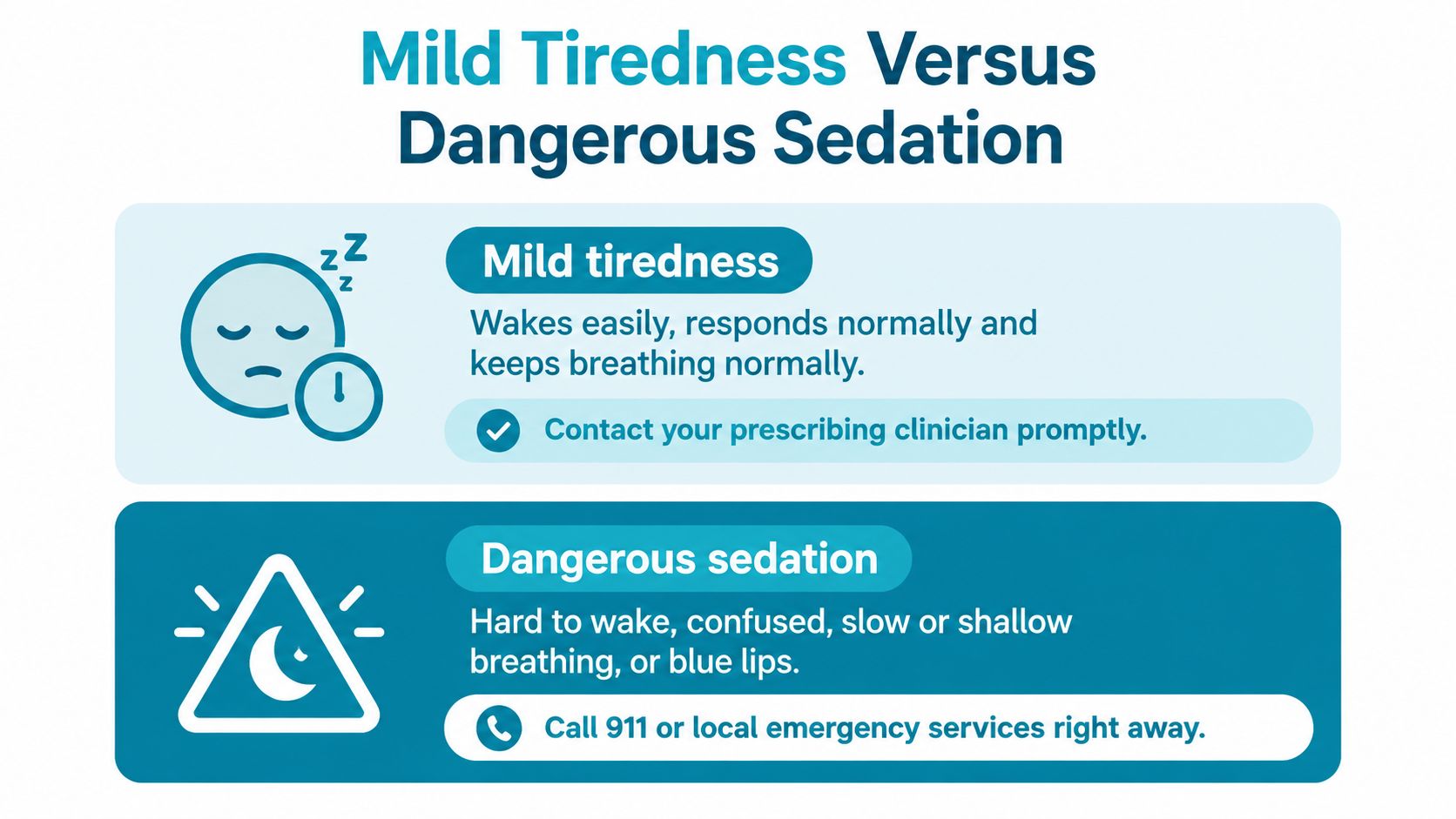
The most important distinction is whether a person can wake normally, respond appropriately, and breathe normally. Mild tiredness can warrant a prompt prescriber conversation; impaired waking or breathing requires emergency action.
The FDA prescribing information warns about sedation, impaired mental or physical abilities, and potentially life-threatening respiratory depression. Excessive sleepiness, confusion, fainting, poor coordination, or slowed breathing shouldn't be dismissed as ordinary adjustment.
Triage guide for sleepiness on buprenorphine/naloxone
| What you notice | Category | What to do |
|---|---|---|
| Tired but alert, responsive, and breathing normally | Mild tiredness | Contact the prescribing clinician promptly if new, worsening, or affecting daily life |
| Snoring with witnessed pauses in breathing | Prompt clinical review | Contact the prescribing clinician promptly; don't wait for it to pass |
| Confusion, fainting, or poor coordination | Urgent medical attention | Call 911 or seek emergency care now |
| Hard to wake or cannot stay awake | Emergency | Call 911; use an opioid-overdose reversal medicine if available |
| Slow or shallow breathing | Emergency | Call 911; use an opioid-overdose reversal medicine if available |
| Blue or gray lips or fingertips | Emergency | Call 911 immediately; use an opioid-overdose reversal medicine if available |
Witnessed breathing pauses during sleep need clinical assessment. If the person is currently difficult to wake, breathing abnormally, or changing color, the situation belongs in the emergency category instead.
What to do during a suspected overdose
- Call 911 immediately. Report difficulty waking, abnormal breathing, or blue or gray lips.
- Give an opioid-overdose reversal medicine if available. Naloxone is one example. Follow the product's instructions and the dispatcher's guidance.
- Stay with the person. Follow emergency instructions rather than assuming sleep will resolve the problem.
- Continue emergency care even after improvement. Symptoms can return after a reversal medicine wears off.
The current Suboxone label on DailyMed provides full prescribing and patient safety information; its effective date should be checked when reviewing it. General information about recognizing a drug overdose can support preparation, but reading a webpage must never delay emergency help.
Driving requires a separate safety decision. Patients shouldn't drive, operate machinery, or perform hazardous tasks until they know how Suboxone affects them. Someone who currently feels sleepy, dizzy, slowed, or poorly coordinated shouldn't drive, including to obtain medical care.
Alcohol, Sedatives and Other Medicines That Add Drowsiness
Sedating effects can add together. Buprenorphine combined with alcohol, benzodiazepines, or other central nervous system depressants can increase drowsiness and raise the risk of overdose and death.
A medication review needs more than a list of daily prescriptions. Occasional substances, nighttime products, and medications borrowed from someone else can change the safety picture.
What belongs on the medication and substance list
- Alcohol: Include occasional drinking, not just regular use.
- Benzodiazepines: Disclose prescribed and nonprescribed use.
- Sleep medications: Include products used only on difficult nights.
- Other opioids: Report prescription and nonprescribed substances.
- Sedating psychiatric medicines: Include medications prescribed by another clinician.
- Allergy medicines and sleep aids: Over-the-counter products can also cause drowsiness.
- Other nonprescribed substances: The prescriber needs an accurate list to assess interactions.
SAMHSA's buprenorphine information identifies drowsiness and fatigue as recognized effects of treatment. NIDA also identifies drowsiness and dizziness among buprenorphine effects, while other medicines, substances, and health conditions can affect alertness and coordination.
Why complete disclosure helps
The purpose of asking about substances is safety, not judgment. An incomplete list can make medication-related sedation look like a sleep problem or leave a dangerous interaction unrecognized.
Barbiturates are another class of sedating medicine. Information about barbiturate overdose risks may be relevant when one appears on a person's medication or substance list.
Medication review rule: A product doesn't become harmless because it's available without a prescription or used only occasionally.
Patients shouldn't independently start, stop, or combine medicines to counter sleepiness. The prescribing clinician needs the full list, including product names and actual use, before deciding whether any change is appropriate. That review is particularly useful when symptoms appear during treatment initiation or after a prescribed change.
Tracking Fatigue Patterns Over Time
One difficult afternoon is a single frame; a log shows the sequence around it. Tiredness becomes easier to interpret when it is mapped against dose timing, sleep, alcohol or other substances, mood, and medical symptoms.
SAMHSA's treatment guidance advises patients to report sedation or euphoria within one to four hours after a dose. The same guidance describes sedation as generally low when concurrent substances are absent and notes that common side effects often improve over time or can be addressed clinically, without promising a particular outcome.
A practical fatigue log
A two-week log can organize observations for a visit. New impairment, worsening sleepiness, or breathing concerns need attention sooner, so the log should never delay urgent reporting.
- Prescribed dose times: Record when each prescribed dose was taken.
- Tiredness timing: Note when symptoms began, ended, and affected alertness.
- Sleep duration and quality: Include awakenings and whether sleep felt restorative.
- Breathing observations: Record snoring or pauses witnessed by another person.
- Alcohol and other substances: Include occasional use and timing.
- Other medicines: List prescriptions, allergy products, and over-the-counter sleep aids.
- Withdrawal-type symptoms: Note sweating, aches, stomach upset, or cravings.
- Mood and daily function: Record low mood, loss of interest, and effects on work or other activities.
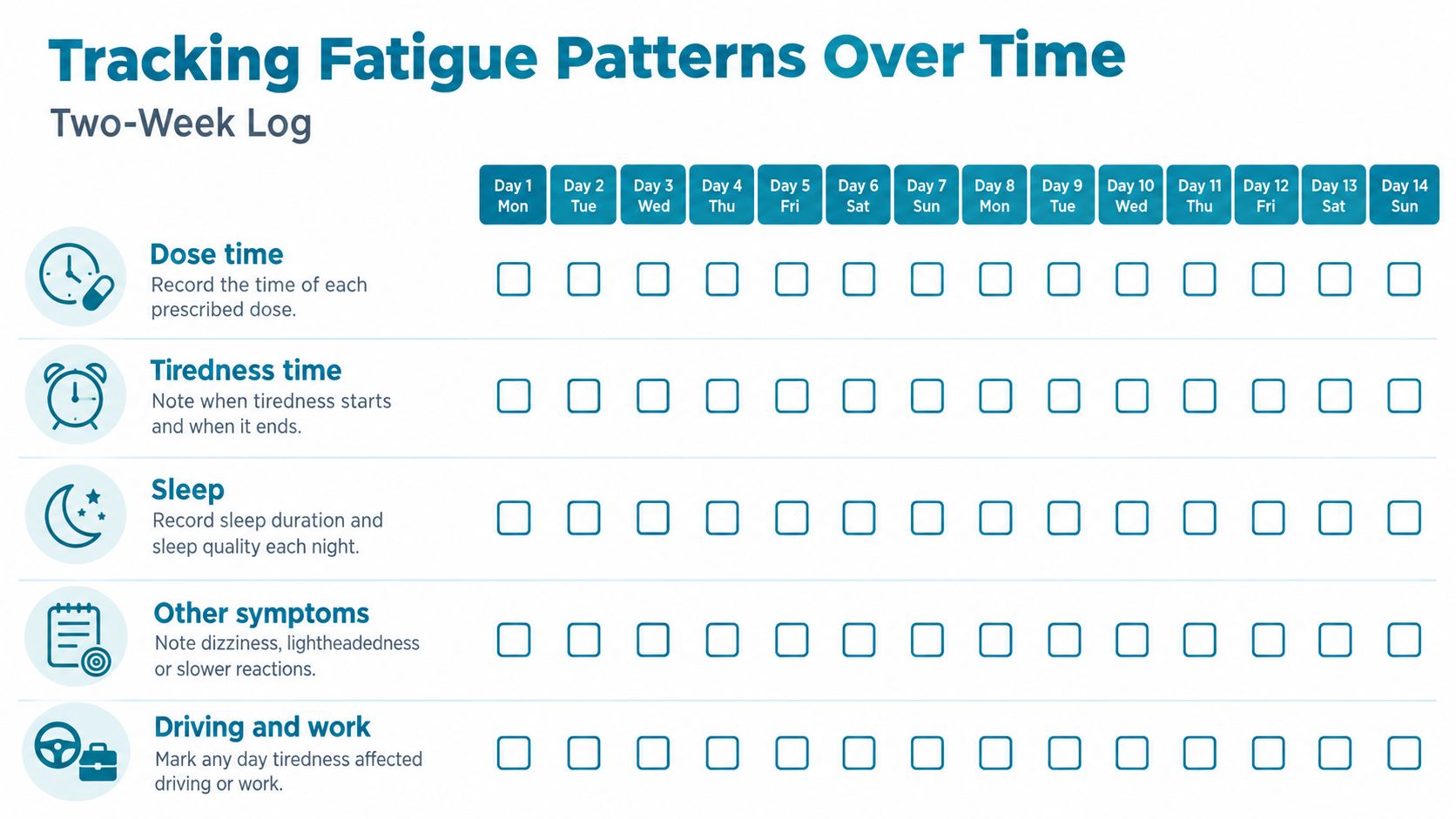
Consistent descriptions matter more than a complicated score. “Fell asleep during a meeting” points a clinician toward different questions than “felt physically drained but stayed alert,” even if both entries feel like fatigue in the moment.
How a clinician might interpret the notes
Hypothetical example: An adult records afternoon tiredness after several nights of poor sleep and reports no alcohol use. A clinician would review the timing relative to medication, other sedatives, sleep quality, and mood before deciding whether any treatment change is needed.
The example doesn't establish a cause or describe a treatment outcome.
Early treatment-related sleepiness can differ from persistent fatigue after stabilization. Information about the circadian rhythm and sleep timing may help organize sleep observations, while a log alone cannot rule out a sleep disorder.
The notes belong in the medication review. Persistent mental fogginess or impairment after dosing deserves assessment rather than acceptance as an unavoidable part of recovery.
Talk to Your Prescriber Before Changing Anything
Tiredness that is new, worsening, or interfering with work or safe daily activities deserves prompt contact with the prescribing clinician. Patients shouldn't reduce, skip, stop, or otherwise change Suboxone independently. Those adjustments belong inside the clinical conversation, where the reason for the fatigue can be identified first.
Abrupt changes can introduce additional problems while leaving the original cause of fatigue unresolved. Withdrawal, pain, poor sleep, depression, and continued substance use can each complicate the assessment. A dose that felt sedating during a stretch of bad sleep may be appropriate once sleep recovers, which is why the pattern matters more than any single tired day.
What a coordinated review considers
The practice doesn't publish a dose-adjustment method. Before making a decision, the prescriber evaluates sedation, withdrawal or cravings, interactions, and clinical stability. Each factor points in a different direction, and the response to oversedation differs from the response to uncontrolled cravings.
Using a benzodiazepine or another sedative alongside buprenorphine calls for careful management and coordinated assessment rather than automatic denial of effective opioid use disorder treatment. Withholding treatment isn't generally considered safer than coordinated assessment and risk management.

Questions worth bringing to the appointment
- Medication timing: When does tiredness occur relative to the prescribed dose?
- Interactions: Which medicines, over-the-counter products, and substances might contribute?
- Sleep: Is sleep long enough and restorative?
- Breathing: Have snoring or witnessed breathing pauses been reported?
- Follow-up: What monitoring plan applies, and which changes require a call?
The fatigue log can make that discussion more concrete. Guidance on preparing for an initial addiction medicine appointment can also help patients organize medication lists, concerns, and treatment goals.
Sources
Primary references include the FDA Suboxone prescribing information, the current DailyMed label, and SAMHSA buprenorphine treatment guidance. The population-specific sleep study adds patient-experience context, not a general treatment recommendation.
Byline: Empire Medical Wellness Editorial Team
This article is educational and isn't personal medical advice. Difficulty waking, slow breathing, or blue or gray lips requires immediate emergency help.
Empire Medical Wellness offers private, physician-led outpatient addiction medicine assessment, monitoring, and recovery planning. Adults seeking a clinical discussion about treatment concerns such as tiredness can visit Empire Medical Wellness to learn about its care approach and appointment process.