
A weekday evening often exposes the weakness in a complicated weight-loss plan. The refrigerator contains ingredients for several “healthy” recipes, the workday ran late, and hunger makes takeout feel easier than chopping vegetables. A balanced diet for weight loss has to work in that moment, not only on a carefully organized Sunday.
The practical answer is a repeatable meal structure built around protein, produce, and a suitable carbohydrate, with portions adjusted to the individual. Food quality matters, but lasting weight loss also requires an energy intake that fits the person's needs, preferences, health conditions, schedule, and ability to follow the plan.
Byline: Empire Medical Wellness Editorial Team
Published: October 5, 2026
Updated: October 5, 2026
Table of Contents
- What a Balanced Diet Means for Weight Loss
- How to Build Meals with Protein, Produce, and Carbohydrate
- Sample Three-Day Menu Matrix and Practical Swaps
- Smart Grocery Strategies and Simple Meal Prep
- Tracking Progress and Adjusting Safely
- Diet Quality, Calories, and Long-Term Sustainability
What a Balanced Diet Means for Weight Loss
A person can prepare a nutritious dinner and still struggle with weight loss if the overall eating pattern is too rigid, too expensive, or difficult to repeat. A balanced diet for weight loss does not require banning bread, eating the same breakfast daily, or meeting a fixed macro ratio. It combines food quality with an energy intake that supports gradual progress and can be maintained in ordinary life.
Clinical guidance describes a balanced, calorie-controlled eating pattern as a foundation for weight management. Initial goals often focus on a modest reduction of 5% to 10% of starting body weight over 6 to 12 months, rather than rapid loss. Clinical guidance on obesity treatment identifies this kind of progress as medically meaningful.
The same principle applies to energy intake. A daily deficit may be used as a practical framework, but the appropriate amount depends on body size, activity, health conditions, medications, hunger, and the person's ability to follow the plan. A target should guide decisions, not become a universal prescription. Progress also includes maintaining losses and improving health markers, rather than chasing an abstract “ideal weight.”
Balance has to fit real life
A meal plan can look excellent on paper and fail in practice when it depends on disliked foods, costly ingredients, or cooking time a person does not have. Familiar cultural meals can often be adjusted more successfully than replaced. Someone with limited kitchen access may rely on frozen vegetables, canned beans, eggs, yogurt, or ready-to-eat foods. Those choices can support a consistent pattern when elaborate preparation is unrealistic.
The 2025–2030 Dietary Guidelines for Americans emphasize varied, nutrient-dense foods and portions suited to individual needs, while encouraging adults to meet food-group needs within calorie limits. The Dietary Guidelines for Americans 2025–2030 offer a framework for choosing foods without requiring identical meals for everyone.
Practical rule: Build meals from repeatable components, then adjust the ingredients, portions, and preparation method to fit budget, preference, schedule, and appetite.
A balanced pattern also needs a recovery plan. After an unplanned restaurant meal, return to the next ordinary meal instead of treating the day as ruined. That response protects consistency better than compensating with severe restriction. Adults seeking general food-planning ideas may find this guide from Rip Van useful, while individual medical needs still require professional guidance.
For another practical discussion, see Empire Medical Wellness's balanced diet and weight loss guide. The central working principle is food quality, portions, and sustainable energy intake work together. None has to be perfect at every meal.

How to Build Meals with Protein, Produce, and Carbohydrate
A useful meal doesn't need a precise percentage of protein, carbohydrate, and fat. Energy needs, activity, health conditions, food preferences, and tolerability all influence appropriate portions. NIDDK recommends a balanced pattern that includes vegetables, fruits, whole grains, dairy or fortified soy products, protein foods, and oils such as olive oil, while also reducing calories from foods and beverages for adults pursuing weight loss. NIDDK guidance on eating and physical activity provides the supporting framework.
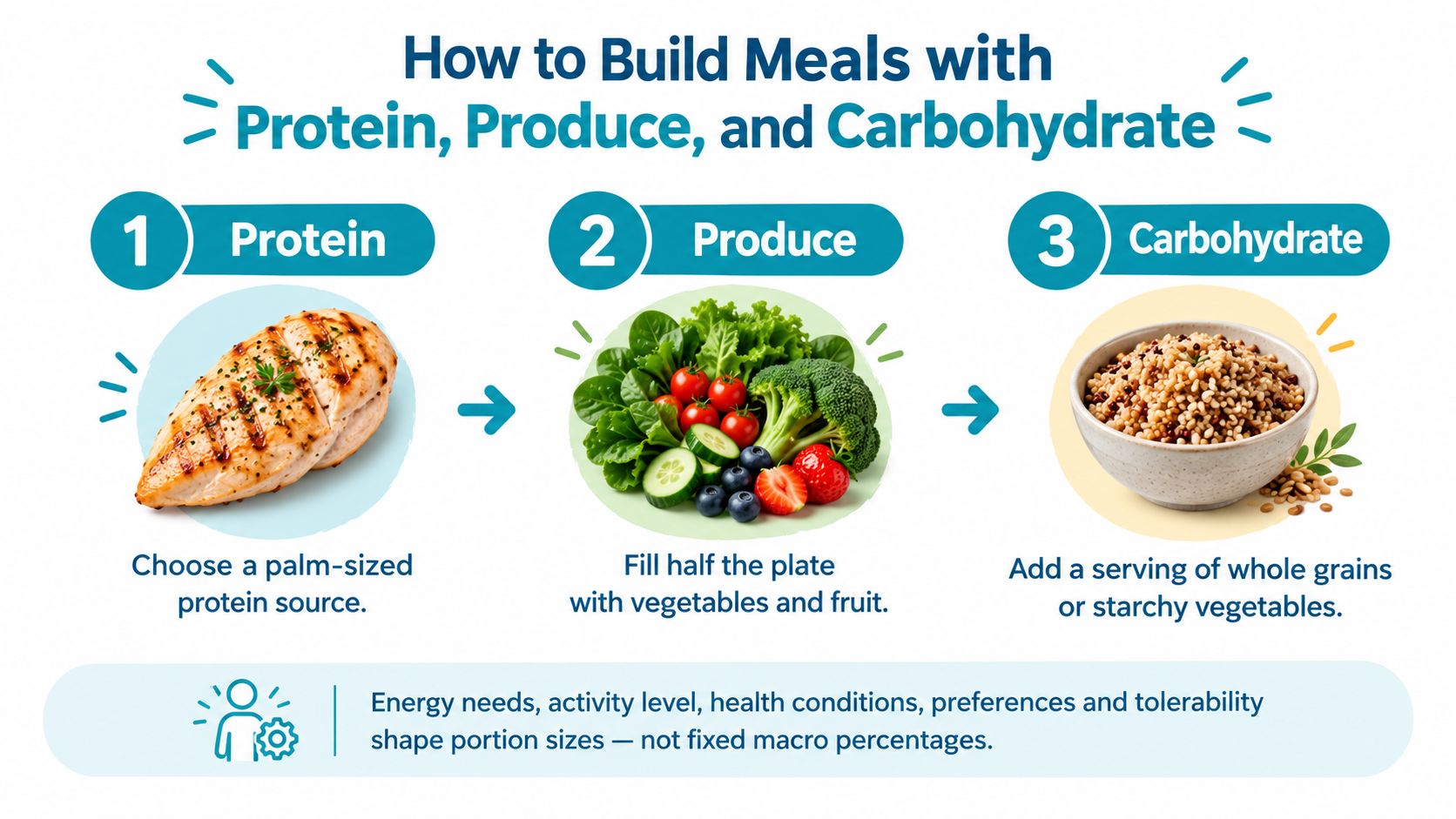
A flexible meal-building sequence looks like this:
Choose a protein food. Examples include fish, chicken, eggs, tofu, beans, lentils, Greek yogurt, seafood, nuts, seeds, or fortified soy foods. Protein can help make a meal more satisfying, but the appropriate amount varies.
Add produce. Use vegetables or fruit according to the meal, season, budget, and appetite. Fresh produce is useful, but frozen mixed vegetables, frozen spinach, canned tomatoes, and other convenient forms can make the pattern easier to maintain.
Add a suitable carbohydrate. Brown rice, oats, potatoes, quinoa, whole-grain bread, corn, beans, and other whole-grain or starchy foods can fit. A carbohydrate isn't automatically incompatible with weight loss. The relevant questions are the portion, the overall meal, and whether the choice supports a sustainable energy intake.
Two meals, one structure
A bowl of tofu with vegetables and brown rice and a plate of fish with potatoes and greens can both fit the same architecture. They don't need identical calories, ingredients, or macro percentages. A clinician or dietitian can individualize quantities when medical conditions, symptoms, medication effects, or nutritional concerns affect the plan.
Three practical staples can reduce decision fatigue:
- Lentils can anchor soup, a grain bowl, or a salad with tomatoes and herbs.
- Oats can become breakfast with fruit, yogurt, milk, or fortified soy beverage.
- Frozen mixed vegetables can go into a stir-fry, omelet, soup, or rice bowl without the preparation required for several fresh vegetables.
These are examples, not mandatory foods. Allergies, gastrointestinal tolerance, cultural preferences, dental concerns, and clinical restrictions may require substitutions. Beans can replace lentils, potatoes can replace rice, and eggs or tofu can replace fish when those choices are acceptable and nutritionally appropriate.
The structure also works for quick dinners. Adults seeking more ideas for protein-centered meals can browse high protein quick meals, then adapt the recipes to personal preferences, portions, and available produce. A more detailed discussion of this meal format appears in Empire Medical Wellness's balanced meal guide.
Sample Three-Day Menu Matrix and Practical Swaps
The matrix below is an editorial illustration, not an Empire patient plan and not a promise of a particular outcome. It uses a small group of ingredients in different combinations so meal preparation doesn't require starting from zero each day.
| Day | Breakfast | Lunch | Dinner | Optional Snack |
|---|---|---|---|---|
| Day 1 | Oats with berries, plain yogurt, and walnuts | Lentil soup with a side salad and whole-grain bread | Grilled chicken, brown rice, and frozen mixed vegetables | Apple with peanut butter |
| Day 2 | Scrambled eggs or tofu with spinach and whole-grain toast | Brown rice bowl with lentils, tomatoes, cucumbers, and herbs | Fish or baked tofu with potatoes and green vegetables | Plain Greek yogurt or fortified soy yogurt |
| Day 3 | Oats with banana and cinnamon, with milk or fortified soy beverage | Chicken and vegetable salad, or lentil and vegetable salad, with whole-grain crackers | Vegetable stir-fry with tofu or lean chicken and brown rice | Carrots with hummus |
Swaps that preserve the pattern
A vegetarian swap doesn't need to create a completely different menu. Replace chicken with lentils, beans, tofu, tempeh, eggs, or another suitable protein food. Replace fish with tofu or beans, while keeping the vegetables and carbohydrate if those foods are enjoyable and tolerated.
An omnivore swap works in the opposite direction. Chicken can replace tofu in a rice bowl, fish can replace lentils at dinner, and eggs can replace tofu at breakfast. The plate remains recognizable even when the ingredients change.
The menu can also change with the household budget. Dried lentils, oats, eggs, potatoes, frozen vegetables, canned beans, and brown rice may be useful lower-cost building blocks. Fresh fish, specialty grains, or individually packaged foods aren't required for a balanced pattern.
A simple preparation rhythm can make the matrix easier to use. Cook one grain, prepare one protein food, and keep washed or frozen vegetables available. Brown rice and lentils can become a warm vegetable bowl one day, then a tomato-herb salad the next. Seasonings, sauces, and cooking methods can create variety without adding a new recipe for every meal.
Adults who want another practical meal-planning reference can review weight-loss balanced meals. The useful takeaway is not strict menu compliance. It's the ability to rearrange familiar components when appetite, time, budget, or household plans change.
Smart Grocery Strategies and Simple Meal Prep
Grocery planning should reduce friction, not turn nutrition into a second job. A short list of repeatable ingredients often works better than a cart filled with ambitious recipes that require unfamiliar spices, special equipment, or several hours of preparation.
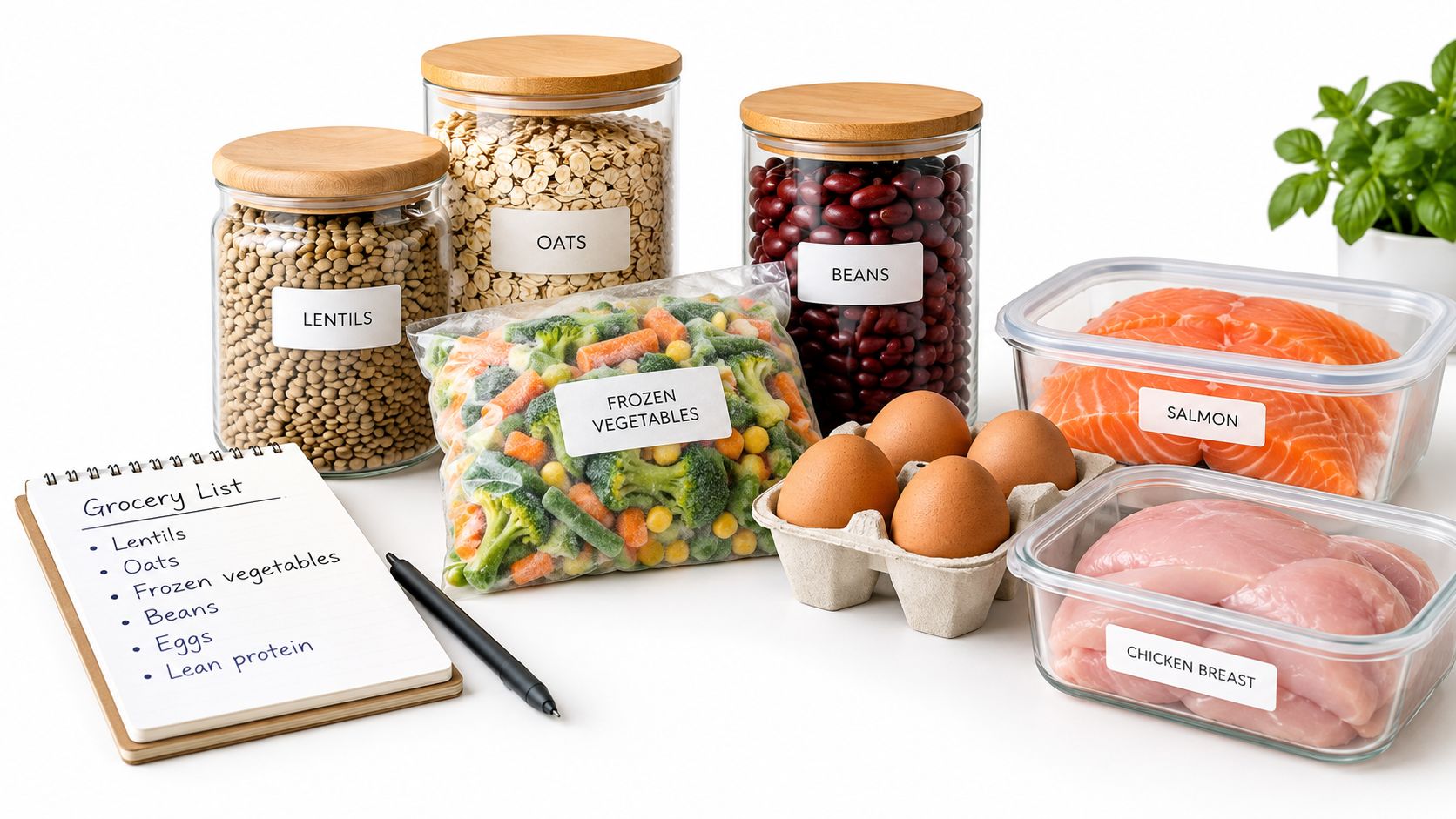
A practical shopping list can include:
- Protein foods: Lentils, beans, eggs, tofu, Greek yogurt, chicken, fish, or other preferred options.
- Carbohydrate choices: Oats, brown rice, quinoa, potatoes, whole-grain bread, or whole-grain pasta.
- Produce: Frozen mixed vegetables, salad greens, carrots, peppers, tomatoes, fruit, or seasonal options.
- Flavor and fats: Olive oil, herbs, garlic, vinegar, salsa, low-sodium sauces, nuts, or seeds.
- Convenient snacks: Apples, bananas, yogurt, hummus, roasted chickpeas, or a small portion of nuts.
Frozen vegetables can be particularly useful when fresh produce is expensive, unavailable, or likely to spoil before it is used. Canned beans and lentils can also reduce preparation time, with label checking for sodium and added ingredients. A food doesn't become unsuitable just because it comes frozen or canned. The broader meal and the person's health needs matter.
Build components, not identical meals
A useful preparation example is to cook one grain, prepare one protein food, and store washed or frozen vegetables where they're easy to see. Brown rice, lentils, and frozen vegetables can become a bowl with herbs and olive oil, then a different meal with tomato, greens, and a simple vinaigrette.
Micro-preparation may suit adults who can't set aside a long cooking session. One day can involve cooking oats or rice, another can involve washing produce, and a later evening can involve portioning snacks. Ready-to-eat foods can fit when labels, portions, budget, and nutritional needs are considered.
A meal plan should make the next balanced choice easier, not make a person prove discipline through unnecessary inconvenience.
Labels can help identify added sugars, sodium, fiber, protein, and serving information, but labels shouldn't create paralysis. A person may choose a frozen vegetable blend, canned tuna, or prepared beans because that option is realistic. The best choice is often the one that gets eaten and fits the rest of the pattern.
The CDC places healthy eating within a broader lifestyle pattern that also includes regular physical activity, adequate sleep, and stress management. CDC guidance on healthy weight loss supports treating meal planning as one part of weight management rather than the entire explanation for every outcome.
Tracking Progress and Adjusting Safely
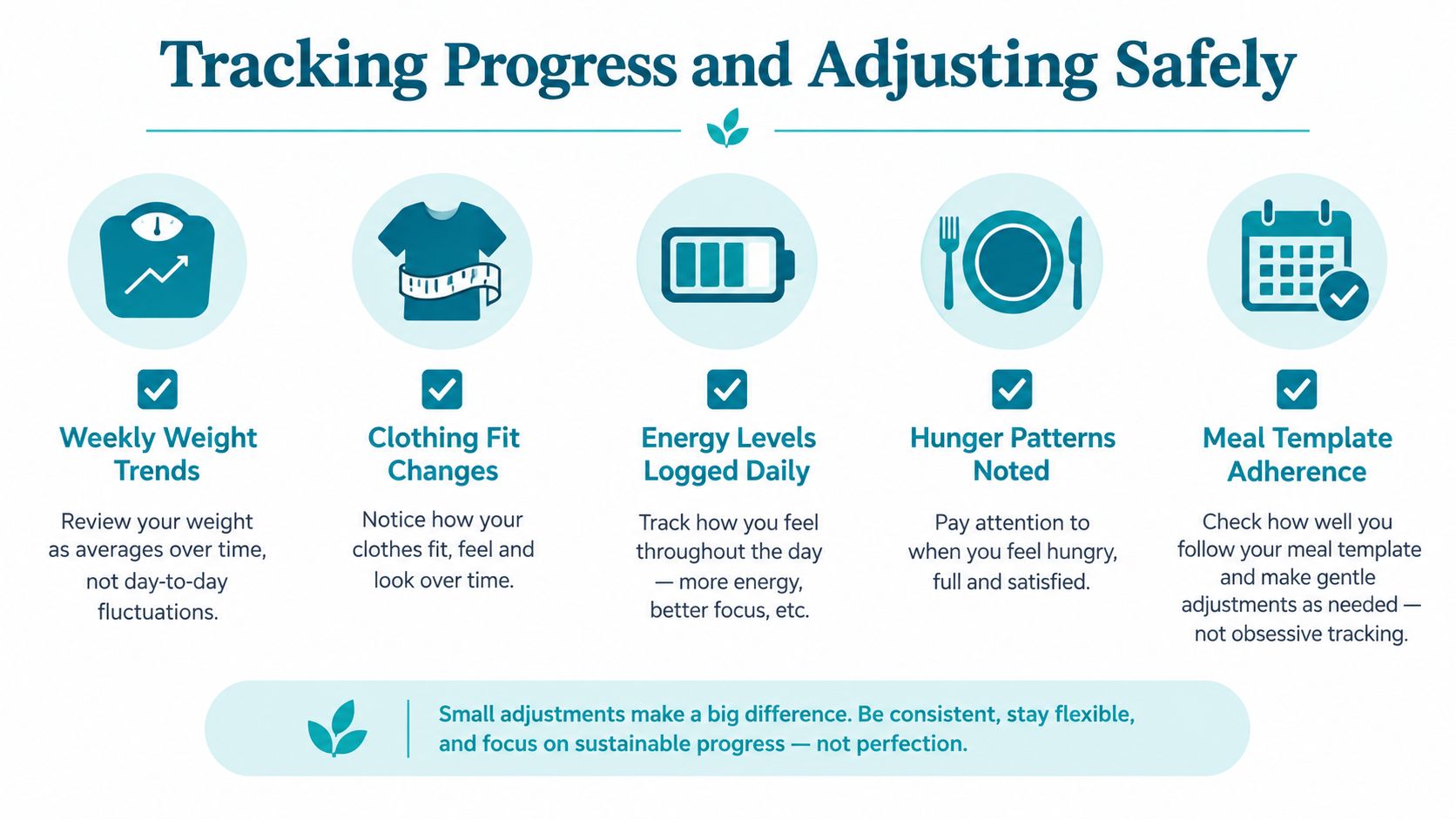
A person can follow a balanced meal structure, see little change on the scale for several days, and still be making useful progress. Review the pattern over time, including clothing fit, energy, hunger, meal-template adherence, and how easily the plan fits work and family responsibilities. Daily weight changes often reflect normal fluctuation rather than a clear change in body fat.
A practical review can include:
- Weight trend: Compare measurements across several weeks instead of reacting to one reading.
- Clothing fit: Note changes that matter to the individual.
- Energy: Record whether meals support work, movement, and daily tasks.
- Hunger: Look for persistent hunger, evening overeating, or difficulty feeling satisfied.
- Adherence: Mark how often the meal structure was followed without demanding perfection.
Use a small planning worksheet alongside these measures. For each meal, list the protein, produce, carbohydrate, preferred swap, and approximate cost. For example, eggs can replace yogurt, frozen vegetables can replace fresh produce, and beans can replace meat when that suits the budget and preference. This makes the review actionable. If hunger is high, increase the meal's volume or protein. If a food is repeatedly rejected, replace it rather than treating dislike as a discipline problem.
Reassess without overcorrecting
Review the plan every 2 to 4 weeks and change one practical factor at a time. Adjusting portions, meal timing, activity, or an unpopular ingredient may help. Sleep, stress, medication, and health conditions can also affect appetite and weight. Cutting out more foods should not be the automatic response.
Progress is often gradual, and results vary with metabolism, activity, medications, and health conditions. Very low-calorie plans require clinical supervision. Guidance on safe calorie deficits and calorie intake warns against dropping below about 1,200 kcal per day for women or 1,500 kcal per day for men without clinician oversight.
Professional input is appropriate when weight changes unexpectedly, nutritional concerns arise, hunger becomes difficult to manage, a medical condition affects food choices, or individualized planning is needed. For structured follow-up, calculating a calorie deficit offers general educational context, but a public calculator cannot replace medical assessment.
Diet Quality, Calories, and Long-Term Sustainability
A balanced diet can improve food quality without producing weight loss if portions and total energy intake remain mismatched to the individual's needs. Conversely, a person may reduce energy intake with a nutritionally narrow diet that is difficult to sustain and may not support health. Both food quality and energy balance matter.
Research comparing popular dietary patterns doesn't show one macronutrient approach to be uniquely superior when the diet is balanced, calorie-appropriate, and sustainable. A BMJ network meta-analysis of 14 popular diets found similar six-month weight loss for low-carbohydrate and low-fat diets, 4.63 kg versus 4.37 kg, with comparable blood pressure reductions. BMJ network meta-analysis supports choosing a pattern based on adherence, nutrition, and fit rather than diet branding.
A JAMA randomized trial reported mean 12-month weight changes of -5.3 kg with a healthy low-fat diet and -6.0 kg with a healthy low-carbohydrate diet, without a statistically significant difference between them. The comparison doesn't mean every diet works equally well for every adult. It means that rigid claims about one universally superior macro pattern aren't supported by these findings.
What people can follow matters
Long-term adherence often predicts success more strongly than the name of the diet. In one study, the most-adherent participants lost about -8.3 kg compared with -1.9 kg among the least-adherent participants on one diet pattern, while another study reported 24-month overall compliance of 85% across diets, with Mediterranean-pattern compliance at 85% and low-carbohydrate compliance at 78%. Peer-reviewed evidence on dietary adherence illustrates why flexibility matters.
A diet-quality review found that dietary quality indices based on dietary guidance were inversely associated with obesity, while evidence from randomized weight-loss programs on improving diet quality was limited. The systematic review of diet-quality indices supports a nuanced conclusion: minimally processed foods, fruits, vegetables, whole grains, and adequate protein are useful foundations, but food quality doesn't eliminate the need for an appropriate energy intake.
Adults using GLP-1 medications may need special attention to protein, fiber, micronutrients, meal timing, and smaller portions because appetite and meal tolerance can change. Emerging nutrition coverage describes growing interest in higher protein and fiber during GLP-1 use, but the right plan remains individualized and should account for symptoms, medical history, and clinician guidance. Adults exploring portable protein options can review high protein plant based jerky for weight, while recognizing that a snack is only one part of an overall eating pattern.
A qualified clinician can help an adult decide whether calorie-deficit diets fit the person's health status, preferences, and goals. The right plan may use a balanced diet alone or may require broader obesity care because nutrition doesn't address every cause or contributor to obesity.
Empire Medical Wellness provides physician-led obesity medicine that may include medical and metabolic assessment, individualized weight-management planning, appropriate medication consideration, monitoring, and long-term maintenance planning. Adults seeking private-pay medical guidance for a repeatable eating pattern can visit Empire Medical Wellness to review the practice's obesity care options. This article is educational and isn't personal medical advice.