
You've probably tried a few versions of “eating better” already. Maybe it was low-carb for a few weeks, then fasting, then a stricter routine that felt fine at first and became impossible to keep. A balanced meal to lose weight is usually the more durable answer, because it focuses on a steady pattern of food you can repeat, not on cutting out an entire group and hoping the plan lasts.
Table of Contents
- What a Balanced Meal Looks Like for Weight Loss
- The Four Components of a Weight-Loss Plate
- Calorie Deficit and Protein Targets for Sustainable Weight Loss
- Sample Meal Templates You Can Repeat All Week
- Snacking, Meal Timing, and Eating on Medication
- Monitoring Progress and Knowing When to Ask for Help
What a Balanced Meal Looks Like for Weight Loss
A balanced meal for weight loss is a meal that gives you enough protein, fiber, and volume to stay satisfied, while still keeping total calories lower than your body uses. In plain terms, it is not a “diet meal” with missing parts, it is a normal meal built in a way that makes a modest calorie deficit easier to maintain.
Large trials support that idea. In a 2-year randomized trial published in the New England Journal of Medicine, adults on reduced-calorie diets lost an average of 6 kg at 6 months, about 7% of initial body weight, and still had meaningful net loss at 2 years, with average losses ranging from 2.9 to 3.6 kg depending on diet composition. The key point was that weight loss was similar across macronutrient profiles NEJM trial. That makes the message simple, lasting results usually depend more on adherence, calorie intake, and food quality than on finding one perfect macro split.
Why the “balanced” part matters
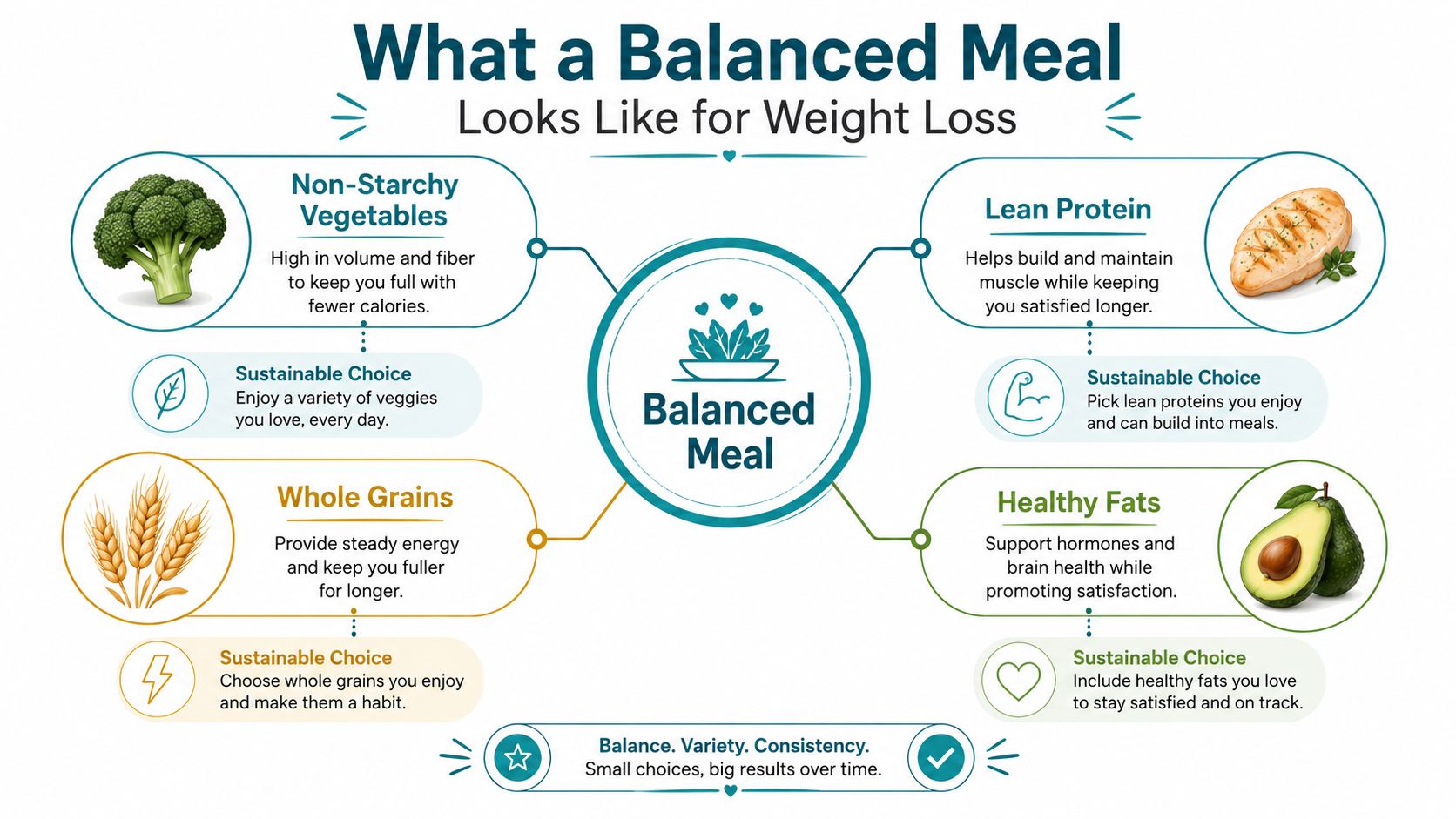
When meals include vegetables, lean protein, and measured portions of starch or fat, they tend to feel more filling without becoming calorie dense. That helps adults who have already tried short-term diets and know how quickly extreme rules can backfire. A practical balanced meal to lose weight usually prioritizes vegetables, lean protein, high-fiber carbohydrates, and controlled portions, rather than rigid elimination.
The food pattern matters, but so does sustainability. A meal that works in real life has to fit your routine, your budget, and the way you cook at home. If the plan depends on constant measuring or specialty foods, it usually doesn't survive a normal week.
Practical rule: if a meal feels “clean” but leaves you hunting for snacks an hour later, it probably needs more protein, more vegetables, or both.
For readers comparing physician-led care, the structure of the meal matters more than a long list of forbidden foods, and that's one reason some people also look into weight-management care costs.
The Four Components of a Weight-Loss Plate
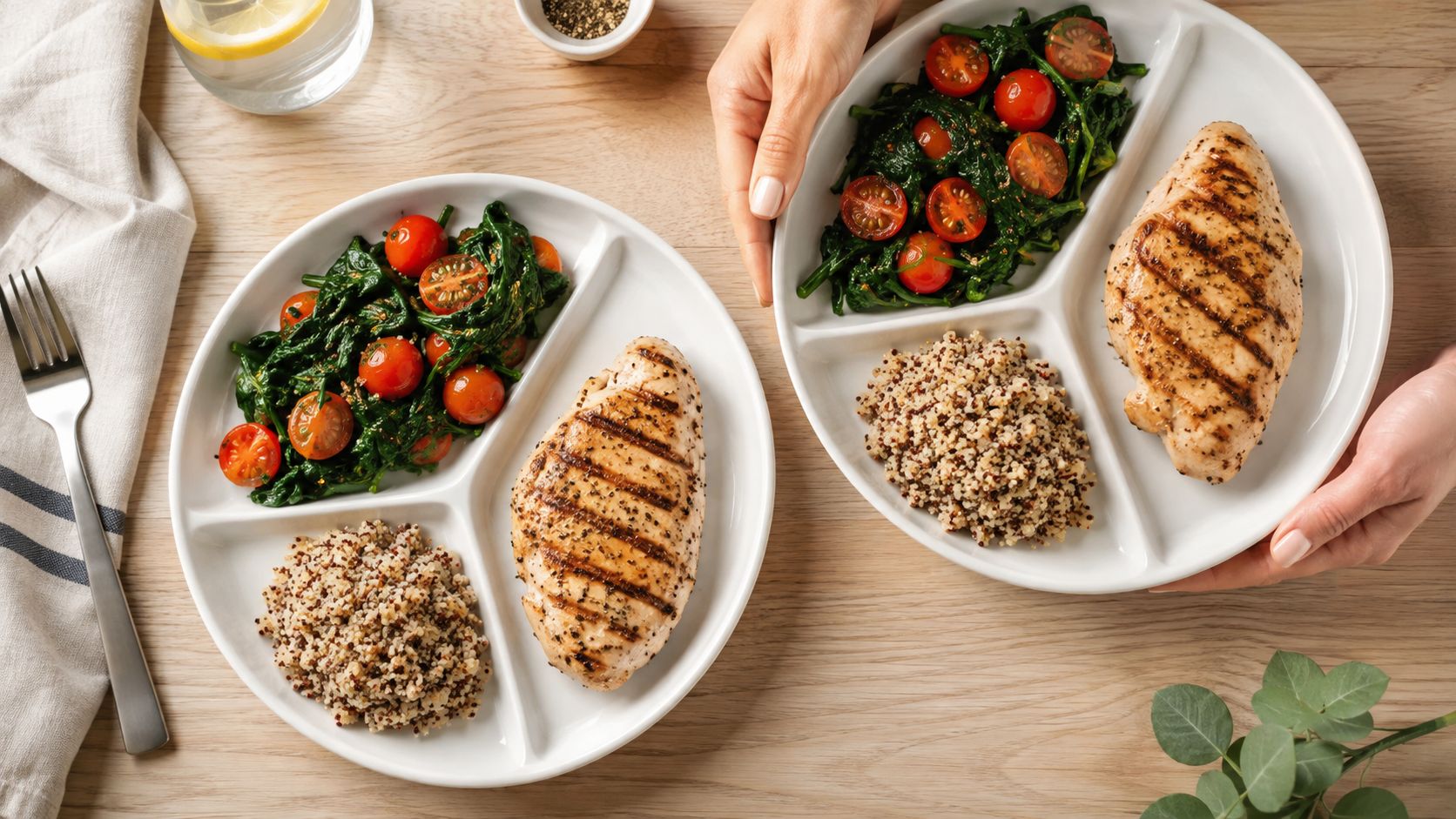
A simple plate method gives balance a shape you can see. Harvard's Healthy Eating Plate and Ohio State Wexner Medical Center's guidance both point toward roughly half the plate from vegetables, plus a quarter protein and a quarter starch or whole grains Ohio State plate guide. The exact foods can change. The structure stays the same.
Build volume first
Non-starchy vegetables are the easiest way to make a plate look generous without making it heavy in calories. Think broccoli, leafy greens, peppers, cauliflower, zucchini, mushrooms, cucumbers, tomatoes, or green beans. They add texture, fiber, and chewing time, which can make a meal feel finished.
Add protein as the anchor
Lean protein helps a meal feel substantial and supports muscle preservation during weight loss. A palm-sized portion is a useful visual cue for many adults. That might be chicken, turkey, fish, eggs, Greek yogurt, tofu, tempeh, beans, or lentils, depending on the meal.
Keep starch measured, not absent
Whole grains or starchy vegetables give the meal staying power. A cupped-hand portion is an easier guide than counting every gram. Brown rice, quinoa, oats, potatoes, sweet potatoes, beans, and whole-grain bread can all fit here.
Finish with a small amount of fat
Healthy fats improve flavor and help meals feel complete. The goal is controlled use, not elimination. Olive oil, avocado, nuts, seeds, and olives can work well, but they're easy to overpour, so a spoonful or small serving is usually enough.
A plate that is mostly vegetables, with one clear protein and one measured starch, usually feels more practical than a plan built around constant restriction.
The benefit of this structure is straightforward. It helps you build meals that are filling, but not so energy dense that they erase the deficit you're trying to create. For readers tracking obesity medicine content more broadly, this is the same logic that often underlies obesity medicine care.
Calorie Deficit and Protein Targets for Sustainable Weight Loss
Meal balance helps, but fat loss ultimately depends on energy intake. A major review on weight-loss strategies reports that reducing daily calorie intake is the most important factor for weight loss and notes that many studies use a balanced hypocaloric diet with a 500 to 1,000 kcal/day reduction from usual intake; it also describes low-calorie diets as 1,000 to 1,500 calories with a 500 to 750 calorie daily deficit review of weight-loss strategies. In everyday practice, a smaller, steadier deficit is often easier to follow than aggressive restriction, especially for adults who have already cycled through diets before.
A useful way to set that deficit is to start from maintenance, then subtract a modest amount your routine can tolerate. That approach works better than slashing food intake so hard that hunger, fatigue, and rebound eating show up within days. For many adults, the goal is not a dramatic reset. It is a repeatable pattern that leaves enough room for work, family meals, and the occasional higher-calorie day without losing control of the week.
Why protein belongs in every meal
Protein helps a meal feel satisfying, and that matters when calories come down. A practical meal-level target often used in planning is 20 to 40 g protein per meal, with some expert plans suggesting about 0.7 to 1.0 g per pound of body weight per day when clinically appropriate balanced diet guidance. That upper range is not for everyone, and adults with kidney disease or other medical concerns should individualize with a physician.
Protein also helps protect lean mass while the deficit is in place. That matters because a plan that trims calories but leaves you underfed can leave meals looking neat while still feeling unsatisfying an hour later. A simple rule is to make protein the anchor, then let vegetables and measured starch or fat fill out the rest of the plate. For readers comparing medication options, appetite changes can alter how much protein feels comfortable, which is one reason some people review GLP-1 treatment and phentermine alongside meal planning.
Where balanced meals fail
The biggest problem is usually not the main meal. It is the extras. Liquid calories, large pours of oil, heavy dressings, refined snacks, and ultra-processed add-ons can wipe out the planned deficit even when the plate looks sensible.
These calorie-creep habits are easy to miss because they rarely look like overeating in the moment. A little sauce here, a splash of creamer there, a handful of crackers while cooking, and the day can drift far enough from the plan to stall progress. Meals that are balanced on paper still need portion awareness in real life, especially when eating out, sharing family dishes, or taking medication that changes hunger and fullness cues.
A useful workflow is simple. Estimate what keeps your weight stable, trim calories by a modest amount, then build meals around a protein anchor, a lot of produce, and a measured carb or fat portion. That keeps the plan close to maintenance eating, just slightly below it, which is usually easier to sustain than a strict short-term diet. If the scale and hunger signals keep moving in the wrong direction, the hidden calories are usually in the drink, sauce, or snack, not the vegetables.
If a meal plan looks balanced on paper but the scale and hunger signals keep drifting the wrong way, the hidden calories are usually in the drink, sauce, or snack, not the vegetables.
Sample Meal Templates You Can Repeat All Week
Templates help more than recipes when the goal is consistency. You don't need a different menu every day. You need a few repeatable patterns that fit breakfast, lunch, and dinner without making home cooking feel like a project.
Breakfast that starts with protein
A good breakfast can be as simple as Greek yogurt with berries and chia seeds, plus oats or whole-grain toast if you want more staying power. Another option is eggs with spinach and a slice of whole-grain bread. If you cook for a household, this is easy to flex, one person can use yogurt while another uses eggs, and the plate logic stays the same.
Lunch that travels well
A portable lunch often works best as a grain bowl or wrap. Use half vegetables, add chicken, tuna, tofu, lentils, or beans, then include a measured serving of brown rice, quinoa, or a whole-grain wrap. Keep dressings and oils separate if you tend to overpour them, because lunch is one of the easiest places for calorie creep to sneak in.
Dinner that fits family routines
Dinner does not need to be separate from everyone else's meal. Build the family plate with roasted vegetables, grilled fish or chicken, and a measured serving of potatoes, rice, or pasta. If the household wants pasta, use a smaller portion of pasta and make the rest of the plate vegetables and protein. That gives you a meal that still feels normal at the table.
The same structure can shift with food preferences. Lentils can replace chicken at lunch, sweet potato can replace pasta at dinner, and tofu can stand in for eggs at breakfast. The point is not identical ingredients. The point is repeated balance.
For more practical health content that fits this kind of everyday meal planning, readers often browse the Empire Medical Wellness blog.
Snacking, Meal Timing, and Eating on Medication
Snacking becomes useful when it is planned and boring in a good way. A snack should fill a gap, not become a second lunch. Good options follow the same pattern as meals, protein plus produce, such as apple slices with peanut butter, Greek yogurt with berries, or hummus with vegetables.
The timing question is simpler than many people think. Most adults do not need a special meal clock to lose weight. Consistency matters more than a perfect schedule, and some people prefer a higher-calorie breakfast pattern because it helps them stay steadier later in the day.
When appetite is lower
That becomes more complicated for adults using anti-obesity medication. Appetite suppression, early fullness, and nausea can make it hard to eat enough protein, fluids, and micronutrients, even when the food choices themselves are good. In those situations, balanced eating shifts from a fixed template to a monitoring task, because the issue is often under-eating rather than overeating.
Small, lower-volume meals can help when hunger drops. So can soft proteins, soups, yogurt, eggs, smoothies made with protein, and meals that are easier to tolerate than large plates. If nausea or poor intake is persistent, that belongs in a physician conversation rather than in another round of self-directed diet tightening.
Helpful distinction: a planned snack has a purpose. Grazing is eating without deciding that you're eating.
A medication-aware plan also pays attention to hydration. People who feel full quickly often stop drinking enough fluids, and that can make everything else harder. For adults managing mental-health medications alongside weight concerns, the medication review process can also matter, which is why some people look at a mental health medication review when appetite or weight changes are part of the picture.
Monitoring Progress and Knowing When to Ask for Help
The best tracking routine is short and calm. A weekly weight average is more useful than reacting to every daily fluctuation. Add a quick note about hunger, energy, clothes fit, and one or two meal photos if that helps you see patterns clearly.
You do not need to track everything forever. In many cases, the point is to notice whether the plate pattern is helping meals feel satisfying and whether the calorie deficit is sustainable. If the pattern is working, the routine usually feels manageable rather than obsessive.
Signs it's time for a clinician conversation
- A plateau that lasts longer than six weeks despite steady adherence.
- Repeated loss-and-regain cycles that suggest the plan is too strict to keep.
- Medication side effects or low intake that make balanced eating hard to maintain.
- A history of disordered eating that deserves careful, individualized support.
Those are not failures. They are signals that the next step may be a more customized plan, more monitoring, or a different treatment discussion. Physician-led obesity medicine can help with that kind of review, especially when prior diets have not led to lasting change.
If you're comparing options, it helps to think in terms of support level rather than promise level. A structured meal pattern can work well on its own, but some adults do better when nutrition, medication, and follow-up are reviewed together.
If you're trying to make weight-loss eating feel practical again, Empire Medical Wellness offers physician-led obesity medicine care that can help you think through balanced meals, medication-related appetite changes, and long-term maintenance planning. If you'd like a careful, private next step, visit Empire Medical Wellness to learn more about obesity medicine care and follow-up options.
This article is educational and not personal medical advice.