
How should an adult choose a depression medication when several options may seem reasonable?
Antidepressants are widely used in adult mental-health care in the United States. The practical aim is an individualized fit, weighing symptoms, previous response, other medicines, side-effect priorities, safety, and pregnancy considerations rather than naming one universal “best” drug.
Before an appointment, bring a current medication list, describe past treatment experiences, and prepare questions about monitoring and safe stopping. Keep a brief symptom-and-tolerability log covering mood, sleep, anxiety, and side effects. Full benefit may take four to eight weeks, so follow-up helps assess whether to continue or adjust the plan.
Empire Medical Wellness Editorial Team
Published October 6, 2026
Updated October 6, 2026
Source information checked October 3, 2026
Table of Contents
- How Depression Medication Fits Into Adult Mental Health Care
- Major Antidepressant Classes and How They Work
- What to Expect During Your First Evaluation and Follow-Up
- Side Effects, Interactions, and Safety Monitoring
- Deciding Whether to Continue, Adjust, or Stop Medication
- How to Prepare for Your Medication Discussion
How Depression Medication Fits Into Adult Mental Health Care
What role can depression medication play in adult mental-health care?
Depression medication refers to prescription medicines used to reduce depressive symptoms and support recovery from a depressive disorder. It may be included in outpatient care with psychotherapy, behavior changes, sleep support, or other services. Taking medication does not by itself indicate unusually severe symptoms, and medication is not the only legitimate treatment path. The plan should reflect the diagnosis, safety concerns, personal goals, and broader clinical situation.
Antidepressant use is common but uneven across adults. The Centers for Disease Control and Prevention's analysis of antidepressant use found that 13.2% of U.S. adults reported taking an antidepressant during the previous 30 days in 2015–2018. The figures were 17.7% among women and 8.4% among men, with additional variation by age, race and Hispanic origin, and educational attainment. These figures describe use, not the prevalence or severity of depression, or the reason a particular person received treatment.
The central principle is fit, not rank
Choosing a medication is an exercise in tolerability optimization, not a contest to identify the universally strongest drug. A prescriber may weigh the symptoms needing attention, such as low mood, anxiety, sleep disruption, reduced concentration, or loss of interest, alongside previous treatment response, medical conditions, interactions, pregnancy considerations where relevant, cost, and personal preferences. Assessment for bipolar symptoms and current safety concerns should come before treating every episode of low mood in the same way.
Bring a current medication list and a short record of mood, sleep, anxiety, and side effects to the appointment. Ask which symptom the medicine targets, which adverse effect deserves attention, what monitoring is planned, and when the treatment will be reviewed. A brief log turns vague impressions into information that can guide adjustment.
Practical rule: Choose the option whose expected benefits and burdens best fit the person, then review that fit with the prescriber.
Medication can work alongside structured therapy, sleep support, and coordination with another clinician. For background on how sleep and mental health interact, strategies from The Sleep Consultant are a useful starting point, but sleep guidance does not replace diagnostic assessment or medication monitoring.
Adults seeking physician-led adult depression care can discuss whether a medication review fits their needs. The goal is a collaborative plan with a clear rationale, planned follow-up, and attention to both improvement and burden.
Major Antidepressant Classes and How They Work
Antidepressant classes describe broad patterns of pharmacology. They don't function as a simple ladder from “weakest” to “strongest.” A class may be useful because of its effect on a particular symptom, its interaction profile, prior response, or its tolerability for a specific patient.
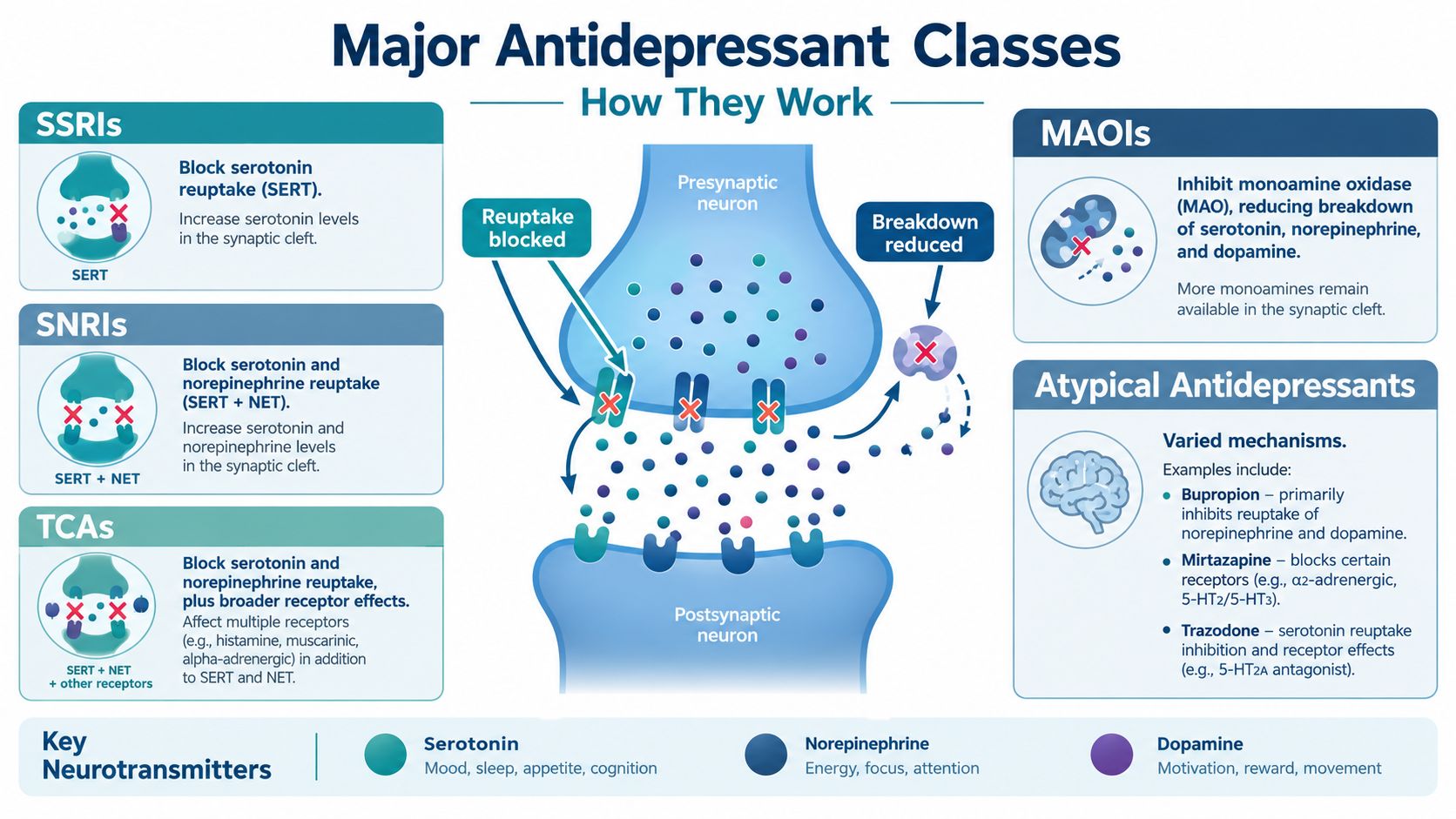
Selective serotonin reuptake inhibitors, or SSRIs, reduce the reuptake of serotonin between nerve cells. This leaves more serotonin available for signaling. Examples include fluoxetine, sertraline, citalopram, and escitalopram. The class is widely used, but that doesn't make every SSRI interchangeable. Patients can experience gastrointestinal symptoms, headache, sleep changes, sexual side effects, or other effects that require discussion.
Serotonin and norepinephrine reuptake inhibitors, known as SNRIs, affect serotonin and norepinephrine signaling. Examples include venlafaxine and duloxetine. Their broader signaling effect may be relevant to a clinical discussion, while tolerability questions can include gastrointestinal symptoms, sleep changes, sexual effects, and other medication-specific concerns.
Atypical antidepressants don't share one mechanism. Bupropion affects norepinephrine and dopamine signaling, while mirtazapine has a different receptor profile. These medicines may be considered when a patient's symptom pattern or side-effect priorities make a non-SSRI option worth discussing. "Atypical" isn't a quality ranking. It indicates that the medicine doesn't fit neatly into the older main categories.
Tricyclic antidepressants, or TCAs, influence several neurotransmitter systems. Examples include amitriptyline and clomipramine. They can be effective, but their broader receptor activity may create more tolerability and safety considerations for some patients, including concerns related to sedation, anticholinergic effects, cardiovascular effects, and overdose toxicity.
Monoamine oxidase inhibitors, or MAOIs, affect the breakdown of several neurotransmitters. They can have important food and drug interaction requirements, so clinicians generally use them with careful medication reconciliation and monitoring. Their place in treatment depends on the individual situation rather than a general claim that older or newer classes are automatically preferable.
What comparative evidence can and cannot show
A network meta-analysis of 21 antidepressants found that all included medicines were more efficacious than placebo in adults with major depressive disorder, while average effects were generally modest. Acceptability differed across medicines, measured partly through all-cause dropout odds. Several medicines, including agomelatine, citalopram, escitalopram, fluoxetine, sertraline, and vortioxetine, had lower dropout odds than some alternatives, while medicines including amitriptyline, clomipramine, duloxetine, fluvoxamine, reboxetine, trazodone, and venlafaxine had higher dropout odds in that analysis. The findings describe population averages and can't predict an individual response. The full network meta-analysis of antidepressant efficacy and acceptability also supports a broader conclusion: tolerability can affect adherence enough to change the practical value of a medicine.
Fluoxetine illustrates why history shouldn't be confused with personal prediction. Researchers first synthesized it in 1971, disclosed it as compound LY110140 in 1974, and received U.S. Food and Drug Administration approval for depression on December 29, 1987. It launched as Prozac in January 1988, becoming the first SSRI introduced in the United States. This history of fluoxetine and the SSRI class marks an important change in pharmacologic treatment, but it doesn't establish that fluoxetine is right for every adult.
| Class | General mechanism | Examples | Common tolerability notes |
|---|---|---|---|
| SSRIs | Increase serotonin signaling by reducing serotonin reuptake | Fluoxetine, sertraline, citalopram, escitalopram | Gastrointestinal symptoms, headache, sleep changes, and sexual side effects may occur |
| SNRIs | Reduce reuptake of serotonin and norepinephrine | Venlafaxine, duloxetine | Gastrointestinal, sleep, sexual, and medication-specific effects require review |
| Atypical antidepressants | Vary by medicine, with effects on systems such as norepinephrine, dopamine, or specific receptors | Bupropion, mirtazapine | Effects differ substantially by medicine and may influence sleep, appetite, activation, or sexual function |
| TCAs | Affect several neurotransmitter and receptor systems | Amitriptyline, clomipramine | Sedation, anticholinergic effects, cardiovascular concerns, and overdose toxicity may matter |
| MAOIs | Reduce breakdown of several neurotransmitters | Class-specific examples | Food and drug interactions require careful prescribing and monitoring |
Adults considering treatment can review general information about antidepressant medication options, then use a physician visit to translate class-level information into an individualized decision.
What to Expect During Your First Evaluation and Follow-Up
What should a first medication evaluation accomplish besides selecting a prescription? It should clarify the diagnosis, review medical history and current medicines, examine previous treatment, consider bipolar symptoms, and assess immediate safety. The clinician should also ask what meaningful improvement would look like in everyday life, such as better sleep, steadier mood, or improved ability to work.
The initial discussion
A useful appointment may cover:
- Symptom clarification. The clinician reviews mood, interest, sleep, appetite, energy, concentration, anxiety, daily functioning, and how these symptoms have changed over time.
- Treatment history. Previous medicines, how long they were taken, whether doses were missed, benefits, side effects, and reasons for stopping often provide more guidance than a drug name alone.
- Medical and medication review. Prescriptions, over-the-counter products, supplements, medical conditions, allergies, and pregnancy considerations can change the safety and tolerability discussion.
- Safety assessment. Suicidal thoughts, unusual activation, severe agitation, psychotic symptoms, or possible bipolar features require direct attention before a treatment plan is set.
- Shared goals. The patient and prescriber identify which symptoms and functional changes matter most, then discuss acceptable and unacceptable tradeoffs.
Medication choice is therefore an individualized tolerability decision, not a ranking of universally best antidepressants. Two medicines in the same class can produce different experiences, and the first choice may be adjusted if benefits are limited or side effects interfere with daily life. The National Institute of Mental Health overview of mental-health medications offers general background for adults preparing for this discussion, but it cannot determine the appropriate treatment for one person.

Why early follow-up matters
Antidepressants usually do not provide their full benefit immediately. NIMH states that they generally take four to eight weeks to work, although sleep, appetite, or concentration may improve before depressed mood. The NIMH information on depression treatment supports planned review rather than deciding after a few days that a medicine has failed.
NICE recommends reviewing response between 2 and 4 weeks after an antidepressant starts, including adherence, side effects, treatment harms, and suicidal ideation. If treatment continues to prevent relapse, reassessment should occur at least every 6 months, with symptom measurement using a validated scale and review of adverse effects and relapse risks. The NICE depression recommendations also explain that dose-reduction symptoms can resemble returning depression, so timing and symptom pattern need attention.
At follow-up, the prescriber may ask how consistently the medicine was taken, how long it was used at the prescribed dose, what changed in mood and functioning, which adverse effects appeared, and whether new safety concerns developed. Possible outcomes include continuing treatment, adjusting it, changing medicine, or reassessing the diagnosis and goals. A universal dose-increase schedule cannot replace that evaluation.
A symptom-and-tolerability log gives the appointment concrete information:
| Period | Mood and interest | Sleep, appetite, and concentration | Functioning | Side effects | Missed doses or other changes | Safety concerns |
|---|---|---|---|---|---|---|
| Week 2 | mood 4/10, interest low | sleep 6h, appetite normal | work tasks mostly completed | mild nausea in mornings | missed 1 dose | none |
| __________ | __________ | __________ | __________ | __________ | __________ | __________ |
| __________ | __________ | __________ | __________ | __________ | __________ | __________ |
Adults preparing for a structured discussion can review this mental-health medication review before the appointment.
Side Effects, Interactions, and Safety Monitoring
How should you judge a side effect after starting depression medication? The answer depends on its intensity, timing, trend, and effect on daily life. A mild symptom that is improving may call for observation, while a persistent, disruptive, or medically concerning symptom may require a prompt discussion with the prescriber. This approach treats medication choice as individualized tolerability optimization, rather than a ranking of universally “best” drugs.
Routine tolerability questions
Antidepressants can cause gastrointestinal symptoms, headache, sleep changes, or sexual side effects. Their likelihood and clinical importance vary by medicine and by the person taking it. A clinician may ask when the symptom began, whether it affects work or relationships, whether it is easing, and whether another medicine or medical condition could be contributing.
A short appointment checklist helps focus the discussion:
- Which symptoms started after the medicine or dose changed?
- Are they mild, worsening, or interfering with daily activities?
- What prescriptions, over-the-counter medicines, supplements, and allergies should be reviewed?
- Are there medical conditions, pregnancy, or breastfeeding considerations?
- What monitoring or follow-up plan is appropriate?
Medication reconciliation works like checking every connection in a system. It can reveal combinations that alter drug levels, intensify adverse effects, or change the safety of treatment. A discussion of anxiety medication and related treatment considerations may help when anxiety and depression symptoms overlap, although the medicines still require individualized review.
Reporting a tolerability problem early keeps more options open for your prescriber than waiting until the problem has become entrenched.
Urgent warning signs
The FDA boxed warning applies specifically to children, adolescents, and young adults through age 24. In short-term studies, antidepressants increased suicidal thinking and behavior compared with placebo in these younger groups. Those studies did not show increased risk in adults older than 24, and they showed reduced risk compared with placebo in adults aged 65 and older. The FDA warning information summarized in peer-reviewed literature supports continued monitoring outside the boxed-warning age range as well.
FDA labeling advises monitoring people of all ages for clinical worsening, suicidality, or unusual behavior, especially after treatment begins or the dose changes. New or worsening suicidal thoughts, severe agitation, dangerous impulsivity, confusion, or markedly unusual behavior requires immediate contact with a clinician or emergency service. Waiting for a routine appointment can be unsafe.
A practical contact plan should name the prescriber's office, an alternate clinical contact, a trusted support person, and the action to take if symptoms worsen outside office hours. An immediate threat to safety calls for emergency help. In the United States, 988 provides crisis support, and 911 is for immediate danger.
Deciding Whether to Continue, Adjust, or Stop Medication
Improvement doesn't end the medication discussion. A person may sleep better while still experiencing low mood, or may feel emotionally improved while dealing with a troubling side effect. Staying on medication isn't automatically passive, and stopping isn't automatically healthier. Both choices require a review of benefit, adverse effects, recurrence risk, preferences, and access to follow-up.
Measuring improvement carefully
The VA/DoD guideline defines treatment response as at least a 50% reduction in symptoms measured with a standardized rating scale. Partial response is typically a 25% to 50% reduction. Remission is a separate goal. One cited clinical definition is a Patient Health Questionnaire-9 score of 4 or less maintained for at least one month. These definitions help distinguish meaningful progress from incomplete relief, but a score doesn't replace a clinical conversation about functioning, safety, and quality of life.
A hypothetical example shows why the distinction matters. An adult reports better sleep but persistent low mood and bothersome nausea. A follow-up can separate partial improvement from side effects, confirm actual use and duration, and then allow the prescriber and patient to discuss whether continuing, adjusting, or changing treatment makes sense. No particular adjustment guarantees a breakthrough.
Planning continuation or a change
For adults with major depressive disorder who reach remission while taking an antidepressant, the VA/DoD guideline recommends continuing the medication at the therapeutic dose for at least six months to reduce relapse risk. Longer continuation may be considered when relapse risk is higher, such as after multiple prior depressive episodes or unstable remission. The VA/DoD guideline on major depressive disorder treats continuation as an active relapse-prevention decision, not an automatic default.
Dose reduction can produce withdrawal symptoms that overlap with recurrence. Abrupt stopping or self-directed changes can therefore make it harder to tell what is happening. A clinician-supervised plan should include what symptoms to monitor, when to contact the prescriber, and what steps to take if depression returns. Information about the meaning of relapse can help distinguish recurrence from other changes, but an individual assessment remains necessary.
How to Prepare for Your Medication Discussion
A focused appointment starts with concrete observations rather than a demand for a particular brand or class. The patient can bring a medication list, prior treatment history, a short symptom-and-tolerability log, and questions about how the proposed treatment fits the person's goals.
A practical appointment checklist
- Target symptoms: Which symptoms is the medicine intended to address, and what changes in daily functioning would count as meaningful?
- Expected timeline: What should be monitored during the early weeks, and when is the planned review?
- Tradeoffs: Which common effects deserve attention, and which effects require prompt contact?
- Medication safety: Could another prescription, supplement, medical condition, pregnancy consideration, or breastfeeding concern affect the choice?
- Diagnostic clarity: Have bipolar symptoms, substance use, sleep problems, medical contributors, and current safety concerns been assessed?
- Treatment options: If the response is partial or tolerability is poor, what categories of next steps might be discussed?
- Coordination: Would communication with a therapist, primary-care clinician, or another treating professional be useful and authorized?
A blank log can remain simple. It can record the date, medication-taking pattern, mood, sleep, appetite, concentration, functioning, side effects, and safety concerns without trying to calculate a personal response percentage. The record gives the prescriber a clearer view of change over time and reduces reliance on memory during a short follow-up.
Shared decision-making works best when the patient understands the available options and the clinician understands the patient's priorities. A plain-language guide to shared healthcare decisions can help adults prepare for a conversation in which benefits, burdens, uncertainty, and alternatives are discussed openly.
Empire Medical Wellness provides physician-led outpatient mental-health evaluation, medication review, ongoing medication management, and authorized coordination with outside treating clinicians when useful. Current standard appointments include a 50-minute initial evaluation for $350 and a 25-minute follow-up for $225; the practice doesn't bill insurance directly, and an itemized receipt is available through the patient portal. Telemedicine appointments support adults physically located in New York, New Jersey, Connecticut, Pennsylvania, or Virginia, with in-person appointments also available through the current workflow.
If symptoms worsen, the prescribing office should be contacted according to the established plan rather than waiting for the next routine visit. An immediate safety threat requires emergency help, with 988 for crisis support in the United States and 911 for immediate danger.
This article is educational and isn't personal medical advice.
Sources: CDC antidepressant medication use, NIMH mental-health medications, NICE depression treatment recommendations, FDA antidepressant warning information, and VA/DoD major depressive disorder guideline.
Adults seeking a careful discussion about depression medication can visit Empire Medical Wellness to review the practice's physician-led outpatient mental-health evaluation and medication-management services. The next step is a structured conversation about symptoms, prior treatment, side effects, safety, and an appropriate follow-up plan.