
A pill can remove a needle, but can it remove the daily discipline that makes a GLP-1 medicine work as intended? Yes, a U.S. prescription Wegovy tablet now exists, but it isn't a shortcut or a casual substitute for medical follow-up. The oral form is semaglutide for chronic weight management, and its labeled routine depends on fasting, water-only administration, gradual dose escalation, and long-term monitoring.
Byline: Empire Medical Wellness Editorial Team
Published: October 5, 2026
Updated: October 5, 2026
Table of Contents
- What the Wegovy Pill Actually Is
- Who the Label Says Can Take It
- The Daily Routine the Label Requires
- Wegovy Pill, Wegovy Injection, and Oral Semaglutide Compared
- A Hypothetical Decision at the Consultation
- Side Effects, Tolerability, and When to Call the Prescriber
- Following Up Without a Fixed Schedule
- Why the Pill Is Not the Easy Version
- Sources
What the Wegovy Pill Actually Is
What does the Wegovy pill change, and what does it leave unchanged? It is a once-daily oral tablet containing semaglutide, approved by the U.S. Food and Drug Administration in December 2025 for chronic weight management in adults. Reuters reported on the European authorization and early market launches, including broader European authorization in July 2026 and early market launches.
The tablet and the familiar Wegovy pen use the same active molecule, semaglutide, a GLP-1 receptor agonist. Their delivery systems and schedules differ. The pen is injected under the skin once a week. The tablet is swallowed each morning under fasting conditions, so the medication decision includes a recurring morning routine, not just a preference for pills over needles.
That routine works like a gate. Food, other drinks, or incorrect timing can interfere with how the tablet is taken, while the prescribed dose begins lower and rises gradually to the labeled maintenance strength. The gradual titration gives the body time to adjust, particularly to gastrointestinal effects. A tablet may suit an adult who strongly prefers to avoid injections, but it replaces a weekly injection task with a daily timing task.
Brand names that are easy to confuse
Rybelsus is also an oral semaglutide product. Its FDA-labeled indication is for adults with type 2 diabetes, so its approved purpose, product labeling, strengths, and treatment context differ from those of the Wegovy tablet. Related active ingredients do not make the products interchangeable for weight management.
The weekly Wegovy injection remains a separate formulation. The labeled choice is between daily oral administration and weekly subcutaneous administration, with different practical demands for taking or delivering the medicine. A checklist based on the prescribing information is more useful than an online comparison focused only on convenience.
| Field | Wegovy Tablet | Wegovy Injection |
|---|---|---|
| Active ingredient | Semaglutide | Semaglutide |
| Route | Oral tablet | Subcutaneous injection |
| Schedule | Once daily | Once weekly |
| Key administration issue | Empty stomach, water only, followed by a waiting period | Injection technique and weekly timing |
| Dose escalation | Gradual daily titration to the labeled maintenance strength | Gradual weekly titration to the labeled maintenance strength |
| Clinical framing | Chronic weight management with nutrition and activity changes | Chronic weight management with nutrition and activity changes |
Adults considering physician-led obesity care can use Empire's GLP-1 medication information to place semaglutide within a broader medical plan. The practical question is whether the prescribed routine can be followed consistently, then reviewed and adjusted safely with the prescriber.
Who the Label Says Can Take It
Could an adult meet the label's criteria for chronic weight management, yet still need a careful safety review before choosing a tablet or injection? Eligibility starts with the patient's health profile, not with the convenience of an oral dose.
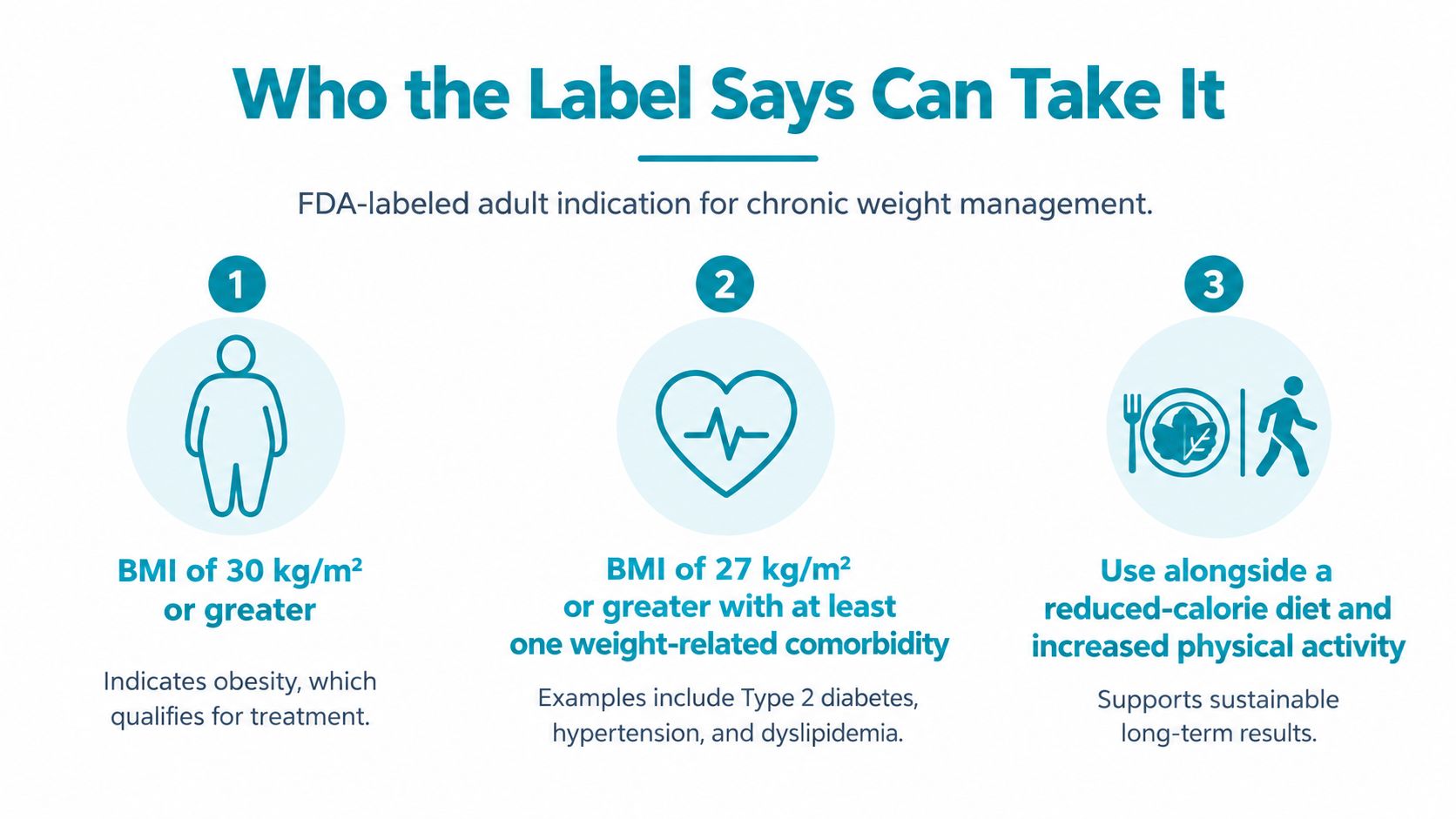
The FDA-labeled adult indication covers people with obesity, generally defined as a BMI of 30 kg/m² or greater, and people with overweight, generally a BMI of 27 kg/m² or greater, plus at least one weight-related condition. Examples include hypertension, dyslipidemia, obstructive sleep apnea, type 2 diabetes, and established cardiovascular disease. Treatment is prescribed with a reduced-calorie diet and increased physical activity.
The tablet is not labeled for cosmetic weight loss in adults below those criteria. An indication for one semaglutide formulation does not automatically apply to another. Pediatric uses and MASH-related indications for injectable products therefore require separate consideration rather than being carried over to the Wegovy tablet.
Screening before a prescription decision
BMI opens the conversation. A prescriber also reviews the patient's history, current medicines, pregnancy plans, and ability to follow the labeled routine. The June 2026 Wegovy prescribing information identifies the main contraindications and precautions.
- Thyroid cancer history: A personal or family history of medullary thyroid carcinoma is a contraindication.
- MEN 2: Multiple endocrine neoplasia syndrome type 2 is also a contraindication.
- Serious allergy: A previous serious hypersensitivity reaction to semaglutide or any product ingredient matters before treatment.
- Pregnancy planning: Weight-loss treatment is not appropriate during pregnancy. Breastfeeding calls for individualized review.
- Medication review: Prescriptions, supplements, diabetes medicines, and conditions affecting hydration or digestion can change the safety assessment.
These eligibility rules broadly apply to both formulations. The tablet-versus-injection choice then depends on administration demands, tolerability, medication interactions, preference, and follow-up. Information about blood sugar regulation supplements may appear during nutrition research, but supplements do not replace an eligibility assessment or prescription review.
The Daily Routine the Label Requires
The Wegovy tablet has a narrow morning routine. The tablet is taken once daily on an empty stomach, in the morning, with plain water only. The water volume must not exceed 4 ounces. After swallowing the tablet whole, the patient must wait at least 30 minutes before eating, drinking anything other than water, or taking another oral medicine or supplement.
The tablet shouldn't be split, crushed, or chewed. These details aren't cosmetic. Oral semaglutide has food-sensitive absorption, so taking it with breakfast, coffee, vitamins, or another medication can change how much medicine becomes available.
Practical rule: The morning schedule should be tested against the actual medication list, commute, work start time, breakfast habits, and supplements before treatment begins.
The labeled escalation schedule
The FDA label describes a step-up schedule beginning at 1.5 mg once daily. The dose increases every 30 days until the maintenance dose of 25 mg once daily is reached. The label's titration sequence should be followed exactly as prescribed, rather than copied from the injectable Wegovy schedule or modified with extra tablets.
The purpose of escalation is tolerability. Semaglutide can affect appetite, stomach emptying, and gastrointestinal function. A gradual increase gives the body time to adjust and gives the prescriber an opportunity to respond to nausea, vomiting, constipation, diarrhea, or other problems.
| Routine point | What the label requires |
|---|---|
| Timing | Morning, once daily |
| Stomach status | Empty stomach |
| Liquid | Plain water only, up to 4 ounces |
| After dosing | Wait at least 30 minutes |
| Tablet handling | Swallow whole |
| Escalation | Increase at 30-day intervals as prescribed |
| Maintenance | 25 mg once daily under the labeled regimen |
A missed or poorly timed dose shouldn't lead to self-directed catch-up dosing. The appropriate response depends on the prescribed product, timing, symptoms, and the prescriber's instructions.
Wegovy Pill, Wegovy Injection, and Oral Semaglutide Compared
Adults often see three semaglutide products in online searches: the Wegovy tablet, the Wegovy injection, and Rybelsus. They share an active ingredient, but they don't share the same FDA-labeled indication or administration instructions.
The Wegovy tablet is labeled for adult chronic weight management at a 25 mg once-daily maintenance dose. The Wegovy injection is labeled for chronic weight management with titration to a 2.4 mg weekly maintenance dose. Rybelsus is an oral semaglutide product labeled for type 2 diabetes, with labeled daily strengths that include 7 mg or 14 mg. The products shouldn't be compared by milligram number alone because oral and injectable strengths don't represent equivalent dosing.
| Feature | Wegovy Tablet, oral semaglutide 25 mg | Wegovy Injection, semaglutide 2.4 mg | Oral Semaglutide, Rybelsus |
|---|---|---|---|
| Main labeled use | Chronic weight management in eligible adults | Chronic weight management in eligible adults | Type 2 diabetes |
| Maintenance dose | 25 mg once daily | 2.4 mg once weekly | 7 mg or 14 mg once daily |
| Administration | Empty stomach with water only | Subcutaneous injection | Oral administration under its own label |
| Timing burden | Daily fasting window and waiting period | Weekly dosing schedule | Product-specific oral administration rules |
| Titration | Daily strength increases at 30-day intervals | Weekly dose escalation | Separate diabetes dosing schedule |
| Active ingredient | Semaglutide | Semaglutide | Semaglutide |
| Appropriate comparison | Tablet versus weekly injection | Injection versus daily tablet | Not a substitute for a Wegovy weight-management prescription |
The practical trade-off isn't just “pill versus needle.” It includes daily fasting versus weekly administration, swallow-only dosing versus device training, and how supply or access affects continuity. A discussion of GLP-1 medication pros and cons can provide general context, but product-specific decisions should rely on the applicable prescribing information.
Adults can also review semaglutide treatment information before discussing which labeled formulation fits the medical history and daily routine. No formulation should be ranked as universally superior.
A Hypothetical Decision at the Consultation
Hypothetical example, not a patient story: An adult meets the labeled weight-management criteria, prefers to avoid needles, takes two prescription medicines in the morning, and starts work early. The adult's preference makes the tablet worth discussing, but it doesn't settle the decision.
A clinician first confirms the indication and reviews contraindications. The medication list receives careful attention because the Wegovy tablet requires a fasting window before other oral medicines. The consultation then maps the morning in practical terms: wake-up time, first medication, breakfast, coffee, commute, work demands, and the ability to maintain the routine on weekends or during travel.
The decision checklist
- Eligibility: Does the adult meet the labeled indication, including obesity or overweight with a weight-related condition?
- Safety screening: Has the clinician reviewed thyroid cancer history, MEN 2, serious semaglutide allergy, pregnancy plans, breastfeeding, and other relevant risks?
- Medication timing: Can other morning medicines and supplements be separated from the tablet as required?
- Routine fit: Is an empty-stomach dose followed by a 30-minute wait realistic on ordinary workdays?
- Preference: Does avoiding an injection matter enough to accept daily fasting requirements?
- Tolerability: Is there a plan for monitoring gastrointestinal symptoms, hydration, and nutrition?
- Alternatives: Would the weekly injection or another approved anti-obesity medication better fit the adult's schedule and medical profile?
The conversation might also include device training for the injection, travel logistics, pharmacy access, and the patient's comfort with swallowing a tablet each morning. A cost discussion can be kept separate from clinical eligibility, with weight-management care information reviewed only as applicable to the practice and the adult's circumstances.
The outcome of such a visit is a shared decision and a baseline monitoring plan, not a promised weight change. Adherence, nutrition, physical activity, tolerability, and ongoing clinical review all affect how treatment proceeds.
Side Effects, Tolerability, and When to Call the Prescriber
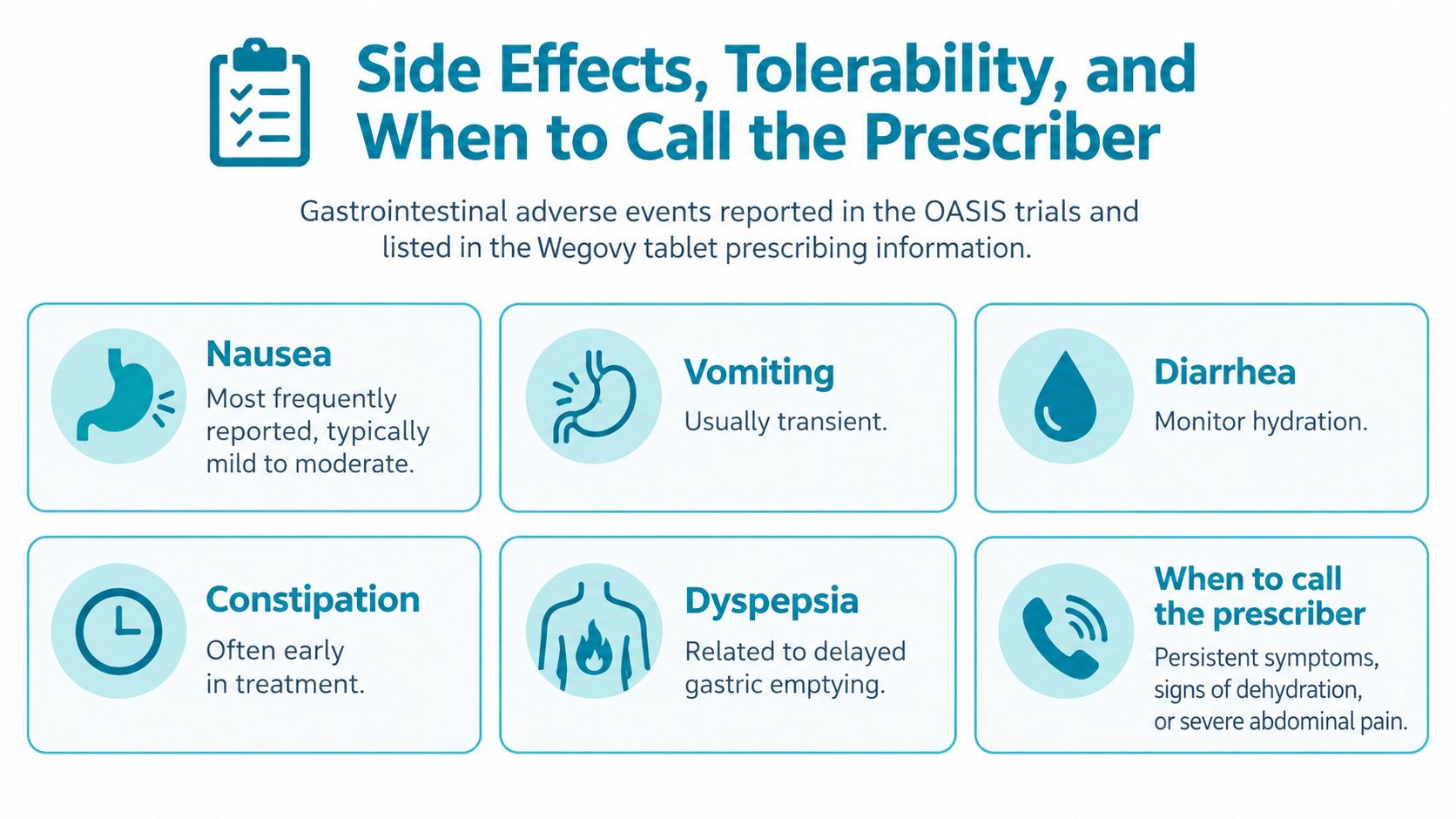
Which symptoms are expected during treatment, and which ones should prompt a call? Oral semaglutide commonly causes nausea, vomiting, diarrhea, constipation, dyspepsia, and abdominal pain. Dyspepsia refers to indigestion or discomfort in the upper abdomen. In the OASIS 4 phase 3b study, 307 adults were followed for 64 weeks, and Novo Nordisk reported substantial weight loss with the 25 mg oral formulation among participants who adhered to treatment. The company's OASIS 4 report describes the study population and outcomes.
Symptoms often become more noticeable during dose escalation because the labeled regimen raises exposure over time. Meal size, food choices, hydration, and the pace of titration can influence tolerability. The morning routine remains part of safe use, so a patient should not self-escalate, take extra tablets, or copy the schedule used for an injection.
Warnings that deserve clinical attention
The prescribing information warns about pancreatitis, gallbladder disease, hypoglycemia when semaglutide is used with insulin or sulfonylureas, and acute kidney injury associated with dehydration. It also includes a boxed warning about thyroid C-cell tumors and contraindicates use with a personal or family history of medullary thyroid carcinoma or MEN 2.
Contact the prescriber promptly for:
- Severe or persistent abdominal pain, particularly pain that may radiate to the back.
- Possible gallbladder symptoms, including upper abdominal pain, fever, jaundice, or unusually pale stools.
- Repeated vomiting or inability to keep fluids down, especially when dehydration may develop.
- Fainting, marked weakness, or confusion, which may signal a serious problem.
- New or worsening visual changes in an adult with diabetic retinopathy.
- Persistent gastrointestinal symptoms that disrupt food, fluids, prescribed medicines, or ordinary activities.
Review Wegovy side effects and tolerability guidance for symptoms to monitor between visits. Severe symptoms, breathing difficulty, facial swelling, or other signs of a medical emergency require emergency care rather than a routine appointment. Give the prescribing clinician a complete account of symptoms and current medicines.
Following Up Without a Fixed Schedule
A useful follow-up record captures what happened between prescriptions. A calendar entry showing that a prescription was issued doesn't show whether the fasting window was followed, whether vomiting occurred, or whether the adult could maintain hydration.
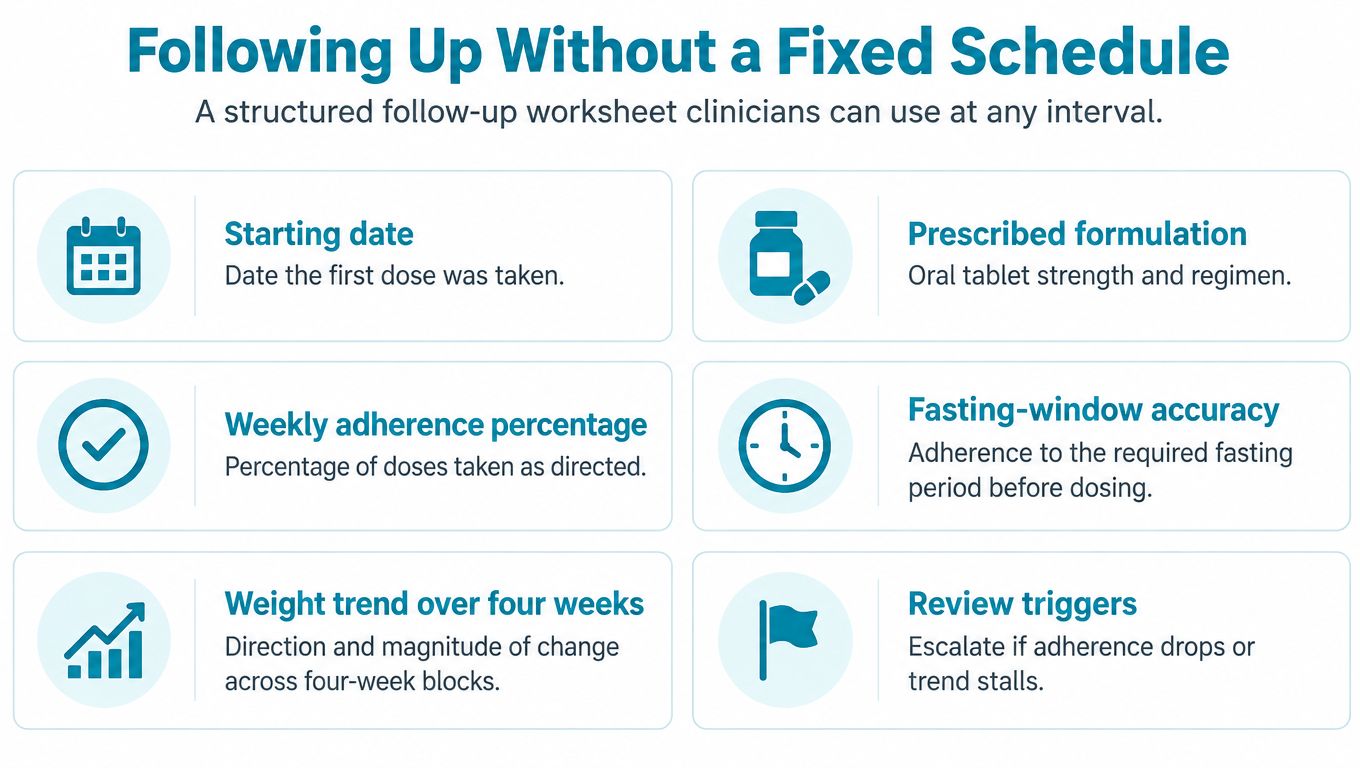
A structured worksheet can include the following:
| Worksheet field | What to record |
|---|---|
| Starting date | Date the first tablet was taken |
| Prescribed formulation | Oral Wegovy tablet and prescribed strength |
| Actual use | Doses taken as directed and any missed doses |
| Fasting-window accuracy | Whether the empty-stomach and waiting rules were followed |
| Weight trend | Direction of change across four-week blocks |
| Tolerability | Nausea days, vomiting episodes, constipation, diarrhea, and abdominal symptoms |
| Hydration | Ability to maintain fluids and signs of dehydration |
| Nutrition | Regular meals, adequate protein-forward choices, and tolerance |
| Functional goals | Patient-defined goals such as stair climbing or sleep apnea burden |
| Glucose monitoring | Monitoring when relevant to diabetes or other clinical factors |
What should trigger an earlier review
No universal visit interval belongs in an educational article because follow-up depends on the formulation, titration stage, symptoms, medical history, and prescribing practice. The FDA label and the OASIS trial structure provide clinical context, but they don't create a single appointment schedule for every adult.
A plateau or missed dose should prompt review of the plan rather than unsupervised extra tablets. Persistent vomiting, dehydration, possible gallbladder symptoms, severe abdominal pain, or visual changes warrant sooner contact regardless of the next planned visit.
The adult taking the medicine and the prescriber share responsibility for monitoring. A simple log brought to the next appointment can reveal whether a concern reflects absorption timing, tolerability, adherence, nutrition, another medicine, or a need to reconsider the treatment plan.
Why the Pill Is Not the Easy Version
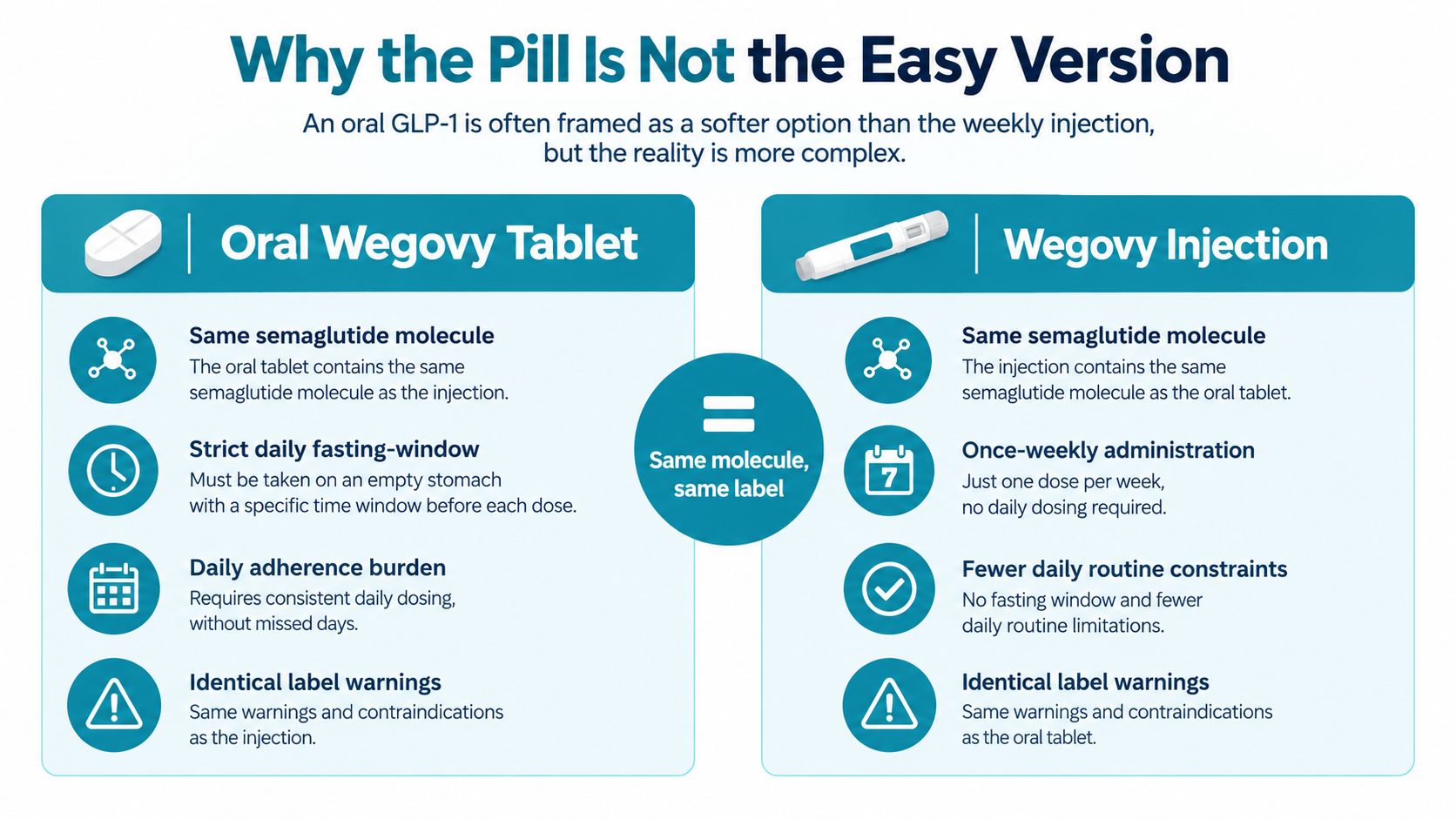
The oral route changes the routine, not the fundamental medical seriousness of semaglutide. The tablet and injection use the same active molecule, so the decision doesn't remove the need to review thyroid cancer risk, MEN 2, pancreatitis, gallbladder disease, hypoglycemia risk, kidney concerns related to dehydration, or gastrointestinal tolerability.
The tablet's convenience is specific. It removes the injection device, but it adds a fasting requirement every morning. The dose must be taken with a limited amount of plain water, followed by a waiting period before food, other drinks, oral medicines, or supplements. For an adult who takes several morning prescriptions, the tablet may require more planning than a weekly injection.
The choice is about fit, not softness
A pill isn't automatically gentler for an older adult, an adult with swallowing difficulty, or someone who dislikes injections. It also isn't automatically easier for a person with a crowded morning medication schedule. Absorption depends on following the labeled administration rules, and other oral products may complicate the timing.
The weekly injection has its own burdens, including comfort with the device, injection technique, storage, travel planning, and weekly adherence. The tablet has different burdens, including daily dosing and the fasting window. Neither delivery system eliminates the need for a chronic-disease framework.
A daily tablet can be the right delivery system for some adults, but only when the daily routine is realistic enough to sustain.
Adults who prefer a swallow-only option may find that the tablet aligns better with personal preferences. Others may decide that a weekly injection creates fewer interruptions in the morning. That decision belongs in a clinician-led review of the labeled indication, medication schedule, tolerability, preferences, and follow-up needs. Products described as compounded semaglutide should not be assumed to have the same FDA-approved labeling or oversight as Wegovy.
For adults considering physician-led obesity care, semaglutide treatment options should be discussed in the context of approved products, safety screening, and the individual medication list.
Sources
- June 2026 Wegovy prescribing information, checked October 3, 2026.
- FDA Wegovy tablet label.
- OASIS 4 oral semaglutide trial report.
- Reuters report on European authorization.
A physician-led obesity medicine consultation can review Wegovy tablet eligibility, the fasting morning routine, medication interactions, side effects, and follow-up needs without promising a particular outcome. Adults interested in discussing whether oral or injectable treatment fits their medical history can visit Empire Medical Wellness. This article is educational and isn't personal medical advice.