
Can two people take the same antipsychotic and have nothing else in common? Yes, and they often do. One may be treating schizophrenia, another bipolar mania, a third severe nausea. A drug name describes a molecule, not a diagnosis.
That's the first thing to understand about any antipsychotic drugs list. Antipsychotics are medicines that reduce psychotic symptoms, such as hallucinations and delusions, and most are also labeled for other conditions. They're grouped into two broad classes. First-generation (typical) drugs, such as haloperidol and chlorpromazine, came first and act mainly by blocking dopamine D2 receptors. Second-generation (atypical) drugs, such as risperidone, olanzapine, quetiapine, aripiprazole, and lurasidone, act on dopamine and serotonin and tend to carry different side-effect profiles.
The class label matters less than it once did. As the National Institute of Mental Health overview of mental health medications explains, selection depends on the person's symptoms, medical history, side-effect risks, and response, and FDA approval differs by drug and by indication. Some uses are labeled. Others are off-label. The entries below give labeled uses, brand names, and the questions worth raising with a prescriber. This is educational information, not a recommendation, and it can't replace an evaluation.
Table of Contents
- 1. Haloperidol (First-Generation, Typical Antipsychotic)
- 2. Chlorpromazine (First-Generation, Typical Antipsychotic)
- 3. Fluphenazine (First-Generation, Typical Antipsychotic)
- 4. Perphenazine (First-Generation, Typical Antipsychotic)
- 5. Clozapine (Second-Generation, Atypical Antipsychotic)
- 6. Risperidone (Second-Generation, Atypical Antipsychotic)
- 7. Olanzapine (Second-Generation, Atypical Antipsychotic)
- 8. Quetiapine (Second-Generation, Atypical Antipsychotic)
- 9. Aripiprazole (Second-Generation, Atypical Antipsychotic)
- 10. Lurasidone (Second-Generation, Atypical Antipsychotic)
- Antipsychotic medications at a glance
- Bringing This List to Your Next Appointment
1. Haloperidol (First-Generation, Typical Antipsychotic)
Haloperidol is the archetypal first-generation antipsychotic: potent, long studied, and still widely used. It works mainly by blocking dopamine D2 receptors, which is also why it can produce movement side effects. It's available as tablets, an oral solution, and a long-acting injection sold as Haldol Decanoate.
FDA labeling lists schizophrenia and control of tics and vocal utterances in Tourette's disorder among its approved uses. Other uses depend on the clinical setting and count as off-label. The drug's staying power is measurable: in a 2025 study of 608 patients receiving antipsychotic medication, haloperidol was prescribed to 19.4% of them, according to the Scientific Reports analysis.
Movement effects are the main thing to watch. Report new stiffness, tremor, restlessness, or unusual movements promptly, because early recognition makes them easier to manage. Ask whether a baseline electrocardiogram or other monitoring is part of the plan, especially with injectable forms. And don't stop or change the drug on your own. Stopping abruptly can bring symptoms back quickly.
A first visit is mostly a conversation about symptoms, history, and goals.

If you're weighing benefits against burdens, this look at medication for mental illness pros and cons covers the trade-offs people ask about.
2. Chlorpromazine (First-Generation, Typical Antipsychotic)
Chlorpromazine is where modern psychopharmacology starts. The World Health Organization's evidence review of antipsychotic medicines.pdf?sfvrsn=615165eb_3) notes that its introduction in the early 1950s helped establish pharmacological treatment for psychosis, with haloperidol following later in that decade. The same review lists chlorpromazine among the medicines on its Essential Medicines List.
It's a phenothiazine, and it doesn't only block dopamine. It also blocks histamine and muscarinic receptors, which explains much of its sedation, dry mouth, and lightheadedness on standing. Those effects aren't failures of the drug. They're the predictable consequence of how it binds.
FDA labeling includes schizophrenia and severe nausea and vomiting, and the label runs broader than many newer antipsychotics. That's why the full list of approved uses belongs in the current prescribing information rather than in a summary like this one.
Three practical points come up again and again. Stand up slowly, especially in the first weeks, and tell your clinician about dizziness on standing. Use sunscreen and cover up outdoors, since phenothiazines can make skin more sensitive to light. Plan for dry mouth with water and sugar-free gum rather than waiting for it to become miserable. If sedation interferes with driving or work, that's a reason to call, not a reason to skip doses.
3. Fluphenazine (First-Generation, Typical Antipsychotic)
Fluphenazine is a phenothiazine available as an oral tablet and as a long-acting decanoate injection. FDA labeling lists the management of psychotic disorders among its approved uses. The tablet suits people who take daily medication reliably. The injection suits situations where steady dosing is the main concern, because it's given on a scheduled interval instead of every day.
Long-acting injectables are a genuine option, not a last resort. In a Swedish register study of 131,476 people, long-acting injectables were associated with a lower risk of relapse than the matching oral versions, with an adjusted hazard ratio of 0.81 (95% CI, 0.79-0.84), according to the JAMA Network Open comparative-effectiveness study. A hazard ratio below 1 means fewer relapses in the injected group.
The trade-off is that an injection can't be taken back. Side effects can persist after the dose is given, so monitoring has to happen on the schedule rather than on demand.
Ask directly: How long does one injection keep working, and what's the plan if a scheduled dose gets missed?
Report fever with muscle stiffness or confusion right away, since that combination can signal a serious reaction that needs urgent care. Keep follow-up visits on the calendar to track movement symptoms, even when everything feels fine.
4. Perphenazine (First-Generation, Typical Antipsychotic)
Potency on an antipsychotic label describes the size of the dose, not the strength of the effect. Perphenazine is a mid-potency phenothiazine, sitting between the highly sedating low-potency drugs and the very potent ones, and its side-effect pattern follows from that position.
FDA labeling includes schizophrenia and severe nausea and vomiting in adults. A combination product with amitriptyline is also labeled for specific anxiety and depression presentations. That combination carries additional warnings, including the suicidality warning that applies to antidepressants, so it behaves differently from perphenazine alone.
Older doesn't mean obsolete. A network meta-analysis covering 402 randomized studies and 53,463 participants found that every evaluated antipsychotic reduced overall schizophrenia symptoms more than placebo, with standardized mean differences ranging from -0.89 for clozapine to -0.03 for levomepromazine, as reported in the published network meta-analysis. The authors described the differences between drugs as gradual rather than a clean split between effective and ineffective options.
That's the reason to ask questions instead of assuming. Confirm whether you're prescribed perphenazine alone or the combination product, since the two have different warnings and different monitoring. Report new movement changes early, because they're easier to adjust for at the first sign. Bring a current medication list to every visit, including supplements, so interactions get checked against what you take.
5. Clozapine (Second-Generation, Atypical Antipsychotic)
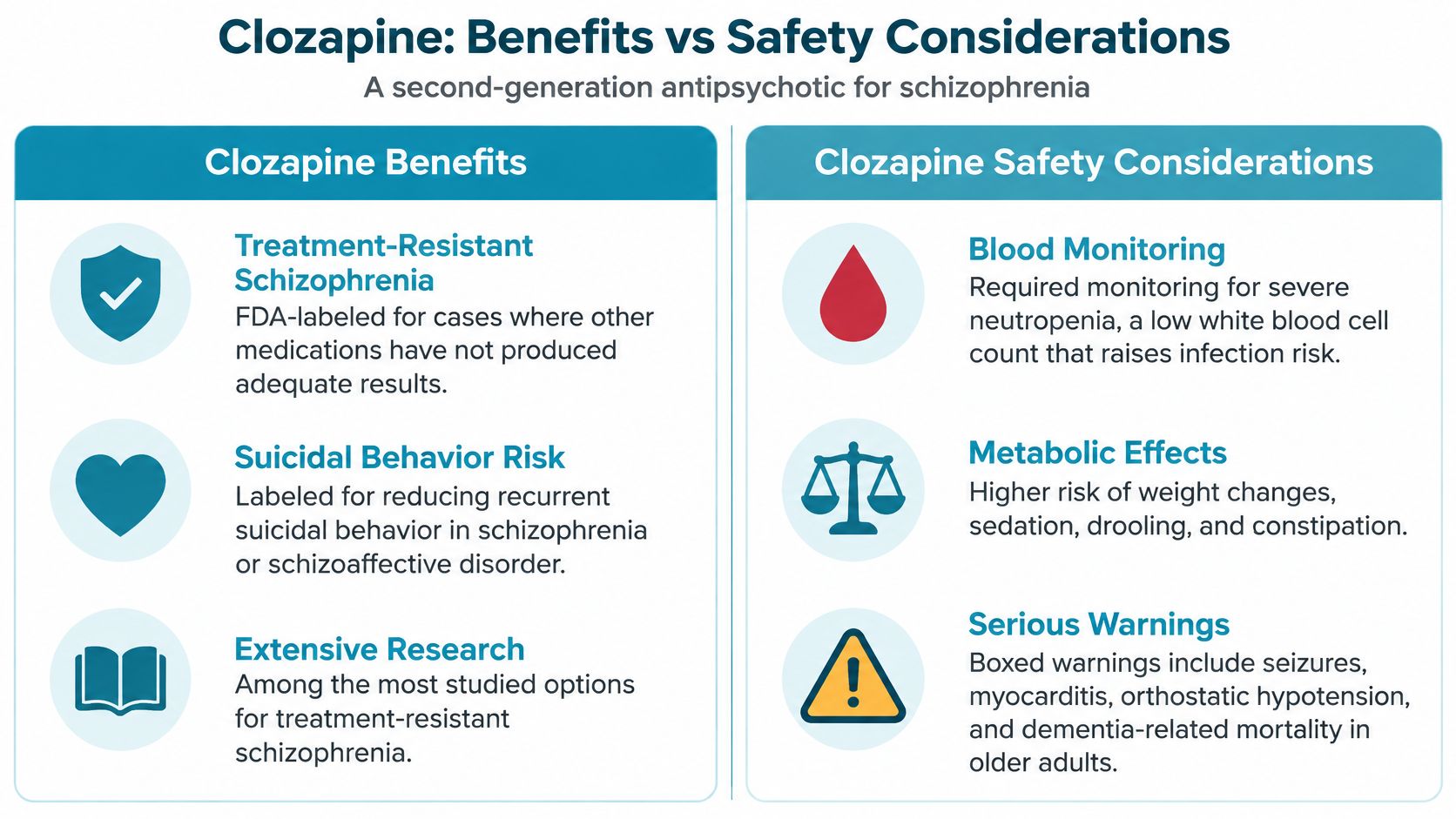
Clozapine is the drug most often described as different, and it earns that reputation in both directions. FDA labeling includes treatment-resistant schizophrenia, meaning symptoms that haven't improved enough with other antipsychotics, and reducing the risk of recurrent suicidal behavior in schizophrenia or schizoaffective disorder. The brand name is Clozaril.
Why the Blood Tests Exist
Clozapine can cause severe neutropenia, a dangerous drop in the white blood cells that fight infection. The VA/DoD schizophrenia pocket card sets out absolute neutrophil count checks weekly for the first six months, every two weeks for the next six months, then monthly, and it notes that NIMH describes the serious blood-cell complication as occurring in approximately 1% to 2% of people taking clozapine. The same guidance recommends baseline troponin and C-reactive protein testing, then weekly checks for at least the first month, to catch myocarditis early.
Regulation changed in 2025. The FDA removed the clozapine REMS program effective June 13, 2025, while stating that the drug can still cause severe neutropenia and that absolute neutrophil count monitoring should continue under the prescribing information. Less paperwork, same biology.
Removing a reporting program doesn't remove a biological risk.
Keep a clear record of blood test results and dates. Report fever, sore throat, or other signs of infection promptly rather than waiting for the next scheduled draw, and ask how the current monitoring requirements apply to your prescription.
The benefit and monitoring burden are easier to see side by side.
6. Risperidone (Second-Generation, Atypical Antipsychotic)
Risperidone blocks both dopamine and serotonin receptors. FDA labeling includes schizophrenia, bipolar I disorder with manic or mixed episodes, and irritability associated with autistic disorder in children and adolescents. It comes as tablets, orally disintegrating tablets, and long-acting injections (Risperdal Consta).
Because it can raise prolactin, a hormone that affects breast tissue and menstrual cycles, some people notice breast tenderness or changes in their periods. Weight gain and metabolic shifts are possible too. Neither is a reason to panic, and both are reasons to keep the monitoring appointments rather than skip them when life gets busy.
What Gets Checked and When
For adults, public guidance recommends weekly weight checks during the first six weeks, then checks of weight, pulse, blood pressure, and blood tests at around three months, according to the NICE guidance on antipsychotic medication. For children and adolescents the schedule is broader and can include BMI or growth-chart weight, waist circumference, glucose or HbA1c, lipids, prolactin, movement-disorder screening, and an ECG when indicated.
A weekly tracker turns vague impressions into numbers your clinician can act on.

Ask whether prolactin or metabolic labs are part of your plan. Track weight, sleep, and appetite changes and share them at follow-up. Don't change the timing or amount on your own, even if a dose seems to be working faster or slower than expected.
7. Olanzapine (Second-Generation, Atypical Antipsychotic)
Olanzapine acts on several receptor systems at once, which helps explain both its reach and its side effects. FDA labeling includes schizophrenia and bipolar I disorder, and a combination product with fluoxetine (Symbyax) is labeled for treatment-resistant depression in certain adults. The standalone brand is Zyprexa.
Weight gain, increased appetite, sedation, and changes in blood sugar and lipids are the effects clinicians watch most closely with this drug. Those are manage-and-monitor issues, not reasons to avoid care altogether. A clinician who knows the risk profile can plan for it from the first prescription instead of reacting months later.
A Monitoring Schedule You Can Expect
The 2023 VA/DoD schizophrenia guideline lists body-mass index, waist circumference, hemoglobin A1c or fasting plasma glucose, and a fasting lipid panel, with BMI checks at baseline and again at one, two, three, six, and twelve months, per the VA/DoD schizophrenia clinical practice guideline. Baseline labs include glucose, A1c, triglycerides, and HDL and LDL cholesterol.
Results are easier to discuss when they're on paper in front of you.

Track weight, blood pressure, and blood sugar results at follow-up visits. Ask how metabolic monitoring will be scheduled before treatment starts, not after. If weight change is already a concern, this explanation of psychiatric medication and weight gain describes what can be done about it.
8. Quetiapine (Second-Generation, Atypical Antipsychotic)
Quetiapine has one of the broadest labeled reaches on this list. FDA labeling includes schizophrenia, bipolar I mania, bipolar depression, and adjunctive treatment of major depressive disorder in adults. Brands include Seroquel and Seroquel XR.
Sedation is common and is often the reason it's taken at night. Metabolic changes are possible as well. The label carries boxed warnings about increased mortality in older adults with dementia-related psychosis and about suicidal thoughts and behaviors in young people and in adults starting treatment for depression.
Those warnings track a real pattern in care settings. A CMS report found that 23.9% of long-stay U.S. nursing home residents were receiving an antipsychotic in the fourth quarter of 2011, excluding residents with schizophrenia, Huntington's disease, or Tourette syndrome, and that the rate fell by 39% over the period covered by the CMS antipsychotic medication use report.
Worth knowing: A drug that helps one person can be the wrong choice for an older adult with dementia, which is why the diagnosis behind a prescription matters as much as the drug name.
Report any new or worsening thoughts of self-harm right away. Share daytime drowsiness with your clinician, since it affects driving and work. Ask about routine metabolic labs. If mood stability is the broader question, this mood stabilizers list shows where antipsychotics sit among other options.
9. Aripiprazole (Second-Generation, Atypical Antipsychotic)
Aripiprazole works differently from its neighbors. It's a partial agonist at dopamine and serotonin receptors, which means it acts more like a dimmer switch than an on/off switch. It can raise or lower signaling depending on how much activity is already there.
FDA labeling includes schizophrenia, bipolar I disorder, adjunctive treatment of major depressive disorder, irritability associated with autistic disorder in children and adolescents, and Tourette's disorder. Brands include Abilify and Abilify Maintena.
Its boxed warnings cover increased mortality in older adults with dementia-related psychosis and suicidal thoughts and behaviors. Akathisia, an intense inner restlessness that's easy to mistake for anxiety, is a known side effect. So are new compulsive urges, such as gambling or overspending. Those are uncommon, and they're worth naming because people rarely connect them to a medication on their own.
Report restlessness or an inability to sit still, since it's treatable and often mistaken for worsening anxiety. Tell your clinician about new urges or behaviors that feel out of character. Keep a simple symptom and sleep log to share at follow-up. When depression is the reason for treatment, this overview of depression care explains how medication fits into the larger plan.
10. Lurasidone (Second-Generation, Atypical Antipsychotic)
Lurasidone is labeled for schizophrenia and for bipolar depression in adults and in children and adolescents aged 10 and older. The brand is Latuda. Labeling directs that it be taken with food, so follow the instruction on your prescription rather than taking it on an empty stomach.
It's often discussed for having comparatively smaller effects on weight and metabolic measures than some other second-generation drugs. That's a relative difference, not an exemption. Monitoring still applies, responses vary between people, and akathisia and other movement effects remain possible. The same boxed warnings about dementia-related mortality and suicidality apply here as with other drugs in the class.
For a plain-language tour of the whole class and how the drugs differ in side effects, the Cleveland Clinic overview of antipsychotic medications is a reasonable starting point. Bipolar depression raises its own treatment questions, and the bipolar disorder care page describes how mood episodes are assessed and managed.
Follow the food instructions on the label, since they affect absorption. Share any new restlessness, sleep change, or mood shift with your clinician. Ask how metabolic monitoring will be scheduled, even though this drug is often chosen with those effects in mind.
Antipsychotic medications at a glance
| Item | Generation | FDA-labeled uses (summary) | Key monitoring focus |
|---|---|---|---|
| Haloperidol | First generation (typical) | Schizophrenia; tics and vocal utterances in Tourette's disorder | Movement symptoms and, when appropriate, QT interval |
| Chlorpromazine | First generation (typical) | Schizophrenia; severe nausea and vomiting; other labeled uses vary | Sedation, dizziness on standing, anticholinergic and movement effects |
| Fluphenazine | First generation (typical) | Management of psychotic disorders | Movement symptoms, sedation, and blood pressure; consider duration of effects after injection |
| Perphenazine | First generation (typical) | Schizophrenia; severe nausea and vomiting in adults; specific anxiety and depression presentations with amitriptyline combination | Movement symptoms and anticholinergic effects; confirm which product is prescribed |
| Clozapine | Second generation (atypical) | Treatment-resistant schizophrenia; reducing recurrent suicidal behavior in schizophrenia or schizoaffective disorder | Blood monitoring for neutropenia; watch for infection, cardiac effects, seizures, and metabolic changes |
| Risperidone | Second generation (atypical) | Schizophrenia; bipolar I manic or mixed episodes; irritability associated with autistic disorder | Prolactin-related effects, weight and metabolic changes, and movement symptoms |
| Olanzapine | Second generation (atypical) | Schizophrenia; bipolar I disorder; treatment-resistant depression in certain adults with fluoxetine combination | Weight, blood sugar, lipids, and sedation; monitor after long-acting injection |
| Quetiapine | Second generation (atypical) | Schizophrenia; bipolar I mania and depression; adjunctive treatment of major depressive disorder in adults | Sedation, weight and metabolic changes, and mood or suicidal thoughts |
| Aripiprazole | Second generation (atypical) | Schizophrenia; bipolar I disorder; adjunctive major depressive disorder; autistic-disorder-associated irritability; Tourette's disorder | Akathisia, impulse-control changes, and mood or suicidal thoughts |
| Lurasidone | Second generation (atypical) | Schizophrenia; bipolar depression | Movement symptoms, mood or suicidal thoughts, and weight or metabolic changes |
Bringing This List to Your Next Appointment
A medication list is only useful if it changes the conversation. The valuable part of this one isn't the order of the drugs. It's the questions each entry raises about labeled use, monitoring, and what to report.
Bring details, not just names. Write down every medication you take, including supplements and anything over the counter, plus the side effects you've noticed and when they started. Empire Medical Wellness asks for an updated medication list, pharmacy information, relevant lab results, and contact details for other clinicians before a first visit, and that preparation makes the appointment more useful.
Track what's measurable. Weight, sleep, appetite, restlessness, and menstrual changes are the details that turn "I don't feel right" into a decision. A note on your phone beats memory every time.
Routine questions belong at a scheduled visit. Ask whether the current drug is still the right choice, what is being monitored and how often, and what the next step looks like if symptoms aren't improving. A medication review visit exists for exactly that conversation: whether treatment is helping, what side effects are showing up, and what to adjust.
Some situations don't wait for an appointment. Get urgent help for fever with muscle stiffness or confusion, chest pain, fainting, seizures, or thoughts of self-harm. Call 911 or, in the U.S., call or text the 988 Suicide and Crisis Lifeline at 988.
Empire Medical Wellness is a private-pay, physician-led outpatient practice, and a review of a current regimen is one of the services it provides. You can read more about mental health medication review before scheduling. This article is educational and is not personal medical advice. Treatment decisions belong with a clinician who knows your history.
If you're taking an antipsychotic and want a calm, unhurried second look at whether it's helping, Empire Medical Wellness provides physician-led mental health evaluation and medication management for adults, adolescents, and children ages 8 and older, with visits available by secure telemedicine for patients in New York, New Jersey, Connecticut, Pennsylvania, and Virginia. Appointments include a 50-minute initial evaluation for $350 and a 25-minute follow-up for $225, and Empire does not bill insurance directly. Visit Empire Medical Wellness to see how the practice works and to schedule an appointment.