
Some people notice early changes from Zoloft (sertraline) within about 1–2 weeks, while fuller benefit is commonly assessed over several weeks and may take about 8 weeks. There is no guaranteed date; timing depends on the condition being treated and the person's response.
What may change before mood feels better? Sleep, appetite, anxiety, daily functioning, and side effects can shift on different schedules. Tracking each separately can make follow-up conversations more useful than asking only whether the medication “works.”
Byline: Empire Medical Wellness Editorial Team
Published: October 28, 2026
Updated: October 28, 2026
Table of Contents
- How Long Zoloft Usually Takes to Show Benefit
- Why Sertraline Takes Weeks Rather Than Days
- Factors That Change How Long Treatment Takes
- Tracking Early Changes Without Overreading Them
- Warning Signs That Need Prompt Medical Attention
- Follow-Up, Continuation and Questions for Your Visit
- Sources, Dates and Next Steps
How Long Zoloft Usually Takes to Show Benefit
| Timeframe | What may change | What it does not prove |
|---|---|---|
| Days 1–7 | Blood levels approach a stable point after about one week of once-daily dosing | A stable level doesn't mean symptoms are resolved |
| Weeks 1–2 | Some early changes, such as sleep, appetite, or specific anxiety symptoms, may appear | An early change isn't a full response |
| Weeks 2–4 | Gradual, uneven improvement may continue; the clinician may review tolerability and adherence | Lack of improvement alone doesn't confirm that treatment will fail |
| Weeks 4–8 | Response is commonly assessed; many depression trials evaluated effects over about 8 weeks | Group averages don't predict an individual's exact date |
| Beyond 8 weeks | Benefit may keep developing in some people; continuation or dose decisions are made with the clinician | No timeline guarantees remission |
The table shows why “working” can mean different things at different stages. An early change is a shift such as improved sleep, appetite, or anxiety. It may be encouraging, but it doesn't establish that core symptoms have improved enough.
A meaningful response is an improvement in the symptoms that matter for the person's condition, judged with a clinician. A treatment trial is a planned assessment period at a tolerated prescribed dose. It allows time to evaluate benefit, side effects, and adherence, but it's not a promise that the medicine will work.
The timing ranges aren't identical across sources. The UK's NHS guidance on antidepressants describes possible early effects within 1–2 weeks and fuller benefit taking up to 8 weeks. A Cochrane evidence summary on antidepressant response describes benefit as developing over time, with response potentially taking several weeks. These are general timing guides, not individual forecasts. For U.S. approved indications and safety information, the relevant source is the U.S. prescribing information for Zoloft, not UK licensing.
No single date is a deadline for success or failure. A lack of change in the first week doesn't by itself show that sertraline won't help, and a first improvement doesn't necessarily mean the treatment has reached its full effect.
Why Sertraline Takes Weeks Rather Than Days
A furnace can switch on within minutes, but the room takes longer to warm and stay warm. Sertraline has a similar distinction between starting to affect a biological process and producing a noticeable, sustained change in symptoms. It affects the serotonin transporter soon after doses, while related changes in signaling, emotional processing, sleep, and energy develop over time.
One clock tracks the medication level. Steady state means the amount of medicine in the bloodstream has reached a relatively stable pattern with regular once-daily use. The FDA prescribing information reports that sertraline reaches steady-state blood concentrations after about one week. That doesn't mean mood, anxiety, or obsessive symptoms should be fully improved by day seven. The FDA prescribing information describes clinical studies that continued beyond this early medication-level milestone, including an initial treatment phase of 8 weeks and relapse-prevention follow-up lasting as long as 28 weeks.
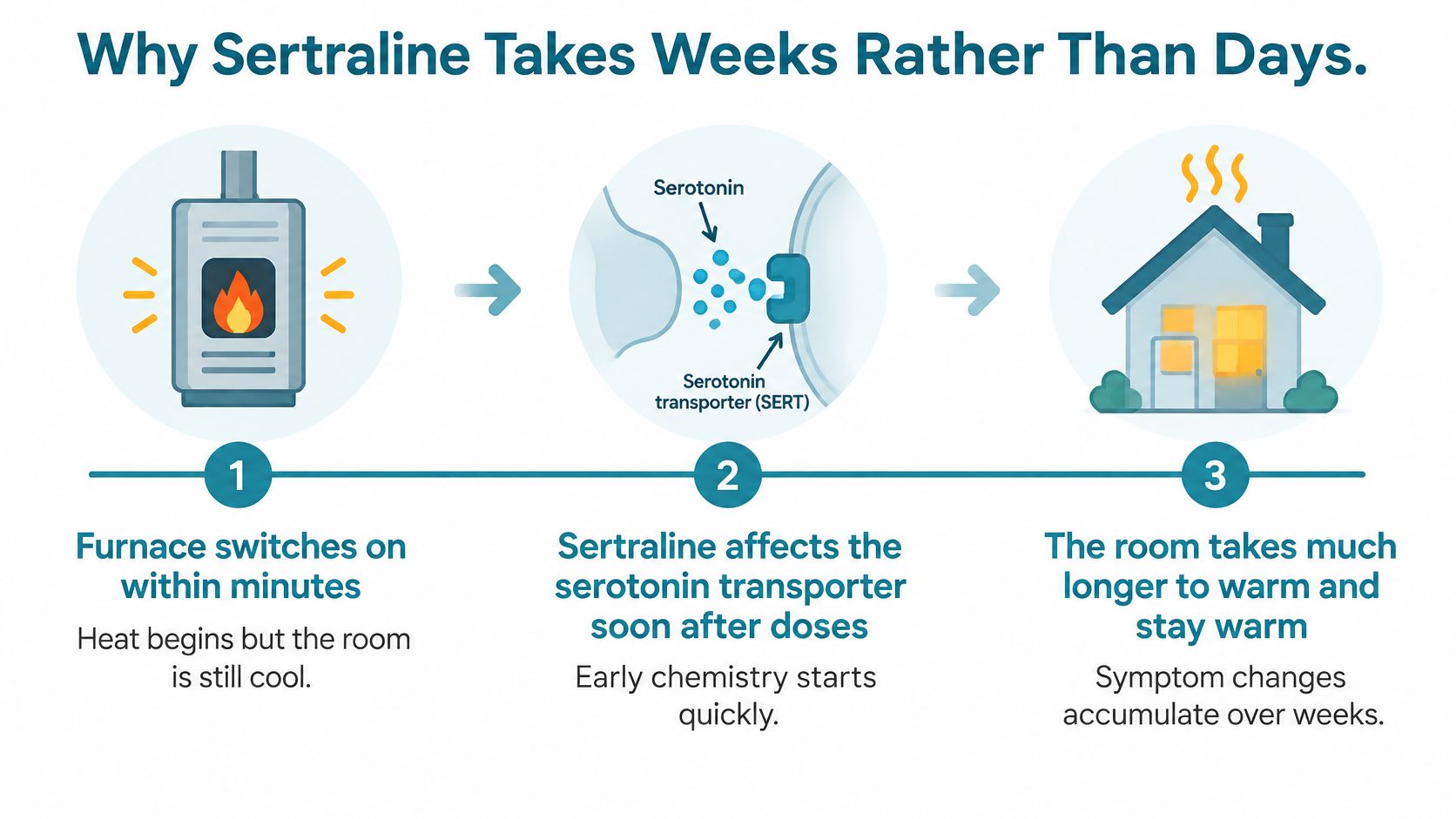
The second clock tracks symptoms. Early biological effects don't provide a reliable countdown to when someone will feel better. The mechanisms behind antidepressant response are still being studied, and people's symptom patterns and responses differ.
Practical rule: Early days are useful for noticing tolerability and safety changes. Treatment response is assessed over weeks with the prescribing clinician.
For an accessible discussion of antidepressant treatment and medication review, see Empire Medical Wellness's mental health information. A clinician can help interpret changes without treating a particular day as a pass-or-fail test.
Factors That Change How Long Treatment Takes
There's no fixed average that applies to every patient. The time needed to assess response can depend on the diagnosis, symptom pattern, consistency in taking medication, and other health factors. The FDA's current Zoloft prescribing information describes sertraline as a treatment evaluated over time, not an immediate symptom reliever.
| Factor | How it can affect timing |
|---|---|
| Diagnosis and symptom pattern | Different conditions can take different lengths of time to respond |
| Severity | More severe symptoms may call for closer review and a longer evaluation |
| Adherence | Missed doses or stopping early can make response hard to judge |
| Time at a tolerated prescribed dose | Response is assessed after several weeks at a suitable dose, not after a few days |
| Dose changes | The label recommends waiting one week between changes, with the clinician deciding any adjustment |
| Other medicines and supplements | Interactions can change side effects or the overall plan |
| Co-occurring conditions | Medical or other psychiatric conditions can change how symptoms are judged |
| Sleep, alcohol, and substance use | These can affect mood, anxiety, and sleep, changing how response is interpreted |
These factors help explain why early changes, a meaningful response, and a full treatment trial are different milestones. A change in one symptom does not necessarily mean the overall treatment is working, and no single day is a deadline for judging benefit.
Dose decisions belong with the prescriber. The interval between dose changes in the label is not a reason to adjust treatment independently, and raising the dose without medical guidance does not reliably speed improvement. At a review, the clinician can consider whether the plan has been followed, whether side effects are affecting consistency, and whether other factors may be influencing symptoms.
Empire Medical Wellness begins mental health care with a review of symptoms, medical history, current functioning, previous treatment, and current and past medications. Sleep, substance use, and lifestyle are considered when relevant to diagnosis or treatment response. The practice's information about depression medication evaluation explains what this kind of assessment can involve.
This article addresses adults. Medication monitoring and considerations for children and older adults can differ, so their treatment timing requires specific clinical guidance. The Pfizer label lists major depressive disorder, obsessive-compulsive disorder, panic disorder, posttraumatic stress disorder, premenstrual dysphoric disorder, and social anxiety disorder as approved indications. Other uses are off-label, and the timing evidence may differ by condition.
Tracking Early Changes Without Overreading Them
Hypothetical example: A person keeps a diary for six weeks, recording sleep, daily functioning, mood, anxiety, and side effects using the same scale each week. The example doesn't assume that any one symptom improves on a particular day. Its purpose is to make changes easier to describe during a clinical conversation.
| Area tracked | What to note each week | Why it matters |
|---|---|---|
| Sleep | Hours slept, waking during the night, and overall quality | Sleep can change before mood does |
| Daily functioning | Work, household tasks, and social contact | Shows practical change beyond how a person feels |
| Mood | Low mood, interest, and energy | Tracks core symptoms over time |
| Anxiety | Frequency and intensity of worry or panic | Some anxiety symptoms may shift earlier than mood |
| Physical side effects | Nausea, diarrhea or loose stool, tremor, sweating, appetite, and sexual function | Helps the clinician judge tolerability |
| Restlessness or unusual thoughts | Any new agitation, restlessness, or suicidal thoughts | Needs prompt contact with the clinician |

Improvement can be gradual and uneven. A 2025 analysis of randomized-trial data on sertraline reported changes in some emotional and anxiety symptoms around two weeks, while reduced anhedonia, meaning less difficulty feeling interest or pleasure, and broader anxiety improvement were more apparent around 12 weeks. Those findings describe study results, not a schedule every person will follow.
Side effects should be recorded separately from benefits. The U.S. label lists nausea, diarrhea or loose stool, tremor, sweating, appetite changes, sexual dysfunction, and decreased libido among commonly reported adverse reactions. Not everyone experiences them, and the list doesn't predict when an individual might notice them. A change in sleep or appetite may matter, but it doesn't prove full response.
The diary is for discussion, not self-directed medication changes. Empire Medical Wellness's information about depression care can help readers explore mental health services relevant to depression. New, severe, or concerning symptoms warrant contact with the prescribing clinician rather than waiting for a diary pattern to become clear.
Warning Signs That Need Prompt Medical Attention
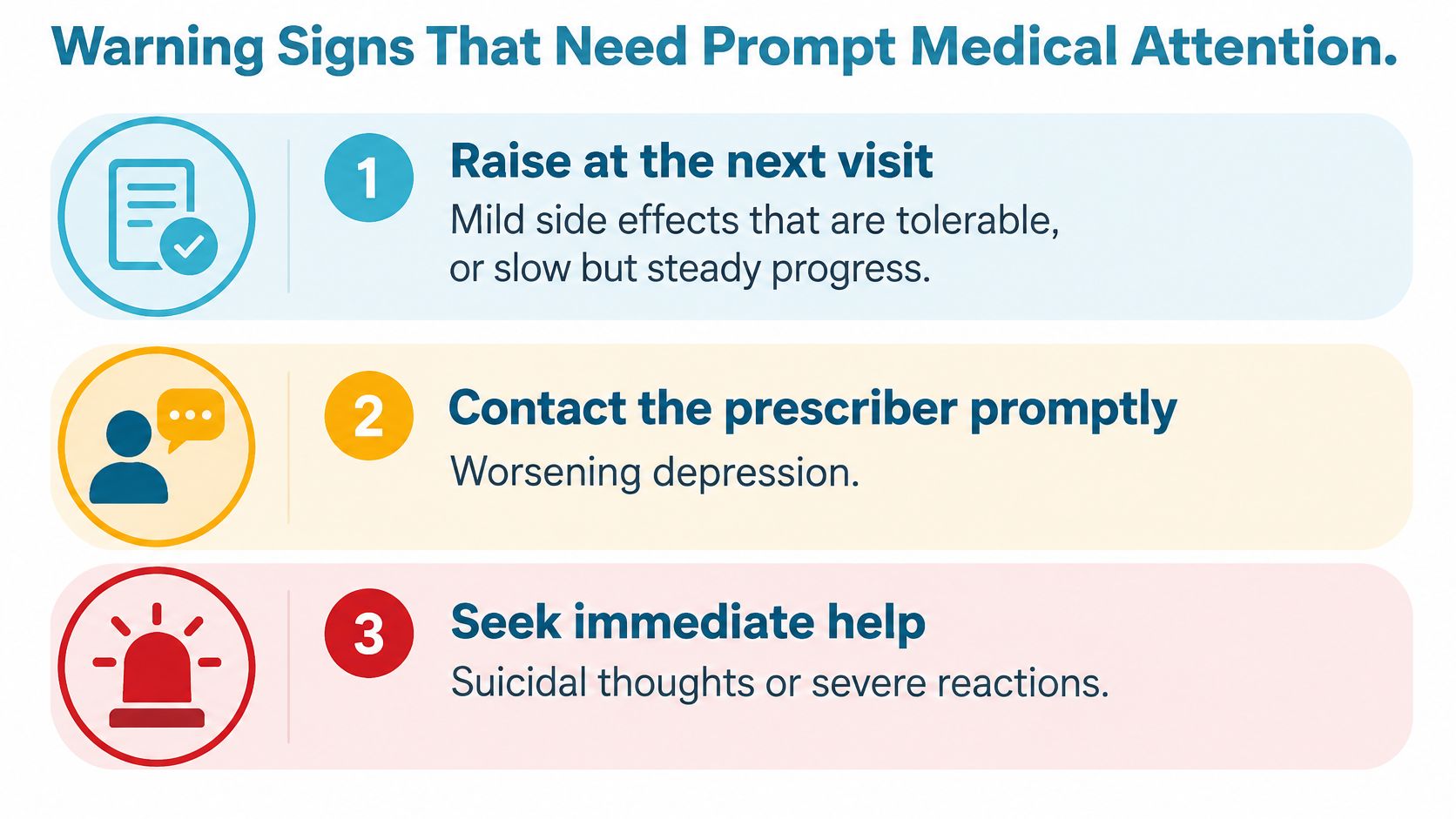
Urgent concerns shouldn't wait for the next appointment. Sertraline can cause side effects, and some changes call for quicker assessment than routine monitoring.
- Raise at the next visit: Mild side effects that remain tolerable, or slow but steady progress. Record what changed and whether it affects daily life.
- Contact the prescriber promptly: Worsening depression or anxiety, new or worsening sleep problems, intense or unexpected side effects, or increasing restlessness and agitation. Suicidal thoughts without a specific plan also need prompt support. Call or text 988 for immediate emotional support in the United States.
- Seek emergency care now: Suicidal thoughts with intent or a plan, or a severe reaction that may suggest serotonin syndrome. Possible warning signs include agitation, confusion, a fast heartbeat, high fever, heavy sweating, muscle twitching or rigidity, or worsening tremor. Call 911 for an emergency.
The Pfizer label includes a boxed warning about suicidal thoughts and behaviors in young people. New activation, such as racing thoughts or unusual restlessness, should be reported to the prescriber, especially if it's intense or worsening. A discussion of medication benefits and risks can support an informed conversation, but it doesn't replace prompt care for urgent symptoms.
Sertraline shouldn't be stopped abruptly without medical guidance because discontinuation symptoms can occur. If a concern feels urgent, contact a clinician or emergency resource rather than waiting for a planned follow-up. When medication is appropriate, Empire Medical Wellness uses follow-up to assess response and tolerability and determine whether treatment needs adjustment.
Follow-Up, Continuation and Questions for Your Visit
Follow-up separates three questions: Are side effects tolerable? Is there a meaningful response? Could continuing treatment after improvement help? These decisions happen on different timelines. Safety and tolerability may be reviewed earlier, while changes in symptoms take longer to assess.
The Kaiser Permanente depression guideline recommends assessing adherence and response about 4–8 weeks after starting an SSRI before considering a switch. This is a point to review progress with the prescriber, not a deadline for improvement. If symptoms worsen or side effects become severe, contact a clinician rather than waiting for a scheduled review.
Early changes, meaningful response, and a full treatment trial are not the same milestone. To make follow-up more useful, track symptoms separately: note what has changed, when it changed, and whether it affects daily functioning. For example, record sleep, mood, or concentration individually instead of relying on a general impression that you feel better or worse. Bring those notes to the appointment, along with any side effects.
Some people continue treatment for a period after symptoms improve. How long to continue depends on the person's situation and should be discussed with the prescriber. Decisions to reduce or stop medication also call for medical guidance, since stopping abruptly can cause symptoms.
At Empire Medical Wellness, the first mental health appointment is 50 minutes and focuses on symptoms, medical and treatment history, current medications, daily functioning, and goals. The patient receives an explanation of the clinical assessment, treatment options, and recommended follow-up. A mental health medication review can provide a structured discussion of response and tolerability.
A first-visit checklist can make that conversation more specific:
- Symptoms and timing: Note your concerns and when they began.
- Treatment history: Bring details about previous evaluations and treatments.
- All products taken: List prescription medicines, over-the-counter products, and supplements.
- Daily factors: Share relevant information about sleep, alcohol, and other substance use.
- Goals and questions: Describe what improvement would look like in daily life. Ask how response, side effects, and follow-up will be assessed.
- Diary entries: Bring symptom and side-effect notes, if available.
No medication is assumed in advance. The appointment is a chance to clarify your situation, review suitable options, and agree on next steps.
Sources, Dates and Next Steps
This article draws on the U.S. Zoloft prescribing information from Pfizer for approved indications and safety, NHS guidance for general timing context, a Cochrane evidence summary on antidepressant response, a 2025 randomized-trial analysis, and the Kaiser Permanente depression guideline. It also references the FDA prescribing information for Zoloft and the 2017 FDA prescribing information for Zoloft.
Byline: Empire Medical Wellness Editorial Team
Published: October 28, 2026
Updated: October 28, 2026
For emergencies, call 911. For immediate emotional support in the United States, call or text 988. This article is educational and isn't personal medical advice.
Empire Medical Wellness offers adult mental health evaluation and medication management, including review of treatment response, side effects, and possible next steps. Adults considering or taking sertraline can visit Empire Medical Wellness to learn about its mental health services and request information about care.