
You can decide to quit smoking on a Monday, switch to a lighter brand on Wednesday, and still feel stuck by Friday. That gap between wanting to stop and stopping is common, and it is why a quit attempt works better when it is treated like a written plan with support, medicine, trigger management, and follow-up instead of a single burst of resolve.
For adults who want a calm, practical path, the goal is simple. Stop treating smoking as a test of character, and start treating it as a health problem that responds best to structure, support, and repeated adjustment.
Table of Contents
- Why Quitting Takes More Than Willpower
- Building a Practical Quit Plan
- Comparing FDA-Approved Cessation Medicines
- Adding Counseling and Follow-Up
- Managing Cravings, Withdrawal, and a Lapse
- The E-Cigarette Question
- A Quit Plan You Can Bring to a Visit
Why Quitting Takes More Than Willpower
A lot of adults try to quit in private, cut down for a few days, and then assume the problem is a lack of discipline. Clinically, that is the wrong frame. Smoking is usually maintained by cues, withdrawal, and habit loops that do not disappear just because someone wants them to.
The pattern shows up in the numbers too. In the United States, 28.8 million adults smoked cigarettes in 2022, 53.3% made a quit attempt in the prior year, and only 8.8% had successfully quit recently, according to CDC data (CDC smoking cessation data). That gap is why a quit attempt needs relapse prevention built in from the start.
A workable quit plan usually combines behavioral support, FDA-approved medicine, trigger planning, and follow-up. In practice, that means choosing tools ahead of time, then adjusting them when cravings show up in the same places they always have, after coffee, while driving, during stress, or after meals. A quit attempt goes better when the person is using a system, not improvising in the middle of withdrawal.
The early physiological wins are real, and they are covered in the withdrawal section below, but they do not remove the need for planned support. Cravings still arrive, especially when a cigarette has been tied to pressure, boredom, or routine for years.
A written plan helps because it gives the urge a response. If the first move is already decided, there is less room for bargaining in the moment.
Practical rule: quitting is usually easier to sustain when the plan is written down before the quit date, not improvised during the first strong craving.
Stress and habit often travel together. A cigarette can become the default response to tension, and willpower alone has to fight both nicotine withdrawal and a rehearsed cue. To find stress and willpower insights, it helps to see that pattern clearly, because the same loop appears in smoking cessation every day.
For adults considering nicotine treatment, a clear overview of nicotine replacement options can help with product choice and technique. The nicotine treatment page gives a practical place to review those options when replacing cigarettes with a cleaner source of nicotine needs to be understood in one place.
The main point is straightforward. Many people want to stop, many make serious attempts, and fewer succeed quickly than they expect. That does not mean quitting is unlikely. It means the plan has to match the problem.
Building a Practical Quit Plan
The best quit plans start before the quit date. A person can write down the cigarettes that feel automatic, then mark the situations that make them most likely, such as the commute, after-meal coffee, phone calls, stress, social drinking, or long gaps between tasks. That list becomes the target, because cravings are often cue-driven rather than random.
Put the plan on paper before the first hard moment
A realistic quit date is usually chosen within the next couple of weeks, not months away. That gives enough time to prepare without letting the plan drift. It also helps to tell at least one supportive person, because silence makes it easier to slip back into old patterns without noticing.
Start with this sentence: “If the urge hits, the first move is not a cigarette. It's the next step in the plan.”
Removing cigarettes, lighters, ashtrays, and other reminders from home, car, and work space can also lower friction in the first days. Behavioral support can then be added in parallel, rather than waiting to see whether the person can “earn” help later. The U.S. Preventive Services Task Force gives an A recommendation to ask about tobacco use and provide both behavioral interventions and FDA-approved pharmacotherapy when appropriate (USPSTF tobacco cessation recommendation).
A one-page quit-plan worksheet is often enough to make the next step feel concrete. A useful version has four boxes:
- Triggers: list the situations that usually lead to smoking.
- Chosen support: write down who or what will help, such as a clinician, quitline, counselor, or text program.
- Medicine questions: note what to ask about approved medications, side effects, and how to use them safely.
- Slip plan: write what to do after the first strong craving, and what to do after a lapse.
That worksheet matters because it turns a vague intention into a documented plan. It also makes the follow-up visit more productive, since the discussion can focus on what happened instead of re-starting from zero.

Comparing FDA-Approved Cessation Medicines
A quit plan often gets easier once the medicine matches the job. Some people need steady nicotine coverage through the day. Others need help with a sudden urge after coffee, after meals, or during a stressful call. The main FDA-approved options are nicotine replacement therapy, varenicline, and bupropion SR. Each has a different role, different cautions, and a different fit in a documented quit attempt.
The three categories in plain language
Nicotine replacement therapy, or NRT, gives nicotine without cigarette smoke. It comes as a patch, gum, lozenge, nasal spray, or inhaler. CDC guidance says it is usually used for about 8 to 12 weeks, though the exact course can vary by product and plan (CDC quit-smoking medicines). The patch provides long-acting coverage. Gum and lozenges are better for breakthrough cravings that show up between doses.
Varenicline is a prescription medicine that reduces craving and makes smoking less rewarding. Bupropion SR is another prescription option that can help with withdrawal and may fit better when depression history or weight concerns are part of the discussion. The choice depends on the person's medical history, current medicines, and tolerance for side effects. It is a clinical decision, not a test of willpower.
Combination treatment is common in real practice. A nicotine patch can provide the baseline support, while gum or lozenges handle cue-triggered urges that break through later in the day. The nicotine patch overview is useful when the goal is to understand how the long-acting form fits into the larger plan. Technique matters for the short-acting forms too, because the way they are used affects how well they work.
| FDA-Approved Cessation Medicines at a Glance | |||
|---|---|---|---|
| Medicine | How used | Access notes | Key cautions |
| Nicotine replacement therapy | Patch for steady support, gum or lozenge for sudden cravings, other forms also exist | Some forms are available over the counter, others may need clinician guidance | Product choice should account for medical history, pregnancy, and other medicines |
| Varenicline | Prescription option used as part of a quit plan | Requires clinician involvement | Needs review of tolerability, prior experience, and current medications |
| Bupropion SR | Prescription option that can support withdrawal management | Requires clinician involvement | Not everyone is a candidate, so history and medication review matter |
The USPSTF says evidence remains unclear on whether e-cigarettes help adults quit smoking, which is why established behavioral treatment and FDA-approved medicines stay first-line (USPSTF tobacco cessation recommendation).
The best medicine is the one that fits the person's health history, medication list, and willingness to use it consistently. A quit attempt usually succeeds through adjustment, not through one perfect day.
Adding Counseling and Follow-Up
You pick a quit date, clear the cigarettes out of the car, start the patch, and still end up smoking during the same drive home where you always used to light up. That does not mean the plan failed. It means the plan needs follow-up.
Behavioral support is more than “try harder.” In outpatient care, it can include brief clinician advice, individual counseling, group counseling, a telephone quitline such as 1-800-QUIT-NOW, or text and digital programs. Its job is simple. It gives the quit attempt structure, repeated contact, and a place to adjust the plan when triggers show up.
What Support Changes
The WHO's 2024 clinical guideline recommends combining pharmacotherapy with behavioral interventions, and its evidence summary notes that more intensive support with medication is linked to better quit rates than medication alone (WHO tobacco cessation guideline). In practice, that matters because motivation is only part of the job. A person may be fully ready to quit and still need help with morning coffee cues, the commute, alcohol, stress at work, or the after-dinner cigarette that has become automatic.
Repeated contact closes the gap between trying to quit and staying quit. It also makes room for honesty. If someone had one cigarette after three smoke-free days, I treat that as information first. We review what happened, what the trigger was, whether medication coverage was strong enough, and what should change this week.
A follow-up visit is practical. It usually checks:
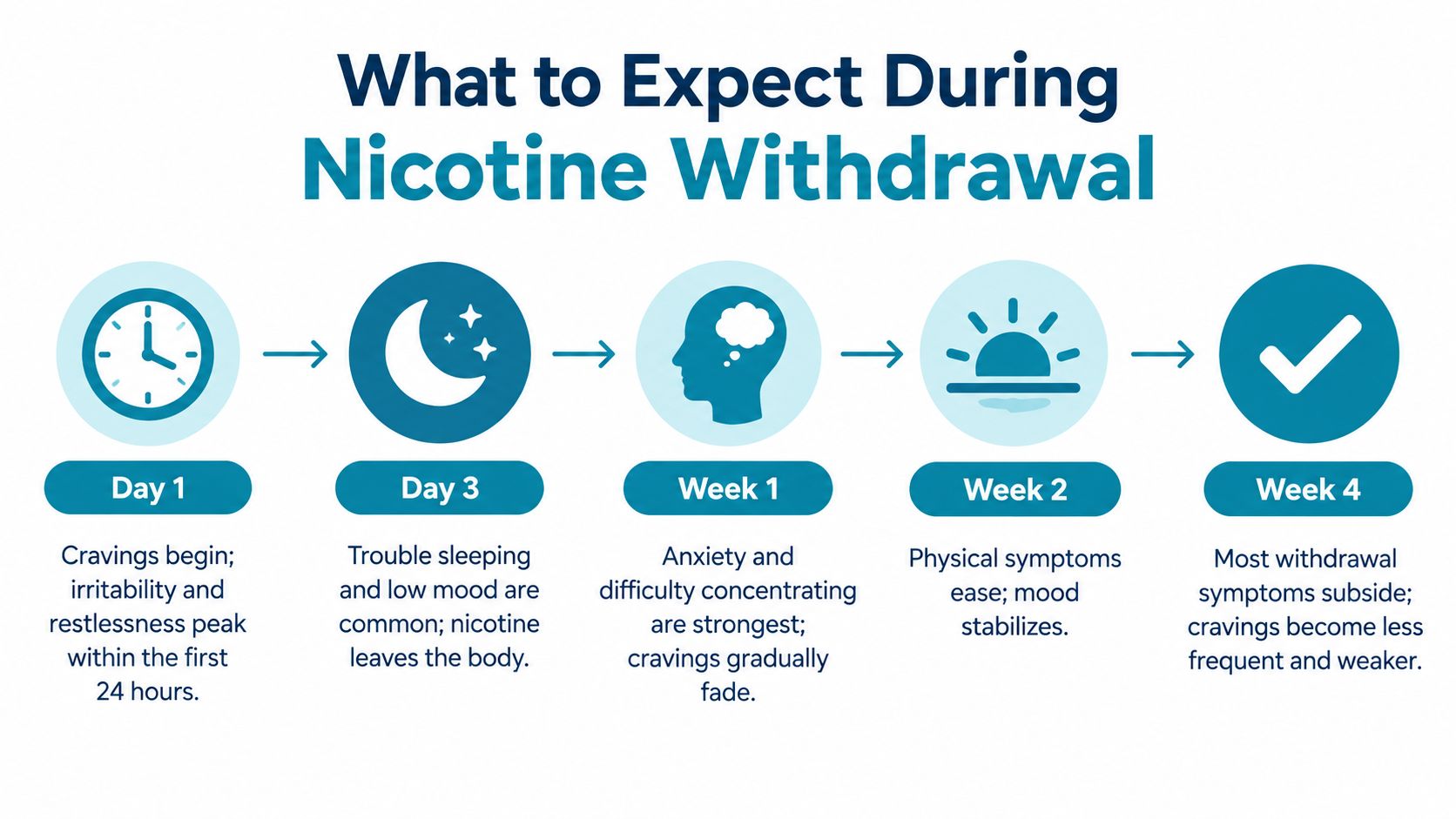
- Withdrawal symptoms such as cravings, irritability, sleep problems, or low mood
- Medication tolerability and whether the person is taking it as planned
- Recent tobacco exposure after the quit date
- Counseling frequency and whether support is happening often enough
- Adherence barriers, including side effects, cost, or confusion about use
For adults who want physician-led outpatient care, the useful question is which mix of support they can realistically use and continue. A first addiction medicine appointment can help map triggers, set follow-up, and document what to do after a lapse so one hard day does not turn into a full return to smoking.
Managing Cravings, Withdrawal, and a Lapse
Nicotine withdrawal has a recognizable pattern. Common symptoms include irritability, depressed mood, insomnia, anxiety, restlessness, difficulty concentrating, and cravings. For many smokers, the strongest symptoms last several days to a few weeks, which is uncomfortable but usually time-limited.
What the body does after the last cigarette
The CDC benefits timeline, referenced earlier, gives a useful anchor. Heart rate drops within minutes, blood nicotine falls to zero within 24 hours, and carbon monoxide declines to the level of a nonsmoker within several days. Cough and shortness of breath generally improve over 1 to 12 months, and the added risk of coronary heart disease falls by half within 3 to 6 years.
Those are population-level timelines, not promises for an individual. They do, however, show why the early period deserves a plan. The first strong craving is usually brief, even when it feels loud.
A useful protocol is simple:
- Delay 10 minutes.
- Use the agreed short-acting support if one was chosen, such as gum or lozenge.
- Drink water and change the setting.
- Breathe slowly until the peak passes.
- Contact support if the urge keeps repeating.
A lapse is not the same thing as relapse. A lapse is one cigarette or one short slip. Relapse means returning to regular smoking. Treat a lapse as information: review what happened, identify the trigger, and decide whether the medication or counseling plan needs adjustment.
Clinical rule: a slip is information. It is not a verdict.
That distinction matters most when mood symptoms get in the way. Persistent low mood, severe anxiety, sleep problems that last beyond a few weeks, or any unusual medication side effect should prompt a clinician call. The relapse guidance is relevant when the next step needs to be clear, calm, and nonjudgmental.
The E-Cigarette Question
Many adults ask whether vaping should replace smoking during a quit attempt. The honest answer is that it can work, with conditions attached. A 2025 evidence update reported high-certainty evidence that nicotine e-cigarettes increase six-month quit rates compared with NRT, and the same update noted that 54% of people using e-cigarettes to quit were still using them at six months, while evidence relative to varenicline was less certain and longer-term safety remains unclear (Cochrane living review update summary).
The trade-off is not simple
That persistence figure changes the question. Stopping cigarettes is one goal. Whether the plan is temporary nicotine use, long-term maintenance, or a later taper is a separate decision, and it should be made deliberately rather than by default.
The immediate clinical priority is still clear. Stop combustible cigarettes first. If a person chooses e-cigarettes as a temporary bridge, the next step is an individualized plan to avoid dual use and, if desired, reduce nicotine later. As noted earlier, U.S. preventive guidance considers the evidence insufficient to recommend e-cigarettes broadly as cessation therapy, which is why FDA-approved medicines and quitlines remain the standard starting point.
If disposable vaping is part of that bridge, the disposable vaping overview can help clarify product differences before the clinician conversation. For adults weighing nicotine-free alternatives, the guide to 0% nicotine devices explains the difference between quitting cigarettes and continuing another inhaled habit. Either way, the decision belongs in a clinician conversation, not an impulse purchase.
A Quit Plan You Can Bring to a Visit
A useful visit starts with a few direct questions. What has been tried before, what helped, what didn't, what triggers still feel strongest, and which FDA-approved medicine seems reasonable to discuss? The clinician can then review withdrawal, cravings, mood, sleep, side effects, tobacco exposure after the quit date, and counseling frequency.
Quitting at any age can still matter. The Surgeon General's 2020 report says cessation can reduce the risk of premature death and may add as much as 10 years to life expectancy, while also lowering risks for 12 cancers and major cardiovascular and respiratory disease (Surgeon General cessation report). That is a strong reason to keep adjusting the plan instead of abandoning it after one hard day.
For adults seeking confidential outpatient evaluation, the most useful next step is a calm addiction medicine visit focused on the full quit plan, not a lecture. This article is educational and not personal medical advice. If there is a crisis, call 988 or 911 right away.
Empire Medical Wellness provides confidential, physician-led outpatient addiction medicine care for adults who want help with smoking cessation, medication planning, and follow-up. For a measured, evidence-based discussion of your quit plan, visit Empire Medical Wellness.