
A first addiction medicine appointment can feel surprisingly difficult to prepare for. Someone may have booked the visit, then wondered whether to stop using a substance, gather every medical record, or arrive with a firm commitment to abstinence. The practical answer is simpler: the appointment is a confidential medical assessment, and uncertainty is appropriate information to bring.
Table of Contents
- What to Expect at Your First Addiction Medicine Appointment
- Preparing Your History Before the Visit
- Questions Worth Bringing to the Appointment
- When Symptoms Need Urgent Care Instead of Waiting
- Turning the Visit Into a Realistic Follow-Up Plan
- Privacy, Telemedicine, and Appointment Costs
- Taking the Next Step With Confidence
- Frequently Asked Questions About a First Appointment
What to Expect at Your First Addiction Medicine Appointment
You arrive with a worksheet, a few questions, and uncertainty about what will happen next. A first addiction medicine appointment gives a physician time to assess immediate safety, substance use, physical and mental health, personal goals, and the conditions affecting recovery. It is a medical conversation, not a quiz or a test of whether you qualify for care. Your answers help shape a safe next step.

The visit examines more than substance use
The ASAM Criteria describes a multidimensional assessment. It considers intoxication and withdrawal risk, biomedical conditions, psychiatric and cognitive history, readiness to change, continued risky use, and the recovery environment. The ASAM Criteria overview explains why an initial evaluation covers more than the frequency or amount of substance use.
The physician may ask about sleep, mood, anxiety, pain, medical conditions, housing, work, family responsibilities, and previous care. Each topic supplies part of the safety picture. For example, unstable housing may affect medication storage, while untreated pain or anxiety may influence substance use and follow-up needs. These questions are about choosing appropriate care, not assigning blame.
Your worksheet can also hold questions about abstinence, reduced use, cravings, or withdrawal. A person may want to stop, may be considering a change, or may not know what goal feels possible yet. Sharing that uncertainty supports shared decision-making. The clinician may recommend monitoring, medication, counseling, referral, or a combination rather than asking for an all-or-nothing promise.
Outpatient care has defined limits
An outpatient visit is scheduled medical care without an overnight stay. It differs from emergency treatment, withdrawal management, detoxification, inpatient care, residential treatment, and intensive outpatient programming. The appointment may produce a treatment plan, monitoring schedule, referral, or coordination with another service instead of immediate enrollment in a higher-intensity program.
The plan can change as new information appears. Follow-up appointments allow the physician to reassess symptoms, treatment response, and safety. An addiction medicine specialist can explain how medical assessment fits into ongoing care. The Refresh Psychiatry appointment overview offers general behavioral-health context, while addiction medicine adds substance-related medical and safety considerations.
Preparing Your History Before the Visit
If your mind goes blank in the waiting room, a short worksheet can keep important details within reach. It is a record for conversation, not a test you must pass. A simple timeline often works better than trying to reconstruct everything under pressure.
Gather the clinical essentials
Use plain descriptions. The physician can translate them into medical terms and ask follow-up questions.
- Substance-use pattern: List each substance, how it is used, how often, the approximate amount, and when it was last used. Include prescribed medicines that may affect alertness or withdrawal risk.
- Recent changes: Record increases, decreases, periods without use, and new changes in sleep, mood, appetite, pain, or general health.
- Withdrawal and overdose history: Describe what happened before, whether medical care was needed, and any known overdose. Exact terminology is not required.
- Current medicines and supplements: Bring bottles or a current list of prescriptions, over-the-counter products, vitamins, and supplements. Add doses when known, but missing details should not stop you from booking care.
- Previous care: Note counseling, medications, detoxification, residential or outpatient treatment, mutual-support participation, and earlier attempts to change use. Write what helped, what created difficulty, and why care ended.
- Relevant health history: Include diagnoses, allergies, surgeries, pregnancy when relevant, infectious diseases, injuries, psychiatric symptoms, and current clinicians.
The NIAAA questions for addiction doctors suggests asking about treatment choices, risks, follow-up, and what to expect. Save useful questions in a phone note or print them.
This worksheet represents helpful preparation, not confirmed Empire intake requirements. A practice may request particular forms, records, testing, or telemedicine steps. Confirm those details directly rather than treating this list as a mandatory checklist. The addiction medicine service offers further context about available care.
| What to Prepare | Details to Note | Why It Matters |
|---|---|---|
| Substance-use timeline | Substances, frequency, amount, route, and last use | Helps identify intoxication, withdrawal, interactions, and overdose concerns |
| Current medications | Prescriptions, over-the-counter products, supplements, and known doses | Supports safer medication review and interaction screening |
| Prior treatment | Clinicians, programs, medications, and outcomes | Shows what has been tried and what may need reconsideration |
| Recent health changes | New symptoms, injuries, mood or sleep changes, and medical events | Helps identify immediate clinical needs |
| Available records | Medication lists, laboratory results, discharge summaries, or care contacts | May reduce repetition, although missing records should not prevent questions about care |
A guide to what to expect in therapy can help organize emotional or counseling questions. A physician visit also includes medical review and safety screening. If severe symptoms are developing, seek urgent assessment rather than waiting for a routine appointment.
Questions Worth Bringing to the Appointment
Many people remember their history but freeze when the physician asks whether they have questions. A written list changes the conversation from passive intake to shared decision-making. The patient can read the questions directly or hand over the list.
Questions about the plan
NIAAA patient guidance supports asking what treatment is intended to change, what happens before treatment begins, and how the physician will assess progress. Useful questions include:
- What concern is the recommended treatment meant to address?
- What information or examination is needed before starting anything?
- What benefits, limitations, side effects, or interactions should be considered?
- What symptoms should prompt a call to the practice?
- How will progress be reviewed?
- What happens if the first plan doesn't fit the person's goals or circumstances?
- Who should be contacted between visits?
These questions apply whether the person is considering abstinence, reduced use, help with cravings, or clarification. Not being ready to choose a single goal doesn't make the visit unproductive. Goals can be discussed alongside safety, mental health, work, housing, family responsibilities, and prior treatment experiences.
Questions about coordination
A patient can ask whether coordination with an existing therapist, primary-care clinician, psychiatrist, or outside treatment program would be useful. Coordination requires the patient's authorization, and the patient can ask what information would be shared, with whom, and for what purpose.
Medication-related logistics deserve direct questions too. If a medication is recommended, the patient can ask where it would be obtained, what must happen before it can be started, what to do if a pharmacy cannot fill it, and how follow-up will be arranged. The Suboxone information page may be relevant to some readers, but a physician must determine whether any particular medication is clinically appropriate.
When Symptoms Need Urgent Care Instead of Waiting
A scheduled appointment may be unsafe to wait for if someone has stopped or sharply reduced heavy alcohol or sedative use and is developing concerning symptoms. Urgent or potentially severe withdrawal requires prompt medical assessment. Withdrawal can worsen quickly, so a person should not try to manage possible danger alone while waiting for an outpatient booking.
The American Society of Addiction Medicine places urgent medical and psychiatric problems first. These include overdose, severe intoxication, acute withdrawal risk, injury, and suicidal thoughts. Its opioid guidance also describes a history and physical examination focused on signs of opioid withdrawal. ASAM's national practice guidance explains why a clinician must assess the person's current condition and risk before choosing the appropriate level of care.
Symptoms that deserve prompt assessment
Use the preparation worksheet to record symptoms and when they began, but do not delay urgent help to complete it. Concerning signs include:
- Marked autonomic symptoms: A racing heart, feverishness, heavy sweating, or pronounced tremor.
- Gastrointestinal illness: Repeated vomiting or significant diarrhea, especially with weakness or faintness.
- Neurologic or general weakness: Severe weakness, dizziness, faintness, confusion, or a clear change in alertness.
- Acute psychiatric risk: Suicidal thoughts, inability to stay safe, severe agitation, or hallucinations.
- Overdose or severe intoxication: Trouble breathing, inability to wake, collapse, injury, or a dangerous change in consciousness.
Telemedicine may not allow reliable collection of vital signs or a physical examination. That limitation does not automatically rule it out, but symptoms such as a racing heart, feverishness, tremor, sweating, vomiting, weakness, faintness, or dizziness must be reported clearly. The clinician may direct the person to urgent or emergency care instead of continuing a routine video visit.
Safety rule: If overdose, severe intoxication, serious injury, severe withdrawal, or immediate danger is present, call 911 or go to an emergency department. In the United States, call or text 988 for urgent suicide or mental-health crisis support.
The alcohol withdrawal resource offers background on why withdrawal concerns need medical attention. It cannot replace emergency evaluation or an individualized detoxification plan.
Turning the Visit Into a Realistic Follow-Up Plan
A useful appointment ends with more than a general recommendation. Before leaving, the patient should understand what the physician recommends, why it was recommended, and what needs to happen next. The first visit can be clinically meaningful even when the result is monitoring, referral, or coordination rather than immediate treatment enrollment.
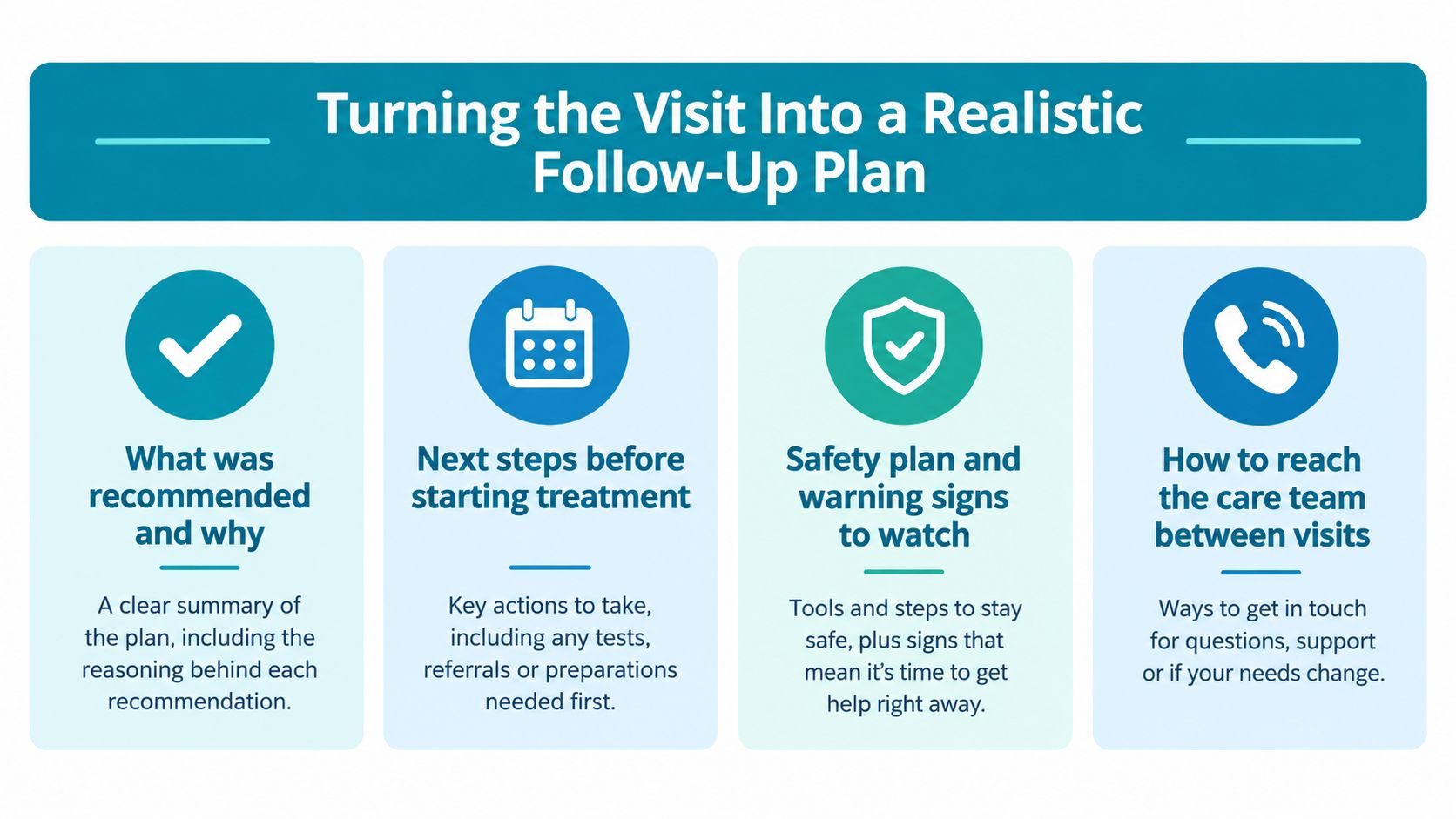
Write down four answers
A patient-held follow-up note can include:
- The recommendation: What was suggested, and what concern is it intended to address?
- The preparation step: What must happen before treatment begins, such as reviewing records, completing an assessment, arranging laboratory work, or coordinating with another clinician?
- The safety plan: Which warning signs require a call, urgent assessment, or emergency care?
- The contact plan: How should the patient reach the care team between visits, and what response process should be expected?
Medication logistics should be concrete. Patients can ask which pharmacy will dispense a prescription, what to do if the pharmacy cannot fill it, whether another pharmacy should be contacted, and whom to notify about a problem. The physician may also discuss side effects, interactions, missed appointments, and changes in symptoms without giving a universal plan that applies to everyone.
Follow-up depends on clinical progress
Follow-up timing isn't one fixed schedule for every patient. It depends on the treatment plan, response, safety concerns, changes in use, side effects, and progress toward agreed goals. A physician may recommend continued outpatient monitoring, coordination with another service, or a higher level of care if the patient's needs change.
A patient can also ask whether a therapist, primary-care clinician, or outside treatment program should be involved. Information sharing requires authorization, and the patient can clarify the scope of that authorization. The relapse information page may offer additional context for discussing recurrence of use without treating it as a moral failure.
Privacy, Telemedicine, and Appointment Costs
Before booking, a patient may want to know who can access addiction-treatment records. 42 CFR Part 2 protects the confidentiality of certain substance-use-disorder records held by federally assisted programs that provide diagnosis, treatment, or referral. It does not automatically cover every medical record that mentions substance use or every private practice.
HHS's 2024 final-rule fact sheet explains that a single consent can cover future uses and disclosures for treatment, payment, and health-care operations, while Part 2 retains specialized protections. Ask the practice how records are stored, when permission is required before sharing information with another clinician, and which legal exceptions may apply. The HHS guidance on 42 CFR Part 2 provides federal context.
Current practice logistics
According to the supplied practice information, Empire Medical Wellness offers telemedicine for adults who are physically located in New York, New Jersey, Connecticut, Pennsylvania, or Virginia. In-person appointments are also available. Confirm your location and telemedicine eligibility during scheduling, since licensing and clinical requirements can affect whether the visit may take place remotely.
For the current standard fees, a 50-minute initial evaluation costs $350, and a 25-minute follow-up costs $225. Empire does not bill insurance directly, though patients can obtain an itemized receipt through the patient portal. A receipt does not guarantee reimbursement. Review fees and how the process works and confirm the current details before booking.
Taking the Next Step With Confidence
A patient arrives with notes, medication bottles, and several unanswered questions. The worksheet may be incomplete, and the treatment goal may still be uncertain. That is acceptable. The first addiction medicine appointment is a medical conversation about safety, health, substance-use patterns, goals, and practical next steps.
Preparation can reduce anxiety without becoming a test to pass. Gather what you know, write down what you want clarified, and be ready to describe current use as accurately as possible. A clinician can help organize missing details and explain which options fit the assessment.
Adults considering private, physician-led outpatient care can review the Empire addiction medicine service and use the appointment scheduling page to confirm current procedures, availability, and location requirements. The practice's information may change, so verify details before booking.
Published October 8, 2026. Updated October 8, 2026.
Byline: Empire Medical Wellness Editorial Team
This article is educational and isn't personal medical advice. For overdose, severe withdrawal, serious injury, or immediate danger, call 911. For an urgent suicide or mental-health crisis, call or text 988.
Frequently Asked Questions About a First Appointment
Does someone need to stop using before the visit?
No. A person should come as they are and describe current use straightforwardly. The appointment is an assessment, and sudden changes can create safety concerns for some substances.
Does the patient have to commit to abstinence or one treatment model?
No. Goals are discussed rather than imposed. Reduced use, cravings, withdrawal concerns, uncertainty, and interest in abstinence are all appropriate subjects for a respectful medical conversation.
Can someone see the physician while working with a therapist or outside program?
Yes, coordination may be useful. The patient's authorization is required before information is shared with outside clinicians or programs, and the patient can ask what information would be exchanged.
What if the person isn't sure the use is “bad enough”?
A confidential evaluation can help answer that question. Concerns don't need to reach a particular threshold before someone asks for medical guidance, and uncertainty itself can be discussed during the appointment.
Adults considering confidential outpatient addiction medicine can use Empire Medical Wellness to learn about physician-led assessment, evidence-based treatment when clinically appropriate, monitoring, and follow-up planning. The practice's scheduling process can help clarify appointment details, current fees, telemedicine eligibility, and what to prepare before the visit.