
During the first 6 months of structured weight-management treatment, average weight loss is approximately 5–8.5 kg, or 5%–9% of starting body weight, and weight commonly reaches a plateau at about 6 months. A plateau is a common physiological response, not proof of failure, and there's no universal number of days that defines one.
A reader may recognize the situation. The initial trend was encouraging, meals and activity seemed consistent, and then several weigh-ins looked almost identical. Frustration can quickly turn into stricter dieting or thoughts about changing medication without clinical guidance.
The scale, however, reflects more than body fat. Hydration, bowel contents, menstrual-cycle effects, sodium intake, exercise, and measurement conditions can temporarily obscure a genuine trend. A careful assessment looks at repeated measurements, appetite, energy expenditure, adherence, medications, health factors, function, and the person's own goals.
Byline: Empire Medical Wellness Editorial Team
Published: October 7, 2026
Updated: October 7, 2026
Table of Contents
- What Is a Weight Loss Plateau
- Why Weight Loss Can Flatten
- How to Assess a Plateau Step by Step
- Anti-Obesity Medication and Plateaus
- FDA Trial Thresholds and Individual Outcomes
- When to Seek Physician Evaluation
- Sources
What Is a Weight Loss Plateau
A weight loss plateau is a sustained stabilization in measured weight after an earlier decline. It isn't one unchanged weigh-in, a few days of fluctuation, or a scale reading that follows a salty meal or a change in exercise.
Weight can vary while fat mass is changing. Fluid retention, bowel contents, menstrual-cycle effects, and different weighing conditions can all create short-term noise. There's no universally established day-count cutoff that separates a true plateau from normal variation, so the trend needs to be reviewed over several weeks under reasonably consistent conditions.
A trend matters more than a single reading
A useful worksheet records the date, approximate time, clothing conditions, scale used, weight, meals, activity, sleep, medication changes, symptoms, and relevant obstacles. The purpose isn't to demand perfect tracking. It's to identify whether the overall pattern has stabilized.
Early weight loss is often faster than later loss. A systematic review of reduced-energy diets and weight-management medications found that weight loss generally reached a plateau around 6 months, while longer follow-up showed that some participants maintained an average loss of approximately 3–6 kg, or 3%–6% of initial body weight, in studies lasting up to 48 months (systematic review and meta-analysis). Stabilization at a lower weight can therefore represent maintained progress, not complete reversal.
Practical rule: A plateau should be assessed after the measurement trend is clear, not declared after a disappointing scale reading.
A flattening trend doesn't mean the body's metabolism is “broken.” It usually means that energy needs, appetite, movement, treatment response, and the original plan have changed relative to one another. The page on metabolism and weight management provides related context, but the clinical question remains individual: what has changed, and what outcome now matters most?
Why Weight Loss Can Flatten
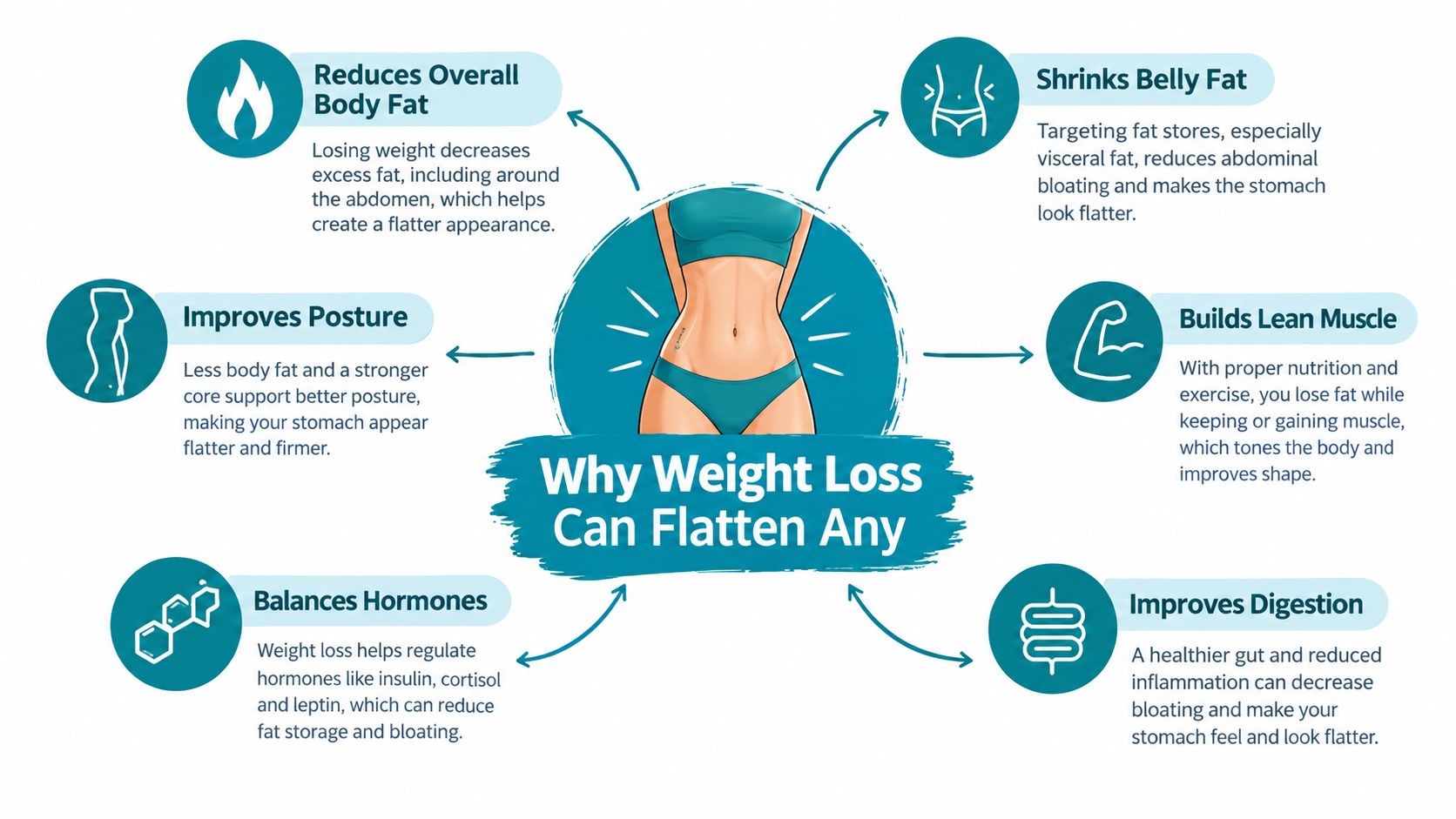
A patient may follow the same eating and activity plan for months, then see the scale hold steady. That change can feel like failure, but it often reflects new physiological conditions rather than a lack of effort. Weight loss changes the energy balance that produced the initial decline.
A smaller body generally needs fewer calories to maintain itself and to move through daily life. If food intake and activity stay unchanged, the deficit that supported earlier loss gradually narrows. Short-term fluctuations can obscure this process, so a few unchanged readings do not establish true stabilization.
The body may also adjust its energy use. Adaptive thermogenesis, sometimes called metabolic adaptation, is a reduction in energy expenditure beyond what weight loss alone would predict. A peer-reviewed review reports that adaptive thermogenesis can range from approximately 100 to 500 kilocalories per day (NIH review of adaptive thermogenesis). This range comes from reviewed research, not a forecast for any individual patient.
Appetite and movement change too
As weight declines, appetite may rise, resting energy expenditure may fall, and spontaneous movement may decrease without a deliberate decision to become less active. A patient can continue planned workouts while taking fewer steps, standing less, or feeling less inclined to move during routine tasks.
The CALERIE Phase 2 trial illustrates how these forces can interact. It randomly assigned 238 adults to a 25% calorie-restriction target or to continue eating normally, then followed them for 2 years. The restriction group lost about 16 pounds on average, but loss slowed and largely stopped around the 12-month mark. A later physiological analysis modeled body weight as approaching a plateau within approximately 12 months, associating the pattern with increased appetite and lower energy requirements as weight declined (reported CALERIE findings).
Outpatient programs commonly reach maximum weight loss around six to eight months, followed by a plateau or gradual regain over subsequent years, consistent with the same NIH-hosted review. This pattern calls for reassessment of the treatment plan, not a judgment about character or commitment.
Why extreme restriction usually isn't the answer
A crash diet may produce a brief scale change while worsening hunger, fatigue, adherence, and preservation of lean mass. Repeated severe restriction also makes it harder to judge whether the original plan was realistic enough to maintain.
A sustainable calorie deficit approach accounts for changing energy needs, food quality, hunger, activity, sleep, and medical context. A timeline-based discussion of beating weight loss plateaus may offer general perspective, but a physician should help determine whether the pattern reflects normal variation, true stabilization, or a factor requiring evaluation.
How to Assess a Plateau Step by Step
The first response should be verification, not punishment. A structured worksheet helps separate measurement noise from a persistent trend and makes a follow-up visit more productive.
Start with standardized measurements
Record repeated weigh-ins under similar conditions. A single number can't show whether weight is stable, slowly declining, or fluctuating around a broader downward trend. Waist measurements may add context when used consistently, although they also have measurement limitations.
The worksheet can include:
- Weight trend: Record dates, conditions, and readings rather than relying on memory.
- Food and beverages: Review portions, snacks, restaurant meals, alcohol, sweetened drinks, and additions to coffee.
- Adherence: Note missed medication doses, access interruptions, changes in timing, and difficulty following the agreed plan.
- Activity: Include planned exercise and ordinary movement, since a smaller body may use less energy during both.
- Sleep and stress: Record meaningful changes that could affect appetite, fatigue, recovery, or eating patterns.
- Health context: List new symptoms, medication changes, endocrine concerns, and other conditions for clinical review.
A scale app can simplify recordkeeping, and readers comparing digital tools may find information about smart scale app and Apple Health sync relevant to measurement organization. The tool matters less than consistent use and sensible interpretation.
Change one measurable variable
After the records are reviewed, the clinician and patient can choose one feasible change. Options may include improving meal structure, increasing daily non-exercise movement, addressing sleep, reviewing alcohol intake, or strengthening resistance exercise when medically appropriate. Protein intake and resistance training may help support lean mass, but a precise target requires individual assessment.
A commonly cited starting deficit is 500–750 kcal per day, historically associated with approximately 0.5–1 kg of weekly loss, while a target near 0.7% of body weight per week may help balance fat loss against excessive adaptation and lean-mass loss (clinical plateau-management review). These figures are not personal prescriptions.
A hypothetical decision example illustrates the process. An adult brings several weeks of standardized weigh-ins, meal records, activity notes, sleep information, and medication changes to a follow-up. The trend appears stable, but the record also shows more weekend eating and less ordinary movement after work. Rather than cutting intake sharply and changing medication independently, the clinician reviews adherence, health factors, and treatment goals, then selects one feasible adjustment to reassess over time.
The calorie deficit formula can explain the arithmetic behind energy balance, but arithmetic alone can't determine whether a plan is safe, sustainable, or clinically appropriate.
Anti-Obesity Medication and Plateaus
A plateau while using an anti-obesity medication doesn't automatically mean the medication has stopped working. Medication effects commonly reach a maximum therapeutic response, after which weight may stabilize. In some cases, the medication is helping maintain a lower weight even though the scale is no longer declining.
Stopping effective treatment also requires planning. In STEP 4, participants who continued semaglutide after an initial 10.6% loss lost an additional 7.9%, while participants switched to placebo regained 6.9%. In the STEP 1 extension, participants regained roughly two-thirds of their prior loss one year after semaglutide withdrawal (peer-reviewed semaglutide withdrawal analysis). These findings don't prove that every patient needs indefinite medication, but they do show why discontinuation shouldn't be treated as a casual experiment.
What a clinician reviews
A physician-led review generally considers the whole response rather than the scale alone:
- Treatment timeline: Confirm the medication, titration history, duration, and whether the intended treatment phase has been completed.
- Tolerability and administration: Review side effects, administration problems, supply interruptions, and missed doses.
- Measured outcomes: Assess weight and waist trends, appetite control, function, health markers when indicated, and patient-defined goals.
- Eating and activity patterns: Look for appetite return, portion drift, reduced movement, or changes in routine.
- Medical context: Review sleep, stress, interacting medications, endocrine disease, and other contributors to weight change.
- Maintenance plan: Decide whether the present weight is a satisfactory maintenance point or whether a clinically appropriate adjustment deserves discussion.
A hypothetical decision example might involve an adult with a persistent plateau who brings records to a follow-up. The clinician reviews adherence, side effects, appetite response, treatment duration, and possible contributors before discussing whether continued care, a treatment adjustment, a switch, or a maintenance focus is appropriate. No dose change is made independently, and no outcome is assumed in advance.
Information about physician-led obesity medicine can help readers understand the role of clinical monitoring. It can't determine whether a particular medication or change is suitable for an individual.
FDA Trial Thresholds and Individual Outcomes
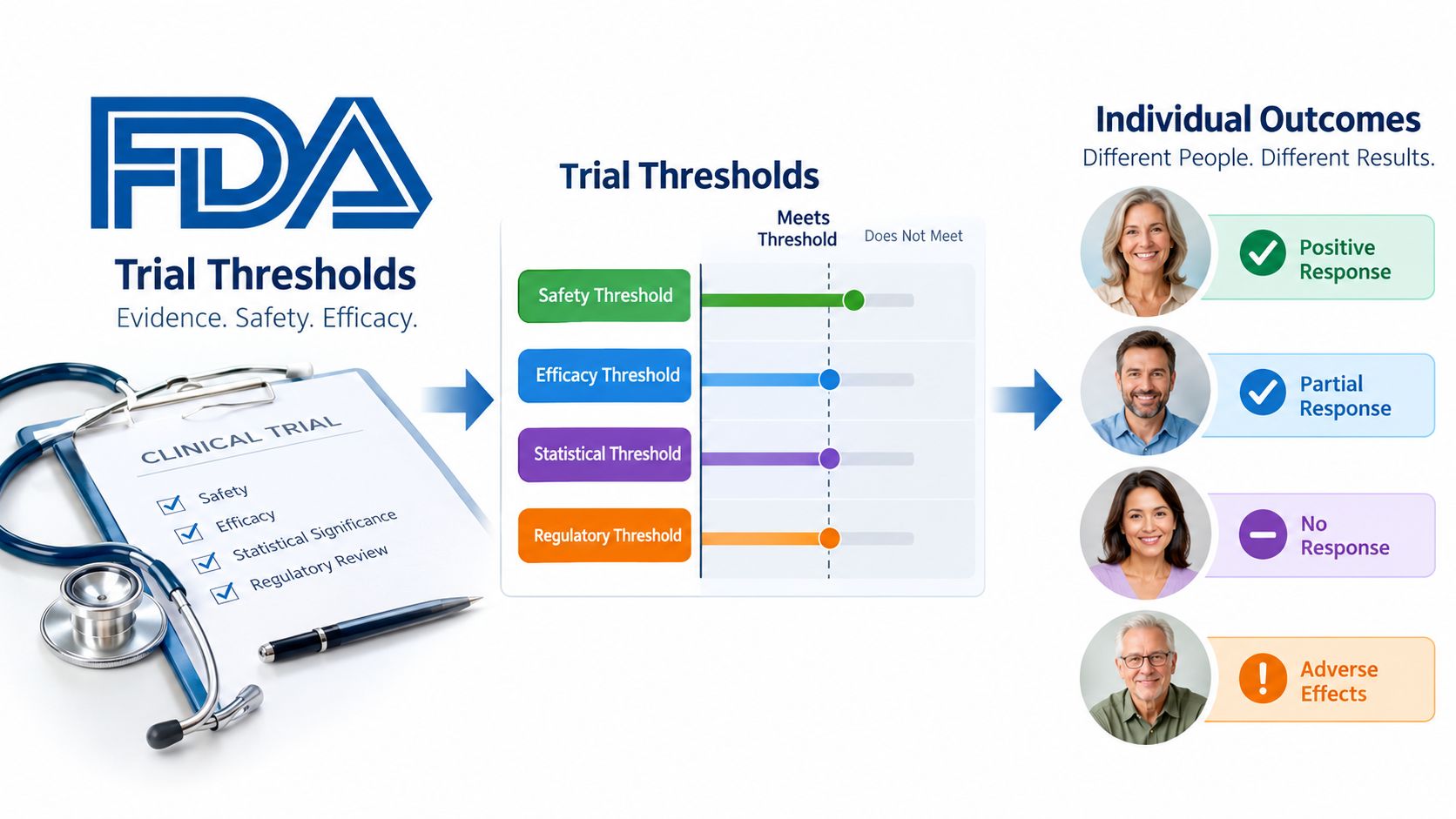
FDA trials measure treatment response using defined research outcomes. Wegovy labeling includes mean percentage change in body weight and the proportion of participants achieving at least 5%, 10%, and 15% weight loss from baseline by week 68 (FDA Wegovy labeling). These thresholds help researchers compare groups. They aren't promises for a specific patient.
FDA trial results for Zepbound provide another example. In two randomized, placebo-controlled trials lasting 72 weeks, participants assigned to the highest approved dose lost an average of 18% of body weight in one trial and 12% in another when treatment was combined with a reduced-calorie diet and increased physical activity (FDA Zepbound announcement). The results are group averages, not guaranteed individual outcomes.
Research thresholds are not treatment instructions
A patient may plateau before reaching a research threshold, after reaching one, or while moving between thresholds. Tolerability, treatment duration, health conditions, appetite response, adherence, and broader goals all affect interpretation.
| Research measure | What it tells clinicians | What it doesn't establish |
|---|---|---|
| Mean percentage change | How the treatment performed on average in a study group | What one patient will lose |
| At least 5%, 10%, or 15% loss | How many participants reached predefined trial outcomes | That a plateau below or above a threshold proves treatment failure |
| Weight at a specified week | The response at a defined research time point | That the same timeline applies to every patient |
| Continued treatment versus withdrawal | How maintenance and regain may differ under study conditions | That medication should be stopped, increased, or replaced without review |
Clinical follow-up places trial data beside the person's actual trend, function, safety, and goals. That comparison is more useful than treating a single percentage as a pass-or-fail test.
When to Seek Physician Evaluation
A persistent weight-loss plateau deserves a planned review when the trend is clear, the existing plan has been followed as feasible, or the person is unsure whether treatment remains appropriate. A physician-led visit may include a review of weight history, appetite, activity, sleep, current medications, relevant health conditions, treatment tolerability, and maintenance goals.
The most useful records include standardized weigh-ins, waist measurements when appropriate, meal and beverage patterns, activity, sleep, medication changes, symptoms, and barriers. Functional capacity and patient-defined goals also matter. Body-composition devices have measurement limitations and can't prove small changes in fat mass.
Sudden weight gain with swelling or breathlessness warrants medical assessment rather than a diet adjustment. New or worsening symptoms, significant medication side effects, access interruptions, or concern about an interacting medication also justify contacting a qualified clinician.
A review of medical weight-management care can help adults understand what physician-led evaluation may involve. Possible next steps include continued monitoring, lifestyle-plan refinement, medication reassessment when clinically appropriate, or a maintenance-focused plan. None should be selected from scale movement alone.
Empire Medical Wellness offers physician-led outpatient obesity medicine with medical and metabolic assessment, treatment-response review, individualized planning, and long-term maintenance planning. Adults seeking a careful evaluation of a persistent plateau can visit Empire Medical Wellness to review the practice's current care information and appointment options.
Sources
Authoritative sources are linked inline throughout the article, including FDA labeling and announcements, NIH and NIDDK materials, NHLBI guidance, peer-reviewed clinical reviews, and published medication-maintenance analyses.
This article is educational and isn't personal medical advice.