
Mounjaro is a once-weekly subcutaneous injection that starts at 2.5 mg weekly, increases in 2.5 mg steps no faster than every 4 weeks, and has labeled maintenance options of 5 mg, 10 mg, or 15 mg weekly. A prescriber chooses the maintenance dose based on response and tolerability, so reaching 15 mg isn't automatically the goal.
Could the “right” Mounjaro dose be lower than the highest available strength? That question matters because titration and maintenance serve different purposes. Titration helps the body adjust to tirzepatide. Maintenance is the dose a prescriber selects for continued treatment after considering benefit, side effects, other medicines, and the approved indication.
This guide focuses on the practical questions that often arise after the prescription is written: how the strengths differ, what happens after a missed dose or longer interruption, why Mounjaro and Zepbound shouldn't be treated as interchangeable prescriptions, and which symptoms require prompt attention.
Table of Contents
- What Mounjaro Is and How Dosing Works
- Available Dose Strengths and the Weekly Titration Schedule
- Mounjaro Dose for Diabetes Versus Weight Management
- Weekly Injection Basics and Administration Technique
- Missed Doses, Restarting After a Gap, and Dose Holds
- Safety, Boxed Warning, and Drug Interactions That Affect Dose
- A Hypothetical Example of Holding an Escalation
- Monitoring, Red Flags, and Questions for Your Prescriber
What Mounjaro Is and How Dosing Works
What does a Mounjaro dose represent, and why does treatment begin below the maintenance range?
Mounjaro is the brand name for tirzepatide, a prescription medicine used with diet and exercise to improve blood glucose control in adults with type 2 diabetes. Tirzepatide acts on GIP and GLP-1 hormone pathways involved in glucose regulation, appetite, and food intake. The NIDDK explanation of tirzepatide and its brand names distinguishes Mounjaro from Zepbound, even though both products contain tirzepatide.
Mounjaro is a subcutaneous injection, so the medicine enters the tissue beneath the skin, rather than a vein or muscle. It is taken once weekly in a prefilled, single-dose pen. The FDA prescribing information starts treatment at 2.5 mg once weekly, then increases the dose to 5 mg after 4 weeks. The current FDA Mounjaro prescribing information
Why the starting dose is different from the maintenance dose
The 2.5 mg strength is an initiation dose, not a dose intended to provide glycemic control. Its role is to give the gastrointestinal system time to adjust before the prescriber considers therapeutic dose levels. Nausea, diarrhea, reduced appetite, constipation, and other digestive effects can occur with tirzepatide, so gradual increases support tolerability as well as treatment response. The FDA label's dosing and titration information
The label permits increases in 2.5 mg steps after at least 4 weeks on the current dose, up to a maximum adult dose of 15 mg once weekly. This schedule provides a framework, not permission to change the dose independently. The prescribing clinician decides whether to escalate, hold, reduce, or continue a dose.
A higher dose is not automatically the best maintenance dose. For physician-led obesity care, the choice depends on the product and indication, treatment response, medical history, current medicines, and side effects. The Mounjaro information page from Empire Medical Wellness offers related practice information, while an individual prescription decision requires clinical evaluation.
Practical rule: The useful dose is the one the prescriber selects for the indication and that you can tolerate safely.
Available Dose Strengths and the Weekly Titration Schedule
How do the available Mounjaro dose strengths fit into a weekly titration plan? Mounjaro is available in six single-dose pen strengths: 2.5 mg, 5 mg, 7.5 mg, 10 mg, 12.5 mg, and 15 mg. Each pen delivers 0.5 mL subcutaneously once weekly, as noted in the FDA prescribing information linked earlier.
The schedule works like a staircase, with each increase separated by time for the body to adjust. Treatment generally starts at 2.5 mg once weekly for 4 weeks, followed by 5 mg if the prescriber considers an increase appropriate. Any later increase requires at least 4 weeks at the current dose.
Mounjaro dose titration schedule
| Week range | Weekly dose | Purpose |
|---|---|---|
| First 4 weeks | 2.5 mg | Treatment initiation and gastrointestinal adaptation |
| Following 4 weeks | 5 mg | First labeled maintenance option and therapeutic dosing |
| Next step, if prescribed | 7.5 mg | Escalation step between maintenance levels |
| Next step, if prescribed | 10 mg | Labeled maintenance option |
| Next step, if prescribed | 12.5 mg | Escalation step before the highest maintenance option |
| Highest labeled option | 15 mg | Labeled maximum adult maintenance dose |
This table shows the labeled sequence, not a requirement to use every strength. 2.5 mg and 7.5 mg are stepping-stone strengths. The labeled maintenance options are 5 mg, 10 mg, and 15 mg weekly. A person may remain at a lower maintenance dose when it provides an appropriate response with fewer unwanted effects. The highest available dose is not automatically the best long-term dose.
The Mounjaro dosage information from Empire Medical Wellness provides a plain-language overview of this sequence. It cannot determine an individual dose or replace instructions for restarting after missed injections.
What “titration” means
Titration is the gradual adjustment of a medicine to balance treatment benefit with unwanted effects. The label establishes the minimum interval between increases. A prescriber may keep the current dose longer, hold an escalation, or choose another adjustment after considering symptoms, glucose control, other medicines, and the person's broader clinical situation. Repeated gaps or a planned restart require separate guidance, rather than automatic return to the previous dose.
Mounjaro Dose for Diabetes Versus Weight Management
Which tirzepatide product matches the treatment goal, and does the highest dose always make sense? Mounjaro and Zepbound contain the same active ingredient, tirzepatide, but their FDA-approved uses and labeling differ. Mounjaro is approved for adults with type 2 diabetes. Zepbound is approved for chronic weight management in eligible adults with obesity or overweight and a weight-related condition.
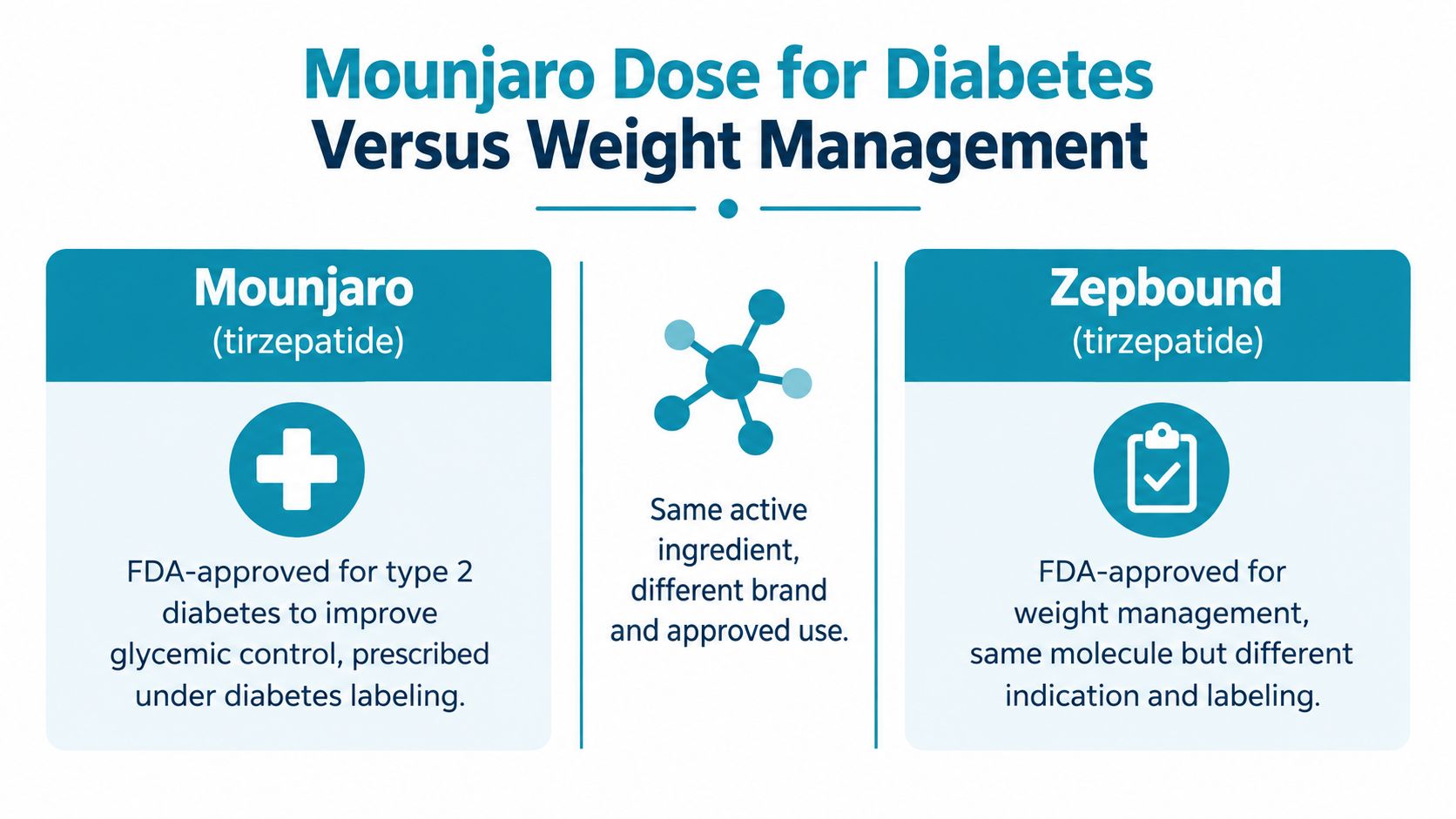
The labeled dose progression is similar for these tirzepatide products. Treatment begins at 2.5 mg weekly, then may increase in 2.5 mg steps no more often than every 4 weeks, up to 15 mg weekly under the applicable labeling. The schedule is a framework, not a command to reach the top dose. Coverage, authorization, treatment goals, and follow-up can differ between diabetes care and weight management.
| Question | Mounjaro | Zepbound |
|---|---|---|
| Active ingredient | Tirzepatide | Tirzepatide |
| FDA-approved use | Adults with type 2 diabetes | Chronic weight management in eligible adults |
| Formulation | Once-weekly subcutaneous injection | Once-weekly subcutaneous injection |
| Dose-selection principle | Prescriber-guided response and tolerability | Prescriber-guided response and tolerability |
A prescriber may use Mounjaro off-label for weight management when clinically appropriate. That decision does not make Mounjaro and Zepbound interchangeable, and it does not support switching without medical guidance. A person can also remain at a lower effective maintenance dose if it provides adequate benefit with fewer unwanted effects. The highest labeled dose is an option, not an automatic destination.
Semaglutide and tirzepatide are different medicines, with separate labels and dosing schedules. The semaglutide versus tirzepatide comparison offers broader context, while the prescriber determines which product, indication, and dose fit the individual.
Weekly Injection Basics and Administration Technique
How should a weekly Mounjaro injection fit into your routine? Choose one day each week and use it consistently. Mounjaro is injected under the skin, at any time of day. Approved injection areas include the abdomen, thigh, upper arm, and lower flank. Rotate locations instead of using the identical spot repeatedly. The Lilly instructions for using Mounjaro
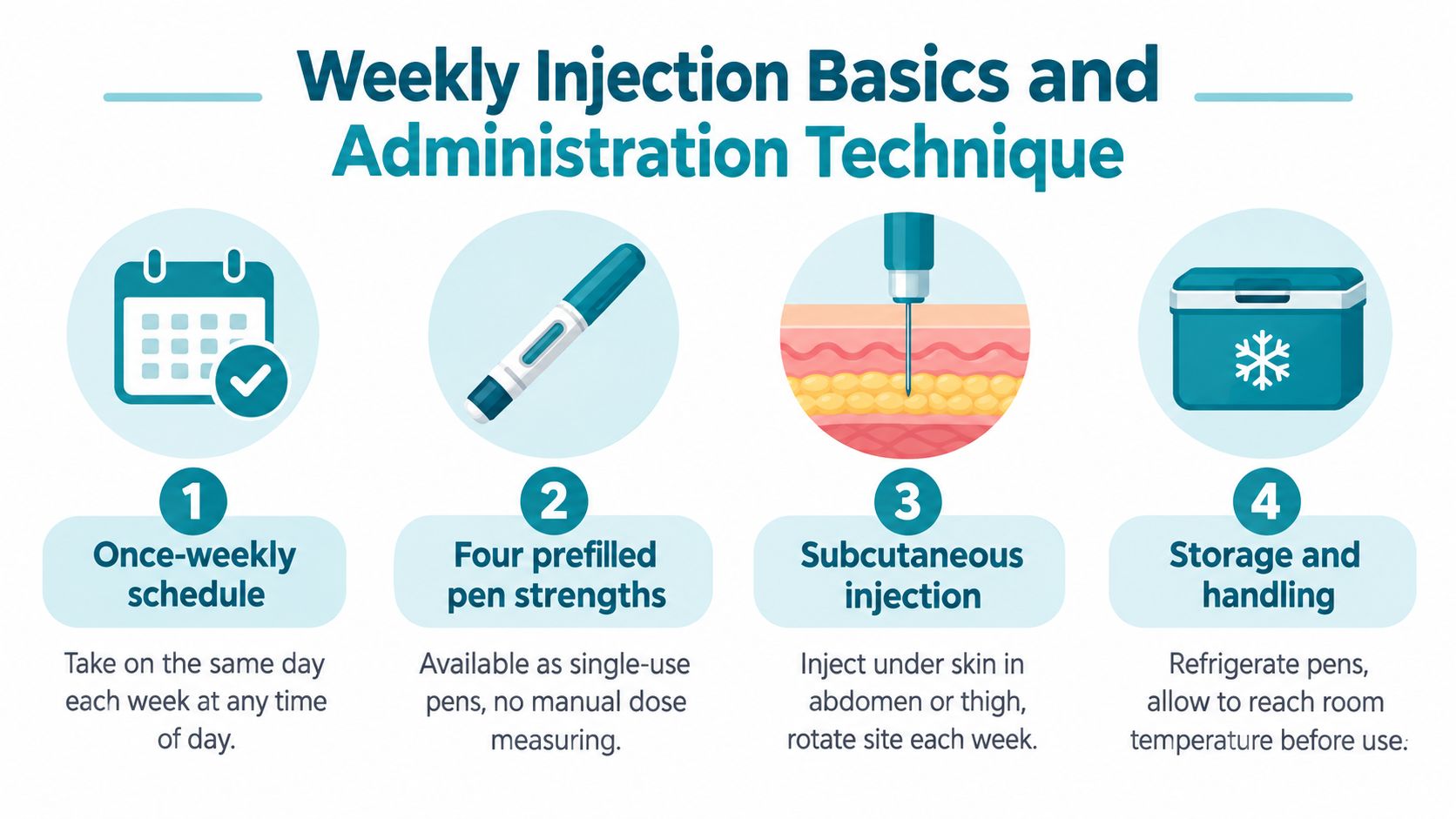
The single-dose pen arrives prefilled, so you do not measure the medicine yourself. Available single-dose strengths are 2.5 mg, 5 mg, 7.5 mg, 10 mg, 12.5 mg, and 15 mg. Product presentations can differ, so follow the instructions for the prescribed pen or device, even if another device appears similar. Ask the prescribing clinic to observe your technique if you are uncertain.
Storage and handling
Keep Mounjaro refrigerated at 2°C to 8°C. It can remain below 30°C for up to 21 days and should be protected from light. Storage requirements may differ from those of other injectable medicines, so confirm them in the product instructions. Place used pens in an appropriate sharps container. FDA-approved Mounjaro labeling
Safe administration includes more than pressing the injection button. The clinic should confirm the product, strength, injection site, storage conditions, and disposal method. Do not use a damaged pen or combine leftover medicine from separate devices. A quick technique review can prevent errors before they occur.
Missed Doses, Restarting After a Gap, and Dose Holds
What should you do when one Mounjaro injection is late, or several weekly doses have been missed? The answer depends on the length of the gap, because a single delay follows a label-based rule, while repeated interruptions may require a new clinical decision.
If you remember a dose within 4 days, or 96 hours, take it. If more than 4 days have passed, skip that dose and take the next one on your usual weekly day. Keep at least 3 days, or 72 hours, between doses. Never take two injections to compensate for a missed dose. Lilly's Mounjaro use instructions
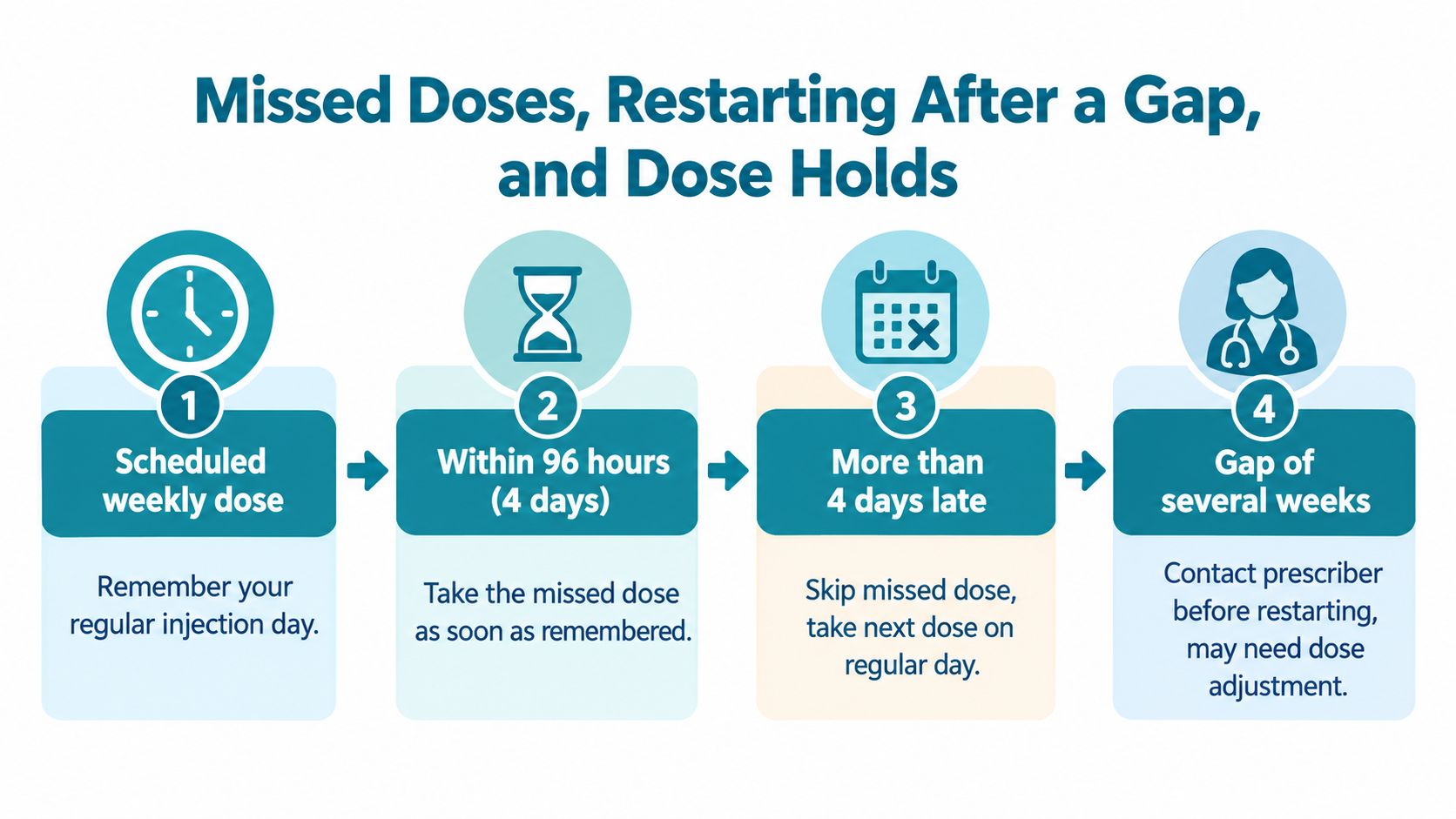
This rule covers one missed injection. After more than one missed dose, the calendar no longer provides the whole answer. The prescribing clinician may review the previous strength, side effects, fluid intake, blood glucose control, and other medicines before choosing a restart plan. Returning automatically to the former maintenance dose may be unsuitable.
A practical decision path
- One dose late within 96 hours: Follow the product instructions, then maintain the required separation before the next injection.
- More than 96 hours late: Skip the missed dose instead of doubling up.
- More than one dose missed: Contact the prescribing clinic before restarting.
- A gap lasting several weeks: Arrange a clinical review rather than treating it as a simple change to the injection day.
- Significant nausea, vomiting, or reduced fluid intake: Speak with the prescriber before restarting or increasing the dose.
A dose hold means pausing the next increase or remaining at the current strength. It is a planned adjustment, not permission to take extra medicine later. The highest available dose is not automatically the right maintenance dose for every patient. If a lower strength controls the treatment goal with fewer side effects, the prescriber may keep the dose there.
Safety, Boxed Warning, and Drug Interactions That Affect Dose
What safety findings can change a Mounjaro dose before the next injection? The first check is whether treatment is appropriate at all. Mounjaro carries a boxed warning about thyroid C-cell tumors observed in rodents. It is contraindicated for people with a personal or family history of medullary thyroid carcinoma or Multiple Endocrine Neoplasia syndrome type 2, also called MEN 2. Anyone with either condition should not receive Mounjaro. See the Current FDA prescribing information and boxed warning.
The prescribing information also warns about pancreatitis, gallbladder disease, hypoglycemia when Mounjaro is used with insulin or a sulfonylurea, worsening gastrointestinal disease including gastroparesis, and acute kidney injury associated with dehydration. These warnings do not create a single dose formula. They guide the review before treatment and whenever symptoms or other medicines change.
Safety signals and dose planning implications
| Safety signal | Dose planning implication |
|---|---|
| Personal or family history of medullary thyroid carcinoma or MEN 2 | Mounjaro is contraindicated |
| Pancreatitis symptoms | Seek prompt clinical assessment and do not escalate without prescriber guidance |
| Gallbladder symptoms | Medical review may be needed before another dose decision |
| Hypoglycemia risk with insulin or a sulfonylurea | The prescriber reviews the complete glucose-lowering regimen |
| Severe gastrointestinal disease or gastroparesis | The prescriber assesses whether Mounjaro is appropriate |
| Dehydration or kidney concerns | Fluid loss and kidney function may affect treatment decisions |
| Another GLP-1 receptor agonist | Do not combine it with Mounjaro |
| Another tirzepatide product | Do not combine products containing tirzepatide |
Mounjaro can affect oral medication absorption, and the label includes monitoring considerations for medicines such as warfarin. Tell the prescriber about pregnancy plans, glucose-lowering medicines, procedures, and other incretin therapies. The prescriber decides whether to escalate, hold, adjust, or discontinue treatment.
For a plain-language explanation of symptoms that may need attention, read this Mounjaro side-effects guide.
A Hypothetical Example of Holding an Escalation
What should happen if nausea worsens after a dose increase? Consider a hypothetical composite example, not an Empire patient. An adult begins tirzepatide at 2.5 mg weekly under prescriber supervision and tolerates the initiation period. The prescriber then increases the dose to 5 mg weekly. After a later increase to 7.5 mg, persistent nausea develops, and the adult is eating and drinking less than usual.
The next step is not automatic progression toward 15 mg. The prescriber may review the exact product and indication, symptom timing and severity, hydration, concurrent medicines, relevant glucose information, and causes unrelated to tirzepatide.
Clinical principle: Titration can pause when tolerability worsens. The prescriber may delay the next increase or return to a previously tolerated dose when that better fits the person's response.
In this scenario, the prescriber could hold the next escalation, discuss hydration and slower meal pacing, review other medicines, and consider keeping the adult at 5 mg instead of pursuing the highest labeled strength. This is not a universal instruction for nausea. Persistent or severe symptoms need medical assessment, while vomiting or inability to maintain fluids may require urgent care.
The example also clarifies why the highest dose is not automatically the best maintenance dose. For obesity treatment, tirzepatide maintenance options include 5 mg, 10 mg, and 15 mg weekly. The peer-reviewed SURMOUNT-MAINTAIN report found that continuing treatment at a maximum tolerated dose of 10 or 15 mg, or stepping down to 5 mg, maintained weight-loss benefits better than switching to placebo. The suitable maintenance dose is the one that balances response and tolerability under prescriber guidance.
Monitoring, Red Flags, and Questions for Your Prescriber
What should a Mounjaro dose review examine besides the number on the pen? The review should connect the exact product and intended indication with treatment response, gastrointestinal tolerability, current medicines, pregnancy considerations, recent interruptions, and whether another increase remains appropriate.
Routine effects to monitor
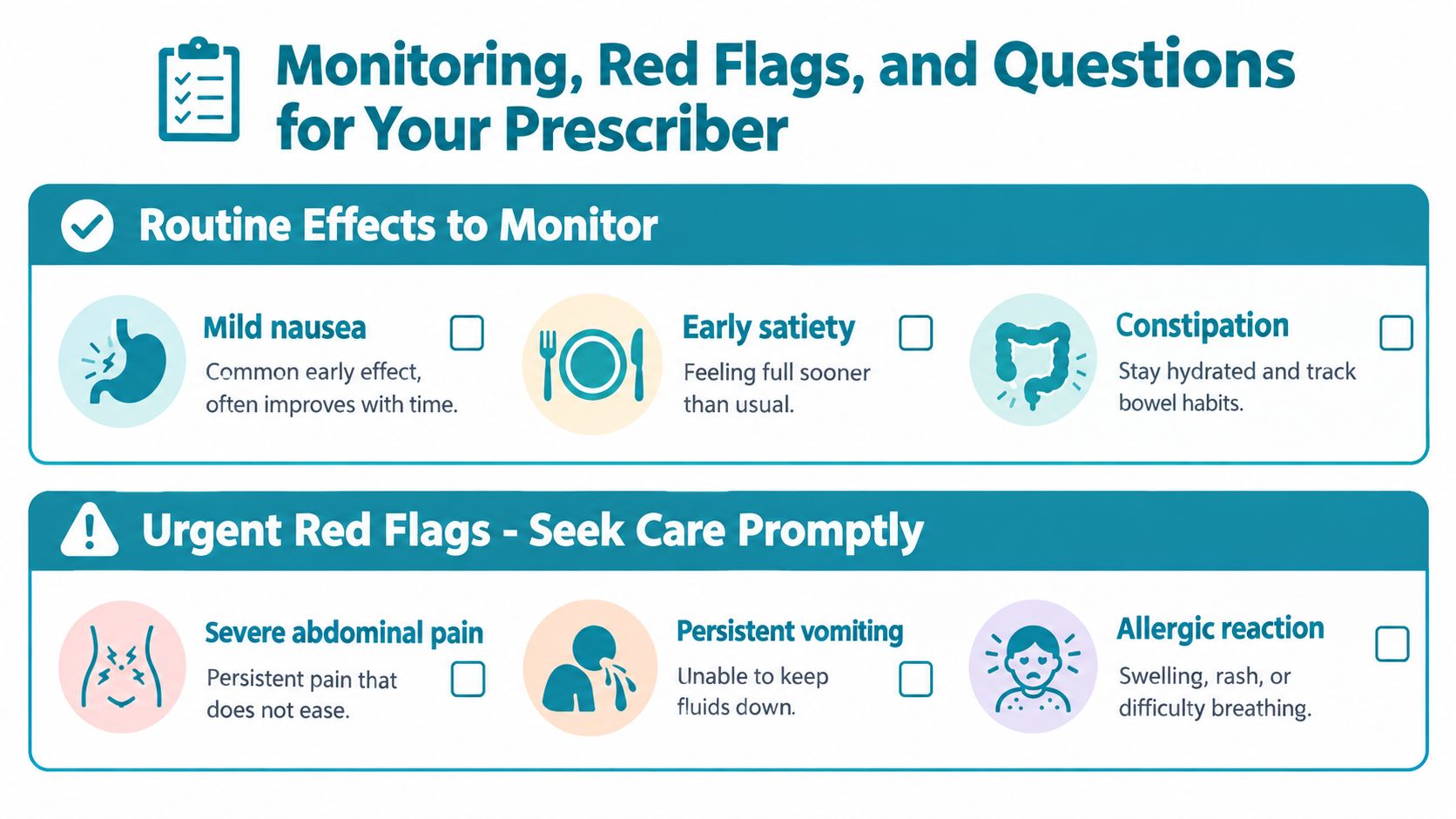
Mild nausea, early satiety, and constipation may occur. Early satiety means feeling full sooner than usual. Track when symptoms begin, whether they follow the weekly injection, and whether they are improving or interfering with normal eating and drinking.
- Mild digestive symptoms: Note their timing, severity, and relationship to the injection.
- Reduced intake: Tell the prescriber if nausea or early fullness makes fluids or nutrition difficult to maintain.
- Constipation: Report bowel changes that persist or worsen instead of changing the dose independently.
- Medication changes: Include new prescriptions, over-the-counter medicines, supplements, and other glucose-lowering or incretin medicines.
A simple symptom record can make the dose discussion more precise. Bring the injection dates, recent dose changes, symptoms, fluid intake concerns, and questions about missed doses or repeated gaps.
Red flags that need prompt action
Severe or persistent abdominal pain, especially with vomiting, needs prompt medical evaluation because it may signal a serious complication. Persistent vomiting or inability to keep fluids down can cause dehydration and kidney injury. Yellowing of the skin or eyes, fever with upper abdominal pain, or other concerning symptoms also warrant prompt medical attention.
Swelling of the face, lips, tongue, or throat, widespread hives, wheezing, or difficulty breathing may indicate a serious allergic reaction. Call emergency services for trouble breathing, severe swelling, fainting, confusion, or symptoms that seem immediately life-threatening. Do not wait for a routine appointment.
The tirzepatide treatment information can help you prepare for a prescriber discussion, but it cannot replace urgent evaluation or individualized treatment decisions.
Questions to bring to a dose review
- What exact product and indication am I using?
- Is my current dose an initiation, escalation, or maintenance dose?
- What response are we monitoring?
- Which side effects should prompt a call before the next injection?
- Should the next increase proceed, pause, or be reconsidered?
- What should I do after one missed dose or several missed doses?
- Could my other medicines affect glucose, absorption, or hypoglycemia risk?
- Are pregnancy plans, procedures, or medical conditions relevant to treatment?
This article is educational and is not personal medical advice. Only a qualified prescriber familiar with your medical history can determine whether tirzepatide is appropriate or change your treatment.
Empire Medical Wellness provides physician-led obesity medicine that may include medical assessment, medication review, individualized treatment planning, monitoring, and long-term maintenance planning when clinically appropriate. Visit Empire Medical Wellness to learn about the practice and request appointment information.