
Most advice about weight loss balanced meals gets the order wrong. It starts with a perfect plate, then treats hunger, nausea, appetite suppression, and real life as afterthoughts. In practice, the meal has to fit the person, the medication, and the day. When calories are controlled, the macronutrient split matters less than you think, and adherence matters more than a rigid rulebook, as shown in a major randomized trial in The New England Journal of Medicine (NEJM).
For adults using anti-obesity medication or moving off structured meal replacements, “balanced” often means smaller, more protein-forward, easier-to-tolerate meals that still support satiety and nutrient quality. That's a more useful definition than the classic oversized plate, especially when appetite is low or meal planning feels exhausting.
Table of Contents
- Why No Single Diet Wins for Long-Term Weight Loss
- Core Components of a Balanced Weight Loss Meal
- Practical Portioning Methods Without a Food Scale
- Sample Meals and a 7-Day Template Structure
- Meal Timing and Frequency for Sustainable Results
- Monitoring Progress and When to Seek Physician Support
Why No Single Diet Wins for Long-Term Weight Loss
Standard weight-loss guidance often starts with a perfect plate, then acts surprised when real appetite, side effects, work schedules, and family meals do not cooperate. The better question is simpler. Can you keep eating in a reduced-calorie pattern long enough for it to matter?
A major randomized trial published in The New England Journal of Medicine found that adults assigned to reduced-calorie diets lost an average of 6 kg, or 7% of initial body weight, by 6 months, and the weight loss was similar across diets that varied in protein, fat, and carbohydrate proportions (NEJM). By 2 years, average loss had declined but remained clinically meaningful, with totals of 3.0 to 3.6 kg depending on the diet group, and 23% of participants continued losing weight from month 6 to year 2, averaging an additional 3.6 kg.
That pattern matters. It shows the body responds to sustained calorie control, not to a single ideal ratio on a meal plan. Balanced meals help when they make the plan livable, especially for people whose hunger has changed on anti-obesity medication or who are moving away from structured meal replacements and need real food to feel manageable again.
What the evidence points to instead
A practical interpretation is that flexibility beats rigidity. If a person can build meals they enjoy, repeat them often, and keep portions predictable, they're more likely to maintain the pattern.
Practical rule: if a meal plan is too strict to live with, it won't last long enough to help.
That is why some patients do better with more protein, some prefer more fiber, and others need simpler meals because appetite or nausea makes large servings unrealistic. The framework should serve adherence, not the other way around.
Single-food strategies do not hold up well. A 2022 systematic review and network meta-analysis found that interventions focused on individual foods generally produced no or only trivial weight loss, well below a clinically important threshold, and concluded those trials should be strongly discouraged (PubMed). Weight loss balanced meals work because they combine foods, not because one food gets all the credit.
For people who want physician-guided support, weight-loss care can help with meal planning, medication monitoring, and maintenance planning through Empire Medical Wellness.
Core Components of a Balanced Weight Loss Meal
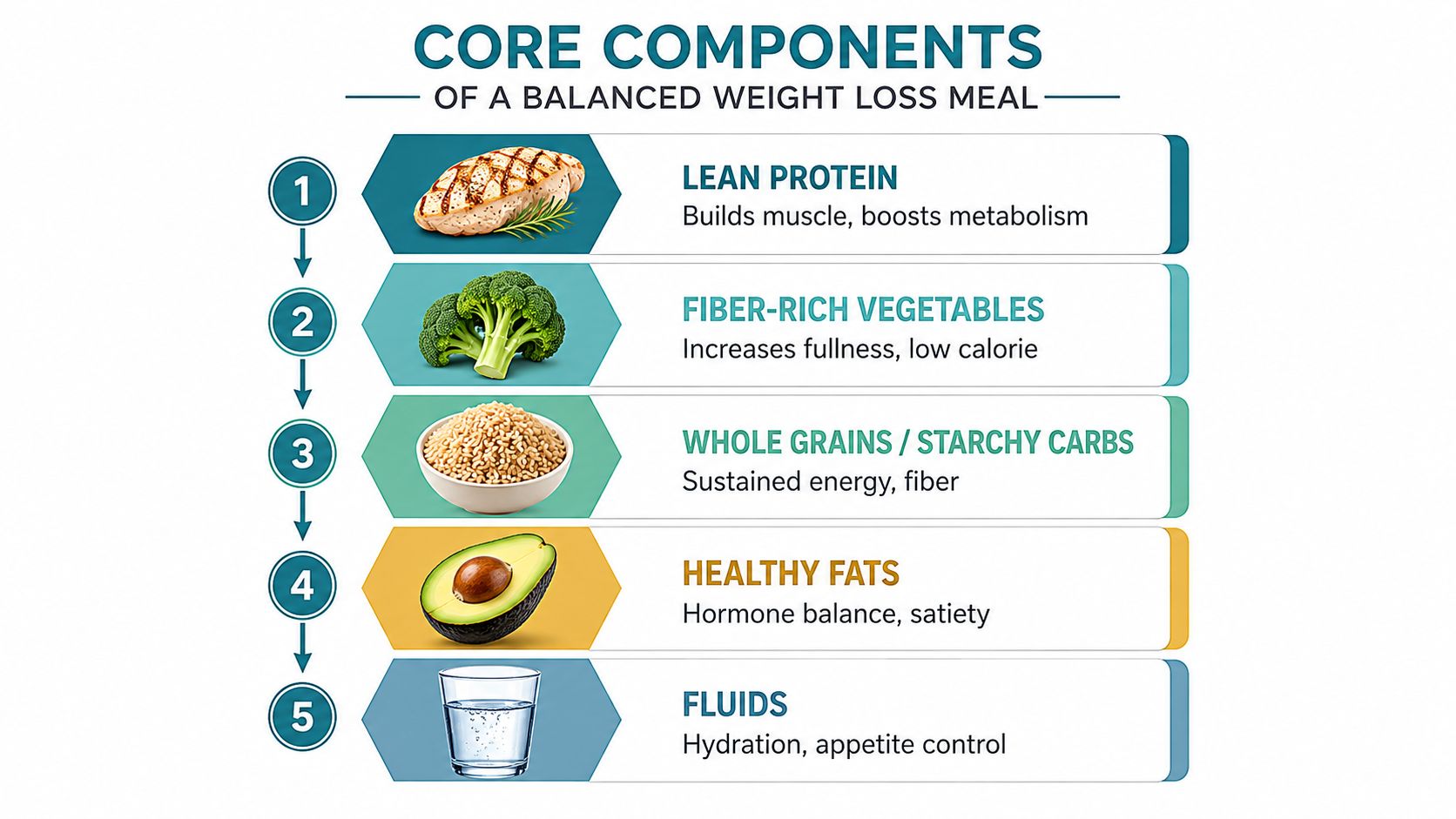
A balanced meal for weight loss does not need a calculator. It needs a few reliable parts that work together. The goal is to make a meal filling enough to prevent grazing, steady enough to support energy, and simple enough to repeat.
Build the plate from the protein out
Start with lean protein, since appetite often drops before protein needs do. Chicken breast, turkey, fish, eggs, Greek yogurt, tofu, cottage cheese, and beans can all fit depending on the meal. For many adults, a palm-sized portion is a practical visual cue.
Next add fiber-rich vegetables. Broccoli, spinach, peppers, zucchini, leafy greens, cauliflower, and green beans add volume without pushing calories up quickly. A fist-sized portion is a useful starting point for home meals, and it tends to work well because vegetables make meals look larger without becoming energy dense.
Then add a modest portion of whole-grain or starchy carbohydrates. Brown rice, oats, quinoa, sweet potato, whole-grain bread, beans, and lentils can help with satiety and daily energy. A cupped-hand serving is a reasonable visual cue for many meals.
Round it out with healthy fats. Olive oil, avocado, nuts, seeds, and fatty fish can improve satisfaction and help a meal feel complete. A little goes a long way, especially if the rest of the meal already has protein and fiber.
Hydration matters too. The NHS Eatwell Guide recommends 6 to 8 glasses of fluids a day as part of a balanced diet, along with at least 5 portions of varied fruit and vegetables, higher-fiber starchy foods, dairy or alternatives, protein foods, and small amounts of unsaturated oils and spreads (NHS).
When appetite is reduced
If you're on anti-obesity medication and meals feel too large, “balanced” should not mean forcing a full plate. A smaller meal can still be balanced if it preserves protein, includes a tolerable fiber source, and avoids turning into only crackers or toast.
The NHS notes that nutrition during weight-loss treatment often needs to be individualized, and that structured meals can be useful when planning feels hard (NHS healthy eating when trying to lose weight). In real life, that often means smaller portions, softer textures, or cooler foods that are easier to tolerate. A yogurt bowl with berries, a soup with chicken and vegetables, or eggs with sautéed greens can fit the same balanced pattern without overwhelming appetite.
Empire Medical Wellness discusses balanced diet and weight loss within physician-led obesity care when patients need a medically supervised plan rather than generic advice.
Practical Portioning Methods Without a Food Scale
A food scale can be useful, but it isn't required for steady progress. You might do better with methods you can use in restaurants, at home, and on days when appetite is lower than expected.
Three ways to portion a meal
The hand-portion method is the easiest to carry anywhere. It works well at restaurants or at a friend's house, where you don't control the serving dishes. Use the hand as a rough guide for protein, vegetables, and starches, then let hunger and medication tolerance guide the rest.
The plate-division method works best at home. Fill about half the plate with vegetables, then split the remaining half between protein and starch. It's visual, fast, and less mentally tiring than tracking every bite.
The structured meal-replacement transition helps when decision fatigue is high. A planned shake, bar, or portion-controlled meal can simplify the first phase of weight loss, then later give way to conventional meals as routine improves. A useful companion resource for estimating home-cooked meal energy is Mise's guide to recipe calories, which can help people who want a practical way to think about portions when cooking.
| Portioning Methods Compared | Best For | Effort Level | Adapts to Low Appetite |
|---|---|---|---|
| Hand portion method | Dining out, travel, quick decisions | Low | Yes |
| Plate division method | Home cooking, family meals | Low to medium | Sometimes |
| Structured meal-replacement transition | Busy starts, high decision fatigue | Medium | Yes |
What to do when appetite is suppressed
If anti-obesity medication reduces hunger, the aim is not to “catch up” by eating huge meals later. That usually backfires. A smaller meal built around protein, some produce, and a little carbohydrate is often easier to finish and easier to repeat the next day.
Keep the meal small enough to finish, but complete enough to prevent late-day grazing.
That same principle can help during the transition away from structured meal replacements. The early phase is about consistency. The later phase is about preserving that consistency while eating regular food again.
For people comparing meal strategies within obesity care, Empire Medical Wellness also has a focused balanced meal to lose weight resource that fits this practical approach.
Sample Meals and a 7-Day Template Structure
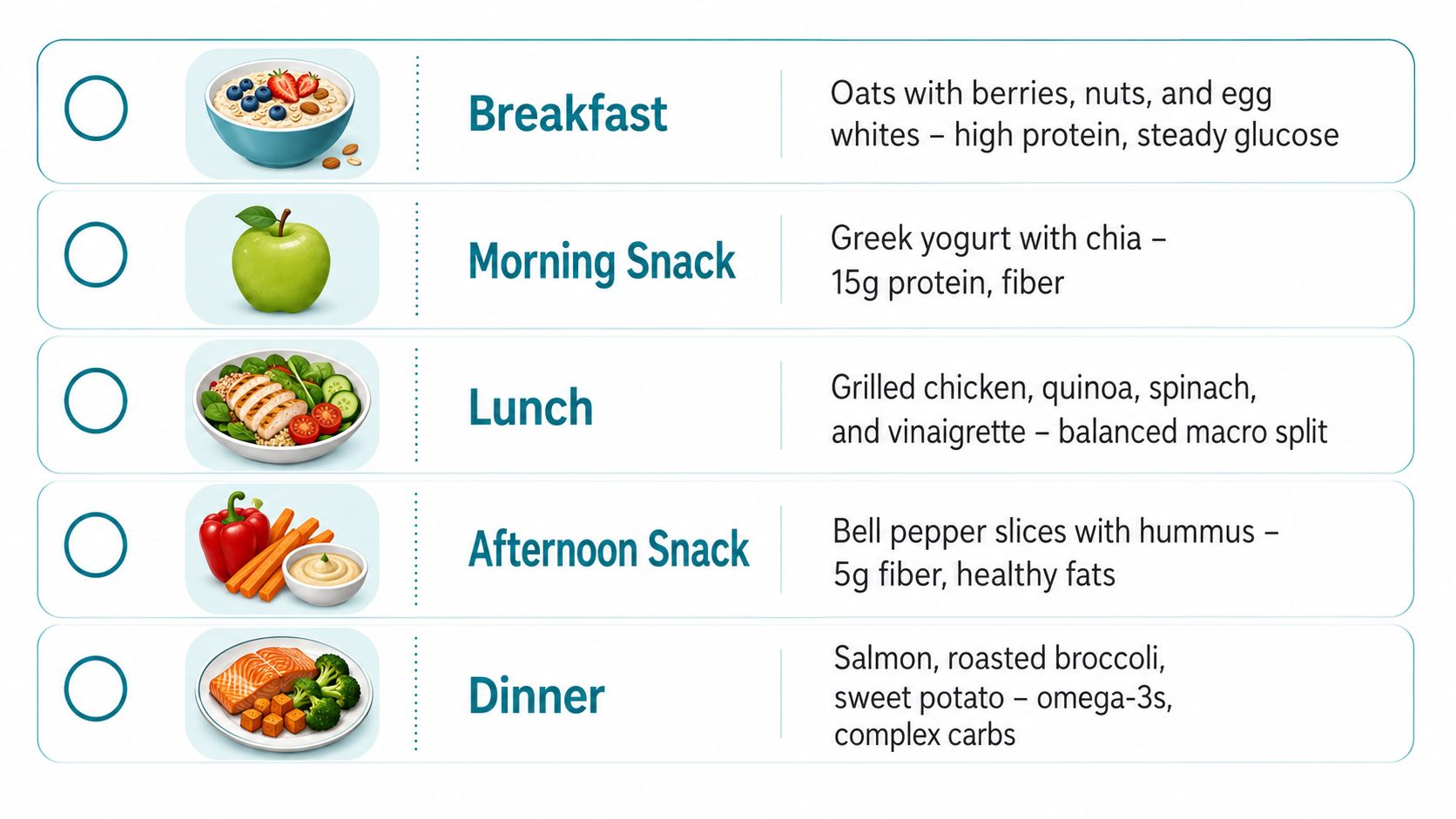
A good meal plan has to work on a tired Tuesday, not just on a perfect Sunday. A day that fits that test might start with oatmeal, berries, and egg whites, move to grilled chicken with quinoa, spinach, and vinaigrette at lunch, then end with salmon, roasted broccoli, and sweet potato at dinner, plus two snacks such as Greek yogurt with chia and bell pepper slices with hummus. The exact foods can change, but the structure should stay steady, protein first, produce next, carbohydrate in a measured amount, and fat used on purpose instead of by default.
The video below shows another way to think about simple meal structure.
A simple weekly pattern
A 7-day template works better than a fixed script. Rotate proteins across chicken, fish, eggs, tofu, turkey, beans, and yogurt. Rotate vegetables by color and texture. Then vary the carbohydrate source, such as oats one day, brown rice another, and sweet potato later in the week. For people who want a practical meal planning structure, that kind of weekly template reduces the number of decisions that have to be made when appetite is low or the day runs long.
That approach fits well with the guide to Mediterranean meal prep, which is helpful for people who want repeatable meals without eating the same thing every day. It also matches what many patients already know from experience, a little prep lowers the odds that a rushed evening turns into delivery food.
Meal planning has supportive evidence. In the National Weight Control Registry substudy, women who planned meals had lower odds of being overweight, with an OR of 0.92, and obese, with an OR of 0.79 (PMC). Higher fruit and vegetable intake was also linked with additional weight loss during both initial loss and maintenance, which supports predictable food quality instead of random eating.
Smart backup options
Keep a short list of emergency foods on hand. Canned salmon, single-serve hummus cups, and frozen edamame are useful examples because they require no prep and each can provide about 15 to 20 g of protein. That kind of backup matters most on the days when appetite is low, energy is low, or the planned meal falls apart.
The practical goal is not perfection. It is enough structure that the next meal does not require a fresh decision from scratch.
Meal Timing and Frequency for Sustainable Results
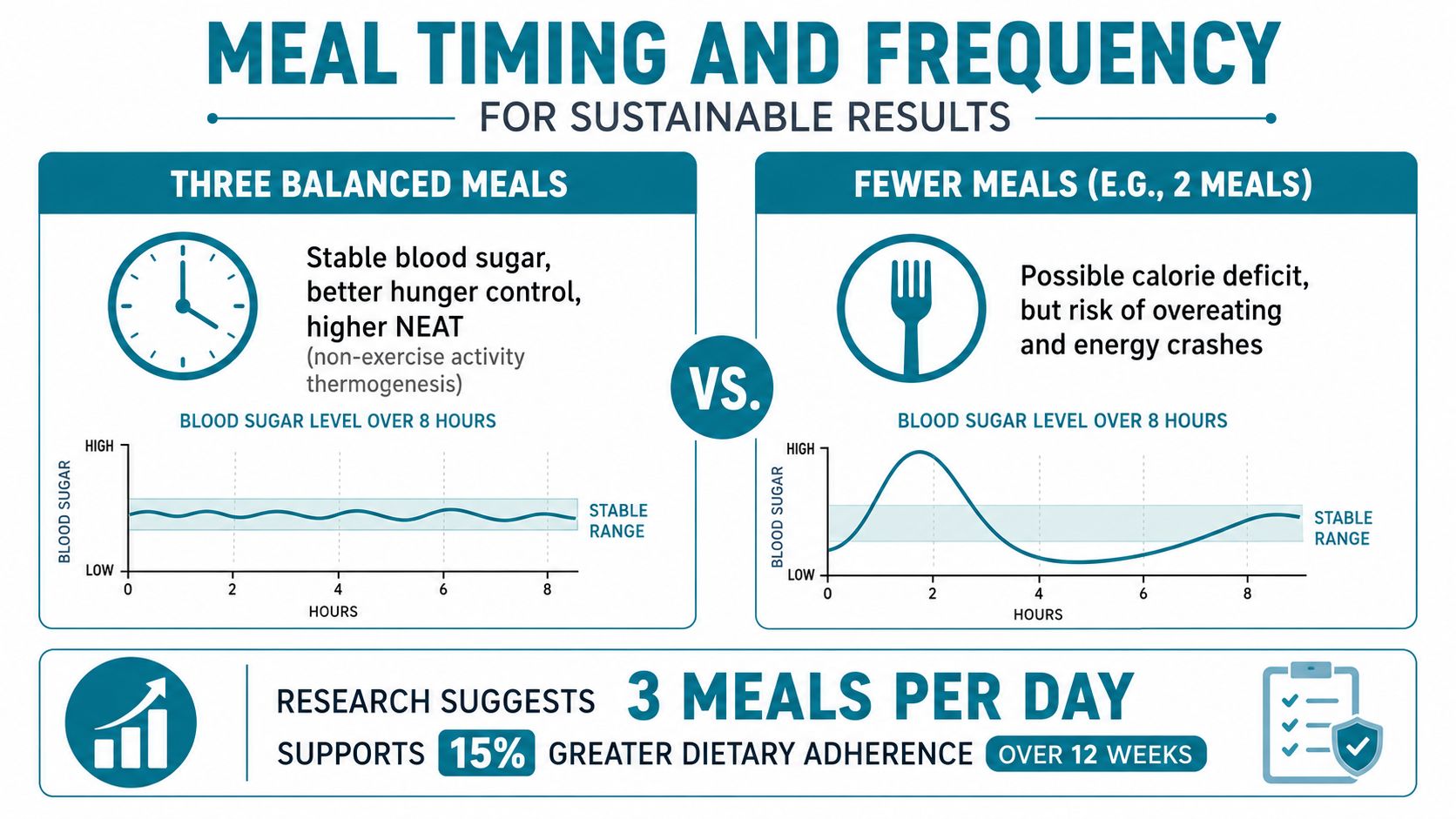
People often ask whether they need three balanced meals a day to lose weight. The honest answer is no, not universally. Some adults feel steadier with breakfast, lunch, and dinner. Others do better with fewer meals if that pattern lowers stress and still keeps intake controlled.
Regular meals versus fewer meals
Regular meal spacing can help with hunger control, planning, and avoiding a late-day rebound. It also tends to work better for people who get shaky, irritable, or overly hungry when they wait too long to eat.
Fewer meals, including time-restricted eating, can also create a calorie deficit for some adults. The trade-off is that long gaps may increase the chance of overeating at the next meal, especially if appetite swings are strong or the person is already tired and underfed.
The Ohio State Wexner Medical Center notes that traditional guidance often recommends breakfast, spacing meals, and avoiding skipped meals, while clinical reviews also discuss intermittent fasting and time-restricted feeding as effective weight-loss strategies, with caution for people taking hypoglycemic agents because medication safety matters (Ohio State Wexner Medical Center).
Match the pattern to the person
For adults on glucose-lowering medication or anti-obesity medication, meal timing should align with safety, tolerance, and the medication plan. A pattern that looks neat on paper can fail if it causes nausea, skipped doses, or energy crashes.
The best meal frequency is the one you can repeat safely without constant friction.
That means the right answer may be three balanced meals, two larger meals, or a hybrid schedule with a planned snack. The point is consistency, not moral correctness.
When the schedule is unclear, a useful test is simple. Which pattern makes it easier to stay within a reduced-calorie pattern, avoid bingeing, and maintain enough protein? That is usually the better choice.
Monitoring Progress and When to Seek Physician Support
The scale gives one data point. It doesn't tell you whether your meals are balanced, whether you're staying satisfied, or whether the plan will hold up next month. A better approach is to watch patterns, adherence, hunger, energy, and whether the day feels sustainable.
That matters because long-term maintenance is hard. The NIH estimates success at only 1% to 3% in the general population, and another review found that even among people who reached their goal, only 30% maintained the loss for at least 18 months (Obesity Reviews). Those numbers don't mean the effort was wasted. They mean maintenance needs a plan.
Signs the current plan needs adjustment
If meals leave you hungry soon after eating, if you're grazing at night, or if you're skipping meals and then overeating later, the structure probably needs work. The same is true if nausea, fatigue, or constipation is making balanced meals hard to finish.
A physician-led obesity medicine visit can help sort out whether the issue is portioning, food choice, medication tolerance, or something else in the overall plan. Empire Medical Wellness offers obesity treatment and weight loss support through a private-pay, physician-led model that can be useful for adults who want thoughtful follow-up rather than one-time advice.
A practical benchmark is not perfection. It's whether you can sustain a clinically meaningful pattern, preserve protein adequacy, and keep the plan stable enough to repeat.
If you've tried many diets and want a steadier approach, Empire Medical Wellness can help you build weight loss balanced meals into a broader obesity medicine plan with medical oversight and follow-up. Visit Empire Medical Wellness to learn how physician-led care may support meal planning, medication monitoring, and long-term maintenance. This article is educational and isn't personal medical advice.