Narcan nasal spray contains 4 mg of naloxone hydrochloride as its only active opioid-blocking medicine, delivered in 0.1 mL for use in the nose. It also contains only inactive helper ingredients: benzalkonium chloride, edetate disodium, sodium chloride, hydrochloric acid, and sterile water.
Many people asking what is in Narcan are really asking two different questions. What chemical is doing the life-saving work, and what else is in the spray device besides that medicine? That distinction matters, especially now that over-the-counter naloxone options have expanded and newer nasal sprays can look similar at first glance.
This article stays focused on addiction medicine. It explains what Narcan contains, how naloxone works, how to respond to a suspected opioid overdose, and how overdose reversal differs from treatment for opioid use disorder. It's educational information for adults, not personal medical advice.
Table of Contents
- What Is in Narcan at a Glance
- Active Ingredient and Inactive Helpers Explained
- How Narcan Nasal Spray Compares to Other Naloxone Products
- How Naloxone Reverses an Opioid Overdose
- Recognizing Overdose and Responding Safely
- Where Naloxone Fits Among Evidence Based Treatment Options
- Access Storage and Next Steps with Empire Medical Wellness
What Is in Narcan at a Glance
What are people usually asking when they ask what is in Narcan?
Often, they want a simple answer to two different questions. First, what medicine reverses an opioid overdose? Second, what kind of product is Narcan compared with the other naloxone sprays now sold over the counter?
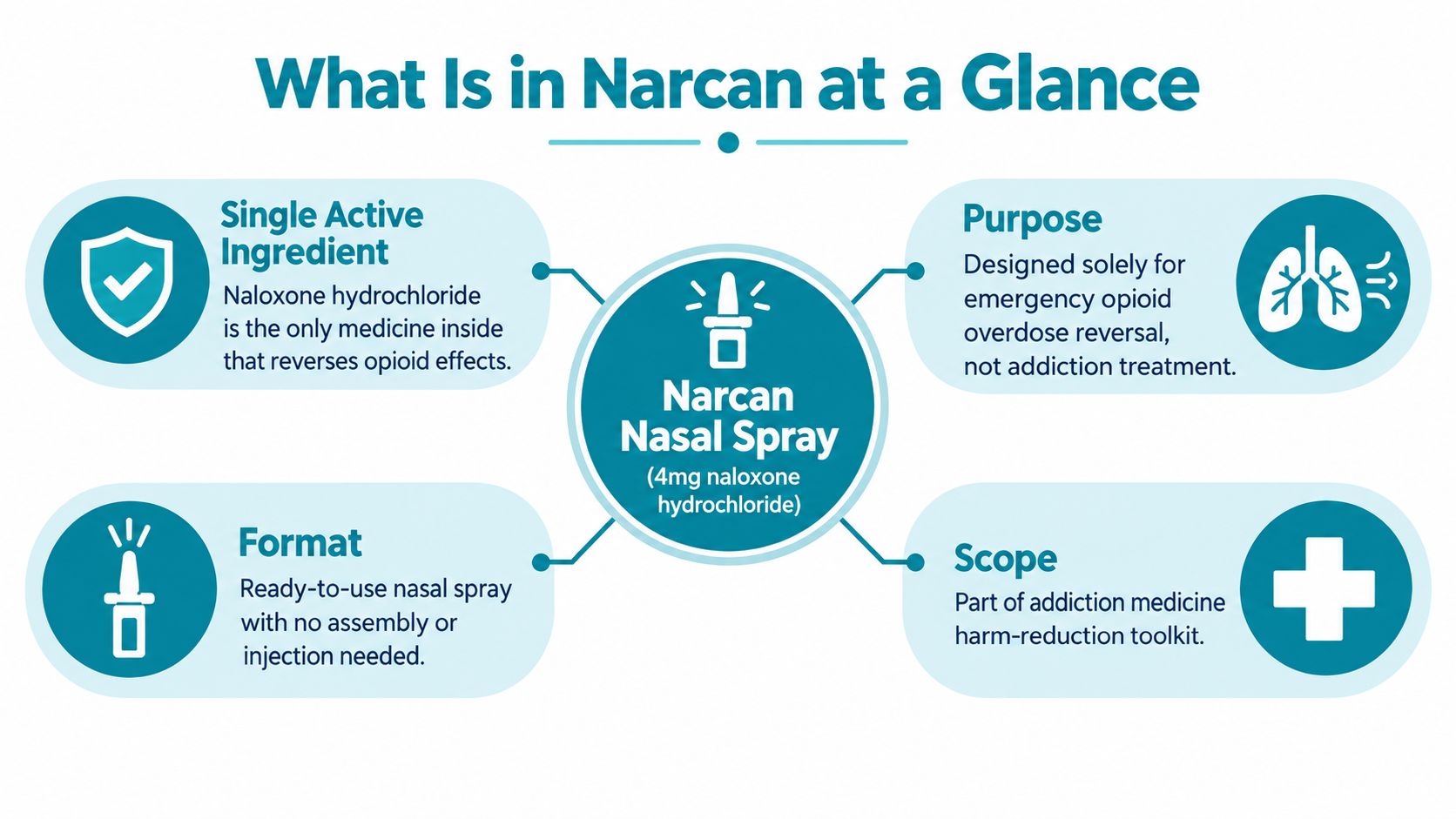
As noted above, Narcan is a single-ingredient naloxone spray. The key point here is why that matters. A single-ingredient product is easier to identify in an emergency. The overdose-reversing effect comes from naloxone hydrochloride itself. The other ingredients support the spray's storage and delivery, not the rescue effect.
The FDA label describes Narcan nasal spray as an intranasal naloxone product with one active ingredient plus a short list of inactive helpers that keep the solution usable in the device and nose. You can review that directly in the FDA-approved Narcan label.
Why this question matters
Clear ingredient labeling helps in three real-world situations:
- Emergency response: Narcan is used for suspected opioid overdose. It does not reverse every cause of unconsciousness or slowed breathing.
- Product comparison: Store shelves and online listings now include more than one naloxone nasal spray. The boxes can look similar, while dose strengths and brand names differ.
- Treatment planning: Naloxone reverses an overdose episode. Ongoing care for opioid use disorder is a separate part of treatment.
A practical way to frame it is this. Narcan is rescue medication, like a fire extinguisher kept for an urgent problem. Treatment for opioid use disorder is longer-term care, more like repairing the wiring after the fire risk is under control.
Practical rule: If opioid overdose is suspected, focus first on responsiveness, breathing, calling 911, and naloxone. Questions about long-term treatment come after emergency action starts.
Why readers get confused now
Narcan became the familiar name first, so many people use "Narcan" as if it means every naloxone spray. That shortcut can blur useful differences.
By 2026, the over-the-counter market included Narcan and newer naloxone nasal sprays, including higher-dose products. The main takeaway is simple. Narcan is one brand within a broader naloxone category. Comparing products starts with the same basic question each time: Is this naloxone, and if so, which brand and dose am I looking at?
Active Ingredient and Inactive Helpers Explained
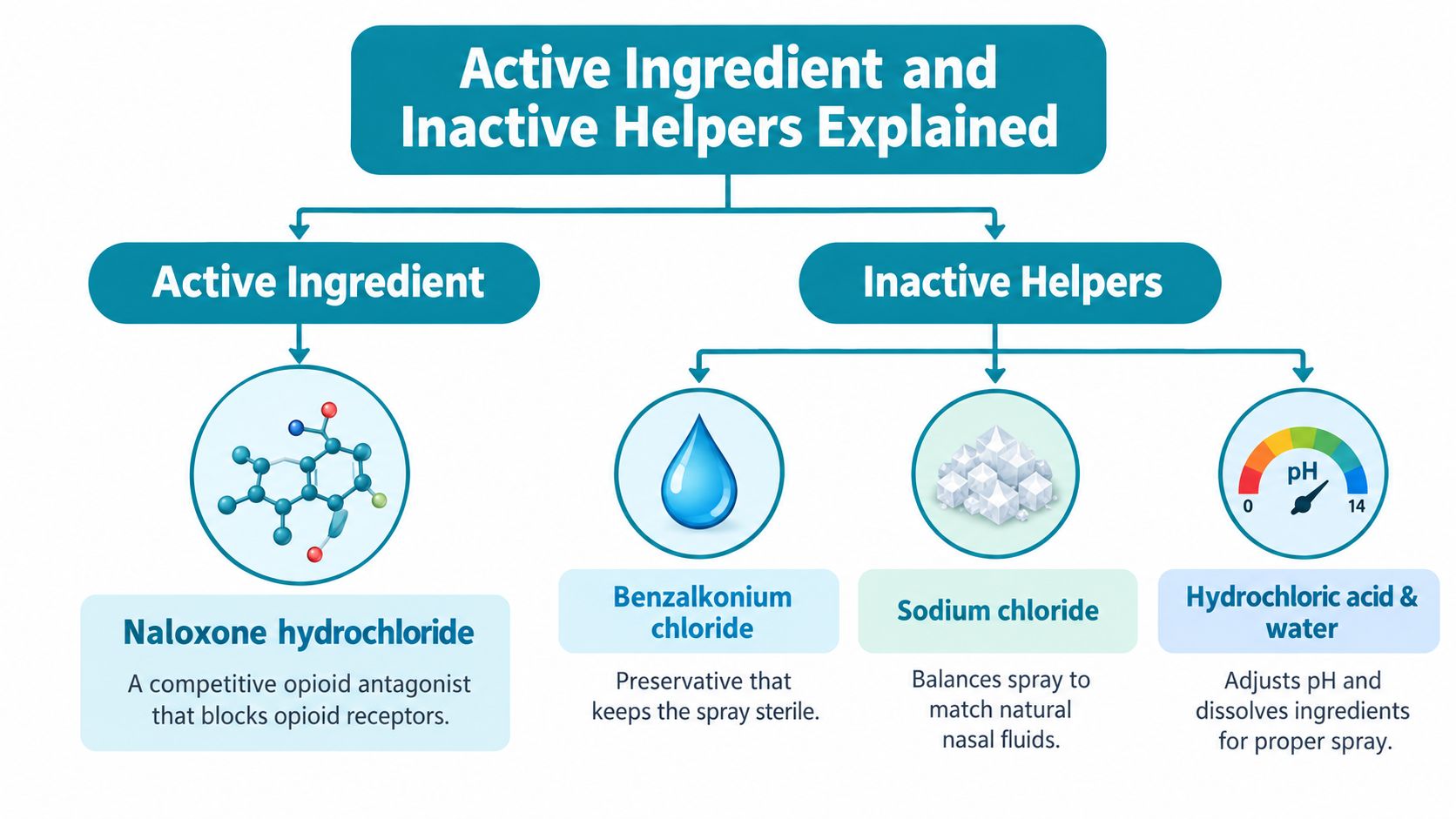
Narcan contains one active drug: naloxone hydrochloride. That point matters because people often use "Narcan" as a catch-all term, even though the product itself is a specific naloxone nasal spray with one opioid-reversing ingredient and several non-drug helpers.
What the active ingredient does
Naloxone hydrochloride is the part that reverses the effects of opioids. FDA materials describe naloxone as a competitive opioid receptor antagonist, meaning it attaches to opioid receptors and blocks opioids from continuing to activate them. In plain language, it acts like a fast-acting blocker at the same target opioids use.
That is the rescue medicine.
A helpful comparison is a fire extinguisher: the chemical inside stops the immediate danger, while the canister and nozzle help deliver it. With Narcan, naloxone is the drug that does the opioid-reversing work. The rest of the formula helps the spray stay usable and reach the nose correctly.
What the inactive ingredients are for
DailyMed lists these inactive ingredients in NARCAN Nasal Spray: benzalkonium chloride, edetate disodium, sodium chloride, hydrochloric acid, and water.
These ingredients have practical jobs:
- Benzalkonium chloride: helps preserve the product.
- Edetate disodium: helps keep the formula stable.
- Sodium chloride: helps make the liquid more compatible with body tissues.
- Hydrochloric acid: adjusts the pH, which means the acidity level.
- Water: acts as the liquid base that holds everything in solution.
None of these ingredients reverses an opioid overdose. They are part of the formulation, not the antidote itself.
Why “single ingredient” can sound misleading
“Single ingredient” does not mean the device contains only one substance. It means there is only one active drug. That is a common point of confusion on medication labels.
Narcan is a single-ingredient naloxone product in that sense. The active ingredient is naloxone hydrochloride. The inactive ingredients help with storage, stability, and nasal delivery.
The dose label can add another layer of confusion. Narcan nasal spray is sold as 4 mg in 0.1 mL per single-dose device. Other naloxone products can use the same active drug but come in different strengths or formats, including higher-dose nasal sprays available in the 2026 OTC market. That is why two boxes can both say naloxone, yet still not be the same product.
How Narcan Nasal Spray Compares to Other Naloxone Products
Standing at a pharmacy shelf, how do you tell whether two naloxone boxes are basically the same rescue drug or meaningfully different products?
A simple way to compare them is to read the front of the box in this order: product type, dose, and directions for use. That helps separate one question from another. The rescue medication may still be naloxone hydrochloride, but the device and instructions can differ enough to matter in an emergency.
What to compare on the package
Narcan is one branded naloxone product. Other products may also contain naloxone, yet come in a different form or strength. The practical question is not just "does it contain naloxone?" The practical question is "what am I holding, and how is it used?"
| Product Type | What to look for on the box | Why it matters in real use |
|---|---|---|
| Narcan nasal spray | Brand name, nasal spray wording, single-use device | Designed for nose administration with product-specific instructions |
| Other OTC naloxone nasal sprays | The stated naloxone dose on the front label, such as 4 mg or 10 mg, plus nasal spray wording | Same rescue drug class, but different labeled strength and directions |
| Prescription or store-counter injectable naloxone | Words such as injection, vial, syringe, or auto-injector | Requires a different delivery method than a nasal spray |
The 2026 over-the-counter market has made this comparison more important. A shopper may now see Narcan alongside newer naloxone nasal sprays, including higher-dose products. One box may say 4 mg and another may say 10 mg. Both can be naloxone. They are still not the same product in a practical sense, because the labeled dose and device instructions are different.
Why the name "Narcan" can blur the picture
People often use "Narcan" the way people use a brand name for a whole category. That is understandable. It can also create confusion.
Narcan is a specific naloxone nasal spray product, not a catch-all name for every naloxone item sold in stores or used by EMS. If you are comparing options, read past the brand name and check the label details.
Use these three questions:
- Is this a nasal spray or an injection?
- What dose does the front label list?
- Are the directions written for a layperson using a spray device, or for someone using an injectable product?
That quick label check can prevent a common mix-up. Two boxes can both say naloxone and still require different handling.
For a plain-language overview of naloxone and opioid overdose reversal, Empire has a related educational page.
The practical takeaway
If you are buying OTC naloxone, compare the box the way you would compare reading glasses. The goal is not just to see the category. The goal is to choose the exact version with the instructions and format you expect to use under stress.
For Narcan versus newer OTC naloxone products, the cleanest comparison is this: same antidote class, sometimes different dose, sometimes different device, always worth reading the label carefully before an emergency happens.
How Naloxone Reverses an Opioid Overdose
How does one ingredient in Narcan change an overdose emergency so quickly?
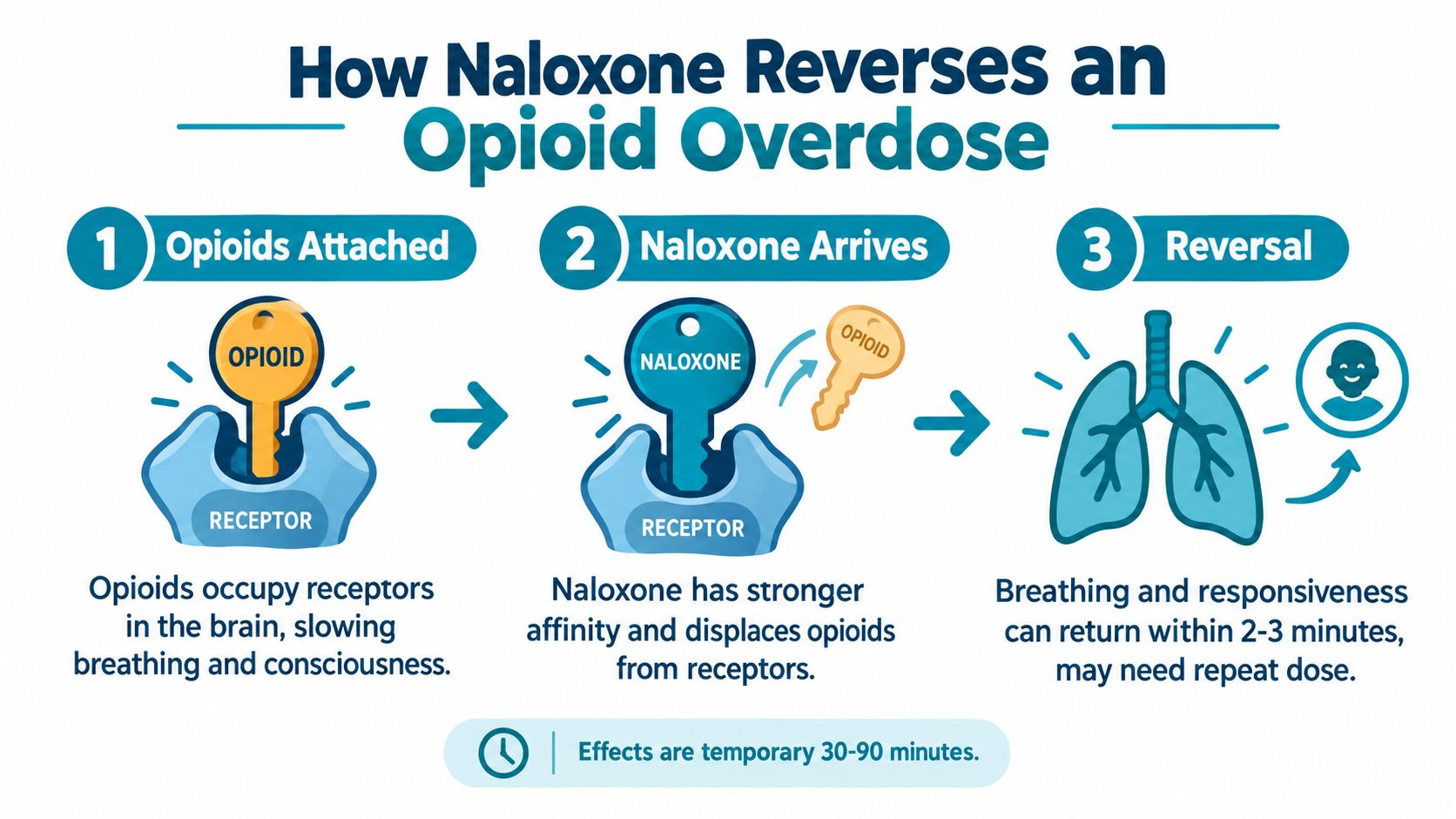
Opioids can slow or stop breathing by overstimulating opioid receptors in the brain. Naloxone reverses that effect by attaching to those same receptors more strongly than many opioids do. When naloxone takes that spot, it pushes the opioid off and blocks its effect for a period of time. The goal is simple. Restore breathing long enough for emergency care to take over.
What is happening in the body
The most dangerous part of an opioid overdose is often the breathing problem, not just sleepiness. As breathing slows, oxygen levels can fall. Naloxone helps by interrupting the opioid signal that is suppressing breathing.
With Narcan nasal spray, the medicine is absorbed through the nose and then enters the bloodstream. Intranasal naloxone may act a little less quickly than injected naloxone, but it is designed for fast use by bystanders during an emergency. That difference matters when comparing products in the 2026 OTC market. Narcan is one single-ingredient naloxone product. Other naloxone sprays may use the same antidote with different labeled doses or device instructions.
This short video gives a visual overview of how naloxone works in the body.
What naloxone does not do
Naloxone is rescue care for suspected opioid overdose. It does not diagnose why a person collapsed. It does not reverse every sedative, alcohol poisoning event, or mixed-drug emergency. It also does not treat opioid use disorder.
A person may wake up after naloxone and still need oxygen support, monitoring, or more than one dose. That is one reason emergency evaluation still matters. This is also why readers comparing Narcan with newer naloxone sprays should focus on the exact product label, because dose and device can differ even when the active drug is still naloxone.
People can also face higher overdose risk after losing tolerance, such as after a period of abstinence or a break in treatment. Readers who want more context about potent synthetic opioids can review this page on fentanyl and overdose concerns.
Naloxone can create a chance for recovery. It is not the recovery treatment itself.
Recognizing Overdose and Responding Safely
In a suspected opioid overdose, the first priorities are responsiveness, breathing, 911, and naloxone. Don't wait for certainty if the situation looks like an opioid overdose emergency.
Emergency response checklist
Use this practical sequence in an emergency:
- Check responsiveness. Try to wake the person. Look for no response or markedly decreased responsiveness.
- Check breathing. Slow, shallow, or absent breathing is a major warning sign.
- Call 911. Tell emergency services your location and that you suspect an opioid overdose.
- Give naloxone. Use the product as labeled.
- Stay and monitor. Watch breathing and responsiveness until help arrives.
If a person improves and then becomes unresponsive again, emergency care is still important. Naloxone is time-sensitive rescue care, not complete medical evaluation.
Overdose red flags and withdrawal clues
Common overdose concerns include:
- Breathing changes: very slow, shallow, irregular, or absent breathing
- Responsiveness changes: hard to wake, not waking, or collapsing
- Color changes: blue or gray lips or nails
- Body signs: limp body or unusual stillness
After naloxone, some people may develop withdrawal symptoms because opioid effects have been blocked. In plain language, withdrawal can mean sudden discomfort such as agitation, sweating, nausea, body aches, or feeling abruptly sick. That can be frightening, but it's different from long-term treatment planning.
Mixed-substance emergencies need extra caution
Not every overdose involves opioids alone. Sedatives and alcohol can complicate the picture. If you're trying to understand overdose risk when benzodiazepines and alcohol are involved, this overview of Klonopin and alcohol overdose gives broader context about mixed central nervous system depressants.
For a separate Empire educational resource on substances that may interact with naloxone response scenarios, see naloxone and related drug considerations.
Call 911 even if naloxone seems to work. The person still needs emergency assessment.
Lower-tolerance relapse safety plan
A simple relapse-safety framework can reduce risk after a period of lower opioid tolerance:
- Assume tolerance may have changed: Risk can rise after time away from opioid use.
- Avoid being alone: If someone is at risk, isolation makes emergency response harder.
- Keep naloxone accessible: Store it where others can find it quickly.
- Plan follow-up care: Emergency reversal should be followed by discussion of ongoing treatment options.
Where Naloxone Fits Among Evidence Based Treatment Options
Opioid use disorder is a treatable medical condition. Naloxone helps in an emergency, but longer-term care usually involves a separate treatment plan based on a person's history, goals, medical risks, and treatment setting.
Rescue medicine versus treatment medicine
A careful addiction evaluation often considers the opioid involved, route of use, last use, tolerance, prior overdose history, exposure to sedatives or alcohol, pregnancy status, and the person's goals. Those factors help shape treatment choices without stigma.
One outpatient option for physician-led evaluation is Empire's page on buprenorphine treatment and opioid use disorder care.
Comparison of evidence-based medication options
The three main medication pathways commonly discussed for opioid use disorder are methadone, buprenorphine, and extended-release naltrexone. They differ in where treatment is provided and how treatment is started.
| Medication | General Role | Typical Setting | Key Consideration |
|---|---|---|---|
| Methadone | Ongoing treatment for opioid use disorder | Structured opioid treatment program setting | Requires a specialized treatment setting |
| Buprenorphine | Ongoing treatment for opioid use disorder | Office-based or outpatient medical settings when appropriate | Initiation planning matters, especially around recent opioid exposure |
| Extended-release naltrexone | Relapse prevention treatment for opioid use disorder | Outpatient medical settings when appropriate | Requires opioid-free initiation planning |
No single medication fits everyone. The right choice depends on clinical context and access, not on stigma or willpower.
A rescue spray and a treatment plan solve different problems. Both can matter, but they aren't interchangeable.
Harm reduction and follow-up still matter
Medication treatment can be combined with behavioral care, recovery planning, and coordination with outside clinicians or programs when the patient authorizes it. After any overdose event, follow-up should address safety, treatment readiness, and ongoing risk.
That often includes practical questions such as whether opioid tolerance has changed, whether fentanyl exposure may be possible, whether sedatives are also involved, and whether the person has a reliable emergency response plan.
Access Storage and Next Steps with Empire Medical Wellness
Narcan's role in public access changed over time. Its approval history moved from prescription status to over-the-counter availability, which made community access easier and helped more adults keep naloxone available outside clinical settings. As newer naloxone sprays enter the market, readers may need to compare labels rather than assume every product is the same.
Storage and handling in plain language
For storage and handling, the safest approach is to follow the product label that comes with the naloxone device you have. That matters because the spray contains not just naloxone hydrochloride but also inactive formulation ingredients that support proper nasal delivery.
In practical terms:
- Keep the product in its original packaging so the label and instructions stay with it.
- Store it where adults can reach it quickly during an emergency.
- Check the specific product label because storage directions can differ by formulation and manufacturer.
When routine follow-up is the next step
A suspected overdose always belongs in the emergency category. After that immediate crisis, adults may want confidential outpatient assessment for opioid use disorder, relapse risk, medication options, or coordination with other care.
For readers seeking physician-led outpatient addiction evaluation, the practice has an addiction medicine specialist page that explains the scope of care. Emergency care, detoxification, and inpatient treatment are separate services and should be used when the situation requires that level of support.
Published: September 21, 2026
Updated: September 21, 2026
Sources
- FDA-approved Narcan nasal spray label
- DailyMed NARCAN dosage and presentation information
- DailyMed NARCAN inactive ingredients information
- FDA naloxone overview and mechanism information
- Narcan approval history summary
- Medical Xpress coverage of the evolving 2026 naloxone nasal spray market
This article is educational and isn't personal medical advice. If you suspect an opioid overdose, call 911 right away and use naloxone according to the product labeling.
Empire Medical Wellness offers private-pay, physician-led outpatient care for adults, including addiction medicine evaluation, treatment planning, monitoring, and coordination when appropriate. If you want a careful follow-up conversation after an overdose event or have questions about opioid use disorder treatment options, visit Empire Medical Wellness.