A strong morning craving can feel automatic. You wake up, reach for a cigarette or vape, and only afterward think about quitting. Nicotine patches can reduce that withdrawal pressure, but they work best as a foundation within a broader plan, not as a standalone cure.
The patch supplies nicotine slowly through the skin. Fast-acting nicotine replacement therapy, behavioral support, and planning for triggers may still be needed when cravings break through. This guide explains how nicotine patches work, what the evidence shows, how labeled products are used, and when medical support is appropriate.
Byline: Empire Medical Wellness Editorial Team
Published: October 2, 2026
Updated: October 2, 2026
Table of Contents
- Why the Transdermal Delivery Pattern Matters
- The Evidence Behind Transdermal Nicotine Therapy
- Step-by-Step Application and Dosing Strategies
- Combining Patches with Fast-Acting Nicotine Replacement
- Comparing Nicotine Delivery and Harm Reduction Profiles
- Managing Side Effects and Recognizing Red Flags
- Building a Quit Plan with Medical Support
Why the Transdermal Delivery Pattern Matters
A person may wake with irritability, restlessness, or an urgent drive to smoke before breakfast. Overnight, nicotine levels fall, and that early craving can reflect physiological dependence rather than a character flaw. A patch addresses part of this withdrawal pattern by maintaining nicotine exposure after waking.
A nicotine patch uses transdermal nicotine replacement therapy. Nicotine passes through the skin into the bloodstream, producing a gradual rise rather than the rapid surge associated with smoking or inhaling. The American Cancer Society's explanation of nicotine replacement therapy identifies the patch as an FDA-approved option for adults who want to quit smoking.

Why the delivery pattern matters
Smoking creates a quick rise and fall in nicotine. A patch builds a more consistent baseline, which can reduce withdrawal without reproducing the rapid reinforcement that makes inhaled nicotine so compelling. Apply it to clean, dry, intact skin as directed, and treat it as the foundation of treatment rather than a complete response to every craving.
The patch makes the physiological part of quitting more manageable. Coffee, driving, stress, alcohol, and seeing someone smoke can still activate learned associations. Planning for those cues, and having a fast-acting nicotine replacement option available for breakthrough urges, addresses gaps that the patch alone cannot cover. A missed application or a patch that loosens also calls for a practical recovery plan, not self-blame.
Pharmacokinetics describes how a substance enters, moves through, and leaves the body. With transdermal nicotine, plasma concentration rises gradually, and nicotine reaches peak plasma concentration at about nine hours, according to a review of nicotine pharmacokinetics in this peer-reviewed clinical article.
The plasma half-life is the time required for the amount of a substance in the blood to fall by half. Nicotine's plasma half-life is about three hours, so a patch supplies a baseline but may not quickly relieve a sudden cue-related craving. For physician-led guidance on combining medication, behavioral support, and nicotine treatment options, a clinician can help match treatment to withdrawal severity, routines, and adherence barriers.
The Evidence Behind Transdermal Nicotine Therapy
Nicotine patches are among the best-supported single-agent treatments for smoking cessation. A large meta-analysis of 53 randomized trials involving 17,703 participants found that nicotine replacement therapy increased the odds of abstinence by 1.71 overall. The same evidence history reported an odds ratio of 2.07 for the transdermal patch compared with control and a pooled risk ratio of 1.64 across 43 trials, as described in this peer-reviewed meta-analysis from the American Psychological Association.
Longer-term results also remained favorable. One analysis reported a pooled one-year abstinence odds ratio of 1.79 for patch users compared with placebo patch users. These findings support the patch as a dependable baseline medication, while leaving room for fast-acting nicotine replacement and behavioral planning to address cravings that arise during the day.
What the evidence does and doesn't mean
A patch does not guarantee abstinence or eliminate every craving. It reduces withdrawal and provides steady nicotine exposure, but treatment still depends on correct use, continued engagement, and a plan for predictable triggers. The medication should be judged as a proven cessation tool, not as a complete response to every smoking cue.
The Cochrane review of nicotine replacement therapy found high-certainty evidence that patches improve cessation success compared with placebo or no NRT. It reported a pooled risk ratio of 1.64 across 51 trials and 25,754 participants, and found that combining a patch with fast-acting NRT, such as gum or a lozenge, works better than using one form alone.
That combination reflects how nicotine dependence behaves in daily life. The patch maintains a background level of nicotine, while gum or a lozenge can address a sudden urge before it leads to smoking. Behavioral preparation matters as well. Driving, work breaks, alcohol, stress, and social settings can all require specific alternatives rather than relying on medication alone.
The patch has a long clinical history. Early human pharmacokinetic research on transdermal nicotine was followed by reports of reduced cigarette craving, and later reviews expanded the evidence across many patch trials. This record helps explain why clinicians continue to use the patch as foundational therapy, while adjusting the broader plan when adherence or breakthrough cravings limit its benefit.
Why a proven treatment may appear to fail
Daily life is less controlled than a clinical trial. Patch use may become inconsistent after a lapse, when urges intensify, or when cigarettes are readily available. Research examining adherence in everyday settings describes these practical barriers in daily-life research on patch adherence.
A clinical review should therefore ask:
- Timing: Was the patch applied consistently?
- Cravings: Was a fast-acting option available for breakthrough urges?
- Access: Were cigarettes, vapes, or other nicotine products easy to obtain?
- Cues: Which routines or settings triggered use?
- Support: Was there a plan for a slip?
A lapse supplies useful information. It identifies where medication technique, rapid relief, cue planning, or follow-up needs strengthening.
Step-by-Step Application and Dosing Strategies
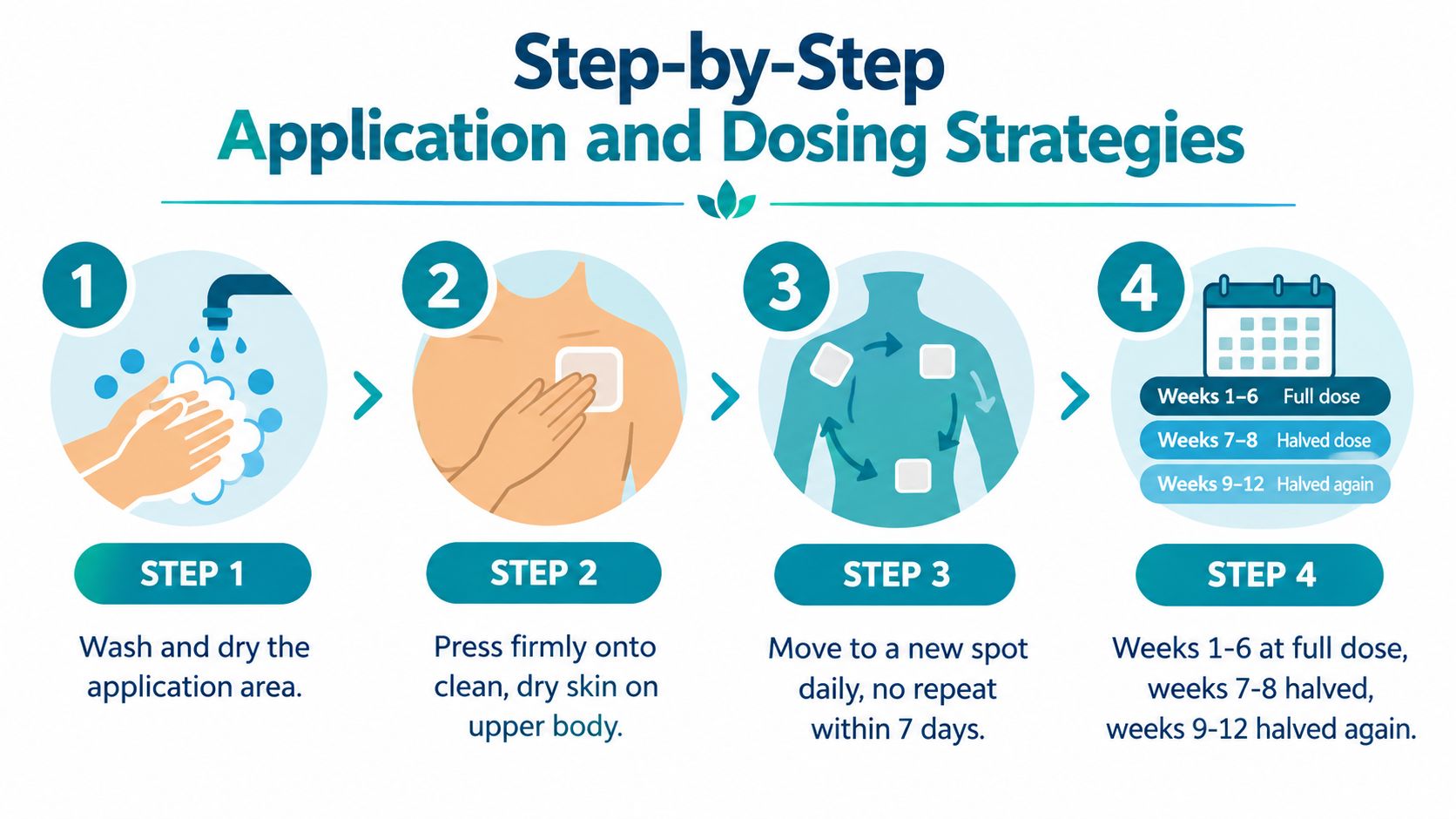
The patch is simple to apply, but technique affects comfort and consistency. The CDC recommends putting on a fresh patch in the morning on clean skin and wearing it for a full 24 hours. FDA labeling says not to leave it on longer than 24 hours because it may irritate the skin and lose strength. The CDC nicotine patch instructions provide the basic application framework.
Understanding strength and step-down treatment
Common FDA-labeled 24-hour products use a step-down sequence of 21 mg, then 14 mg, then 7 mg. This reflects a gradual reduction in nicotine delivery rather than an abrupt stop, as described in FDA labeling for a nicotine patch product.
Marketed systems also vary by wear time. Common 24-hour systems include 7 mg, 14 mg, and 21 mg, while 16-hour systems commonly include 5 mg, 10 mg, and 15 mg. A person asking about “16 mg versus 21 mg” may be comparing products with different labeling conventions. Product strength, wear time, current nicotine exposure, and medical history all matter, so individualized selection belongs in a clinician or pharmacist discussion.
Don't infer the right strength from one detail alone. A useful medical assessment quantifies the product, frequency of use, time to first nicotine, withdrawal symptoms, and the settings that trigger use.
Application checklist
- Choose the site: Use clean, dry, relatively hairless skin on the upper body. Don't apply it to broken, inflamed, or irritated skin.
- Press firmly: Follow the product label and press the patch onto the skin so it adheres securely.
- Rotate locations: Move to a different area each day to reduce local irritation. Avoid repeatedly using the same spot.
- Respect the wear limit: Remove the old patch before applying a new one. Don't wear it beyond the labeled period.
- Protect other people: Fold used patches together with the sticky sides attached and dispose of them according to the product label. Residual nicotine can be dangerous if children or pets handle or ingest a used patch.
- If it comes off: Follow the specific package instructions or contact a pharmacist. Don't automatically apply an extra patch.
A small routine can prevent missed applications. Readers who struggle with consistency may find this guide to how to build a reminder routine useful. For related educational material, see nicotine replacement therapy guidance.
The image and video demonstrate general technique, not a personalized prescription. A physician or pharmacist should interpret the product label and the person's current nicotine use before any treatment changes.
Combining Patches with Fast-Acting Nicotine Replacement
The patch handles the background level of withdrawal. Gum or lozenges can address a sudden craving that arrives during a familiar routine. This is why combination NRT often makes more clinical sense than treating the patch as the entire plan.
The Cochrane evidence summarized above found that patch plus fast-acting NRT improves long-term abstinence by about 25% compared with single-form NRT. The combination still requires appropriate product selection and monitoring. More nicotine isn't automatically better.
A clearly labeled composite example
Composite example, not a real patient: An adult vapes frequently and chews nicotine gum like ordinary gum. Nausea develops, and the person concludes that nicotine replacement is intolerable.
Nicotine gum isn't intended to be chewed continuously like regular gum. The usual technique is to chew slowly until a peppery taste or tingling appears, then “park” the gum between the cheek and gum. After the sensation fades, the person repeats the process rather than swallowing nicotine-laden saliva rapidly.
Correct technique may improve tolerability, but it doesn't guarantee abstinence. A physician also needs to consider the person's total nicotine exposure, baseline strategy, timing of cravings, and other health factors.
You can review information about nicotine chewing gum as part of a discussion with a qualified clinician or pharmacist.
A practical trigger plan
Separate baseline cravings from breakthrough cravings. Baseline symptoms can occur throughout the day and may suggest that the overall plan needs review. Breakthrough urges tend to appear in response to a cue.
Write down three elements:
- Trigger: coffee, driving, stress, alcohol, a work break, or another routine.
- Replacement action: walk briefly, drink water, call a support person, change location, or use the fast-acting product exactly as labeled.
- Slip response: pause, remove access to cigarettes or vaping products, record what happened, and contact the treatment team if the pattern continues.
Combination NRT supports the physiological side of treatment. Cue planning addresses the learned behavior around nicotine.
Comparing Nicotine Delivery and Harm Reduction Profiles
Nicotine products differ in speed, exposure, and clinical purpose. A patch supplies a slow, steady baseline. Gum and lozenges can address breakthrough cravings sooner. Cigarettes deliver nicotine through combustion, exposing the lungs and cardiovascular system to smoke toxins. Disposable vapes avoid combustion, but they still deliver nicotine and may reinforce frequent, cue-driven use. Information on disposable vaping and nicotine care can help patients compare that pattern with cessation options.
Nicotine replacement therapy is far safer than smoking, but it is not risk-free. The practical question is whether a regulated treatment can replace a more hazardous delivery method while the person works toward stopping nicotine use. The patch is foundational rather than a complete behavioral solution. Correct application, a fast-acting NRT option for breakthrough urges, and a plan for predictable cues can improve the chance that the baseline treatment is used consistently.
Nicotine Delivery and Harm Reduction Comparison
| Delivery Method | Speed of Nicotine Peak | Toxic Exposure Level | Primary Clinical Role |
|---|---|---|---|
| Combustible cigarettes | Rapid | High because nicotine is delivered with tobacco smoke and combustion products | A hazardous source of nicotine that cessation treatment aims to replace |
| Disposable vapes | Rapid or relatively rapid, depending on device and use pattern | Lower combustion exposure than cigarettes, but not harmless and not an FDA-approved cessation medication | A nicotine delivery product that may sustain dependence or dual use |
| Nicotine gum | Faster than a patch, but slower and less abrupt than inhaled nicotine when used correctly | Lower toxic exposure than smoking because it doesn't involve combustion | Fast-acting NRT for breakthrough cravings |
| Nicotine lozenges | Faster than a patch, with gradual absorption through the mouth | Lower toxic exposure than smoking because it doesn't involve combustion | Fast-acting NRT for breakthrough cravings |
| Transdermal nicotine patch | Slow, steady delivery, with peak plasma concentration at about nine hours | Lower toxic exposure than smoking because it avoids smoke exposure, though nicotine-related adverse effects remain possible | Baseline NRT that reduces withdrawal across the day |
The patch feels different because it does not recreate the rapid reward associated with inhalation. Its slower delivery is a therapeutic feature. It reduces withdrawal across the day without depending on repeated inhaled doses, while fast-acting NRT can be reserved for specific spikes in craving.
Oral health is another reason to address continued smoking. Readers examining smoking risks for dental restorations can find a separate dental perspective.
Evidence for newer user groups remains limited. A 2025 review found that patches could reduce withdrawal and smoking frequency among adolescents, although long-term abstinence was limited and most studies did not show strong end-of-treatment quitting rates. The same review reported generally mild adverse effects, including skin irritation, headache, and nausea. Serious events were rarely reported. These findings come from the 2025 review in Frontiers in Psychiatry.
Questions about heated tobacco and dual use remain active areas of research. Treatment should account for the products in use, the timing of cravings, and whether nicotine exposure continues through several sources. A lapse may reflect an unaddressed cue or a poorly matched delivery strategy, not merely a failure of motivation.
Managing Side Effects and Recognizing Red Flags
Most patch side effects are manageable, but a calm plan helps distinguish expected discomfort from a problem requiring urgent evaluation. Common reported effects include skin irritation, headache, nausea, and sleep disturbance. Some people experience vivid dreams when they wear a 24-hour patch overnight.
Rotating application sites can reduce local irritation. If sleep becomes difficult or dreams are disruptive, a clinician may discuss whether a 16-hour product is appropriate. That choice has a trade-off because removing nicotine overnight may allow stronger morning cravings.
When the patch seems not to work
A patch can appear ineffective when the main problem is not only baseline withdrawal. High urges, cigarette availability, lapses, incorrect use, insufficient behavioral support, and unaddressed cues can all undermine adherence. The daily-life adherence findings discussed earlier support looking beyond strength alone.
Practical rule: Treat a lapse as a prompt to review timing, triggers, access, technique, and support. It isn't evidence that you lack willpower.
Nausea, dizziness, headache, or a racing heartbeat should be discussed with a physician or pharmacist, especially if symptoms persist or begin after combining nicotine products. People with significant cardiovascular disease, recent cardiac symptoms, or rhythm concerns should seek individualized medical guidance before using nicotine replacement.
Red flags and emergency care
Severe vomiting, marked or persistent rapid heartbeat, confusion, severe weakness, trouble breathing, or chest pain can signal a serious reaction or another urgent medical problem. Remove the patch and seek immediate medical attention. Call 911 for severe symptoms, collapse, difficulty breathing, chest pain, or a suspected poisoning.
Don't attempt to manage an apparent nicotine overdose by adding another nicotine product or changing treatment on your own. Routine side effects belong in a planned clinical follow-up. Emergency symptoms require urgent evaluation, not a wait for the next appointment.
Building a Quit Plan with Medical Support
A quit plan works best when the patch provides a steady nicotine baseline, fast-acting nicotine replacement addresses breakthrough cravings, and behavioral planning reduces predictable lapses. Medical support helps match those pieces to the person's nicotine exposure, health history, routines, and treatment goals.
Start with a focused assessment:
- Quantify use: Record the nicotine product, strength, frequency, and time to first use.
- Identify withdrawal: Track cravings, irritability, restlessness, concentration changes, and sleep disruption without assuming every symptom has one cause.
- Map triggers: Include routines, people, locations, emotions, and access to nicotine.
- Set a goal: Choose a cessation or reduction target that can be reviewed after difficult days.
- Choose treatment: Consider approved medication and behavioral support when clinically appropriate.
- Teach technique: Review patch placement, gum chew-and-park technique, lozenge use, reminders, and safe storage. Follow product instructions, such as the CDC nicotine patch instructions and FDA DailyMed nicotine patch labeling.
- Plan for slips: Decide whom to contact and what to record after a lapse.
- Monitor progress: Follow cravings, nicotine use, side effects, sleep, mood, and day-to-day functioning.
The patch is a foundation, not a complete response to every craving. A clinician can assess whether fast-acting nicotine replacement is appropriate for breakthrough urges and can help set boundaries for safe use. Behavioral planning should address the moments when adherence is most likely to fail, such as a morning routine, stress, social exposure, or keeping cigarettes readily available.
Confidential outpatient addiction medicine can provide assessment, treatment planning, monitoring, recovery planning, and coordination with other clinicians or programs when authorized. Physician-led addiction medicine care may help adults evaluate nicotine use and select a safer, evidence-based treatment path. Depression or other mental health symptoms can affect a quit attempt. People seeking separate counseling may explore Penticton depression counselling.
Routine follow-up versus urgent care
Routine follow-up suits persistent cravings, patch adherence problems, recurring nausea, skin reactions, sleep disruption, uncertainty about combination NRT, or a lapse that needs review. Bring a record of products, timing, symptoms, triggers, and questions.
Severe vomiting, confusion, serious breathing difficulty, chest pain, collapse, or a markedly abnormal heartbeat requires immediate medical attention. Addiction medicine appointments do not replace emergency services, detoxification, inpatient treatment, or crisis response.
Sources
This article is educational and is not personal medical advice.
Empire Medical Wellness offers confidential, physician-led outpatient addiction medicine evaluation and treatment planning for adults addressing nicotine dependence. Explore our outpatient addiction medicine service or view appointment options. Telemedicine is available in New Jersey, New York, Connecticut, Pennsylvania, and Virginia. The practice also evaluates children 8 and up and adolescents; treatment and medication eligibility are assessed individually.