
Nicotine chewing gum is a FDA-approved over-the-counter medication that delivers nicotine through the lining of the mouth to reduce withdrawal symptoms during smoking cessation. It reached a major U.S. regulatory milestone in January 1984 with FDA approval after a 34-month review, and it later moved to over-the-counter status in 1996, which made access much broader.
Many users think the gum works like ordinary gum. It doesn't. It's closer to a small, flexible nicotine delivery system, and the way you use it matters as much as the product itself.
Table of Contents
- What Is Nicotine Chewing Gum
- The Correct Technique for Absorption
- Dosing Guidelines and Frequency Limits
- Comparing Gum to Other NRT Options
- Managing Side Effects and Precautions
- Long-Term Use and Clinical Support
What Is Nicotine Chewing Gum
A common misunderstanding is that nicotine chewing gum is just a flavored habit substitute. It isn't. It's a nicotine replacement therapy product, or NRT, designed to help adults stop using tobacco by easing withdrawal while nicotine exposure drops away from cigarettes.
The difference is in where the nicotine goes. Cigarettes send nicotine quickly into the lungs and then into the bloodstream. Nicotine gum releases nicotine through the buccal mucosa, the lining inside the cheeks and gums, so the body gets a slower, steadier supply rather than the sharp spike that comes from smoking. That slower delivery matters because it reduces rapid reinforcement while still blunting cravings and withdrawal, which is the basic medical reason it can support quitting.
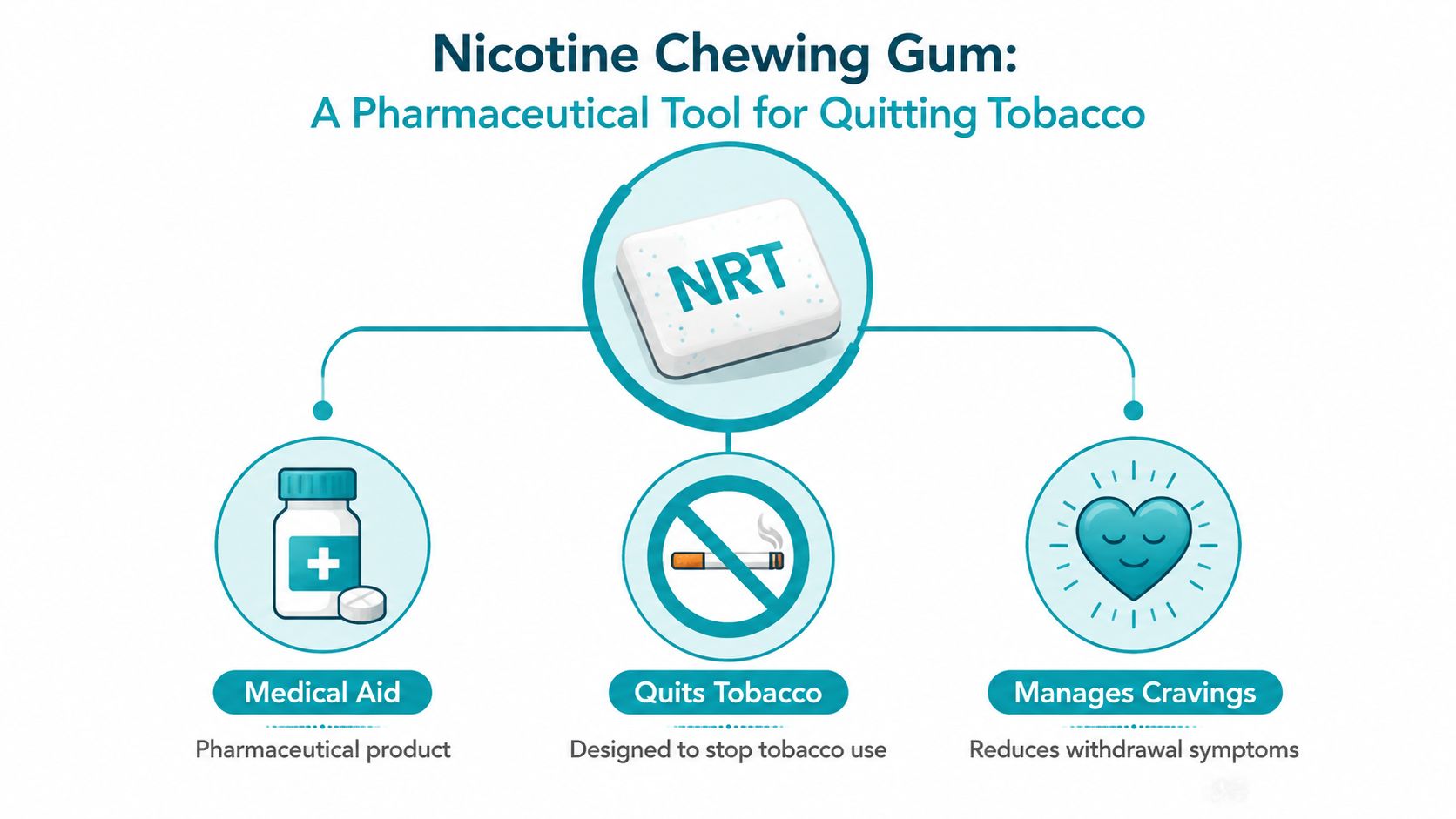
The product exists in 2 mg and 4 mg strengths, and the label-based idea is simple, higher nicotine dependence generally calls for the stronger formulation, while lighter dependence uses the lower one. The product page for nicotine replacement therapy resources is a useful internal reference if you want to compare gum with other forms of nicotine support in one place.
Practical frame: think of nicotine gum as a tool for controlling withdrawal, not as a reward or a snack.
That medical framing helps remove stigma. It also explains why technique is part of the treatment. If you chew it like regular gum, you change how much nicotine reaches the mouth lining, and you can end up swallowing more of it than intended.
For readers curious about oral habits more broadly, gum and dental benefits from DentalHealth.com offers a separate consumer-level perspective on chewing habits, though nicotine gum is a medication and should be treated differently from regular gum.
The Correct Technique for Absorption
The most common mistake is simple. People chew nicotine gum too fast. That turns a medicine into a mouthful of bitter saliva, and it often leads to stomach upset instead of steady nicotine absorption.
The chew and park method
The label-based method is sometimes called chew and park. You chew slowly until you notice the peppery or tingling taste, then stop chewing and rest the gum between your cheek and gum line. That “parked” position lets nicotine move across the mouth lining instead of flooding the stomach.
The saliva itself is part of the process. As nicotine is released, some saliva will collect in the mouth. If you swallow it repeatedly, the stomach absorbs more nicotine than the mouth does, and that can cause nausea, hiccups, or indigestion. The goal is not to keep chewing nonstop. The goal is to pulse the chewing, then hold the gum still so the medication can absorb.
A simple scenario makes the difference clear. One person chews quickly through a piece during a stressful commute, swallows the saliva, and feels queasy within minutes. Another person uses the same piece by chewing until the taste starts, parking it, then chewing again only when the tingling fades. The second person is following the pharmacology, not fighting it.
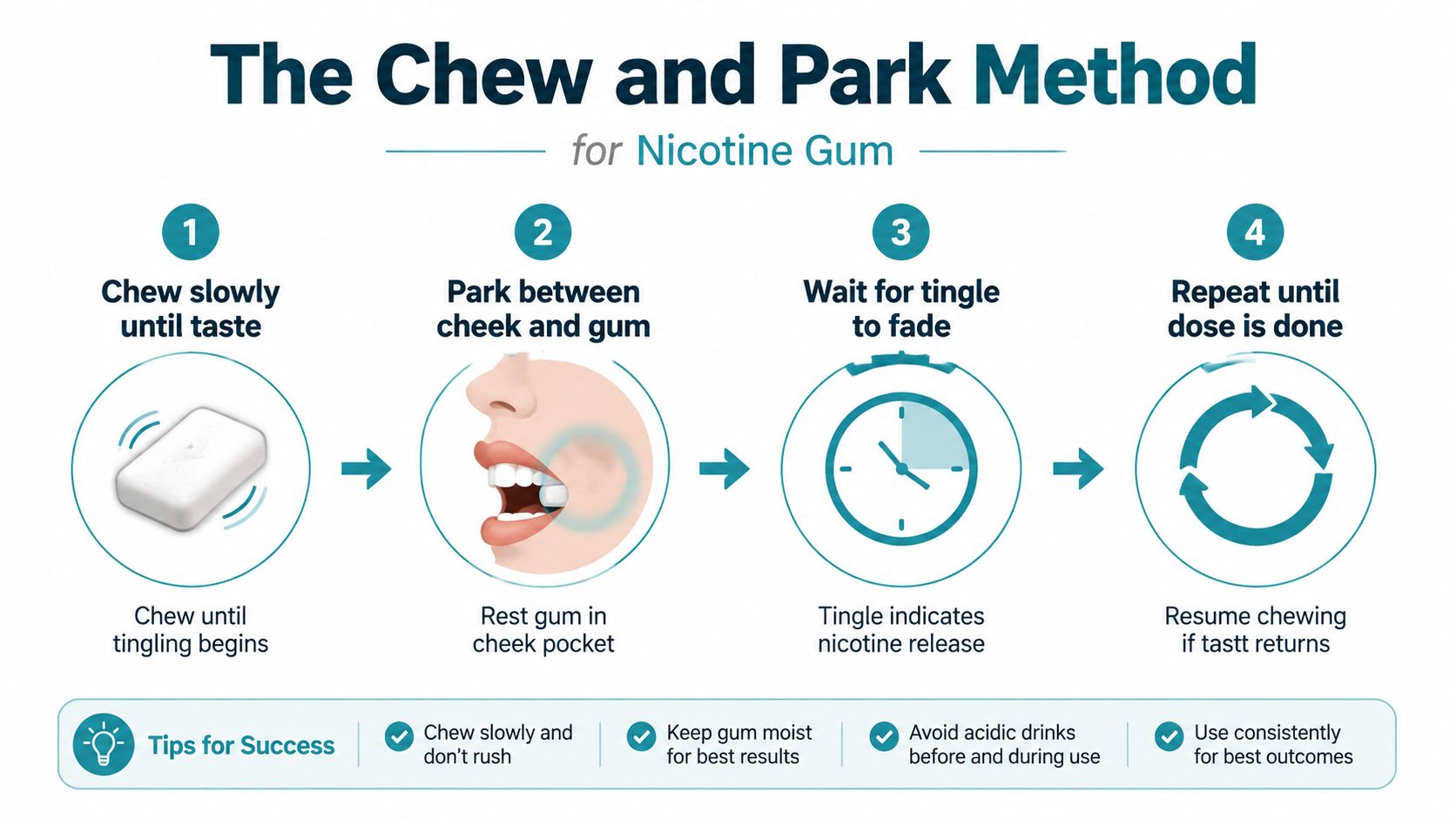
A technique checklist
- Chew slowly: Stop as soon as the peppery taste or tingling starts.
- Park the gum: Rest it between the cheek and gum so nicotine can absorb through the mouth lining.
- Wait for the taste to fade: When the tingling drops off, chew again briefly.
- Repeat the cycle: Keep alternating until the piece is finished.
The mouth lining is the target, the stomach is not.
That's why the technique feels a little unusual at first. The sensation is part of the medicine working, and the pause is not a mistake. It's the point.
Dosing Guidelines and Frequency Limits
Nicotine gum has a clear label structure, and that structure is meant to keep treatment simple. 2 mg gum is generally used for lighter dependence, while 4 mg gum is generally used for more nicotine-dependent smokers, especially those who smoke within 30 minutes of waking. That morning cigarette timing is a practical marker of stronger dependence, not a moral judgment.
| Patient Type | Recommended Strength | Daily Maximum | Usage Duration |
|---|---|---|---|
| Lighter nicotine dependence | 2 mg | 24 pieces per day | Up to 12 weeks |
| Higher nicotine dependence | 4 mg | 24 pieces per day | Up to 12 weeks |
The FDA-approved label says not to exceed 24 pieces per day and not to use the product for longer than 12 weeks without medical guidance. It also notes that using at least 9 pieces per day during the first 6 weeks can improve quit success. That matters because some people underuse the gum out of caution, then conclude it “didn't work” when the issue was inconsistent use, not product failure.
DailyMed and FDA labeling also support the idea that stronger gum can perform better than lower-dose gum in more dependent users. That doesn't mean everyone should jump to the stronger piece. It means the dose should match the level of dependence as closely as the label allows.
For adults discussing a broader cessation plan, the addiction medicine specialist resource can help frame gum as one part of a larger treatment plan rather than a stand-alone fix.
Practical rule: use the gum on a schedule during the quit phase, then taper rather than letting it drift into indefinite, untracked use.
Tapering usually means using the product more regularly at first, then gradually reducing frequency as cravings ease. The point is to lower nicotine exposure while keeping withdrawal manageable enough that you can keep quitting.
Comparing Gum to Other NRT Options
Nicotine gum and the nicotine patch solve different problems. The patch gives a steady baseline of nicotine through the day. Gum gives a short-acting dose when a craving spikes. That difference is why many people use them for different roles, not as rivals.
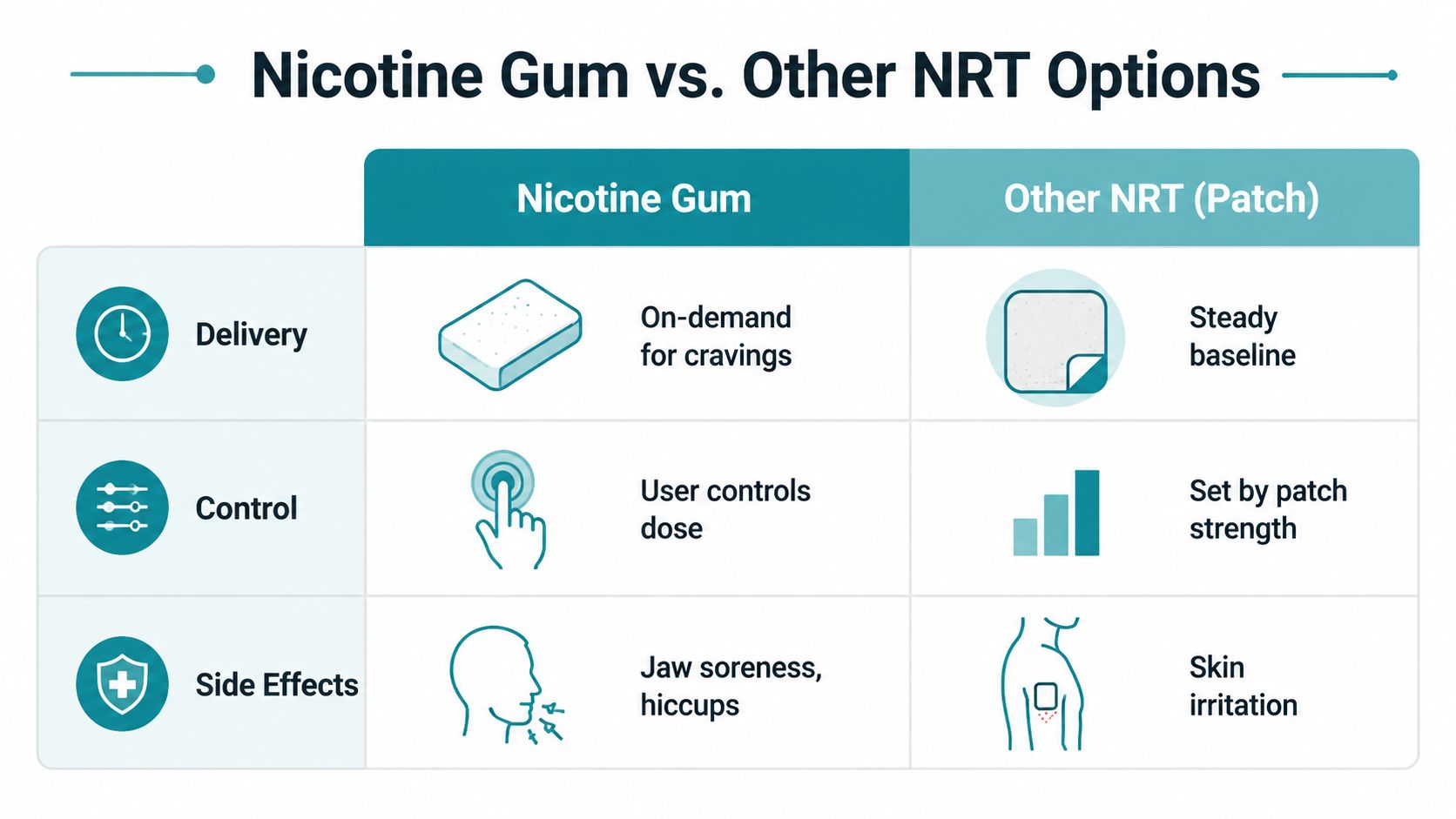
The patch is simpler. You put it on and it works in the background. Gum takes more attention because it demands technique, but that same hands-on process can help during sudden cravings when a person wants something to do with the mouth. The CDC includes gum among over-the-counter quit-smoking medicines and notes that nicotine replacement can ease withdrawal while a person quits tobacco use, which is why both forms stay relevant in routine cessation care.
Patch versus gum
| Feature | Nicotine Gum | Nicotine Patch |
|---|---|---|
| Delivery | On-demand for cravings | Steady baseline |
| Control | User controls dose by use and technique | Set by patch strength |
| Behavior fit | Gives a hand-to-mouth ritual | Simpler, less active |
| Common side effects | Jaw soreness, hiccups, mouth irritation | Skin irritation |
Combination nicotine replacement is also part of the evidence base. A Cochrane review found that licensed nicotine replacement therapies increase long-term quitting by about 50% to 60%, and combination regimens such as patch plus short-acting gum outperform single-form therapy. That doesn't mean everyone needs combination therapy. It means the patch and gum can play complementary roles when one form alone doesn't cover both baseline withdrawal and sudden urges.
For a separate overview of the transdermal option, see the nicotine patch page. If you want a broader look at oral nicotine products, Optimal Native's guide to oral tobacco can help readers compare delivery styles, though it isn't a substitute for medical guidance on quitting.
Managing Side Effects and Precautions
Side effects are one of the main reasons people stop using nicotine gum. The pattern is usually predictable. If the gum is chewed too hard, swallowed too often, or used with acidic drinks close to the dose, the mouth and stomach tend to complain first.
Common side effects
Oral effects can include jaw pain, mouth irritation, burning, and hiccups. Gastrointestinal effects can include nausea, indigestion, and acid reflux. A 2025 network meta-analysis and older observational reports also point to aphthous ulcers and reflux or vomiting, which fits the clinical reality that the mouth and stomach are the first places poor technique shows up.
These reactions don't always mean nicotine gum is the wrong medicine. Often, they mean the technique needs adjustment. Chewing more slowly, parking the gum in a different spot in the mouth, and avoiding repeated swallowing can help reduce irritation.
Timing matters
Acidic drinks can interfere with nicotine absorption. Coffee, soda, and juice are the classic examples, so it helps to avoid them for about 15 minutes before and during use. That timing keeps the mouth lining in a better state for absorption. If the lining is coated in acid, the gum can feel weaker even when the dose is technically the same.
For more practical education on side effects and how patients often misread them, the side-effect management resource is a useful internal reference point.
Practical clue: if the gum tastes harsh and your stomach feels unsettled, the most likely problem is not “too much willpower,” it's technique.
The safest response to persistent symptoms is to review how the gum is being used and to ask a clinician whether another form of nicotine replacement would fit better.
Long-Term Use and Clinical Support
Nicotine gum is meant to help people quit tobacco, but long-term gum use can become its own problem for some adults. A 2025 case-based review highlights that some users develop persistent dependence on the gum itself, which is why tapering and follow-up matter, not just starting treatment. That issue is still under-discussed in consumer content.

A practical first-12-week approach is straightforward. Set a quit date. Use the gum with the chew-and-park method. Track cravings and side effects. Then reduce use gradually rather than letting it continue without a plan. If cravings stay intense, or if the person is relying on the gum far beyond the usual label frame, that's a good time to consider clinician-guided combination therapy or a broader addiction-medicine evaluation.
For adults who want structured outpatient support, the addiction care page is the most relevant starting point.
Empire Medical Wellness offers physician-led outpatient care that can help adults think through nicotine dependence, cessation planning, and follow-up in a calm, private setting. If you're struggling to quit cigarettes, to use nicotine gum correctly, or to taper after you've already started, visit Empire Medical Wellness to learn more about its addiction medicine services.
Sources
- CDC guidance on how to use nicotine gum
- FDA-approved nicotine gum label
- Cochrane review summary on nicotine replacement therapy versus control
- WHO-linked expert review on nicotine replacement therapy
- DailyMed nicotine gum labeling
- Nicorette regulatory history reference
- Case-based review on long-term nicotine gum use
- Network meta-analysis and safety discussion of nicotine gum side effects
This article is for educational purposes only and isn't personal medical advice.