
Type 2 diabetes symptoms may develop gradually or be absent entirely, so feeling well doesn't rule out high blood glucose. Persistent thirst, frequent urination, fatigue, blurred vision, numbness, slow-healing sores, repeated infections, or unexplained weight loss should prompt a discussion about blood glucose testing, not a self-diagnosis.
That distinction challenges the most popular advice about this topic. Many symptom lists imply that a reader can match a few changes, reach a conclusion, and either worry or relax. That approach fails in both directions. A person can have several of these symptoms for reasons unrelated to diabetes, and another person can have type 2 diabetes with no noticeable symptoms at all. Symptoms are useful as reasons to seek testing. They aren't proof, and their absence isn't reassurance.
Table of Contents
- Why Type 2 Diabetes Can Go Unnoticed
- Recognize Common and Subtle Symptoms
- Understand How High Glucose Causes Symptoms
- Compare Type 2 and Type 1 Patterns
- Know When Testing Can Confirm Diabetes
- Prepare for a Medical Evaluation
- Recognize Urgent Signs and Plan Next Steps
Why Type 2 Diabetes Can Go Unnoticed
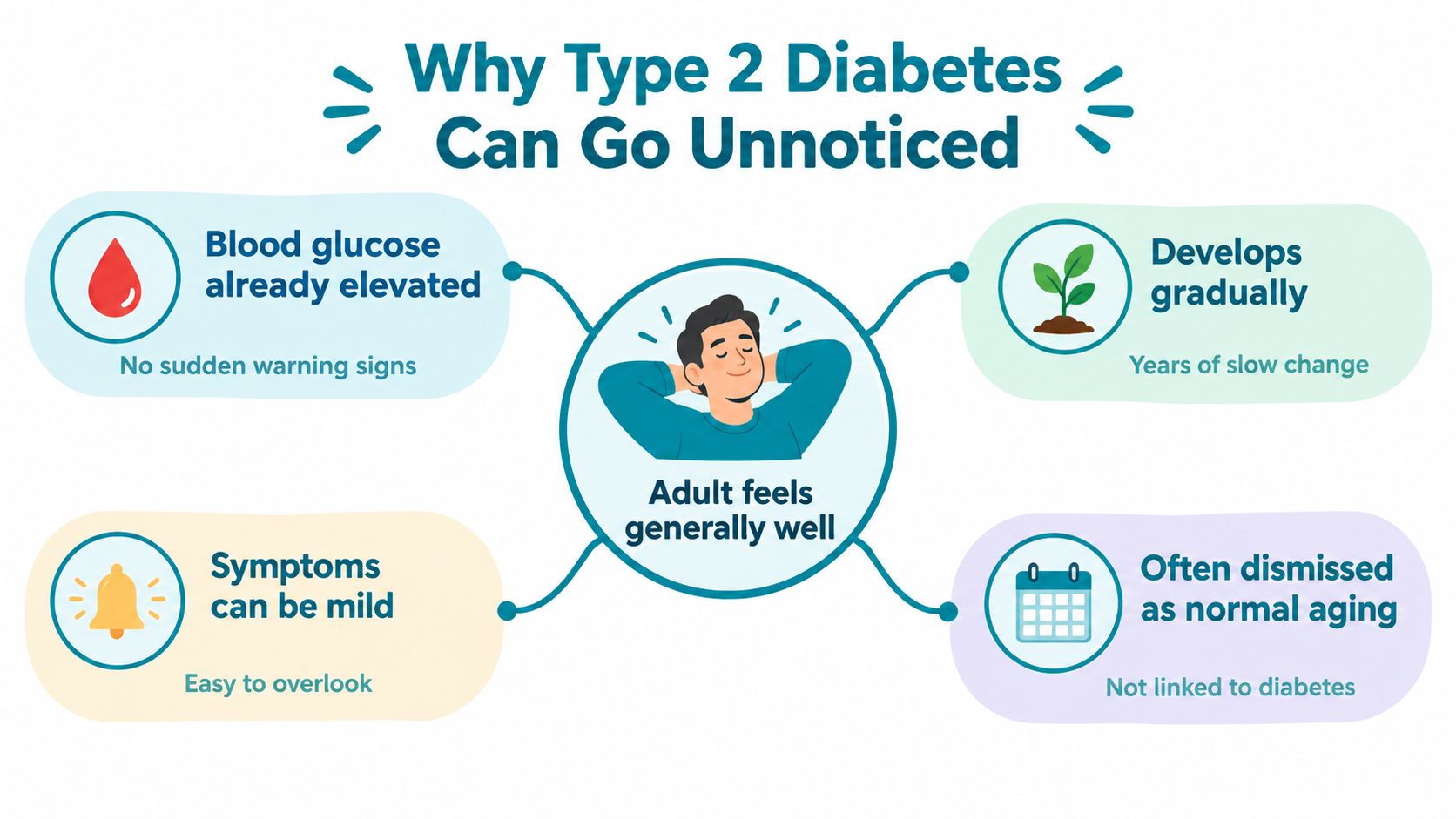
The common assumption is simple: a serious metabolic condition should feel serious. Type 2 diabetes often doesn't work that way. Blood glucose can rise slowly while daily life continues without a clear turning point.
The U.S. National Institute of Diabetes and Digestive and Kidney Diseases, or NIDDK, explains that type 2 diabetes symptoms may develop over several years and can be so mild that people don't notice them. Some people have no symptoms and first learn about diabetes after vision problems, heart disease, or another complication appears.
Mild Changes Are Easy to Explain Away
Fatigue and blurred vision may be easy to dismiss. A busy schedule, poor sleep, aging, stress, or time spent at a screen can seem like a sufficient explanation. Increased thirst or more frequent urination can also blend into routine, especially when the change builds slowly.
That doesn't make those changes meaningless. It means they need context. A symptom that persists, worsens, or appears with other changes deserves medical attention, particularly when a person also has risk factors for diabetes. Related metabolic concerns, such as those discussed in an overview of metabolic syndrome, can also make risk-based testing a reasonable topic to raise.
Practical rule: Persistent symptoms are a prompt for evaluation, not a checklist that confirms or rules out diabetes.
Feeling Well Isn't a Test Result
A World Health Organization clinical guide estimates that approximately 30% to 80% of type 2 diabetes cases remain undiagnosed, varying substantially by country. That wide range reflects different settings and access to care, but the central point is consistent. Symptom-based detection alone misses many cases.
The same source notes that type 2 diabetes accounts for around 90% of diabetes cases and diagnosis may be delayed until complications occur. That's why a calm, useful question isn't, "Do these symptoms prove diabetes?" It's, "Should blood glucose be tested?" Only appropriate blood testing, interpreted by a qualified clinician, can establish the diagnosis.
Recognize Common and Subtle Symptoms
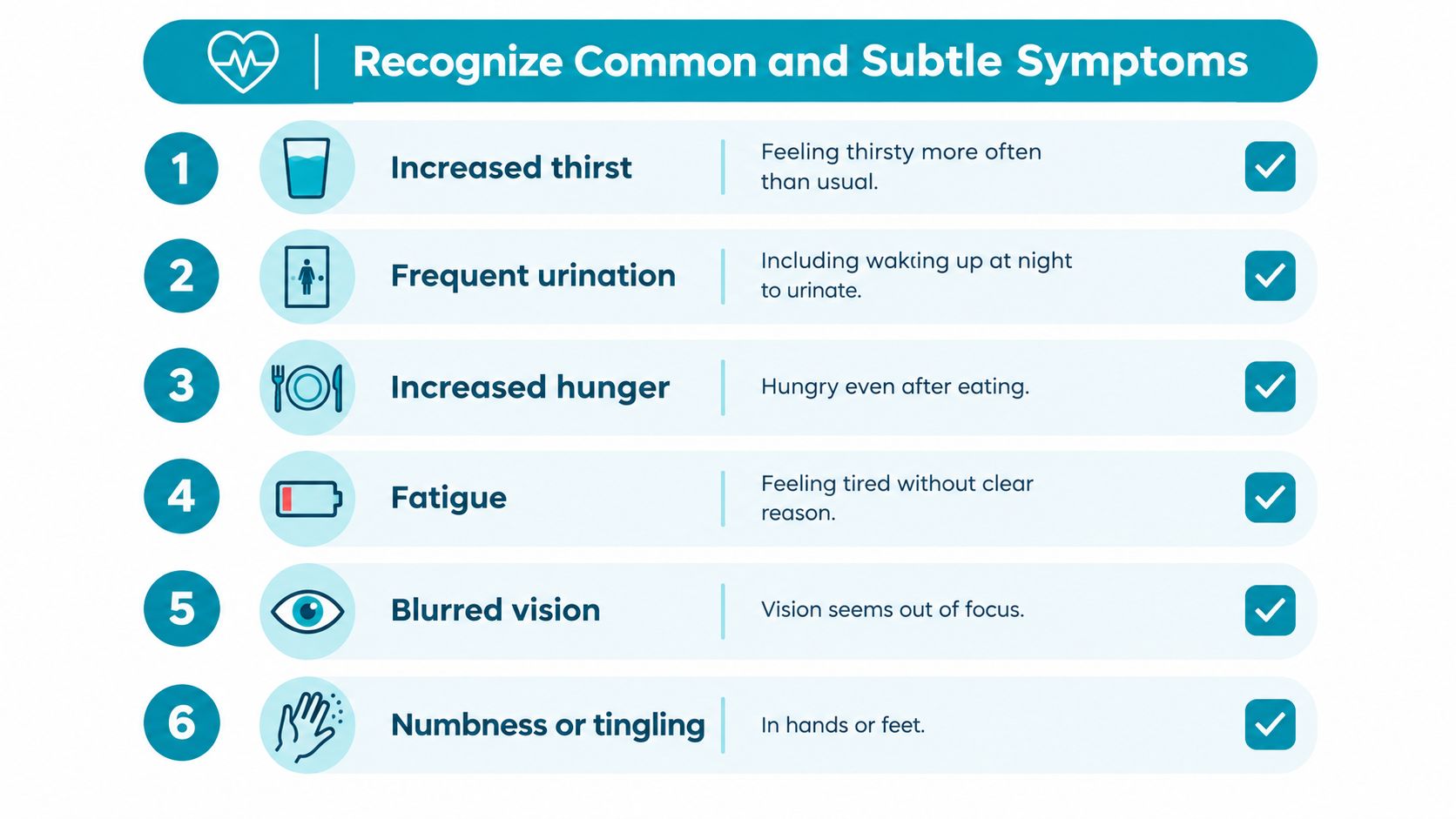
Type 2 diabetes symptoms vary. Some people notice a clear cluster of changes, while others notice one vague problem or nothing at all. Each symptom below can have causes other than diabetes, so the pattern, duration, and medical context matter more than any single item.
Changes Linked to High Blood Glucose
- Increased thirst: A person may feel unusually thirsty during the day or wake with a dry mouth. Thirst alone isn't specific, but persistent thirst with frequent urination is a stronger reason to discuss testing.
- Frequent urination: This can include larger amounts of urine and waking at night to urinate. Urinary, prostate, medication, and fluid-related causes also need consideration.
- Increased hunger: Hunger may return soon after eating. Sleep loss, medicines, thyroid problems, and changes in activity can also affect appetite, so hunger by itself doesn't identify diabetes.
- Fatigue: Tiredness may feel like low stamina or difficulty getting through ordinary tasks. Because fatigue is common and nonspecific, it shouldn't be treated as either proof of diabetes or something to ignore when it persists.
Subtle Signs People May Overlook
Blurred vision can come and go rather than remain constant. A person may blame an outdated glasses prescription, eye strain, or aging. New or persistent visual changes still need assessment because they can reflect diabetes, eye disease, or another condition.
Numbness or tingling in the hands or feet is another possible clue. It may feel like pins and needles, burning, reduced sensation, or pain. Nerve symptoms have many possible causes, including injury, vitamin problems, medication effects, and other neurologic conditions. They warrant evaluation, but they don't independently establish diabetes.
Slow-healing sores and recurrent infections can also occur, including urinary, skin, or yeast infections. A cut that remains open, redness that spreads, or repeated infections should not be watched indefinitely. For foot-specific warning signs, a guide to diabetic ulcer early detection can help readers understand what changes deserve prompt attention, although it doesn't replace medical assessment or glucose testing.
Unexplained weight loss means losing weight without trying to do so. It shouldn't be welcomed as a beneficial effect when it occurs with thirst, urination, hunger, or fatigue. Several medical conditions can cause unintentional weight loss, and the cause needs to be identified.
No single symptom reliably identifies type 2 diabetes. Several persistent changes together make testing more clearly worth discussing.
Body size, a single blood-pressure reading, or general appearance can't diagnose diabetes. A person can look well and still have abnormal glucose regulation. Readers who want background on related metabolic changes can review common signs associated with insulin resistance, while keeping the same limitation in mind. Recognition starts the conversation. Laboratory testing supplies diagnostic evidence.
Understand How High Glucose Causes Symptoms
Symptoms become easier to understand when they're connected to what sustained high glucose does in the body. The link isn't automatic, and responses vary, but several mechanisms explain the classic pattern.
The kidneys filter blood and normally reabsorb glucose so it isn't lost in urine. Think of that system like a filter with a limited capacity. When blood glucose stays high enough, the kidneys can't reabsorb all the filtered glucose. Glucose remaining in the urine draws additional water with it, a process called osmotic diuresis.

Why Thirst and Urination Often Appear Together
More glucose in urine can mean more urine volume. The medical term for excessive urination is polyuria. It may include nighttime urination, which can disrupt sleep and add to daytime tiredness.
As fluid leaves in urine, thirst increases to replace it. That compensatory thirst is called polydipsia. This pairing helps explain why thirst and urination are often discussed together rather than as unrelated symptoms.
The U.S. Centers for Disease Control and Prevention notes that a random plasma glucose of at least 200 mg/dL (11.1 mmol/L) in a person with classic hyperglycemic symptoms meets a diagnostic criterion. Classic symptoms include polyuria, polydipsia, and unexplained weight loss. The laboratory result remains central, even when symptoms are present.
Fatigue, Vision, and Weight Changes
Insulin resistance means cells don't respond normally to insulin, the hormone that helps glucose move from blood into tissues. Over time, insulin-producing beta cells in the pancreas may also become less able to meet demand. A fuller explanation of how insulin resistance develops can help separate that gradual process from day-to-day symptom severity.
When glucose isn't used effectively, a person may feel fatigued despite glucose being plentiful in the bloodstream. Fluid shifts can also affect the lens of the eye and temporarily change focus, which may contribute to intermittent blurred vision. Neither symptom measures glucose directly, and both have other possible explanations.
Unexplained weight loss can occur when inadequate insulin action limits glucose entry into tissues. The body relies more on fat and muscle for energy, while some glucose is lost in urine. That process is a metabolic warning sign, not a healthy method of weight reduction.
Key distinction: The mechanism can explain a symptom, but it cannot prove that diabetes caused a particular person's symptom.
Because insulin resistance and beta-cell dysfunction often progress gradually, glucose may be abnormal long before symptoms feel dramatic. Symptom severity doesn't reliably show how long glucose has been high.
Compare Type 2 and Type 1 Patterns
Type 1 and type 2 diabetes can produce overlapping symptoms because both involve high blood glucose. Thirst, frequent urination, fatigue, blurred vision, and weight loss can occur in either condition. The usual difference is the pace and context in which insulin problems develop.
Slower Versus Faster Onset
Type 2 diabetes commonly develops gradually as insulin resistance increases and beta-cell function declines over time. Symptoms may be subtle, absent, or attributed to aging and daily demands. A person may seek care for an infection, visual change, or nerve symptom before glucose is considered.
Type 1 diabetes often develops more quickly once insulin deficiency becomes pronounced. Symptoms may become obvious over a shorter period, and severe illness can develop if insulin deficiency is not recognized. This faster pattern is a general tendency, not a rule that applies to every person.
| Pattern | Type 2 Diabetes | Type 1 Diabetes |
|---|---|---|
| Typical development | Gradual insulin resistance and progressive beta-cell dysfunction | More rapid loss of adequate insulin production |
| Symptom timing | Mild, absent, or slowly increasing | Often more noticeable over a shorter period |
| Shared symptoms | Thirst, urination, fatigue, blurred vision, weight loss | Thirst, urination, fatigue, blurred vision, weight loss |
| How type is determined | Clinical assessment and laboratory evaluation | Clinical assessment and laboratory evaluation |
Why Appearance Cannot Classify Diabetes
Readers sometimes try to infer the type from age, body size, or how quickly symptoms appeared. Those clues may inform a clinician's questions, but they don't reliably classify the condition. Adults can develop type 1 diabetes, and type 2 diabetes can occur in people whose appearance doesn't match common assumptions.
Complication-first clues add another complication. NIDDK notes that people may learn they have diabetes after developing pain, numbness, tingling, sexual problems, chest pain, or vision loss. Those problems aren't specific to diabetes, and they don't reveal whether diabetes is type 1 or type 2.
The safe conclusion is narrower. New, persistent, or combined symptoms justify medical assessment and blood testing. A clinician can then consider the history, examination, glucose results, and other laboratory evidence before naming the type.
Know When Testing Can Confirm Diabetes
Testing is appropriate to discuss when symptoms persist, several symptoms occur together, or risk factors make diabetes more likely even without symptoms. Risk-based screening matters because prediabetes and early type 2 diabetes are often symptom-free. Waiting for dramatic thirst or weight loss can delay recognition.
Symptoms Versus Confirmatory Diabetes Tests
| Finding | What It Can Suggest | How It Fits Diagnosis | Next Reader Action |
|---|---|---|---|
| Persistent thirst and frequent urination | Possible sustained high glucose, or another medical cause | Supports urgency of testing but doesn't diagnose diabetes | Request medical assessment and glucose testing |
| Fatigue or blurred vision | Possible glucose abnormality, eye disease, sleep problem, or another condition | Nonspecific and insufficient alone | Describe duration, pattern, and related symptoms |
| Numbness, slow healing, or repeated infections | Possible diabetes complication or an unrelated condition | Reason to test glucose and evaluate the symptom itself | Seek timely assessment rather than self-diagnosing |
| No symptoms | Diabetes may still be present | Absence of symptoms can't exclude disease | Ask whether risk-based screening is appropriate |
| Diabetes-range blood test | Laboratory evidence of abnormal glucose regulation | Central diagnostic evidence when properly confirmed and interpreted | Record the result and follow the clinician's confirmation plan |
What the Main Tests Measure
An A1C test measures average blood glucose over approximately the previous three months. NIDDK categorizes an A1C below 5.7% as normal, 5.7% to 6.4% as prediabetes, and 6.5% or higher as diabetes. Those categories help readers understand a result, but a clinician still needs to interpret it in context.
A fasting plasma glucose test measures glucose after a period without food. A result of 126 mg/dL (7.0 mmol/L) or higher is in the diabetes range when the test is performed and interpreted appropriately. An oral glucose tolerance test can also be used, with a two-hour result of 200 mg/dL or higher meeting a diagnostic criterion.
A random glucose result has a different role. When classic hyperglycemic symptoms are present, a random result of 200 mg/dL or higher can meet a diagnostic criterion. Without clear symptoms, an abnormal result generally requires confirmation with a repeat A1C or another diabetes test on a different day.
Limits That Deserve a Direct Question
A1C can be unreliable in some conditions, so a clinician may choose a different test or interpret the result cautiously. Symptoms, medical history, medicines, and the selected test need to be considered together. A single number shouldn't be turned into a personal diagnosis without appropriate confirmation.
Readers who want a broader framework for following laboratory trends can learn how to track metabolic health markers over time. Tracking is useful only when the actual result, test type, date, and clinician's interpretation are recorded.
A useful record contains four items: the test name, the result, the date, and the follow-up plan.
Prediabetes also belongs in this conversation because it may cause no symptoms. Information about prediabetes and glucose ranges can help readers prepare questions, but it doesn't replace individualized screening advice. The decision to test, repeat a test, or use an alternative method belongs with a qualified clinician who knows the person's history.
Prepare for a Medical Evaluation
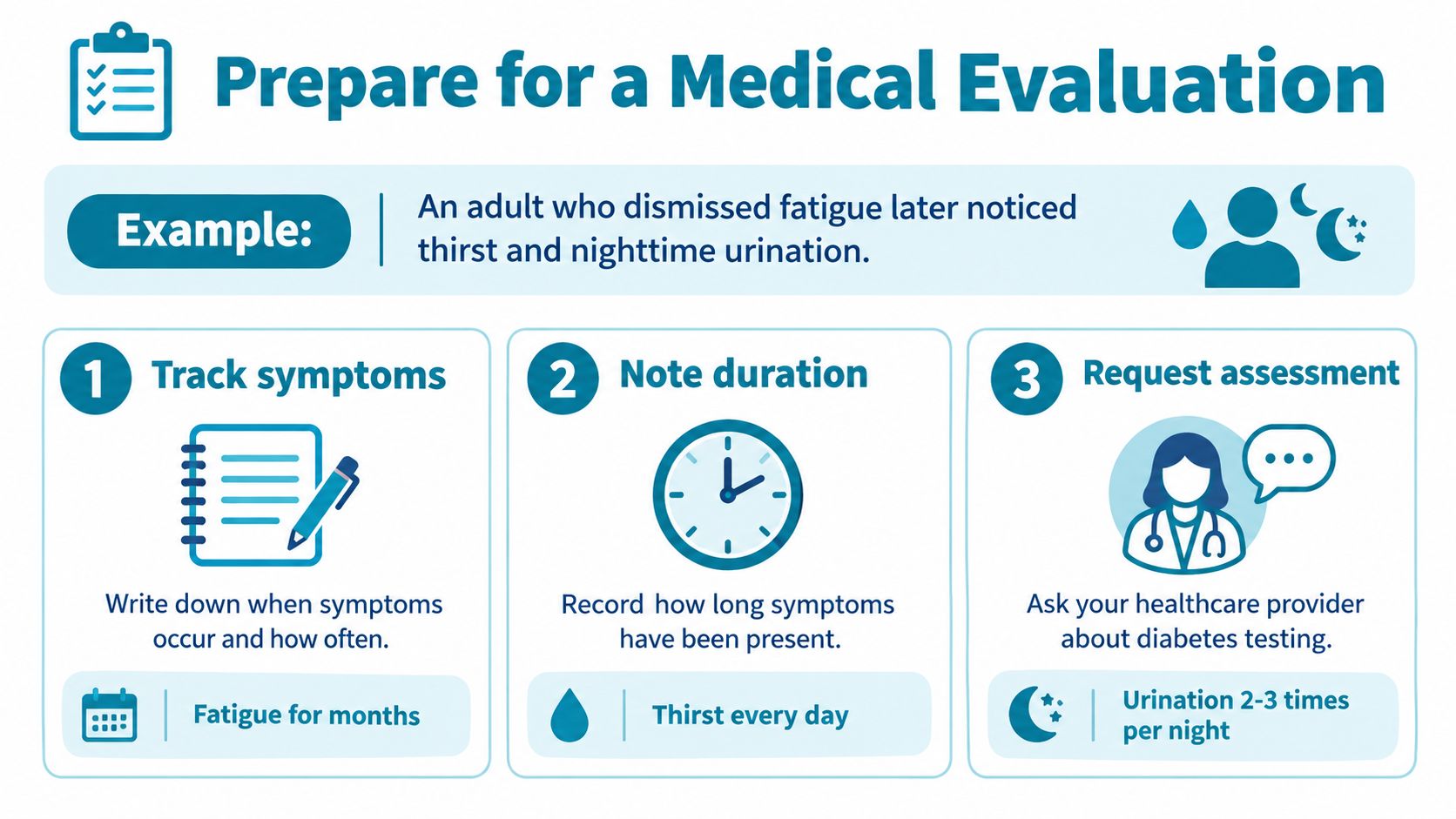
A medical visit is more useful when symptoms and history are described clearly. The goal isn't to persuade a clinician that diabetes is present. It's to provide enough information for appropriate testing and a broader evaluation of other possible causes.
Hypothetical example: An adult attributes persistent fatigue to work for several months, then notices daily thirst and repeated nighttime urination. The reasonable next step is medical assessment and blood testing, not guessing a diagnosis from those symptoms. This example doesn't describe an actual patient, a laboratory result, or an outcome.
Short Appointment Checklist
- Current symptoms: Note what changed, when it began, how often it occurs, and whether it's improving, stable, or worsening.
- Previous glucose results: Bring prior A1C, fasting glucose, or other diabetes test results with dates. Old results help a clinician judge change over time.
- Family history: Record diabetes or prediabetes in close relatives when known. Family history informs risk but doesn't diagnose disease.
- Current medicines: List prescription medicines, over-the-counter products, and supplements. Medicines can affect symptoms, glucose, or test selection.
- Pregnancy-related history: Include gestational diabetes or other pregnancy-related glucose problems where relevant.
- Other medical history: Mention recurrent infections, slow-healing wounds, nerve symptoms, vision changes, blood pressure, lipid concerns, and weight history.
- Questions about testing: Ask which test is appropriate, whether confirmation is needed, and whether any condition could make A1C less reliable.
What Not to Use as a Substitute for Testing
Body size doesn't reveal blood glucose. A blood-pressure reading can be clinically important, but it doesn't establish diabetes. Appearance, energy level, or a symptom checklist also can't replace laboratory evidence.
A careful evaluation may find diabetes, prediabetes, normal glucose, or another explanation for the symptoms. Each result leads to a different plan. If glucose is abnormal, the reader should leave with the actual value, its interpretation, any need for confirmation, and a clear follow-up interval.
Within physician-led obesity medicine, Empire Medical Wellness may include medical and metabolic assessment, individualized planning, medication when clinically appropriate, monitoring, and maintenance. That type of evaluation doesn't mean every consultation diagnoses prediabetes or diabetes. It means symptoms, history, and laboratory evidence are interpreted together rather than inferred from weight or appearance.
Recognize Urgent Signs and Plan Next Steps
Some symptoms justify a routine but timely appointment. Others need urgent medical attention. Separating those categories helps readers respond calmly without delaying care when delay could be unsafe.
Emergency box: Seek urgent medical care for confusion, marked weakness, persistent vomiting, difficulty breathing, loss of consciousness, profound dehydration, new vision loss, or chest pain. Don't wait for a routine appointment to discuss those symptoms.
Severe hyperglycemia can progress to hyperosmolar hyperglycemic state, a serious condition involving profound dehydration and neurologic changes. Mayo Clinic information summarized in the source material identifies confusion, marked weakness, vomiting, breathing difficulty, or loss of consciousness as urgent warning signs. Those symptoms require immediate assessment regardless of whether diabetes has already been diagnosed.
Symptoms That May Reflect a Complication
Tingling, numbness, burning, or pain in the feet or hands can reflect diabetic peripheral neuropathy, a form of nerve damage associated with diabetes. A peer-reviewed review reported that reported prevalence ranges from about 20% to 80% across regions and assessment methods. That broad range shows why population figures can't predict an individual diagnosis.
Recurrent infections, slow-healing sores, sexual problems, and vision changes may also be the first problems that bring diabetes into consideration. They can just as readily reflect another condition. The appropriate response is timely evaluation of the symptom and, when clinically indicated, glucose testing.
Practical next steps are straightforward. A reader can record persistent changes, bring prior results and a medicine list, ask whether diabetes testing or risk-based screening is appropriate, and confirm how an abnormal result will be repeated or interpreted. General nutrition education, including principles of a healthy diet, may support broader metabolic care, but diet information doesn't diagnose diabetes or replace a clinician's plan.
This article is educational and isn't personal medical advice. Type 2 Diabetes Symptoms should be understood as signals to discuss testing, while blood glucose results and clinical interpretation determine the diagnosis.
Empire Medical Wellness provides private, physician-led obesity and metabolic care that may include medical assessment, individualized planning, medication when clinically appropriate, monitoring, and long-term maintenance. Adults who want a careful discussion of persistent symptoms, prior glucose results, and appropriate next steps can visit Empire Medical Wellness to learn more about the practice and its physician-led approach.