
Insulin resistance is often silent, with no symptoms until blood sugar begins to rise. Symptoms alone can't confirm it, so objective testing is needed rather than relying on appearance, fatigue, cravings, or weight changes.
That challenges the most popular advice about insulin resistance symptoms: feeling tired or noticing abdominal weight gain may justify a medical conversation, but neither finding proves what's happening physiologically. Insulin resistance, prediabetes, diabetes, and metabolic syndrome overlap, yet they're different clinical concepts. A careful evaluation separates them instead of treating every nonspecific symptom as a diagnosis.
Table of Contents
- Insulin Resistance Symptoms Are Often Silent
- What Insulin Resistance Means for Your Metabolism
- Common and Less Obvious Symptoms in Context
- How Insulin Resistance Prediabetes Diabetes and Metabolic Syndrome Differ
- Risk Factors and What You Can Discuss With Your Clinician
- Tests That Help Evaluate Insulin Resistance and How to Interpret Them
- Next Steps Tracking Between Visits and When to Seek Care
Insulin Resistance Symptoms Are Often Silent
Insulin resistance can progress without a recognizable symptom. The body's cells respond less effectively to insulin, the hormone that helps glucose move from the bloodstream into cells. Early on, the pancreas may release more insulin to compensate, allowing blood glucose to stay within a typical range while the body works harder to maintain it.
This makes symptom-based self-diagnosis unreliable. Major medical references explain that insulin resistance often has no symptoms until blood sugar rises, and it is commonly identified through routine laboratory testing rather than an early sensation or visible change (NIDDK guidance on prediabetes and insulin resistance). A clinical reference also describes insulin resistance as a condition that may exist before obvious hyperglycemia (NCBI clinical reference).
Why common symptoms can mislead
Fatigue, increased hunger, difficulty concentrating, cravings, and abdominal weight gain are genuine experiences. They can also result from sleep disruption, stress, mood changes, medications, thyroid disorders, anemia, reproductive health concerns, eating patterns, and other conditions. A symptom list can identify topics for a medical conversation. It cannot establish the cause.
Symptoms and metabolic findings should be kept separate. Insulin resistance may be considered when symptoms occur alongside changes in glucose, triglycerides, HDL cholesterol, blood pressure, or waist circumference. These findings can contribute to a broader assessment, but they do not turn a symptom into a diagnosis. The prediabetes care information offers general context, while personal interpretation requires a qualified medical evaluation.
Practical rule: A symptom is a reason to ask a question, not a laboratory result.
Insulin resistance is not a judgment about effort or character. Body size and appearance do not establish it, and metabolic abnormalities can occur in people with different body types. The appropriate response is to review relevant measurements, health history, medications, and other possible explanations with a clinician.
What Insulin Resistance Means for Your Metabolism
Insulin resistance can develop before glucose levels clearly rise. Insulin acts like a key: after digestion, glucose enters the bloodstream, and insulin helps muscle, fat, and other cells take in that glucose for energy or storage.
With insulin resistance, the cells respond less effectively to insulin. The pancreas may release more insulin to produce the same result. For a period, this extra insulin can keep blood glucose within a less noticeable range. Clinicians may describe this as compensation, but symptoms alone cannot establish whether it is occurring.
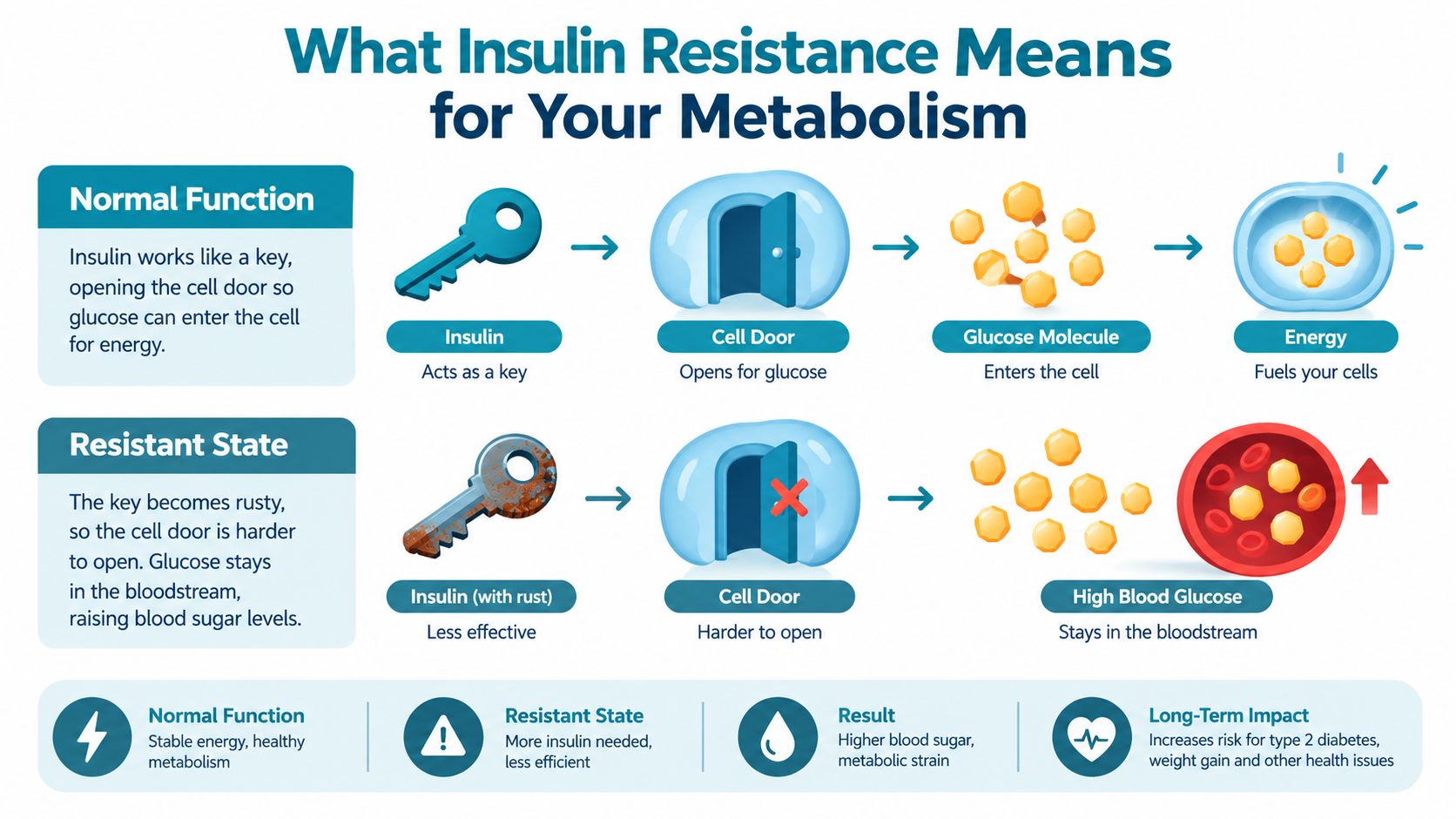
From a metabolic state to measurable risk
If the pancreas can no longer compensate sufficiently, glucose may enter the ranges used to define prediabetes or diabetes. Insulin resistance is also associated with cardiometabolic findings, including high triglycerides, low HDL cholesterol, high blood pressure, and increased abdominal adiposity. A medical review of insulin resistance and its clinical context describes its relationship with type 2 diabetes, hypertension, dyslipidemia, and cardiovascular risk.
These associations explain why clinicians assess a pattern rather than one symptom or one laboratory result. They consider glucose regulation, lipids, blood pressure, body-fat distribution, medical history, and medications together. A broader overview of metabolic syndrome and related risk factors can help clarify why these findings are reviewed as a group.
Terms that should remain distinct
Insulin resistance describes how the body responds to insulin. Prediabetes describes glucose or A1C results above the usual range but below the diabetes range. Type 2 diabetes involves glucose results that meet diagnostic criteria. Metabolic syndrome describes a cluster of risk factors, not a single symptom.
For further physiology, this hormone imbalance and insulin resistance guide provides additional background. Appearance may prompt a question, but it cannot answer it. Clinical interpretation requires the broader pattern.
Common and Less Obvious Symptoms in Context
Symptoms can suggest a question, but they rarely establish insulin resistance. The most useful approach is to ask what a finding might represent and whether objective testing supports it.
Insulin resistance may remain silent. Some people report fatigue, increased hunger, sleepiness after meals, or energy that drops soon after eating. A 2025 symptom-pattern study found that sudden weight gain, particularly around the abdomen, was more common among participants with insulin resistance than among those without it. Increased hunger, post-meal sleepiness, and fatigue also appeared more often in the insulin-resistant group. These observations describe an association, not a diagnostic checklist.

Findings that deserve context
- Fatigue or post-meal sleepiness: These may accompany metabolic changes. They can also result from inadequate sleep, anemia, mood disorders, medication effects, or other medical conditions.
- Increased hunger: Hunger soon after eating can occur with altered glucose regulation. Sleep, stress, meal composition, and many nonmetabolic factors also affect appetite.
- Abdominal weight gain: A changing waistline can relate to cardiometabolic risk, but it does not diagnose insulin resistance. Weight changes deserve respectful evaluation rather than assumptions. Information about unexplained weight gain can help you prepare questions about possible causes.
- Acanthosis nigricans: This dark, velvety, sometimes thickened skin change may appear on the back of the neck, in the armpits, groin, elbows, knees, or knuckles. It is a useful physical clue associated with insulin resistance, yet appearance alone cannot confirm the cause (clinical information on acanthosis nigricans).
- Skin tags: These may occur in skin folds alongside insulin resistance, but they are common and nonspecific.
When glucose begins to rise
Increased thirst, frequent urination, blurred vision, fatigue, unexplained weight loss, recurrent yeast infections, and increased hunger are more consistent with hyperglycemia, meaning high blood glucose, than with silent insulin resistance alone (Cleveland Clinic overview). Persistent thirst or urination, especially with fatigue or blurred vision, warrants objective medical testing.
A fictional composite example can clarify the distinction. An adult notices fatigue and abdominal weight gain but has no diagnostic testing. A clinician would not label the condition from symptoms alone. The evaluation would obtain glucose or A1C, review relevant cardiometabolic measures, and address the abnormalities identified. This example is fictional and does not describe an Empire patient.
A symptom pattern is a reason to discuss testing, not a substitute for it. The same finding may reflect insulin resistance, rising glucose, another medical condition, or no disease at all.
How Insulin Resistance Prediabetes Diabetes and Metabolic Syndrome Differ
These labels overlap, but they describe different parts of metabolic health. Insulin resistance is usually a physiologic process. Prediabetes and diabetes are glucose categories based on testing. Metabolic syndrome is a cluster of measured risk factors. Symptoms alone cannot reliably separate them.
Insulin Resistance Prediabetes Diabetes and Metabolic Syndrome Criteria Compared
| Condition | How It Is Defined | Typical Lab or Clinical Thresholds | Role of Symptoms |
|---|---|---|---|
| Insulin resistance | Cells respond less effectively to insulin, so the body may need to produce more insulin to regulate glucose. No single routine test confirms it by itself. | Clinicians may assess the broader pattern, including glucose, triglycerides, HDL cholesterol, waist circumference, blood pressure, and related findings. | Often silent. Any symptoms are nonspecific or may reflect later glucose elevation. |
| Prediabetes | Glucose regulation is above the usual range but below the diabetes range. | Assessment commonly uses fasting glucose, A1C, or an oral glucose tolerance test. The Mayo Clinic clinical thresholds include fasting glucose at or above 100 mg/dL and A1C between 5.7% and 6.3%. | Usually has no symptoms. Thirst, frequent urination, fatigue, or blurred vision can occur as glucose rises. |
| Diabetes | Blood glucose reaches a diagnostic range on an appropriate test, with confirmation handled according to clinical guidance. | Diagnosis uses validated glucose or A1C testing, interpreted with the clinical context. | Possible symptoms include thirst, frequent urination, blurred vision, fatigue, increased hunger, recurrent infections, or unexplained weight loss. |
| Metabolic syndrome | A cluster involving waist circumference, blood pressure, triglycerides, HDL cholesterol, and glucose. | Relevant markers include triglycerides over 150 mg/dL, HDL below 40 mg/dL in men or 50 mg/dL in women, and waist circumference over 40 inches in men or 35 inches in women. | Symptoms are not required. Identification depends on measurements and laboratory findings. |
The distinction matters because a symptom is not a diagnosis. Fatigue does not prove insulin resistance, and one skin change does not establish metabolic syndrome. The type 2 diabetes information can help explain how disease-level glucose abnormalities differ from earlier risk states.
A clinician may also use a 2-hour glucose value at or above 140 mg/dL as a marker associated with impaired glucose regulation and insulin resistance risk. Interpretation depends on the test method and clinical setting. Symptoms can help decide whether testing is worth discussing, while validated measurements determine which category, if any, applies.
Risk Factors and What You Can Discuss With Your Clinician
Risk factors change the value of screening and follow-up. They don't establish a diagnosis. A person with several risk factors may feel completely well, while someone with a single concern may need evaluation for another cause.
Relevant factors can include increased abdominal adiposity, a family history of diabetes, physical inactivity, prior gestational diabetes, polycystic ovary syndrome, and cardiometabolic findings such as high triglycerides, low HDL cholesterol, or higher blood pressure. Risk also varies across populations and individual medical histories. A respectful conversation focuses on health measures and goals, not blame.
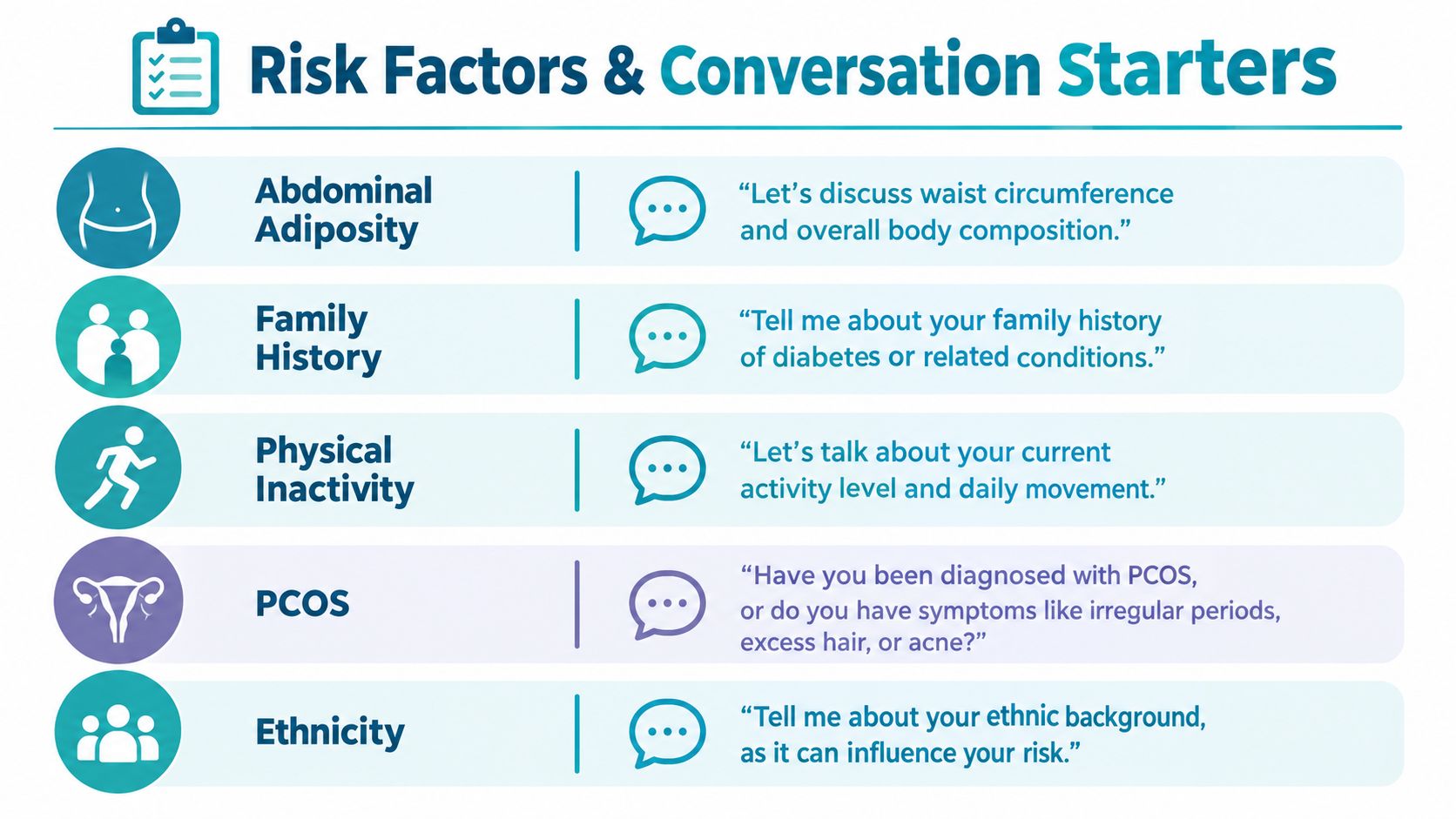
Risk-factor action grid
| Risk factor or finding | Useful question for a clinician |
|---|---|
| Abdominal adiposity | “Would measuring waist circumference add useful information alongside my other risk factors?” |
| Family history of diabetes | “Should we review my glucose or A1C testing schedule?” |
| Physical inactivity | “What level and type of activity would be realistic and sustainable for my health?” |
| History of gestational diabetes | “Does this history change how we monitor glucose over time?” |
| Polycystic ovary syndrome | “How should my reproductive and metabolic health be considered together?” |
| Higher triglycerides or lower HDL cholesterol | “Should we review my full lipid pattern and cardiovascular risk?” |
| Elevated blood pressure | “How does my blood pressure fit with my glucose and lipid findings?” |
Sustainable care rather than quick fixes
Nutrition, activity, sleep, stress, and follow-up can all be part of a care plan, but the details should be individualized. A clinician may consider eating patterns, work schedule, mobility, medications, pregnancy plans, sleep quality, and other medical conditions before suggesting changes.
Medication may be appropriate for some people and not for others. This article doesn't recommend starting, stopping, or changing any medication. The safest approach is to discuss a plan that can be maintained and monitored over time.
Tests That Help Evaluate Insulin Resistance and How to Interpret Them
Insulin resistance often leaves no visible clue, and no single test confirms it by itself. The CDC overview of insulin resistance and type 2 diabetes explains why clinicians combine laboratory results with medical history and physical measurements.
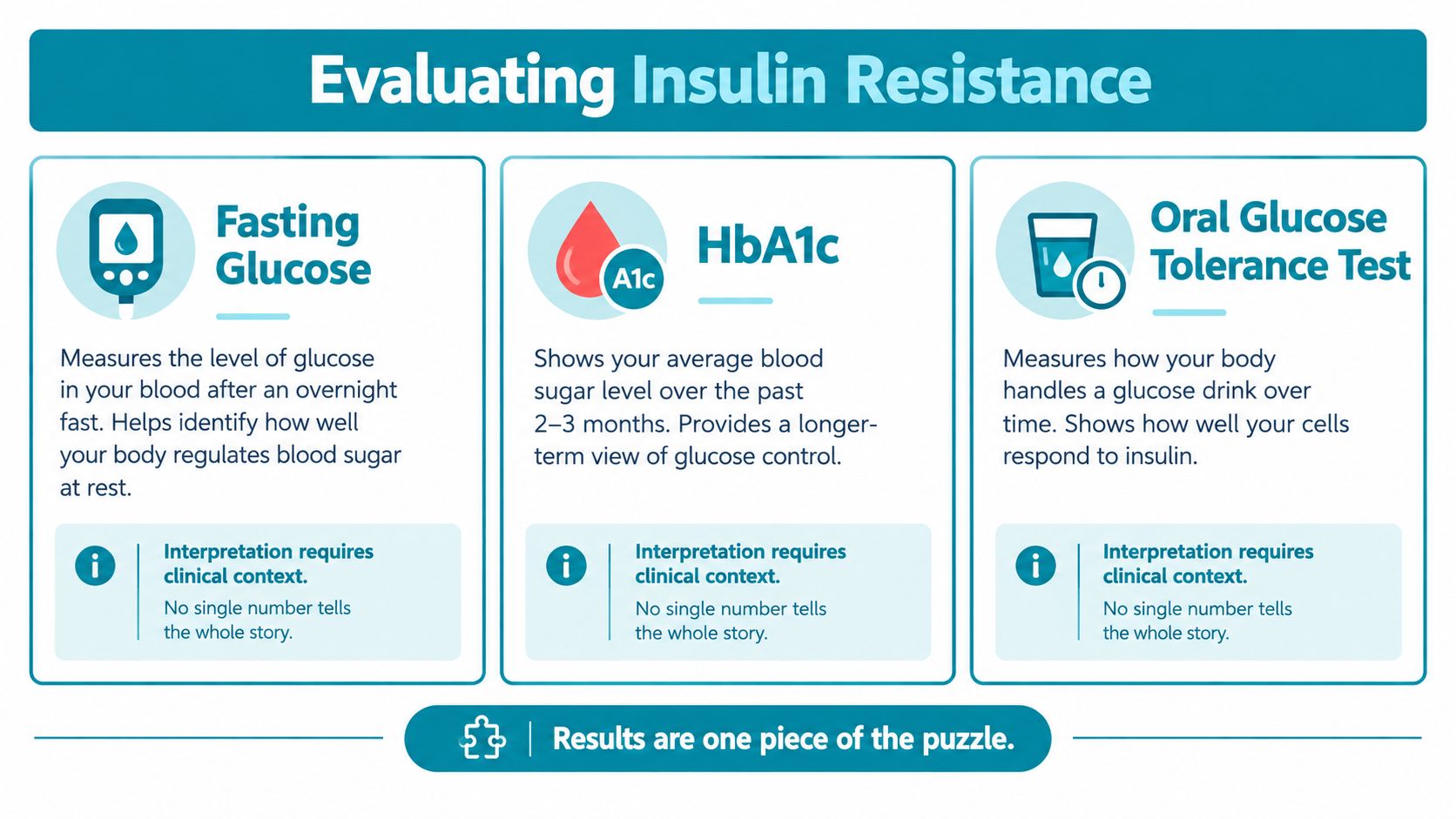
What common measurements show
- Fasting glucose: Blood glucose measured after not eating for a specified period. It provides a current snapshot and may show abnormal glucose regulation.
- A1C: An estimate of average blood glucose over the preceding several months. It can help when symptoms are absent, although some medical conditions can affect its accuracy.
- Oral glucose tolerance testing: This tracks the body's response to glucose over time. The 2-hour threshold of 140 mg/dL cited in the Mayo Clinic reference relates to impaired glucose regulation, but clinicians interpret the result alongside the rest of the evaluation.
- Lipid testing: Triglycerides and HDL cholesterol contribute to the broader cardiometabolic pattern associated with insulin resistance.
- Waist and blood pressure measurements: These add context that a blood test cannot provide alone.
The goal is pattern recognition, not symptom-based self-diagnosis. A person may have insulin resistance without clear symptoms, while abnormal glucose may require a separate clinical assessment.
Before an appointment, record when fatigue or sleepiness appears, along with changes in thirst, urination, skin findings, weight or waist measurements, medication, and sleep. Use these notes to describe patterns, not to diagnose yourself or change treatment.
Some people include broader executive health testing in preventive care. Ask which tests are ordered, what question each addresses, and how the findings fit together. The insulin resistance evaluation resource from Empire Medical Wellness can help you prepare questions for that discussion.
Next Steps Tracking Between Visits and When to Seek Care
Between appointments, record patterns rather than isolated sensations. Note energy after meals, changes in thirst or urination, vision, hunger, skin texture, and waist measurement. Keep observations factual. A symptom log cannot establish insulin resistance or explain every change.
Use a short checklist:
- Symptoms: Record when fatigue, post-meal sleepiness, increased hunger, thirst, urination, or blurred vision appears.
- Skin findings: Note new or changing dark, velvety patches or skin tags, including their location.
- Health measurements: Bring previous glucose, A1C, lipid, and blood pressure results if available.
- Medication context: List prescription medicines, over-the-counter products, and supplements. Do not start or stop them because of an online article.
- Questions: Ask whether the pattern could reflect insulin resistance, prediabetes, diabetes, metabolic syndrome, or another condition.
Arrange routine medical follow-up for persistent fatigue, recurrent hunger, increasing abdominal weight, acanthosis nigricans, or a family history that concerns you. Increased thirst, frequent urination, blurred vision, fatigue, unexplained weight loss, and recurrent infections warrant timely evaluation because they can occur with high blood glucose, even though symptoms alone cannot identify the cause.
Seek urgent care for severe or rapidly worsening symptoms, especially confusion, inability to keep fluids down, severe weakness, or difficulty breathing. These symptoms can have several causes and should not be assessed through tracking alone.
Empire Medical Wellness provides physician-led outpatient obesity medicine for adults, including medical and metabolic assessment, individualized planning, relevant monitoring, and follow-up when clinically appropriate. Care is private pay. Confirm access details directly with the practice.
If you are concerned about insulin resistance symptoms or related metabolic findings, visit Empire Medical Wellness to learn about physician-led obesity medicine assessment and individualized follow-up. Bring symptom notes and prior laboratory results so the consultation can focus on objective findings. This article is educational and is not personal medical advice.