
An adult may finish a workday, care for children, answer messages, and appear dependable while feeling persistently low, tired, distracted, or disconnected from activities that once mattered. Persistent depressive disorder (PDD) can become so familiar that a person mistakes it for personality, stress, or just “how life feels.” The condition is defined by a long-lasting pattern, but anyone experiencing distress or impaired functioning should seek help before a diagnostic time threshold is reached.
Table of Contents
- Recognizing Chronic Low Mood
- Diagnostic Criteria and Assessment
- Prevalence and Risk Context
- Persistent Depression Versus Major Depression
- Evidence-Based Treatment Approaches
- Common Misconceptions About Chronic Depression
- When to Seek Physician-Led Mental Health Care
Recognizing Chronic Low Mood
A person can look functional while carrying a substantial internal burden. Work may continue, parenting may continue, and household responsibilities may get done, but sleep may not feel restorative, decisions may take longer, and enjoyment may gradually shrink. The pattern can be easy to overlook because there may be no single dramatic crisis.
Persistent depressive disorder is a chronic depressive condition. In adults, it involves depressed mood for most of the day, on more days than not, for at least two years, along with at least two associated symptoms. These can include appetite or sleep changes, low energy, low self-esteem, difficulty concentrating or making decisions, and hopelessness. The National Center for Biotechnology Information overview of persistent depressive disorder describes the condition and its relationship to earlier concepts of dysthymia and chronic major depressive disorder.

Function does not tell the whole story
Outward performance isn't a reliable measure of emotional health. A person might meet deadlines while avoiding friends, losing interest in hobbies, struggling to make ordinary choices, or using all available energy to complete basic obligations.
A useful evaluation looks beyond productivity. It considers persistence, distress, relationships, sleep, concentration, decision-making, and quality of life. It also asks whether the person has experienced meaningful periods of relief or whether low mood has become the background against which everything else is judged.
Practical rule: Being able to function doesn't rule out depression. It can show that a person is compensating, not that the condition has no effect.
Some people explore supportive practices, including aromatherapy for anxiety and stress. Such practices may feel calming for some adults, but they shouldn't substitute for an assessment when symptoms persist, worsen, or affect safety and daily life. Adults seeking evaluation and medication management can review adult mental health care as one physician-led outpatient option.
Diagnostic Criteria and Assessment
A person may have adapted to low mood so thoroughly that daily routines look ordinary from the outside. Assessment therefore asks how the pattern developed, how consistently it has been present, and whether another condition could explain it. The APA DSM-5-TR clarification describes depressed mood for most of the day, more days than not, for at least two years in adults as a defining framework. For children and adolescents, the minimum duration is one year.
Symptoms cannot be absent for more than two consecutive months during the qualifying period. A sustained period of relief can alter the timeline a clinician is assessing and may reset the duration requirement. This rule separates an enduring depressive pattern from a short-lived dip in mood, although someone does not need to wait for the full duration before asking for help.
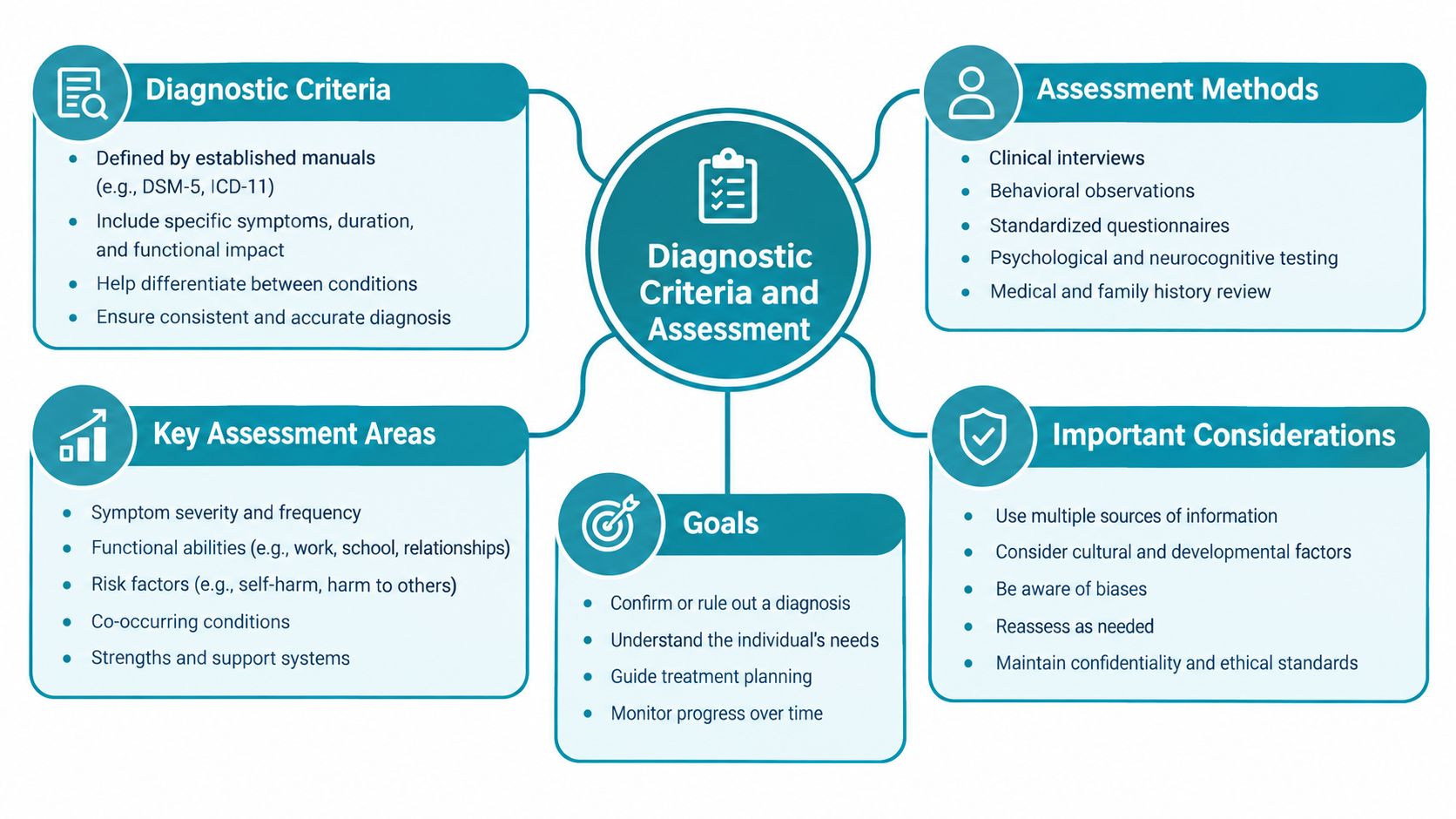
What a clinician evaluates
At least two associated symptoms are considered, including:
- Body rhythms: Appetite changes or sleeping too little or too much.
- Energy: Ongoing fatigue or reduced energy.
- Self-view: Low self-esteem or a negative view of personal worth.
- Thinking: Difficulty concentrating or making decisions.
- Outlook: Feelings of hopelessness.
A clinician evaluates the whole pattern rather than applying a checklist. Medical conditions, medication effects, substance use, trauma, sleep disorders, and bipolar-spectrum symptoms can resemble depression. The assessment also considers whether major depressive symptoms have occurred alongside a longer-standing low mood.
A dated record can make years of gradual change easier to examine. It might track mood, sleep, appetite, energy, concentration, valued activities, relationships, work or household function, and periods of relief. This information can help an adult prepare for a depression evaluation and care appointment without attempting to diagnose themselves. Functioning at work or home may remain intact while sleep, decisions, relationships, and quality of life steadily deteriorate.
Prevalence and Risk Context
A person may keep working, caring for family, and meeting daily obligations while assuming that years of low mood are just part of their personality. That apparent stability can hide changes in sleep, energy, decision-making, relationships, and quality of life. Persistent depressive disorder affects a meaningful minority of adults, although estimates vary with diagnostic definitions and survey methods.
The National Comorbidity Survey Replication estimated that 1.5% of U.S. adults experienced PDD during a 12-month period, including 1.9% among females and 1.0% among males. It estimated lifetime prevalence at 2.5%, meaning approximately one in 40 U.S. adults may experience the disorder at some point in life. These figures come from the National Institute of Mental Health PDD statistics.
These estimates need careful interpretation. A 12-month estimate describes a different period from a lifetime estimate, and PDD prevalence does not represent major depressive disorder prevalence. Another DSM-5-TR-based framework separates chronic depressive presentations into dysthymia and chronic major depressive disorder. Those categories may overlap, so their figures should not be added automatically.
Why population data matter clinically
Statistics cannot diagnose one person. They provide context: persistent low mood is not a personal defect or an unusual experience, yet it may go unrecognized when someone continues meeting responsibilities.
The broader burden of depression also shows why chronic symptoms deserve attention. The World Health Organization depression fact sheet reported that about 5.2% of adults experienced depression in 2023, covering depressive disorders generally rather than PDD specifically.
Risk and maintenance factors may include anxiety, substance-use concerns, medical conditions, previous treatment, and bipolar-spectrum features. They do not establish a diagnosis, but they can affect how a physician interprets symptoms and plans follow-up. If alcohol or another substance may be influencing mood, an addiction medicine evaluation can be considered without assuming that every low mood has a substance-related cause.
Persistent Depression Versus Major Depression
Persistent depressive disorder and major depressive disorder can overlap, but they describe different patterns. PDD centers on chronicity, meaning the depressive mood remains present across a prolonged period. Major depressive disorder more often refers to a discrete episode with a cluster of depressive symptoms that may be more intense.
PDD isn't always mild. Symptoms can range from less severe persistent symptoms to a pattern that includes major depressive episodes. A major depressive episode can occur on top of PDD, a combination sometimes called “double depression.” The reverse confusion also occurs: a person may describe years of low mood but have experienced clear periods of relief, which changes the diagnostic picture.
| Feature | Persistent Depressive Disorder | Major Depressive Disorder |
|---|---|---|
| Primary pattern | Depressed mood persists over a long period | Symptoms occur in a discrete depressive episode |
| Adult duration framework | Depressed mood most of the day, more days than not, for at least two years | Episode-based assessment of depressive symptoms and impairment |
| Severity | Can vary and isn't necessarily mild | Can range from less severe to severe |
| Course | May become normalized and feel like part of personality | May be recognized as a distinct change from usual functioning |
| Overlap | Major depressive episodes may occur alongside the chronic pattern | A person may also have a longer depressive history requiring clarification |
The importance of bipolar assessment
Bipolar depression requires different diagnostic thinking from unipolar depression. A clinician therefore asks about periods of unusually high or irritable mood, changes in energy, reduced need for sleep, impulsivity, and other shifts that may suggest a bipolar-spectrum condition. The absence or presence of these features can't be determined from a single low-mood appointment.
A careful history also separates persistent depression from grief, trauma-related symptoms, medication effects, sleep disorders, and medical contributors. Adults considering a medication review can learn more about depression medication management, while recognizing that treatment selection depends on the individual assessment rather than on the label alone.
Evidence-Based Treatment Approaches
Persistent depressive disorder can look like ordinary functioning from the outside while affecting sleep, decisions, relationships, and sustained effort. Treatment therefore follows the pattern over time, not only whether a person can still work or manage daily tasks. Care may involve psychotherapy, antidepressant medication, or both, especially when major depressive episodes occur alongside the chronic pattern.
Common medication classes include selective serotonin reuptake inhibitors (SSRIs) and serotonin-norepinephrine reuptake inhibitors (SNRIs). Other antidepressants may be considered when a clinician reviews the person's symptoms, medical history, previous treatment, possible interactions, tolerability, anxiety or substance-use concerns, and bipolar-spectrum features. The Mayo Clinic discussion of PDD diagnosis and treatment describes psychotherapy and medication as common approaches. Psychotherapy may include cognitive behavioral therapy or interpersonal psychotherapy.
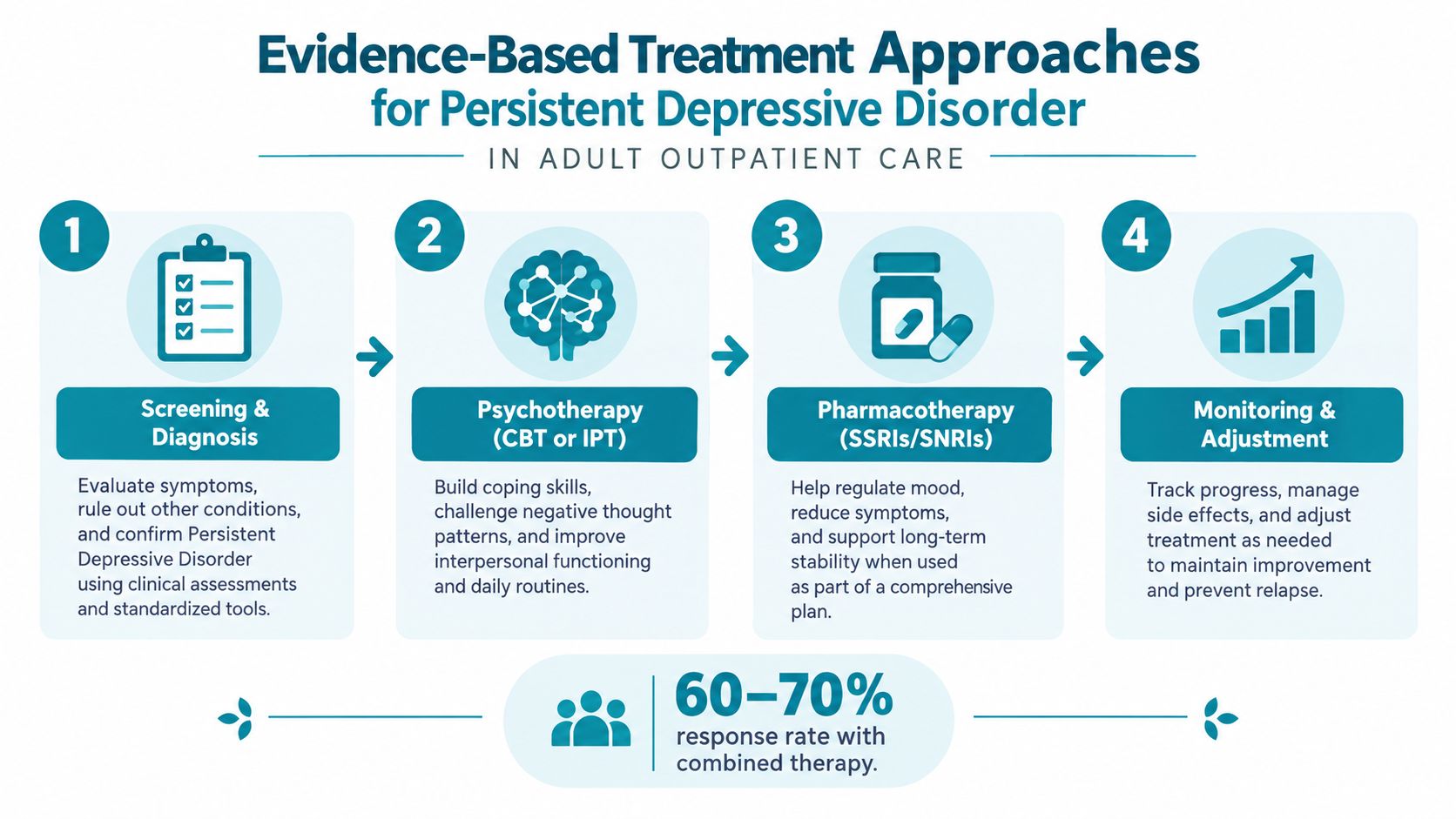
Measuring progress beyond mood
A useful review asks more than, “Do you feel better?” It checks whether change is reaching the parts of life that chronic low mood has steadily narrowed:
- Mood and outlook: Whether sadness, hopelessness, or pessimism has shifted.
- Energy and sleep: Whether fatigue, sleep quality, or sleep timing has improved.
- Thinking: Whether concentration and decision-making require less effort.
- Function: Whether work, household responsibilities, relationships, and valued activities feel more manageable.
- Safety and tolerability: Whether suicidal thoughts, adverse effects, or other concerns have appeared.
- Adherence and context: Whether treatment is being used as prescribed and whether medical, substance-related, or environmental factors are affecting progress.
Partial improvement still provides useful information. A physician may review the diagnosis, treatment duration, dose, adherence, side effects, coexisting conditions, and whether psychotherapy or another evidence-based intervention should be added or coordinated. Adults considering antidepressant care should discuss these choices with the prescribing clinician.
Improvement does not automatically make abrupt medication discontinuation safe. Recurrent or chronic depression may require individualized continuation or maintenance decisions, and tapering may be needed.
Common Misconceptions About Chronic Depression
“It's just a personality trait”
A person may describe years of pessimism, low confidence, or reduced enjoyment as “just who I am.” Familiarity can hide a treatable pattern. Chronic depression may become woven into identity because it has lasted so long, not because it reflects a fixed character trait.
A clinician examines changes in mood, energy, sleep, thinking, relationships, and daily function over time. The useful question is whether the pattern causes distress or narrows a person's life, rather than whether they have always been “the negative one.”
“Treatment is pointless after so many years”
Long duration can lead to resignation. It can also make progress hard to notice because the person has no recent baseline for comparison. A careful treatment plan may require patience, symptom tracking, and adjustment instead of expecting every symptom to disappear immediately.
A person does not need proof that treatment will work before requesting an assessment.
“PDD is always mild”
Persistent depressive disorder is not limited to mild symptoms. Severity can vary, and major depressive episodes may occur during a chronic depressive course. The NIMH depression overview describes symptoms including hopelessness, fatigue, concentration problems, sleep or appetite changes, guilt or worthlessness, and thoughts of death or suicide. These signs can occur in several conditions, so their context, pattern, and duration matter.
Someone may continue working, caring for others, or meeting obligations while sleep, decision-making, relationships, and enjoyment gradually worsen. Functioning on the outside does not show the full burden. Evaluation is reasonable when symptoms feel distressing or life has become narrower. No adult needs to wait two years before discussing persistent low mood with a qualified clinician.

When to Seek Physician-Led Mental Health Care
A physician-led evaluation can clarify the timeline, review medical and psychiatric factors, assess current medications, and distinguish persistent symptoms from episodic depression or other causes. A dated record of mood, sleep, energy, concentration, valued activities, function, adherence, and side effects can make the discussion more useful. Coordination with an outside therapist or treating clinician may be considered when it is useful and authorized.
Adults who want a private, structured resource for personal coping and safety planning can also review this self-guided safety and privacy guide. It isn't a substitute for professional care. If thoughts of suicide, self-harm, or immediate danger are present, call or text 988 for the Suicide & Crisis Lifeline, call 911, or go to the nearest emergency department.
Empire Medical Wellness provides adult mental-health evaluation, diagnostic clarification, medication review, and ongoing medication management in physician-led outpatient care. Adults concerned about persistent depressive disorder can visit Empire Medical Wellness to review the practice's mental-health services and determine whether an evaluation is an appropriate next step.
Byline: Empire Medical Wellness Editorial Team
Published: October 14, 2026
Updated: October 14, 2026
Sources
- APA DSM-5-TR Persistent Depressive Disorder clarification
- National Institute of Mental Health PDD statistics
- National Institute of Mental Health depression overview
- Mayo Clinic PDD diagnosis and treatment
This article is educational and isn't personal medical advice.