
A person may want to lose weight but be unable to exercise because of joint pain, disability, fatigue, illness, caregiving, or a demanding work schedule. Weight loss without exercise is physiologically possible when food and beverage intake creates a sustained calorie deficit. The practical question isn't whether exercise is mandatory. It's how to create a nourishing, manageable eating pattern and identify medical factors that may affect progress.
Table of Contents
- Why Losing Weight Without Exercise Is a Real Question
- The Calorie Deficit and What a Realistic Pace Looks Like
- What to Eat So a Calorie Deficit Actually Feels Doable
- What You Can Do on Your Own and What Needs a Clinician
- Sleep, Medications, and Conditions That Quietly Affect the Deficit
- What Anti-Obesity Medication Can and Cannot Replace
- Questions Worth Bringing to a Qualified Clinician
- Frequently Asked Questions
Why Losing Weight Without Exercise Is a Real Question
The body can lose weight when it receives fewer calories from food and drinks than it uses through daily living and other activities. Planned exercise can support health and weight maintenance, but it isn't required to create the initial energy deficit, according to NIDDK guidance on eating and physical activity for weight management.
That distinction matters for adults whose circumstances limit activity. A painful knee, neurological condition, severe fatigue, recovery from illness, disability, long shifts, or caregiving responsibilities can make a gym-based plan unrealistic. A person may also prefer not to exercise. That preference doesn't make the weight-management question less legitimate.
The useful starting point is a plan that works with the person's current capacity rather than treating exercise as a test of motivation. Food choices, portions, beverages, sleep, medication effects, medical conditions, and clinical treatment can all affect the result.
Practical rule: A plan that can be followed safely and consistently is more useful than an ideal plan that a person can't maintain.
The evidence also has limits. In the CALERIE trial, the National Institute on Aging randomly assigned 218 young and middle-aged adults with normal weight or moderate overweight to calorie restriction or their usual diet for two years. Participants were initially asked to reduce intake by 25%, but the average reduction was approximately 12%. The calorie-restriction group maintained an average 10% reduction in body weight during the study, with reported improvements in blood pressure and cholesterol-related risk factors compared with the control group. The NIH summary of the CALERIE trial also describes follow-up findings showing that participants retained much of the weight loss after the intervention ended.
This was structured research involving a specific population, so the outcome shouldn't be treated as a promise for every adult. It does show that sustained dietary energy reduction alone can produce clinically meaningful weight loss.
The Calorie Deficit and What a Realistic Pace Looks Like
A calorie deficit means consuming fewer calories than the body uses. The deficit can come from smaller portions, fewer calorie-dense snacks, lower-calorie drinks, or changes to meal composition. It doesn't require a specific diet label. NIDDK explains that a dietary pattern supports weight loss only when it reduces total calorie intake.
Federal educational materials have traditionally used a weekly deficit of about 3,500 calories, or roughly 500 calories per day, as an approximation associated with about 1 pound of body-fat loss. The Mayo Clinic explains that a 500-calorie daily reduction may produce about one-half to one pound per week, with variation based on body size, sex, activity level, desired weight loss, and individual physiology.
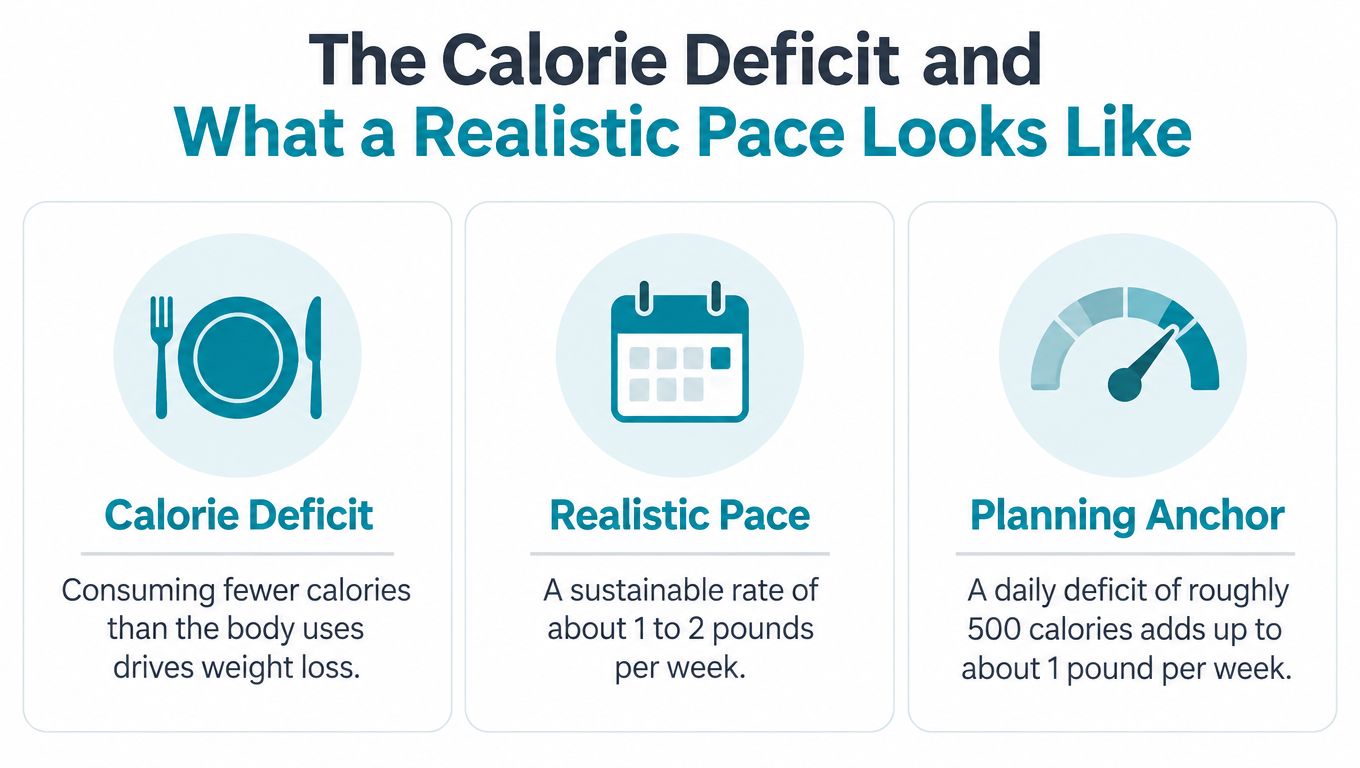
A gradual pace is easier to interpret than a dramatic short-term change. The CDC describes approximately 1 to 2 pounds per week as a gradual rate associated with better weight-loss maintenance, while NIDDK gives an initial planning benchmark of 5% to 10% of starting body weight over approximately six months. For a hypothetical adult weighing 200 pounds, that benchmark would mean 10 to 20 pounds. These are planning anchors, not guarantees or requirements for every person. See NIDDK's healthy eating and activity guidance.
A person doesn't need to count every calorie to make a deficit. Tracking can clarify portions and beverages, but structured meals and repeatable substitutions may work better for someone who finds counting burdensome. The Empire Medical Wellness calorie deficit resource offers a related explanation of this planning concept.
Weight loss also tends to slow. As body mass declines, resting energy expenditure and the energy required to move the body decline as well. Metabolic adaptation can further narrow the original deficit. A several-week trend is more informative than an isolated weigh-in, because sodium, glycogen, and gastrointestinal contents can shift scale weight from day to day.
What to Eat So a Calorie Deficit Actually Feels Doable
A calorie deficit becomes harder to sustain when meals leave a person hungry soon afterward. Food composition can't override energy balance, but it can influence fullness, meal satisfaction, and the ability to follow a plan.
Protein is one useful lever. A 2025 review of randomized-trial evidence reported that higher-protein energy-restricted diets, averaging approximately 1.25 grams per kilogram per day in one meta-analysis, produced about 0.79 kilograms more short-term weight loss than comparator diets. Another synthesis of 37 randomized trials found roughly 1.6 kilograms greater loss, although results varied with diet and study duration. The review is available in peer-reviewed evidence on protein, fiber, and weight management.
Those findings don't create a universal protein prescription. Kidney disease, age, body size, and medical treatment can change what is appropriate. A meal might include eggs, yogurt, fish, tofu, beans, poultry, or another protein source, but the right amount belongs in the broader clinical context.
Fiber and food volume can make a smaller calorie intake feel less restrictive. The CDC explains that fruits and vegetables contain water and fiber, which add volume and can allow a person to eat a similar amount of food with fewer calories. The 2025 review reported that adding an average of 3.7 grams of fiber per day was associated with approximately 1.4 kilograms more weight loss over six months, while viscous fiber supplements showed smaller effects on weight and waist circumference.
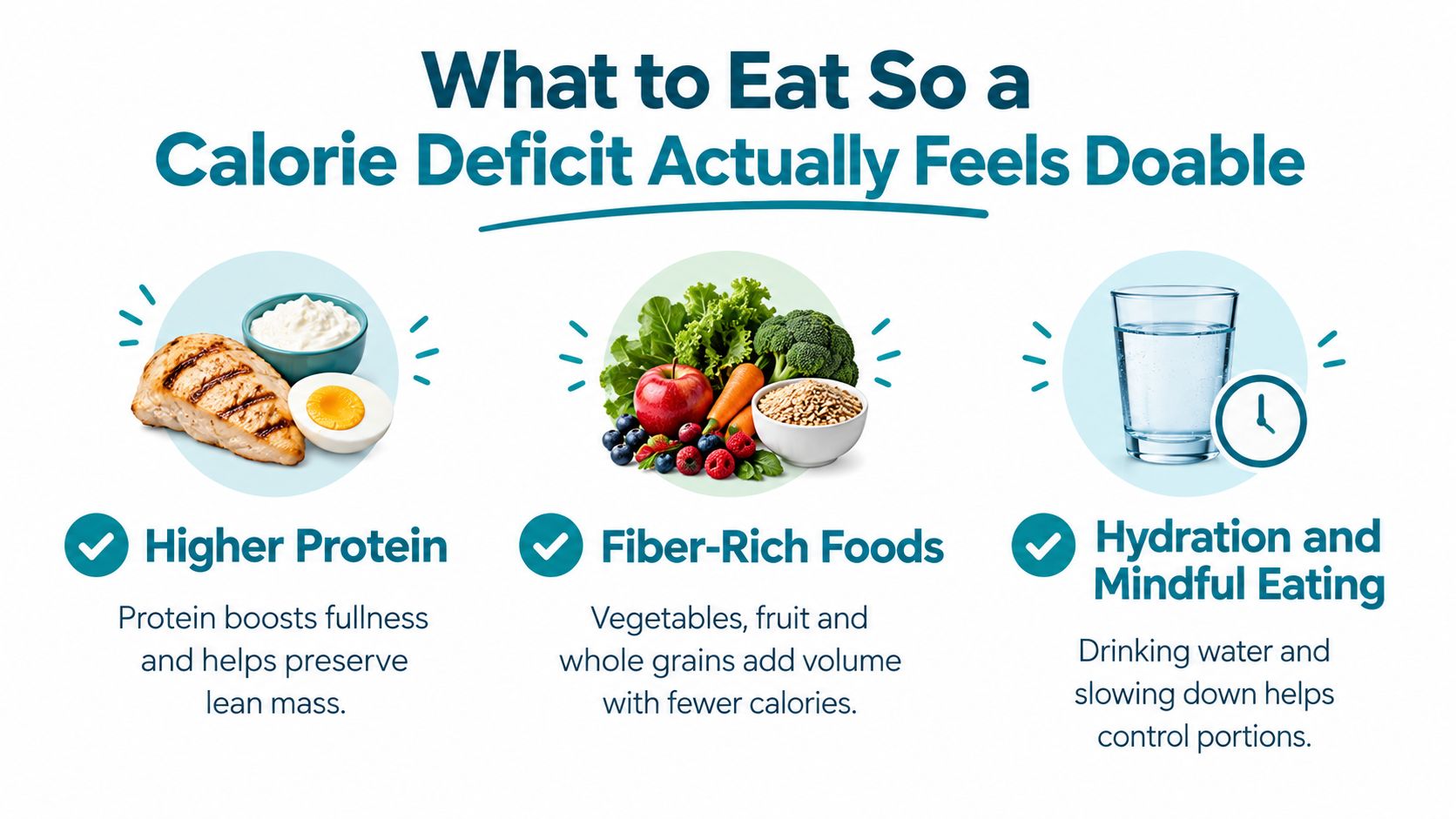
Practical changes can include replacing sugary drinks with water, adding vegetables or legumes to a meal, choosing fruit instead of a calorie-dense snack, and measuring oils, sauces, or calorie-dense spreads. Fiber increases should be gradual, with adequate fluids, because a sudden increase can cause gastrointestinal discomfort. Additional ideas for handling hunger can be found in this evidence-based hunger management guide.
A simple plate pattern may include a protein source, vegetables or legumes, fruit, and a minimally processed high-fiber carbohydrate. There isn't one winning diet for everyone. The balanced meal guide for weight loss provides another way to organize those choices.
What You Can Do on Your Own and What Needs a Clinician
A person can begin with practical food and routine changes, but self-management isn't the right answer for every situation. The table below separates steps that may be reasonable to organize independently from issues that deserve qualified clinical input.
| Likely within your own plan | Worth raising with a qualified clinician |
|---|---|
| Replace sugary drinks and frequent calorie-dense snacks with lower-calorie choices. | Weight change remains difficult despite consistent, sustained changes. |
| Use structured meals and observe portions without pursuing extreme restriction. | A medication may be affecting appetite or weight. |
| Track body weight by looking at weekly trends rather than isolated readings. | A medical condition, sleep disorder, mood change, or eating-disorder risk may be present. |
| Improve sleep routines and record sleep alongside eating patterns. | Anti-obesity medication or another medical treatment may be appropriate to discuss. |
| Choose filling foods that preserve nutritional quality and meal satisfaction. | A history of kidney disease, endocrine illness, significant weight cycling, or other medical complexity requires individualized planning. |
The purpose isn't to decide whether a person is “good” at weight management. It is to identify the kind of support the situation requires. A person beginning after limited prior attempts may start with one or two manageable food changes. Someone with repeated regain, difficult symptoms, or medication concerns may benefit from a medical assessment rather than another unsupervised diet.
For accessible meal ideas and general food-planning inspiration, an IT'S A CHEF! healthy eating guide may be useful. It isn't a substitute for individualized medical care.
A physician-led obesity medicine evaluation can consider weight history, medical conditions, metabolic factors, nutrition-related risks, and treatment options. Empire Medical Wellness obesity medicine is one private-care option adults may review when deciding whether clinical support fits their needs.
Sleep, Medications, and Conditions That Quietly Affect the Deficit
A food-tracking app can't see sleep quality, medication changes, menstrual irregularity, mood, or the symptoms of a sleep disorder. Those factors can affect appetite, energy, food choices, and the body's response to a calorie deficit.
The CDC states that too little sleep can make dieting harder by increasing hunger and appetite, including cravings for high-calorie, high-carbohydrate foods. A 2025 review found that short or poor-quality sleep was associated with higher BMI, waist circumference, and visceral fat, while also concluding that the long-term weight-loss effect of sleep-improvement interventions remains uncertain. The review on sleep and obesity-related outcomes supports a careful conclusion: better sleep may help eating patterns, but it isn't a guaranteed replacement for exercise or medical evaluation.
Medications can also influence weight or appetite. Examples may include some antidepressants, antipsychotics, steroids, and certain diabetes medicines. A medication should never be stopped or changed without the prescribing clinician's guidance. Even a commonly used nonprescription product can prompt a useful review, as discussed in whether Benadryl can affect weight.
Health conditions can change the trajectory of a non-exercise plan. Hypothyroidism, polycystic ovary syndrome, sleep apnea, depression, chronic pain, and other conditions may affect appetite, sleep, energy, or treatment choices. These possibilities don't prove that a condition is present, and they don't mean a plateau reflects a lack of effort.
Symptoms worth raising include new or marked fatigue, severe daytime sleepiness, significant mood changes, suspected sleep apnea, or irregular menstrual periods. A clinician can decide whether evaluation is appropriate and whether the eating plan remains nutritionally adequate.
What Anti-Obesity Medication Can and Cannot Replace
Anti-obesity medication doesn't make nutrition, monitoring, or follow-up irrelevant. These medicines may help with appetite regulation and weight management when clinically appropriate, but decisions depend on health history, contraindications, treatment response, side effects, access, and long-term planning.
Exercise isn't a prerequisite for discussing medication. A clinician can assess whether treatment is appropriate even when pain, disability, illness, fatigue, or schedule limits planned activity. FDA-approved indications and off-label use aren't interchangeable, and medication-specific decisions require current prescribing information and qualified review. This article doesn't provide dosing and doesn't tell anyone to start, stop, or change a medicine.

Discontinuation deserves an honest discussion. A 2025 systematic review reported that stopping treatment was followed by regain of approximately 43% of weight lost after semaglutide and 53% after tirzepatide over the reported follow-up periods. A 2025 American College of Cardiology summary of SURMOUNT-4 reported that 82% of participants assigned to placebo after tirzepatide withdrawal regained more than 25% of the weight they had previously lost within one year. These findings don't mean medication “fails.” They show why obesity treatment may require a long-term strategy rather than an abrupt stop without a maintenance plan. See the systematic review of weight change after stopping medication.
A clinician may discuss appetite changes, gastrointestinal effects, medical history, monitoring, affordability, and what happens if treatment is ineffective or unavailable. Empire Medical Wellness information about GLP-1 treatment is one place to review the practice's related service information, but a webpage can't determine whether a medicine is appropriate for a particular adult.
Questions Worth Bringing to a Qualified Clinician
A clinical visit is usually more productive when you arrive with a short, specific list of questions and a plain account of what you have already tried. That matters for adults whose pain, disability, illness, or schedule makes exercise hard. “Without exercise” is still a real medical conversation, not a sign that you are looking for a shortcut.
Useful questions keep the discussion grounded:
- “What factors could be affecting my weight or appetite?” This opens the door to review sleep, mood, medical history, medications, and other health issues that can make a calorie deficit harder to maintain.
- “Is a reduced-calorie plan medically appropriate for me?” Some adults need closer attention to nutritional adequacy, prior dieting history, symptoms, or conditions that change what is safe.
- “What would a reasonable starting target and monitoring plan look like?” A clinician can help define what to track, which symptoms matter, and when follow-up makes sense.
- “Could any current medication affect weight, and what should happen before anything changes?” Any adjustment should involve the prescribing clinician.
- “If medication is considered, what are the approved uses, side effects, alternatives, and maintenance options?” This keeps the conversation focused on fit, not hype.
- “What would count as a plateau that needs reassessment?” Trend data over time is usually more useful than reacting to day-to-day scale shifts.
- “What should happen if treatment is stopped, unavailable, or not tolerated?” A transition plan matters because weight management rarely stays static on its own.
That kind of discussion works like checking the whole system, not just the number on the scale. A physician-led obesity visit may include review of weight history, medical and metabolic factors, medication options when appropriate, monitoring, and a plan for maintenance. For adults considering that model, the practice's private-pay fees and appointment process explains logistics in practical terms.
Adults who want to learn what that evaluation may cover can review the Empire Medical Wellness obesity medicine service. A webpage cannot tell any one person what treatment fits. The decision to seek care should reflect health needs, preferences, and access.
Frequently Asked Questions
Is calorie counting necessary if portions seem reasonable?
Calorie counting is one tool, not a requirement. Some adults do well with a simpler system: repeating meals, changing beverages, using smaller portions, and limiting the foods that are easy to overeat. That works like using guardrails instead of measuring every inch of the road.
Tracking becomes useful when the scale is not changing and the reason is unclear. It can expose calories from drinks, cooking oils, bites while preparing food, or portions that slowly grew over time.
What does a plateau lasting several weeks mean?
A plateau usually means the earlier calorie deficit is no longer as large as it was. As body weight changes, calorie needs can change too. Water retention can also blur the picture for a while.
Other causes matter. Sleep loss, medications, inconsistent intake, constipation, menstrual-cycle shifts, and some medical conditions can all make progress look stalled. If the pattern holds for several weeks despite steady habits, that is a reasonable time to discuss it with a clinician.
Do low-carbohydrate diets or time-restricted eating have a special advantage?
These approaches are not magic. They help when they make it easier to eat less overall and still get enough nutrition. For one person, a shorter eating window reduces grazing. For another, it triggers rebound hunger later.
The better choice is the pattern a person can live with, especially if pain, disability, illness, or work hours make life feel tight already.
Is weight loss without exercise appropriate for everyone?
For many adults, yes. It is often a legitimate starting point, not a shortcut, especially when activity is limited by health, pain, disability, or schedule.
Still, some situations call for clinical input sooner. That includes major medical conditions, weight-affecting medications, eating-disorder risk, severe symptoms, or repeated difficulty following a plan that should be workable.
This article is educational and is not personal medical advice.
Empire Medical Wellness provides private-pay, physician-led obesity medicine that may include medical assessment, individualized weight-management planning, medication evaluation when clinically appropriate, monitoring, and long-term maintenance planning. Adults considering support for weight loss without exercise can visit Empire Medical Wellness to review the practice and appointment information.
Byline: Empire Medical Wellness Editorial Team
Published: October 8, 2026
Updated: October 8, 2026