
What if the better question isn't “Which drug wins?”, but “Which outcome matters most for you, and what trade-offs are you willing to accept?” Tirzepatide and semaglutide are distinct prescription medicines with separate FDA labels, not interchangeable versions of the same treatment. In direct obesity-treatment evidence, tirzepatide produces greater average weight loss, while semaglutide has the stronger cardiovascular evidence base for certain patients. The choice still depends on eligibility, medical history, tolerability, treatment goals, cost, and access.
Table of Contents
- What the Head-to-Head Question Is Really Asking
- How the Two Medicines Work and What They Are Approved For
- Clinical Trial Evidence for Weight Loss and Glycemic Control
- Side Effects, Contraindications, and When to Call a Prescriber
- Why Average Results Can Mask Very Different Responses
- Dosing, Titration, and Monitoring Under a Physician
- Cost, Access, and Choosing Based on Your Priorities
- Questions to Ask and Where to Learn More
What the Head-to-Head Question Is Really Asking
Which outcome should guide the choice: greater average weight loss, stronger cardiovascular evidence, easier tolerability, or reliable access to treatment? For adults with obesity but without diabetes, the direct comparison favors tirzepatide for average weight reduction. In the 72-week SURMOUNT-5 trial, participants receiving tirzepatide lost an average of 20.2% of body weight, compared with 13.7% for semaglutide, as detailed with sources in the trial-evidence section below. That finding is useful, but it does not determine the right prescription for every patient.
Semaglutide may suit a patient whose main concern is cardiovascular risk, because its cardiovascular evidence is more established for particular populations. Tirzepatide may suit someone whose priority is greater average weight loss. The prescriber should explain how those priorities fit the patient's medical history, treatment goals, and tolerance for gastrointestinal effects.
Individual response also matters. A patient who needs substantial weight reduction may ask whether tirzepatide's average result justifies its dosing and side-effect trade-offs. A patient with relevant cardiovascular disease may instead ask whether semaglutide's evidence better matches the outcome being pursued.
The choice also depends on type 2 diabetes, insulin or sulfonylurea use, a history of pancreatitis or severe gastrointestinal disease, pregnancy plans, and any upcoming procedure involving anesthesia. Product, formulation, indication, titration, and monitoring requirements must be reviewed with the prescriber.
The comparison should address five practical questions:
- Effectiveness: What do randomized and real-world studies show for weight and glycemic outcomes?
- Cardiovascular evidence: Which findings apply to this patient's risk profile?
- Tolerability and safety: Which effects are expected, and which histories may rule out treatment?
- Response and follow-up: How will dose escalation and individual progress be monitored?
- Cost and access: Can the patient obtain and continue the prescribed product?
A productive appointment matches the medicine to the patient's priorities and safety profile, rather than treating either drug as a universal winner.
How the Two Medicines Work and What They Are Approved For
How do tirzepatide and semaglutide differ before their results are compared? Semaglutide selectively activates the glucagon-like peptide-1, or GLP-1, receptor. GLP-1 signaling helps regulate appetite and food intake and supports blood-glucose control. Tirzepatide activates both the GLP-1 receptor and the glucose-dependent insulinotropic polypeptide, or GIP, receptor. This dual activity is one reason prescribers discuss tirzepatide and semaglutide as distinct options rather than interchangeable drugs.
The brand and indication matter. Ozempic is semaglutide labeled for type 2 diabetes, while Wegovy is semaglutide labeled for chronic weight management. Rybelsus is an oral semaglutide product labeled for type 2 diabetes. Mounjaro is tirzepatide labeled for type 2 diabetes, and Zepbound is tirzepatide labeled for chronic weight management. Patients should match the product to the condition being treated and review the applicable label with their prescriber. Adults seeking a broader overview of physician-led incretin treatment can also review Empire's GLP-1 treatment information.
Product, indication, formulation, and dose comparison
The table summarizes the product distinctions and dose ranges in the FDA prescribing information for Ozempic, Wegovy, Mounjaro, and Zepbound.
| Product | Active ingredient | FDA indication | Formulation | Dose range |
|---|---|---|---|---|
| Ozempic | Semaglutide | Type 2 diabetes | Subcutaneous injection | 0.25 to 2 mg once weekly |
| Wegovy | Semaglutide | Chronic weight management | Subcutaneous injection | 0.25 to 2.4 mg once weekly |
| Rybelsus | Semaglutide | Type 2 diabetes | Oral tablet | 3 to 14 mg once daily |
| Mounjaro | Tirzepatide | Type 2 diabetes | Subcutaneous injection | 2.5 to 15 mg once weekly |
| Zepbound | Tirzepatide | Chronic weight management | Subcutaneous injection | 2.5 to 15 mg once weekly |
These are product-specific label ranges, not a conversion chart. A clinician may prescribe a medication off-label when appropriate, but off-label use is not the same as an FDA-approved indication. Label details for each product are covered in the dosing section below.
Clinical Trial Evidence for Weight Loss and Glycemic Control
Which outcome should guide the choice: greater average weight loss, stronger diabetes control, or evidence that fits the condition being treated?
The clearest direct comparison for weight management comes from SURMOUNT-5, a phase 3b randomized trial of adults with obesity or overweight plus at least one weight-related comorbidity, excluding diabetes. At 72 weeks, tirzepatide produced a mean body-weight reduction of 20.2%, compared with 13.7% for semaglutide. Mean absolute weight loss was 22.8 kg versus 15.0 kg, and waist circumference fell by 18.4 cm versus 13.0 cm, respectively. The waist difference was statistically significant at p<0.001, according to the American College of Cardiology summary.
The same trial found that 32% of participants taking tirzepatide achieved at least 25% weight loss, compared with 16% taking semaglutide, as summarized by Weill Cornell Medicine. These are group averages, not a forecast for any one patient.
Head-to-head trial outcomes at a glance
| Outcome | Tirzepatide | Semaglutide | Trial or duration |
|---|---|---|---|
| Mean body-weight reduction | 20.2% | 13.7% | SURMOUNT-5, 72 weeks |
| Mean absolute weight loss | 22.8 kg | 15.0 kg | SURMOUNT-5, 72 weeks |
| Mean waist-circumference reduction | 18.4 cm | 13.0 cm | SURMOUNT-5, 72 weeks |
| Participants achieving at least 25% weight loss | 32% | 16% | SURMOUNT-5, 72 weeks |
| HbA1c comparison in type 2 diabetes | Noninferior and superior to semaglutide | Comparator | SURPASS-2, 40 weeks |
For type 2 diabetes, the original head-to-head trial found tirzepatide noninferior and superior to semaglutide for lowering HbA1c over 40 weeks. Later comparative summaries reported that tirzepatide lowered HbA1c by about 0.29 percentage points more than semaglutide. The underlying SURPASS-2 trial appears in the primary SURPASS-2 publication, so the summary estimate should not be presented as a direct result from that publication.
Real-world findings point in the same direction, with more uncertainty. In a U.S. cohort of adults with obesity without diabetes, six-month average weight loss was 6.6 kg with tirzepatide versus 3.1 kg with semaglutide, or 5.3% versus 2.7%, in the comparative cohort analysis available through PubMed Central. Adherence, prescribing patterns, follow-up, and discontinuation can influence these results, so observational studies supplement rather than replace randomized trials.
Adults considering semaglutide-focused obesity care should ask which indication and outcome matter most. Discuss whether the priority is weight reduction, HbA1c control, cardiovascular evidence, tolerability, or reliable access. The strongest result in one trial does not automatically determine the best prescription for an individual.
Side Effects, Contraindications, and When to Call a Prescriber
What should determine your choice between tirzepatide and semaglutide: the drug with fewer symptoms, or the one you can use safely and consistently? Both have similar gastrointestinal effects. Nausea, vomiting, diarrhea, constipation, abdominal discomfort, and reduced appetite often appear during dose escalation. The exact warnings depend on the prescribed product, so read its Medication Guide and review it with your prescriber.
The key distinction is whether a symptom remains manageable or signals a complication.
Common effects versus urgent symptoms
| Situation | Examples | Appropriate response |
|---|---|---|
| Common routine effects | Nausea, occasional vomiting, diarrhea, constipation, early satiety | Track severity, hydration, bowel habits, and timing. Contact the prescriber if symptoms persist or limit fluids or nutrition. |
| Prompt prescriber contact | Persistent vomiting, dizziness, very dark urine, inability to maintain fluids, concerning visual changes | Contact the prescribing team promptly. Dehydration and diabetic eye complications may need assessment. |
| Urgent evaluation | Severe persistent abdominal pain, especially pain radiating to the back; possible gallbladder symptoms; severe allergic symptoms; suspected obstruction | Seek urgent medical evaluation instead of waiting for a routine appointment. |
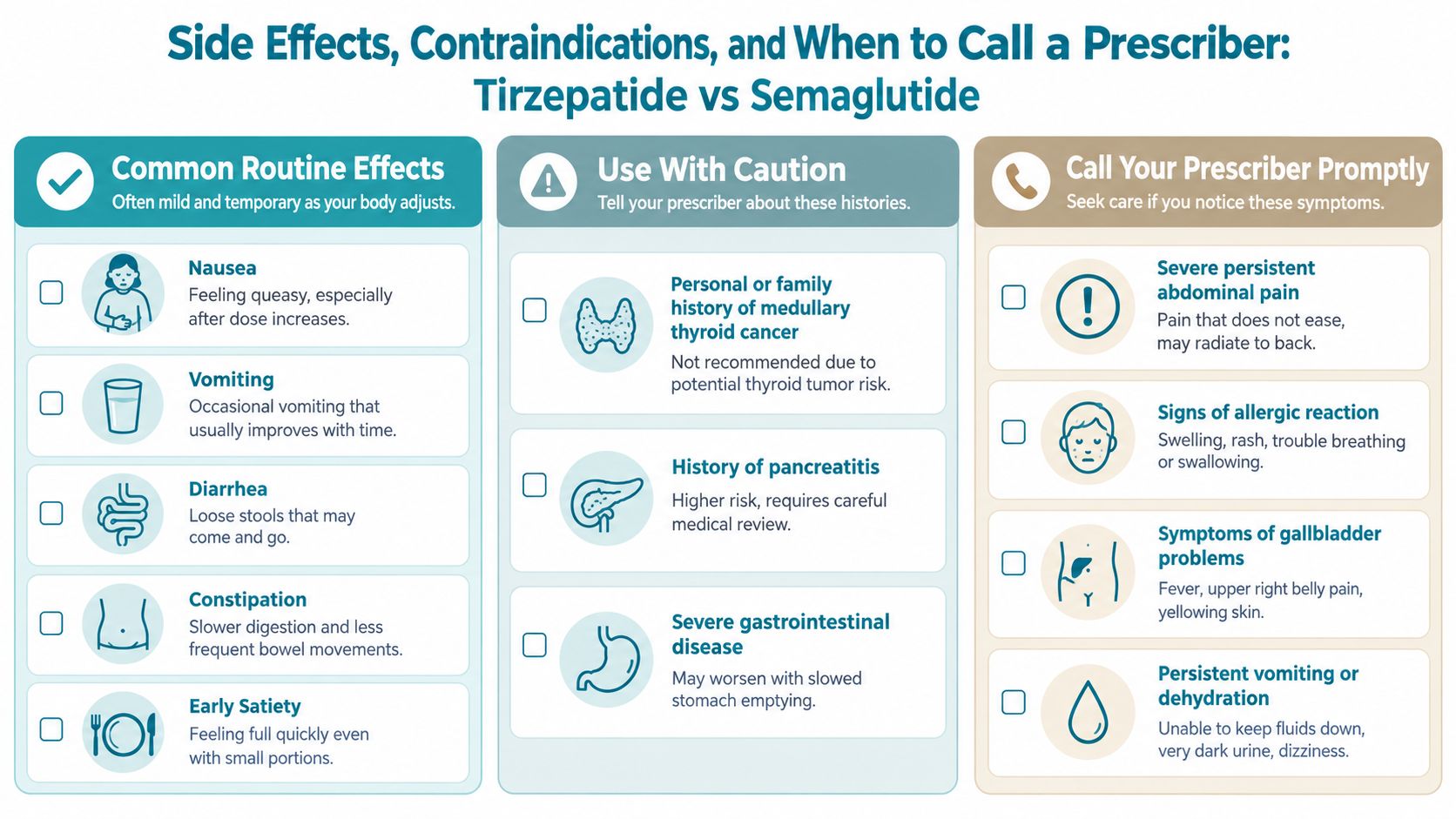
Both products carry a boxed warning about thyroid C-cell tumors based on animal findings. They are contraindicated for people with a personal or family history of medullary thyroid carcinoma or multiple endocrine neoplasia syndrome type 2. Pregnancy requires a separate risk-benefit discussion, and prior serious hypersensitivity is a label-level concern.
Insulin or sulfonylurea use requires specific review because combining glucose-lowering medicines can raise hypoglycemia risk. Tell the prescriber about severe gastrointestinal disease, previous pancreatitis, gallbladder problems, kidney disease, planned procedures, and every prescription, over-the-counter medicine, and supplement.
A practical triage checklist
- Routine follow-up: Mild nausea, constipation, or early fullness that remains manageable.
- Call promptly: Symptoms that prevent adequate fluid intake, persistent vomiting or diarrhea, worsening dizziness, or new visual symptoms in someone with diabetes.
- Seek urgent care: Severe or persistent abdominal pain, trouble breathing or swallowing, facial swelling, yellowing skin, fever with upper-right abdominal pain, or suspected bowel obstruction.
- Before treatment: Review thyroid cancer history, MEN 2, pregnancy plans, pancreatitis history, severe gastrointestinal disease, and other glucose-lowering or incretin medicines.
The FDA's information on GLP-1 medicines and compounded products makes product verification and approved labeling important. For more detail on tirzepatide side effects and monitoring considerations, ask how the specific risks apply to your medical history and treatment plan.
Why Average Results Can Mask Very Different Responses
A mean result describes a group. It doesn't describe the person sitting in front of the prescriber. Comparative peer-reviewed evidence found that tirzepatide was associated with greater percentage weight reduction than semaglutide by an average of 4.28 percentage points and greater absolute weight loss by 4.43 kg, while also noting a higher risk of serious adverse events in the review, available through PubMed Central.
Patients can respond differently for many reasons. Adherence, injection handling, appetite changes, sleep, diet quality, muscle-preserving activity, other medicines, and underlying metabolic health can all affect progress. Some proposed biological explanations remain hypotheses rather than established clinical tests, so a prescriber shouldn't attribute every plateau to a receptor difference.
Distinguishing a plateau from poor tolerance
A patient who has an early response and then stabilizes may have reached a maintenance phase, encountered an adherence barrier, or need a revised long-term plan. A patient with minimal response may need a careful review of the exact product, indication, treatment exposure, eating pattern, activity, and other health factors before anyone considers switching.
The sequence should be deliberate:
- Confirm the product and indication. Brand and formulation errors can make comparisons meaningless.
- Review tolerability and adherence. Ask what was taken, when symptoms began, and whether doses were missed.
- Address modifiable barriers. Hydration, meal patterns, sleep, and resistance exercise may deserve attention.
- Reassess the escalation plan. A prescriber may slow, pause, or adjust titration when symptoms are limiting.
- Discuss switching only after an adequate trial. The alternative isn't automatically better or easier to tolerate.
A labeled composite example, not an Empire patient story, illustrates the point. An adult reports nausea after an escalation. The prescriber checks the exact product, hydration, symptom severity, other possible causes, and the current label, then holds or delays further escalation rather than assuming the highest dose is best. The next plan depends on clinical assessment, not on a fixed internet schedule.
Readers comparing lifestyle support tools may also find an honest Simple Life app review useful for evaluating what an app can and can't contribute. An app may help with organization, but it doesn't replace prescription review or medical monitoring. Physician-led weight-management care should treat medication as one part of a sustainable plan, not as a stand-alone answer.
Dosing, Titration, and Monitoring Under a Physician
The dose schedules are not interchangeable. Semaglutide products use product-specific stepwise titration, while tirzepatide products use a different sequence. The reason for gradual increases is tolerability, especially while the gastrointestinal tract adjusts. Patients shouldn't self-escalate, combine products, or use one product's dose as a conversion for the other.
Titration schedule and monitoring at a glance
| Tirzepatide | Semaglutide |
|---|---|
| Product-specific starting dose followed by label-directed increases through 5, 7.5, 10, 12.5, and 15 mg weekly options | Product-specific starting dose followed by label-directed increases through 0.5, 1, 1.7, and 2.4 mg weekly options for chronic weight management |
| Mounjaro and Zepbound have separate indications and labeling | Ozempic and Wegovy have separate indications and labeling |
| Monitor gastrointestinal tolerance, glucose-related treatment effects when relevant, hydration, and other label warnings | Monitor gastrointestinal tolerance, glucose-related treatment effects when relevant, hydration, and other label warnings |
| Review oral contraceptive considerations, procedure timing, pregnancy plans, and interacting therapies | Review pregnancy plans, procedure timing, and interacting therapies |
A typical physician visit may include weight trend, blood pressure, heart rate, symptom review, hydration, bowel habits, medication reconciliation, and HbA1c when diabetes or glycemic risk makes it relevant. Renal testing, additional laboratory work, gallbladder imaging, an ECG, or ophthalmology assessment may be appropriate when the history or symptoms justify it. There isn't one universal testing schedule for every adult.
Injection technique matters. The current label determines storage, handling, missed-dose instructions, and administration details. Patients should ask about injection sites, site rotation, refrigeration, travel, and what to do if a dose is missed. A patient-facing discussion of laboratory follow-up can supplement, but not replace, the prescription label, such as this overview of Mounjaro tirzepatide monitoring.
Before an appointment, write down:
- The exact product and dose currently used.
- Every glucose-lowering medicine, supplement, and contraceptive.
- The timing and severity of gastrointestinal symptoms.
- Pregnancy plans or the possibility of pregnancy.
- Any upcoming surgery, sedation, or procedure.
- The intended duration of treatment and the maintenance strategy.
For product-specific education, consult tirzepatide dosing and titration information, then confirm the plan with a licensed prescriber.
Cost, Access, and Choosing Based on Your Priorities
Clinical effectiveness is only one part of a workable treatment plan. A medication that produces strong trial averages may still be a poor fit if the patient can't tolerate it, obtain it consistently, or sustain the required follow-up. Cost and access deserve direct discussion rather than being treated as an afterthought.
Empire Medical Wellness uses a private-pay model. The practice lists a $350 initial evaluation and $225 follow-up visit, doesn't bill insurance directly, and provides an itemized receipt through the patient portal. Patients should ask their own insurer or benefits administrator about reimbursement, because an itemized receipt doesn't guarantee coverage.
The FDA has warned about unapproved and compounded GLP-1 products, including concerns involving dosing errors and product quality. Patients should verify what a prescription contains, who prescribed it, where it was dispensed, and whether it is an FDA-approved product. This article doesn't recommend compounded tirzepatide or semaglutide, and it doesn't endorse coupon or discount-pharmacy offers.
Access and evidence comparison
| Factor | Tirzepatide | Semaglutide |
|---|---|---|
| Average weight-loss evidence | Greater average loss than semaglutide in SURMOUNT-5 | Lower average loss than tirzepatide in SURMOUNT-5 |
| Cardiovascular evidence | Cardiovascular outcomes evidence is less mature for obesity comparison purposes | Stronger cardiovascular evidence for certain studied populations and outcomes |
| Diabetes treatment | Mounjaro is the diabetes-labeled product | Ozempic and Rybelsus are diabetes-labeled products |
| Obesity treatment | Zepbound is the chronic-weight-management product | Wegovy is the chronic-weight-management product |
| Tolerability | Gastrointestinal effects can affect continuation | Gastrointestinal effects can affect continuation |
| Access | Depends on product, indication, plan rules, and availability | Depends on product, indication, plan rules, and availability |
The cardiovascular distinction changes the conversation. Tirzepatide is not automatically the better choice because it produces greater average weight loss. Semaglutide may deserve more weight in a decision when established cardiovascular risk and the relevant evidence base are central. Tirzepatide may deserve more weight when the priority is the largest average reduction in body weight and the patient's clinical profile supports it.
Use this priority framework with a prescriber:
- If weight reduction is the main goal: Discuss the head-to-head efficacy difference and what level of response would count as meaningful.
- If cardiovascular risk is central: Ask which product has evidence relevant to your specific condition and treatment goal.
- If tolerability has been difficult: Discuss slower escalation, symptom management, and whether switching is reasonable.
- If access is uncertain: Confirm the exact branded product, coverage rules, continuity plan, and total visit and medication costs.
- If long-term maintenance matters: Ask what happens after the initial response and how progress will be monitored.
Questions to Ask and Where to Learn More
What should you settle with your prescriber before choosing tirzepatide or semaglutide? Leave the visit with a treatment plan, monitoring schedule, and backup option, not only a product name.
Questions about goals
- Is the main goal chronic weight management, type 2 diabetes control, cardiovascular risk reduction, or a combination?
- Which measures will we track besides body weight, such as glucose, blood pressure, waist measurement, symptoms, or daily function?
- What result would count as an inadequate response?
- Which side effects would require a dose change, pause, or switch?
- When will we review progress and decide whether the plan is working?
Questions about safety
- Do my thyroid history, pancreatitis history, gallbladder problems, or gastrointestinal symptoms affect eligibility?
- Could my insulin, sulfonylurea, oral contraceptive, or other medicines require adjustment?
- What symptoms mean I should call the prescriber promptly?
- What should I do if vomiting or diarrhea prevents me from keeping fluids down?
- What should my surgical or anesthesia team know before a procedure?
Questions about reproduction and timing
Discuss pregnancy plans before treatment begins. The product-specific FDA label should guide decisions about stopping therapy and the interval before attempting conception. Do not use a generic internet “washout” rule. The appropriate plan depends on the medicine, indication, medical history, and current labeling.
Frequently asked questions
Is tirzepatide always better for weight loss?
No single medicine is better for every patient. Tirzepatide produced greater average weight loss in SURMOUNT-5, but response and tolerability differ between individuals. Ask how much weight reduction you need, which cardiovascular evidence applies to you, and whether you can continue the chosen treatment safely and consistently.
Can semaglutide and tirzepatide be combined?
Do not combine or substitute them without prescriber direction. They affect overlapping incretin pathways, and each has separate contraindications, dose-escalation instructions, interactions, and monitoring requirements.
What if neither medication works as expected?
Ask the prescriber to verify the product and indication, adherence, dose history, side effects, other medicines, and relevant health factors. The next step may be continued monitoring, slower escalation, or a switch. A plateau does not automatically mean treatment failure.
Which sources should patients read?
Use FDA prescribing information for product-specific dosing, contraindications, warnings, and pregnancy guidance. Use the NIDDK obesity-medication guidance for plain-language background on prescription obesity medicines. Use the American Diabetes Association Standards of Care to understand how these medicines fit into diabetes treatment decisions. For trial and comparative evidence, review the SURMOUNT-5 trial summary from the American College of Cardiology, SURPASS-2 publication in the New England Journal of Medicine, and comparative real-world cohort evidence.
Byline: Empire Medical Wellness Editorial Team
Published: September 23, 2026
Updated: September 23, 2026
This article is educational, not personal medical advice. A licensed prescriber must review your medical history, current medicines, goals, and the exact FDA label before recommending or changing therapy.
Empire Medical Wellness provides private-pay, physician-led obesity medicine evaluations, medication discussions, follow-up monitoring, and long-term weight-management planning for eligible adults. Visit Empire Medical Wellness for practice information.