
Published: September 19, 2026
Updated: September 19, 2026
Byline: Empire Medical Wellness Editorial Team
Metabolic syndrome disease isn't one single disease. It's a clustered cardiometabolic risk state diagnosed when a person meets any 3 of 5 criteria, and that matters because the combination signals higher long-term risk for type 2 diabetes and cardiovascular disease than any one abnormality alone.
A large 2025 global analysis estimated that metabolic syndrome prevalence rose from 11.9% in 2000 to 28.4% in 2023, with about 1.54 billion adults affected worldwide in 2023, according to Nature Communications. For many adults, the confusing part is that the pieces often show up separately first: mildly high blood pressure, borderline glucose, lower HDL, higher triglycerides, or increasing waist size. The useful question isn't whether the label sounds dramatic. It's whether the pattern changes what careful medical follow-up should look like.
Table of Contents
- What Metabolic Syndrome Disease Actually Means
- The Five Diagnostic Criteria and Why They Matter
- Insulin Resistance, Prediabetes, Diabetes, and Metabolic Syndrome Compared
- How a Cardiometabolic Assessment Works in Practice
- Pathophysiology and Health Consequences
- Evidence-Based Prevention and Management
- When to Seek Physician-Led Evaluation
- Common Questions About Metabolic Syndrome Disease
- Sources
What Metabolic Syndrome Disease Actually Means
Metabolic syndrome disease is best understood as a pattern. It isn't diagnosed from appearance, and it isn't the same thing as obesity alone. A person can have obesity without meeting criteria for metabolic syndrome, and a person without obvious central weight gain can still meet criteria if other abnormalities are present.
A clustered risk state, not a single illness
The American Heart Association and NHLBI describe metabolic syndrome as a clustering disorder, not a single disease, and no one factor is required for diagnosis. Any 3 of 5 factors are enough under the harmonized criteria, as described in Circulation.
That point matters because many adults think in isolated terms:
- “I just have high blood pressure.”
- “My sugar is only a little high.”
- “My cholesterol is the issue.”
Sometimes those aren't separate problems. They reflect one broader cardiometabolic pattern.
Why clinicians take the pattern seriously
Metabolic syndrome has been recognized as a clinical pattern for decades. Reviews tracing its history note that the syndrome has existed as a recognizable cluster for at least 80 years, and the field changed after Gerald Reaven's 1988 Banting Lecture introducing “Syndrome X.” Standardized definitions followed from the World Health Organization in 1998, ATP III in 2001, and the International Diabetes Federation in 2005, as summarized in this historical review.
Practical rule: If several cardiometabolic markers are drifting in the wrong direction at the same time, the pattern often matters more than any single lab value.
What changes once the pattern is recognized
The diagnosis doesn't mean a clinician treats “metabolic syndrome” with one universal pill. Current literature still emphasizes that treatment usually targets the individual components, while broader guideline thinking is shifting toward cardiovascular-kidney-metabolic risk-based care rather than a narrow checkbox approach, as noted in this PubMed guideline-related summary.
For an adult researching physician-led obesity care, that's the key takeaway. The label is useful if it leads to more careful assessment, better follow-up, and a plan built around the actual abnormalities present.
The Five Diagnostic Criteria and Why They Matter
A diagnosis of metabolic syndrome is made when a person has at least 3 of 5 specific abnormalities. The harmonized criteria use waist size, triglycerides, HDL cholesterol, blood pressure, and fasting glucose. Central obesity can be one criterion, but it is not required.
The criteria in one table
| Criterion | Threshold (Men) | Threshold (Women) | Clinical Rationale |
|---|---|---|---|
| Waist circumference | Over 40 inches in common U.S. ATP III/AHA cutoffs | Over 35 inches in common U.S. ATP III/AHA cutoffs | Reflects central adiposity, which often tracks with insulin resistance and ectopic fat |
| Triglycerides | 150 mg/dL or higher, or treatment for hypertriglyceridemia | 150 mg/dL or higher, or treatment for hypertriglyceridemia | Suggests disordered lipid handling and higher cardiometabolic risk |
| HDL cholesterol | Below 40 mg/dL | Below 50 mg/dL | Low HDL commonly accompanies insulin resistance and adverse lipid patterns |
| Blood pressure | 130/85 mmHg or higher, or antihypertensive treatment | 130/85 mmHg or higher, or antihypertensive treatment | Indicates vascular strain and added cardiovascular risk |
| Fasting glucose | 100 mg/dL or higher, or glucose-lowering therapy | 100 mg/dL or higher, or glucose-lowering therapy | Signals dysglycemia and possible progression toward diabetes |
These cutoffs are summarized in the NIH Bookshelf review on metabolic syndrome criteria and the StatPearls overview of the harmonized definition.
Why the waist measurement confuses people
Waist size is one of the most misunderstood parts of the diagnosis. U.S. ATP III and AHA thresholds commonly use 102 cm and 88 cm. Other international criteria use lower cutoffs for some populations, such as 94 cm for men and 80 cm for women in several non-U.S. ethnic groups, as shown in this WHO EMRO criteria table.
That doesn't mean one set of numbers is “right” and another is “wrong.” It means waist circumference is population-sensitive.
Why each piece counts separately
Each criterion points to a slightly different part of cardiometabolic dysfunction.
- Waist circumference can reflect visceral fat, which is more metabolically active than fat stored elsewhere.
- Triglycerides and HDL give a window into lipid metabolism.
- Blood pressure reflects vascular stress.
- Fasting glucose helps identify dysglycemia before or alongside diabetes.
For readers tracking blood pressure at home, Empire's overview of blood pressure and medical follow-up can help place that one criterion in context, but blood pressure alone doesn't tell the whole story.
A person can meet the definition without abdominal obesity being the dominant feature. That's one reason the syndrome often gets missed when care focuses on only one problem at a time.
Insulin Resistance, Prediabetes, Diabetes, and Metabolic Syndrome Compared
These terms overlap, but they don't mean the same thing. That's where many people get lost. Insulin resistance is a physiologic state. Prediabetes and type 2 diabetes are glycemic categories. Metabolic syndrome is a multi-factor pattern.
A side-by-side comparison
| Condition | Core Definition | Primary Diagnostic Test | Relationship to Others |
|---|---|---|---|
| Insulin resistance | Reduced cellular response to insulin | No single routine office diagnosis from symptoms alone; often inferred from clinical context and metabolic testing | Often underlies prediabetes, type 2 diabetes, and metabolic syndrome, but isn't interchangeable with them |
| Prediabetes | Glucose levels above normal but below diabetes thresholds | Validated glucose or A1c testing | Can exist with or without metabolic syndrome |
| Type 2 diabetes | Glycemic thresholds in the diabetes range | Validated glucose or A1c testing | May coexist with metabolic syndrome, but one diagnosis doesn't automatically prove the other |
| Metabolic syndrome | At least 3 of 5 cardiometabolic criteria | Waist, blood pressure, triglycerides, HDL, and fasting glucose assessment | Doesn't require diabetes, but often overlaps with insulin resistance and prediabetes |
The clearest distinction is this: symptoms alone can't confirm any of these states. Fatigue, central weight gain, or cravings may prompt testing, but they don't establish a diagnosis by themselves.
Where the overlap happens
Prediabetes is defined by validated glucose testing. Metabolic syndrome uses a broader checklist. A person might have prediabetes with normal triglycerides, normal HDL, and normal blood pressure, which wouldn't meet the syndrome definition. Another person could meet metabolic syndrome criteria because of waist circumference, triglycerides, and blood pressure, yet not have diabetes.
For readers trying to sort out food choices after abnormal glucose testing, a practical prediabetic meal plan can be a useful starting point for meal structure, though it shouldn't replace individualized medical guidance.
Why this distinction matters in real care
If a clinician labels every abnormality “insulin resistance,” important details can get lost. Prediabetes calls for confirmed glycemic assessment. Metabolic syndrome calls for a wider cardiometabolic review. Diabetes requires its own diagnostic standards and long-term management framework.
If you want a patient-focused overview of that underlying physiology, Empire's page on insulin resistance can help clarify the concept, but the practical next step is still objective testing.
The safest approach is simple. Name the exact abnormality, confirm it with appropriate testing, and treat the problems that are actually present.
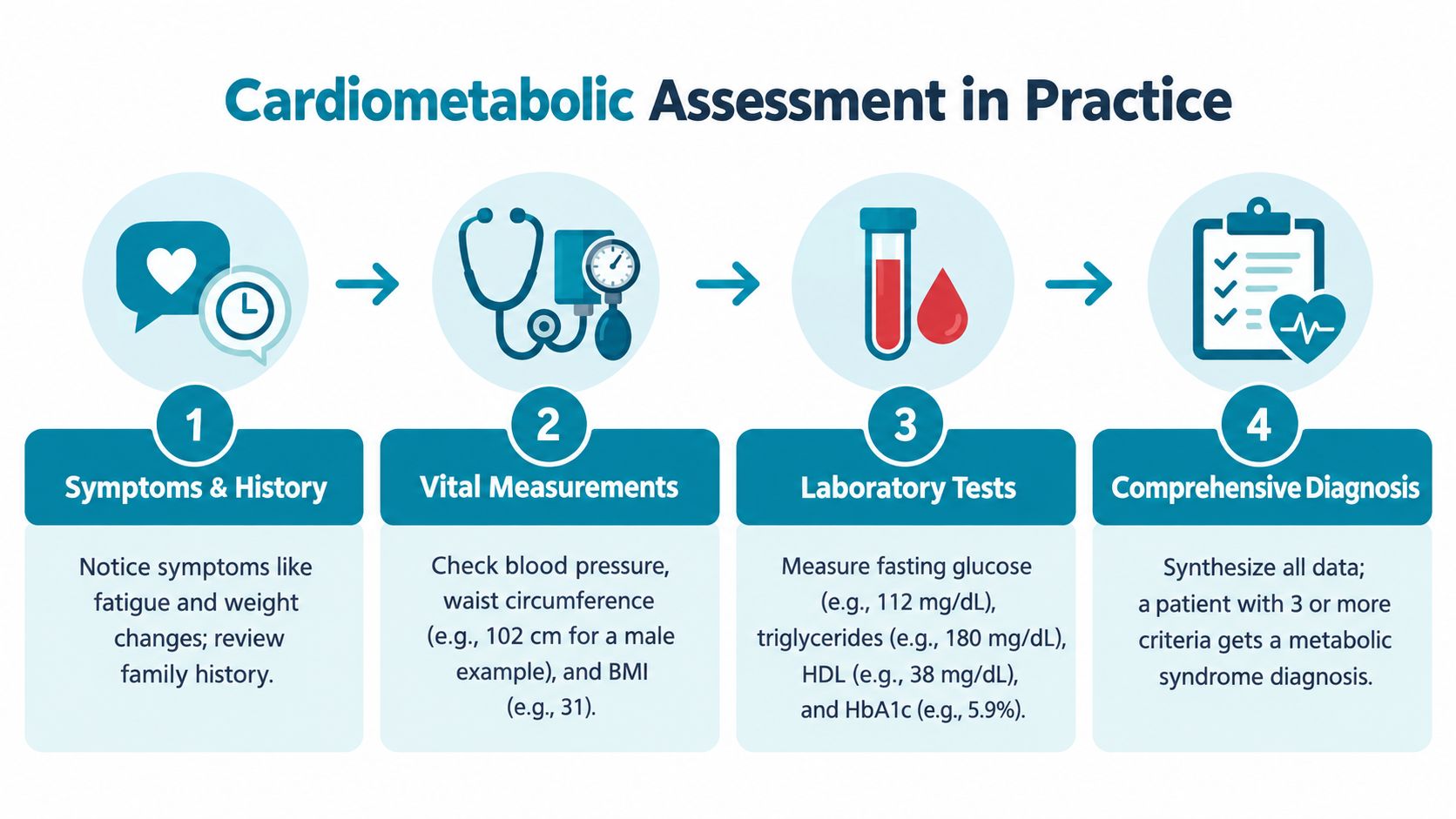
How a Cardiometabolic Assessment Works in Practice
A careful metabolic evaluation starts with measurements and labs, not guesswork. Appearance doesn't diagnose metabolic syndrome disease. Symptoms don't either.
A hypothetical composite example
A hypothetical adult schedules an evaluation because of fatigue, rising waist size, and a few home blood pressure readings that seem higher than usual. That information is useful, but it doesn't prove insulin resistance, prediabetes, or metabolic syndrome.
The next step is structured assessment: history, standardized measurements, fasting labs, and follow-up review.
What usually gets checked
A physician-led assessment often includes:
- History and context: family history of diabetes or cardiovascular disease, sleep pattern, medications, alcohol use, nutrition pattern, activity level, and weight history
- Office measurements: waist circumference, blood pressure, height, and weight using standard technique
- Laboratory review: fasting glucose, triglycerides, HDL cholesterol, and sometimes related testing based on the broader clinical picture
- Medication review: whether current medicines may affect weight, glucose, or lipids
- Follow-up interpretation: not just whether a number is abnormal, but whether the full pattern meets criteria
A practical patient habit between visits is to track glucose and lipids in an organized way so trends are easier to review over time.
This short video gives a general overview of the syndrome concept:
What a good follow-up visit does
The most useful follow-up isn't just “your labs are a little off.” It should clarify which criteria are present, whether repeat testing is needed, what related risks deserve attention, and what markers should be monitored over time.
That approach is one reason adults often seek physician-led obesity medicine evaluation rather than isolated advice. The goal is to build a baseline and track change using objective markers.
Pathophysiology and Health Consequences
Metabolic syndrome is often driven by insulin resistance. In plain language, the body's cells don't respond to insulin as effectively, so the body needs more insulin to keep glucose controlled. That shift affects far more than blood sugar.
How the biology connects
A review in the Journal of Obesity describes metabolic syndrome as an insulin-resistance-driven state in which central adiposity and ectopic fat increase free-fatty-acid flux, promote hepatic overproduction of VLDL, lower HDL, raise triglycerides, and contribute to endothelial dysfunction and prothrombotic signaling, as detailed in this pathophysiology review.
In practical terms, visceral fat can push the liver to make more triglyceride-rich particles. Blood vessels may function less well. Blood pressure regulation may worsen. Glucose handling becomes less stable. Those processes help explain why the syndrome is a cluster, not a random assortment of abnormal labs.
Risk-factor action grid
| Criterion | Mechanism | Primary Consequence |
|---|---|---|
| Increased waist circumference | Often reflects visceral adiposity and ectopic fat | Greater likelihood of insulin resistance and adverse metabolic signaling |
| Elevated triglycerides | Increased hepatic VLDL production and altered fat handling | Higher atherogenic lipid burden |
| Reduced HDL cholesterol | Impaired lipid transport pattern commonly seen with insulin resistance | Less favorable cardiovascular risk profile |
| Elevated blood pressure | Endothelial dysfunction and vascular strain | Higher risk of heart and vessel damage over time |
| Elevated fasting glucose | Early dysglycemia and impaired glucose regulation | Greater risk of progression toward type 2 diabetes |
Why the consequences extend beyond one organ
This syndrome raises concern because each component can contribute to future disease on its own, and the combination points to broader cardiometabolic vulnerability. The literature consistently emphasizes increased downstream risk of type 2 diabetes and atherosclerotic cardiovascular disease.
For readers already managing glucose abnormalities, Empire's overview of type 2 diabetes may help distinguish diabetes care from the broader syndrome pattern.
Metabolic syndrome isn't a heart attack, stroke, or diabetes diagnosis by itself. It's a warning pattern that says long-term risk deserves more attention.
Evidence-Based Prevention and Management
Management works best when it's individualized and sustainable. There's no single “metabolic syndrome medication.” Care usually targets the specific abnormalities present while also addressing the broader pattern that ties them together.
The core pillars of treatment
A practical sequence often looks like this:
Confirm the criteria
Repeat testing may be appropriate when a result is borderline, inconsistent, or likely influenced by timing or temporary illness.
Address food quality and eating pattern
U.S. guideline-based approaches often emphasize vegetables, fiber, lean protein, legumes, whole grains, and unsaturated fats while limiting added sugars, highly refined carbohydrates, and excess sodium. For many adults, patterns such as DASH-style or Mediterranean-style eating are easier to sustain than rigid short-term dieting. Empire's guide to eating heart healthy covers this style of cardiometabolic nutrition in more detail.
Use both aerobic and resistance activity
Physical activity helps with blood pressure, glucose handling, and lipid health. Resistance training matters because muscle tissue plays a major role in glucose uptake.
Include sleep and medication review
Sleep disruption, untreated sleep apnea, and some medications can worsen the same markers used to diagnose the syndrome.
When medications enter the picture
Medication may be part of the plan when lifestyle change alone doesn't adequately control blood pressure, lipids, glucose, or weight-related medical risk. Which medicine is appropriate depends on the problem being treated. That's why clinicians usually think in components:
- For blood pressure, antihypertensive treatment may be indicated.
- For lipids, treatment may focus on the specific pattern and overall cardiovascular risk.
- For glucose, care depends on whether the issue is mild dysglycemia, prediabetes, or diabetes.
- For weight-related risk, anti-obesity medication may be considered when clinically appropriate.
No responsible clinician should promise a quick reversal. The better goal is measurable risk reduction over time.
Why follow-up matters
More recent reviews continue to describe metabolic syndrome as clinically important while also noting that definitions and prevalence estimates can vary by criteria used, as summarized in this 2024 review. In practice, that means progress is often tracked by changes in the actual markers: waist circumference, blood pressure, triglycerides, HDL, and glucose.
If a person is pursuing physician-led obesity care, Empire Medical Wellness is one option for medical and metabolic assessment, individualized planning, and follow-up within obesity medicine when weight-related cardiometabolic risk is part of the picture.
When to Seek Physician-Led Evaluation
A formal evaluation makes sense when isolated concerns start looking like a pattern. That's especially true if you've had more than one abnormal screening result or if the numbers don't match how well you think you're taking care of yourself.
Signs that routine evaluation is reasonable
Consider scheduling an assessment if any of these apply:
- More than one abnormal marker shows up on screening, home blood pressure readings, or routine labs
- Family history matters because close relatives have type 2 diabetes or premature cardiovascular disease
- Waist size is increasing despite consistent effort with nutrition and activity
- Symptoms raise questions such as fatigue or other concerns that could justify metabolic testing
- You want a plan, not isolated advice because interpretation and monitoring are becoming more complex
A physician-led visit often includes confirmation of the criteria, fasting lab review, medication reconciliation, broader risk discussion, and a written follow-up plan. For adults exploring weight-related cardiometabolic care, Empire's weight-loss care information explains how physician-led obesity medicine can fit into that process.
When urgent care is more appropriate
Routine metabolic concerns are different from emergencies. Seek urgent or emergency care right away for symptoms such as chest pain, sudden weakness, sudden trouble speaking, severe shortness of breath, or other signs of an acute medical emergency.
Routine follow-up is for risk assessment and prevention. Emergency care is for immediate danger.
Common Questions About Metabolic Syndrome Disease
Can metabolic syndrome improve or go away
Yes, the criteria themselves can improve with sustained care. A person may no longer meet syndrome criteria if enough components normalize, but that doesn't mean follow-up should stop.
Is there one medication for metabolic syndrome disease
No. Treatment usually targets the abnormalities present, such as blood pressure, lipids, glucose, or weight-related medical risk. The syndrome is a risk pattern, not a single-drug condition.
Is metabolic syndrome the same as prediabetes
No. Prediabetes is a glucose-defined category. Metabolic syndrome is a multi-factor cluster that includes glucose plus other cardiometabolic markers.
Does this apply to children and teenagers
The general concept does, but adult cutoffs shouldn't be applied to younger patients. Pediatric evaluation uses age- and development-specific standards, so children and adolescents need separate clinical assessment.
Sources
- Nature Communications 2025 global prevalence analysis of metabolic syndrome
- Historical review of metabolic syndrome definitions and Syndrome X
- StatPearls overview of harmonized metabolic syndrome criteria
- NIH Bookshelf summary of ATP III and AHA criteria
- American Heart Association and NHLBI scientific statement on diagnosis
This article is for education only and isn't personal medical advice.
If you're looking for a physician-led evaluation of weight-related cardiometabolic risk, Empire Medical Wellness offers adult outpatient care in obesity medicine with medical assessment, individualized planning, and follow-up. If metabolic syndrome disease, insulin resistance, prediabetes, or related risk factors are part of your concern, visiting the practice website can help you decide whether that kind of structured evaluation fits your needs.