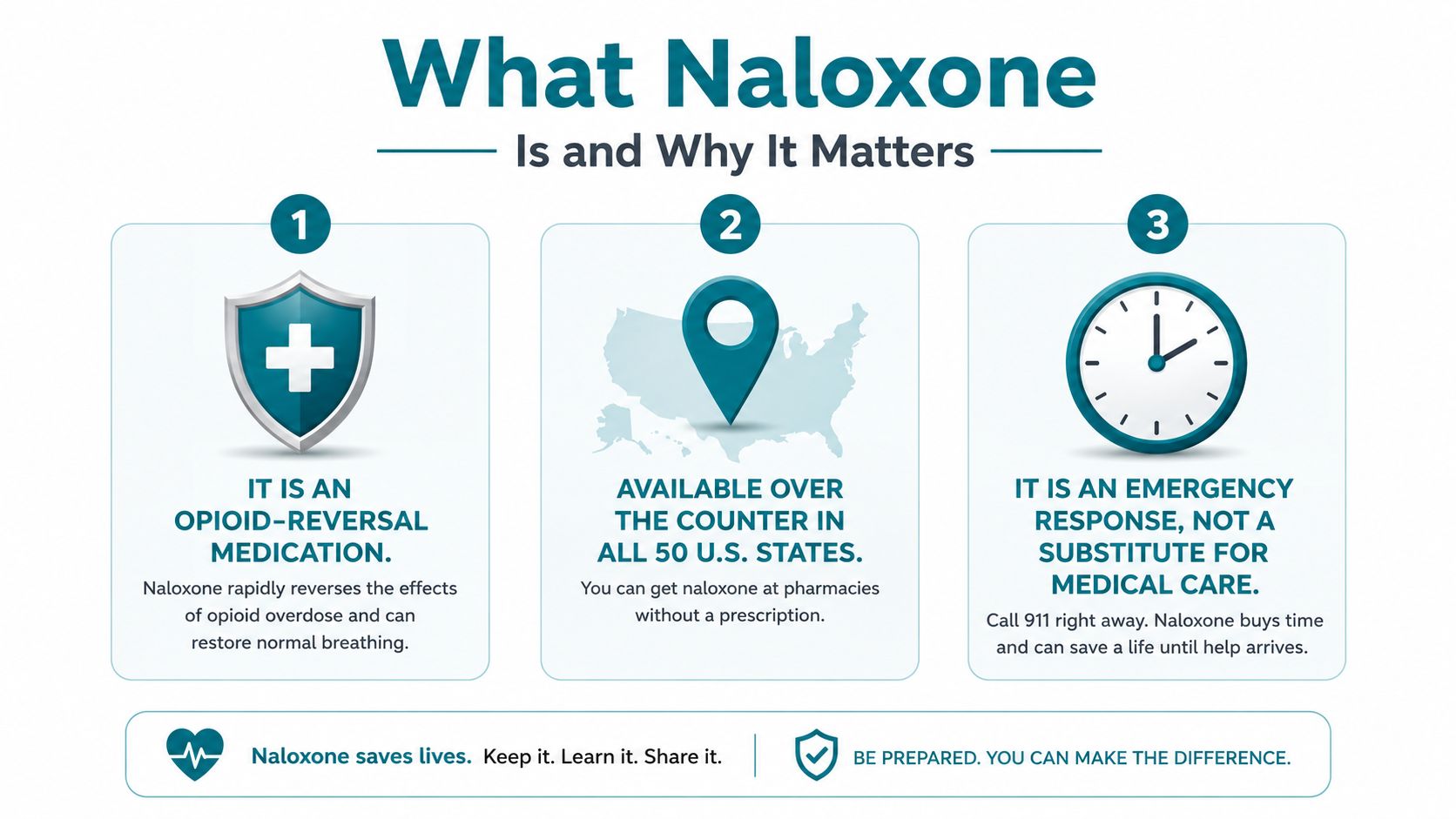
Naloxone is an opioid-reversal medication available over the counter in all 50 U.S. states, and it's intended for emergency response, not as a substitute for medical care or addiction treatment. Between 1996 and 2010, laypersons reported more than 10,000 naloxone reversals, yet many adults still don't know where to obtain it or how to use it (community naloxone data; access findings).
Byline: Empire Medical Wellness Editorial Team
Published: August 27, 2026
Updated: August 27, 2026
Naloxone drugs are designed to buy time when an opioid has slowed or stopped breathing. The practical question isn't only which product exists. It's whether someone nearby can recognize an overdose, call 911, give the product as labeled, and remain with the person until emergency help arrives.
This guide focuses on access, formulation choices, response steps, storage, and the connection between overdose reversal and ongoing addiction care. It's educational information for adults researching physician-led care, not individualized medical advice.
Table of Contents
- What Naloxone Is and Why It Matters
- How Naloxone Reverses an Overdose
- Comparing the Main Naloxone Drugs Available Today
- Recognizing an Overdose and Responding Step by Step
- Side Effects, Withdrawal, and Drug Interactions
- Where to Get Naloxone and How to Store It
- Connecting Overdose Response to Ongoing Addiction Care
- Frequently Asked Questions About Naloxone
What Naloxone Is and Why It Matters
Opioid overdoses can happen after heroin, fentanyl, or a prescription opioid. The person who notices the emergency may be a family member, friend, coworker, or passerby, not a clinician. Naloxone is designed to buy time when an opioid has slowed or stopped breathing.
Naloxone is an opioid antagonist. It attaches to opioid receptors and blocks or displaces opioids that are suppressing breathing. It does not create a high and is not itself an opioid. The U.S. Food and Drug Administration approved injectable naloxone in 1971, followed by the first intranasal product in 2015 and the first over-the-counter nasal spray in March 2023 (FDA approval timeline).
What naloxone can and cannot do
Naloxone can rapidly reverse opioid-related respiratory depression, meaning dangerously slow or absent breathing. It does not reverse every overdose or the effects of non-opioid substances. It also does not replace emergency evaluation, monitoring, or treatment for opioid use disorder.
Its effect lasts about 30 to 90 minutes, so sedation can return after breathing initially improves, as explained by the National Institute on Drug Abuse explanation of naloxone. That possibility makes a response plan more reliable than keeping one device in an uncertain location.
A household or outpatient practice can assign who carries naloxone, teach that person and other nearby adults how to follow the label, and decide where replacement doses are stored. The plan should include calling 911, giving naloxone promptly, and staying with the person until professional help arrives.
911-first principle: Give naloxone as labeled, but do not wait to call 911. Reversal is an emergency bridge, not the final treatment.
Naloxone is now a public-health safety tool as well as a hospital medication. Keeping an FDA-approved product accessible helps people respond while professional care is on the way, without assumptions about anyone's diagnosis, behavior, or recovery goals.
How Naloxone Reverses an Overdose
Naloxone works by competitive receptor blocking. Opioids attach to receptors in the brain and nervous system. At high levels, that signaling can suppress the drive to breathe. Naloxone competes for the same receptors and can displace enough opioid to restore breathing.
The immediate clinical target is adequate ventilation, meaning effective breathing and oxygen exchange. Full alertness may come later, and a person does not need to be completely awake for naloxone to have helped. In supervised clinical care, pharmacology guidance describes titration in 0.4 to 2 mg increments to improve breathing while limiting abrupt withdrawal (clinical pharmacology review). A bystander should follow the specific product label, not try to calculate an individualized dose.
Why duration matters
Naloxone can leave the body sooner than some opioids. Its adult serum half-life is around 60 to 120 minutes, and its effect is often estimated at about 30 to 90 minutes. If the opioid remains active after naloxone levels fall, re-sedation can occur. Someone may breathe normally at first and later become difficult to wake.
Long-acting or potent opioids can make repeat response more likely. EMS data found that overdose events requiring multiple administrations rose from 18.4% in 2015 to 28.4% in 2020, a 54.3% relative increase (EMS study). That finding supports a practical household plan: identify who carries naloxone, teach nearby adults to use the device, keep replacement doses in a known location, and make sure someone can call emergency services and stay with the person.
Intranasal products are useful for public response, although they may reach peak blood levels less quickly than injectable naloxone. Concentrated nasal formulations show roughly 47% to 53% relative bioavailability compared with intramuscular naloxone, with peak levels commonly reached around 15 to 30 minutes (pharmacology review). Prompt administration, breathing support when trained, and emergency transport remain the priorities.
Naloxone differs from naltrexone. Naloxone provides emergency reversal, while naltrexone is a longer-acting opioid antagonist used in specific treatment plans. Neither medication relieves pain, and naloxone does not reverse sedation caused only by alcohol, benzodiazepines, or another non-opioid substance.
Comparing the Main Naloxone Drugs Available Today
The right naloxone product depends on the likely responder and setting. A household may prioritize a simple nasal device, while a clinical organization may use injectable naloxone with trained staff. FDA materials also show that products differ in strength and prescription status, including OTC 4 mg nasal sprays, OTC 3 mg RiVive, and prescription 8 mg Kloxxado (FDA product information).
The table below focuses on common product categories. Product availability and labeling can change, so the package instructions and pharmacist's guidance control.
Naloxone Formulations at a Glance
| Formulation | Dose per Unit | Route | Device Steps | Typical User | Key Trade-offs |
|---|---|---|---|---|---|
| Narcan nasal spray | 4 mg | Intranasal | Remove packaging, place the nozzle in one nostril, press the plunger | Household member or untrained bystander | Portable and simple, but repeat dosing and monitoring may be needed |
| Generic naloxone nasal spray | 4 mg in products with that labeled strength | Intranasal | Follow the product label for nozzle placement and activation | Household member, caregiver, or community responder | May improve availability, but OTC and prescription status can differ by product |
| RiVive nasal spray | 3 mg | Intranasal | Use the single-use device exactly as labeled | Adult household or community responder | Nonprescription option, with manufacturer-set availability and price |
| Kloxxado nasal spray | 8 mg | Intranasal | Use the single-use device as labeled | Trained or untrained responder | Higher-strength prescription product, but strength alone doesn't determine the best choice |
| Injectable naloxone | Common clinical concentrations include 0.4 mg/mL | Intramuscular or intravenous | Draw up and inject only with appropriate training and equipment | Clinician, EMS professional, or trained organization | Flexible dosing, but greater assembly and training burden |
| Evzio auto-injector | Legacy reference | Intramuscular | Place against the outer thigh and follow device prompts and labeling | Trained caregiver or responder when available | Simple injection concept, but product availability and current status require verification |
For a practical comparison of opioid treatment concepts, readers may also find this Suboxone guide from Tru Dallas Detox & Recovery Center useful. It covers a different medication and should not be confused with emergency naloxone.
Adults researching naloxone access and overdose response through Empire Medical Wellness should treat formulation selection as a choose-and-train decision:
- Choose for the responder: A nasal spray may be practical when a family member or bystander is most likely to act.
- Match the setting: Injectable products can suit clinicians and organizations with appropriate training.
- Review the label: Strength, activation, repeat-dose instructions, and prescription status vary.
- Build redundancy: One device may not be enough when the opioid lasts longer than naloxone.
Clinicians may also discuss naloxone access with patients who take chronic prescription opioids or who face other overdose risks. Distribution through harm-reduction programs can reach people who may not otherwise obtain it.
Recognizing an Overdose and Responding Step by Step
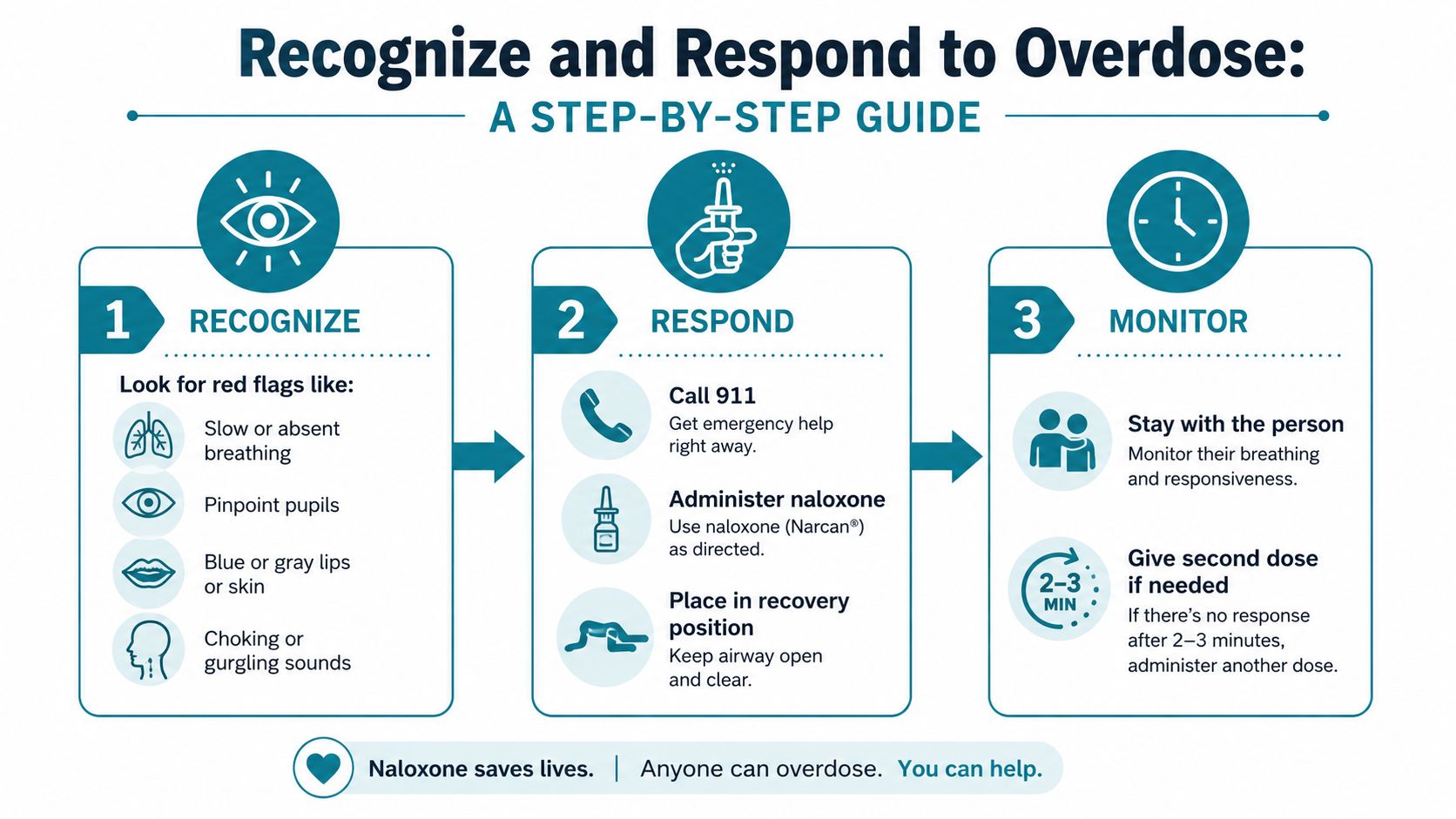
An opioid overdose is a breathing emergency. Warning signs include slow or absent breathing, inability to wake the person, blue or gray lips or fingernails, pinpoint pupils, choking or gurgling sounds, and a limp body. Someone may appear asleep, yet failure to respond to a firm voice or gentle physical stimulation requires immediate action.
Recognize, respond, monitor
Recognize the emergency. Check responsiveness and normal breathing. Do not delay while trying to identify the exact substance.
Call 911. Use speakerphone if possible. Tell the dispatcher that an opioid overdose may be occurring and provide the location. Follow the dispatcher's directions.
Give naloxone as labeled. For a nasal spray, remove the device from its packaging, place the tip in one nostril, and press the plunger. Do not test or prime a single-use device. For an auto-injector, place it against the outer thigh and follow its voice prompts or written instructions.
Support breathing if trained. Rescue breathing may help when breathing is absent or inadequate. Use the training and equipment available, and follow emergency-dispatcher instructions.
Stay with the person. If breathing returns, place the person in a recovery position when you can do so safely. Continue watching for renewed sleepiness, abnormal breathing, vomiting, agitation, or other deterioration.
Repeat only as the label directs. Breathing may improve within 2 to 3 minutes when naloxone is effective, according to FDA and CDC naloxone guidance. If breathing does not improve or symptoms return, use a new dose according to the product label and dispatcher instructions.
A household plan works best when more than one person knows where naloxone is stored, how to use the specific device, and who will call for help. Outpatient practices and community programs can apply the same approach by training staff, checking supplies, and planning for a second dose when directed.
The responder's job is to recognize danger, support breathing, give labeled emergency medication, and hand the person over to professionals. It is not to diagnose the substance or decide that the danger has passed.
Withdrawal symptoms may follow reversal, but discomfort should not delay naloxone when overdose signs are present. For background on fentanyl and its overdose risks, see Empire Medical Wellness' fentanyl resource.
Side Effects, Withdrawal, and Drug Interactions
Naloxone has limited effects when no opioid is present. That makes accidental administration to a person who isn't experiencing an opioid overdose generally low risk, although it still doesn't replace an emergency assessment when the situation is unclear.
After reversal, a person may develop nausea, sweating, flushing, headache, body aches, or brief agitation. These reactions can reflect the abrupt removal of opioid effects rather than a new illness. Vomiting also creates a safety concern, especially if the person remains drowsy.
Precipitated withdrawal
Precipitated withdrawal occurs when naloxone rapidly blocks opioid activity in someone whose body has developed physical dependence. Symptoms can feel intense and may include restlessness, muscle aches, sweating, nausea, abdominal discomfort, and a strong urge to use opioids again.
The possibility of withdrawal shouldn't delay emergency reversal. Untreated respiratory depression can be fatal, while withdrawal, although distressing, is managed after breathing is restored. A person who remains confused, difficult to wake, or short of breath still needs emergency evaluation even if they become agitated after naloxone.
Naloxone can also block prescribed opioid pain relief. It may reverse sedation from combination exposures that include an opioid, but it won't reverse the effects of alcohol or benzodiazepines by themselves. Mixed-substance exposure can therefore remain dangerous after a person appears more awake.
Rare allergic reactions require medical follow-up. Naloxone itself isn't intoxicating or addictive, and it doesn't cause respiratory depression on its own. For readers trying to distinguish expected withdrawal from a medical emergency, this overview of opioid withdrawal manifestations provides additional educational context.
Where to Get Naloxone and How to Store It
Adults can request an over-the-counter naloxone nasal spray from a pharmacist without a prescription. Pharmacies, grocery stores, and large retailers may carry it, but product selection and local stock differ. The FDA approved Narcan as the first OTC naloxone nasal spray in March 2023, followed by RiVive, a 3 mg OTC nasal spray, in July 2023 (FDA Narcan announcement; FDA RiVive announcement).
A pharmacist may also dispense naloxone through a standing order or another state-authorized process. Insurance coverage, subsidy programs, and community distribution vary. Ask a pharmacist or local health department which option applies in your area.
Common Naloxone Access Pathways at a Glance
| Access Route | Who Can Get It | Typical Cost | Notes |
|---|---|---|---|
| OTC pharmacy purchase | Adults and caregivers | Varies by product and location | No prescription is required for OTC products, but stores may have different stock |
| Pharmacist dispensing pathway | Eligible people under local rules | Varies by coverage and program | State authorization can affect how the pharmacist supplies it |
| Community harm-reduction program | People at risk, families, and community members | May be free or subsidized | Local health departments and syringe service programs may distribute kits |
| Clinical or organizational supply | Practices, agencies, and trained responders | Depends on the program or purchaser | Organizations can ask local public-health programs about bulk distribution |
Access is only part of preparedness. A household, practice, or agency should decide who will carry naloxone, where it will be kept, and who knows how to use the specific device. Keeping more than one device in separate, familiar locations can reduce delays when one person is away or a kit cannot be found.
Store naloxone at room temperature, away from direct sunlight, excessive heat, cold, and moisture. Keep it in the original packaging, check the expiration date during routine medication reviews, and replace a device after use. FDA product instructions should guide storage decisions when conditions are unclear.
Expired naloxone may retain some activity, but its potency can be reduced. A calendar reminder, travel checklist, or replacement check during a pharmacy visit can help keep a usable kit available. Practical medication-management education, such as this health and social care medication course, can reinforce clear storage and administration systems.
Connecting Overdose Response to Ongoing Addiction Care
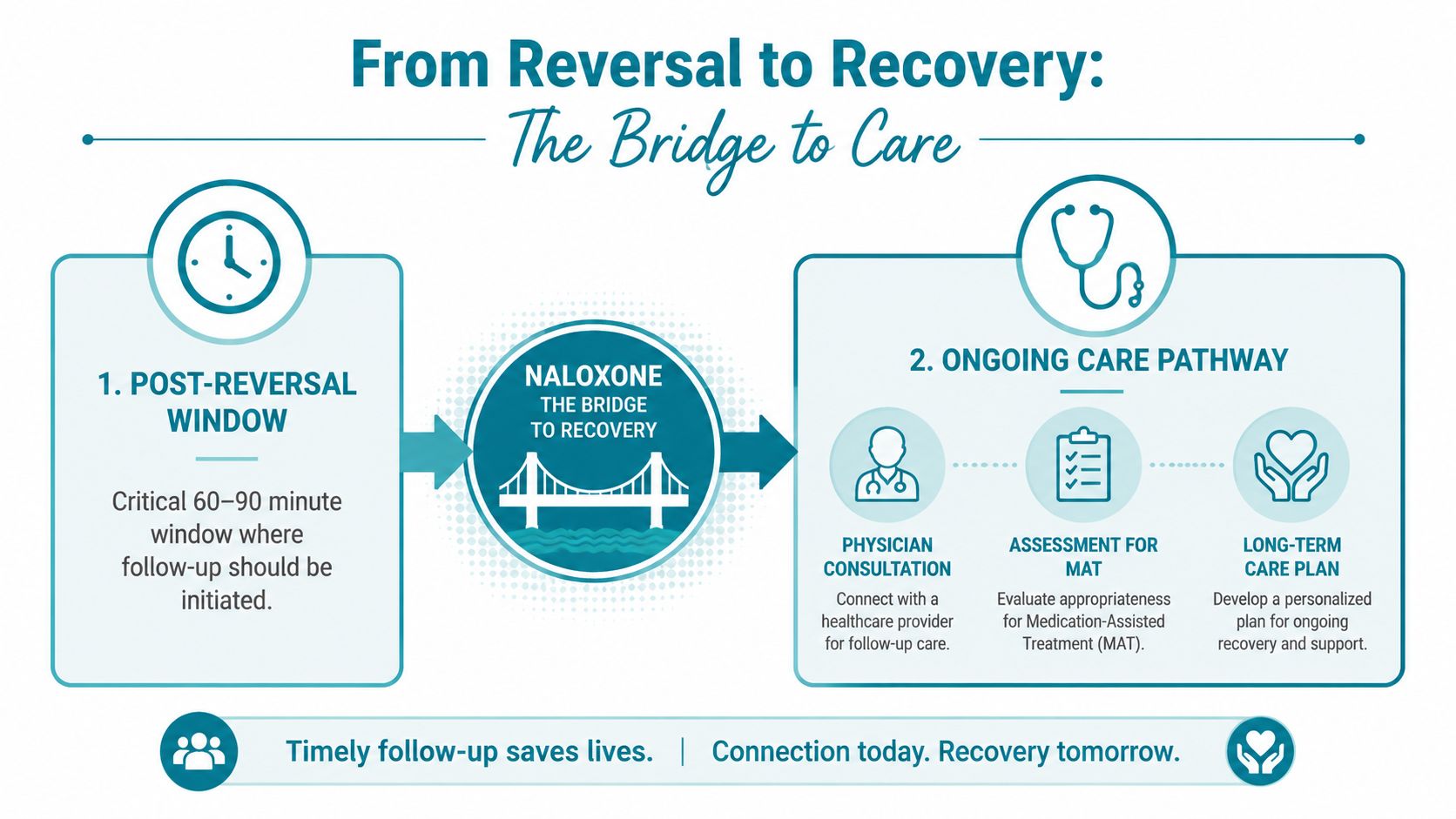
Naloxone can restore breathing, but it doesn't address the medical conditions, medication exposure, social circumstances, or treatment needs that contributed to the overdose. After emergency evaluation, a person may benefit from a confidential conversation about what happened and what support they want next.
What an outpatient assessment may include
A physician-led addiction medicine assessment can cover:
- A nonjudgmental history: Substance exposure, prescribed medications, prior overdose events, withdrawal experiences, and current safety concerns.
- Treatment discussion: Evidence-based medications and behavioral supports may be considered when clinically appropriate.
- Co-occurring conditions: Sleep, pain, anxiety, depression, trauma, and other health concerns can affect safety and treatment planning.
- Patient-defined goals: Some adults seek abstinence, while others first want safer use, reduced risk, medication support, or help reconnecting with care.
Emergency services remain necessary for an active overdose or persistent breathing problem. Outpatient care isn't detoxification, inpatient treatment, or emergency stabilization. It can provide continuity after the immediate crisis, with monitoring and coordination when the patient authorizes it.
For a broader perspective on treatment planning around substance use, readers may review alcohol treatment options from Providers for Healthy Living. Alcohol-related care differs from opioid-overdose response, but both require individualized, non-stigmatizing medical assessment.
Empire Medical Wellness offers confidential outpatient addiction medicine assessment, evidence-based treatment when clinically appropriate, monitoring, recovery planning, and authorized coordination with outside clinicians or programs. Adults considering medication treatment can review the practice's Suboxone information as an educational starting point, not as a personal recommendation.
Frequently Asked Questions About Naloxone
How long does naloxone stay active?
Naloxone's effect may last about 30 to 90 minutes, while its adult serum half-life is around 60 to 120 minutes. Some opioids remain active longer, so breathing problems can return after an initial improvement. Call 911 and continue observing the person, as explained earlier.
Does naloxone work on non-opioid substances?
Naloxone targets opioid receptors, so it may not reverse poisoning caused only by alcohol, benzodiazepines, stimulants, or another non-opioid substance. Drug contents are often uncertain. If opioid involvement is possible, give naloxone while contacting emergency services.
Is naloxone dangerous for someone who hasn't overdosed?
Naloxone generally has limited effects when no opioid is present. In someone who has opioid dependence, it can trigger sudden withdrawal. A person who is unresponsive or breathing abnormally needs emergency help, regardless of the suspected substance.
When should an expired kit be replaced?
Replace naloxone after use and replace expired products through an appropriate pharmacy or community program. Keep each device in its original packaging, check the expiration date periodically, and avoid relying on an old kit when a current one is available. A household plan should identify who carries naloxone, who knows how to use it, and who will call 911.
Adults seeking confidential, physician-led guidance can learn about an addiction medicine specialist. Emergency overdose symptoms require 911, not an outpatient appointment.
Empire Medical Wellness provides confidential outpatient addiction medicine assessment, treatment when clinically appropriate, monitoring, recovery planning, and authorized coordination with outside care. Visit Empire Medical Wellness for more information.
This article is educational and isn't personal medical advice.